

 Not in Hall of Fame News
Yes, we know that this is taking a while! As many of…
 Not in Hall of Fame News
On this evening’s American Idol, the Rock and Roll Hall of Fame…
 Not in Hall of Fame News
Last January, the Baseball Hall of Fame announced the Class of 2026,…
 Not in Hall of Fame News
Yes, we know that this is taking a while! As many of…
 Not in Hall of Fame News
1993 Pro Football Hall of Fame Revisited Project Class. Here we are! …
 Not in Hall of Fame News
Afrika Bambaataa, the legendary DJ, producer, and widely recognized "Godfather" of hip-hop…
 The Buck Stops Here
Kirk Buchner and Chris Mouradian dive into the massive list of over…
 The Buck Stops Here
Welcome to Season 6, Episode 16 of The Hall of Fame Show…
 The Buck Stops Here
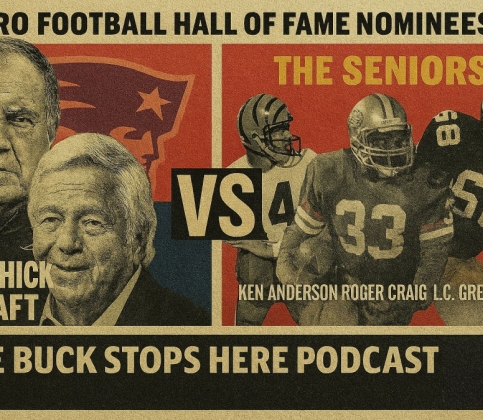
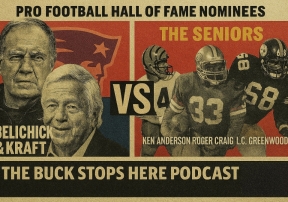
Bill Belichick & Robert Kraft vs. The Seniors: Analyzing the ProFootball Hall of Fame Class Nominees
The Pro Football Hall of Fame voting process is more complicated than…
 From the Desk of the Chairman
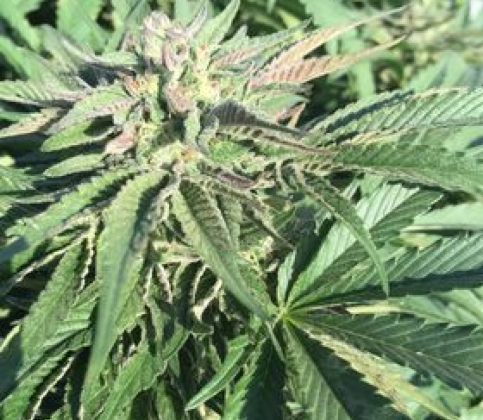
Recreational cannabis laws have changed how adults can buy cannabis in many…
 From the Desk of the Chairman
Synthetic turf has become an increasingly familiar surface in the sports world.…
 From the Desk of the Chairman
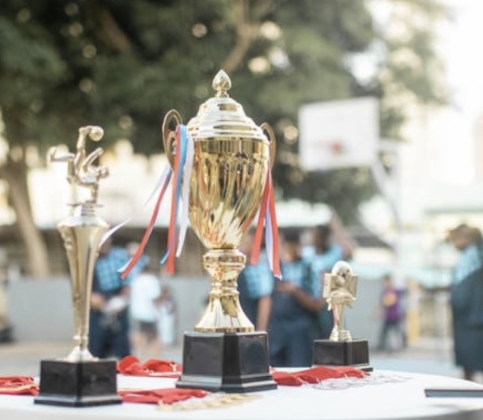
Athletic performance is shaped by discipline, training, and resilience, but motivation often…


 The Buck Stops Here
Bill Belichick & Robert Kraft vs. The Seniors: Analyzing the ProFootball Hall of Fame Class Nominees
The Pro Football Hall of Fame voting process is more…
100 Active Potential Football Hall of Famers
-
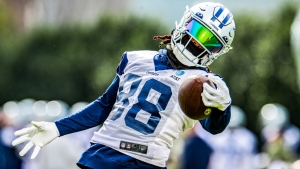 #59 Overall, CeeDee Lamb, Dallas Cowboys, #12 Wide Receiver2024 Pre-Season Rank #75, 2023: Pre-Season Rank #148. Peak Period: 2020-24 CeeDee Lamb has been the top weapon for the Dallas Cowboys over…
 -
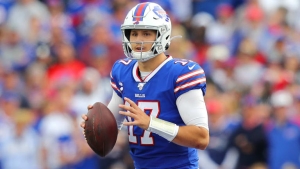 #17 Overall, Josh Allen, Buffalo Bills, #5 Quarterback2024 Pre-Season Rank #39, 2023 Pre-Season Rank #69, 2022 Pre-Season Rank #98, 2021 Pre-Season Rank #117. Peak Period: 2020-24. What Josh Allen accomplished…in Quarterbacks
 -
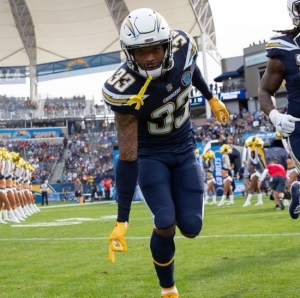 #96 Overall, Derwin James, Los Angeles Chargers, Strong Safety, #6 Safety2024 Pre-Season Rank #130, 2023: Pre-Season Rank #136. Peak Period: 2018-24* After a spectacular rookie year (2018) where he was the runner-up for the…in Safeties
 -
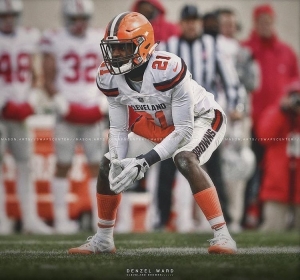 #91 Overall, Denzel Ward, Cleveland Browns, #9 Cornerback2023 Pre-Season Rank #128. Peak Period 2020-24 A four-time Pro Bowl Selection, Denzel Ward has sneakily been one of the most efficient Cornerbacks in…in Cornerbacks
Visit the Fictitious Halls of Fame!


You May Also Like...
EDITOR’S CHOICE
 DDT's Pop Flies
When the veterans committee (VC), officially convening as the Contemporary Baseball Era…



 Live Music Head
Project/Objectan interview with André Cholmondeleyby Live Music HeadOriginally published at timessquare.com on…

LATEST RANKINGS


MOST POPULAR RANKINGS


Site Admin
40. John Thomson
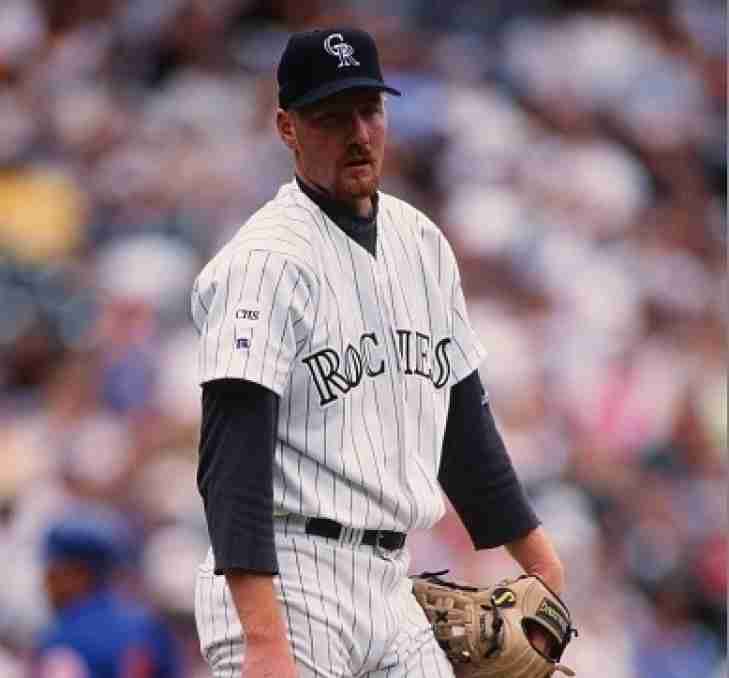
A seventh-round draft pick with a lean frame and a relentless sinking fastball, John Thomson didn't rely on the high-velocity fireworks that often resulted in "taters" in Denver. Instead, he leaned on a focused intensity and a specialized ability to induce contact,
He arrived as a young arm in 1997 and immediately became a workhorse, throwing 166.1 innings in his first full season. While he never reached a dominant statistical summit, he provided the organization with something arguably more valuable in the late '90s: a pitcher who didn't beat himself. He currently sits near the top of the Rockies' all-time leaders for fewest walks allowed per nine innings, a level of control that was essential for survival in a high-scoring environment.
He amassed 27 wins and nearly 400 strikeouts in purple and black before being traded to the Mets in 2002.
38. Chris Iannetta
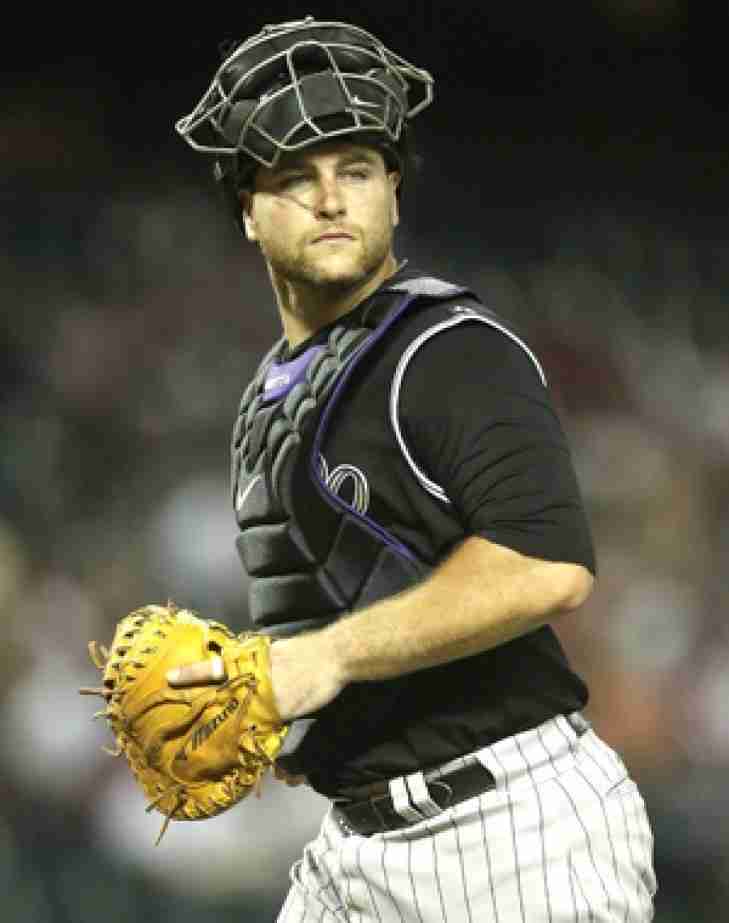
While the Colorado Rockies are often defined by the high-altitude power of their "Blake Street Bombers," Chris Iannetta brought a different, more patient brand of value to the catcher's spot. A fourth-round pick from North Carolina State, Iannetta didn't just occupy the space behind the plate; he became a vital, if occasionally underrated, asset for a franchise seeking stability in its battery. His career in Denver was marked by two distinct chapters, one as a young, power-hitting starter and another as a respected veteran, proving that a catcher’s worth is often measured by the trust of his pitchers as much as his own stat line.
Iannetta’s first run in Colorado was defined by a rare combination of power and plate discipline for the position. His best offensive year was 2008, when he emerged as a primary offensive threat by blasting 18 home runs and driving in 65. During the Rockies' historic 2007 "Rocktober" surge, Iannetta provided the steady-state reliability needed to navigate a grueling postseason, helping lead the club to its only World Series appearance. He possessed a specialized ability to handle a staff in the league's most difficult environment, eventually recording a 2.5 defensive bWAR with the Rockies.
Ianetta was traded to the Angels after the 2011 season, but returned seven years later in a veteran capacity. He retired two years later, having compiled 435 hits and 80 home runs with Colorado.
44. Garrett Atkins
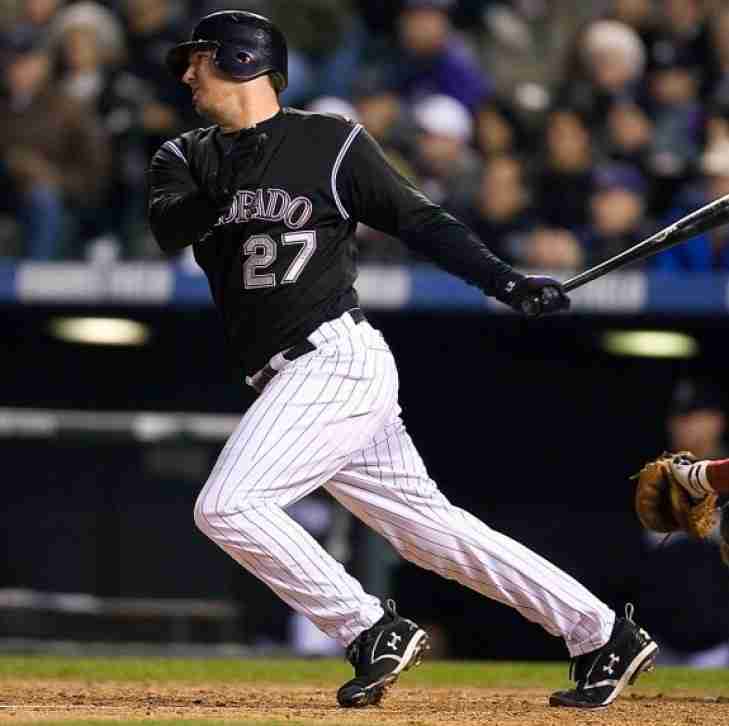
Arriving in 2003, Garret Atkins eventually claimed the third base job and became a central figure in the Rockies' most successful era. While he offered the kind of high-volume production that looks great on a 1990s baseball card, he was also a defensive liability whose overall value was often diluted by the very environment that padded his offensive totals.
Atkins reached his professional high-water mark during a 2006 campaign that, on the surface, looked like the birth of a superstar. He finished 15th in the NL MVP voting after hitting a blistering .329 with 29 home runs and 120 RBIs, numbers that placed him in a specialized group with the likes of Albert Pujols and Miguel Cabrera that year. This wasn't an isolated burst; he backed it up with a 25-homer, 111-RBI performance in 2007, serving as a vital run-producer for the "Rocktober" squad that reached the World Series. He twice batted over .300 and amassed three consecutive seasons with 20 or more home runs.
However, the focused intensity of his offensive production was almost entirely offset by his struggles in the field. Atkins was essentially a natural first baseman playing third out of necessity, and the metrics reflected that discomfort. He compiled a career -4.9 dWAR with the Rockies, often struggling with range and lateral quickness at the "hot corner." This defensive anchor, combined with a significant drop in production away from Denver, meant that despite his 100-RBI seasons, he never achieved the elite sabermetric status of his teammates. He plateaued early, and as his hitting began to decline in 2009, his lack of defensive versatility made him a difficult fit for the roster’s long-term plans.
His tenure with the organization ended following the 2009 season, after seven of his eight major league years in a Rockies uniform. Atkins compiled 805 hits and 98 home runs while finishing fourth in the 2005 NL Rookie of the Year race.
36. Kevin Ritz
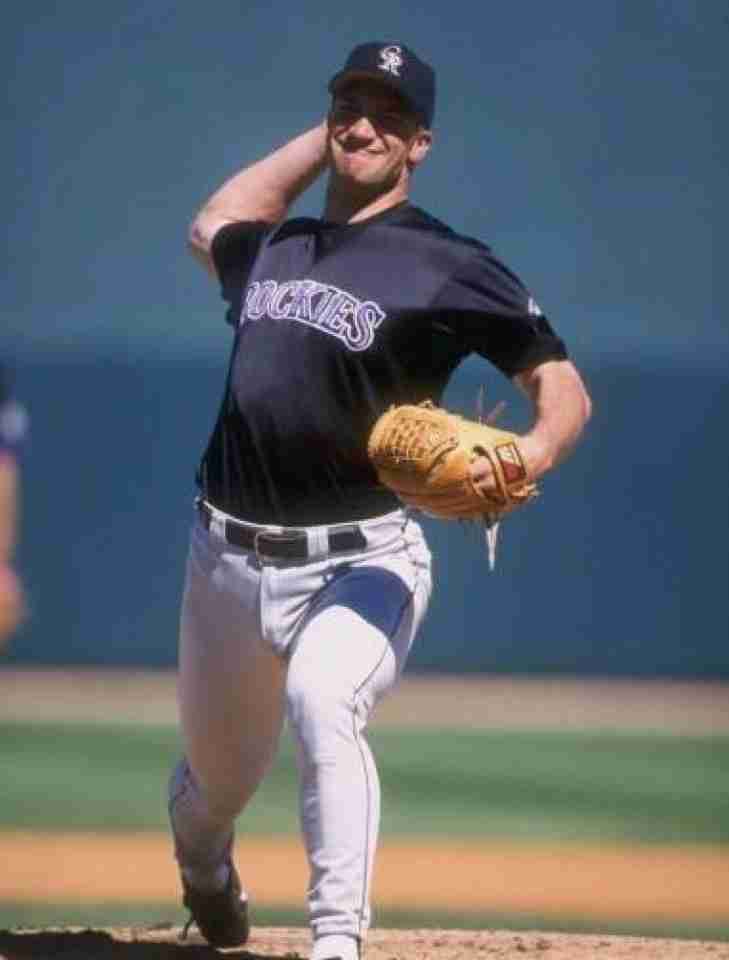
For a brief but electric window in the mid-1990s, Kevin Ritz was the definition of "Coors Field Proof." Arriving as an expansion draft selection from Detroit, Ritz didn't just survive the thin air of Denver; he thrived in it, providing the Colorado Rockies with the first legitimate ace in franchise history.
During the 1995 campaign, Ritz emerged as the backbone of the "Blake Street Bombers" era, leading the club to its first-ever postseason appearance. He authored a season of such profound efficiency that he finished 8th in the National League in bWAR for pitchers (4.5). The year after he won 17 games, a club record that stood for fourteen years. It was a season of pure survival and grit; while he led the National League in earned runs allowed (125), he also led his team in innings pitched (213) and games started (35).
Ritz struggled afterward, as in 1997 and 1998, as shoulder injuries began to take their toll. After undergoing major surgery, he attempted a professional comeback but was eventually forced into retirement. With the Rockies, Ritz compiled 39 wins and 337 strikeouts, setting a then-franchise record with 17 victories in 1996.