

 Not in Hall of Fame News
Yes, we know that this is taking a while! As many of…
 Not in Hall of Fame News
On this evening’s American Idol, the Rock and Roll Hall of Fame…
 Not in Hall of Fame News
Last January, the Baseball Hall of Fame announced the Class of 2026,…
 Not in Hall of Fame News
Yes, we know that this is taking a while! As many of…
 Not in Hall of Fame News
1993 Pro Football Hall of Fame Revisited Project Class. Here we are! …
 Not in Hall of Fame News
Afrika Bambaataa, the legendary DJ, producer, and widely recognized "Godfather" of hip-hop…
 The Buck Stops Here
Kirk Buchner and Chris Mouradian dive into the massive list of over…
 The Buck Stops Here
Welcome to Season 6, Episode 16 of The Hall of Fame Show…
 The Buck Stops Here
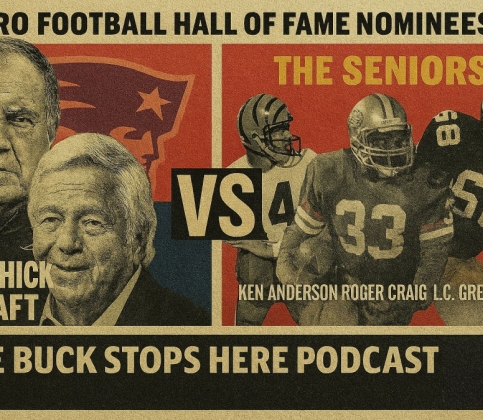
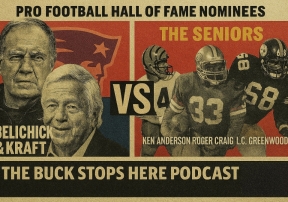
Bill Belichick & Robert Kraft vs. The Seniors: Analyzing the ProFootball Hall of Fame Class Nominees
The Pro Football Hall of Fame voting process is more complicated than…
 From the Desk of the Chairman
Recreational cannabis laws have changed how adults can buy cannabis in many…
 From the Desk of the Chairman
Synthetic turf has become an increasingly familiar surface in the sports world.…
 From the Desk of the Chairman
Athletic performance is shaped by discipline, training, and resilience, but motivation often…


 The Buck Stops Here
Bill Belichick & Robert Kraft vs. The Seniors: Analyzing the ProFootball Hall of Fame Class Nominees
The Pro Football Hall of Fame voting process is more…
100 Active Potential Football Hall of Famers
-
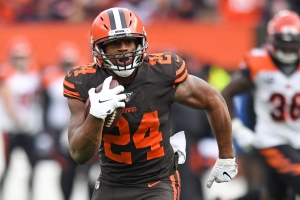 #82 Overall, Nick Chubb: Cleveland Browns, #7 Running Back2024 Pre-Season Rank #84, 2023 Pre-Season Rank #91, 2022 Pre-Season Rank #114, 2021 Pre-Season Rank #140. Peak Period: 2018-22 Chubb emerged as the…
 -
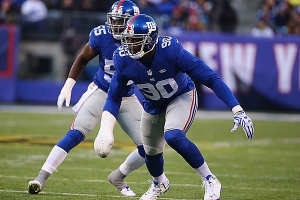 #84 Overall, Jason Pierre-Paul, Free Agent, Defensive End #16: Defensive Lineman/Linebacker: Pass Rusher2023 Pre-Season Rank #86, 2022 Pre-Season Rank #90, 2021 Pre-Season Rank #95, 2020 Pre-Season Rank #122. Peak Period: 2011-15 We noted before that…
 -
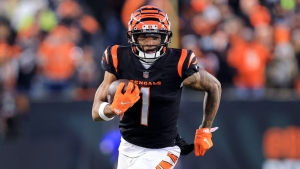 #56 Overall, Ja'Marr Chase, Cincinnati Bengals, #10 Wide Receiver2024 Pre-Season Rank #111, 2023 Pre-Season Rank #134, 2022 Pre-Season Rank #145. Peak Period: 2021-23* Here is what we said last year: “A…
 -
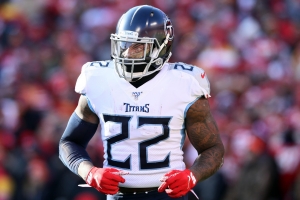 #11 Overall, Derrick Henry, Baltimore Ravens, #1 Running Back2024 Pre-Season Rank #23, 2023 Pre-Season Rank #39, 2022 Pre-Season Rank #47, 2021 Pre-Season Rank #70, 2020 Pre-Season Rank #108. Peak Period: 2019-20/2022-24…
Visit the Fictitious Halls of Fame!


You May Also Like...
EDITOR’S CHOICE
 DDT's Pop Flies
When the veterans committee (VC), officially convening as the Contemporary Baseball Era…



 Live Music Head
Project/Objectan interview with André Cholmondeleyby Live Music HeadOriginally published at timessquare.com on…
LATEST RANKINGS



MOST POPULAR RANKINGS


Site Admin
47. Bug Holliday
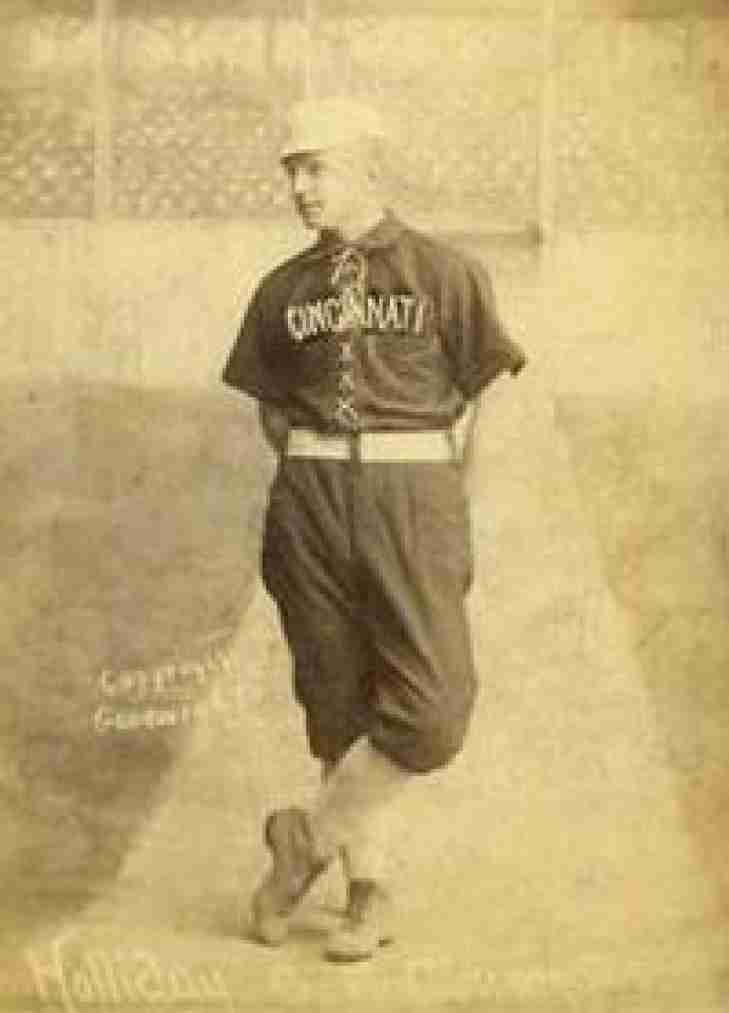
In the early, dust-caked era of Cincinnati baseball, few players combined speed and power as effectively as James "Bug" Holliday. A small-statured center fielder with a specialized ability to drive the ball deep, he emerged as a premier offensive force just as the franchise made its pivotal leap from the American Association to the National League. While a serious medical emergency would eventually diminish his physical tools, Holliday’s first six seasons in the Queen City established him as one of the most dangerous and efficient run-producers in the nineteenth-century canon.
Holliday’s arrival in 1889 was a high-velocity entrance that immediately validated the club’s investment. In his debut campaign, he tied for the American Association home run title with 19 blasts, a massive total for the era, while driving in 104 runs and swiping 46 bases. He was a model of specialized versatility, blending elite contact with a refined eye, allowing him to finish in the top ten in nearly every major offensive category. His craftsmanship remained intact during the team’s transition to the National League in 1890, where he famously recorded the first home run in the franchise's NL history on Opening Day.
The most consistent stretch of his career occurred during the early 1890s, when he established himself as a model of steady-state dominance. Holliday was a tactical engine in the outfield, twice capturing the home run crown, once in each league, and authoring four seasons with a batting average above .300. His production reached a statistical peak in 1894, a summer where he hit a career-high .372 and led the staff with 126 runs scored and 123 RBIs. He possessed a specialized athleticism that allowed him to thrive in multiple roles, serving as a high-frequency source of extra-base hits and a high-leverage presence in the heart of the order.
His tenure took a sharp turn in 1895 due to a devastating appendectomy that nearly claimed his life. The surgery sapped his professional resilience, leaving him without the strength that had made him a home run king. While he remained with the Reds for four more seasons, his role shifted to that of a steady hand off the bench, providing veteran poise in a reserve capacity.
With the Reds, Holliday compiled 1,141 hits, 65 home runs, and 252 stolen bases across 10 seasons.
45. Ival Goodman
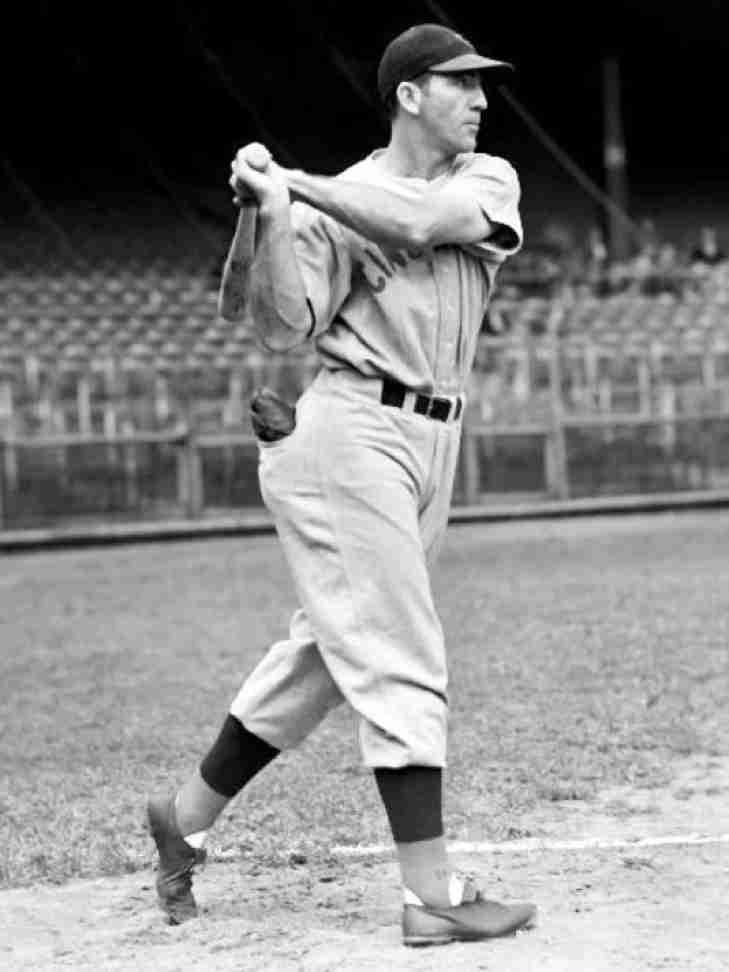
Goodman’s impact was felt the moment he stepped into the starting lineup in 1935, sparking the offense with a league-high 18 triples as a rookie. This high-velocity arrival was no fluke, as he repeated the feat the following summer, establishing himself as one of the premier gap-hitters in the National League. By 1938, he had broadened his game into a more specialized power profile, launching 30 home runs and earning his first of two consecutive All-Star selections. He was a model of offensive versatility, providing the tactical stability needed to anchor the middle of a lineup quietly building toward a pennant.
The most efficient stretch of his tenure occurred during the 1939 campaign, where he reached his personal watermark for contact and plate discipline. That year, Goodman hit a career-high .323 with a .401 on-base percentage, serving as a high-leverage producer for a squad that captured the National League pennant. While his statistical output declined slightly during the historic 1940 season, his professional resilience remained a foundational element of the club's success. He was a primary engine of the team that finally secured the World Series trophy.
Departing for Chicago in 1943, Goodman compiled 995 hits and 588 RBIs while helping lead the club to two pennants and a World Series title. The organization provided the ultimate punctuation to his career by inducting him into the Cincinnati Reds Hall of Fame in 1959 as part of their second and only induction class.
44. Ken Raffensberger
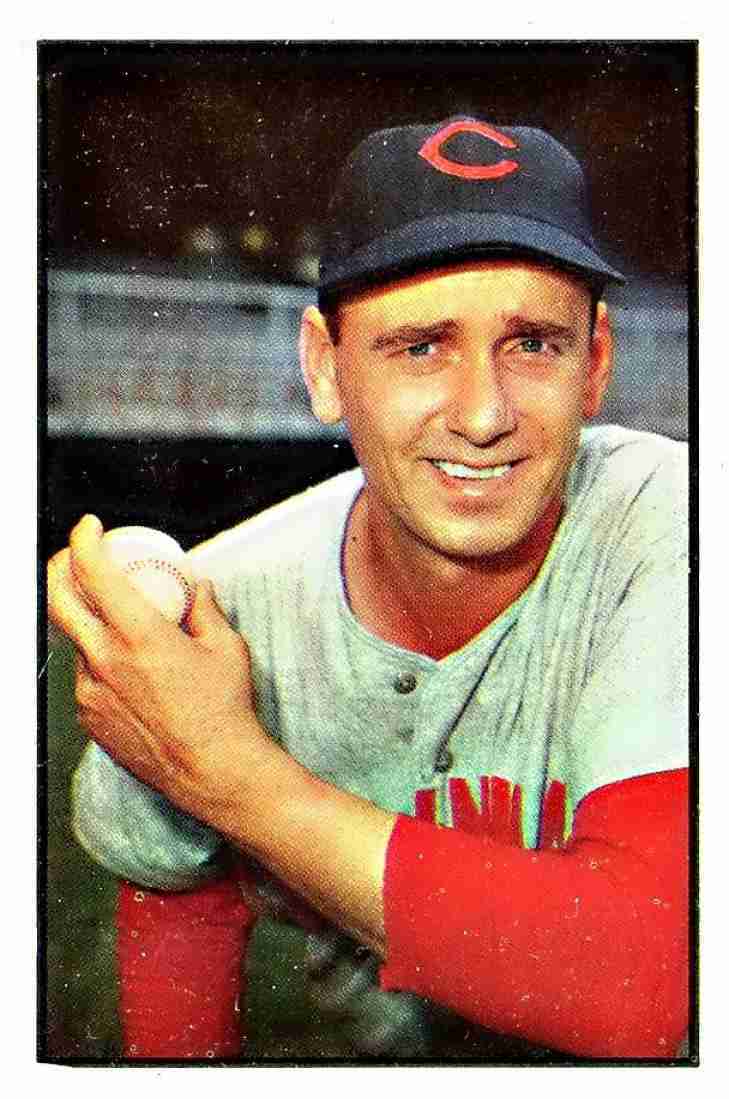
Raffensberger functioned as the reliable foundation of the Cincinnati rotation throughout the late 1940s and early 50s. He was a model of level-headed consistency, utilizing a rare forkball and multiple arm angles to dismantle hitters through deception rather than raw power. Despite the lack of run support that often skewed his win-loss record, his individual efficiency was undeniable; he led the National League in WHIP in 1951 and consistently finished among the league leaders in fewest hits allowed per nine innings. He was a high-frequency workhorse who provided the tactical stability required to anchor a staff during some of the franchise's leaner competitive years.
The most extraordinary aspect of his craftsmanship was a technical command that bordered on the obsessive. Raffensberger was a master of refusing to walk batters, leading the Senior Circuit in fewest walks per nine innings in back-to-back seasons in 1950 and 1951. He would finish in the top five of that category five different times as a Red, serving as a high-leverage anchor who forced opponents to earn every base they took. This specialized precision allowed him to navigate over 1,600 innings for the club, maintaining a respectable 3.64 ERA while facing some of the era’s most explosive lineups.
He left the Majors in 1954 with 89 wins as a Red and a reputation as the most refined southpaw to call Crosley Field home during the decade, having set a standard for accuracy that few left-handers have matched since.
39. Bob Purkey
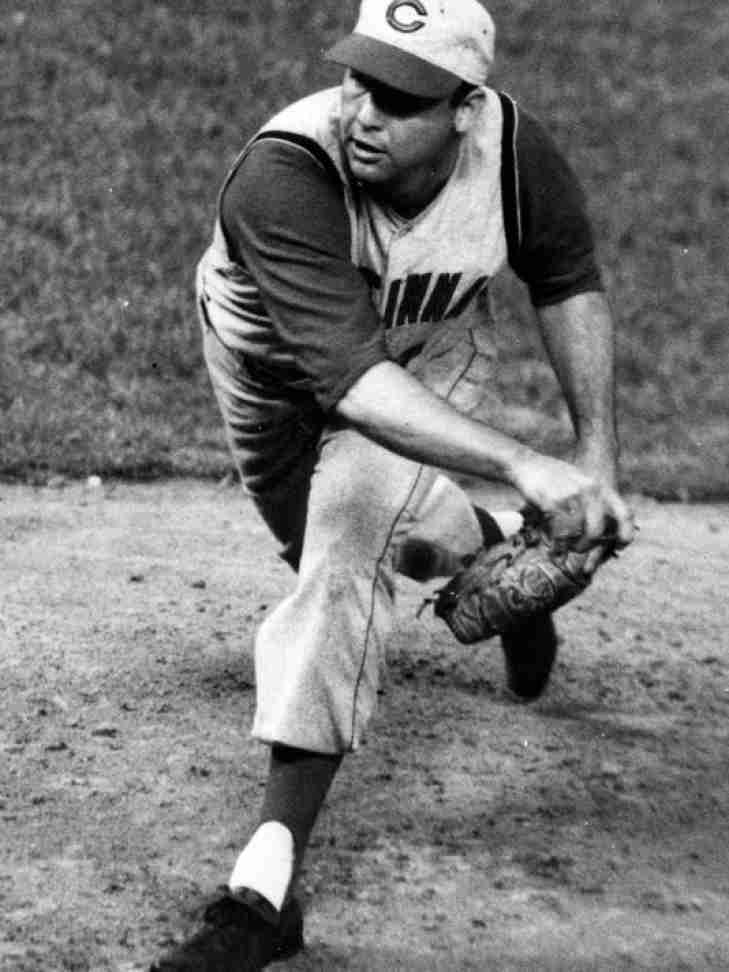
Traded from Pittsburgh in the winter of 1957, Bob Purkey matured instantly into the staff's most dependable engine, utilizing a specialized approach where he blended a traditional sinker and slider with a "hard" knuckleball. This craftsmanship reached a spectacular summit in 1962, a summer when he authored one of the most dominant individual seasons in franchise history. He finished with a staggering 23-5 record, leading the National League in win percentage and placing third in the Cy Young race.
The most extraordinary aspect of his tenure was the technical precision he maintained while throwing a pitch known for its volatility. Purkey was a master of the strike zone, twice leading the league in fewest walks per nine innings during his stay. He wasn't just a gimmick pitcher; he was a model of specialized efficiency who led all National League hurlers in bWAR and Win Probability Added (WPA) during that magical 1962 campaign. He served as the high-leverage anchor of the 1961 "Ragamuffin" Reds, providing the veteran poise and the innings required to secure the club's first pennant in over two decades.
His presence was defined by professional resilience and physical durability, which saw him record four 15-win seasons in a Reds uniform. Purkey remained the heartbeat of the rotation through the peak of the early 60s, earning three All-Star selections and proving that a knuckleballer could be a high-frequency winner in a park built for hitters. Whether he was baffling hitters with the dancing movement of his signature pitch or grinding through one of his nine shutouts for the club, he competed with a focused intensity that made him a local favorite. He showed that a player could become a franchise pillar by mastering the rare, high-stakes art of controlled unpredictability.
Purkey was traded to the Cardinals, but he left the organization as a statistical titan of the era. He departed Cincinnati with 103 and 706 strikeouts while maintaining a historic 3.49 ERA across 213 starts.