

 Not in Hall of Fame News
Yes, we know that this is taking a while! As many of…
 Not in Hall of Fame News
On this evening’s American Idol, the Rock and Roll Hall of Fame…
 Not in Hall of Fame News
Last January, the Baseball Hall of Fame announced the Class of 2026,…
 Not in Hall of Fame News
Yes, we know that this is taking a while! As many of…
 Not in Hall of Fame News
1993 Pro Football Hall of Fame Revisited Project Class. Here we are! …
 Not in Hall of Fame News
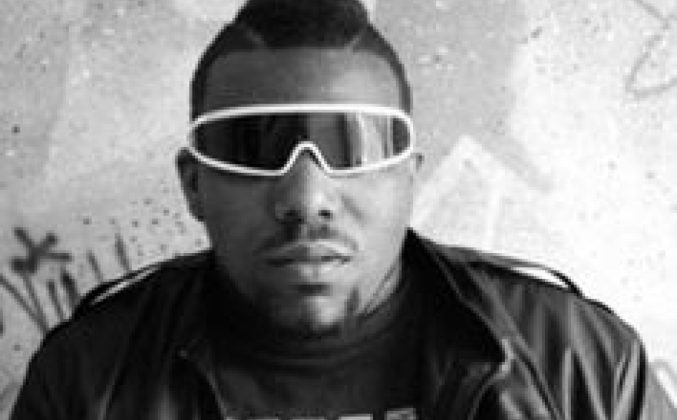
Afrika Bambaataa, the legendary DJ, producer, and widely recognized "Godfather" of hip-hop…
 The Buck Stops Here
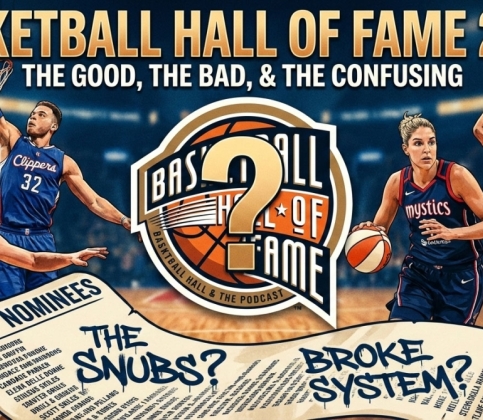
Kirk Buchner and Chris Mouradian dive into the massive list of over…
 The Buck Stops Here
Welcome to Season 6, Episode 16 of The Hall of Fame Show…
 The Buck Stops Here
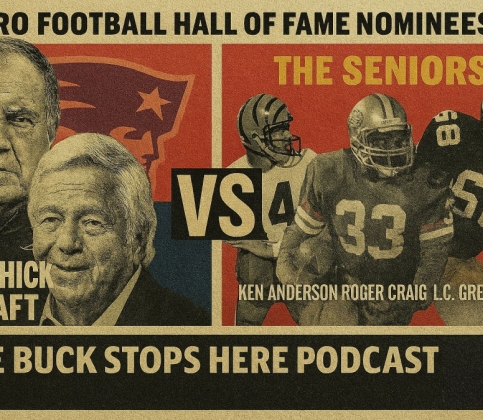
Bill Belichick & Robert Kraft vs. The Seniors: Analyzing the ProFootball Hall of Fame Class Nominees
The Pro Football Hall of Fame voting process is more complicated than…
 From the Desk of the Chairman
Recreational cannabis laws have changed how adults can buy cannabis in many…
 From the Desk of the Chairman
Synthetic turf has become an increasingly familiar surface in the sports world.…
 From the Desk of the Chairman
Athletic performance is shaped by discipline, training, and resilience, but motivation often…

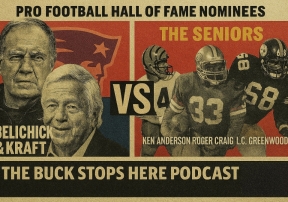 The Buck Stops Here
Bill Belichick & Robert Kraft vs. The Seniors: Analyzing the ProFootball Hall of Fame Class Nominees
The Pro Football Hall of Fame voting process is more…
100 Active Potential Football Hall of Famers
-
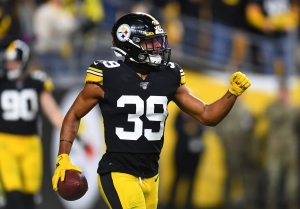 #43 Overall, Minkah Fitzpatrick, Pittsburgh Steelers, Free Safety, #3 Safety2024 Pre-Season Rank #56, 2023 Pre-Season Rank #63, 2022 Pre-Season Rank #99, 2021 Pre-Season Rank #108, 2020 Pre-Season Rank #140. Peak Period 2019-23.…in Safeties
 -
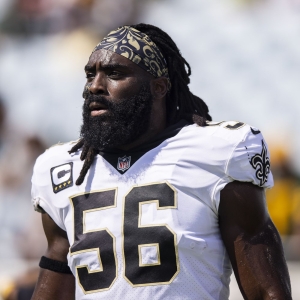 #47 Overall, DeMario Davis, New Orleans Saints Linebacker, #5 Defensive Lineman/Linebacker: Interior Lineman2024 Pre-Season Rank #47, 2023 Pre-Season Rank #61, 2022, Pre-Season Rank #137. Peak Period: 2019-23 Davis, a veteran player, has experienced a significant…
 -
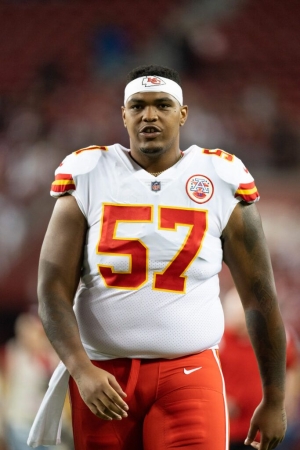 #62 Overall, Orlando Brown, Cincinnati Bengals, Tackle, #7 Offensive Lineman2024 Pre-Season Rank #66, 2023: Pre-Season Rank #93. Peak Period 2019-23. Orlando Brown begins his eighth season, his third in Cincinnati, where the…
 -
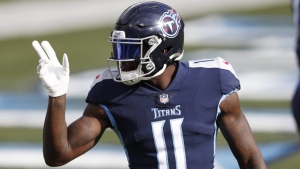 #49 Overall, A.J. Brown, Philadelphia Eagles, #8 Wide Receiver2024 Pre-Season Rank #76, #2023 Pre-Season Rank #106, 2022 Pre-Season Rank #142, 2021 Pre-Season Rank #141. Peak Period: 2020-24 The fanbase of the…
Visit the Fictitious Halls of Fame!

You May Also Like...
EDITOR’S CHOICE
 DDT's Pop Flies
When the veterans committee (VC), officially convening as the Contemporary Baseball Era…



 Live Music Head
Project/Objectan interview with André Cholmondeleyby Live Music HeadOriginally published at timessquare.com on…
LATEST RANKINGS


MOST POPULAR RANKINGS

Site Admin
2. Bret Saberhagen
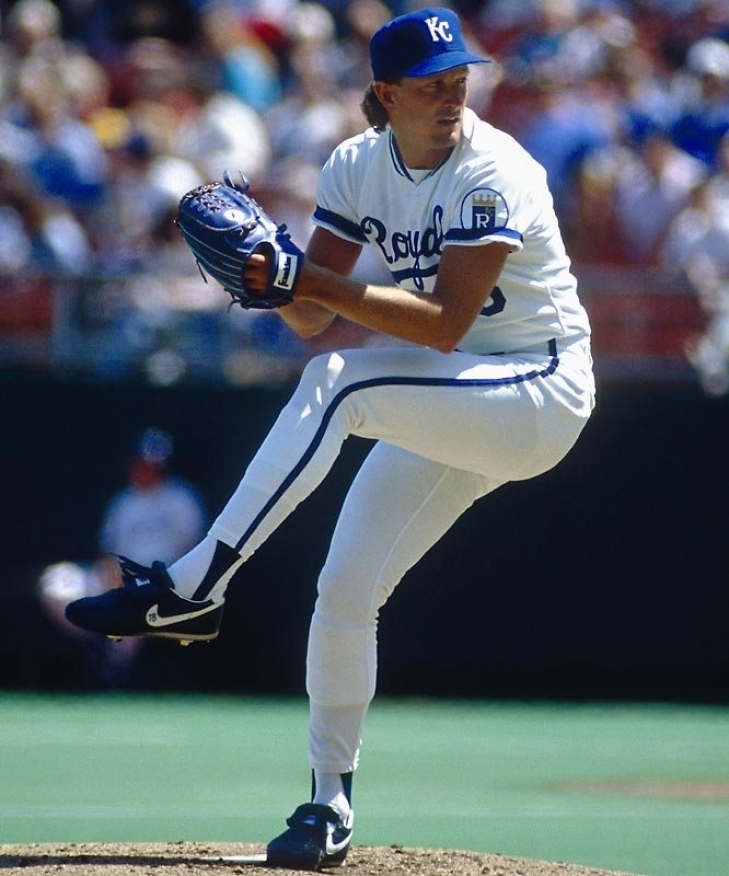
For a decade in Kansas City, following the "Saberhagen Cycle" was the most reliable way to predict the American League pennant race. A slender right-hander with a repeatable, athletic delivery, Bret Saberhagen possessed a specialized command that made him the tactical focal point of the Royals' rotation. While his career was famously defined by an "odd-year" phenomenon, in which he alternated between human fallibility and untouchable dominance, his peaks were so high that they reshaped the franchise's history.
In 1985, at just 21 years old, he displayed a professional resilience far beyond his years, capturing his first Cy Young Award with 20 wins and a 2.87 ERA. However, it was in the postseason that he achieved legendary outlier status. During the "I-70 Series" against St. Louis, Saberhagen authored a masterpiece of high-leverage efficiency, pitching two complete games—including a shutout in the decisive Game 7- to secure the World Series MVP and the Royals' first world title. He proved that a young pitcher could anchor a championship staff by prioritizing location and veteran-like poise over raw velocity.
The hallmark of his craftsmanship returned with a vengeance in 1989, a season that remains a statistical monument in Kansas City lore. After navigating the expected "even-year" dip, Saberhagen had another phenomenal year, going 23-6 and leading the American League in wins, ERA (2.16), WHIP (0.961), and FIP. He captured his second Cy Young Award by mastering the subtle art of the strike zone, leading the circuit in strikeout-to-walk ratio while providing the steady-state reliability of 262 innings. He was a model of specialized control, a pitcher who didn't just throw strikes but dictated exactly where the hitter would make contact.
In 1991, Saberhagen was traded to the New York Mets. With the Royals, Saberhagen compiled 110 wins, 1,093 strikeouts, and two Cy Young Awards, and in 2005, he was inducted into the Royals Hall of Fame.
1. George Brett
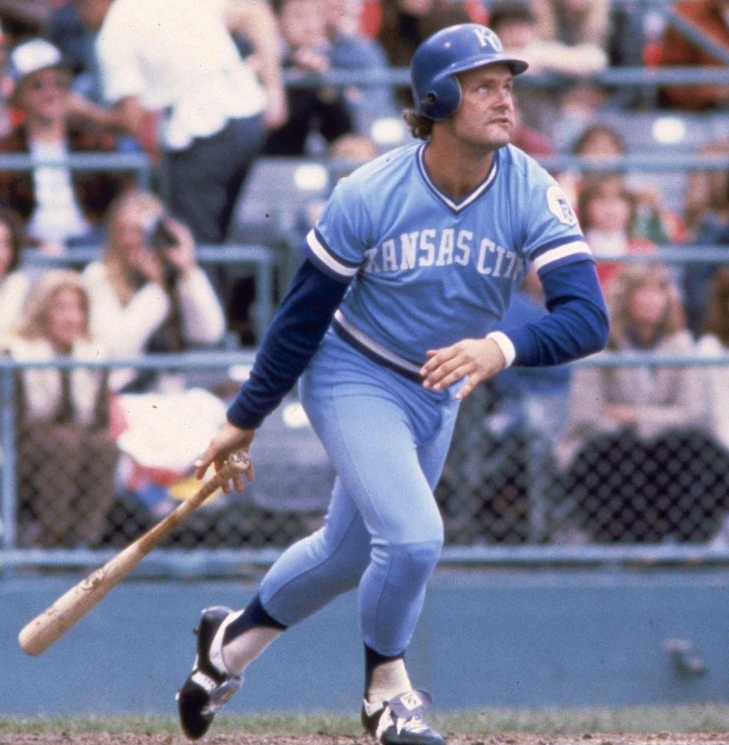
To speak of the Kansas City Royals is to speak of George Brett; the two are functionally inseparable. Arriving in the mid-1970s as a high-intensity third baseman with a violent, beautiful swing, Brett didn't just play for the franchise—he authored its soul. For 21 seasons, he served as the undisputed heartbeat of the organization, evolving from a contact-oriented spark plug into a psychological titan who could dismantle an entire pitching staff through sheer, unadulterated willpower.
Brett’s tenure in Kansas City was defined by a pursuit of offensive perfection that reached a historic crescendo during the summer of 1980. That year, he flirted with the mythical .400 mark deep into September, eventually finishing with a staggering .390 average—the highest by any player since Ted Williams. He was a model of specialized efficiency, capturing the American League MVP while leading the circuit in On-Base Percentage, Slugging, and OPS. It was a season of such profound outlier status that it remains the gold standard for modern hitting, a masterclass in professional resilience and technical command.
While his 1980 campaign was his masterpiece, Brett remained a high-frequency producer for over two decades. He possessed a rare, versatile power that saw him blast 317 home runs, but his true craftsmanship lay in his ability to spray line drives into every corner of the park. He captured three batting titles across three decades (1976, 1980, 1990), a feat of sustained excellence that remains unmatched. He was the primary engine for the Royals' golden era, a 13-time All-Star who provided the veteran-like poise required to lead the club to seven postseason appearances.
The hallmark of his game was a big-game temperament that famously peaked in the 1985 World Series. After helping the Royals navigate a grueling seven-game ALCS where he earned MVP honors, Brett hit .370 in the Fall Classic to secure Kansas City's first world title. He proved that a player could become a franchise lifer by mastering the high-leverage moments, eventually joining an elite fraternity as one of only four players in major league history to amass 3,000 hits, 300 home runs, and a career batting average over .300.
Beyond the box score, his presence was defined by a fierce, focused intensity—famously immortalized by his explosive reaction during the 1983 "Pine Tar Game." Whether he was charging out of the dugout to defend his integrity or providing the tactical mentorship needed for a young roster, he competed with an energy that made him the face of the city. He showed the organization that a superstar could be both a technician and a warrior, eventually amassing 3,154 hits while playing every single game of his legendary career in a Royals uniform.
His story in Kansas City reached its final punctuation in 1994, when the team retired his number 5 and inducted him into the franchise Hall of Fame. The baseball world followed suit in 1999, ushering him into Cooperstown with a staggering 98.2% of the vote, a near-unanimous validation of a career built on grit and greatness.
Colt Cabana
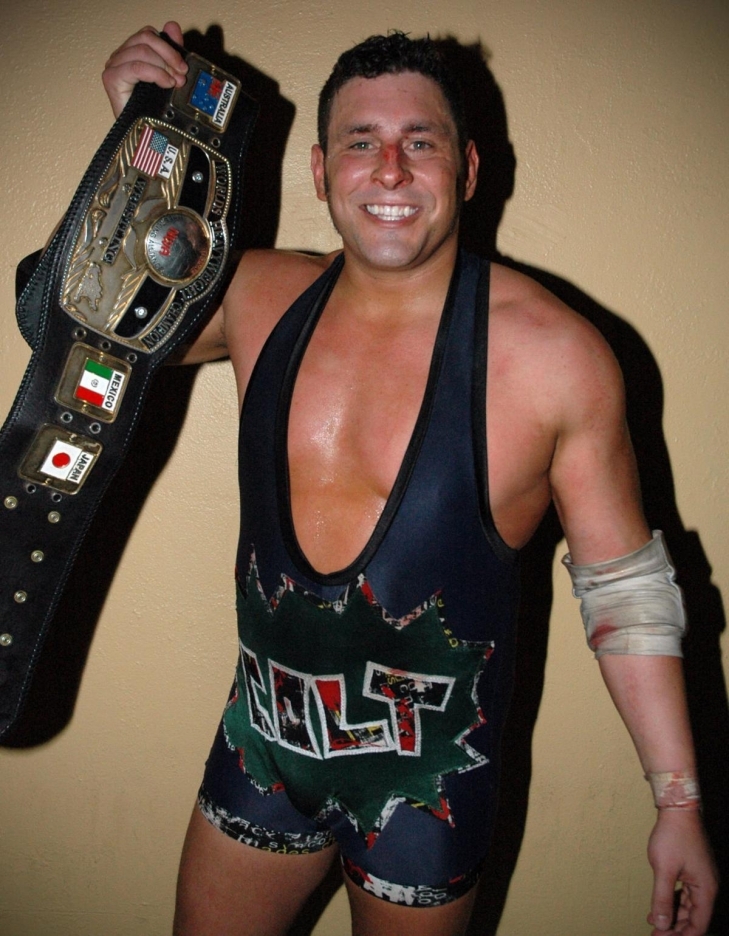
There are certainly a lot of strikes against Colt Cabana in regards to the WWE Hall of Fame.
Natalya
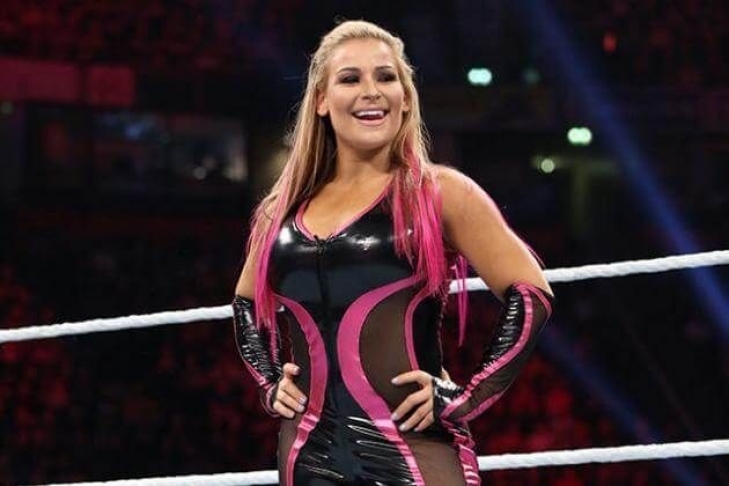
As the niece of Bret “Hit Man” Hart and the daughter of Jim “The Anvil” Neidhart, Natalya was arguable bred for the business of professional wrestling.