


Site Admin
5. Charlie Blackmon
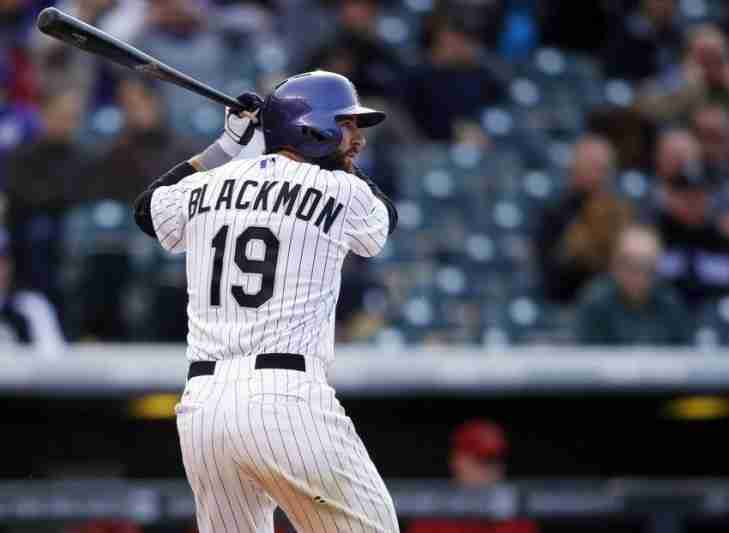
Charlie Blackmon’s journey to stardom required a patient maturation, but once he secured a regular starting role in 2014, the league quickly took notice. He earned his first All-Star nod that summer, signaling the arrival of a high-ceiling talent who could ignite an offense from the very first pitch. By 2016, he had unlocked a new level of power, belting 29 home runs and batting .324 to earn his first Silver Slugger. He arrived as a reliable outfielder and evolved into a tactical nightmare for opposing pitchers, combining elite plate discipline with a swing built to exploit the cavernous gaps of the National League West.
The absolute pinnacle of his career arrived in 2017, a season where "Chuck Nazty" put together one of the most prolific campaigns ever authored by a leadoff hitter. Blackmon was a statistical outlier, leading the National League in runs scored (137), hits (213), and triples (14), and capturing the batting title with a .331 average. With an even 1.000 OPS and a fifth-place finish in the MVP voting, he wasn't just a local favorite; he was arguably the most impactful offensive player in the game. He followed that masterpiece with two more All-Star appearances, consistently delivering a high volume of extra-base hits and maintaining his status as the club's primary engine.
Reliability and a deep connection to the city became the hallmarks of his identity. Blackmon remained a fixture in the Colorado lineup even as the roster around him transitioned, eventually becoming a lifer who dedicated all 14 years of his Major League career to the Rockies. Whether he was sprinting into the gap to track down a fly ball or launching a leadoff home run to start a rally, he played with an intensity that resonated with the Denver faithful. He proved that a player could sustain elite efficiency well into their thirties, serving as a veteran anchor for the next generation of talent.
The chapter finally reached its conclusion in 2024, when Blackmon hung up his cleats after a storied run. He left the organization with a legacy measured in 1,805 hits, 227 home runs, and a reputation as one of the most professional hitters to ever wear the Rockies uniform.
20. Jorge de la Rosa
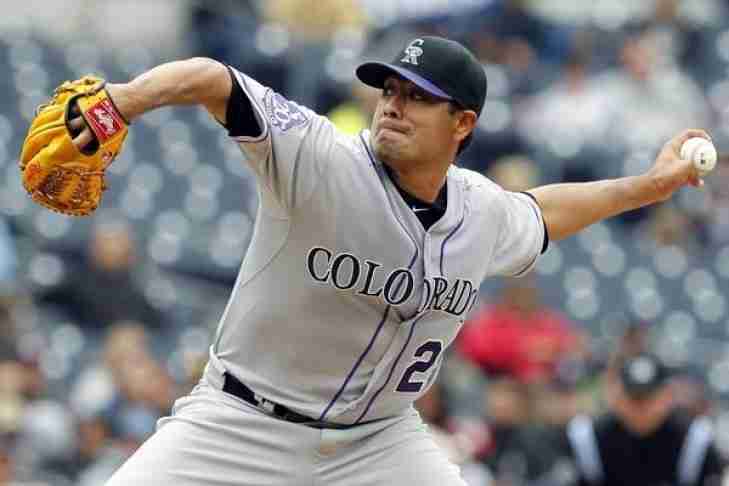
In the thin, unforgiving air of Denver, Jorge De La Rosa achieved what many thought impossible: he became a consistent winner in a ballpark built for hitters. Arriving in 2008 as a left-hander with a power arsenal and a checkered injury history, the Monterrey native developed into the most statistically successful pitcher to ever call Coors Field home. While the "altitude tax" broke many of his peers, De La Rosa utilized professional resilience and a devastating split-finger fastball to anchor the rotation for nearly a decade, eventually leaving as the franchise’s all-time leader in wins and strikeouts.
De La Rosa’s stay in Colorado was defined by a remarkable ability to neutralize the home-field disadvantage. He established a level-headed consistency at 5,280 feet, finishing his tenure with the best winning percentage in the history of the park. He was a model of high-frequency production, four times exceeding double-digit wins and reaching the 16-victory mark on two separate occasions (2009 and 2013). During those years, he was a tactical engine of the rotation, twice finishing third in the National League in wins and providing the high-leverage durability required to lead the staff through the grueling summer months.
The most impressive aspect of his craftsmanship was how he balanced high-volume strikeout numbers with a gritty, workmanlike approach. De La Rosa moved past several franchise legends to secure his place as the organization's career wins leader (86) and, for a time, its strikeout king with 985 punchouts. He possessed a specialized, heavy delivery that generated swings-and-misses when the club needed them most, serving as the primary anchor for the 2009 squad that charged into the postseason. Even after a major injury in 2011, he returned with a focused intensity that saw him post some of the best efficiency numbers of his career, proving that his value was built on more than just raw velocity.
His run in Colorado concluded after the 2016 season as he transitioned to a relief role in Arizona and Chicago. The ultimate punctuation on his career arrived in 2025, when he was inducted into the Mexican Professional Baseball Hall of Fame.
11. DJ LeMahieu
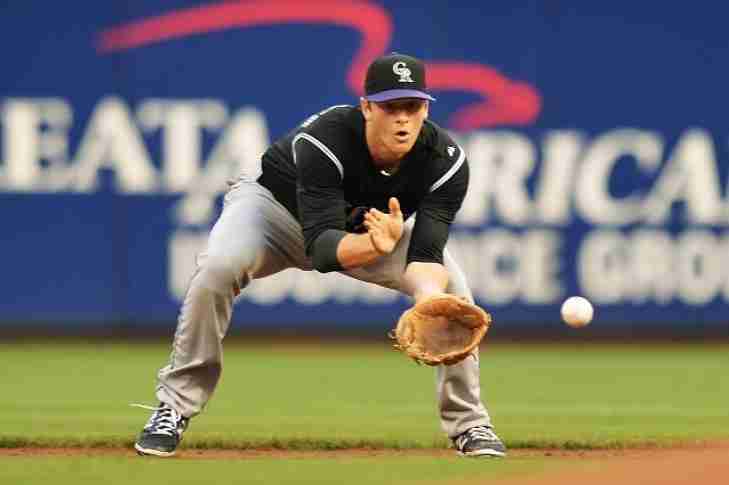
D.J. LeMahieu arrived in a 2011 trade from the Chicago Cubs, a transaction that proved to be one of the most lopsided gains in franchise history. Quickly becoming Colorado’s starting second baseman, LeMahieu possessed a specialized ability to handle difficult hops and turn high-speed double plays, earning three Gold Glove Awards and three Wilson Defensive Player of the Year honors during his stay. He wasn't just a steady glove; he was a tactical run-preventer who consistently led the league in range factor and fielding percentage, providing the Rockies' rotation with an elite security blanket.
The most impressive aspect of his tenure was an offensive surge that reached a historic crescendo during the mid-2010s. LeMahieu was a master of the opposite-field hit, a reputation earned during a 2016 campaign in which he captured the National League Batting Title with a staggering .348 average. He was a model of specialized efficiency, proving he could maintain elite contact skills while navigating Denver's unique atmospheric challenges. He became a two-time All-Star for the club, serving as a high-frequency table-setter who accumulated over 1,000 hits in a Rockies uniform and maintained a nearly .300 career average during his tenure.
The chapter reached a bittersweet conclusion in 2019 when he departed for New York as a free agent, where he continued his pattern of elite production. He left the organization as a statistical titan of the modern era, having established himself as the most decorated and respected second baseman to ever call the Mountain West home.
With the Rockies, LeMahieu compiled 1,011 hits and 348 runs scored while securing three Gold Glove Awards and the 2016 Batting Title.
15. Aaron Cook
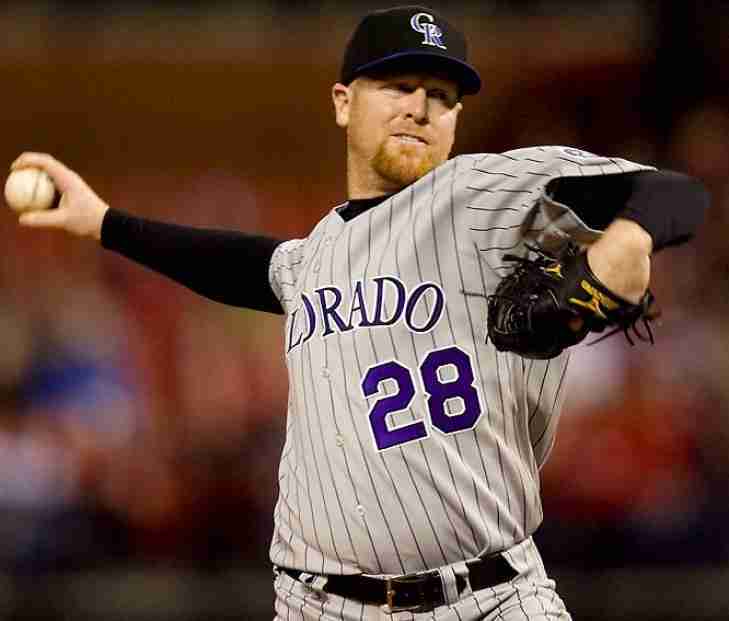
Aaron Cook was a homegrown talent, drafted by the organization in the second round in 1997. Becoming a regular in 2002, Cook’s calling card was a specialized grip that transformed a standard two-seamer into a devastating sinker. His craftsmanship was nearly derailed in 2004 by a life-threatening pulmonary embolism, but he made an incredible recovery to win the Tony Conigliaro Award. He returned to anchor the staff during the historic "Rocktober" run of 2007, and despite missing most of the stretch with an injury, he provided the veteran poise to start Game 4 of the World Series.
The absolute high-water mark of his career arrived in 2008, a summer where he emerged as a genuine National League ace. Cook reached a statistical plateau that saw him secure a career-high 16 wins and earn his first All-Star selection. His performance in that Midsummer Classic remains a piece of club lore; he navigated three scoreless extra innings at Yankee Stadium, famously escaping a bases-loaded, no-out jam to preserve the tie. He was a model of specialized efficiency, twice recording complete games on fewer than 80 pitches, proving that his game was built on a relentless ability to induce contact and let his defense do the work.
Cook remained the tactical anchor of the Rockies' rotation through 2011, navigating the era’s physical demands with a consistent, blue-collar approach. With the Rockies, Cook compiled 72 wins, 1,312 innings pitched, and 11 complete games across 10 seasons.