


Site Admin
23. Jason Jennings
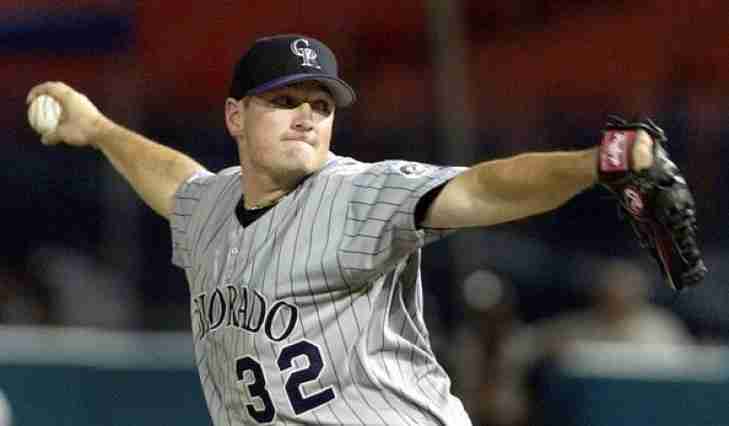
Jason Jennings’ stay in Colorado began with a high-velocity entrance in late 2001, but it was his 2002 campaign that remains a pillar of franchise history. He became the first, and still only, Rockie to capture the National League Rookie of the Year award, navigating a massive workload to secure 16 victories. He was a model of specialized efficiency from the jump, utilizing a heavy sinker and a competitive grit to post a winning record in a season where the league batting average was soaring. He possessed a rare, high-leverage durability, serving as the primary engine for a rotation that was desperate for a frontline anchor.
The most profound aspect of his career was his ability to maintain a professional resilience through the grueling summers of the pre-humidor era. While his win-loss records in subsequent years were often victims of the high-scoring environment, his individual value reached a second peak in 2006. That summer, Jennings authored a masterclass in run prevention, posting a 3.78 ERA, a decent figure for a Coors Field starter at the time, which earned him an eighth-place finish in bWAR among all National League pitchers.
The story in Colorado reached a crossroads following his dominant 2006 campaign. As Jennings entered his final year of salary arbitration and neared free agency, the Rockies faced a difficult financial reality. Rather than risk losing their ace for nothing at the end of the 2007 season, the front office opted for a blockbuster trade in December 2006, sending Jennings to the Houston Astros in a multi-player deal that brought back Willy Taveras, Jason Hirsh, and Taylor Buchholz. It was a bittersweet conclusion; the man who had stabilized the rotation for five years was moved just months before the franchise’s historic "Rocktober" run to the World Series.
With the Rockies, Jennings compiled 58 wins and 622 strikeouts.
24. Dexter Fowler
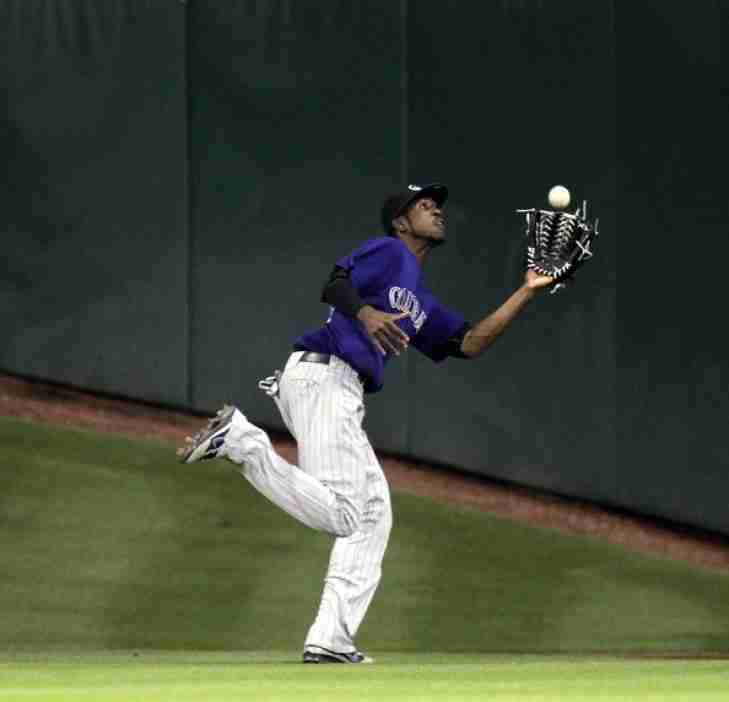
Dexter Fowler’s stay in Colorado was defined by an immediate and relentless offensive efficiency. After a foundational debut in late 2008, he established himself as a model of specialized versatility, utilizing his elite speed to pressure opposing defenses from the leadoff spot. In between 2009 and 2012, a four-year run in which he recorded at least 10 triples annually. This stretch was highlighted by a 2010 campaign where he led the National League with 14 triples, a feat that perfectly illustrated his ability to exploit the massive dimensions of his home ballpark.
The most profound aspect of his game was a disciplined eye that balanced his aggressive baserunning. Fowler was more than just a sprinter; he was a patient table-setter who maintained a career .365 on-base percentage during his six seasons in purple. He possessed a specialized athleticism that allowed him to patrol center field with grace, neutralizing the altitude's effect on fly balls and serving as the primary defensive anchor for a pitching staff that relied on his range.
After the 2013 season, when he was traded to Houston, marking the end of a six-year journey that saw him transform from a high-upside prospect into a premier leadoff threat. With the Rockies, Fowler compiled 606 hits, 53 triples, and a .270 batting average while leading the league in triples in 2010.
26. Jeff Francis
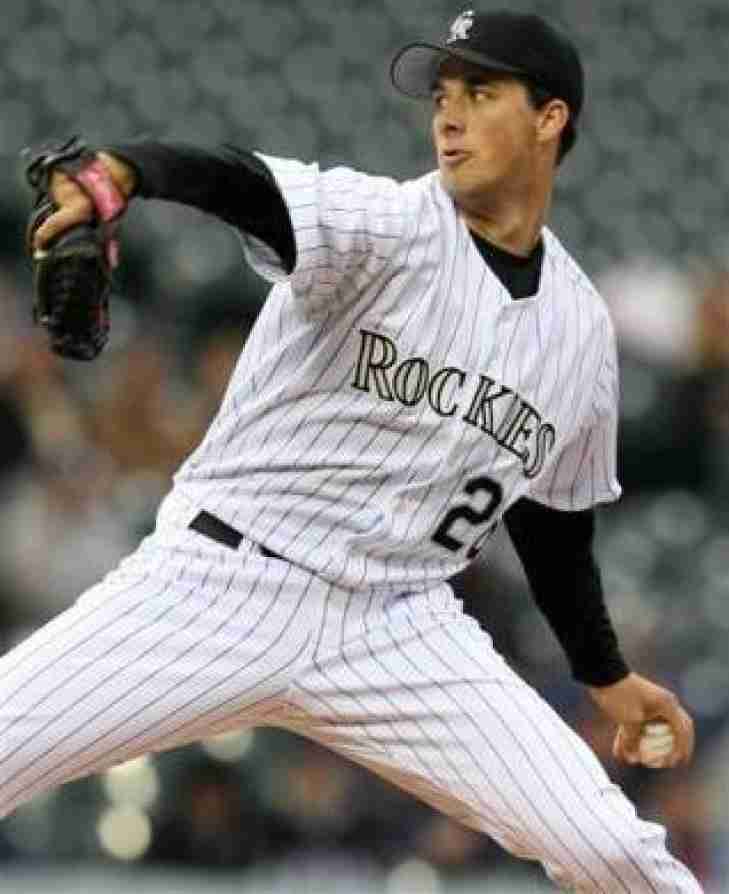
A first-round pick out of the University of British Columbia, the left-hander arrived in Denver with a polished delivery and a professional poise that seemed immune to the psychological toll of pitching at altitude. For a brilliant three-year window in the mid-2000s, "The Socially Conscious Southpaw" provided the Rockies with a steady-state reliability that finally allowed the organization to dream of October.
He established himself as a model of specialized durability between 2005 and 2007, a three-year run where he averaged over 190 innings per season and posted consistent winning records. He possessed a rare, high-leverage mental toughness, navigating the thin air with a focused intensity that saw him secure 14 wins in 2005 and 13 in 2006. He was the primary engine of a rotation desperate for a frontline anchor, proving that a pitcher could find success in Denver by prioritizing location and movement over raw velocity.
During the historic "Rocktober" run of 2007, Francis had a career year, going 17-9 with a 4.22 ERA, a decent mark for a Coors Field starter in that era, and finishing ninth in the Cy Young voting. He achieved historic outlier status that October, becoming the first Canadian pitcher ever to win a postseason game and start a World Series matchup. He served as the tactical leader of the staff during the club's 21-of-22 game winning streak, providing the veteran-like poise required to carry the franchise to its first National League pennant.
The middle chapters of his story were marked by a difficult physical toll. Following his 2007 heroics, a significant shoulder injury forced him to miss the entire 2009 campaign. While he showed a remarkable resilience by returning for a second stint in a Rockies uniform later in his career, he was no longer the high-frequency workhorse of his prime.
With the Rockies, Francis compiled 82 wins and 869 strikeouts.
116. Tim Hudson