


Site Admin
46. Marvin Freeman
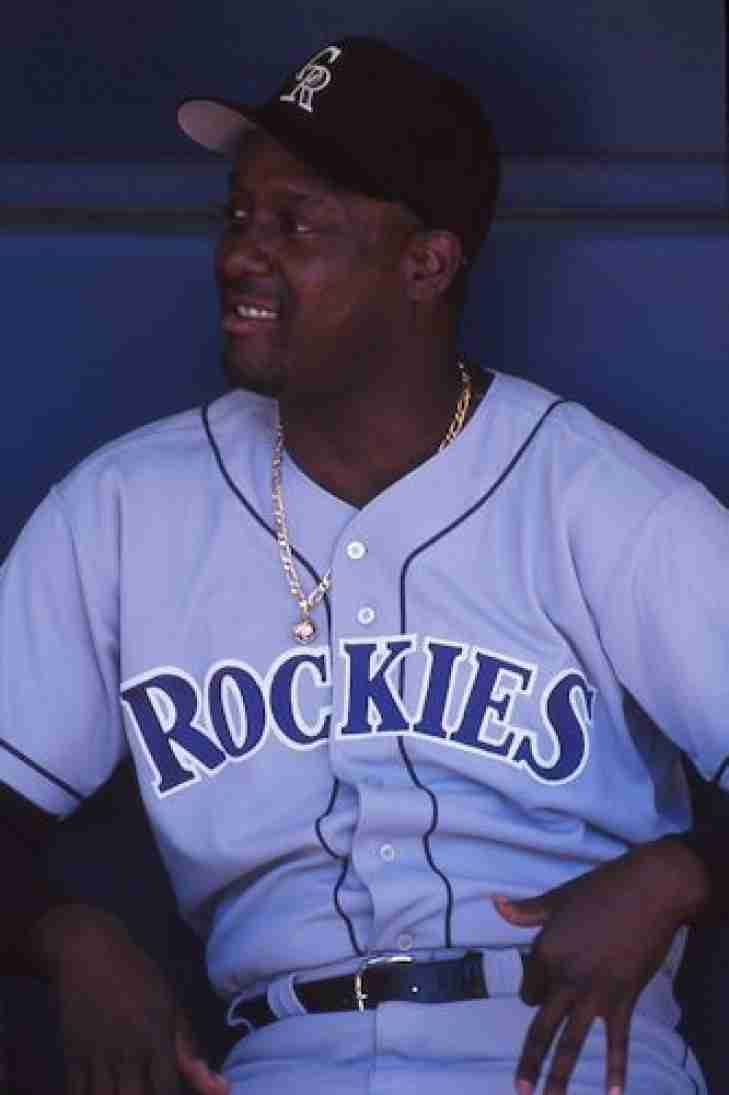
In the early years of the Colorado Rockies, Marvin Freeman was the definition of a one-hit wonder. Nicknamed "Starvin’ Marvin" for his tall, 6'7" frame, he spent most of his decade-long career as a middle-of-the-road swingman for the Phillies and Braves. However, for a few months in 1994, he managed to do something almost no other pitcher in baseball history had: he dominated while pitching at Mile High Stadium.
Freeman’s tenure in Denver is defined entirely by the strike-shortened 1994 season, a run that looks like a complete statistical fluke when compared to the rest of his career. Before arriving in Colorado, he hadn't been a regular starter in years, but a spring injury to a teammate thrust him into the rotation. He responded by going 10-2 with a 2.80 ERA, a figure that would have been second in the league only to Greg Maddux had the season not been cut short. He managed a 4.5 bWAR in just 19 games, a level of efficiency that earned him a fourth-place finish in the NL Cy Young voting.
Once the 1995 season began, the league seemed to catch up. His ERA ballooned to 5.89, and he struggled with elbow soreness that eventually required surgery, forcing him to miss the franchise's first-ever postseason run. By 1996, his performance had regressed even further, and he was eventually released by the team mid-season after a difficult stretch that included a reported on-field incident with a media personality.
Freeman compiled a 20-18 record with 200 strikeouts with Colorado.
37. Armando Reynoso
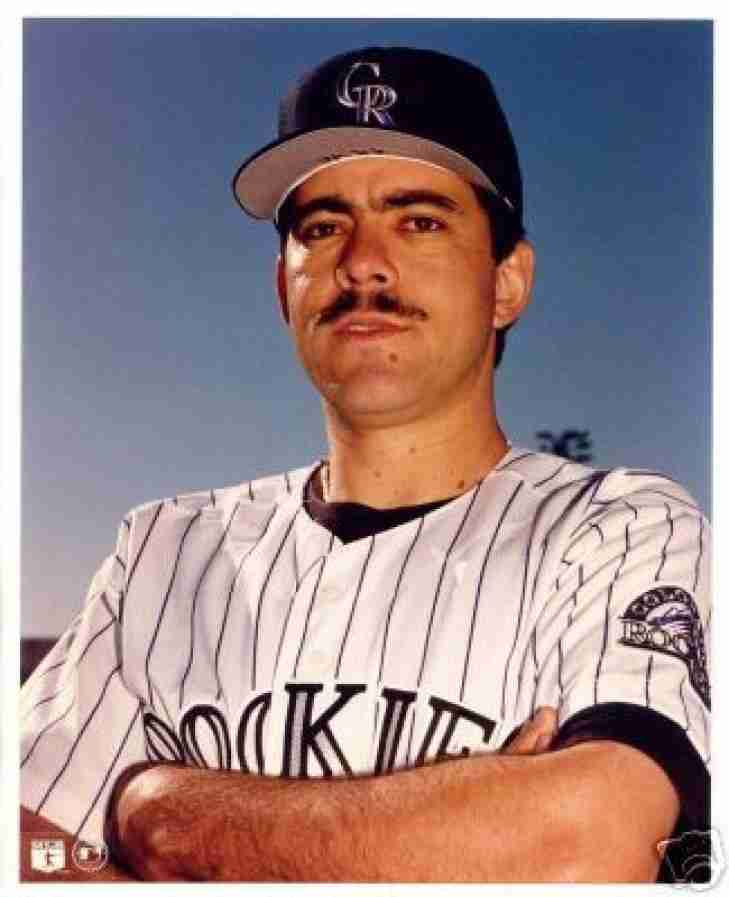
A right-hander from Mexico who had previously struggled to find a permanent home in Atlanta, Reynoso became an original member of the 1993 inaugural rotation.
Reynoso’s time in Denver began with a 1993 season that remains one of the best for a starter in the team's early history. He led the inaugural staff with 12 wins and 189 innings pitched. In an era where a 5.00 ERA was often considered a success at altitude, Reynoso produced a sharp 4.00 mark and struck out 117 batters.
The calling card of his time in purple and black was a professional resilience that allowed him to bounce back from injuries that hampered his 1994 and 1995 campaigns. Despite being limited to just 29 appearances across those two seasons, he remained a high-leverage asset whenever he took the mound, contributing to the club's historic first playoff run in 1995.
Reynoso had a much better 1996, throwing 168.2 innings with an 8-9 record and a 4.96 ERA, but he would be traded to the New York Mets that December. As a member of the Rockies, Reynoso had a 30-31 record with a 4.65 ERA.
35. Jeff Cirillo
32. Clint Barmes
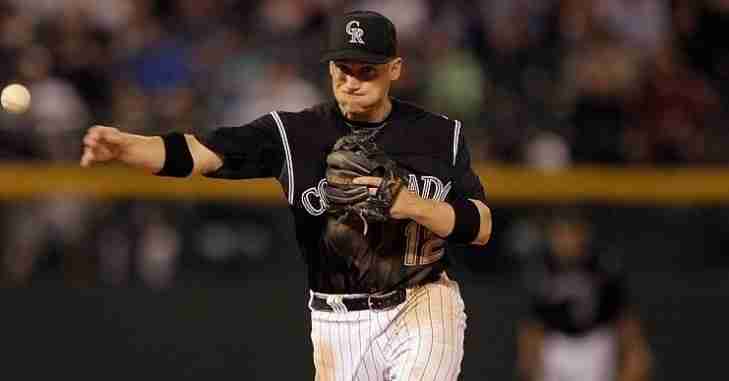
Before Troy Tulowitzki redefined the shortstop position in Denver, Clint Barmes was the athletic, high-energy presence who bridged the gap for the Colorado Rockies. Arriving as a 10th-round pick from Indiana State, Barmes didn't just fill a spot on the roster; he became a vital part of the franchise's mid-2000s identity.
Barmes’ tenure in Colorado began with a sensational 2005 campaign. Through the first six weeks of the season, he led the major leagues in batting average, hitting over .400 and capturing the NL Rookie of the Month honors for April. This stretch was punctuated by a legendary walk-off home run on Opening Day against Trevor Hoffman, a moment that remains etched in Coors Field lore. While a freak off-field injury involving a package of deer meat eventually derailed his Rookie of the Year candidacy, he proved he could provide the spark needed to ignite a lineup.
The hallmark of his time in the Rockies’ infield was defensive efficiency that often outpaced his offensive numbers, especially in 2006, when he recorded a 3.2 defensive bWAR, the second-highest mark in the National League. Despite a difficult year at the plate, Barmes was a model of specialized fielding, utilizing his sprinter-like quickness to inhale ground balls across the diamond. He possessed a versatile skill set that allowed him to transition smoothly to second base later in his tenure, where he eventually set a career high with 23 home runs during the 2009 season, helping lead the club back to the postseason.
While his career was marked by a specialized struggle with on-base percentage, his lifetime .294 OBP remains a significant statistical anchor; his total contributions to the organization are undeniable. He amassed 564 hits and 61 home runs before departing for Houston in 2011.