


Site Admin
8. Yogi Berra
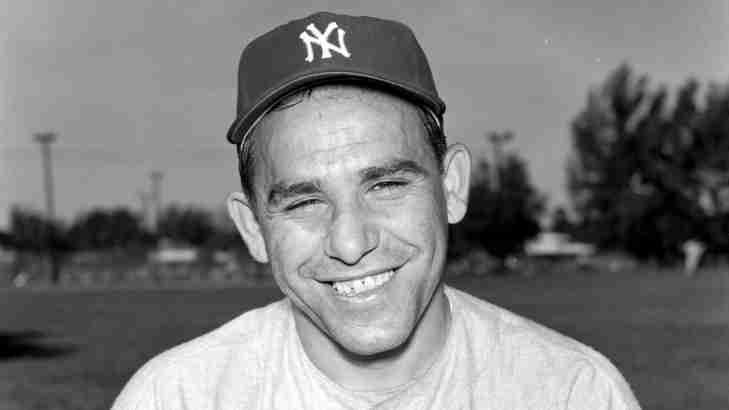
Yogi Berra, a short and stocky kid from St. Louis's Italian-American neighborhood "The Hill,” had just returned from serving in World War II. During the Normandy landings, he operated a rocket boat as a Navy seaman. His raw, unrefined athletic build led many early observers to underestimate his potential in baseball. However, behind his many paradoxical "Yogisms" that turned him into a cherished figure in American sports history, there was much more to his story.
Berra was a legendary and notoriously aggressive "bad-ball" hitter, capable of hitting pitches well out of the strike zone while rarely striking out, as evidenced by his 1950 season, when he struck out only 12 times in 597 at-bats. He reached a personal peak by winning three American League Most Valuable Player Awards (1951, 1954, and 1955) and finishing as runner-up twice. From 1950 to 1957, he maintained an exceptional level of peer recognition, never ranking lower than fourth in MVP voting, and he was a key part of the Yankee lineup as an 18-time All-Star.
While his bat dominated the middle of the card with 358 home runs and 1,430 RBIs, Berra combined this powerful offense with exceptional defensive work and skillful management of the pitching staff. He was a dedicated professional who played in both games of 117 doubleheaders, set a record with 173 career shutouts, and was instrumental in Don Larsen's legendary perfect game during the 1956 Fall Classic. His leadership laid the groundwork for the most glorious era in sports history; he participated in 14 World Series as a player, achieving a record 10 championships.
The long Bronx journey ended after the 1963 season, when he moved into management, leading the Yankees to the 1964 pennant, and he spent a brief 1965 stint with the Mets. His significant impact made his post-career recognition inevitable. In 1972, Cooperstown inducted him into the Hall of Fame, and the Yankees retired his No. 8 to Monument Park, cementing his pinstripe legacy.
6. Mariano Rivera
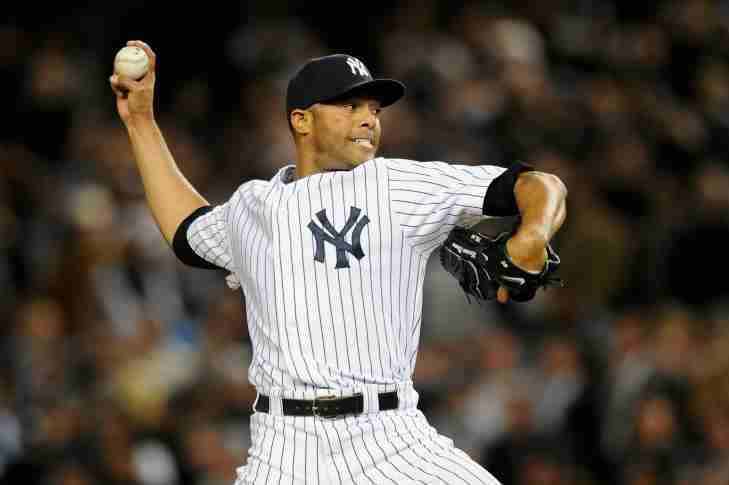
A slender right-handed pitcher with a smooth delivery that concealed the explosive velocity of his fastball.
That was Mariano Rivera.
While he struggled as a starter, a move to the bullpen in 1996 fundamentally changed the franchise's trajectory. Across 19 seasons in pinstripes, he operated as the most efficient high-leverage weapon in the history of the sport, relying almost exclusively on a signature cut-fastball that shattered bats and shattered the hopes of opposing lineups.
In his first season in the bullpen (’96), Rivera delivered one of the most exceptional relief seasons in baseball history, pitching 107.2 innings with a 2.09 ERA and 130 strikeouts, and finishing third in the Cy Young Award voting. He acted as the key bridge to closer John Wetteland, offering the strategic prowess that helped the Yankees win their first World Series in 18 years. By 1997, he had become the team's primary closer, earning 43 saves and introducing the "born-again" cutter, a pitch that would define his career for the next twenty years.
Between 1998 and 2000, he was the decisive figure in the Yankees' "three-peat" of World Series titles, earning World Series Most Valuable Player honors in 1999 after pitching 4.2 scoreless innings against Atlanta. He demonstrated total mastery of the October stage, ultimately concluding his career with an extraordinary 0.70 ERA and 42 saves across 96 postseason games. Whether he was pitching three shutout innings to secure the 2003 American League Championship Series Most Valuable Player award or recording the final out in five different World Series, he proved to be a formidable figure who grew even larger as the pressure intensified.
His career milestone was achieved on September 19, 2011, at Yankee Stadium, when he recorded his 602nd save, overtaking Trevor Hoffman as the all-time leader. Despite a severe knee injury in 2012 that almost ended his career, he made a remarkable comeback for a spectacular final season in 2013, adding 44 saves at age 43. He retired as the all-time leader with 652 saves and the most games finished, holding a career WHIP of 1.000 and an ERA+ of 205. His legacy was sealed in 2019 when he became the first player ever to be unanimously elected to the National Baseball Hall of Fame, shortly after Yankees retired his No. 42.
There will never be another Mariano Rivera.
9. Whitey Ford
10. Red Ruffing
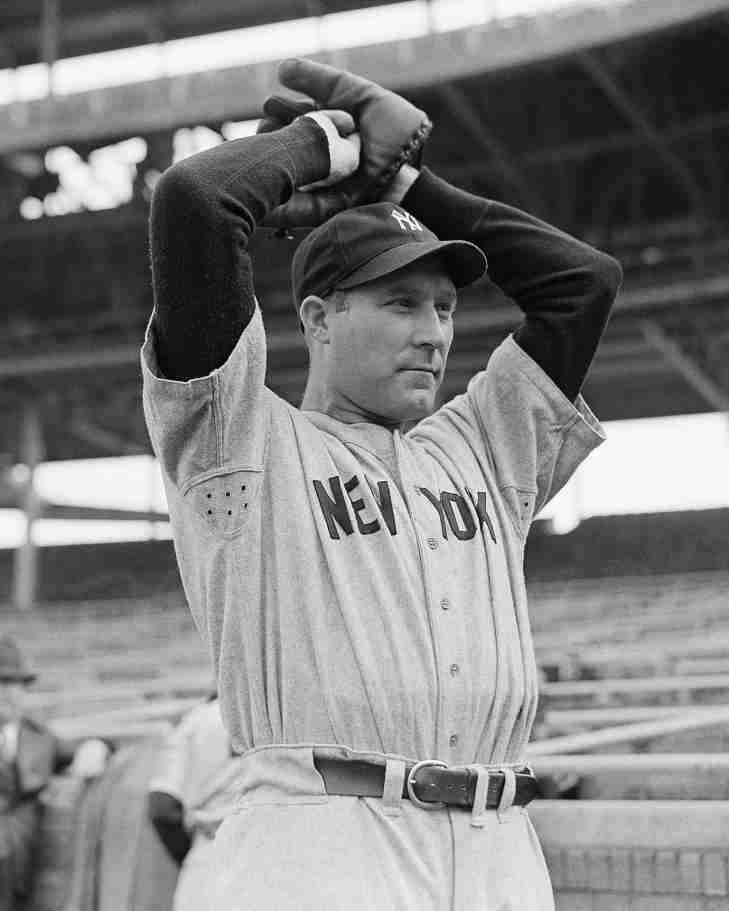
Red Ruffing arrived in the Bronx in May 1930, orchestrating a trade that became the second-most notorious theft the New York Yankees ever committed against the Boston Red Sox. Sent south in exchange for outfielder Cedric Durst and cash, the tough right-hander left Boston with a misleading, heavily bruised 39-96 career record that was solely due to the talent-starved Red Sox roster. Under manager Joe McCarthy's leadership, Ruffing completely changed his pitching style, transforming from a hard-luck loser into the clear, reliable ace of the most formidable baseball team of the 1930s.
Ruffing was a true cornerstone for McCarthy, consistently delivering impressive performances with 11 seasons of at least 15 wins while wearing the New York uniform. From 1936 to 1939, he reached exceptional heights with four straight 20-win seasons, helping lead a legendary Yankees team that secured four consecutive world championships. A dependable and respected professional, he often shut down opposing lineups, earning six American League All-Star selections and serving as a vital counterbalance to the team's powerful batting lineup.
While critics often pointed out that he benefited from pitching alongside legendary sluggers, Ruffing truly had powerful skills that allowed him to stand out on his own in the league. He was a remarkable strikeout artist for his time, leading the American League twice in strikeouts per nine innings and often ranking high in complete games. His precise mechanics were exceptional for his era, helping him finish in the top five in WHIP eight times during his years with the Yankees. Besides his impressive ability to prevent runs on the mound, he also showcased his athletic talent at the plate, hitting an impressive .270 with 34 home runs as a Yankee. This rare combination of pitching excellence and offensive skill made him an extra valuable player for New York, especially on the days he was pitching.
Ruffing turned the Fall Classic into his personal showcase, posting a brilliant 7-2 record with a 2.63 ERA in 10 historic appearances, helping New York capture six World Series championships. He departed the Bronx after the 1946 season as one of the most decorated winners in franchise history, with a magnificent 273-225 career record that remains closely tied to his legendary pinstripe peak.
He would enter the Baseball Hall of Fame in 1967, though he probably should have entered Cooperstown sooner. The Yankees will posthumously dedicate a permanent plaque in his honor within the hallowed confines of Monument Park.
