


Site Admin
18. Charlie Keller
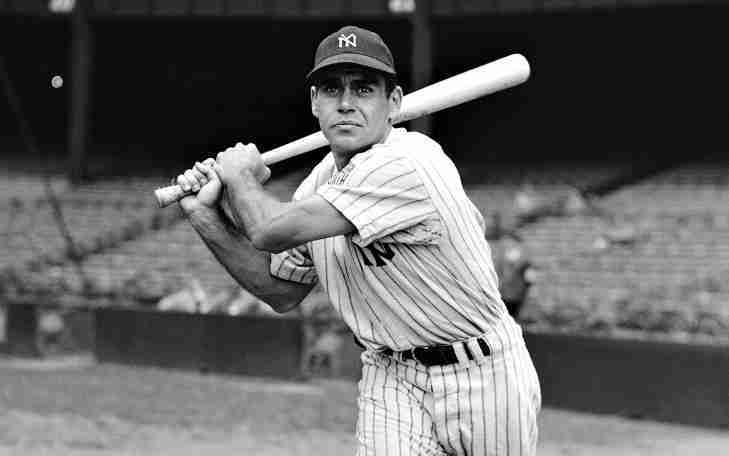
In spring 1939, when Charlie Keller earned his spot on the Bronx starting lineup, he teamed up with Joe DiMaggio and Tommy Henrich to create a formidable, championship-quality outfield trio. The heavily muscled 22-year-old left fielder from the University of Maryland, recognized for his broad shoulders and dark, thick eyebrows, was quickly dubbed "King Kong"—a nickname he detested, preferring to let his refined and patient batting style speak for itself.
While the sporting audience focused on his raw, muscular strength, Keller’s true skill was in his highly disciplined strike zone management, which effectively balanced his role as a run producer. He deliberately did not expand his zone against aggressive pitchers, drawing walks with the precision of a top-of-the-order hitter while still providing the power needed for a cleanup hitter, as demanded by manager Joe McCarthy. Keller surpassed 100 walks in four different seasons and led the American League twice in free passes. This exceptional plate discipline resulted in seven seasons with an on-base percentage over .400, including six finishes among the league's top ten.
He combined disciplined, everyday play with powerful extra-base hitting. Keller surpassed 20 home runs five times during his main tenure in New York, with his peak season in 1941 when he hit 33 homers and had a career-high 122 RBIs, helping the team become world champions. His offensive strength was clearly confirmed in 1943; despite wartime roster challenges reducing the talent pool, Keller dominated the league by hitting 31 home runs, drawing 106 walks, and leading the American League with a .922 OPS, guiding the Yankees to another pennant.
He was a fierce big-game performer who approached the Fall Classic as if it were an afternoon game. In the 1939 four-game sweep of Cincinnati, the rookie outfielder batted .438 with three home runs. Over 19 World Series games for the Yankees, Keller achieved a remarkable .611 slugging percentage, with five homers and 18 RBIs, playing a key frontline role in winning five world titles (1939, 1941, 1943, 1947, and 1949).
Tragically, severe, chronic back injuries combined with a mandatory stint in the Merchant Marines during World War II completely robbed him of his ultimate career longevity, restricting his explosive physical movement just as he entered his athletic prime. Following a brief two-year stint in Detroit, he returned to the Bronx for a sentimental, two-game final farewell in 1952 before retiring to his Maryland farm.
While his overall traditional numbers might seem somewhat lower than those he his ranked ahead of, his overall value to the Yankees can’t be underestimated, though it often is. Keller had 184 Home Runs with a Slash Line of .286/.410/.518 as a Yankee.
16. Bernie Williams
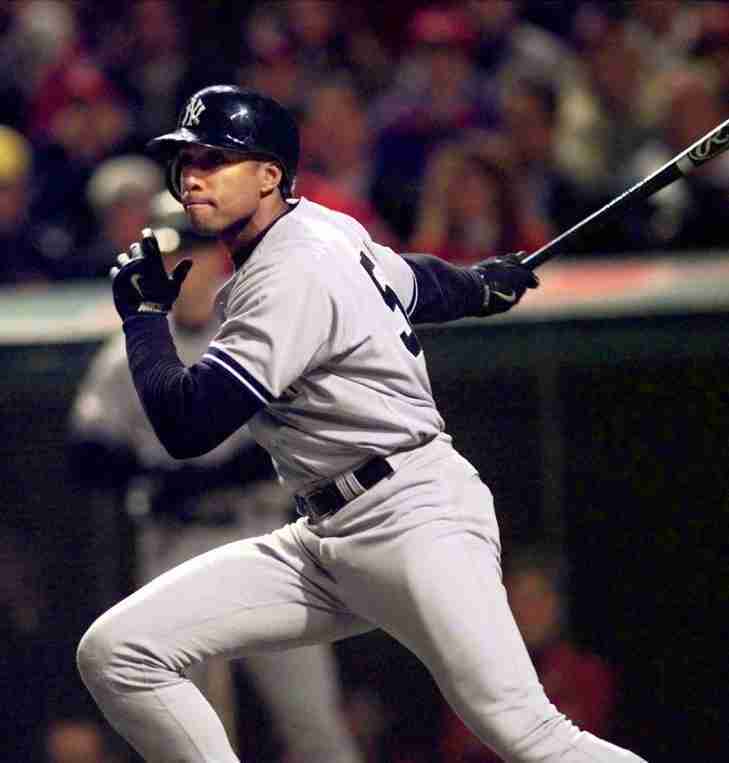
In July 1991, Bernie Williams’ debut didn't cause immediate excitement. The quiet, classical guitar-playing center fielder from Puerto Rico initially faced trade rumors and owner George Steinbrenner's intense skepticism. However, by maintaining consistent performance at the center of the field, the switch-hitter gradually shifted from a fragile trade asset to a key, dependable member of the modern Core Four era.
His career gained momentum in the mid-1990s. Williams used a well-balanced hitting style, blending disciplined plate discipline with the skill to hit extra-base hits from either side of the batter's box. He truly made his mark nationally during the 1996 postseason, where he led the Yankees’ lineup confidently, earning the ALCS MVP with a .474 batting average and three home runs against Baltimore. His performance was crucial in securing the Yankees’ first World Series title in 18 years.
That breakthrough sparked a remarkable five-year period of peak performance. Between 1997 and 2001, Williams earned five straight All-Star nods and four Gold Glove Awards for his smooth fly ball tracking in center field. His regular-season performance hit a record high during the iconic 1998 season. Williams dominated American League pitchers with a league-leading .339 batting average, also hitting 26 home runs, aiding a 114-win team in chasing another championship.
During the Yankees’ historic three-peat championship run from 1998 to 2000, Williams established himself as the ultimate high-leverage performer in postseason play. While other stars received much of the attention, his offensive contributions truly made the difference, highlighted by a record-breaking 80 RBIs in the playoffs. He remained a key middle-of-the-order hitter into the early 2000s, earning a Silver Slugger Award in 2002 after posting a .333 batting average and setting a career-high 204 hits.
His sixteen-year tenure in the Bronx, the only major league team he played for, ended smoothly after the 2006 season. He retired with 2,336 hits, 287 home runs, and a career slash line of .297/.381/.477, placing him among the franchise's top five in doubles, walks, and total bases.
The Yankees retired his number 51 in 2015.
14. Bill Dickey
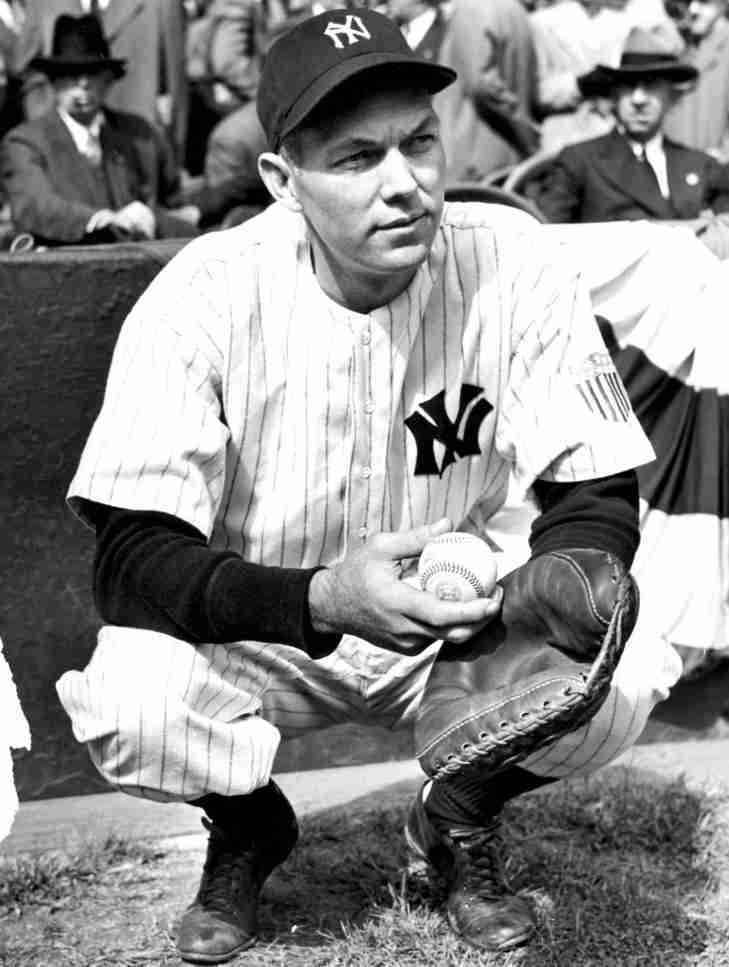
The arrival of Bill Dickey in the late 1920s provided the New York Yankees with an indispensable, leveling force exactly at the juncture when the franchise was shifting from the raw power characteristic of the "Murderers' Row" era to its subsequent decade of unparalleled dominance. Making his debut at the conclusion of 1928, the young Arkansan swiftly secured the position of starting catcher, introducing an uncommon blend of defensive composure, discreet leadership, and a formidable left-handed bat amid a star-studded clubhouse led by Babe Ruth and Lou Gehrig.
His early seasons as the regular catcher quickly made him a top offensive player at his position. In 1929, he hit an impressive .339, beginning a notable streak where he maintained a batting average over .300 in ten of his first eleven full seasons with the Yankees. Dickey was more than just a high-average hitter; he had excellent bat control and uncommon power for a catcher, rarely striking out and frequently hitting the ball deep into Yankee Stadium's right-field porch.
That offensive baseline surged to a historic high in the late 1930s with Joe DiMaggio’s arrival. Between 1936 and 1939, Dickey achieved four straight seasons with at least 20 home runs and 100 RBIs, highlighted by a remarkable 1936 season in which he hit .362. His offensive performance frequently put him in MVP discussions, and he finished as a runner-up in 1938. However, his true value extended beyond hitting; he was a master defender and a skilled Pitcher, with a powerful arm that often stopped opponents' stolen bases and a keen strategic mind for managing pitching staffs. This earned him the full respect of every pitcher who played for New York.
As the decade progressed, he emerged as the key link to an impressive haul of championships. Dickey was the strategic force behind the Yankees' remarkable streak of four straight titles from 1936 to 1939. His ability to perform under pressure became a hallmark of October, consistently excelling in critical moments, such as hitting a clutch, game-winning home run in the 1943 World Series against St. Louis. This brought his total championship rings to eight.
Dickey’s playing career was briefly interrupted by military service during World War II, but he returned to the Bronx to conclude his playing days in 1946, stepping away with 1,969 hits, 202 home runs, and a stellar .313 career batting average.
Nevertheless, his influence on the organization went well beyond his last game. Dickey took on a coaching role, where he was responsible for developing a talented young prospect named Yogi Berra, instructing him on game-calling and receiving skills, and later mentoring Elston Howard as well.
His standing as the original gold standard of Yankee catchers received its ultimate punctuation marks decades later. Dickey was elected to the National Baseball Hall of Fame in 1954, and, in a fitting tribute to the passing of the torch, the Yankees simultaneously retired the number 8 jersey for both Bill Dickey and Yogi Berra in 1972.
15. Don Mattingly
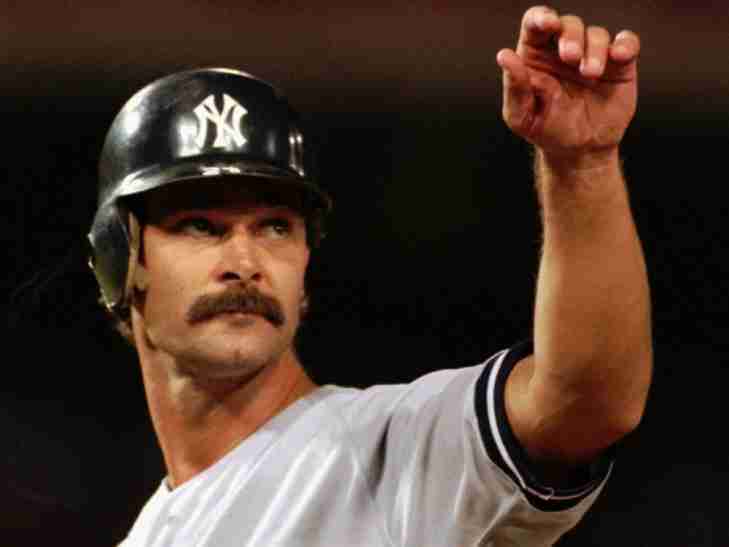
When Don Mattingly debuted in September 1982, few foresaw that the 19th-round draft pick would become a symbol of New York baseball throughout the decade. By 1983, as he took on a partial role, this quiet first baseman, known for his smooth, compact left-handed swing, was merely waiting for a regular opportunity to ignite a period of exceptional offensive skill.
In 1984, that opportunity fully materialized, marking one of the most overwhelmingly dominant peaks in the American League's history. "The Hit Man" secured the starting position and quickly rose to national prominence, maintaining a hit-for-hit comparison with teammate Dave Winfield until the last day of the season. Mattingly concluded the season with the league's highest 207 hits and a .343 batting average, winning the American League batting title and earning his first of six consecutive All-Star selections.
His performance improved significantly the following summer, transforming from a star to a complete powerhouse. In 1985, Mattingly led the Bronx lineup with commanding authority, hitting 35 home runs and driving in an outstanding 145 RBIs, the best in the league, earning him the American League MVP title. The next year, in 1986, he delivered a statistical performance that even surpassed his MVP season; he set lasting franchise records with 238 hits and 53 doubles, batting .352, and narrowly missed out on the MVP award. Coupled with his exceptional defense, which earned him nine Gold Glove Awards at first base, he became the undisputed leader of New York.
Although his journey to Cooperstown appeared almost assured, a subtle tragedy quietly developed behind the scenes. In the late 1980s, persistent severe back issues gradually eroded his explosive core strength. This debilitating injury steadily diminished his power to hit over the fence, turning the second half of his career into a difficult battle of endurance. During this time, he was forced to reinvent himself as a contact-focused singles and doubles hitter to remain active on the field.
The physical toll was paired with a rare streak of institutional misfortune. Mattingly's 14-year career coincided precisely with the period when the most successful franchise in professional sports did not make it to the World Series. He experienced his only October baseball in his last season, 1995, delivering a heroic and gritty performance in the ALDS against Seattle, just as the modern Yankee dynasty was beginning.
He retired with 2,153 hits, 222 home runs, and a lifetime batting average of .307. Although he did not win a World Series ring, he earned something that resonated more deeply with local fans. In 1997, the organization honored this special emotional connection by permanently retiring his number 23 jersey and installing his plaque in Monument Park, cementing his legacy as "Donnie Baseball."
