


Site Admin
23. Jorge Posada
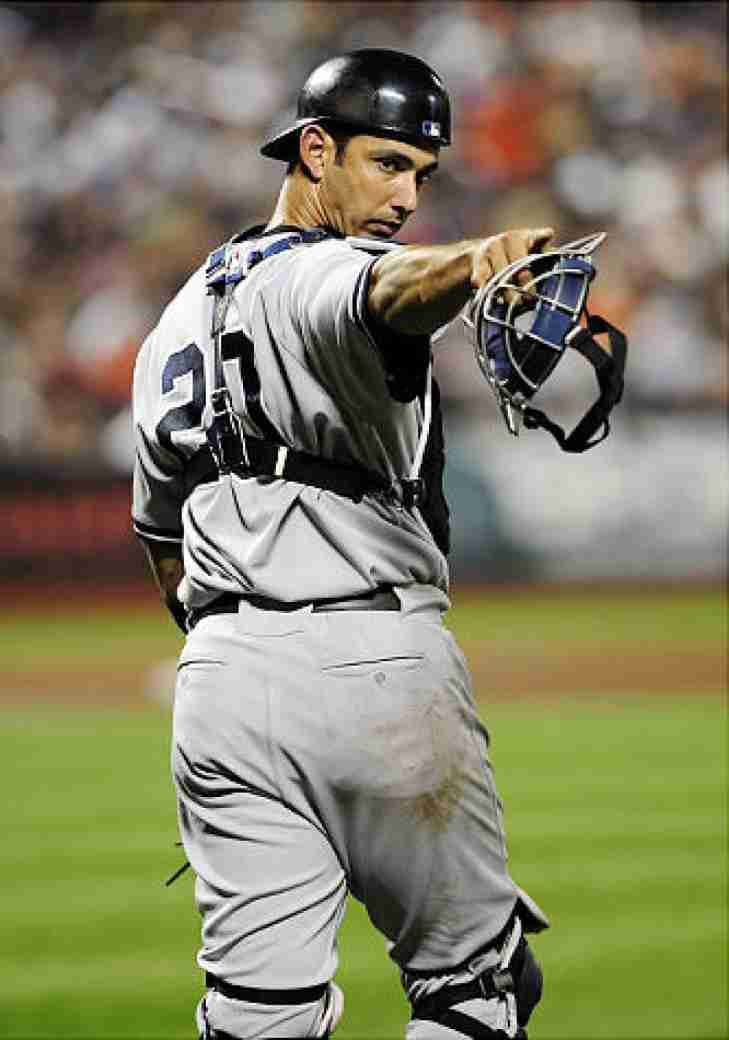
Jorge Posada was selected in the 24th round of the 1990 draft as a skinny infielder out of an Alabama community college, a place where you are barely expected to make it out of single A. Tapped to convert to catcher by the front office, the Puerto Rican native hammered away at his defensive assignments until making his mark in the Bronx. He eventually cemented his status as the fiery, emotional engine of the legendary "Core Four" alongside Derek Jeter, Mariano Rivera, and Andy Pettitte.
Posada brought a rare and formidable offensive style to the switch-hitting catching position. He played with a fierce, competitive mindset at the plate, often skipping batting gloves and using dirt on his hands to get a tough, gritty grip on the bat. His patient approach in the zone helped wear down opposing pitchers, earning over 100 walks in 2000 and maintaining an on-base percentage often above .370. Year after year, he challenged the American League with strong extra-base hitting, accumulating a high number of RBIs and achieving eight seasons with 20 or more home runs.
That player's peak performance was evident during a historic showcase in 2003. Posada dominated pitching by hitting 30 home runs, driving in 101 runs, and leading the Yankees’ offense with a strong .281/.405/518 slash line. His consistent daily performance earned him a third-place finish in the American League MVP voting, demonstrating his ability to lead a top-tier lineup from behind the plate. He capped his career with a remarkable 2007 season, hitting .338 with 42 doubles and 20 home runs at age 35, earning his fifth Silver Slugger Award.
When the postseason spotlight intensified, Posada proved to be a highly valuable asset. He caught for the team in the 1998, 1999, 2000, and 2009 championships, earning four World Series rings as the main catcher for the pitching staff. His exceptional durability helped him set major league records for the most postseason games played (119) and hits (103) by a catcher, confidently managing top-tier postseason rotations.
Age and severe knee wear finally prompted a full-time move to designated hitter during his final summer in 2011, culminating in a dramatic, division-clinching walk-off hit against Tampa Bay before he formally walked away from the diamond. Posada spent all 17 of his professional seasons in a single uniform, retiring as one of only five catchers in history to cross the metric threshold of 1,500 hits, 350 doubles, 275 home runs, and 1,000 runs batted in.
The Yankees retired his number 20 in 2015.
25. Tony Lazzeri
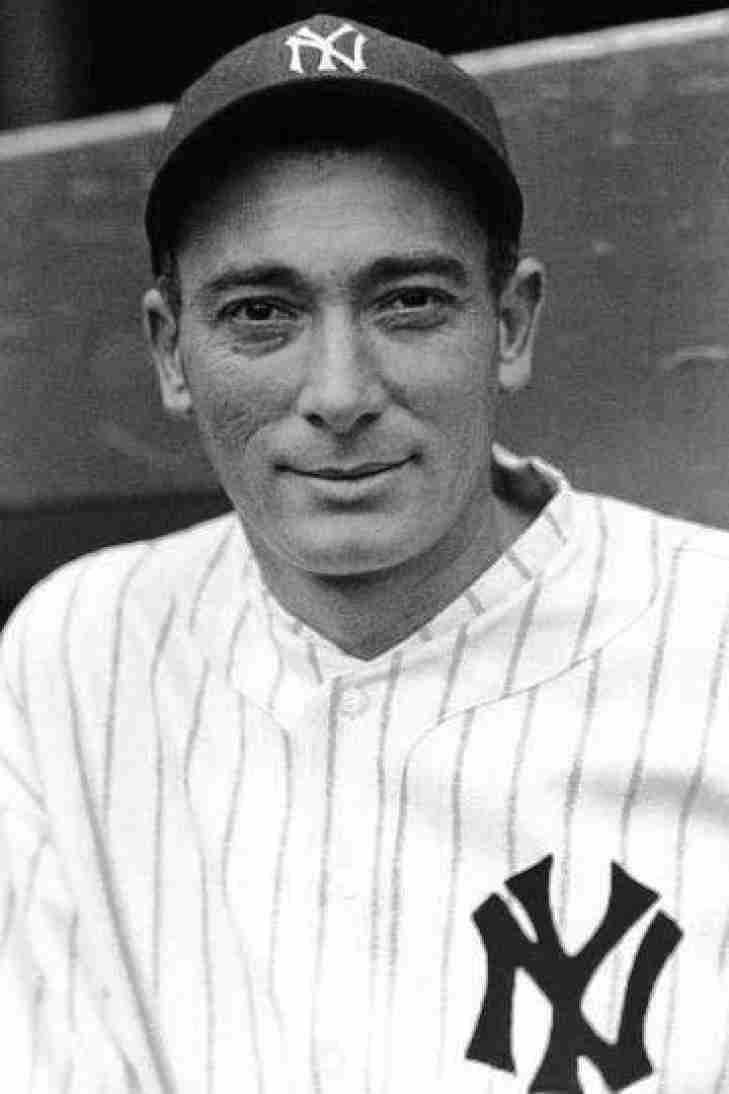
Tony Lazzeri's arrival in the Bronx in spring 1926 marked not only the debut of a highly praised rookie second baseman but also the emergence of a significant cultural icon for thousands of Italian-American fans across New York City. They packed the stands, enthusiastically chanting "Poosh 'Em Up Tony”, a tribute to his legendary power. While historical focus often highlights the mythical, tape-measure home runs of Babe Ruth and Lou Gehrig, Lazzeri’s subtle yet deadly efficiency in the lower order was essential in uniting the historic "Murderers' Row" lineup.
Lazzeri fundamentally redefined the expectations for middle infielders regarding run production. During a period when second basemen were generally regarded as diminutive, primarily defensive specialists employing small-ball strategies, he introduced a rare level of power expected from middle-of-the-order hitters. Over the course of his twelve distinguished seasons with the New York Yankees, he exceeded 100 RBIs on seven occasions, with his peak performance in 1930 when he achieved a career-high 121 RBIs. This offensive prowess was complemented by exceptional defensive zone control, and he maintained an impressive batting average of .292 alongside an outstanding on-base percentage of .380. Furthermore, he surpassed twenty doubles on ten occasions while representing New York.
His individual brilliance is highlighted by one of the most remarkable and impactful hitting displays in major league history. On June 3, 1932, during a high-scoring game against the Philadelphia Athletics, Lazzeri achieved a rare feat that remains unmatched. He hit a perfect "natural cycle," collecting a single, double, and triple in succession. Then, in the ninth inning, with the bases loaded, he hit a grand slam, ending the cycle and becoming the only player in baseball history to finish a natural cycle with a grand slam. Ironically, his legendary performance was overshadowed the next morning, as Lou Gehrig hit four home runs in the same game.
Beyond that singular afternoon of enchantment, Lazzeri was an ubiquitous presence in the playoffs, anchoring the infield for a roster that consistently excelled in the sport. He was a fundamental component of six American League pennant-winning teams, securing five World Series championships (1927, 1928, 1932, 1936, and 1937) while serving as a dependable, consistent defensive contributor alongside shortstop Frankie Crosetti. Furthermore, he holds the longstanding American League record for the most RBIs in a single game, with an impressive 11 runs driven in on May 24, 1936, during a contest that featured two grand slams.
He eventually departed New York following the 1937 season, concluding his brilliant, 12-year pinstriped stay with 1,784 hits, 169 home runs, and 1,157 runs batted in before brief, late-career stops with the Cubs, Dodgers, and Giants. Tragically, his life was cut short when he passed away suddenly at his home in San Francisco in 1946 at the young age of 42.
The Veterans Committee eventually elected him into the Hall of Fame in 1991.
24. Bob Shawkey
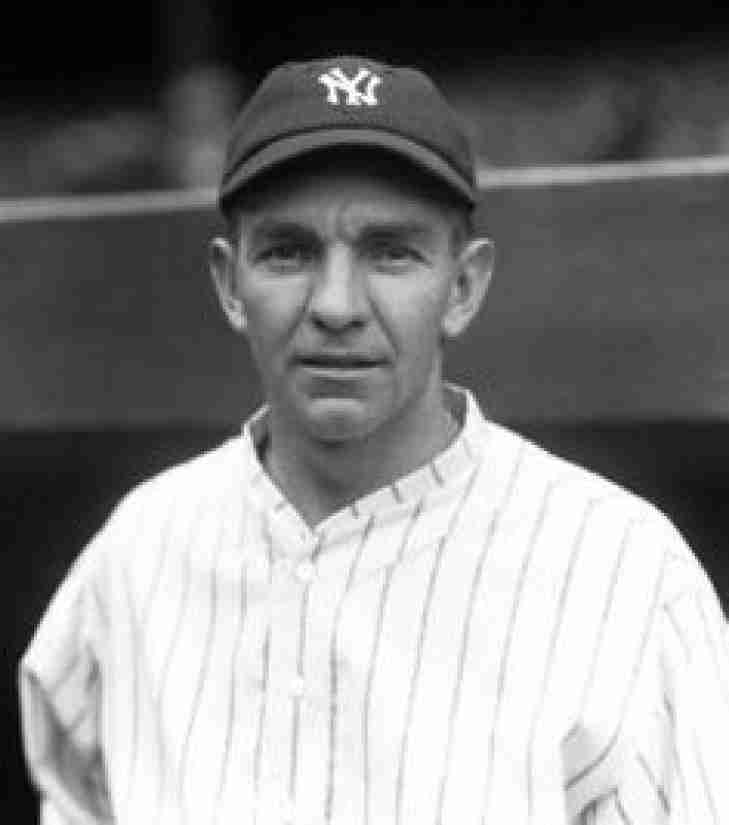
When a franchise builds its identity around a mythic moniker like the "Bronx Bombers," the elite pitching often gets overshadowed. Bob Shawkey spent 13 seasons in New York as the team’s main ace before the baseball world focused on Babe Ruth and Lou Gehrig's home runs. Nicknamed "Sailor Bob" after military service on USS Arkansas during WWI, his arrival through a $3,000 purchase from Connie Mack's Athletics in June 1915 changed the New York rotation.
Shawkey combined a high-velocity fastball with an exceptionally sharp, snapping curveball to methodically dismantle lineups. He expended no time in establishing an elite workload, experiencing a remarkable first full summer in pinstripes in 1916. He delivered an exceptional hybrid performance by initiating 27 games and completing another 24 from the bullpen, securing 24 victories to place second in the American League behind only Walter Johnson, while maintaining an impressive 2.21 ERA.
His consistency over the subsequent years emerged as the primary competitive driving force for Manager Miller Huggins. Shawkey surpassed the elusive 20-win threshold on four occasions while serving in New York, achieving identical 20-win seasons in 1919 and 1920, and culminating with another 20-victory season that contributed significantly to the 1922 pennant pursuit. He demonstrated mastery in run prevention, securing the 1920 American League ERA title with an exceptional 2.46 ERA. His meticulous approach to pitching was complemented by a formidable, historically significant dominance; notably, on the final day of the 1919 season, Shawkey recorded 15 strikeouts against Philadelphia batters, establishing a franchise record for the most strikeouts in a single game, a milestone that remained unchallenged for 59 years until Ron Guidry's remarkable 18-strikeout game in 1978.
Beyond his impressive stats, Shawkey is woven into the organization's history. On April 18, 1923, before 74,000 fans, he was the Opening Day starter for Yankee Stadium's debut. He threw a complete game to beat the Red Sox 4–1, becoming the first to pitch in "The House That Ruth Built." While Babe Ruth hit the stadium's first home run, Shawkey drove in another run and was the game's winning pitcher.
His arm eventually succumbed to severe structural fatigue in the latter half of the decade, shifting him into a veteran depth role during the historic 1927 "Murderers' Row" championship campaign before he formally transitioned to coaching. He closed his brilliant pinstriped playing career with 168 wins, 1,163 strikeouts, 168 complete games, and a stellar 3.12 ERA.
22. Phil Rizzuto
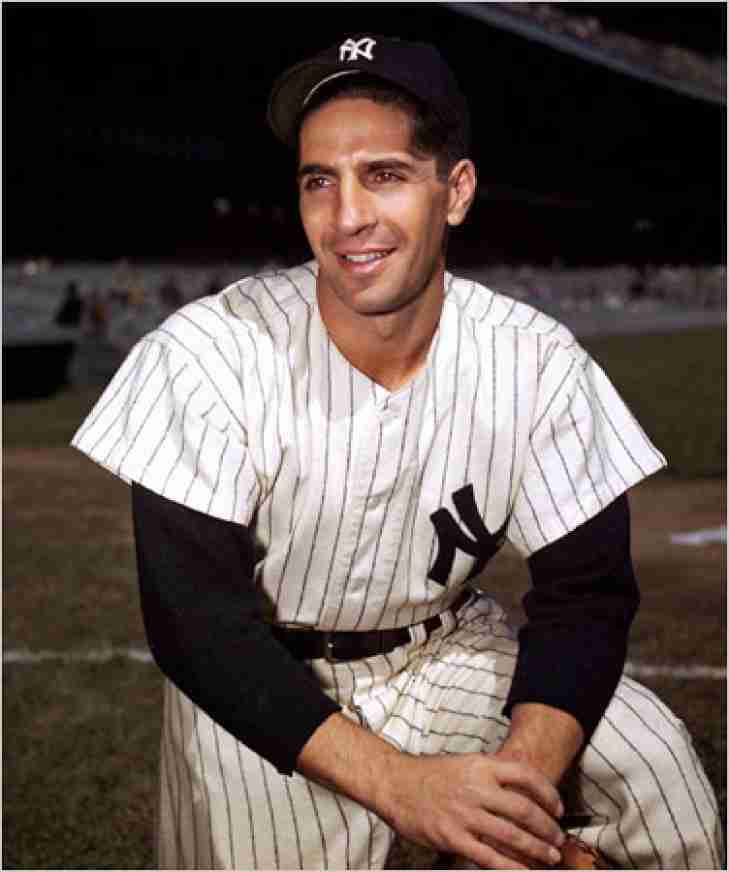
Holy Cow!
Philip Francis Rizzuto was cut by the Brooklyn Dodgers and New York Giants as a teenager because of his 5-foot-6 frame—told by Casey Stengel to "go get a shoeshine box.” Few predicted he would become the key infield anchor of baseball's greatest dynasty. The Brooklyn native didn't let rejection slow him, arriving in Bronx in 1941 to start at shortstop and change organizational control of the diamond.
"The Scooter" served as the quintessential counterbalance to the formidable identity of the "Bronx Bombers." He did not achieve fame by consistently hitting baseballs over the fences, amassing only 38 home runs throughout his 13-year tenure donning the pinstripes. Instead, Rizzuto perfected the art of small-ball execution, transforming it into an unparalleled craft. He was a consummate situational hitter, proficient in deftly manipulating the defense through precisely executed bunts, intelligent application of the hit-and-run play, and an aggressive style of baserunning that resulted in 1,588 hits and 149 stolen bases. His exceptional zone coverage and ability to perform in high-pressure situations on the basepaths exerted continuous pressure on opposing pitching staffs, thereby creating an ideal platform for the heavy hitters positioned behind him.
On the grass, his defensive performance was truly exceptional. Rizzuto had an extraordinary sense of timing, lightning-fast lateral agility, and smooth transfers that enabled him to execute double plays consistently. He surpassed a 2.0 defensive bWAR in six seasons, leading all American League shortstops in this category three times.
During a historic showcase in 1950, Rizzuto demonstrated an exceptional level of skill that reached its peak. He dominated the junior circuit with exactly 200 hits, scored 125 runs, and maintained an impressive .324/.418/439 slash line. Modern advanced metrics widely confirm his excellence, as he led all American League batters with a remarkable 6.7 bWAR. His consistent, high-quality performance earned him the 1950 American League Most Valuable Player award, showing that precise, efficient play can rival the league's top power hitters.
Above all, Rizzuto was the key factor in the team's greatest achievements. His career was interrupted by three prime years of military service with the U.S. Navy during World War II. Despite this, he returned to help the Yankees win nine American League pennants and an impressive seven World Series titles, cementing his reputation as a vital, legendary figure in big games.
After retiring from the uniform lines during the 1956 campaign, he moved straight into broadcasting, where over the next forty years, he captivated multiple generations of fans with his signature catchphrase, "Holy Cow!’, and his charmingly unconventional storytelling approach. He would be inducted into the Baseball Hall of Fame by the Veterans Committee in 1994, nine years after the Yankees retired Rizzuto's number 10.
