


Site Admin
36. Brett Gardner
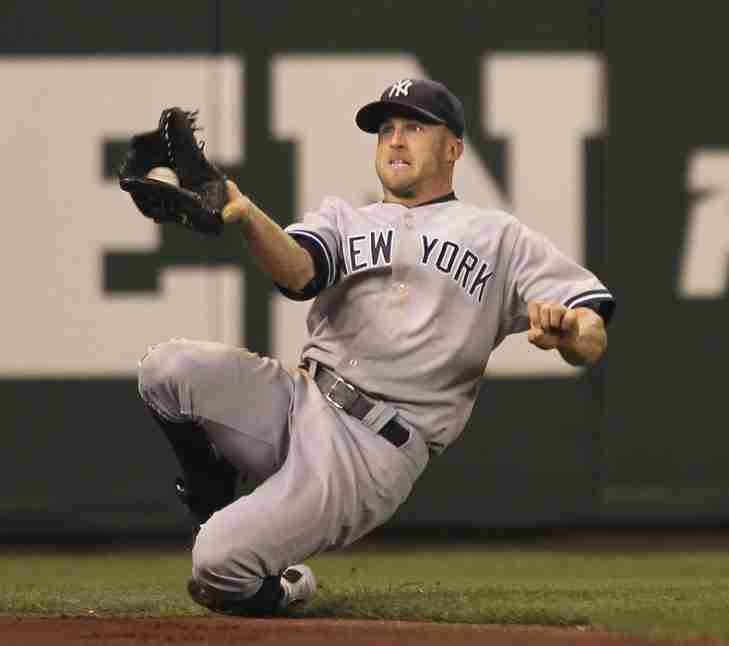
When a player remains with a single franchise for 14 seasons in today's free-agency era, it's no coincidence. It indicates that the front office recognizes something that casual observers often overlook. Brett Michael Gardner may not have had the legendary reputation of Derek Jeter or the overwhelming power of Aaron Judge that captures broadcasts, but he was the perfect example of an analytical favorite—a crucial "glue guy" whose high value stemmed from exceptional spatial awareness, patience, and relentless grit.
Gardner exemplified modern, highly efficient base running. He transformed the batter's box into a contest of endurance, often forcing pitchers into long, tiring counts with a disciplined visual approach. As a top leadoff hitter, he exceeded 60 walks seven times, led the American League with 10 triples in 2013, and scored 132 runs in a stellar 2011 season. Once on base, his speed posed constant danger, with 274 stolen bases placing him among the franchise's top ten all-time alongside baseball legends.
While his keen eye kept the game progressing, Gardner's superior defensive skills elevated his value from a reliable player to a nearly essential one. He covered Yankee Stadium's expansive outfield with a lightning-fast first step and an fearless attitude toward the wall, turning tough line drives into easy outs. Having played years in a key left field role to support Jacoby Ellsbury and Curtis Granderson, his advanced metrics strongly affirmed his elite defense. He earned the 2016 Gold Glove and Wilson Defensive Player of the Year awards, and finished with a notable career defensive bWAR that amazed many outside New York but was perfectly understood by the front office.
In the clubhouse, his strong, lead-by-example approach made him the clear emotional leader of the team during a challenging time of change. He was a rookie during the historic 2009 World Series win, and by the end of his career, he was the last remaining connection to that championship team. As the veteran, his intense competitive spirit—highlighted by his well-known habit of rhythmically banging his bat against the dugout roof to motivate teammates- solidified his position as a fan favorite.
Later in his career, Gardner enhanced his offensive skills by incorporating powerful pulls, hitting a career-high 28 home runs at age 35 in 2019 to help maintain the lineup's momentum despite injuries.
He left the diamond after 2021, ending a lifelong journey with 1,470 hits, 139 home runs, and 578 RBIs in 1,688 games.
44. Allie Reynolds
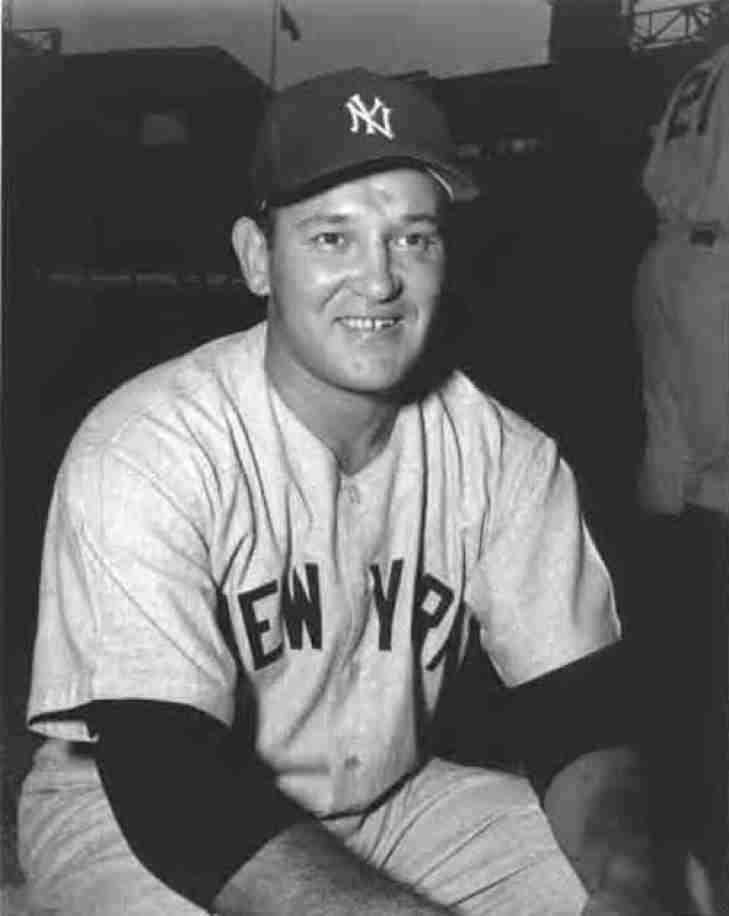
When modern analytics grids dissect Allie Reynolds's career, the spreadsheets can look a bit cold. Sabermetricians often point straight to his 1.386 career WHIP and assert that his heavy win totals were simply a byproduct of playing for an absolute powerhouse dynasty that gifted him relentless run support. But evaluating "Superchief" solely through a modern mathematical lens completely misses the actual shape of his legacy. Reynolds wasn't built to maximize efficiency rows on a computer screen; he was engineered to win the specific baseball game right in front of him.
His most notable trait was an exceptional, multi-positional versatility that defied the conventions of his time. Well before the modern game divided pitchers into specialized roles, manager Casey Stengel relied on Reynolds as his most versatile tactical asset. He could confidently deliver a complete-game victory on Thursday afternoon and then come out of the bullpen on Saturday night to record a crucial save. This adaptable, two-way capability gave his overall stats a distinct edge, saving 41 games over his career while serving as a key part of the starting rotation.
When he established his true peak in the early 1950s, he demonstrated that his top-tier baseline was as exceptional as anyone else's in the sport. In 1951, he threw two renowned no-hitters, the second against Boston, which he capped by getting Ted Williams to fly out to end the game. He then followed that with a remarkable 1952 campaign, showcasing outstanding run prevention by leading the American League with a tiny 2.07 ERA and 160 strikeouts. His dominance during the regular season earned him consecutive top-3 finishes in the AL MVP voting, placing third in 1951 and finishing as a runner-up in 1952.
What truly set Reynolds apart from his peers was his unwavering calm during the intense pressures of October. He didn't just endure the World Series spotlight; he excelled at it. In his six Fall Classic appearances with the Yankees, he achieved an impressive 7–2 record with a 2.79 ERA, demonstrating complete composure under pressure. Additionally, he enhanced his value by becoming a significant threat at the plate in October, hitting a strong .308 and providing the Yankees with a crucial high-leverage advantage.
A severe back injury sustained in a team charter bus accident eventually exacted a heavy structural toll on his body, forcing his retirement after the 1954 season at age 37. He walked away from the Bronx with a spectacular 131–60 record, yielding an astonishingly efficient .686 winning percentage that ranks among the highest in franchise history alongside 967 strikeouts and a solid 3.30 ERA.
40. CC Sabathia
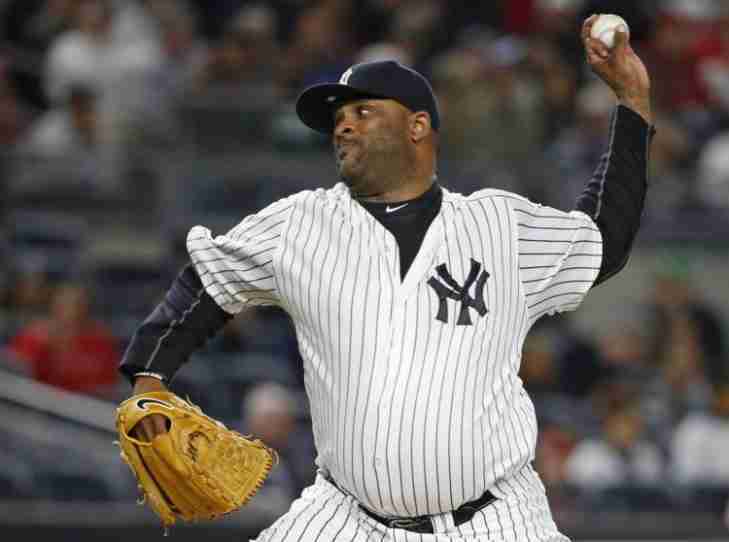
C.C. Sabathia Jr. finalized a massive seven-year, $161 million contract in December 2008, which wasn’t just a premium free-agent signing. He was assuming the ultimate, high-stress mandate: anchor a modern pitching rotation under the most demanding spotlight in sports. Standing an imposing 6-foot-6 and weighing well over 270 pounds, the Vallejo, California native brought a towering physical presence and a fierce, competitive fire to the Bronx that immediately shifted the organizational culture, which, considering the legacy of the Yankees, was no small task.
Sabathia did not merely accept the role of ace; he upheld it with a durability reminiscent of the legendary workhorses of the past, exemplified by a resilience comparable to carrying a lunch pail. Equipped with a blazing fastball in the mid-90s and a devastating slider, the left-handed pitcher excelled in dominating the American League from the outset. He recorded consecutive seasons as the leader in victories within the junior circuit, securing 19 wins in 2009 and a career-high 21 triumphs in 2010. He exceeded 200 innings pitched in each of his initial five seasons with New York, providing Manager Joe Girardi with a reliable, high-leverage starter capable of effectively halting losing streaks. Although he did not replicate his 2007 Cleveland Cy Young Award achievement while with the Yankees, his exceptional regular-season performance earned him widespread national recognition, including three All-Star selections and three top-five finishes in the Cy Young Award voting while serving as a Yankee.
That raw dominance reached its absolute competitive pinnacle during the historic 2009 postseason run. Sabathia single-handedly piloted the Yankees through October, taking home the ALCS MVP award before anchoring the staff in the Fall Classic to capture the franchise's 27th world championship.
What truly made him a legendary figure in Yankee history was his incredible second act in his pinstriped journey. Despite his knee pain and natural aging that diminished his fastball, Sabathia completely reinvented himself. With sharp game awareness and smart strategy, he shifted from a power pitcher to a clever, tactical leader. By mastering a cutter and changeup, he continued to outsmart young lineups, while also charming his teammates as a passionate, respected captain during a vibrant youth movement.
Despite experiencing significant physical wear, he persisted, pitching with a taped-up knee to lead the team to several postseason appearances late in the decade. On April 30, 2019, he achieved a historic milestone with the Yankees, striking out Arizona’s John Ryan Murphy and becoming only the third left-handed pitcher in baseball history to reach 3,000 strikeouts.
Sabathia retired after the 2019 season, ending an 11-year Bronx career with a 134–88 record, 1,700 strikeouts, and a 3.81 ERA in 306 starts. His championship peak and late-career longevity left a lasting impact on fans. He was elected into the Baseball Hall of Fame in 2025 on his first attempt.
It's Now or Never
Elvis Presley
It’s Now or Never
