


Site Admin
5. Joey Votto
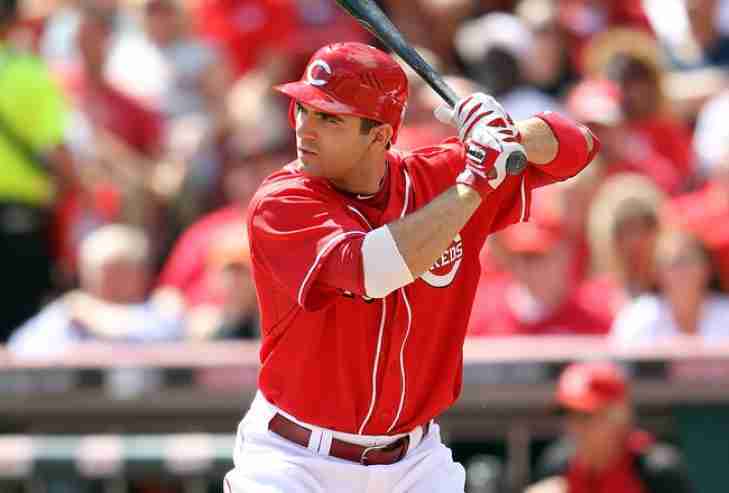
When Joey Votto arrived in Cincinnati in late 2007, he brought with him a cerebral approach to hitting that felt like a throwback to an era of pure contact, yet was powered by modern power. By 2010, he had evolved from a promising rookie into the undisputed king of the National League, capturing the MVP award and leading the Reds back to the postseason. He was a "Lifer" in the truest sense, a player who famously declared he would never want to play anywhere else, anchoring the middle of the Cincinnati order with a discipline that bordered on the obsessive.
The peak of his residency was defined by a historic mastery of the strike zone. Votto didn't just reach base; he owned it, capturing seven National League On-Base Percentage titles, including a staggering four-year stretch of dominance from 2010 to 2013. He was a hitting savant who would rather take a walk than swing at a pitch an inch off the black, a trait that occasionally drew fire from traditionalists who wanted him to be more aggressive. But the numbers called a spade a spade: he was a former slugging champion with over 300 career home runs, proving he could punish a mistake just as easily as he could wait for one.
The middle years of his journey saw Votto become the bridge between different iterations of the Reds' roster. He was an All-Star fixture who consistently hit above .300, providing a steadying presence as the team transitioned through various rebuilding phases. Even as he aged, he continued to refine his craft; in 2021, at 37, he staged a massive late-career resurgence, hitting 36 home runs and driving in 99 runs. It was a final, loud reminder that his intellectual approach to the game allowed him to outthink Father Time long after his peers had faded.
However, the final walk toward the exit arrived with the bittersweet reality of a franchise moving toward a younger core. After the 2023 season, the Reds declined their option for 2024, bringing an end to an incredible 17-year tenure. Votto left the Queen City with 2,135 hits, 356 home runs, and a staggering career on-base percentage of .408, a figure that places him among the elite in the history of the sport.
Joey Votto concluded his time in Cincinnati having climbed into the top five of the franchise’s all-time greats, surpassing legends like Barry Larkin in cumulative value. He arrived as a focused kid from Toronto and left as a permanent icon, the man who proved that the most dangerous weapon in a hitter’s arsenal is a disciplined mind. While he may have briefly looked for a final chapter elsewhere, his legacy is firmly rooted in the dirt of Great American Ball Park.
4. Barry Larkin
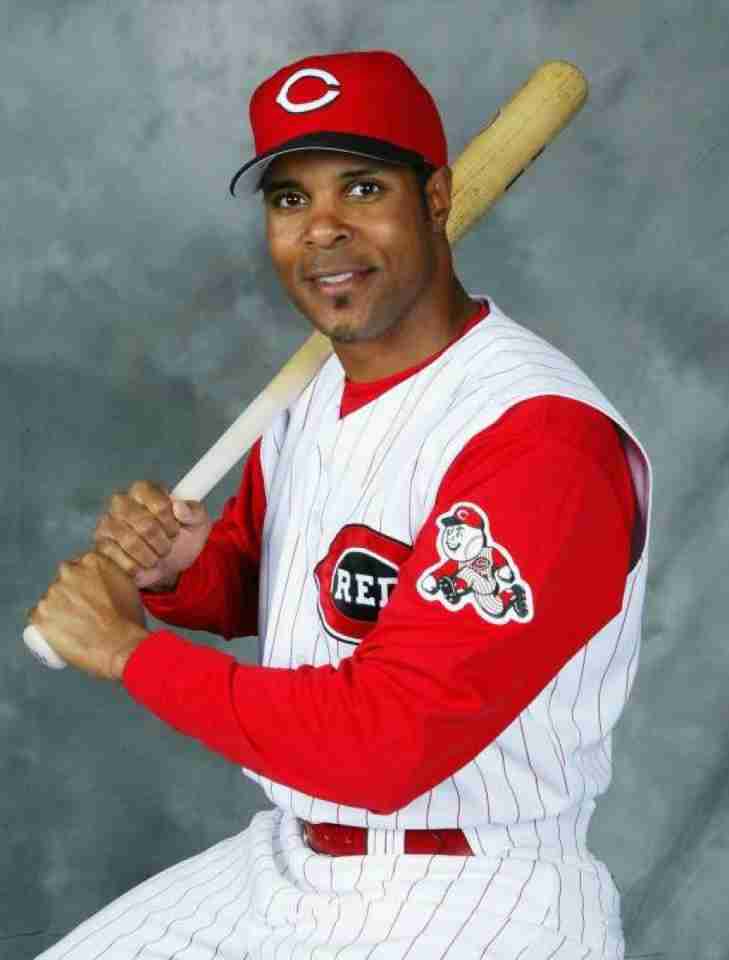
When Barry Larkin arrived on the South Side of Cincinnati in 1986, the city didn’t just gain a shortstop; it gained a favorite son. Born and raised in the area, Larkin played with a level of comfort and command that suggested he had been destined for the position since childhood. He wasn't the flashy, oversized shortstop of the future; he was a surgical, five-tool technician who combined elite speed with surprising power and a gold-glove caliber vacuum at the bag. He arrived as a high-pedigree prospect and immediately began a "Lifer" journey that would see him never wear another professional jersey.
The middle chapter of his residency was defined by the magic of 1990. While the "Nasty Boys" bullpen got the headlines, Larkin was the steady hand that guided the Reds to a wire-to-wire World Series sweep of the Oakland A’s. He batted .353 in that Fall Classic, proving he was a big-game hunter on the grandest stage. As the 90s progressed, he evolved from a "solid contributor" into the undisputed MVP of the league. In 1995, he captured the NL MVP award, and a year later, he made history as the first shortstop to ever record a 30-30 season. He was the prototype for the modern shortstop—a player who could beat you with a stolen base in the first inning and a walk-off home run in the ninth.
Defensively, Larkin was the heartbeat of the infield. A three-time Gold Glove winner, he played with a cerebral intensity that allowed him to compensate for any physical toll the turf at Riverfront Stadium took on his body. He was a 12-time All-Star who led by example, eventually serving as the team's captain and the primary bridge between the championship squad of 1990 and the rebuilding years of the late 90s. His statistical footprint remains staggering for a middle infielder: 2,340 hits and a career slash line of .295/.371/.444.
The final walk toward the exit in 2004 was a bittersweet moment for Southern Ohio. After 19 seasons of unwavering loyalty, Larkin retired as a first-ballot immortal in the eyes of the fans, even if it took three years for the national voters to officially usher him into Cooperstown in 2012. The Reds rightfully hoisted his number 11 to the rafters that same year, cementing his legacy as the most complete shortstop of his generation. He arrived as a local prodigy and left as a permanent hero, the man who proved that you can go home again—and stay there until the end.
6. Joe Morgan
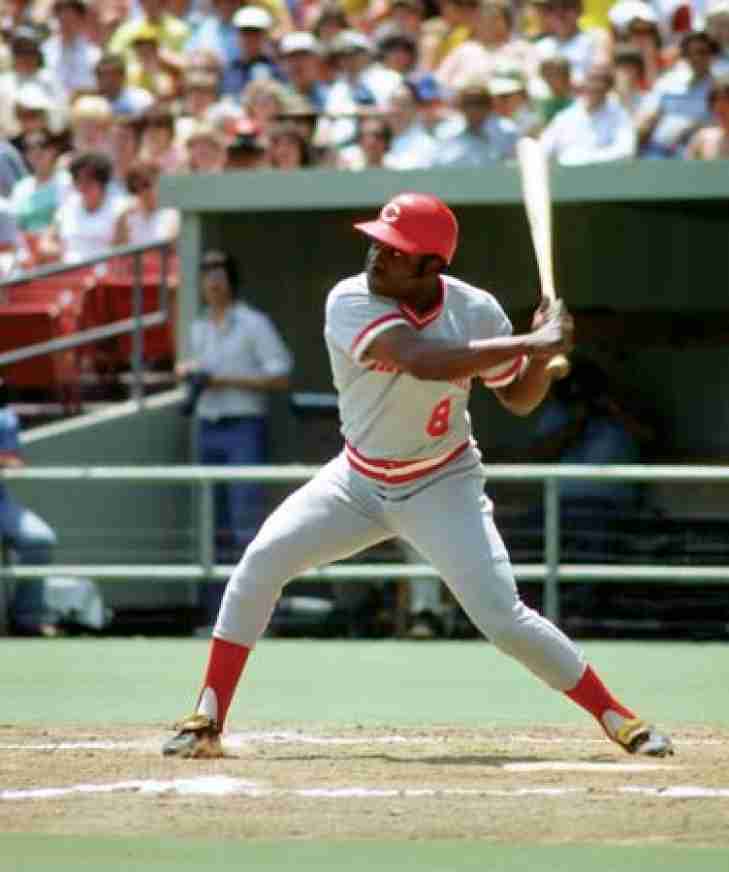
When Joe Morgan arrived in Cincinnati in 1971 as part of an eight-player blockbuster trade, many observers actually thought the Reds had lost the deal by giving up slugger Lee May. They couldn't have been more wrong. Morgan arrived with a "chicken-flap" arm waggle and a relentless focus that immediately reshaped the team's identity. He didn't just occupy second base; he patrolled it with a defensive urgency that earned him five consecutive Gold Gloves. From the moment he stepped into the clubhouse, he proved to own the soul of a winner, leading the majors in runs scored during his very first season in the Queen City.
The peak of his stay in Cincinnati, and perhaps the most dominant five-year stretch by any middle infielder in history, arrived between 1972 and 1976. During this span, "Little Joe" was playing a different game than everyone else. He was a statistical outlier who led the National League in on-base percentage four times, utilizing a legendary eye to draw over 100 walks nearly every season. In 1975 and 1976, he captured back-to-back MVP awards, a feat mirrored by the Reds' back-to-back World Series titles. He was the definitive advanced metrics player, twice leading the league in OPS and routinely pacing the league in WAR, proving that a 5-foot-7 frame could cast the longest shadow on the field.
He was electric on the basepaths, where he strung together five straight seasons of at least 50 stolen bases. Morgan treated the path from first to second as his personal property, combining elite speed with a strategic acumen that made him the most efficient base-stealer of his generation. He wasn't just a volume producer; he was a high-leverage specialist. It was Morgan’s ninth-inning bloop single in Game 7 of the 1975 World Series that drove in the winning run, cementing his status as the man who came through when the pressure was at its absolute highest.
The final walk toward the exit of his first Reds tenure came after the 1979 season, when he departed as a free agent. While he would eventually return to Houston and finish his career as a nomad of winning teams, his eight years in Cincinnati remain the heart of his legend. He left the Reds as a 10-time All-Star (counting his Houston years) and the franchise's all-time stolen base leader at the time. His impact was so profound that the Reds retired his number 8 in 1998, and a bronze statue of him now stands outside Great American Ball Park, frozen in that iconic batting stance.
3. Frank Robinson
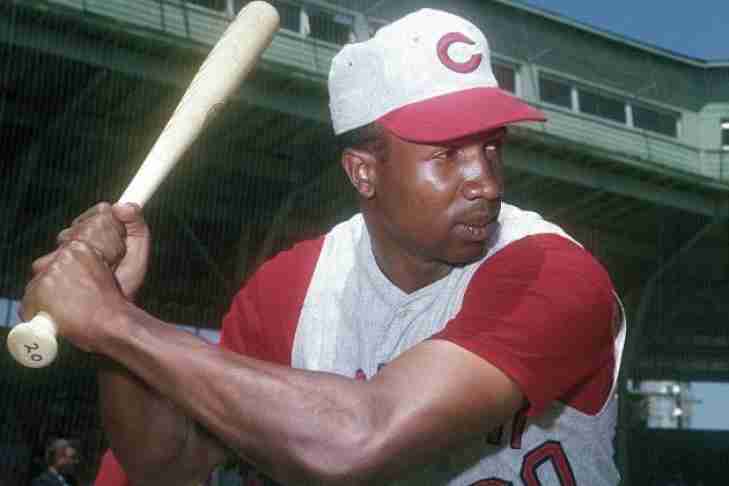
When Frank Robinson arrived in Cincinnati in 1956, he didn't just win the Rookie of the Year award; he staged a league takeover. At just 20 years old, he tied the then-record for home runs by a rookie with 38, signaling the arrival of a player who combined terrifying power with a relentless, aggressive plate presence. Robinson played with a chip on his shoulder, crowding the plate and daring pitchers to come inside—a tactical move that resulted in him leading the league in being hit by pitches seven times as a Red. He was the young, fiery engine of a franchise searching for its identity in the post-war era.
The peak of his Cincinnati tenure arrived in 1961, a season in which he claimed the National League MVP and willed the Reds to their first pennant in over twenty years. Robinson was a statistical titan during this stretch, authoring a slash line of .303/.389/.554 that stands as a masterpiece of offensive efficiency. He captured three slugging titles and was a perennial fixture in the MVP top-ten, blasting 324 home runs in a Reds uniform. He wasn't just a "solid contributor"; he was the premier outfielder in the senior circuit, a five-tool threat who played the game with a ferocious intensity that defined the era.
However, the final chapter of his story in Cincinnati remains one of the most scrutinized exits in sports history. Following the 1965 season, Reds owner Bill DeWitt famously traded Robinson to the Baltimore Orioles, labeling him an "old 30." It was a staggering miscalculation of a superstar's longevity. While the trade's returns failed to move the needle for Cincinnati, Robinson immediately captured the Triple Crown and the American League MVP, leading Baltimore to a world title. For fans in Cincinnati, it was a bitter pill to swallow, imagining how much more terrifying the "Big Red Machine" might have been had Robinson remained to bridge the gap into the 1970s.
Frank Robinson left the Reds as one of the most accomplished players to ever wear the wishbone "C." He was a first-ballot immortal whose legacy was eventually honored with the retirement of his number 20 in 1998 and his induction into the team's Hall of Fame decades earlier. He arrived as a fearless rookie and left as a statistical giant, the man who proved that age is just a number and that greatness, once ignited on the South Side of Cincinnati, could never truly be extinguished.
