


Site Admin
34. Carney Lansford
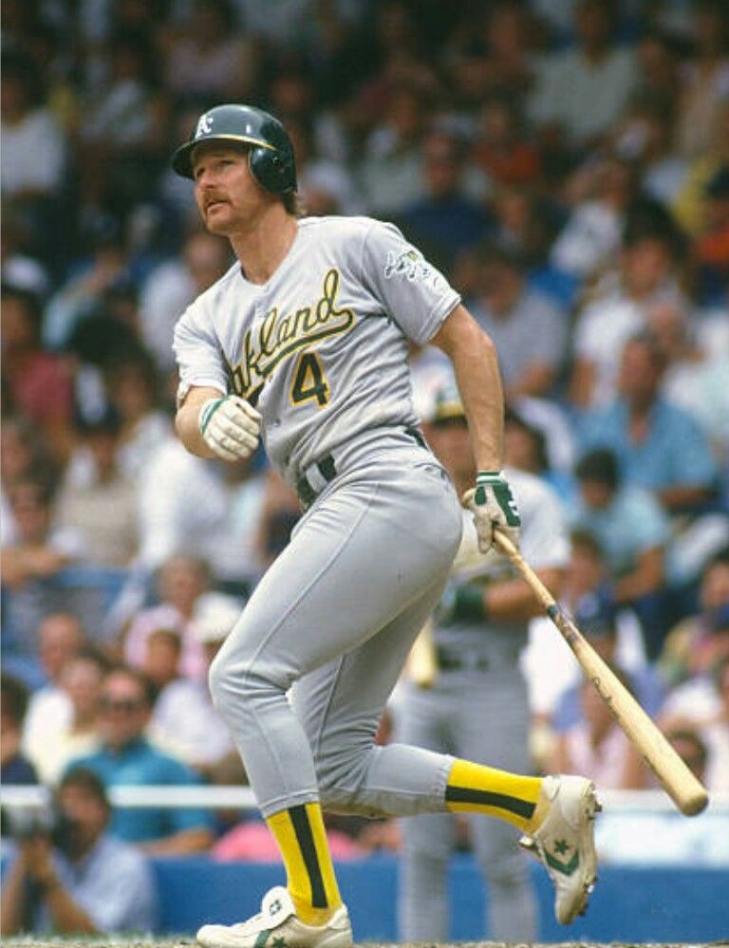
Carney Lansford joined Oakland before the 1983 season, instantly bringing credibility to the hot corner. Just two years after winning an American League batting title with the Boston Red Sox, he was traded to the Athletics to be a reliable, professional presence during a pivotal period for the franchise. Although he didn't earn another batting crown in Northern California, Lansford spent the following decade solidifying his role as the cornerstone of the infield and establishing himself as one of the premier all-around third basemen in baseball.
He instantly impressed East Bay fans by posting a consistent .300 average in his first two summers with the team. Lansford showcased a fluid, high-contact swing and a dependable glove at third base, quickly establishing himself as a clutch hitter known for line drives and rarely wasting an at-bat.
By the late 1980s, as Tony La Russa's dominant teams peaked, Lansford adapted his play to combine power and speed effectively. He became a key middle-of-the-order hitter, achieving five seasons with at least 10 home runs and hitting back-to-back 19-homer seasons in 1986 and 1987.
His sudden transformation on the basepaths was equally surprising. After four seasons without hitting double digits in stolen bases, Lansford displayed a new level of athleticism by stealing 16 or more bases in five consecutive summers from 1986 to 1990.
This versatile player was a crucial force when Oakland became the dominant team in the American League. Lansford led the lineup, helping the Athletics reach three straight World Series from 1988 to 1990. In the notable 1989 championship run, he delivered a standout offensive performance, batting .336 in the regular season and providing veteran stability after the Loma Prieta earthquake, ultimately helping the team secure the world championship.
Although he surprisingly received only one All-Star selection while in Oakland in 1988, his unmatched consistency and top-tier leadership establish him as one of the key architects of the franchise's modern golden era. The severe knee injury from a 1991 snowmobile accident slowed his career, but he fought back to finish playing on his terms. Lansford retired after 1992, ending a ten-year run with 1,317 hits and 219 doubles as an Athletic.
49. Ferris Fain
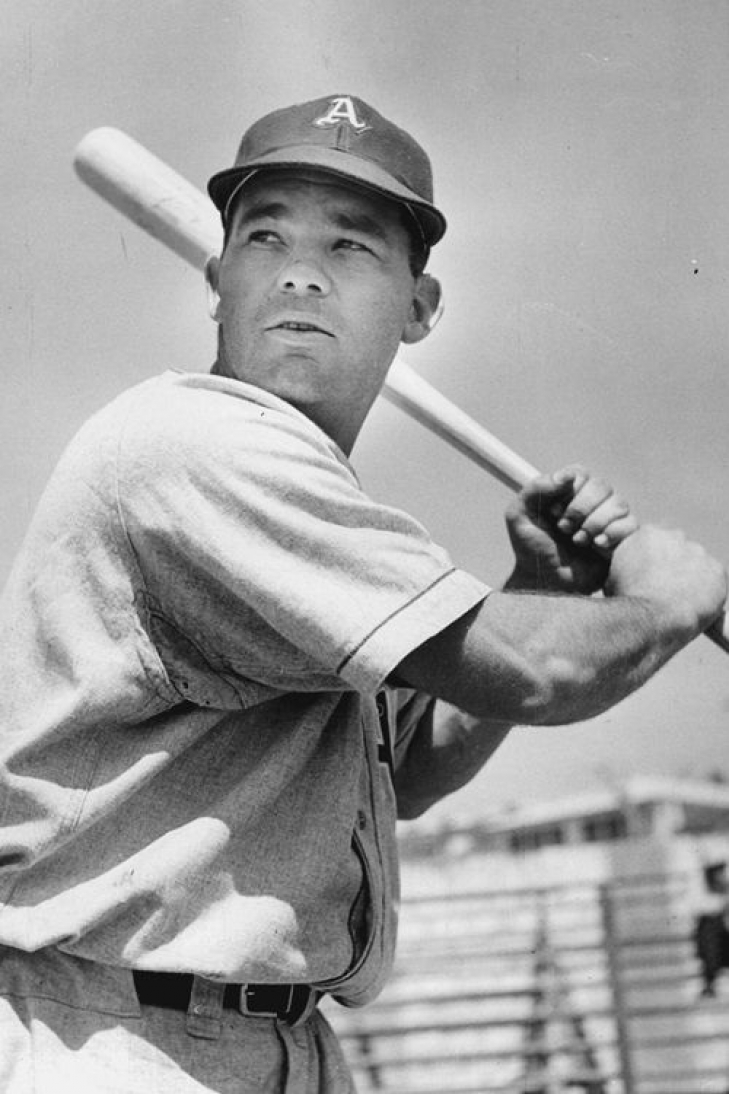
Ferris Roy Fain entered the majors with a reputation that preceded him, though it wasn't exactly the kind that traditional managers favored. The son of a professional boxer, Fain possessed a notoriously combustible, high-velocity temper and a complete willingness to speak his mind. He spent several long years refining his craft in the Pacific Coast League before Connie Mack finally brought the left-handed hitting first baseman to Philadelphia in 1947.
At 26, he brought a unique offensive style. Unlike typical mid-century first basemen who relied on power, Fain focused on a disciplined approach, turning walks into an art. He rapidly developed elite plate discipline from the top of the batting order. In his 1947 rookie season, Fain drew 95 walks, balancing a .244 batting average with a .368 on-base percentage. He became a nightmare for pitchers, heavily relying on walks and refusing to expand his strike zone.
During the 1951 schedule, Fain exhibited an exceptional offensive performance, leading the entire junior circuit with a commendable .344 batting average while also leading all of baseball with 107 bases on balls and an impressive .451 on-base percentage. Instead of experiencing a natural decline, he successfully defended his title during the 1952 season. Fain consistently baffled American League pitchers with a smooth, compact stroke, achieving a .327 batting average to secure his second consecutive American League batting title, complemented by a league-leading 43 doubles and earning another starting position in the Midsummer Classic.
Yet, focusing solely on his advanced offensive efficiency overlooks the incredible defensive vacuum he created at first base. Fain combined supreme athletic instincts with an exceptionally aggressive approach, routinely playing shallow to take away the bunt and leading American League first basemen in double plays turned on five separate occasions.
His regular-season output kept the Athletics competitive, but his fiery personality often clashed with the front office. Recognizing his trade value was highest, Philadelphia traded their two-time batting champion to the White Sox before 1953 in a blockbuster to inject youth into the roster.
In a Philadelphia uniform, Fain managed 831 hits, 585 walks, and a spectacular .425 career on-base percentage. Fain entered the Philadelphia Baseball Wall of Fame in 1997.
38. Jack Coombs
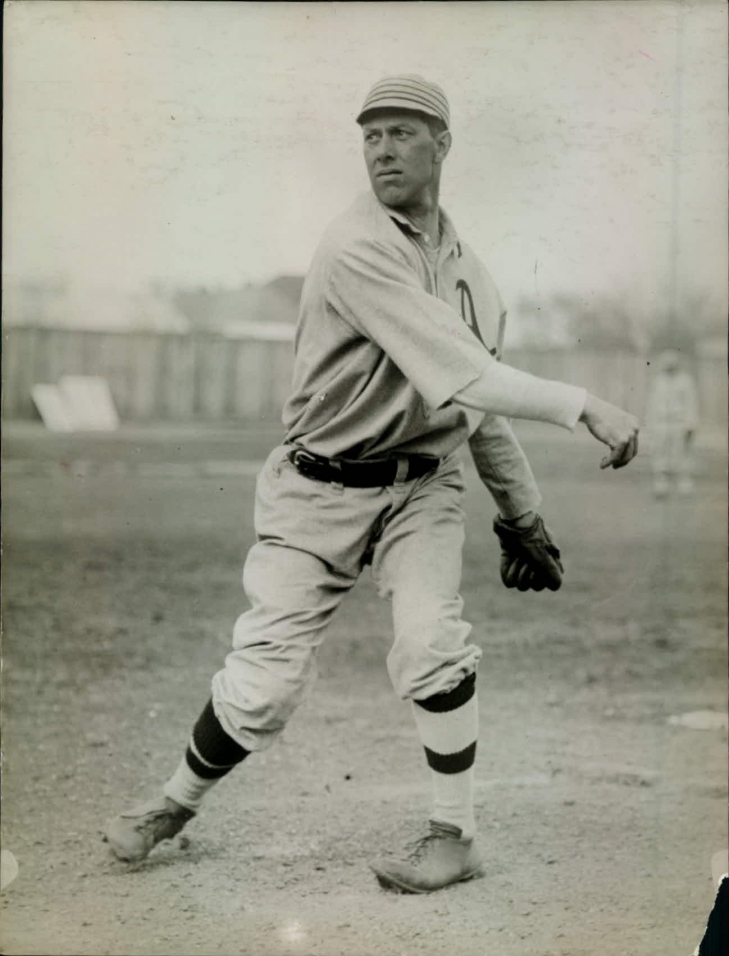
During the initial four years of his Major League career, Jack Coombs showed minimal indication that he would eventually rewrite the franchise record books. Upon his arrival in Philadelphia from Colby College in 1906, the right-handed pitcher epitomized an average, unrefined player. He maintained a perfectly balanced record of 35-35 entering the 1910 season, and when his early performances that spring were inconsistent, Connie Mack became sufficiently frustrated to demote him to the bullpen.
Then, baseball alchemy took place. According to dugout lore, during his exile to the relief corps, Coombs entirely rediscovered the release point on his overhand, drop-off-the-table curveball. Equipped with a new, deadly secondary pitch to complement his powerful fastball, he launched a summer streak unmatched in Athletics history.
Coombs rejoined the rotation and quickly became nearly unbeatable, dominating the A.L. like a natural phenomenon. He concluded the notable 1910 season with an astonishing 31-9 record, maintaining a minimal 1.30 ERA over an impressive 353 innings. During this period, he threw 13 shutouts, including a remarkable streak of 53 consecutive scoreless innings.
Fittingly, his regular-season mastery carried directly into October. Coombs single-handedly battered the Chicago Cubs in the 1910 World Series, throwing three complete-game victories in a span of just six days to carry Philadelphia to its first Title.
Instead of resting on his laurels, "Colby Jack" once again proved to be a relentless performer during the 1911 title defense. He secured his second straight American League wins title with 28 victories, despite the league's widespread offensive increase due to the new cork-centered ball, which caused his ERA to rise to 3.53 over 336.2 innings.
When the Athletics advanced to the Fall Classic to face the New York Giants, Coombs etched his name more deeply into baseball folklore. In a legendary, high-stakes duel, he out-slugged and outlasted the immortal Christy Mathewson on the mound, securing a signature postseason victory that helped secure back-to-back world titles.
He pushed through to secure another 21-win season in 1912, but the constant and extensive workload eventually wore him down. Before the 1913 season, Coombs contracted a severe typhoid fever, an illness so intense it nearly took his life and kept him out for most of the next two years. Realizing that the passionate right-hander was no longer at his peak physically, a financially strained Mack decided to release him. This move later allowed Coombs to make a successful second career as a veteran stabilizer for the Brooklyn Robins.
He concluded his dramatic, high-variance tenure in Philadelphia with a stellar 115-67 record, a 2.60 ERA, and 850 strikeouts. Coombs would be added to the Philadelphia Baseball Wall of Fame in 1992.
31. Joe Rudi
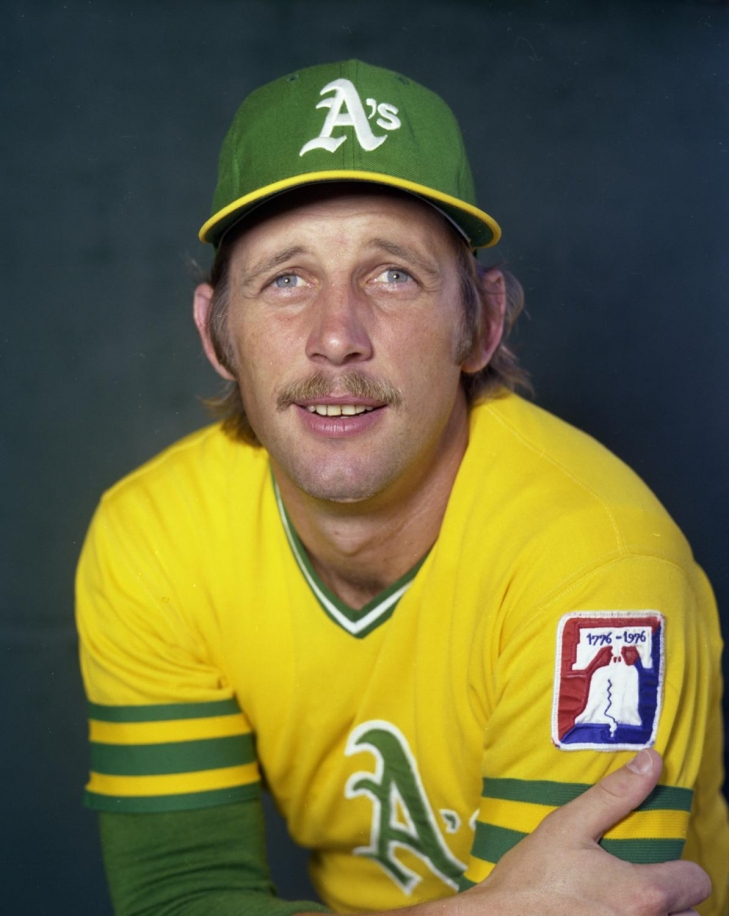
When Joe Rudi first donned the Athletics uniform, the franchise was preparing to relocate. He appeared in just 19 games in 1967 during its last summer in Kansas City, before moving west to California. His early years in Oakland were challenging; he was stuck in a part-time role and struggled to find his rhythm, with his batting average staying below .200.
Everything shifted in 1970. With a permanent starting position in left field for a quickly ascending, powerhouse team, Rudi finally found his rhythm at the plate, showcasing a smooth, line-drive swing to achieve an impressive .309 batting average and solidify his role as a vital core member.
By 1972, the Athletics were poised to establish one of the most dominant dynasties in modern baseball, with Rudi leading the charge. He showcased an exceptional offensive display that summer, leading the American League with 181 hits and 9 triples, while also hitting 19 home runs and maintaining a solid .305 batting average. This breakout year earned him his first All-Star selection and a close second place behind Dick Allen in the AL MVP voting.
More importantly, it laid the groundwork for October folklore. In Game 2 of the 1972 World Series versus Cincinnati, Rudi created a memorable franchise moment by leaping high against the left-field wall to make a stunning backhanded catch that saved the game and helped secure the first of three consecutive world titles.
Although his raw percentage metrics dipped slightly during his 1973 title defense, he rebounded strongly in 1974. Rudi dominated junior circuit pitchers, leading the league with 39 doubles, setting a career high with 22 home runs, and driving in 99 runs. For the second time in three years, he finished as a close runner-up in the AL MVP voting, narrowly behind Jeff Burroughs.
The historic 1974 season also saw a significant defensive achievement, as he earned his first of three straight Rawlings Gold Glove Awards, transforming left field into an impenetrable zone for the "Mustache Gang." He capped the year by hitting the decisive, World Series-winning home run in Game 5 against Los Angeles' Mike Marshall, securing the team's record-breaking “three-peat."
He achieved an additional highly productive season in 1975, with 21 home runs. However, the impending financial challenges associated with free agency soon resulted in widespread organizational disorder. In June 1976, owner Charlie Finley, facing financial difficulties, unexpectedly sold Rudi and relief pitcher Rollie Fingers to the Boston Red Sox for a substantial sum of money during a notable fire sale. This transaction garnered significant media attention; nevertheless, commissioner Bowie Kuhn intervened merely three days later, nullifying the deals and mandating the return of both players to Oakland.
Rudi finished out the summer in the green and gold, but with the reserve clause dissolved, he immediately exercised his right to test the open market at season's end, walking away to sign a lucrative contract with the California Angels.
After subsequent stops with the Angels and Red Sox, his baseball journey reached a beautiful, full-circle conclusion in 1982. Rudi returned to Oakland for one final, nostalgic season, closing out his playing days under the Coliseum sun.
Rudi would contribute 1,468 Hits with 179 Home Runs for the Athletics and was elected to the Athletics Hall of Fame in 2022.
