


Site Admin
38. Cecil Fielder
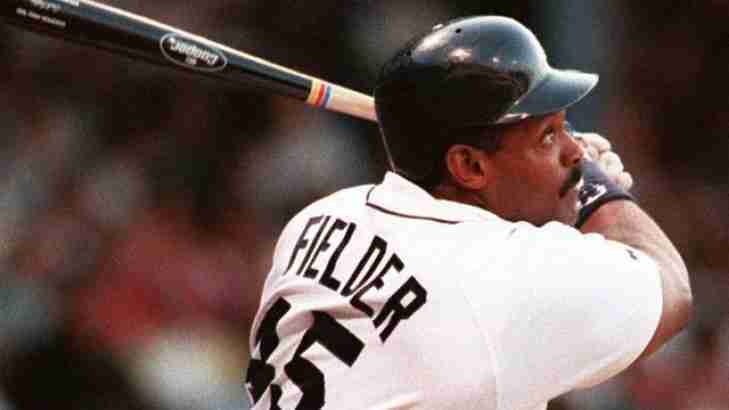
Cecil Fielder arrived in Detroit as the greatest mystery in baseball, a former part-time prospect who had vanished into the Japanese Central League only to return as a completely transformed offensive powerhouse. Signed by the Tigers in early 1990 after a year with the Hanshin Tigers, he immediately shattered the expectations of a league that had largely written him off, and in his first three years back, he was the most feared power hitter in the AL.
Fielder’s impact in a Detroit uniform reached a historic peak the moment he stepped back onto American soil in 1990. In a season that sent shockwaves through the sport, he became the first player in thirteen years to eclipse the 50-home run mark, finishing with 51 round-trippers and 132 RBIs. He demonstrated a specialized ability to drive the ball out of any part of Tiger Stadium, including a legendary blast over the left-field roof, leading the league in home runs, RBIs, and slugging percentage. He earned his first All-Star nod and a Silver Slugger while finishing as the narrow runner-up in the MVP voting.
Between 1990 and 1992, Fielder was at the absolute forefront of the league's offensive leaderboards, becoming the first player since Babe Ruth to lead the majors in RBIs for three consecutive seasons. He maintained a focused intensity in the middle of the order, clouting another 44 home runs in 1991 to repeat as the league's home run champion and secure his second straight second-place finish in the MVP race.
Following that untouchable 1990–1992 peak, Fielder’s game entered a phase of high-volume production that lacked the same league-altering efficiency. While he remained a 30-homer threat and earned another All-Star nod in 1993, his slugging percentage began to dip as he transitioned into a more patient, walk-heavy approach. By 1994 and 1995, he continued to be a statistical force in the middle of the order, but the physical toll of his frame and a high-frequency strikeout rate became more glaring as the roster struggled around him.
Everything culminated in a 1996 mid-season trade to the New York Yankees, where he eventually secured the World Series title that had eluded him in Detroit. With the Tigers, Fielder compiled 245 home runs and 758 RBIs.
37. Max Scherzer

Max Scherzer arrived in Detroit as part of a blockbuster three-team trade in 2010, a young right-hander with an electric arm and a distinctive three-quarters delivery that many scouts feared would lead to the bullpen. Instead, he transformed into a cornerstone of a rotation that dominated the American League Central for half a decade.
When he first arrived in 2010, the "stuff" was undeniable, but the consistency was elusive; he even spent a brief stint in Triple-A Toledo that May to iron out his mechanics and find a more repeatable rhythm. He returned with a vengeance, flashing his potential with a 12-win debut in Detroit, but he remained a diamond in the rough—a pitcher who could dominate for five innings but often struggled to finish what he started.
By 2011 and 2012, the transformation was well underway. Scherzer began to harness his maximum-effort delivery, transitioning from a thrower into a true pitcher. He recorded a career-high 15 wins in 2011, helping the club reach the ALCS, and followed it up with a 231-strikeout campaign in 2012 that signaled he was ready for a larger share of the spotlight. This period of growth served as the essential lead-in to his historic 2013 run, proving that when an elite arm finally aligns with elite command, the result is a trophy-winning season that alters a franchise's course.
Scherzer’s journey in a Detroit uniform reached a historic peak during the 2013 campaign. That summer, he transitioned into the most unhittable presence in the league, capturing the American League Cy Young Award with a staggering 21-3 record. He demonstrated a specialized ability to dismantle lineups with a high-velocity heater and a devastating slider, posting an American League-best 0.97 WHIP. He showed the organization that he was a foundational ace in his own right, earning the starting nod for the All-Star Game and providing the strikeout production that anchored a championship-contending staff.
The 2014 season served as a thunderous encore, proving that his previous dominance was no statistical fluke. Betting on himself in a contract year, Scherzer became the first pitcher in Tigers history to start a season with seven or more strikeouts in each of his first seven starts. He reached a career peak for workload and durability, leading the American League with 18 wins and racking up a then-career-high 252 strikeouts. That June, he finally ended a drought of 178 starts without a complete game by tossing a three-hit shutout against Chicago.
Scherzer eventually moved on to Washington as a free agent, leaving behind a legacy as one of the greatest power pitchers to ever take the mound in Detroit. With the Tigers, Scherzer compiled 82 wins and 1,081 strikeouts over five seasons.
42. Billy Rogell
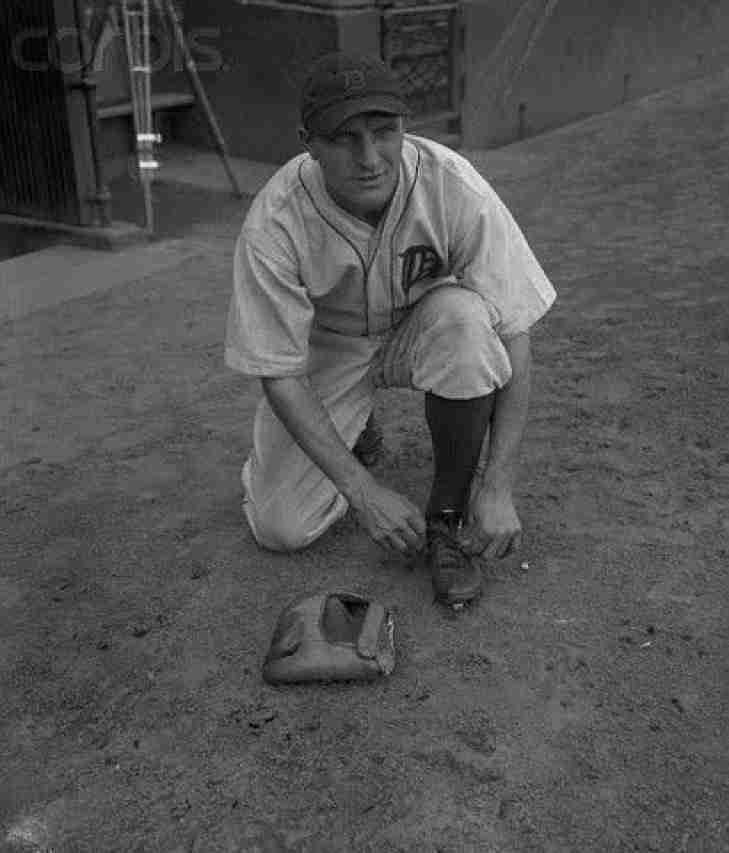
While many of the 1930s Tigers legends were homegrown, Billy Rogell’s arrival in Detroit was the result of a calculated gamble by the front office to fix a glaring hole in the middle of the diamond. He didn't start his career Detrotit; instead, he broke in with the Boston Red Sox in the late 1920s.
By 1930, however, Rogell found himself at a career crossroads. Boston had traded him to the St. Louis Salukis of the minor leagues, where he began to truly master the shortstop position. It was there that the Tigers’ scouts noticed his elite defensive range and high-velocity arm. Seeking a steady hand to anchor their infield, Detroit purchased his contract from St. Louis in 1930.
He didn't become the everyday starter immediately, but by 1932, he had completely seized the job. His arrival proved to be the final defensive piece the Tigers needed to transition from a middle-of-the-pack team into a powerhouse. By pairing Rogell’s vacuum-like glove with Charlie Gehringer’s precision at second base, the Tigers built a defensive wall that would eventually lead them to the 1935 World Series title.
By the late 1930s, the physical toll of his high-velocity style of play, specifically, a lingering arm injury sustained during the 1938 season, began to affect his legendary range. Despite the pain, he remained a model of durability, continuing to anchor the middle of the diamond and providing the steady-state leadership required as the 1935 championship core began to age.
Following the 1939 season, the Tigers traded their long-time defensive anchor to the Chicago Cubs for shortstop Dick Bartell. With the Tigers, Rogell compiled 1,332 hits, led the AL in defensive bWAR three times, and won the 1935 World Series.
47. Tony Phillips
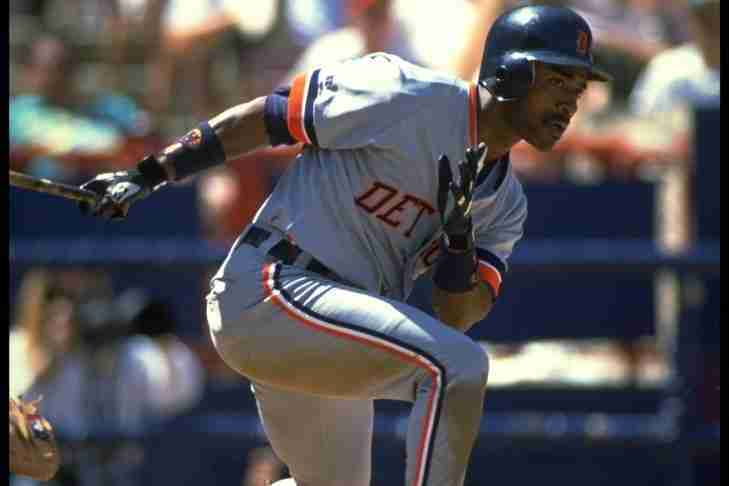
Tony Phillips joined the Detroit Tigers as a free agent in late 1989, a veteran utility man who had spent eight seasons in Oakland as a valuable but often overlooked role player. The move to the Motor City transformed his career, as he transitioned from a part-time contributor to a tactical powerhouse at the top of the lineup.
During the 1992 and 1993 campaigns, he demonstrated a focused intensity on the strike zone that redefined the role of a leadoff hitter, leading the American League with 114 runs scored in 1992. By 1993, he evolved into the most patient presence in the sport, leading the league with 132 walks while recording a career-high .313 batting average and a .443 on-base percentage. He showed the organization that he was a foundational spark plug, finishing 16th in the MVP voting.
Phillips was traded to the California Angels in 1995 after five seasons, and he left behind 763 hits and 492 walks.