


Site Admin
31. Jon Lester

Jon Lester’s journey to Boston greatness is defined by a level of perseverance that transcends the box score. Drafted in 2002, he debuted in 2006 but soon faced a battle far greater than any hitter: a diagnosis of Anaplastic Large Cell Lymphoma. His return to the mound in 2007 was a movie-worthy story, culminating in a high-leverage start in Game 4 of the World Series. By clinching the title against Colorado, Lester didn't just win a game; he signaled the arrival of the next great Red Sox ace.
Lester’s peak arrived in 2008 when he went 16–6 and threw a legendary no-hitter against the Royals—the first by a Red Sox lefty in over 50 years. He was even more stellar in 2010, posting a 19–9 record with a 3.25 ERA and 225 strikeouts, finishing fourth in the Cy Young voting. He was a perennial workhorse, recording at least 200 innings and 200 strikeouts in three different seasons for Boston, earning the Hutch Award for his dedication to the game.
Where Lester became most alive was in October. He was the undisputed engine of the 2013 World Series championship, going 4–1 in the postseason with a staggering 1.56 ERA. In the Fall Classic against the Cardinals, he won both of his starts, allowing only one run over 15.1 innings. This performance cemented his reputation as one of the greatest big-game pitchers in franchise history—a lefty who thrived when the lights were brightest, and the stakes were highest.
Lester’s tenure in Boston ended abruptly in 2014 when he was traded to Oakland at the deadline, a move that left a permanent mark on the Fenway faithful. He departed with a 110–63 record and 1,386 strikeouts, ranking among the franchise leaders in nearly every major pitching category. Though he later won another title in Chicago, his legacy remains anchored in New England as the man who beat cancer and then beat the world’s best hitters to bring two trophies to Yawkey Way.
The Buck Stops Here -- African Americans Who Belong in Sports Halls of Fame
The Buck Stops Here -- Hall of Fame News -- Season 1 Episode 24

33. Mel Parnell
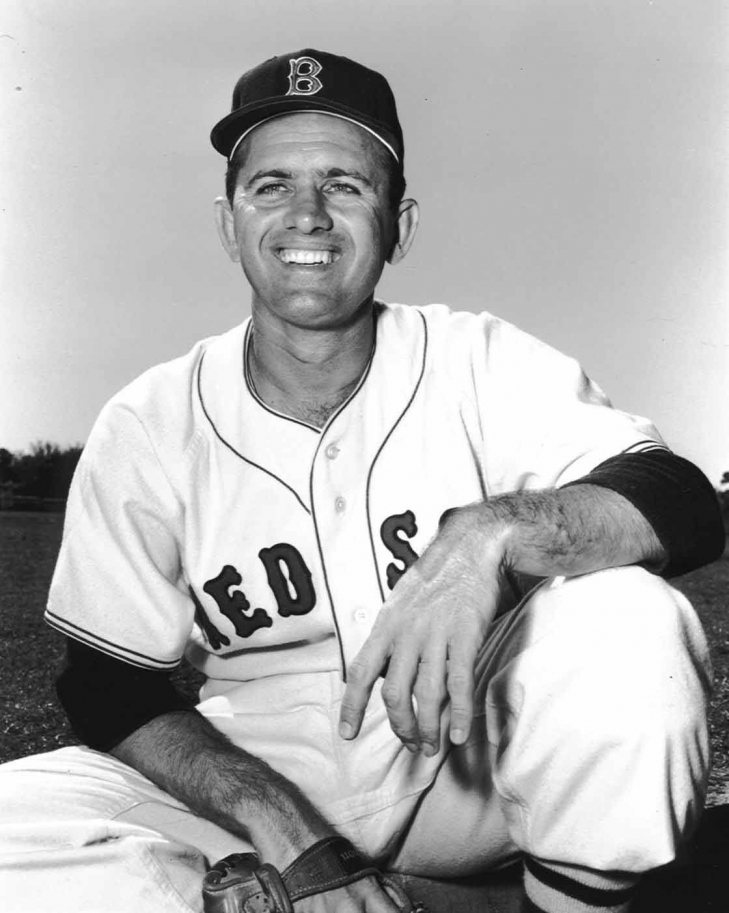
Mel Parnell debuted in 1947 and quickly proved that a left-hander could not only survive Fenway Park but dominate it. A career Red Sox who spent his entire 10-year career in Boston, Parnell combined impeccable control with a hard-breaking slider that stifled right-handed hitters. His legacy is built on his status as the "Yankee Killer," a pitcher who consistently rose to the occasion against Boston's fiercest rival during the height of the post-war era.
The 1949 season stands as Parnell’s best year. In a year where he finished fourth in the MVP voting, he led the American League in Wins (25), ERA (2.77), Complete Games (27), and Innings Pitched (295.1). He also had a league-leading 0.2 HR/9 rate, a staggering statistic for a left-hander pitching in the shadow of the Wall. This remains the most wins ever recorded by a Red Sox southpaw in a single season, a benchmark that even icons like Jon Lester and Lefty Grove never surpassed.
Parnell’s consistency was his hallmark, recording three more seasons with at least 18 wins (1950, 1951, and 1953). His impact was vital to the Red Sox staying in the hunt during the competitive early 50s. On July 14, 1956, he provided a final signature moment by throwing a no-hitter against the White Sox, the first by a Red Sox pitcher in 33 years. Though arm and elbow injuries eventually forced his retirement after that season, he left as the franchise leader for left-handers in wins, starts, and innings.
Parnell finished his journey on the diamond with a 123–75 record and a stellar .621 winning percentage. His deep connection to the franchise continued long after his playing days as he served as a beloved broadcaster for the team. Inducted into the Red Sox Hall of Fame in 1997.