

Our All Time Top 50 Los Angeles Dodgers have been revised to reflect the 2025 Season

Yes, we know that this is taking a while!
As many of you know, we at Notinhalloffame.com are slowly generating the top 50 of each major North American sports team. That being said, we maintain and update our existing Top 50 lists annually. We are pleased to present our pre-2026 revision of our top 50 Los Angeles Dodgers.
As for all of our top 50 players in baseball, we look at the following:
1. Duration and Impact.
2. Traditional statistics and how they finished in the Major League Baseball.
3. Advanced Statistics.
4. Playoff performance.
5. Their respective legacy on the team.
6. How successful the team was when he was there.
7. Respecting the era in which they played.
Criteria 1-4 will make up the lion’s share of the algorithm. Please note that we have implemented this for the first time. This has changed the rankings all throughout the board.
Last year, the Dodgers did exactly what many predicted. They won the 2025 World Series in a thrilling seven-game series against the Toronto Blue Jays. Despite the Dodgers’ lengthy tenure, there were three new entrants and one significant rise. There was actually a fourth new entrant, who rose due to the new algorithm.
As always, we present our top five, which saw no changes.
1. Clayton Kershaw
2. Sandy Koufax
3. Jackie Robinson
4. Don Drysdale
5. Duke Snider
You can find the entire list here.
Mookie Betts, who came off another good season, jumped to #21 from #31.
Freddie Freeman, who is a former MVP, joins the list at #39.
Debuting on the list is Shohei Ohtani, who may only have been a Dodger for two years, but won MVPs and World Series rings in both of them. He is ranked #47.
Also notable, Kevin Brown returns to the list due to the new algorithm. He is ranked at #48.
The last new entrant is Max Muncy. He debuts at #50.
Ramon Martinez, Matt Kemp, Babe Herman, and Andre Ethier fell off the Top 50.
We thank you for your continued support of our lists on Notinhalloffame.com.
50. Max Muncy

Max Muncy made his way to Los Angeles in 2018 as a minor league signing. His career looked like it might be over after he was released by the Oakland Athletics. But with a clever mechanical adjustment, he transformed into one of the most inspiring success stories in the history of the 213.
Muncy had an incredible debut year, hitting 35 home runs even though he started in Triple-A. He really showed his mastery of the strike zone and finished the season with an impressive .973 OPS. His place in Dodger history was cemented during the 2018 World Series when he became a local hero by hitting a walk-off home run in the 18th inning of Game 3, the longest game in Fall Classic history.
Between 2019 and 2024, he achieved four seasons with at least 35 home runs and was selected as an All-Star twice (2019, 2021), demonstrating that his power was genuine. He played a key role in the 2020 World Series championship, providing a steady presence during the team's run through the bubble. Although he sometimes faced moments of frustration with a lower batting average, his ability to draw walks and his versatility in playing first, second, and third base with professionalism made him a truly valuable asset to the organization. He again helped the Dodgers win another World Series Championship in 2025, and broke the 200 home run plateau in the season.
Can Muncy help them win another in 2026?
47. Shohei Ohtani

Shohei Ohtani was a force of nature whose MLB career felt wasted in Los Angeles as the Angels could not build anything around him and Mike Trout. A free agent entering the 2024 season, Ohtani elected to stay in L.A.; the Dodgers, that is.
Signing the biggest contract in baseball history, Ohtani had high hopes and quickly proved himself right. In his first year in Dodger blue, he made history with the first "50/50" season in Major League Baseball, a stunning blend of power and speed, hitting 54 home runs and stealing 59 bases. He displayed full mastery of the National League, earning the MVP award and helping the Dodgers win their first World Series title with him on the team. During that postseason, he reached new heights with clutch performances, showing that Hollywood’s brightest lights were just the perfect stage for his extraordinary talent.
Ohtani reached an incredible new height during the 2025 season. Coming back to the mound while keeping up his amazing offensive skills, he created a season that confirmed his status as a true legend in the sport. He set a historic milestone by surpassing his own Dodgers record with 55 home runs and also scored 146 runs, something that hadn't been achieved in the franchise since 1930. On the mound, he was a reliable star, wrapping up his comeback with a 2.87 ERA and winning MVP awards two years in a row. His journey was celebrated further when he was named NLCS MVP, helping Los Angeles win their second straight World Series and showing that his influence is as unstoppable as it is remarkable.
Entering 2026, Ohtani compiled 109 home runs, 118 stolen bases, and a .301 batting average. What a start!
39. Freddie Freeman

Freddie Freeman was a baseball superstar in Atlanta, where he won an MVP and a World Series ring. When he was a free agent in 2022, Freeman opted to return to the area where he was raised, and he signed with the Los Angeles Dodgers.
Freeman quickly proved his value after joining the talented Dodgers team. In his first two seasons (2022–2023), he reached new heights, posting over 200 hits each year and leading the National League in doubles twice. He demonstrated excellent strike zone control, using a focused "gap-to-gap" approach, and achieved a career-high 211 hits in 2023, the most by a Dodger in more than sixty years. He has become a key fixture in the All-MLB First Team.
The 2024 season solidified Freeman’s status as a Dodgers legend. During that postseason, despite battling a tough ankle injury, he delivered one of the most heroic runs in World Series history. In Game 1 against the Yankees, he created unforgettable drama by hitting the first-ever walk-off grand slam in Fall Classic history. He then set a major league record for consecutive World Series games with a home run and was eventually named the World Series MVP. This display of resilience was the driving force behind the Dodgers' eighth championship and further established his reputation as a big-game performer.
The 2025 season marked another peak of efficiency for Blue. Freeman continued to be a dominant force in the middle order, batting .295 with 24 home runs and securing his ninth All-Star selection. During this time, he achieved several historic milestones, cementing his status as a perennial MVP candidate and leading a record-setting 97-win team. As he heads into the 2026 season, he is just 30 home runs away from reaching 400 and is nearing 2,500 hits, making his eventual Hall of Fame induction almost guaranteed.
Clayton Kershaw to retire at the end of the season

It was long suspected, but today, Los Angeles Dodgers Pitcher Clayton Kershaw has announced that this season will be his last.
Kershaw debuted for L.A. in 2008, and in the 2010s, he was the most dominant Pitcher in the National League. From 2011 to 2017, Kershaw never finished lower than fifth in Cy Young voting, with him winning the Cy Young three times, along with the MVP in 2014. A five-time ERA leader and three-time Strikeout leader, Kershaw currently has a record of 222-96, and will finish his career under 100 Losses. He is also a member of the 3,000 Strikeout club.
Enjoying a renaissance this year (10-2), Kershaw is already a two-time World Series Champion, though his playoff performances have been the only flaw in what will be a Hall of Fame career.
He is eligible for Cooperstown in 2031 and should be a lock to enter that year.
Our All Time Top 50 Los Angeles Dodgers have been revised to reflect the 2024 Season
Yes, we know that this is taking a while!
As many of you know, we at Notinhalloffame.com are slowly generating the top 50 of each major North American sports team. That being said, we have existing Top 50 lists and consistently look to update them when necessary and based on necessity. As such, we are delighted to present our post-2024 revision of our top 50 Los Angeles Dodgers.
As for all of our top 50 players in baseball, we look at the following:
1. Advanced Statistics.
2. Traditional statistics and how they finished in the National League.
3. Playoff accomplishments.
4. Their overall impact on the team and other intangibles that are not reflected in a stat sheet.
Please note that our algorithm has changed, which yielded minor changes throughout the baseball lists.
Last year, the Dodgers went all in on Shohei Ohtani, and it paid off immediately with the Los Angeles winning the World Series, by defeating the New York Yankees. Amazingly, there were no new entrants based on 2024, though Max Muncy and Freddie Freeman were close. Despite winning the MVP, on a team as old and as successful as the Dodgers, Ohtani is not ranked.
As always, we present our top five, which saw two changes based on the new algorithm.
3. Sandy Koufax
4. Don Drysdale
5. Duke Snider
You can find the entire list here.
Within the top five, Robinson rockets up to #2 from #6. His importance in the game could easily place him at the top, but that is another list completely.
Mookie Betts shot up from #46 to #31 and with the new algorithm, Outfielder Andre Ethier comes in at #50.
We thank you for your continued support of our lists on Notinhalloffame.com.
RIP: Fernando Valenzuela
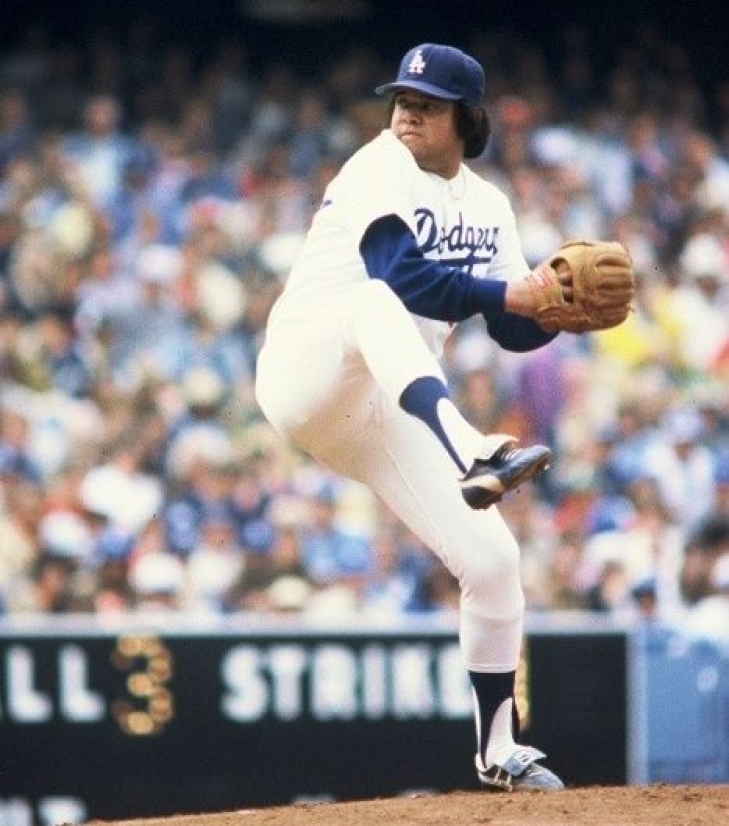
One of the Los Angeles Dodgers' legendary pitchers passed away days before the Dodgers will face the New York Yankees in the 2024 World Series.
Fernando Valenzuela, who took over the hearts of Los Angeles in the early 80s, passed away yesterday. He was 63 years old.
From Navojoa, Mexico, Valenzuela was a late call-up in 1980. Due to an injury to Jerry Reuss on the eve of the 1981 Opening Day, he got the call and began the season by winning his first eight decisions. He finished the season as 13-7 with a league-leading 190 Strikeouts and would win the National League Rookie of the Year and Cy Young Award. The Dodgers won the World Series that year, and Fernandomania was the toast of the baseball world.
Valenzuela did not speak English when he was called up, and his portly body did not look athletic at all. Still, he had an infectious smile and undeniable charisma, and he became a fan favorite among all Dodgers fans, Hispanic or not.
He went on to have three more top-five Cy Young finishes, was a six-time All-Star, a two-time Silver Slugger, and a one-time Gold Glove winner. Valenzuela also played for California, Baltimore, Philadelphia, San Diego, and St. Louis and had a record of 173-152 with 2,074 Strikeouts. Following his playing career, Valenzuela worked for the Dodgers on their Spanish Language broadcasts, and stepped aside a week ago to focus on his health.
We here at Notinhalloffame.com would like to extend our condolences to the fans, friends and family of Fernando Valenzuela.
Our All-Time Top 50 Los Angeles Dodgers have been revised to reflect the 2023 Season
Yes, we know that this is taking a while!
As many of you know, we here at Notinhalloffame.com are slowly generating the 50 of each major North American sports team. That being said, we have existing Top 50 lists out and we always consistently look to update them when we can and based on necessity. As such, we are very happy to present our post 2022/23 revision of our top 50 Los Angeles Dodgers.
As for all of our top 50 players in baseball we look at the following:
1. Advanced Statistics.
2. Traditional statistics and how they finished in Major League Baseball.
3. Playoff accomplishments.
4. Their overall impact on the team and other intangibles not reflected in a stat sheet.
Last year, the Dodgers had another great year, with a playoff run, but in their current state, anything other than a World Series Championship is a failure. The 2023 season gave us one new entry.
As always, we present our top five, which saw no changes.
2. Sandy Koufax
3. Duke Snider
4. Don Drysdale
5. Dazzy Vance
You can find the entire list here.
This is one of the hardest lists to do, and we know positioning Kershaw at the top is controversial considering the legends that he beat out. Statistically, we can defend it, but in terms of overall legacy, it would be different.
The lone new entrant was last year’s National League runner-up, Mookie Betts, who debuts at #44.
As always, we thank you for your support, and look for more revisions in the future.
21. Mookie Betts
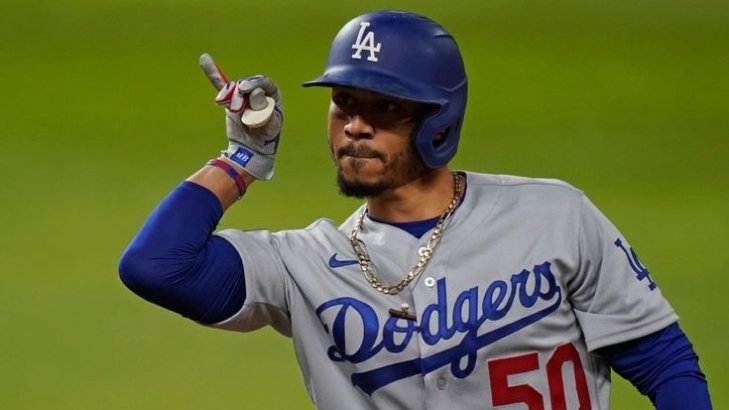
Mookie Betts was a star with the Boston Red Sox, and a lot of heads were scratched in New England when they traded him to the Los Angeles Dodgers. They will remain befuddled to the end of time.
In the COVID- shortened 2020 season, Betts achieved a historic milestone, guiding the Dodgers to their first World Series title in 32 years and finishing as the runner-up for the National League MVP. He earned both a Gold Glove and a Silver Slugger in his first NL season. By 2022, after a brief period affected by injuries, he returned to his top form, hitting 35 home runs and placing fifth in MVP voting, once again collecting all the major awards for right fielders.
In 2023, he authored a season that saw him expand his primary professional role into the infield. He reached a career-high with 39 home runs, drove in 107 runs, and batted .307, finishing second in a historic MVP race. More importantly, he began his tactical transition to second base and shortstop, demonstrating that his athleticism was a specialized asset capable of resolving any defensive crisis. He continued with a 2024 campaign that solidified his second championship with the team, earning his fourth consecutive All-Star selection as a Dodger and an additional Silver Slugger award, while serving as the primary lead-off hitter for a world-title contending squad.
The 2025 campaign presented certain challenges; however, as anticipated, Betts demonstrated resilience and adaptability. Despite managing a localized hand fracture that temporarily incapacitated him during part of the summer season, he made a commendable return, culminating in receiving the prestigious Roberto Clemente Award in 2025. On the playing field, he exhibited consistent proficiency at shortstop throughout nearly the entire season, ultimately being nominated as a Gold Glove finalist for his defensive excellence and contributing significantly to the Dodgers’ attainment of another World Series Championship. Entering the winter of 2025, he had already secured his seventh career Silver Slugger Award, a testament to his enduring excellence and status as a prominent figure in the game well into his thirties.
Through 2025, Betts has compiled 1,772 hits, 293 home runs, and three World Series titles in Los Angeles.
Imagine how high on this list he would be if he only wore Dodger blue!
The Los Angeles Dodgers will retire Fernando Valenzuela's #34 this August
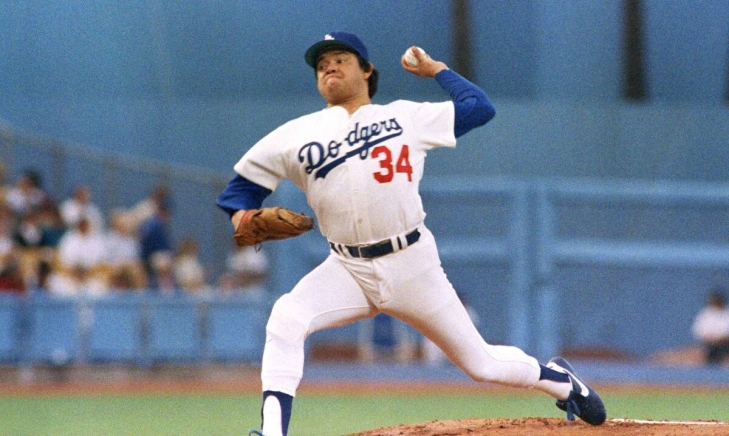
Regular visitors of Notinhalloffame.com know that we are slowly working on the top 50 of every major team in the NHL, NBA, NFL and MLB. Once that is done, we intend to look at how each team honor their past players, coaches and executives. As such, it is important to us that the Seattle Mariners have announced that the Los Angeles Dodgers will retire Fernando Valenzuela’s #34 this August.
The Dodgers accidentally discovered Valenzuela as they were scouting a Shortstop in Mexico. They were dazzled by the rotund hurler and signed him, buying out his Mexican League contract in 1979. A year later, he was a September callup, and in 17.2 Innings, he never allowed a run. It didn't take a clairvoyant to see what might happen in 1981.
"El Toro" helped the Dodgers win the 1981 World Series. That season, he won the Rookie of the Year and Cy Young, making him the first player to accomplish that in the same year. Valenzuela was the opening day starter, and everyone in Los Angeles took the Mexican star to heart.
The mania surrounding Valenzuela cooled, but he was still an elite pitcher for many years. He was an All-Star each year from 1981 to 1986, and he had three more top-five finishes in Cy Young voting. Valenzuela would have three 200 Strikeout years, and he was also a decent batter, winning two Silver Sluggers, as well as aiding L.A to a World Series win in 1988.
Valenzuela will join Pee Wee Reese, Tommy Lasorda, Duke Snider, Gil Hodges. Jim Gilliam, Don Sutton, Walter Alston, Sandy Koufax, Roy Campanella, Jackie Robinson and Don Drysdale who have their number retired by the Dodgers.
Pitchers had better careers, but many of those never captured the imagination of baseball fans like Fernando Valenzuela.
We here at Notinhalloffame.com would like to congratulate Fernando Valenzuela for this impending honor.
Our All-Time Top 50 Los Angeles Dodgers are now up!
Yes, we know that this is taking a while!
As many of you know, we here at Notinhalloffame.com are slowly generating the 50 of each major North American sports team. We have a new one to unveil today, that of the Los Angeles Dodgers.
One of the most celebrated franchises in all sports, the Los Angeles Dodgers were initially the Brooklyn Grays in 1883, but it was a long time before they found an identity.
The organization changed its name multiple times since its origin, the Atlantics (1884), back to the Grays (1885-87), then the Bridegrooms (1888-90), the Grooms (1991-95), the Bridegrooms again (1895-98, the Superbas (1899-1910), the Trolley Dodgers (1911-12), then the Dodgers (1913), the Robins (1914-1931), before settling on the Dodgers again in 1932.
The Brooklyn Dodgers would sign Jackie Robinson to integrate baseball, and in 1955, on their eighth attempt, they finally won their first World Series.
The fans of Brooklyn were not rewarded for their loyalty and patience, and like the crosstown New York Giants, westward the Dodgers went in 1957, where they remain to this day.
In Los Angeles, the Dodgers won three World Series Titles in their first ten years in the new environment, capturing it all in 1959, 1963, and 1965. The 1970s saw them competitive at the decade's end, and they won two more Championships in the 1980s (1981 and 1988).
In recent years, the Dodgers have been a top team, with their last World Series win coming in 2020, giving them seven in total.
Our Top 50 lists in Baseball look at the following:
1. Advanced Statistics.
2. Traditional statistics and how they finished in the National League.
3. Playoff accomplishments.
4. Their overall impact on the team and other intangibles not reflected in a stat sheet.
Remember, this is ONLY based on what a player does on that particular team and not what he accomplished elsewhere and also note that we have placed an increased importance on the first two categories.
This list is updated up until the end of the 2022 Season.
The complete list can be found here, but as always, we announce our top five in this article. They are:
1. Clayton Kershaw
2. Sandy Koufax
4. Duke Snider
5. Dazzy Vance
We will continue our adjustments on our existing lists and will continue developing our new lists.
Look for our more material coming soon!
As always, we thank you for your support.
48. Kevin Brown

Kevin Brown's arrival in Los Angeles in 1999 marked a historic milestone as the first player in Major League Baseball to be awarded a contract exceeding $100 million. This extensive seven-year agreement, which transitioned him from San Diego to Chavez Ravine, was predicated on the expectation that he would be the pivotal element in securing a championship. Although the period known as the "Kevin Brown Era" is often viewed through the prism of the substantial financial investment and a series of injuries, the right-hander demonstrated a high level of efficiency that, when he was healthy, rendered him one of the most formidable sinkerball pitchers in franchise history.
Back in 1999, Brown hit a peak in his workload, pitching a season with 18 wins and over 250 innings, a true testament of his mastery in the National League. He demonstrated incredible control, striking out 221 batters and finishing sixth in the Cy Young voting. The following year, in 2000, he reached new heights of efficiency, capturing the ERA Title with an impressive 2.58 and leading the league in WHIP at 0.99. Throughout this exciting period, he was a key player, surpassing the 200-strikeout mark in consecutive years and proving once again that he was a formidable force in the game.
Brown faced a tough crossroads mid-contract. Between 2001-2002, injuries like chronic back, elbow, and shoulder problems led to a decline in durability. Once a key player, he only won 10 games in 2001 and just 3 in 2002, with a 4.81 ERA. During this period, focus shifted from his sinker to his salary, and fan expectations grew frustrated as the team missed the postseason.
In 2003, Brown had his final full season with the Blue, posting a 14-9 record with a 2.39 ERA. He was a key part of the rotation, earning his second All-Star selection and finishing in the top ten in ERA. However, that winter, the organization changed direction, and Brown was traded to the Yankees for Jeff Weaver and prospects.
Brown compiled a 58-32 record, a 2.83 ERA, and 784 strikeouts as a Dodger, which, while decent, earns him a spot here, will always be associated with a contract that his body couldn’t live up to.
45. Mike Scioscia
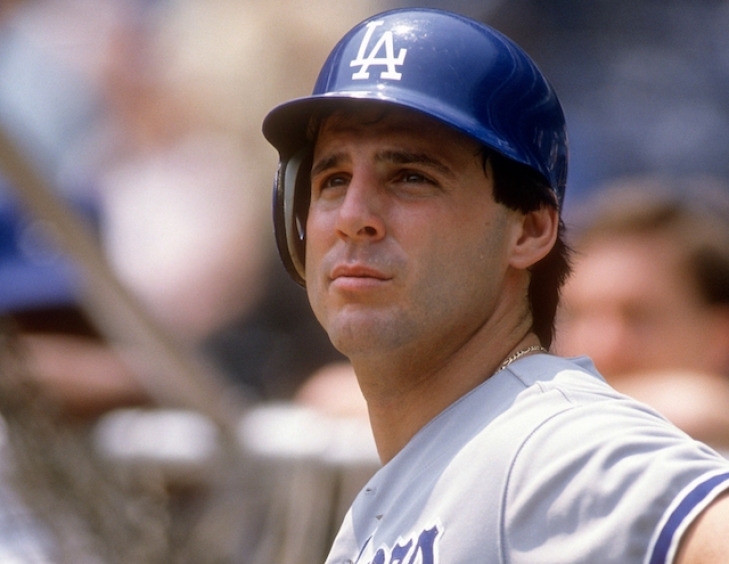
A first-round draft pick in 1976, Mike Scioscia was a catcher who would eventually define the position for an entire generation of Dodgers fans. Known for his legendary toughness and a specialized ability to block the plate, he operated as the undisputed field general for manager Tommy Lasorda. Across 13 seasons in Chavez Ravine, he would wear only one uniform as a player.
Scioscia showed incredible dedication when he learned Spanish to connect better with the young star Fernando Valenzuela. This special bond was a key factor during the exciting "Fernandomania" of 1981, as the rookie catcher helped Valenzuela navigate a remarkable season that earned both the Cy Young Award and Rookie of the Year honors. Scioscia’s deep understanding of the game was evident in his catching career, with 1,395 games, a franchise record that still holds, and his impressive durability and skill in pitch-calling.
Scioscia shined brightly during the 1988 postseason, a memorable highlight in his career. Known more for his reliable contact than power, he created a legendary moment in Game 4 of the NLCS against the New York Mets. When the Dodgers were trailing in the ninth inning against Dwight Gooden, Scioscia hit a special two-run home run that tied the game and set the stage for a thrilling 12-inning victory. This exciting swing sparked the team's path to winning the World Series over the Athletics. During this time, he also gained significant individual recognition with two All-Star selections in 1989 and 1990.
Scioscia retired after the 1993 season with 1,131 hits and 446 RBIs. Following his playing career, he became a successful manager, earning two Manager of the Year Awards and leading the Angels to a World Series victory in 2002.
46. Mike Griffin
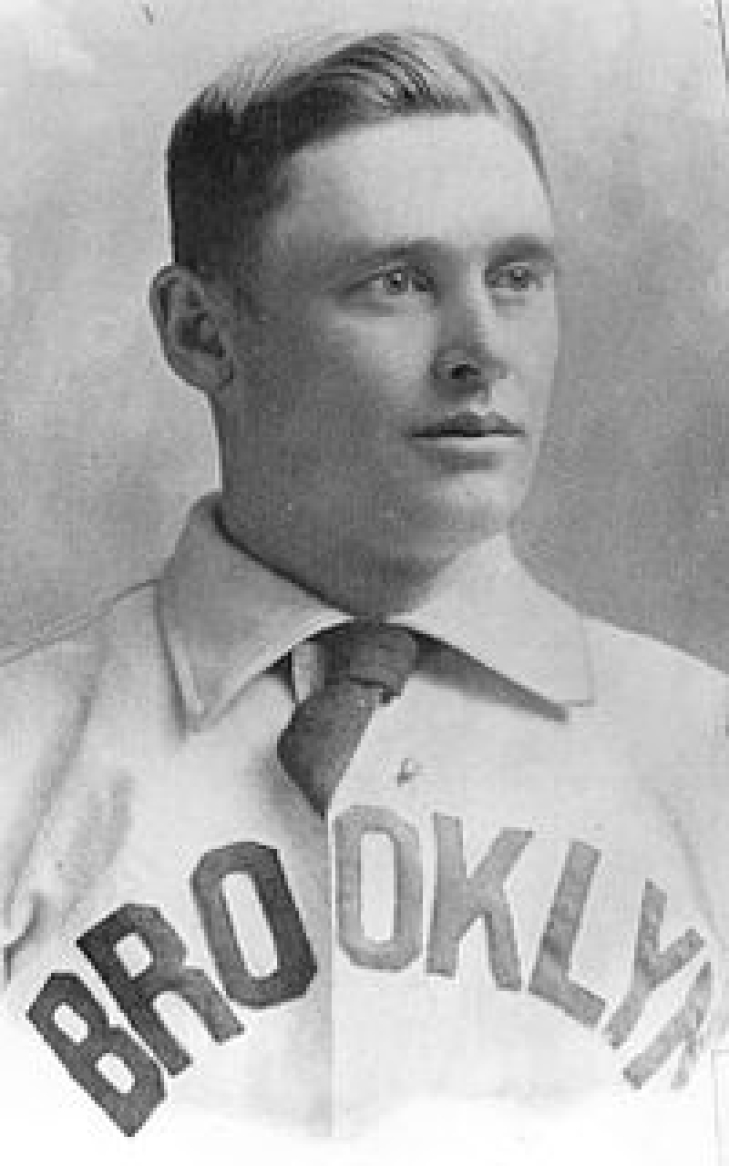
Mike Griffin arrived in Brooklyn in 1891, a seasoned 26-year-old outfielder who had already established himself as a premier run-scorer and a defensive vacuum in center field. While his journey in the borough began after a stint in the short-lived Players' League
In his inaugural season in Brooklyn, Griffin attained a remarkable level of situational hitting, leading the National League with 36 doubles and recording a career-high 65 stolen bases. He demonstrated comprehensive mastery of the outfield, earning recognition as one of the finest defensive center fielders of his era, while establishing a statistically significant pattern of consistent high-volume performance. He reached a level of durability that enabled him to score over 100 runs in nearly every full season he played in Brooklyn, proving to be the primary catalyst for a team that depended on his ability to generate runs from the top of the batting order.
Griffin's impressive 1894-1898 run saw him batting at least .300 for five seasons, peaking at .358 in 1894. He became a key player, team captain, and briefly interim manager in 1898. As good as he was, Griffin would have one of the most acrimonious exits in baseball history.
After the 1898 season, Griffin was surprised when the organization finalized a "syndicate" merger with the Baltimore Orioles, ending his playing days. He refused to sign a contract with new manager Ned Hanlon for less than his previous $3,500. His contract was sold to Cleveland and St. Louis, but Griffin decided his career was over. He ended his career by winning a $2,300 lawsuit against Brooklyn for breach of contract, a symbolic victory at age 33.
His end with Brooklyn was not pretty, but his play was solid, with a .305 Batting Average, 1,168 Hits, and 264 Stolen Bases.
36. Bob Welch
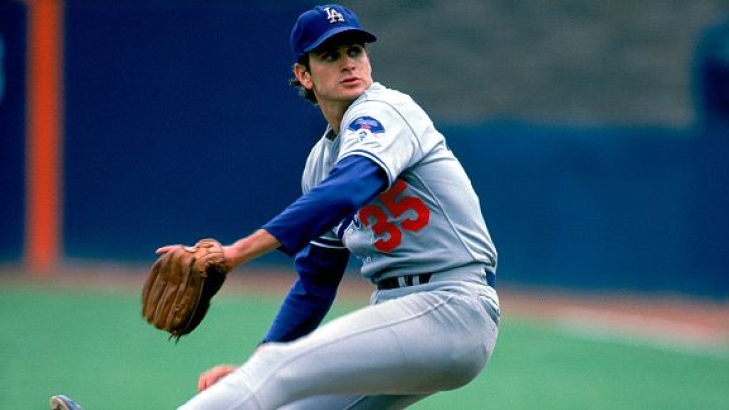
Bob Welch quickly became a well-known name in Southern California. Just a year after being the 20th overall pick in the 1977 draft from Eastern Michigan, the right-hander was pitching in the ninth inning of Game 2 of the 1978 World Series. In a pivotal moment early in his career, the 21-year-old rookie faced off against the legendary Reggie Jackson with two outs and the tying run on third. He ultimately struck out Jackson with a high fastball, sealing the win. This strikeout was more than just the end of a game; it marked the rise of a powerful pitcher who would be a key part of the Los Angeles rotation for the next decade.
While the 1978 highlight reel made him a star, Welch’s true strength was his ability to consistently dismantle National League lineups. By 1980, he received his first All-Star nomination, marking his emergence as a top-tier starter. As a key part of the 1981 staff that finally won the World Series, he provided stability amid the challenges of a split season. Welch demonstrated remarkable durability, achieving a four-year streak starting in 1982 with at least 13 wins each season. His 1983 season was particularly impressive, with 15 wins and a 2.65 ERA, placing him in the top ten for Cy Young voting.
The narrative of Welch's time in Los Angeles is often viewed through the lens of what he did later in Oakland, but his 1987 season with the Blue Jays was arguably the most masterful pitching of his life. Though his 15-9 record was solid, the deeper metrics reveal a monster of a season; he led the entire National League with a 7.1 bWAR, proving he was doing the heavy lifting for a team in transition. He threw a career-high 251.2 innings that year, leaving everything on the mound before the front office decided to move him to the Athletics in a massive three-team trade that winter.
The trade to the American League gave Welch a change of scenery and eventually a Cy Young Award in 1990. Welch compiled a 115-86 record, a 3.14 ERA, and 1,292 strikeouts in Los Angeles.
44. Preacher Roe
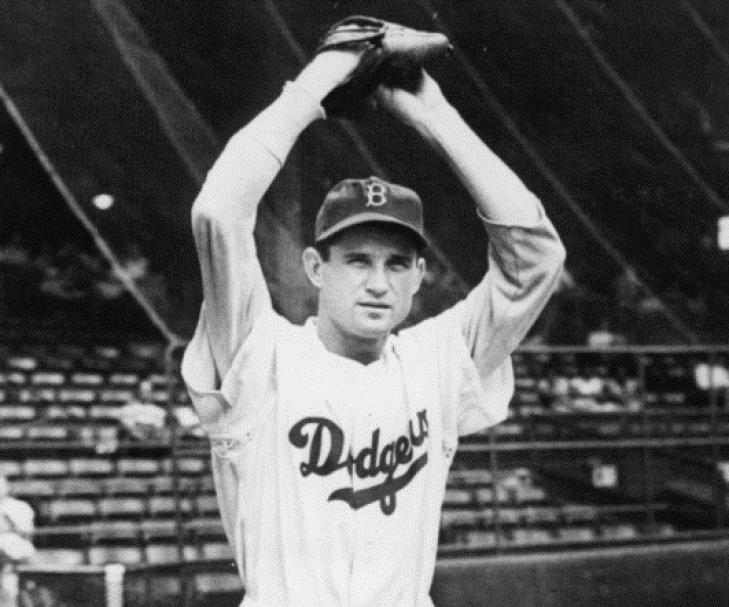
An All-Star with the Pirates in 1945, Elwin “Preacher” Roe made the most of his belated opportunity with the depleted World War II roster, but when the Majors were replenished, the next two years saw his ERA balloon over five, though likely this was the result of the after-effects of a fractured skull he suffered from a fight while refereeing a high school basketball game. Now over 30, it appeared that Roe’s run in the Majors would end shortly, but Dodgers GM, Branch Rickey, had other ideas.
Roe achieved incredible success in Brooklyn, being selected as an All-Star four years in a row from 1949 to 1952. During this time, he truly dominated the senior circuit, especially in 1951 when he had an outstanding season, going 22-3. His remarkable .880 winning percentage that summer is still one of the highest ever for a 20-game winner in modern history, earning him a well-deserved fifth place in the NL MVP voting.
Roe truly shined during some of the most exciting moments in the postseason, reaching new heights of confidence and skill. He was a dependable part of the World Series rotation, especially remembered for his outstanding performance in Game 2 of the 1949 World Series where he pitched a six-hit shutout against the Yankees. Although the Dodgers didn’t win the championship during his time, Roe finished with a commendable 2-1 postseason record and a strong 2.54 ERA, showing he was a clutch performer when it mattered most. His special "money pitch" and veteran experience made him a great partner to the fast-throwing Don Newcombe and Carl Erskine, helping to keep the Dodgers a formidable team in October.
Age and fatigue began to catch up to the 39-year-old left-hander, and the organization finalized a trade that sent him to the Baltimore Orioles, though he never did play for the club. As a Dodger, Roe owned a scintillating 93-37 record, a winning percentage (.715), a 3.12 ERA, and 610 strikeouts.
40. Claude Osteen
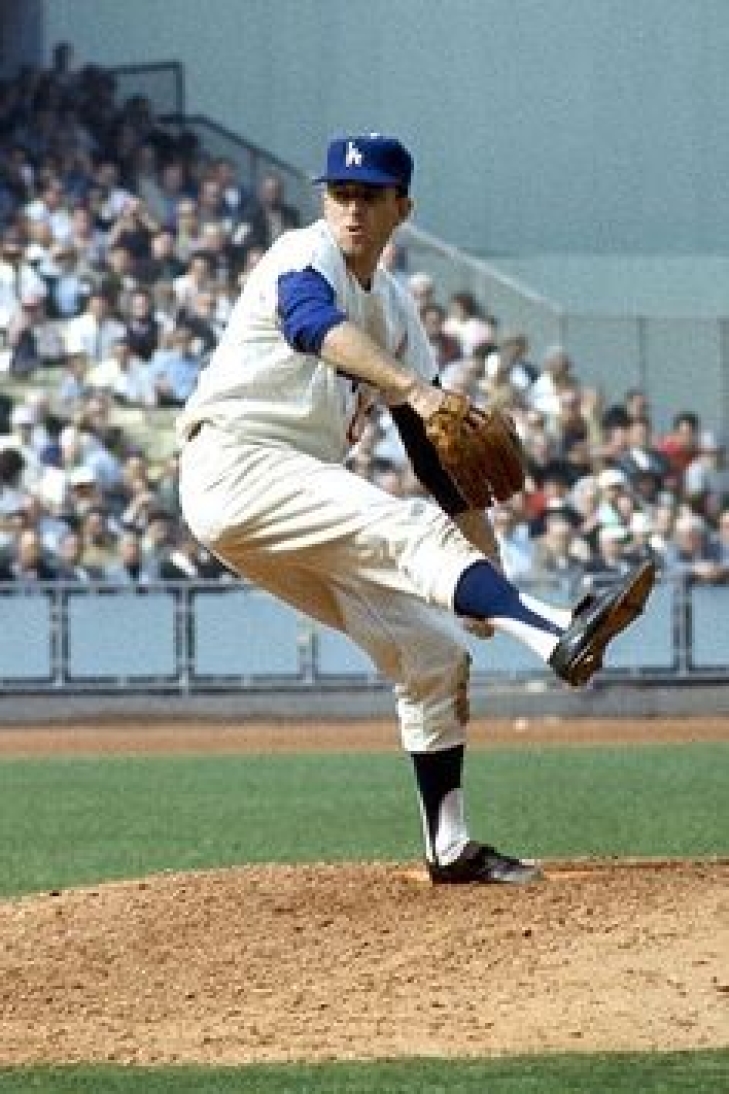
In December 1964, Claude Osteen became a Los Angeles Dodger as the centerpiece of a seven-player trade that sent power-hitter Frank Howard to the Washington Senators. While the Dodgers were trading away a mountain of home runs, they were acquiring a "marathon man" of a southpaw who would spend the next decade defining durability in a rotation that already featured legends.
In his first season on the West Coast, Osteen reached a high point during the World Series against the Twins. When the Dodgers trailed 2-0, he started Game 3 with a five-hit shutout that shifted the series momentum. That summer, he commanded the strike zone, winning 15 games and achieving a career-high 162 strikeouts. Despite occasional hits allowed, he showed resilience, pitching at least 240 innings in nine of ten seasons with the team, becoming the staff's backbone.
During the late 1960s and early 1970s, Osteen enjoyed seven seasons with at least 15 wins for the Dodgers, reaching his peak in 1969 and 1972, with 20 wins in each year. He achieved a historic milestone by being named to three All-Star teams (1967, 1970, 1973), demonstrating that a control-oriented left-handed pitcher could still attain greatness in an era increasingly focused on velocity. His tenure was distinguished by his specialized ability to complete what he started, recording 118 complete games as a Dodger.
After the 1973 season closed, he was traded to the Houston Astros in an exchange that brought the Dodgers Jim Wynn. With Los Angeles, Osteen compiled a 147-126 record, a 3.06 ERA, and 1,162 strikeouts.
49. Pete Reiser
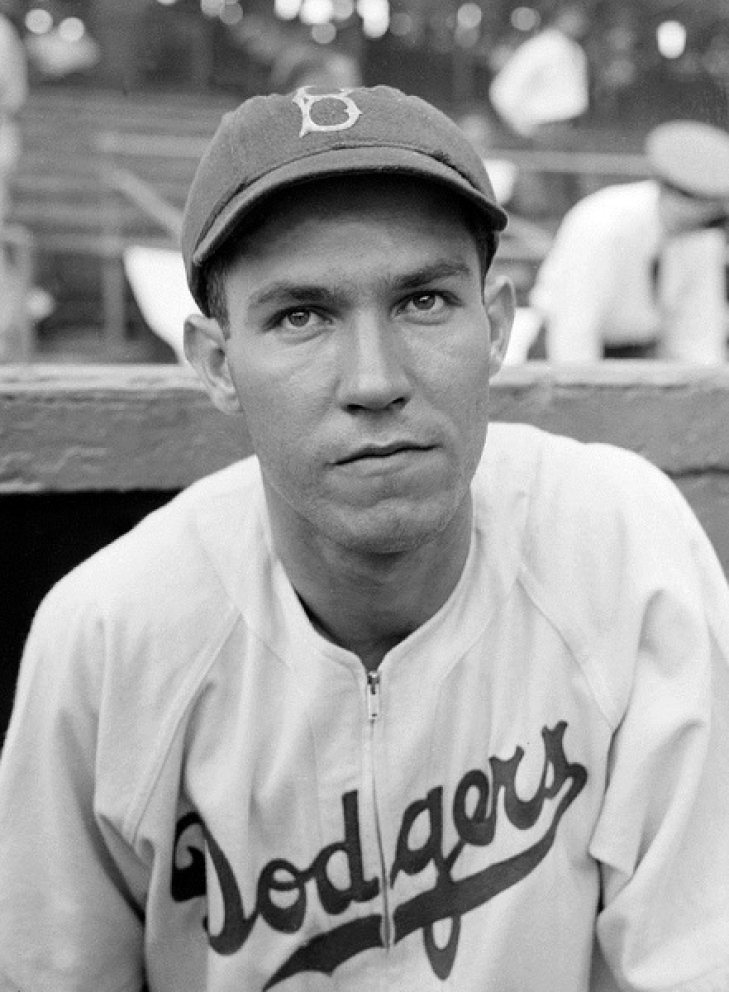
In the late 1930s, Branch Rickey (then with the Cardinals) had built an intricate, sprawling farm system. To circumvent rules limiting how many players a team could control, Rickey "hid" prospects by moving them between various minor league clubs he secretly owned or controlled. Landis, who despised the farm system and saw it as a form of "chain-gang" baseball that suppressed player wages and mobility, launched a massive investigation.
MLB Commissioner Kennesaw Mountain Landis ruled that the Cardinals were illegally controlling dozens of players. He issued a "blanket emancipation," declaring 74 Cardinals prospects, including a young Pete Reiser, to be free agents. Despite being declared a free agent, Reiser was still a Rickey favorite. Rickey didn't want to lose him, so he allegedly struck a "gentleman’s agreement" with Larry MacPhail, the GM of the Dodgers. MacPhail would sign Reiser for $100, "stash" him in the Dodgers' system for a year, and then trade him back to the Cardinals once the heat from Landis died down.
However, Reiser spent a year in the minors for Brooklyn, his talent became undeniable. During Spring Training in 1940, Reiser was so explosive that the Dodgers' veteran players and manager Leo Durocher reportedly refused to let MacPhail trade him away, though Rickey himself would take over the administrative reins of the Dodgers in 1943.
Reiser spent a year in the minors for Brooklyn, and his talent became undeniable. During Spring Training in 1940, Reiser was so explosive that the Dodgers' veteran players and manager Leo Durocher reportedly refused to let MacPhail trade him away.
In 1941, at merely 22 years of age, Reiser attained an exceptional peak of achievement by authoring a remarkable season, during which he led the National League in batting average (.343), runs (117), doubles (39), triples (17), and slugging percentage (.558). He demonstrated comprehensive mastery of the game, finishing second in the Most Valuable Player (MVP) voting to his teammate, Dolph Camilli, an outcome that many baseball historians considered a significant oversight, considering Reiser’s league-leading 8.0 Wins Above Replacement (bWAR). During that summer, he reached a distinguished plateau of stardom, guiding the Dodgers to the Fall Classic and cementing his reputation as the premier player in the senior circuit.
The season after, Reiser was on track for another batting title, but disaster struck in the form of crashing face-first into the outfield wall at Sportsman’s Park. The concussion marked a turning point; he returned days later, but his ability to track the ball was compromised. Although he still made the All-Star team, he never regained his 1941 peak. His "fighting spirit" was both his greatest asset and his undoing.
Like many ballplayers, Reiser served his country in World War II, but he returned to Ebbets Field significantly changed. Although he continued to show great effort, often crashing into walls and sustaining multiple fractures, he took a pivotal step in his career when traded to the Boston Braves. He left Brooklyn with 666 hits and a .306 batting average.
41. Brickyard Kennedy
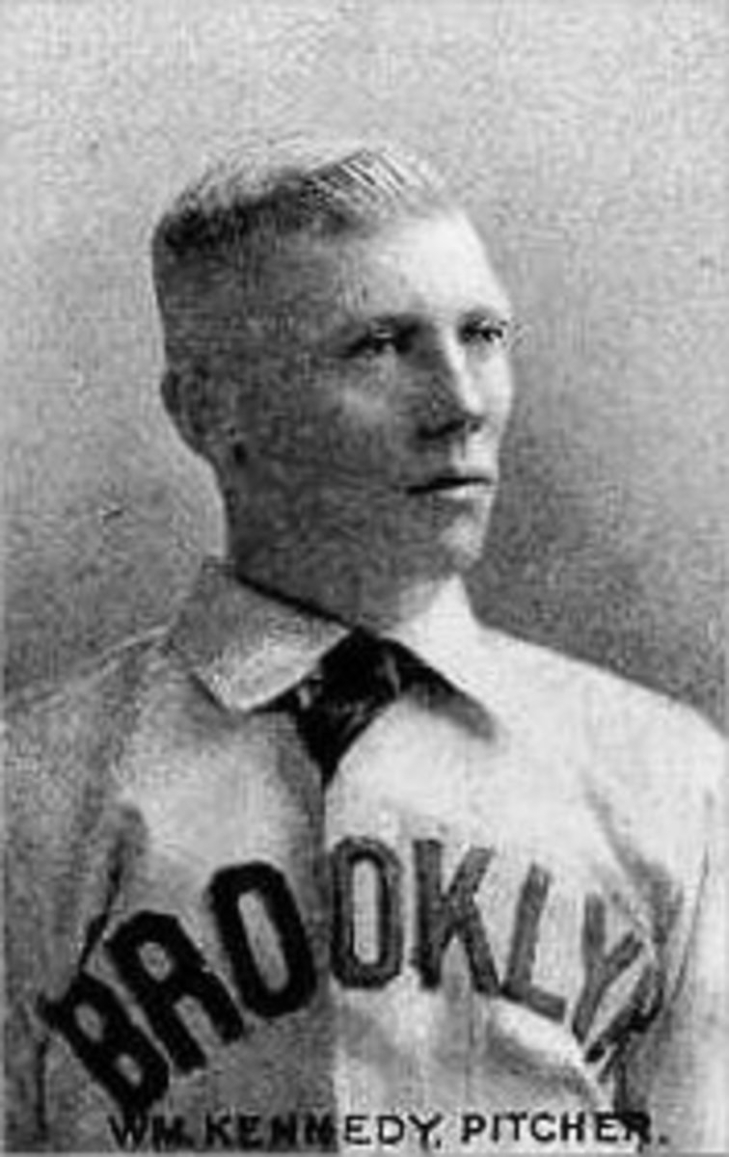
Arriving in Brooklyn in 1892, William “Brickyard” Kennedy was a right-hander with a booming voice and a work ethic forged in the clay pits of his Ohio hometown. While he earned the nickname "Roaring Bill" for his vocal presence on the diamond, it was his off-season labor in a brickyard that gave him the moniker that would stick for over a century
Kennedy hit his peak early, with back-to-back 20-win seasons in 1893 and 1894. He demonstrated exceptional endurance, pitching a career-high 382.2 innings in 1893. Although his career 3.98 ERA in Brooklyn seems modest today, he reached a high value simply by staying on the mound. A key team presence, he remained competitive even in 1895 with a 19-12 record and a spikes to 5.05 ERA, showing teammates’ confidence in his ability to finish.
A key asset for the 1899 and 1900 Brooklyn Superbas, Kennedy helped them win consecutive National League pennants. He posted a 22-9 record with a 2.79 ERA in 1899, showing he still reached elite levels of efficiency. Beyond pitching, he was a skilled hitter, with 306 hits and a .256 average during his Brooklyn years, often contributing significantly during high-stakes battles of the 1890s.
After a decade of service and 177 wins, the organization concluded that his high-velocity years had ended and released Kennedy in 1901. He compiled a 177-148 record, a 3.98 ERA, and 721 strikeouts for Brooklyn.
42. Burt Hooton
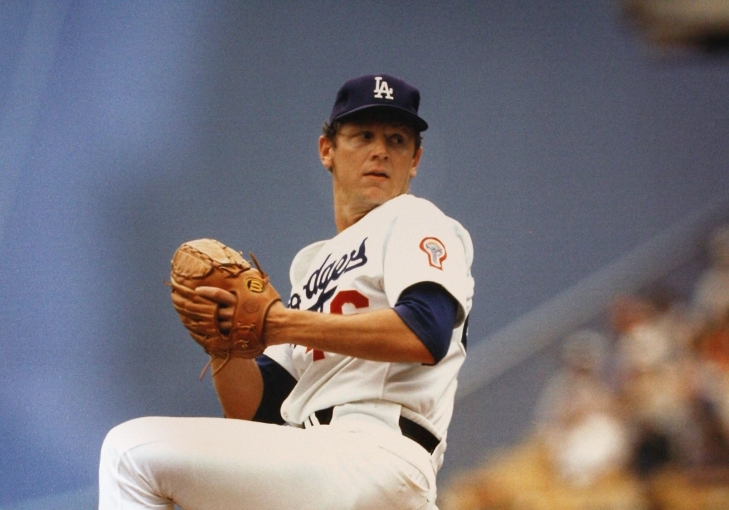
Burt Hooton cut his teeth with the Chicago Cubs, making their parent club in 1971, but struggles at Wrigley led to the hurler being traded to L.A. early in the 1975 Season. If you are to go by traditional statistics, this was the most fantastic year of Hooton's career, as he went 18 and 9, the best Winning Percentage in the National League.
After a winless start in Chicago in 1975, Hooton reached new heights after being traded to the Dodgers. He posted an 18-7 record with a 2.82 ERA, winning his last 12 decisions to break a franchise record held by Sandy Koufax. He demonstrated total command of the National League that summer, showing his breaking ball was key for a contending staff. By 1978, he was Cy Young runner-up with a career-high 19 wins and a 2.71 ERA.
Hooton reached a historic postseason high during the 1981 championship run. While he peaked in individual production in 1978, his 1981 tenure was marked by a ‘clutch' gene. He led one of the most dominant post-seasons, earning his only All-Star and reaching a peak in October. He was named NLCS MVP after pitching 14.2 scoreless innings against Montreal and sealed his success with a win in the World Series against the Yankees. Hooton was a steady rotation mainstay, with a calm, 'Happy' demeanor that helped him thrive in October.
As his high-velocity years began to transition into a specialized relief role, he reached a high-leverage crossroads and departed for the Texas Rangers as a free agent. With Los Angeles, Hooton had a 3.14 ERA with 112 Wins against 84 Losses.
