

142. Jose Cruz
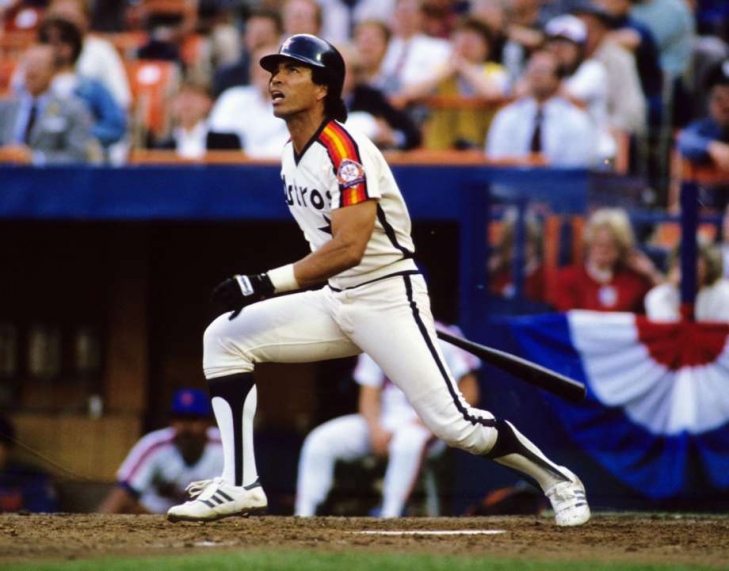
In the late 1970s and early 1980s, the Houston Astros had put together a good team, but they did not see much national attention, as they had never won anything of note before. Those who were paying attention to Houston couldn’t take their eyes off their Puerto Rican Outfielder, Jose Cruz.
Cruz played his first five seasons in St. Louis, but he never had a 100 Hit season with the Cards. A trade to Houston in 1975 changed his fortunes, and Cruz was their starting Left Fielder from 1976 to 1986. With the Astros, Cruz was a two-time All-Star, and he showed a sweet combination of hitting, power, speed, and defensive skill.
Cruz would have five .300 seasons, and while his 165 career home runs are not head-turning, they are more than respectable. He would have seven 20 Stolen Base years, and while he never won a Gold Glove, Cruz had three top-ten finishes in Total Zone Runs, and he was in the top two among National League Leftfielders in that stat in seven different seasons. The MVP voters knew that Cruz was very good, as he was third in balloting in 1980, sixth in 1983, and eighth in 1984.
After one final season in 1988 as a New York Yankee, Cruz retired with 2,251 Hits and 288 Stolen Bases.
Our Top 50 All-Time Houston Astros has been revised
Yes, we know that this is taking a while!
As many of you know, we here at Notinhalloffame.com are slowly generating the 50 of each major North American sports team. That being said, we have existing Top 50 lists out and we always consistently look to update them when we can and based on necessity. As such, we are very happy to present the first revision of our top 50 Houston Astros of all-time.
As for all of our top 50 players in baseball we look at the following:
- Advanced Statistics.
- Traditional statistics and how they finished in the American League.
- Playoff accomplishments.
- Their overall impact on the team and other intangibles not reflected in a stat sheet.
Remember, this is ONLY based on what a player does on that particular team and not what he accomplished elsewhere and also note that we have placed an increased importance on the first two categories, which has altered the rankings considerably.
This list is updated up until the end of the 2018 Season.
The complete list can be found here, but as always we announce our top five in this article. They are:
There is a significant shift in many of the players and a few new ones based on shuffling of the metrics we have used for our Top 50s.
The biggest change based on recent play is Altuve’s rise to number 5.
As always we thank you for your support.
7. Jose Cruz
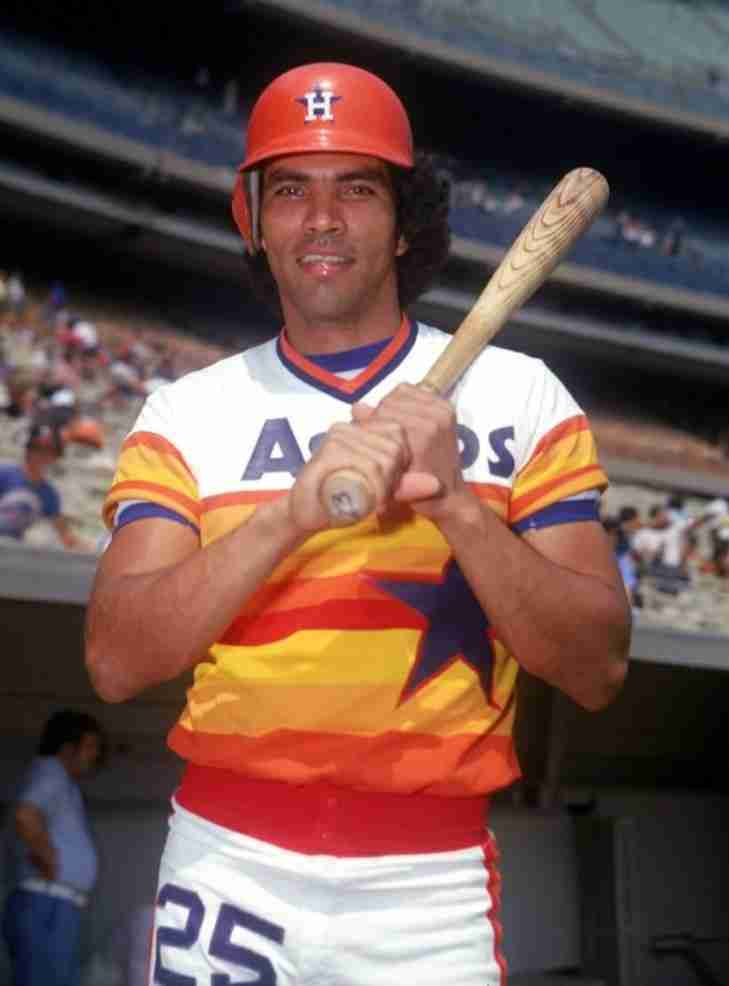
Long before the "Killer B's" took over Houston, the Astrodome belonged to a left-handed contact artist from Puerto Rico named Jose Cruz. Arriving in 1975 after a stint in St. Louis, "Cheo" became the definitive face of the franchise during the most pitcher-friendly era in baseball history. In a cavernous ballpark where home runs went to die, Cruz mastered the art of the line drive, carving out a legacy as one of the most consistent and beloved hitters to ever wear the tequila-sunrise stripes.
Cruz’s tenure in Houston was a masterclass in hitting for average and creating chaos on the basepaths. He hit his stride in the late 1970s and stayed there for a decade, posting a batting average of .300 or better in six different seasons. His best year was in 1983, a summer where he led the National League with 189 hits and drove in 92 runs, earning a Silver Slugger and a third-place finish in the MVP race. He was a model of specialized efficiency, utilizing a short, lightning-quick stroke to slice doubles into the gaps and providing the steady-state production that carried the Astros to their first-ever division titles in 1980 and 1986.
Cruz’s versatile athleticism often went overlooked in the national spotlight. He wasn't just a slap hitter; he possessed a deceptive burst of speed that saw him eclipse the 30-stolen base plateau five times as an Astro. He possessed a professional resilience that allowed him to remain a high-frequency contributor well into his late 30s, eventually amassing 1,937 hits in a Houston uniform. He served as the primary engine for the 1980 "Cardiac Kids," utilizing his veteran-like poise to lead the club through a grueling one-game playoff and into the postseason for the first time in franchise history.
He left for the New York Yankees after the 1987 season and would go on to amass 1,937 hits, 288 stolen bases, and a .292 batting average while finishing in the top ten of the MVP voting three times. Houston bestowed the ultimate honor on Cruz: a franchise Hall of Fame induction in 2019.
