

14. Adrian Wilson
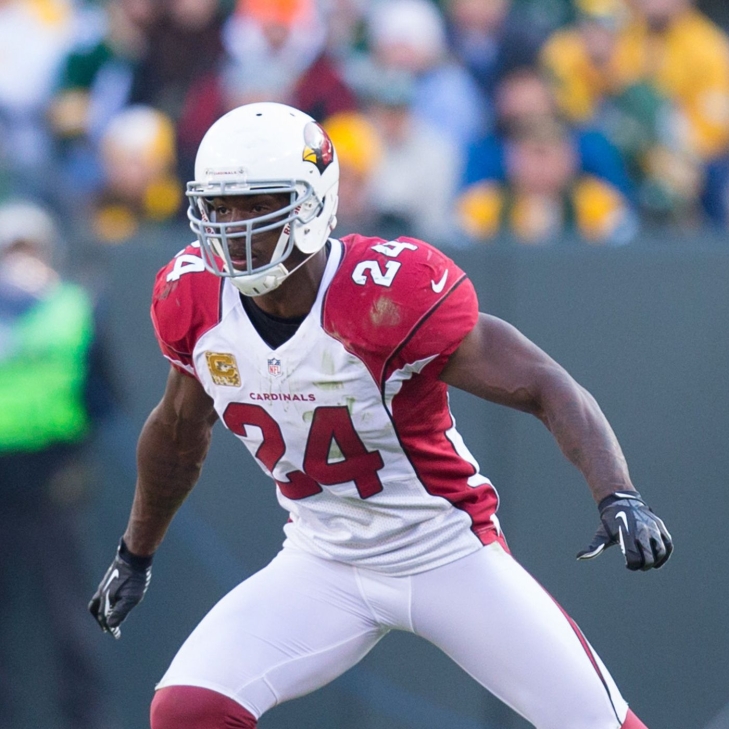
Another Cardinal, another Defensive Back.
Adrian Wilson was a third-round pick (64th overall) from North Carolina State in the 2001 NFL Draft who proved to be a steal. He developed from a raw college player into a highly impactful strong safety known for his toughness. Wilson became a starter during his second year, leading the Cardinals' defense for 12 seasons (2001–2012). His aggressive style at the line of scrimmage established a strong defensive identity for the team.
Operating as a true hybrid box safety, he terrorized opposing offenses as an extra pass rusher, uncoiling downhill with incredible explosion. His diagnosing quickness and violent tackling made him a run-fit nightmare for opposing coordinators, while his ball skills allowed him to track downfield throws, resulting in 27 career interceptions.
His breakout as an elite individual playmaker came during the 2005 campaign. Wilson delivered an extraordinary statistical masterpiece, racking up 109 tackles and an astonishing 8.0 sacks—one of the highest single-season sack totals ever recorded by an NFL defensive back. That performance set the stage for his first career Pro Bowl selection in 2006, when he returned an intercepted pass 99 yards for a touchdown.
Between 2008 and 2011, Wilson served as the emotional heartbeat of the franchise, stringing together four consecutive Pro Bowl appearances. The peak of his individual recognition came in 2009, when he recorded 75 tackles, 5 interceptions, and 2.0 sacks to earn First-Team All-Pro honors. As a team captain, his high-leverage plays in the secondary were instrumental in guiding Arizona to its historic run to Super Bowl XLIII. Wilson stands as one of only six players in NFL history to record at least 25 career sacks and 25 career interceptions, cementing his status as one of the most versatile defensive backs to ever play.
After his release following the 2012 season, Wilson signed brief contracts with New England and Chicago, but a torn Achilles sustained in training camp kept him out of the regular season. As a result, all 181 of his career regular-season games were played in a Cardinals uniform. He retired with 903 total tackles, 25.5 sacks, 27 interceptions, 16 forced fumbles, and 5 Pro Bowl selections. In 2015, Wilson entered the Cardinals Ring of Honor.
13. Jim Hart
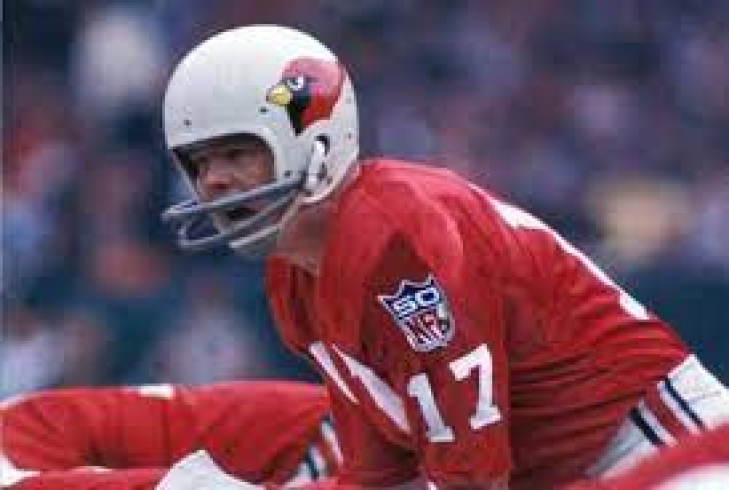
The path from an unheralded, undrafted free agent to the absolute standard-bearer of an NFL franchise is rarely traveled, but Jim Hart walked it for nearly two decades. Arriving out of Southern Illinois in 1966, Hart signed with the St. Louis Cardinals without a shred of fanfare. What followed was an eighteen-year demonstration of sheer durability, quiet toughness, and relentless aerial volume that fundamentally anchored the franchise's identity through the peak of the 1970s.
Hart did not have the aristocratic draft pedigree or the flashy athletic fame of his urban peers, but he had a powerful, fearless arm and sharp diagnostic skills. Playing behind a legendary offensive line led by Dan Dierdorf, he thrived as a pocket passer willing to take deep risks, trusting his quick processing to challenge defenses downfield. His most notable quality was his relentless durability; despite enduring physical punishment in the late 1960s, he consistently remained the starting quarterback, often absorbing hits to make crucial throws down the seam.
Hart’s career soared to new heights after head coach Don Coryell joined in 1973. With Coryell’s dynamic "Air Coryell" passing system, Hart became the perfect signal-caller for one of football’s most exciting offenses. Their partnership quickly proved successful in 1974, as Hart led several dramatic fourth-quarter comebacks, earning the team the nickname: the "Cardiac Cards.” That season, Hart threw for 2,411 yards and 20 touchdowns, helping the Cardinals achieve a 10-4 record and their first division title in nearly thirty years. His outstanding performance earned him the NFC Offensive Player of the Year award from UPI and his first of four straight Pro Bowl selections (1974–1977). From 1974 to 1976, Hart guided the Cardinals through three consecutive seasons with ten or more wins, including two NFC East titles, and orchestrated ten game-winning drives in the fourth quarter.
He maintained a stellar peak through the mid-1970s, guiding the franchise to an 11-3 record in 1975 and a 10-4 record in 1976. Although the postseason saw early, painful losses to NFC giants like Minnesota and Los Angeles, Hart’s status as a top-tier passer was undisputed. Even as the team aged and records declined later in the decade, Hart stayed the consistent force, achieving a career-high 3,121 passing yards in 1978.
By the time he ceded the starting job to Neil Lomax in the early 1980s, Hart had established numbers that shattered every passing threshold in franchise history. Over his 18 seasons in St. Louis (1966–1983), he threw for 34,639 yards and 209 touchdowns—marks that still stand as the absolute zenith of Cardinals passing records.
In 2017, Hart was selected to join the Cardinals Ring of Honor in 2017.
11. Dick "Night Train" Lane
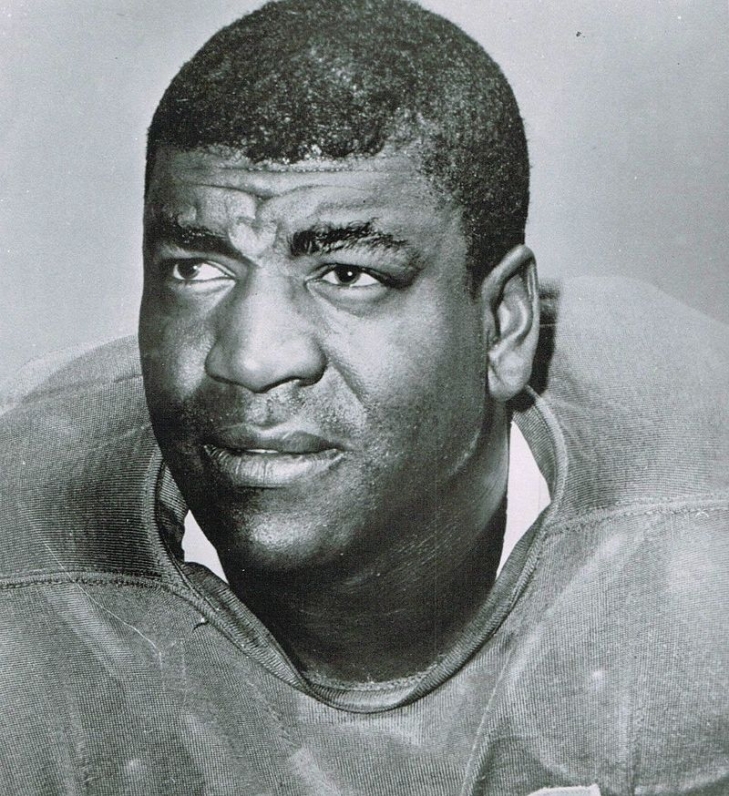
Few nicknames in football history evoke as much fear and respect as "Night Train." Before he played in the NFL, Richard Lane’s unconventional journey to greatness defied typical scouting expectations. After four years in the U.S. Army and working on assembly lines at a Los Angeles aircraft factory, he confidently approached the Los Angeles Rams in 1952 for a tryout. Not only did he earn a spot as an undrafted rookie, but he also set a league record with 14 interceptions in a 12-game season—a record that remains unbroken today. Two years later, the Chicago Cardinals orchestrated a three-team trade to acquire this standout defender, securing him as a key part of their secondary for the next six seasons.
Lane had exceptional vertical leap, smooth hip movement, and a quick closing burst that turned minor quarterback errors into defensive touchdowns. Besides his sharp pass coverage skills, he was arguably the most intimidating, hard-hitting tackler in the league—known for his brutal clothesline tackles called "Night Train Necktie,” which led the NFL to change its rules on neck and facemask contact. His overwhelming athletic ability even led the Cardinals to occasionally use him on offense; notably, in a 1955 game against Pittsburgh, he caught a 98-yard touchdown pass, one of the longest in NFL history at that time.
His first campaign in 1954 while wearing a Chicago uniform immediately highlighted his exceptional ability to intercept the ball. Leading the NFL with 10 interceptions, Lane secured his second career interception title and received his first of four Pro Bowl invites in Chicago. He maintained this high level of performance during his time in the Windy City, leading a tough defense and earning AP First-Team All-Pro recognition in 1956 after making 7 interceptions and returning one for a touchdown.
Between 1954 and 1959, Lane served as the premier perimeter anchor for the Cardinals, collecting four Pro Bowl invitations (1954, 1955, 1956, 1958) while amassing 30 interceptions and 628 return yards in just 68 games. Despite the organization’s overall roster struggles during the decade, Lane was universally recognized as an unassailable star who erased elite split ends across the circuit.
Believing his high-mileage career was nearing its decline, Chicago traded the veteran defensive back to the Detroit Lions prior to the 1960 season. Lane rapidly proved the Cardinals wrong, putting together six more stellar seasons in Detroit—earning three additional First-Team All-Pro nods and bringing his final career tally to 68 interceptions, which ranked second in NFL history at the time of his retirement and still stands fourth all-time.
Lane received the Pro Football Hall of Fame call in 1974 and was named to the NFL 50th, 75th, and 100th Anniversary Teams. In 2006, the Cardinals enshrined Lane in their first Ring of Honor Class.
10. Ernie Nevers
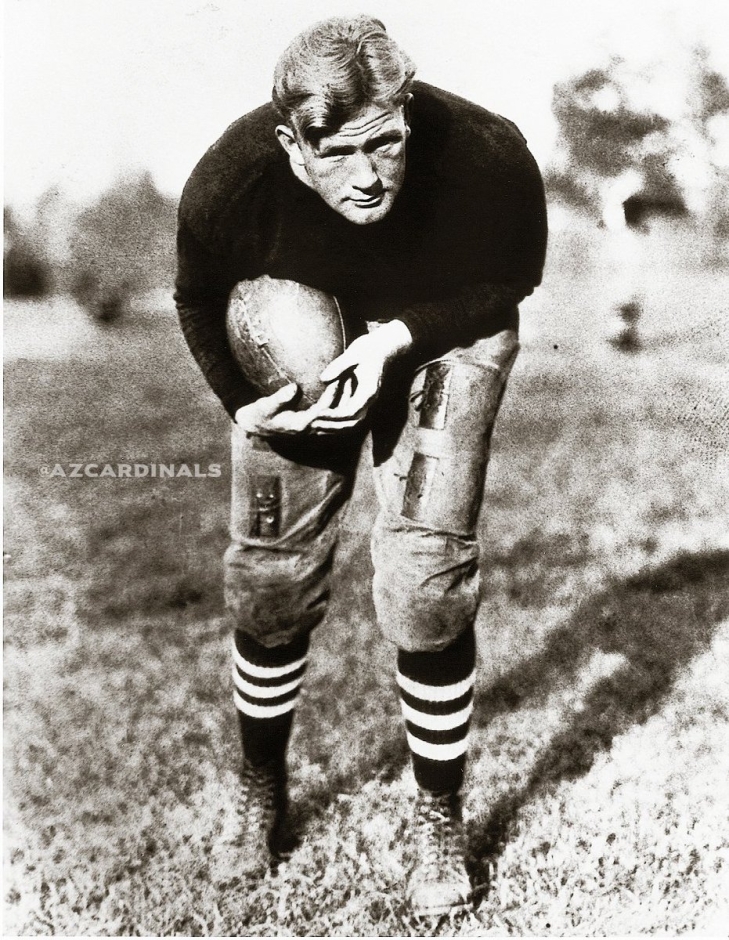
The origins of modern professional football record books can be traced back to the rough sandlots and cold fields of the 1920s. Ernie Nevers, a legendary "triple-threat" back and a consensus All-American under Glenn "Pop" Warner at Stanford, was one of America's most sought-after football stars. After excelling as a tough player-coach for the itinerant Duluth Eskimos in 1926 and 1927, Nevers briefly left playing to become a coach at Stanford. However, the era's competitive spirit was too strong to resist, leading him to return to the field in 1929 with the Chicago Cardinals, where he launched one of the most outstanding individual offensive seasons in football history.
Nevers was a relentless and high-volume power back, known for his bruising, low-center-of-gravity running style. As a versatile "triple-threat" player, he had a strong arm for passing and also excelled as a drop-kicker and placekicker. His aggressive approach required high snap counts; he consistently touched the ball on almost every play and would quickly switch to linebacker to anchor the defense, willingly enduring tough physical hits each series.
Nevers’s 1929 debut in Chicago marked the most legendary individual offensive game in NFL history. During a cold Thanksgiving game at Comiskey Park against George Halas and the Chicago Bears, he delivered an extraordinary performance. As a solo force, he scored six rushing touchdowns and kicked four extra points, totaling all 40 points in a 40–6 victory. His six rushing touchdowns set a league record, still tied but never surpassed, and his 40 points in one game remain the oldest untouched NFL record. Nevers finished his remarkable 1929 season by earning consensus First-Team All-Pro honors.
During his last two active seasons in 1930 and 1931, Nevers took on the additional role of player-head coach for the Cardinals, increasing his workload significantly. Despite intense physical defenses dedicated to stopping him, he maintained his individual dominance on the field. He earned consensus First-Team All-Pro honors in both years, leading the team in rushing, passing, and kicking, all while calling plays from the backfield.
Nevers, the top fullback and a dominant force in the game, finally reached his physical limit after the 1931 season due to relentless pounding. Aware of the intense toll on his body, he retired permanently, leaving a brief but impactful legacy with 5 First-Team All-Pro selections over five NFL seasons—two with Duluth and three with Chicago.
Nevers was selected to the NFL 1920s All-Decade Team, and in 1963, he earned the ultimate honor when he was enshrined as a charter member of the inaugural Pro Football Hall of Fame class. He would later be an inaugural member of the Cardinals Ring of Honor in 2006.
9. Ollie Matson
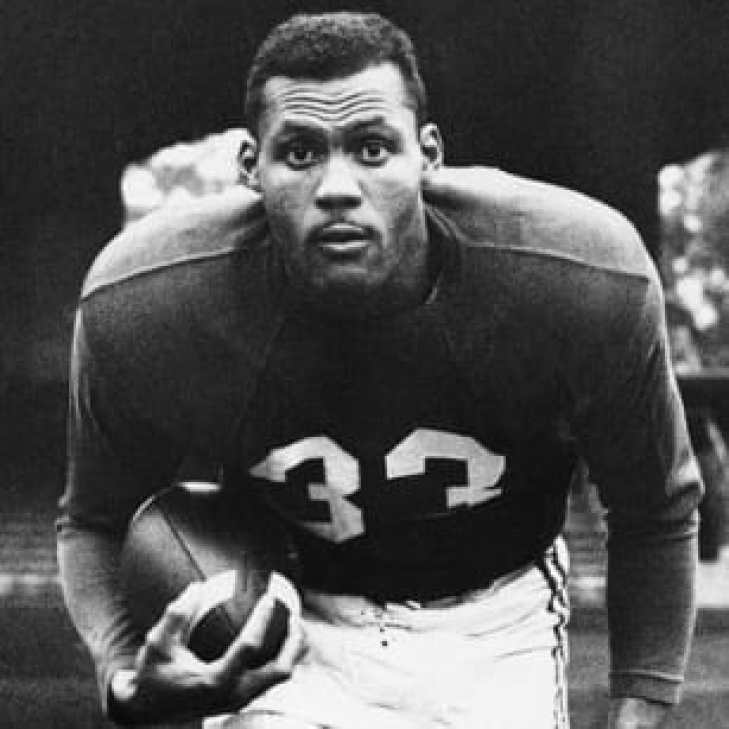
Before recording his first professional football carry, Ollie Matson had already made a significant mark in global athletic history. As a standout consensus All-American running back at the University of San Francisco, his exceptional track speed propelled him to the 1952 Helsinki Olympics, where he earned a silver medal in the 4x100-meter relay and a bronze in the 400-meter dash. Drafted third overall in the first round of the 1952 NFL Draft by the Chicago Cardinals, the versatile athlete quickly proved to be one of the most explosive and game-changing players the league had ever seen.
Matson had an exceptional stride length that enabled him to clear angles easily in open space. Unlike typical sprinters who avoided contact, he ran with aggressive, high-knee motion, powering through arm tackles at the line of scrimmage before accelerating into top speed. His versatility was nearly unrivaled in the 1950s: he served as a main rushing threat from the backfield, an elite receiver downfield, and the most feared kickoff and punt returner in the NFL.
His debut in the NFL in 1952 was an immediate showcase of talent. Matson had a remarkable rookie year, gaining 1,326 all-purpose yards and scoring 9 touchdowns, which earned him a Pro Bowl invitation and a First-Team All-Pro spot. However, just as his career was gaining momentum, it was interrupted when he joined the military, causing him to miss the entire 1953 NFL season while serving in the U.S. Army.
Upon returning in 1954, Matson proved to be an even more formidable player. He dominated defenses across the NFL, accumulating 1,666 all-purpose yards—an average of 5.3 yards per carry—and scoring 9 touchdowns, earning his second First-Team All-Pro honor. Throughout his time in Chicago, he maintained this high level of performance, never falling below 1,200 all-purpose yards in any season with the team. In 1956, he repeated as the NFL’s top all-purpose yardage leader, totaling 1,524 yards and scoring 9 touchdowns—including a 100-yard kickoff return and a 79-yard punt return. Over six seasons with Chicago, Matson averaged more than 1,420 all-purpose yards annually, led the NFL in combined yardage twice, and was the focal point of the Cardinals’ offense.
Despite Matson’s individual brilliance—which generated six consecutive Pro Bowls (1952, 1954–1958) and five First-Team All-Pro selections in Chicago—the Cardinals struggled to build a competitive roster around him. The team managed only one winning season during his tenure. Recognizing his immense market value, Chicago engaged in a historic, blockbuster transaction prior to the 1959 season, trading the superstar to the Los Angeles Rams in exchange for nine players (seven players and two draft picks). While the massive package failed to revitalize Chicago’s fortunes, Matson’s grueling workload in the desert and Midwest meant his elite vertical speed naturally began to taper off in Los Angeles, though he played eight more seasons as a respected veteran across the league.
Matson left behind a towering footprint of 8,544 all-purpose yards and 46 total touchdowns in just 74 games for the Cardinals. At the time of his ultimate retirement in 1966, his combined career running and receiving yards trailed only the legendary Jim Brown on the NFL's all-time list.
Matson, a top halfback on the NFL 1950s All-Decade Team, was inducted into the Pro Football Hall of Fame in 1972 and joined the Cardinals’ Ring of Honor as part of the inaugural group in 2006.
8. Jackie Smith
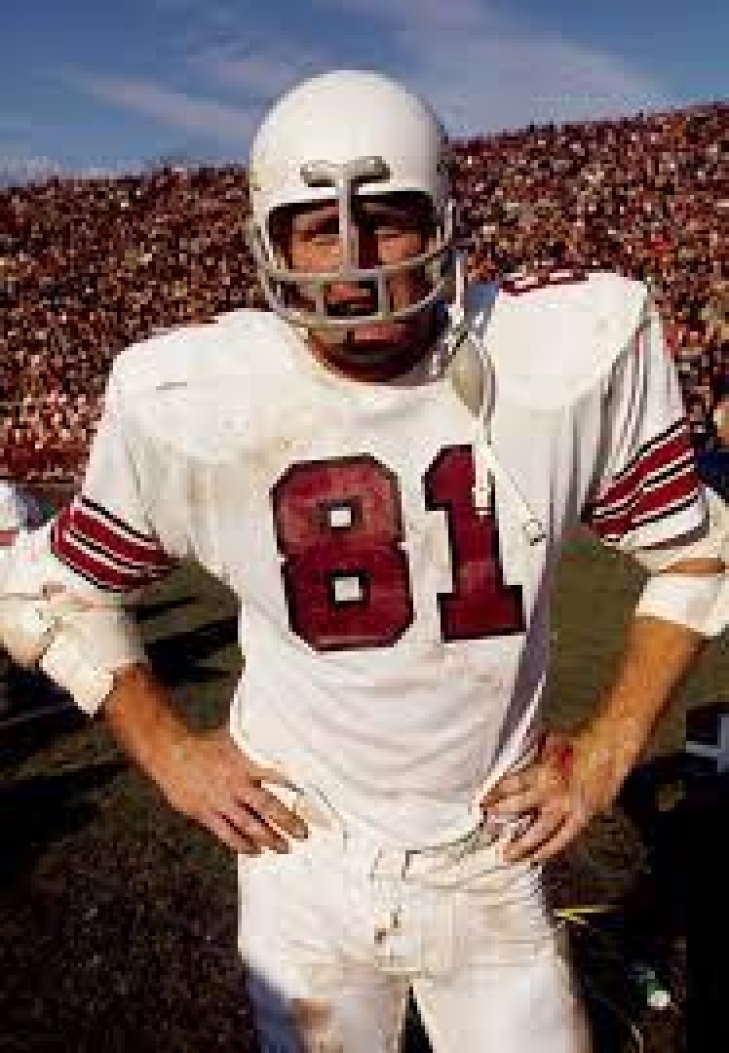
Modern offensive football evolved significantly with the emergence of an underrated draft pick from Northwestern State. Jackie Smith, standing 6’4" and weighing 235 pounds of muscular build, was talented both as a college receiver and a track athlete. His unique blend of height and explosive speed attracted the attention of the St. Louis Cardinals, who selected him in the tenth round of the 1963 NFL Draft. Initially projected as a flanker, Smith was soon transitioned to tight end, a shift that dramatically expanded the tactical role of the position for future generations.
His game mechanics introduced a groundbreaking archetype to professional football. While tight ends were traditionally seen as extra offensive tackles who occasionally ran short curl routes, Smith showcased genuine, field-changing speed. He had the strength to overpower linebackers at the line of scrimmage during runs and the vertical quickness to outrun safeties down the seam. Once he caught the ball, he was a relentless runner after the catch, often dragging defenders for extra yards. To emphasize his exceptional athletic versatility, Smith also served as the team's main punter during his first three seasons (1963–1965), averaging nearly 5,000 yards with 127 punts.
His move to the professional league was immediate. In his rookie year of 1963, Smith quickly became the starting tight end and made an instant impact during a fifth-week game against Pittsburgh. In that game, he surpassed the Steelers' defense with 9 receptions, 212 yards, and 2 touchdowns, marking the rise of a matchup nightmare.
By the mid-1960s, Smith had become one of football's top pass-catchers. His remarkable streak started in 1966, marking his first of five straight Pro Bowl selections (1966–1970). The highlight of this period was his exceptional 1967 season, where he served as the ultimate vertical threat, catching 56 passes for 1,205 yards and 9 touchdowns in 14 games. His impressive 21.5 yards per reception that year was extraordinary for a tight end and earned him First-Team All-Pro honors. That season's 1,205 receiving yards shattered typical tight end benchmarks of the era and remains one of the most explosive individual seasons by a tight end in NFL history.
Throughout his career, Smith played through severe injuries and remained the core of the St. Louis offense for fifteen seasons (1963–1977). He appeared in 198 games for the team, achieving a streak of 45 consecutive games with a reception. His brief final stint with the Dallas Cowboys in 1978 included participation in Super Bowl XIII. When he retired, Smith had set records with 7,918 receiving yards and 480 receptions, the highest ever by a tight end in NFL history.
Smith was enshrined in the Pro Football Hall of Fame in 1994, becoming just the third tight end in history to enter the Hall. Amazingly, as of this writing, he is not part of the Cardinals Ring of Honor.
7. Patrick Peterson
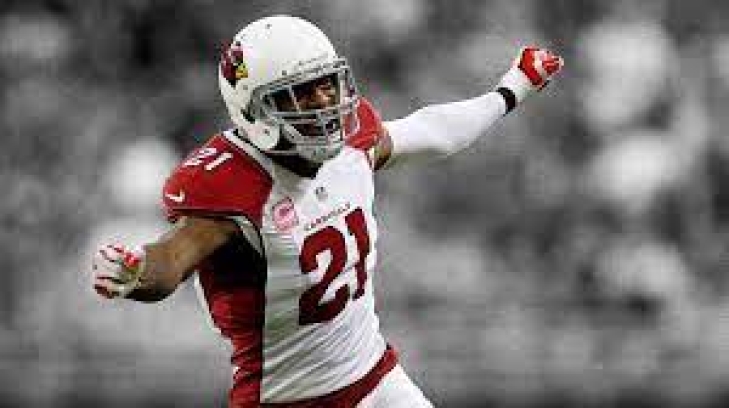
The Cardinals’ history of defensive backs is legendary, and in spring 2011, they welcomed another top talent into that legacy. Patrick Peterson, an LSU graduate and winner of the Bednarik and Thorpe Awards, entered the NFL as an exceptionally athletic, high-profile prospect. Chosen fifth overall in the 2011 draft, Peterson combined impressive size, blazing speed, and smooth hips, quickly making a significant impact as a standout defender in Arizona.
What set him apart was his skill to move across the field in true man-to-man coverage, shadowing the main receiver no matter their alignment. Peterson exhibited great physical confidence, using his length to disrupt routes at the line of scrimmage and boasting elite recovery speed to close any vertical gap. Beyond his lockdown abilities, his open-field awareness and rapid, fluid movements made him a dynamic, game-changing asset in the kicking game.
His rookie 2011 season was one of the most explosive in franchise history, especially on special teams. He started all 16 games at right cornerback and dominated return coverage. Peterson tied the NFL record with 4 punt return TDs, including a stunning 99-yard game-winner in overtime against St. Louis. He led the league with 699 punt return yards, earned his first Pro Bowl and First-Team All-Pro honors as a return specialist, and also recorded two interceptions. His four punt return TDs in 2011 set an NFL record for rookies and made him the only rookie in league history to achieve this.
In his sophomore 2012 season, Peterson made the permanent shift to the left cornerback spot, fully taking on the responsibility of locking down the opposition's top target. He responded with 7 interceptions and 5 fumble recoveries, earning his second Pro Bowl nod. That marked the start of an incredible run of individual consistency. Over his first eight seasons in Arizona (2011–2018), Peterson was voted to eight consecutive Pro Bowls, joining an elite group of defensive players in NFL history to accomplish that feat to open a career.
During Bruce Arians' competitive era with the Cardinals, Peterson led defenses that propelled deep playoff runs. His outstanding coverage led to First-Team All-Pro selections in 2013 and 2015, playing a key role in reaching the 2015 NFC Championship. Quarterbacks often avoided targeting his side, reducing his target count and enabling the Cardinals to allocate additional safety support elsewhere.
His decade-long run in Arizona drew to a close following the 2020 campaign, after which he signed with Minnesota in free agency. Across his ten seasons in the desert, Peterson suited up for 154 games, accumulating 28 interceptions, 91 pass deflections, 499 tackles, and 4 return touchdowns.
5. Dan Dierdorf
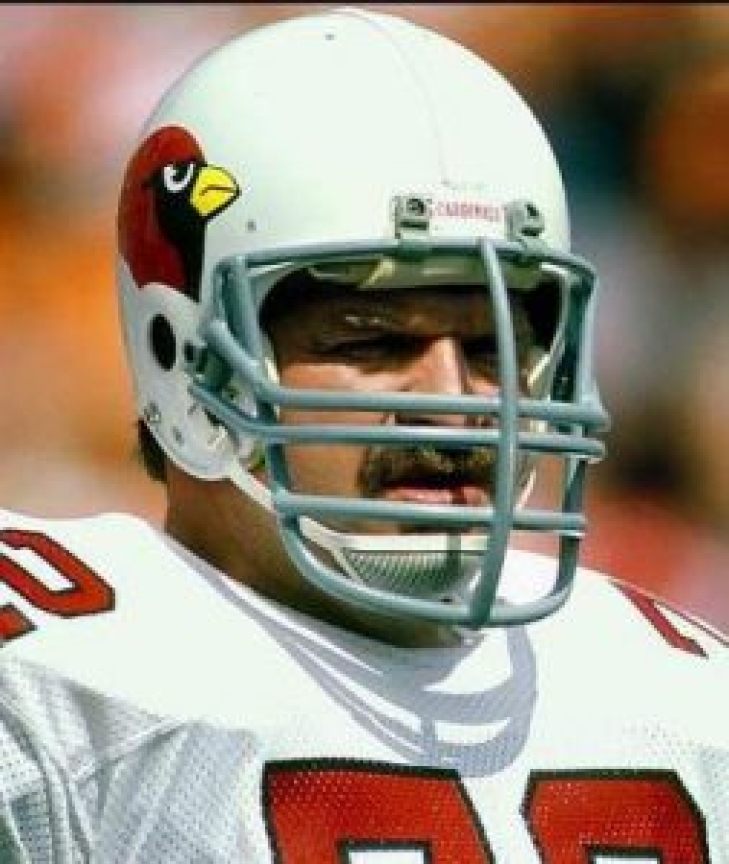
The mid-1970s revival of modern Cardinals football was built on strong offensive line play, led by a legendary technician who became the benchmark for excellence. Dan Dierdorf, a consensus All-American at Michigan under Bo Schembechler, brought exceptional size and agility to the NFL when the St. Louis Cardinals took him in the second round of the 1971 draft. He then spent an impressive thirteen seasons with the team, combining physical prowess with technical mastery to become the top offensive tackle of his era.
His game showcased expert pass protection and run-blocking leverage, resembling a masterclass. Standing 6’3" and weighing 275 pounds, Dierdorf had a strong foundation, a powerful initial punch, and excellent lateral mirroring. Although he demonstrated versatility at guard and left tackle early on, his true breakthrough came in 1974 during his fourth season. After permanently moving to right tackle, Dierdorf became nearly unstoppable, earning his first Pro Bowl and second-team All-Pro honors while contributing to Don Coryell’s dynamic "Air Coryell" offense.
That breakout campaign sparked a five-year period of unparalleled individual dominance. Between 1974 and 1978, Dierdorf was recognized as the top tackle in the league, earning five straight Pro Bowl selections and four consecutive first-team All-Pro honors. He led a legendary St. Louis offensive line—alongside Conrad Dobler and Tom Banks—that consistently shut down the most formidable pass rushes of that era. His peak performance came in the 1975 season, when the Cardinals’ offensive line set an NFL record by allowing just eight sacks in 14 regular-season games.
Over the next two years, Dierdorf's dominance became nearly legendary. During the 1976 and 1977 seasons, he completely neutralized opposing pass rushers, going two years without allowing a single sack. His perfect mirroring technique was clearly shown in internal coaching footage, which displayed a player consistently winning crucial battles against top-tier edge rushers without needing help from tight ends. Due to his exceptional performance, the NFL Players Association named Dierdorf the NFL Offensive Lineman of the Year for three straight years (1976–1978). Dierdorf's legendary streak of allowing no sacks over the 1976 and 1977 seasons remains the gold standard for pass-blocking efficiency in franchise history.
Even when a severe knee injury sidelined him for most of the 1979 season, the veteran anchor displayed immense resilience. He authored a brilliant individual bounce-back during the 1980 campaign, returning to full strength to start all 16 games at right tackle, earning his sixth career Pro Bowl invitation and his fifth first-team All-Pro nod. Ever the consummate professional, Dierdorf willingly shifted to the center position for his final two years in 1982 and 1983, stabilizing an evolving interior front with his high-level diagnostic intelligence. The historic marathon in St. Louis reached its final punctuation following the 1983 campaign, when the veteran leader hung up his cleats after 160 regular-season games.
Dierdorf was named to the prestigious NFL 1970s All-Decade Team, and his journey came full circle in 1996 when the Canton, Ohio native was fittingly enshrined into the Pro Football Hall of Fame right in his own hometown. The Cardinals also honored Dierdorf in 2006 as a member of the inaugural group in their Ring of Honor.
4. Roger Wehrli
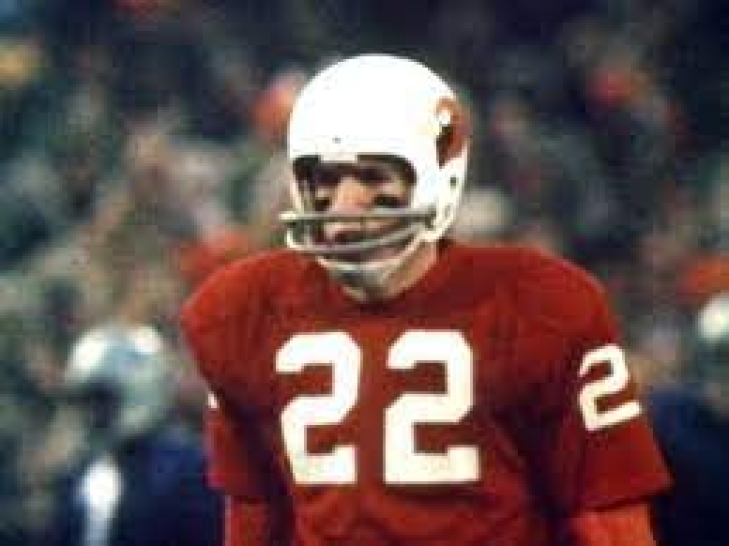
As Larry Wilson’s legendary career neared its end in the late 1960s, the St. Louis Cardinals’ secondary urgently needed a new core leader. They found their solution in spring 1969, effectively bridging generations. Roger Wehrli, a consensus All-American and Big Eight Defensive Player of the Year from the University of Missouri, completely changed the way individual pass coverage was viewed. Initially expected to be picked in the second round by some analysts, he defied scouting expectations at the combine by running a rapid 4.5-second 40-yard dash. This exceptional display of speed catapulted him into the first round as the 19th overall pick—a choice that quickly silenced critics and redefined NFL passing strategies for the next fourteen years.
Wehrli was an outstanding fluid mover, combining extraordinary recovery speed with a PhD in spatial trail technique. Unlike the physical, bump-and-run cornerbacks of his time who depended on boundary positioning, he demonstrated a highly poised diagnostic ability, matching the top route runners without giving up cushion. His quick closing burst enabled him to undercut routes with precision, turning deep threats into dead zones. His technical discipline was enhanced by excellent ball-tracking skills, making him a prolific playmaker who collected loose footballs, with 40 career interceptions and 22 fumble recoveries. Roger Staubach famously called Wehrli a "shutdown corner,” highlighting his complete containment of elite wide receivers and shaping new terminology for scouts.
His debut in the professional ranks in 1969 immediately demonstrated his dominance in his position. Wehrli joined the starting lineup, secured his side of the field, intercepted three passes, and earned consensus All-Rookie honors, finishing as the runner-up for NFL Defensive Rookie of the Year. He carried this momentum into 1970, posting a remarkable statistical season with 6 interceptions, which earned him his first of seven career Pro Bowl selections and his first first-team All-Pro recognition.
After a brief transitional phase for the Cardinals’ defense in the early 1970s, Wehrli fully established himself as an unstoppable perimeter defender by the mid-1970s. His exceptional coverage skills drew praise from Dallas Cowboys legend Roger Staubach, who famously called Wehrli a "shutdown corner"—a phrase widely regarded by football historians as the first time it was used to describe a defensive back. With this recognition from his toughest rival, Wehrli became a key player for Don Coryell's competitive St. Louis teams, earning four straight Pro Bowl selections (1973–1976) and three consecutive first-team All-Pro honors (1974–1976). His peak performance came in 1975, when he intercepted six passes, helping the Cardinals finish with an 11-3 record and win the NFC East.
As Wehrli’s career neared its end, his exceptional technical skills kept him highly effective, despite a natural decline in his elite vertical speed. In 1979, he earned his final Pro Bowl selection as a veteran and continued mentoring an evolving secondary. His long, historic stint in a St. Louis uniform concluded after the strike-shortened 1982 season, when he retired after 193 regular-season games, never having worn another professional jersey.
Wehrli was named to the NFL 1970s All-Decade Team, and in 2007, he was enshrined in the Pro Football Hall of Fame. That same year, Wehrli was part of the inaugural Cardinals Ring of Honor Class.
6. Aeneas Williams
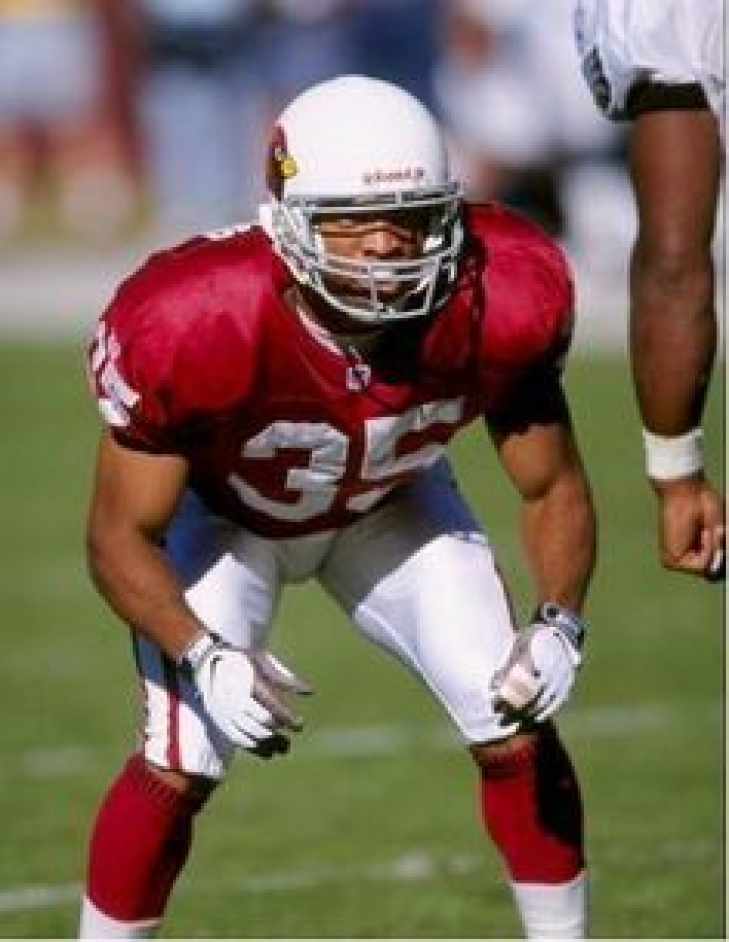
Aeneas Williams did not play competitive football during his first two years at Southern University. He only joined the team as a junior, but by his senior year, he led the nation in interceptions and quickly attracted the attention of the Phoenix Cardinals, who picked him in the third round of the 1991 NFL Draft. What began as a low-profile pick developed into an impressive fourteen-year career—marked by his exceptional coverage skills and legendary ball-hawking instincts—establishing him as one of the top boundary defenders of his time.
Williams relied not on sheer size to challenge wide receivers but on sharp route recognition and spatial advantage. He excelled at mirroring top wideouts closely, maintaining smooth footwork during his backpedal, and then using a powerful burst to intercept passes. His natural hands turned contested throws into turnovers, complemented by superb open-field tackling. His quick diagnostic skills kept him a constant scoring threat following turnovers, with an impressive 9 career interception return touchdowns—tying him for second in NFL history at retirement.
Williams's debut in the professional ranks in 1991 instantly transformed his scouting profile. He secured the starting right cornerback position right after training camp, delivering an exceptional rookie season by recording a league-high 6 interceptions, earning PFWA All-Rookie honors, and placing third in the AP NFL Defensive Rookie of the Year voting. When he moved to the left cornerback position under defensive coordinator Fritz Shurmur, his dominance over the boundary became even more evident. In 1994, Williams completely shut down opposing passing attacks, leading the NFL with a career-best 9 interceptions and earning his first Pro Bowl selection.
That exceptional campaign sparked a remarkable six-year period of dominance in the desert. From 1994 to 1999, Williams earned six straight Pro Bowl selections as the key defensive stalwart for the rebuilding Cardinals. His outstanding performance was clearly demonstrated in 1995 when he made 6 interceptions—returning two for touchdowns—earning his first first-team All-Pro honor. He maintained that elite coverage level in 1997, again intercepting 6 passes and earning his second consensus first-team All-Pro selection. Williams proved himself as the crucial game-changer during the 1998 postseason, intercepting two passes in a thrilling wild-card upset against the Dallas Cowboys, leading the franchise to its first playoff win in fifty years.
As the Cardinals embarked on a major rebuilding phase at the start of the 2000s, the experienced boundary cornerstone was traded to the St. Louis Rams in spring 2001. Williams smoothly brought his veteran leadership to the Rams' secondary, eventually transitioning to safety later on. He received two more Pro Bowl selections and a first-team All-Pro honor in St. Louis, playing a crucial role in leading the Rams to Super Bowl XXXVI. After retiring following the 2004 season, he totaled 55 career interceptions, of which 44 were while he played for the Cardinals.
Williams was named as a premier boundary selection to the NFL 1990s All-Decade Team, and his eternal connection to football immortality was finalized in 2014 when he was enshrined in the Pro Football Hall of Fame. The Cardinals honored him six years earlier by selecting Williams for their Ring of Honor.
1. Larry Fitzgerald
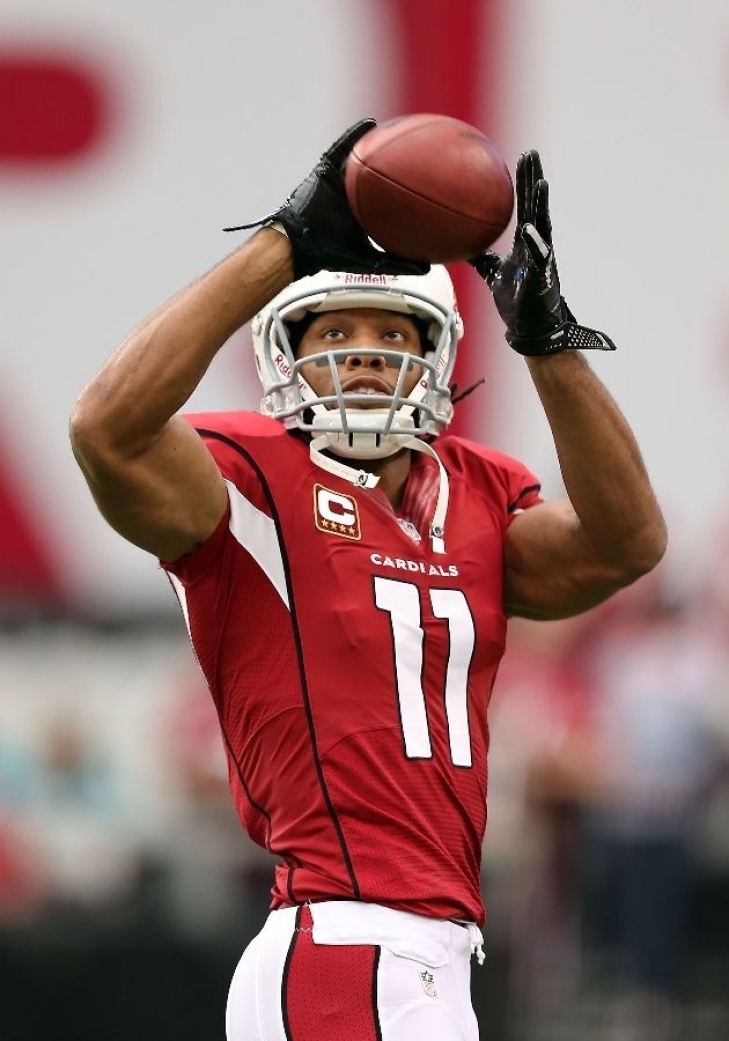
Over the century-plus existence of the Cardinals through stops in Chicago, St. Louis, and Arizona, it takes a special player to make the top of a list of the greatest of all time. In the case of the Cardinals, the top of the heap comes in Larry Fitzgerald, who became their gold standard in 2004.
After an outstanding season at the University of Pittsburgh, where he won the 2003 Big East Offensive Player of the Year and was the Heisman Trophy runner-up, Fitzgerald was selected third overall in the NFL Draft. He then embarked on a remarkable seventeen-season career entirely with the Cardinals. Throughout this journey, his exceptional athleticism and dependable hands transformed the franchise's modern history.
His game showcased flawless aerial geometry, with Fitzgerald, standing 6'3" and built robustly, relying not on pure speed but on refined skills like stem leverage, blind-spot awareness, and exceptional boundary sense. He had a vast, multidimensional catch radius, turning nearly even chances into sure catches by perfectly timing his jumps and using his strength to block defenders at the peak of his leap. Known for his extraordinary hands and vice-like grip, he prevented double catches and secured the ball through heavy contact. Later, he adapted seamlessly into a rugged slot receiver, using high-level spatial awareness to find soft spots in zone defenses and becoming an elite, fierce blocker in the run game.
The initial chapters of his remarkable career immediately announced the arrival of a generational talent. Following a productive rookie year in 2004 with 780 yards and 8 touchdowns, Fitzgerald had a phenomenal second season in 2005. At only 22, he dominated opposing defenses, leading the league with 103 receptions for 1,409 yards and 10 touchdowns. This performance earned him his first of 11 Pro Bowl selections and established him as the top offensive threat in the desert.
While Fitzgerald's consistent individual performance was clear, he cemented his football legacy through arguably the finest postseason run in NFL history during 2008. With excellent route-running and a legendary catch radius, he teamed up with quarterback Kurt Warner to make the 2008 playoffs his personal showcase. In just four postseason games, Fitzgerald set records with 30 receptions, 546 yards, and 7 touchdowns. His late-game 64-yard catch-and-run touchdown in Super Bowl XLIII briefly gave Arizona the lead in the final moments, completing an extraordinary postseason where quarterbacks had a near-perfect passer rating when targeting him. Fitzgerald's 546 receiving yards and 7 touchdowns in the 2008 playoffs stand as the highest totals ever recorded by a wide receiver in a single postseason.
He reached a high point during the 2009 season, leading the NFL in receiving touchdowns for the second year in a row with 13, and surpassing 1,000 yards for the third consecutive season. After Warner retired, Fitzgerald endured a challenging period with inconsistent quarterback play but remained a consistent source of production. In 2010, despite the unpredictable quarterback situation, he still recorded 90 receptions for 1,137 yards. He then had an outstanding 2011 season, overcoming defensive coverage to gain 1,411 yards and score 8 touchdowns, with an impressive average of 17.6 yards per catch.
As head coach Bruce Arians arrived and Carson Palmer took the reins, Fitzgerald’s veteran evolution accelerated. He crossed the 80-catch threshold in 2013 with 10 touchdowns, and by 2015 he had fully engineered an elite slot renaissance. That year, he reestablished himself as a dominant volume monster, hauling in a then-franchise-record 109 receptions for 1,215 yards and 9 touchdowns, guiding the high-octane Cardinals to the NFC Championship game.
This transformation culminated in a remarkable renaissance during the 2016 season. After 11 years since he first led the league in receptions, 33-year-old Fitzgerald once again claimed the NFL reception title with 107 catches, showcasing his exceptional spatial awareness over the middle of the field. His influence went well beyond the game that year, as his notable philanthropic contributions earned him the esteemed 2016 Walter Payton NFL Man of the Year Award, highlighting his character and leadership.
Even during the franchise's rebuilding after 2016, Fitzgerald continued to perform, serving as a key security blanket for a new generation of quarterbacks. In 2017, at age 34, he defied typical age-related decline for wide receivers by tying his career high with 109 receptions, gaining 1,156 yards and scoring 6 touchdowns. When rookie quarterback Kyler Murray joined in 2019, Fitzgerald became a vital veteran presence, leading the team with 75 receptions for 804 yards and surpassing Terrell Owens to move into second place on the all-time receiving yards list.
The historic marathon in pinstriped red reached its quiet final punctuation after the 2020 campaign. Fitzgerald walked away from the game with a statistical resume that ranks near the absolute summit of football history. He retired comfortably, sitting second all-time in NFL history in career receptions (1,432) and career receiving yards (17,492), while ranking sixth all-time with 121 receiving touchdowns. His legendary ball security was beautifully quantified by an advanced metric shared by team officials: Fitzgerald finished his illustrious career with more total tackles (37) than dropped passes (29) across more than 2,100 targets.
Named to both the NFL 2010s All-Decade Team and the prestigious NFL 100th Anniversary All-Time Team, Fitzgerald cruised into the Pro Football Hall of Fame in 2026 in his first year on the ballot.
2. Larry Wilson
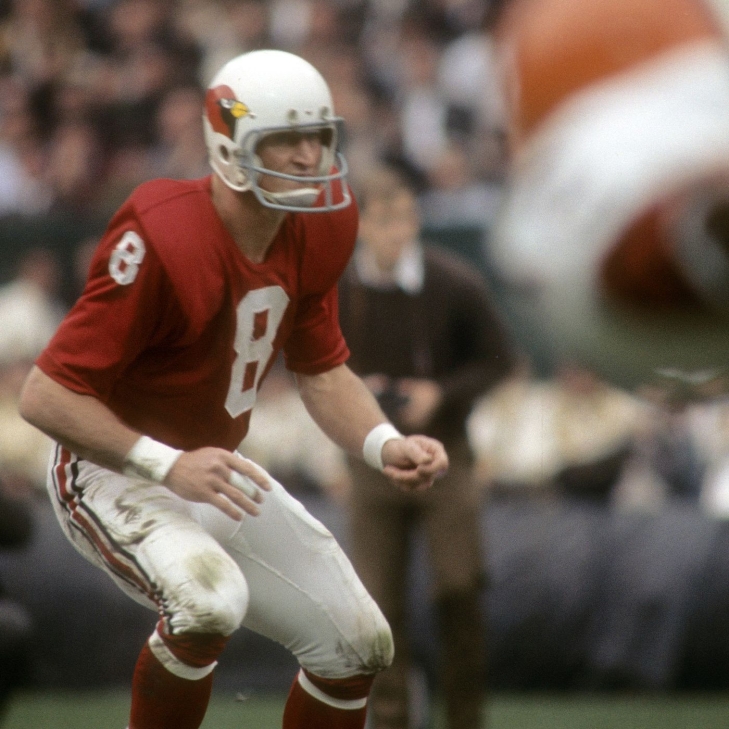
A two-way star at Utah, Larry Wilson barely reached six feet, which was primarily why he dropped to the Seventh Round of the 1960 NFL Draft, and it would not take long to see that he was the steal of the day.
A Cardinal for the entirety of his 12 NFL campaigns, Wilson was one of the most outstanding Safety of the 1960s and helped redefine the position. With his speed and tackling ability, the Cardinals had a player who could execute the Safety Blitz, a novelty at the time. Wilson had 21 (unofficial) Sacks over his career, and in traditional Defensive Back stats, he recorded 52 Interceptions, including a league-leading 10 in 1966, a year where he was second in MVP voting. He was also known for his toughness, having once played with casts on both arms.
From 1962 to 1970, Wilson was named to the Pro Bowl, and he rattled off five consecutive First Team Selections from 1966 to 1970. Not surprisingly, Wilson was chosen for the 50th, 75th, and 100th NFL Anniversary Teams.
Wilson entered the Pro Football of Fame in his first year of eligibility, one of two people (Tom Nix) being the other, to accomplish this astounding feat.
He may never have appeared in a playoff game, but many a game was won for St. Louis because Wilson was on their squad. The Cardinals retired his number 8 in 1970; in 2006, he entered their Ring of Honor.
#24 Overall, Budda Baker, Arizona Cardinals, Free Safety, #1 Safety
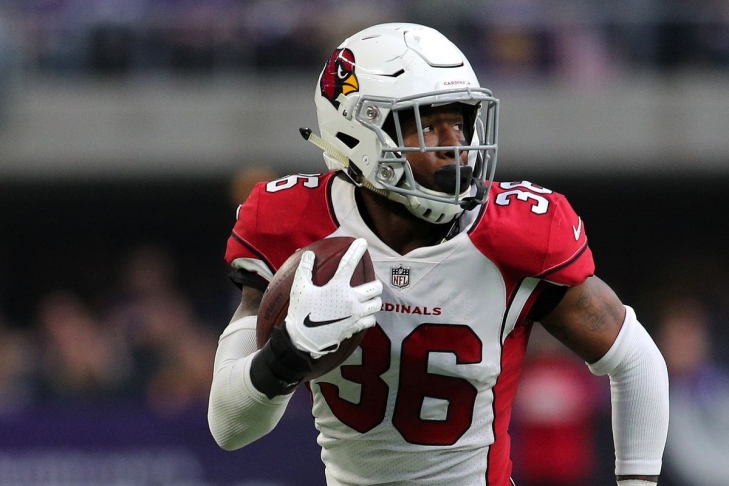
2025 Pre-Season Rank #28, 2024 Pre-Season Rank #43, 2023 Pre-Season Rank #78, 2022 Pre-Season Rank #86, 2021 Pre-Season Rank #113, 2020 Pre-Season Rank #147. Peak Period: 2020-24.
There are a lot of parallels with our highest-rated cornerback, Jalen Ramsey, and our highest-ranked safety, Budda Baker:
Both have a loaded baseline we are comparing them to, and both feel like something is missing.
We have had Baker at #1 in Safeties since the removal of Earl Thomas, but honestly, we aren’t in a golden era of Safeties. It is a high bar for this position, and the Hall itself often ignores that spot on the field. Regardless, Baker is an eight-time Pro Bowl selection (seven as a Safety, one in Special Teams), and his tackling numbers are incredible, as among all Safeties over the past seven seasons, his tally is easily the highest.
Baker is now 30, and there is no reason he can’t keep producing at a high level; given the Safety baseline, he will have to.
94. Anquan Boldin
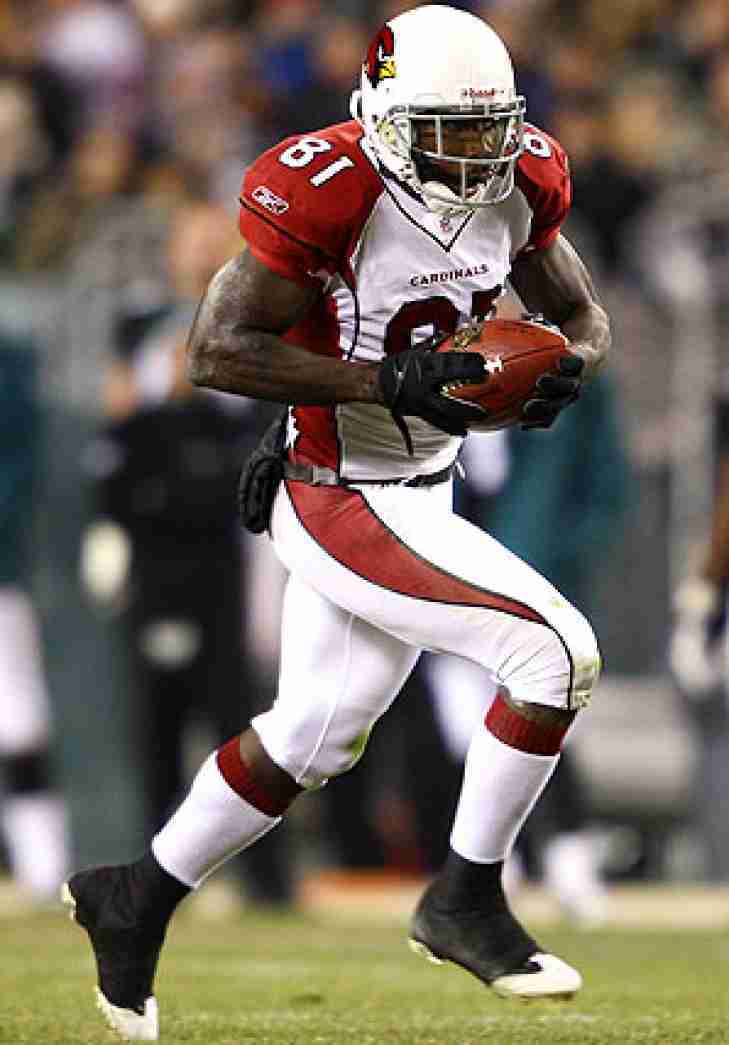
Retiring from the National Football League early so that he could devote more time to his humanitarian efforts, Anquan Boldin would secure seven seasons in which he had four digits in Receiving Yards. Boldin was an explosive force on the gridiron, making an immediate impact in his rookie year, finishing third in both Receptions and Receiving Yards.
Boldin would have his best run with the Arizona Cardinals, where his tandem with Larry Fitzgerald made them one of the best one-two punches in the league. He later achieved the ultimate prize when he helped Baltimore win Super Bowl XLVII. What made Boldin unique was his power. Often, Wide Receivers are not known for their brute strength, but once he had his hands on the ball, it was his, and if it wasn’t, he would make sure that his opposition couldn't pull it down. His philanthropic efforts also deserve mention, as he is one of the few men to have won the Walter Payton Man of the Year and Alan Page Community Award.
With over 13,779 Receiving Yards and 1,076 Receptions, he has a statistical case for a look from the Canton committee.
147. Boomer Esiason
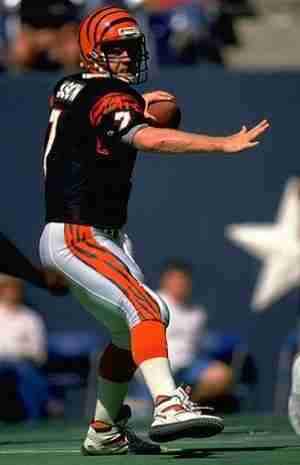
The hard-luck Cincinnati Bengals have yet to win a Super Bowl, but it was Boomer Esiason who brought them closer than anyone else had when they lost to the San Francisco 49ers on a last-minute drive in Super Bowl XXIII. Fortunately for Esiason, his career did not need a Super Bowl Ring to be considered great.
Replacing the productive Ken Anderson, the powerful southpaw became one of the premier Quarterbacks in the league. During his time in Cincinnati, Esiason was a consistent producer, and he turned the Bengals into a high-powered attack. Mastering the play-action pass, Boomer used his strength and speed and consistently produced high-yardage games.
Boomer Esiason may be best known to younger football fans as a competent broadcaster, but he is still revered in Southern Ohio. He may have done enough to at least get on the ballot one day, but in this age of the Quarterback, his all-time statistical rankings will likely plummet in the near future.
