


Committee Chairman
43. Louis Breeden
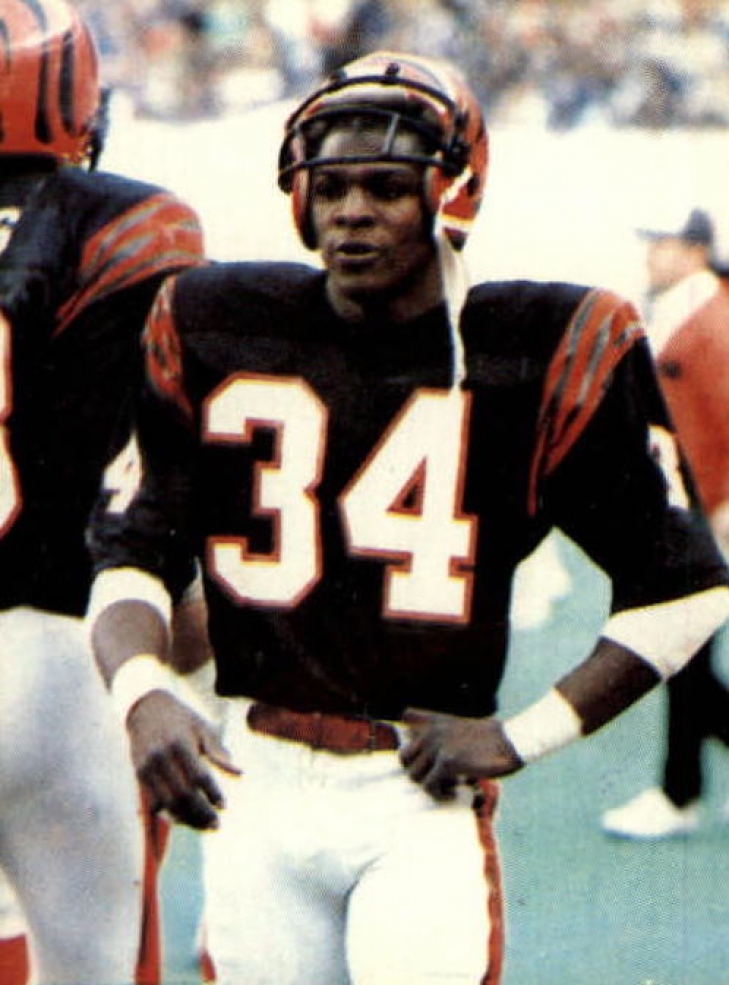
Drafted in the seventh round (187th overall) of the 1977 NFL Draft out of North Carolina Central, Louis Breeden arrived in Cincinnati as an unheralded small-school prospect whose professional journey nearly stalled before it started. After a severe injury forced him to spend his entire rookie season on injured reserve, Breeden returned with a vengeance, evolving into one of the most ball-hawking secondary anchors in franchise history.
Breeden broke through in 1978, securing the starting cornerback job and displaying rare closing speed, fluid hip transitions, and exceptional ball skills. By 1980, he was a true shutdown threat, intercepting seven passes to jumpstart a dominant multi-year run in the Bengals' secondary.
His most iconic moment came during the 1981 AFC Championship campaign: in a Week 10 clash against San Diego, Breeden intercepted a Dan Fouts pass deep in his own end zone and returned it 102 yards for a touchdown—a dramatic play that stood for decades as the longest interception return in team history.
Breeden reached the pinnacle of individual recognition in 1982, earning First-Team All-Pro honors after picking off four passes during the strike-shortened season. He remained a lockdown cornerstone on the outside through the mid-1980s, matching his career-high with another seven-interception campaign in 1986. He retired following the 1987 season, capping a decade of high-level service spent entirely in Cincinnati.
With the Bengals, he generated 33 interceptions, 135 return yards, and two defensive touchdowns, trailing only Ken Riley on the franchise's all-time interception list.
42. Joe Walter
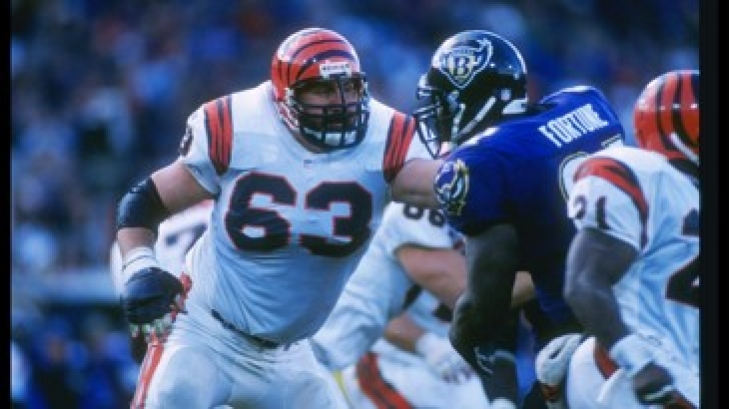
Joe Walter was a seventh-round pick in 1985 and became a cornerstone of the franchise's offensive line. Over a 13-year career spent entirely in Cincinnati, Walter established himself as a reliable, tough-as-nails anchor at right tackle.
At 6 feet 6 inches and 295 pounds, Walter had exceptional length, strong lateral footwork, and a heavy anchor in pass protection. After adjusting to the professional game during his 1985 rookie campaign, he claimed the starting right tackle spot in 1986 and held onto the position for the next decade.
Walter experienced his most distinguished individual season in 1988, establishing a formidable partnership with Anthony Muñoz. He commenced all 16 games as right tackle, achieving a personal record with a double-digit Approximate Value rating, while effectively creating running lanes for Ickey Woods and James Brooks and safeguarding Boomer Esiason during Cincinnati’s advancement to Super Bowl XXIII.
Despite battling a severe knee injury in 1993, Walter’s durability and veteran leadership kept him in the starting lineup through 1996. He transitioned to a valuable reserve and mentor role for his final season in 1997 before hanging up his cleats, leaving as one of the longest-tenured offensive linemen in franchise history. Walter started 136 games for the squad.
41. Rudi Johnson
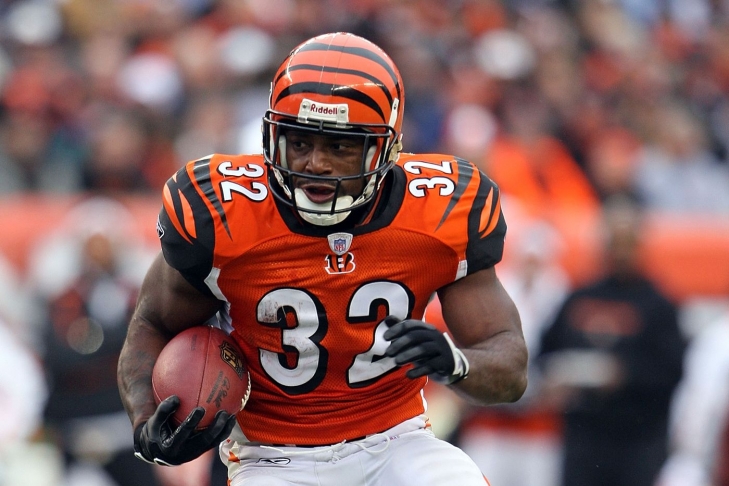
With the fourth-round pick (100th overall), the Bengals selected Rudi Johnson of Auburn. Johnson arrived in Cincinnati as an intense, physical runner. Armed with explosive lower-body power, vision through the tackles, and a punishing finish at the second level, Johnson became the primary backfield anchor during the franchise’s mid-2000s resurgence under Marvin Lewis.
Johnson spent his first two NFL seasons biding his time behind Corey Dillon, contributing primarily as a special teams returner. His opportunity arrived in 2003, when Dillon battled injuries. Johnson stepped into the feature role and seized it, rushing for 957 yards and nine touchdowns in nine starts. When Cincinnati parted ways with Dillon after the season, the backfield belonged to Rudi.
Between 2004 and 2006, Johnson established one of the most prolific multi-year periods in the history of the team by a running back. He received his sole career Pro Bowl selection in 2004, during which he set a then-franchise record with 1,454 rushing yards and 12 touchdowns. In 2005, he accumulated 1,458 rushing yards and an additional 12 touchdowns, significantly contributing to Cincinnati’s first AFC North championship and playoff appearance in fifteen years. In 2006, he achieved his third consecutive season with over 1,300 rushing yards, totaling 1,309 yards, and notably equaled his exact number of 12 rushing touchdowns for the third consecutive season.
Hamstring issues derailed his momentum in 2007, limiting him to 497 yards. Following the emergence of Chris Perry and the arrival of rookie Cedric Benson, the Bengals released Johnson prior to the 2008 season. He spent one final campaign with the Detroit Lions before retiring from the NFL.
With Cincinnati, Johnson compiled 5,742 rushing yards and 48 rushing touchdowns.
40. Dave Lapham
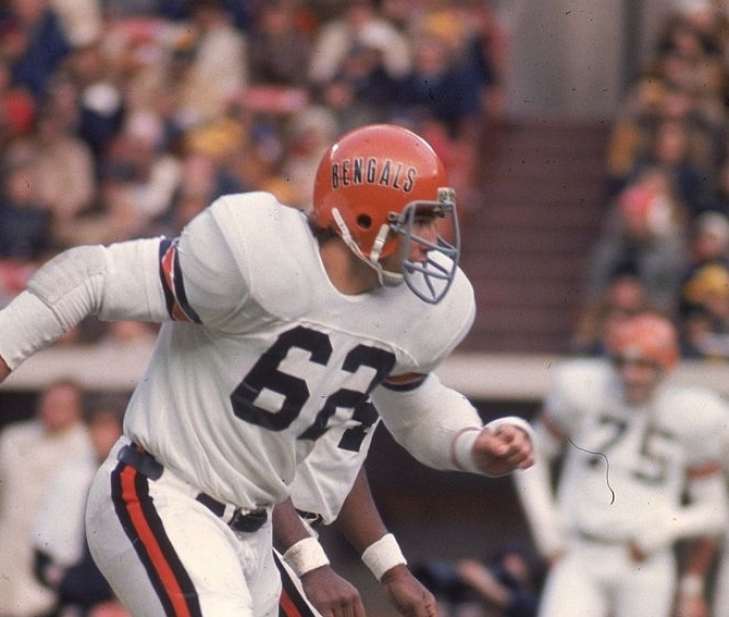
The Bengals from Syracuse selected Dave Lapham in the third round (48th overall), recognizing his versatility and strength as an offensive lineman. During his decade-long career in Queen City, Lapham established himself as a key player in the trenches and later became the iconic media voice of the franchise for fans across generations.
Standing tall at 6 feet 4 inches and weighing 260 pounds, Lapham brought impressive footwork, a sharp football IQ, and an adaptable approach to Paul Brown’s offense. After serving as a key interior backup during his rookie year in 1974, he proudly earned the starting right guard spot in 1975. Lapham held onto this position for five exciting seasons (1975–1979), providing solid protection for quarterbacks Ken Anderson and Virgil Carter, while also creating openings for Pete Johnson. His outstanding performances in the late 1970s led to consecutive seasons with double-digit Approximate Value, according to pro football historians.
After returning to a reserve utility role in 1980, Lapham regained the starting right guard position in 1981 under head coach Forrest Gregg. He was a key member of the "Freezer Bowl" offensive line, contributing to Cincinnati’s first AFC Championship and their appearance in Super Bowl XVI. He stayed a regular starter on the interior line until the 1983 season, after which he left the Bengals to play two final seasons with the USFL's New Jersey Generals.
Following his retirement from the field, Lapham seamlessly stepped into the broadcast booth, becoming the color analyst for the Bengals Radio Network in 1986—a post he held for decades as the soundtrack of Cincinnati football. Over his career, Lapham played in 140 regular-season games (105 starts) and four playoff contests, lining up at guard, tackle, and center whenever duty called.
