

2003 Pro Football Hall of Fame Revisited Project Class.
Here we are! Again!!
If you have been following our Pro Football Hall of Fame Revisited Project, you know we have asked the question: What if the PFHOF had begun in January 1946?
After soliciting and obtaining a passionate group of football fans and historians, we sent out a ballot for a Preliminary Vote, in which each voter selected 25 names as their semi-finalists and five names for the Senior Pool.
We then asked the group to vote for their 15 Finalists in the Modern Era and 3 in the Senior Category. The final stage was to vote for their five Modern Era inductee and one Senior inductee.
These are the results of the 61st official class.
Below are the final results of this project based on 38 votes.
Remember that we have reverted back to the top five candidates entering the Hall in the Modern Era
This is for the “Modern Era”
*Bold indicates they have been elected to the Pro Football Hall of Fame Revisited Class of 2003:
Player | Year of Eligibility | Vote Total |
Marcus Allen RB | 1 | 28 |
Gary Zimmerman T | 1 | 20 |
Curley Culp DT-NT | 17 | 19 |
Drew Pearson WR | 15 | 13 |
Ken Anderson QB | 12 | 12 |
Richard Dent DE | 1 | 11 |
Joe Klecko DE-NT | 10 | 9 |
Ken Riley DB | 15 | 8 |
Harry Carson LB | 10 | 7 |
Karl Mecklenburg LB | 4 | 7 |
Mark Gastineau DE | 10 | 5 |
Stanley Morgan WR | 8 | 4 |
Deron Cherry DB | 7 | 4 |
Steve McMichael DT | 4 | 4 |
Todd Christensen TE | 10 | 3 |
This is for the “Senior Era.”,
*Bold indicates they have been elected to the Pro Football Hall of Fame Revisited Class of 2003.
Arch Ward CONTRIBUTOR | 14 | 11 |
Winston Hill T | 1 | 9 |
Andy Russell LB | 2 | 5 |
Alan Ameche FB | 18 | 4 |
None of the Above | N/A | 3 |
This is for the “Coaches/Contributors.”
*Bold indicates they have been elected to the Pro Football Hall of Fame Revisited Class of 2003.
Jim Finks (Executive) | 15 | 13 |
Jimmy Johnson (Coach) | 2 | 11 |
Tom Flores (Coach) | 7 | 3 |
None of the Above | N/A | 5 |
About the 2003 Inductees:
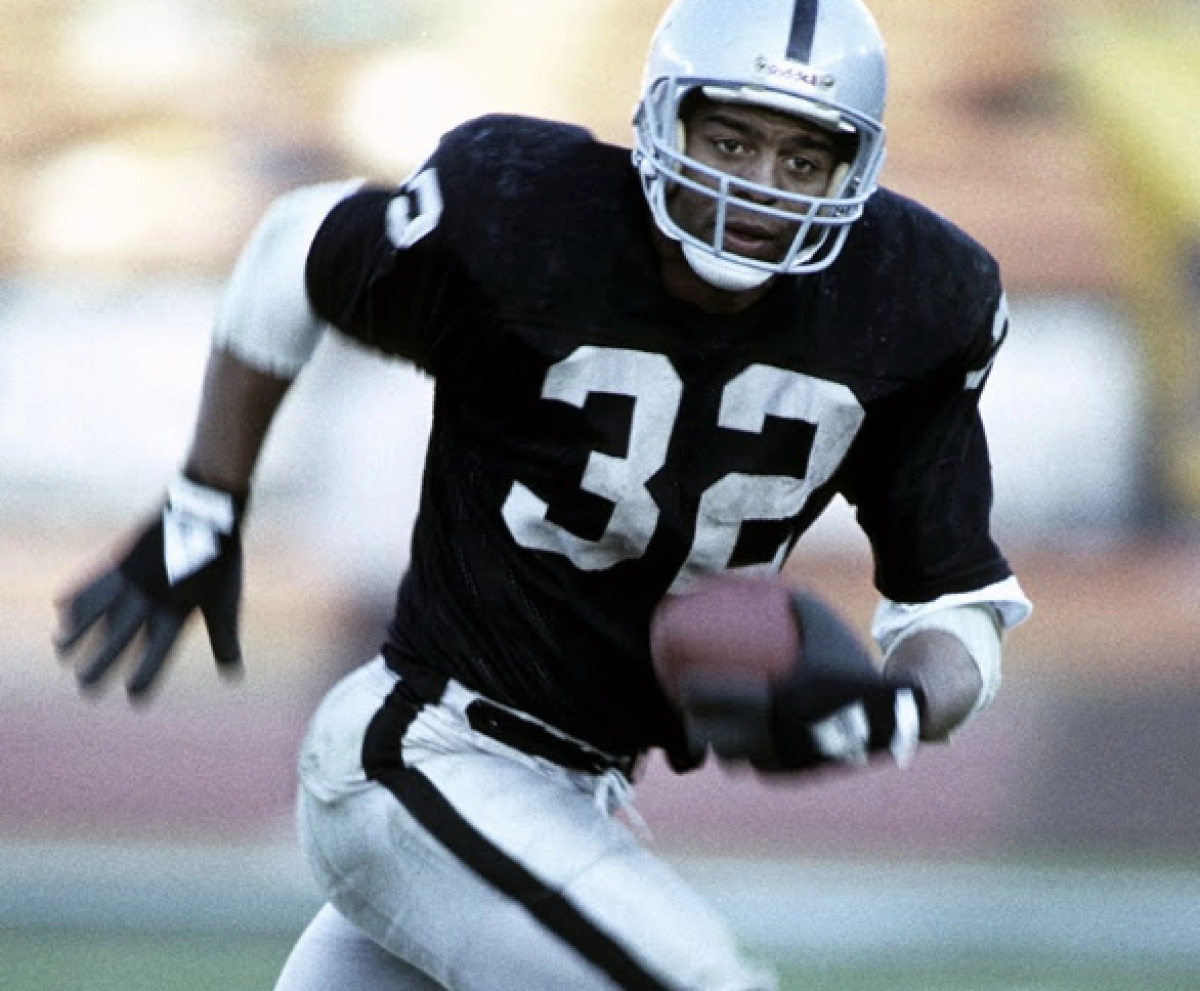
Marcus Allen, RB, RAI 1982-92 & KAN 1993-97: Inducted in the Pro Football Hall of Fame Revisited Project in 2003 on his 1st Ballot. Inducted into the actual Pro Football Hall of Fame in 2003.
Drafted 10th overall in 1982 by the Los Angeles Raiders, Allen made an immediate impact by winning the NFL Rookie of the Year award during a strike-shortened season. His rare combination of running power, elite pass-catching ability, and willingness to block quickly established him as the focal point of the Raiders' offense and one of the league's premier young superstars.
The pinnacle of Allen’s time with the Raiders came during the 1983 season, culminating in a dominant performance in Super Bowl XVIII. On January 22, 1984, Allen rushed for a then-record 191 yards against the Washington Redskins, highlighted by a breathtaking, field-reversing 74-yard touchdown run that remains one of the most iconic plays in NFL history. His spectacular performance earned him the Super Bowl MVP trophy. Just two seasons later, in 1985, Allen secured the NFL Regular Season MVP award after leading the league with 1,759 rushing yards and scoring 14 total touchdowns, cementing his status at the absolute peak of professional football.
Despite his immense success, the latter half of Allen's tenure with the Raiders was marred by a highly publicized and bitter feud with team owner Al Davis. This conflict left Allen underutilized, benched, and moved to fullback to make way for other players like Bo Jackson. Demonstrating his ultimate professionalism and versatility, Allen excelled in this secondary role, showcasing his elite short-yardage skills and goal-line intuition. However, after years of tension, he finally left the franchise following the 1992 season, eager to prove he was still a premier feature back.
In 1993, Allen signed with the Kansas City Chiefs, rejuvenating his career and instantly becoming a fan favorite in the Heartland. Reunited with quarterback Joe Montana, Allen silenced his critics by leading the Chiefs to the AFC Championship Game in his first year, winning the NFL Comeback Player of the Year award after scoring a league-high 12 rushing touchdowns. He spent five productive seasons in Kansas City as a revered team leader and reliable goal-line weapon who consistently found the end zone when his team needed it most.
He was the first player in NFL history to gain more than 10,000 rushing yards and 5,000 receiving yards in a career, finishing with 12,243 rushing yards, 5,411 receiving yards, and 145 total touchdowns.
Gary Zimmerman, T, MIN 1986-92 & DEN 1993-97: Inducted in the Pro Football Hall of Fame Revisited Project in 2003 on his 1st Ballot. Inducted into the actual Pro Football Hall of Fame in 2008.
Originally selected by the New York Giants in the 1984 NFL Supplemental Draft, Gary Zimmerman instead began his professional journey in the United States Football League (USFL) with the Los Angeles Express. Over two seasons in the upstart league, he protected young quarterback Steve Young and established a reputation for elite athleticism and fundamental footwork. When the USFL folded, the Giants traded his rights to the Minnesota Vikings, setting the stage for his arrival as a premier blindside protector in the NFL.
Upon joining the Minnesota Vikings in 1986, Zimmerman immediately assumed the starting left tackle position and became the cornerstone of their offense. Over his seven seasons in Minnesota, he was a model of consistency, starting all 108 games. His quiet efficiency and masterful execution of block mechanics earned him four Pro Bowl nods and two First-Team All-Pro selections during his tenure. Zimmerman’s exceptional play strengthened the Vikings' pass protection and run game, establishing him as one of the most dominant offensive linemen of the late 1980s and early 1990s.
In 1993, Zimmerman brought his elite talents to the Denver Broncos, a pivotal acquisition that transformed the franchise's trajectory. Tasked with protecting legendary quarterback John Elway, Zimmerman brought instant veteran leadership and stabilizing excellence to a line that desperately needed it. His pairing with Elway created a formidable offensive foundation, allowing Denver's passing game to flourish while enabling a high-octane zone-blocking scheme. In Denver, Zimmerman earned three additional Pro Bowl selections and another First-Team All-Pro honor, remaining an elite force well into his thirties.
Zimmerman's crowning achievement came in 1997, culminating in Super Bowl XXXII on January 25, 1998. Battling through painful shoulder and knee injuries, the aging veteran put together a masterclass performance to help the Broncos defeat the heavily favored Green Bay Packers 31-24. Zimmerman’s relentless blocking cleared paths for running back Terrell Davis's historic MVP performance and provided the crucial pocket stability Elway needed to capture his elusive first championship. Having finally reached the pinnacle of the football world, Zimmerman retired on top following the historic victory.
Curley Culp, DT-NT-G, KAN 1968-74, HOU 1974-80 & DET 1980-81. Inducted in the Pro Football Hall of Fame Revisited Project in 2003 on his 17th Ballot. Inducted into the actual Pro Football Hall of Fame in 2013.
The pioneer of the modern nose tackle position, Curley Culp was initially drafted in the second round of the 1968 draft by the Denver Broncos, who tried to transition the former Arizona State NCAA heavyweight wrestling champion into an offensive guard. When that experiment stalled, he was traded to the Kansas City Chiefs, where his immense physical strength immediately helped reshape pro football’s defensive landscape.
During his early years in Kansas City, Culp became a crucial interior component of head coach Hank Stram’s brilliant, suffocating defense. In just his second season, he helped guide the Chiefs to a dominant victory over the Minnesota Vikings in Super Bowl IV. During this historic championship run, Stram effectively experimented with a prototype 3-4 defense, sliding Culp directly over the center. Culp’s unprecedented ability to demand and destroy double teams paralyzed opposing offensive game plans, earning him an AFL All-Star nod in 1969 and a Pro Bowl selection in 1971.
In 1974, Culp was sent to the Houston Oilers in a blockbuster trade for John Matuszak, along with a first-round draft pick. His arrival in Houston instantly transformed the trajectory of a struggling franchise that had endured back-to-back 1-13 seasons. Installed at nose tackle under defensive assistant (and later coordinator) Wade Phillips, Culp served as the absolute centerpiece of the Oilers’ newly adopted, permanent 3-4 defensive scheme. His impact was so immediate that he single-handedly elevated Houston to a 10-4 record in 1975—marking the club’s first winning season in eight years.
The 1975 campaign stood as the statistical and accolades peak of Culp's illustrious career. He wreaked havoc from the interior, amassing 11.5 sacks—a staggering number for a nose tackle—while leading the Oilers to the AFC's top-ranked run defense. For his individual dominance, the Newspaper Enterprise Association named Culp NFL Defensive Player of the Year, and he earned First-Team All-Pro honors. He remained the emotional leader and physical anchor of the iconic "Luv Ya Blue" Oilers teams, guiding them to consecutive AFC Championship Game appearances in 1978 and 1979.
He followed that with a brief final stint with the Detroit Lions. Culp retired after the 1981 season with 179 career games, 68.5 unofficial sacks, and six Pro Bowl invitations.
Drew Pearson, WR, DAL 1973-83. Inducted in the Pro Football Hall of Fame Revisited Project in 2003 on his 15th Ballot. Inducted into the actual Pro Football Hall of Fame in 2021.
Revered as one of the ultimate clutch wide receivers in football history, Drew Pearson was signed out of the University of Tulsa in 1973, where he had transitioned from quarterback to receiver. Pearson initially made the roster by proving his worth on special teams. However, a teammate's injury midway through his rookie season opened the door for him to enter the starting lineup. He capitalized immediately, recording 388 receiving yards and establishing a remarkable chemistry with Hall of Fame quarterback Roger Staubach that would define an era of football.
As the decade progressed, Pearson grew into the focal point of the Dallas passing attack, earning the iconic nickname "Mr. Clutch" for his uncanny ability to make game-winning plays when everything was on the line. His defining moment occurred on December 28, 1975, during an NFC Divisional Playoff game against the Minnesota Vikings. With the Cowboys trailing in the final seconds, Pearson caught a dramatic, game-winning 50-yard touchdown pass from Staubach—a historical play that Staubach famously described as a "Hail Mary," forever entering the sports lexicon. Pearson was on the receiving end of multiple game-deciding plays that NFL Films recognized among the greatest in league history.
Pearson’s legacy is also deeply intertwined with the prestige of the Dallas Cowboys' No. 88 jersey, a lineage of wide receiver excellence he helped launch. As the "Original 88," he set a golden standard of productivity, leading the team in catches and receiving yards for four consecutive seasons starting in 1974. His regular-season peak came in 1977, when he led the NFL with 870 receiving yards. Pearson's individual dominance was matched by team success, as he served as the offensive captain and helped propel the Cowboys to three Super Bowl appearances, ultimately capturing a ring in Super Bowl XII against the Denver Broncos.
Over his 11-year career, he played entirely with the Dallas Cowboys. Pearson amassed an impressive list of accolades. He earned three consecutive Pro Bowl selections and three First-Team All-Pro honors (1974, 1976, and 1977). His consistency across the era earned him selection to the prestigious NFL 1970s All-Decade Team. At the time of his retirement following a severe automobile accident in 1984, Pearson hung up his cleats as the franchise’s all-time leader in both receptions (489) and receiving yards (7,822), alongside 48 touchdown receptions
Ken Anderson, QB, CIN 1971-86. Inducted in the Pro Football Hall of Fame Revisited Project in 2003 on his 12th Ballot. Inducted into the actual Pro Football Hall of Fame in 2016.
Drafted out of tiny Augustana College in the third round of the 1971 NFL Draft by the Cincinnati Bengals. Anderson was initially seen as an unheralded small-school prospect. However, his rare combination of field vision, flawless mechanics, and a strong engineering mind quickly elevated him into the starting role. He would ultimately spend nearly two decades transforming the franchise's identity and establishing a blueprint for modern quarterback play.
Anderson’s early-career trajectory changed forever when he paired with legendary assistant coach Bill Walsh in Cincinnati. As one of the primary pioneers and earliest practitioners of what became known as the West Coast Offense, Anderson used quick reads, precise timing, and rhythm over brute force to dissect opposing defenses. This cerebral style yielded staggering efficiency; he led the NFL in passing yards twice (1974 and 1975) and earned back-to-back league passer rating titles during those same seasons. His off-field leadership earned him the prestigious Walter Payton NFL Man of the Year Award in 1975, cementing his legacy as a pillar both on and off the gridiron.
The apex of Anderson’s career came during an iconic, decorated 1981 campaign. After being benched in the opening game, Anderson returned with relentless poise to orchestrate one of the greatest single-season turnarounds in NFL lore, throwing for 3,754 yards and 29 touchdowns. He single-handedly swept the major individual accolades, claiming the NFL Most Valuable Player, Offensive Player of the Year, and Comeback Player of the Year honors. Anderson also famously conquered the legendary, bone-chilling "Freezer Bowl" AFC Championship game, guiding Cincinnati to its first-ever franchise appearance in Super Bowl XVI.
Even as the league evolved into the 1982 strike-shortened season, Anderson continued his historic surgical dominance from the pocket. He captured yet another passer rating crown while setting a then-NFL single-season record by completing 70.6% of his passes—an astonishing efficiency milestone that stood unmatched for over 25 years until Drew Brees finally eclipsed it. This remarkable feat made Anderson the only quarterback in NFL history to win consecutive league passing titles across two entirely separate decades (1974–1975 and 1981–1982), a definitive testament to his enduring longevity and masterclass consistency.
When Ken Anderson retired after the 1986 season, he left behind a staggering statistical profile: 32,838 passing yards, 197 passing touchdowns, and an additional 2,220 yards on the ground. He sits in an exclusive group of just five signal-callers to earn four or more NFL passing efficiency titles alongside Bart Starr, Roger Staubach, Steve Young, and Aaron Rodgers.
Arch Ward. Inducted in the Pro Football Hall of Fame Revisited Project in 2003 on his 14th Senior Ballot. Was never inducted into the actual Pro Football Hall of Fame.
After graduating from Notre Dame, where he served as a sports publicity director under the legendary Knute Rockne, Arch Ward joined the Chicago Tribune in 1925 and became sports editor in 1930. From this influential platform, he earned the nickname the "Cecil B. DeMille of Sports" for his knack for creating mass-spectacle sports events. While he famously created baseball's All-Star Game and boxing's Golden Gloves, his immense passion for gridiron football profoundly reshaped both the amateur and professional ranks.
Ward's first massive contribution to the football landscape came in 1934 with the creation of the Chicago Charities College All-Star Game. Hosted at Soldier Field, this highly anticipated annual preseason spectacle pitted a squad of the nation's best recently graduated college stars against the reigning NFL champions. The event became an immediate national institution, drawing massive crowds and serving as a vital bridge that brought professional football—still struggling for mainstream respectability—to a college-centric sports public. Ward's soaring reputation in football circles grew so large that the National Football League offered him the role of NFL Commissioner in 1941, though he ultimately turned down the massive salary to maintain his editorial independence at the Tribune.
Believing the NFL operated like a "cheap-john minor league outfit" that underpaid its players, Ward took matters into his own hands by founding a major rival league: the All-America Football Conference (AAFC). Launching in 1946, the AAFC directly challenged the NFL monopoly, establishing professional football franchises in major unserved markets across the United States. Though the star-crossed league lasted only four seasons before a merger, Ward's creation permanently forced the sport's evolution; it introduced the world to the dominant Cleveland Browns and the San Francisco 49ers, both of which transferred directly into the NFL in 1950. Through his independent leagues and promotion, football historians recognize that Ward forced the NFL to become a true major-league enterprise.
Jim Finks, Executive, MIN 1964-71 (General Manager), Chicago Bears 1974-82 (General Manager) & NO 1986-92 (General Manager). Inducted in the Pro Football Hall of Fame Revisited Project in 2002 on his 15th Coaches/Conrtibutors Ballot. Inducted into the actual Pro Football Hall of Fame in 1995.
Celebrated as one of the most prolific and transformative front-office architects in NFL history, Jim Finks had a legendary reputation as a master evaluator who resurrected three separate losing franchises into perennial powerhouses.
After a playing career as a quarterback for the Pittsburgh Steelers and a successful management run in the CFL, Finks broke into the NFL executive ranks in 1964 as the general manager of the struggling expansion Minnesota Vikings. Refusing to rely on quick-fix gimmicks, he meticulously built the team for long-term sustainability, drafting core defensive legends like Alan Page and Carl Eller to form the feared "Purple People Eaters" defensive line. Finks made the bold decision to hire an unheralded CFL coach named Bud Grant in 1967 and orchestrated a major trade to bring back quarterback Fran Tarkenton, moves that successfully propelled Minnesota to five divisional titles and two Super Bowl appearances during his ten-year tenure, earning him NFL Executive of the Year honors in 1973.
In 1974, Finks brought his team-building blueprint to the Chicago Bears, taking absolute control of football operations from legendary owner George Halas, who had personally run the team since 1920. In his first season, Finks conducted a massive assessment of the league’s talent pool before rebuilding the stagnant Bears roster. His draft precision fundamentally transformed the franchise, highlighted by the monumental selection of Walter Payton in 1975. Under Finks’ guidance, Chicago broke a 14-year postseason drought by securing playoff berths in 1977 and 1979. Though he resigned in 1982 due to ownership interference, Finks left behind a golden championship inheritance: he personally drafted 19 of the 22 starters who went on to dominate the league on the historic 1985 Super Bowl XX championship squad.
Finks undertook what was arguably his greatest executive miracle in January 1986, taking the reins of a New Orleans Saints organization that had famously never experienced a single winning season or playoff appearance in its entire 19-year history. He immediately instilled a culture of accountability by hiring head coach Jim Mora and building a physical, defense-first roster. The turnaround was astonishingly rapid; by his second season in 1987, the Saints exploded for a 12-win campaign, capturing the franchise's first-ever winning record and postseason berth. Finks’ brilliant executive management over seven seasons guided New Orleans to four separate playoff appearances and the team's first-ever division crown in 1991, earning him his second career NFL Executive of the Year award in 1987.

Comments powered by CComment