


Site Admin
Kid Rock

28. Kevin Federline

16. Jon Stewart

25. Denny McLain
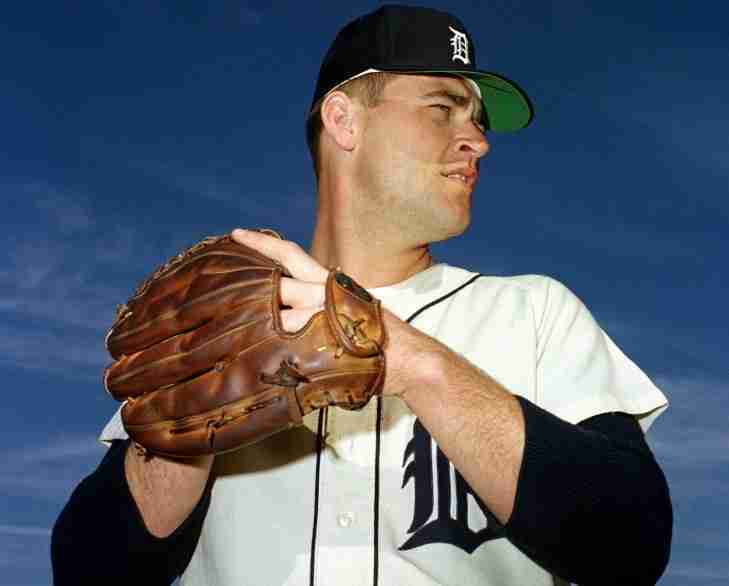
For a brief, white-hot stretch in the late sixties, Denny McLain wasn't just the best pitcher in the American League; he was a cultural phenomenon who lived life at a breakneck speed that mirrored his fastball. While his time at the summit was fleeting, McLain provided the Motor City with a statistical explosion that remains one of the most singular achievements in the history of the sport.
McLain’s rise in Detroit began with a glimpse of his massive ceiling in the mid-sixties. He broke out in 1966, winning 20 games for the first time and signaling a transition from a young arm with potential to a frontline starter. He possessed a focused intensity and a disregard for the game’s established norms, a style that culminated in the historic 1968 campaign. That summer, McLain reached a peak that no pitcher has touched since, winning 31 games and becoming the last man to cross the thirty-victory threshold. It was a statistical outlier of a season where he captured both the Cy Young and the MVP, leading the Tigers to a World Series title and cementing his legacy as the premier outlier of his era.
The core of his tenure was defined by a three-year run of unrivaled dominance and high-frequency workloads. In 1969, he proved his arm hadn't lost its bite, winning 24 games and securing a second consecutive Cy Young Award. He showed the organization that a pitcher could lead the league in starts, innings, and complete games simultaneously, providing the steady-state reliability that made the Tigers a perennial threat. However, the distractions of a high-profile life off the diamond soon caught up with him. In 1970, the commissioner handed down a series of suspensions, initially sparked by his involvement in a bookmaking operation and later compounded by a clubhouse prank involving a bucket of water, which effectively derailed his momentum and cost him a significant portion of the season.
Everything culminated in a rapid shift in direction following that tumultuous 1970 campaign. Between the disciplinary issues and a sudden loss of efficiency on the mound, the Tigers traded the two-time Cy Young winner to the Washington Senators. He left Detroit with 117 wins and 1,150 strikeouts, a statistical footprint that felt like a meteor strike, brilliant, devastating, and gone far too soon.