


Site Admin
20. Joe Tinker
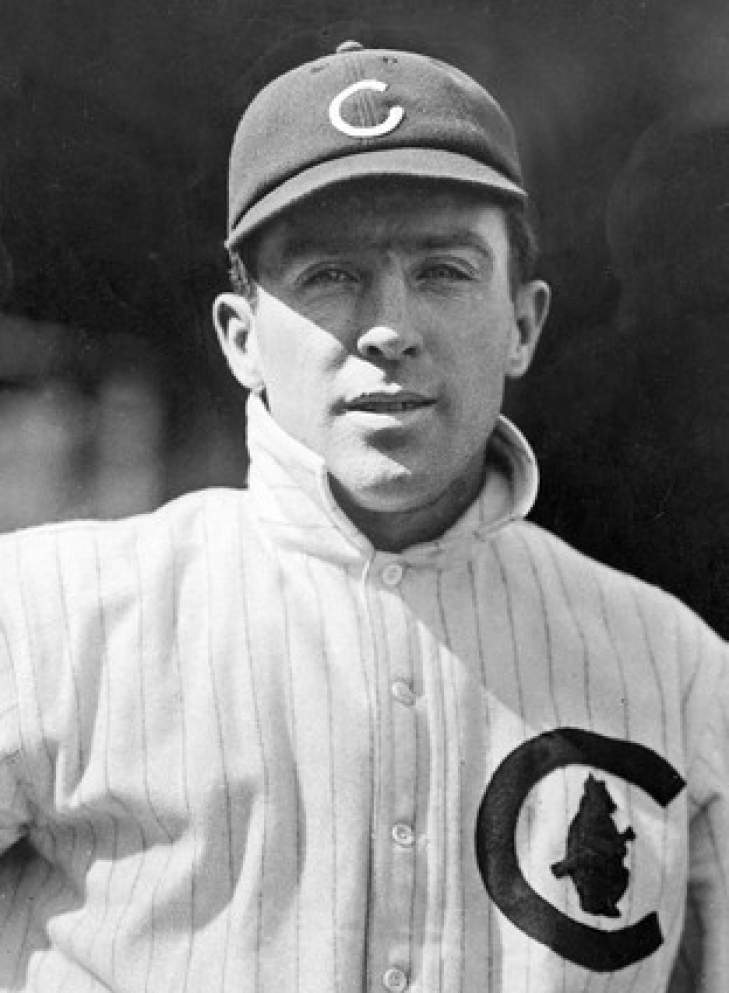
When Joe Tinker arrived in Chicago in 1902, the Cubs were a franchise on the verge of a golden era. He immediately stepped into the starting shortstop role, a position he would hold with an iron grip for the next eleven seasons. While history remembers him as the first link in the "Tinker to Evers to Chance" double-play combination, the reality on the dirt was far more complicated. Tinker and second baseman Johnny Evers famously despised each other, reportedly going years without speaking a word off the field. Yet, when the umpire cried, "Play Ball," Tinker’s professionalism took over. He arrived as a young, agile defender and quickly became the premier shortstop of the Deadball Era, proving that personal friction was no match for championship chemistry.
The peak of his residency was defined by the back-to-back World Series titles in 1907 and 1908. During this stretch, Tinker was a defensive titan, leading National League shortstops in fielding percentage four times and routinely topping the charts in assists and putouts. While his offensive numbers, including a modest .303 on-base percentage, might seem pedestrian by modern standards, he was more than adequate for a Deadball shortstop. He was a clutch performer who collected over 1,400 hits in a Cubs uniform, often delivering the timely knock that a low-scoring Chicago team desperately needed. Without his glove and his occasional bat, the Cubs’ trophy case from that era would likely be far emptier.
He was a five-time leader in defensive bWAR and the runner-up on four other occasions, establishing himself as arguably the greatest defensive player in the sport during his prime. He was the vacuum that allowed the Cubs' legendary pitching staff to thrive, turning countless potential base hits into routine outs. His value wasn't found in home runs or slugging, but in the ground balls that died in his glove and the runners he erased at second base.
The final walk toward the exit in 1912 was a direct result of his fractured relationship with Johnny Evers. When Evers was named player-manager, Tinker demanded a trade, leading to a brief departure from the North Side. However, the gravitational pull of Chicago was too strong; he returned to the city to lead the Chicago Whales of the Federal League, eventually making a final homecoming to the Cubs as a player-manager in 1916 after the leagues merged. It was a fitting, if short-lived, final chapter for a man who had become synonymous with Chicago baseball.
Joe Tinker’s legacy was finally cemented in 1946 when the Old Timers Committee ushered him into Cooperstown. In 2021, the Cubs rightfully included him in their inaugural franchise Hall of Fame class, a long-overdue nod to the man who started the poem but finished the job. He arrived as a scrappy infielder in a new century and left as a permanent monument to the "Hitless Wonders" era. He proved that you don't have to like your teammates to win with them, you just have to be better than everyone else when the ball is hit your way.
14. Billy Herman
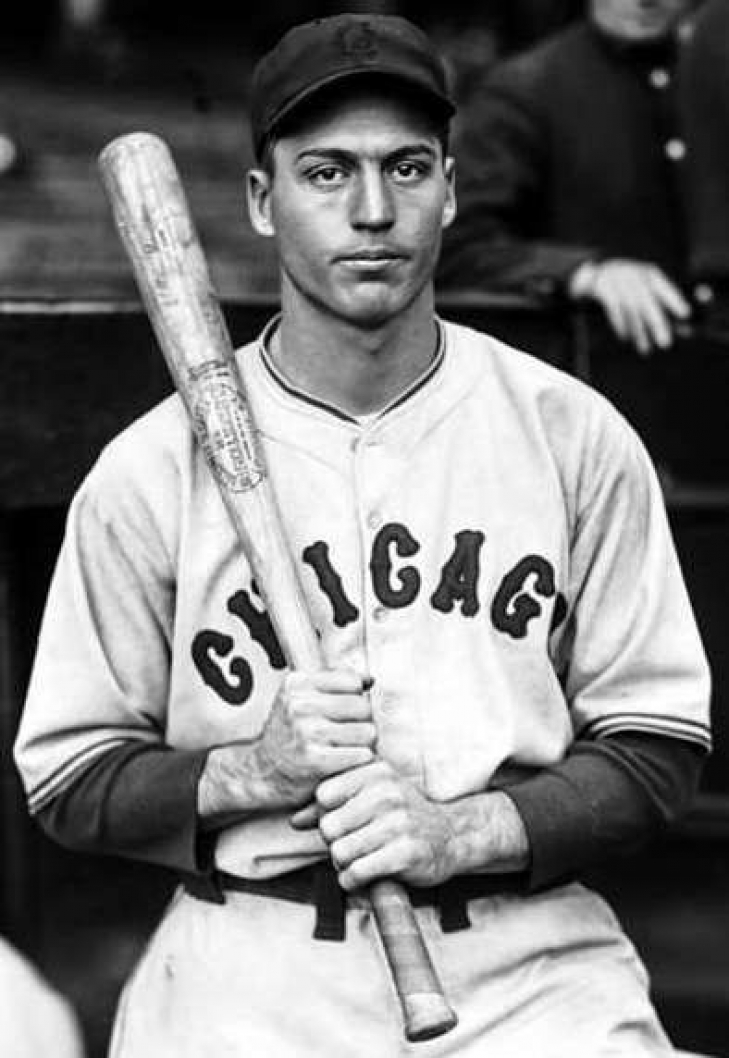
When Billy Herman arrived at Wrigley Field in 1931, he brought with him a brand of baseball that was as elegant as it was efficient. He didn't just play second base; he patrolled it with a spatial awareness that made it feel like he was playing a different game than everyone else. For a decade, Herman was the "vital cog" in a Cubs machine that churned out three National League pennants, providing a defensive foundation that anchored the team's greatest era of the 1930s. He arrived as a rookie with a reputation for his glove, and he spent the next ten years finishing in the top ten for Defensive bWAR seven times, a testament to a range and reliability that made him a perennial All-Star.
But the story of Billy Herman isn't just a defensive highlight reel. He was a dual-threat pioneer who proved that a middle infielder could be a centerpiece of the batting order. His offensive peak came in 1935, a season in which he led the National League with 227 hits, serving as the leadoff catalyst for a World Series run. Herman was a hitting machine who flirted with the .340 mark and retired from Chicago with a sterling .309 career average. He wasn't a power hitter who cleared the fences; he was a surgeon who sliced line drives into the gaps, amassing 1,710 hits in a Cubs uniform and earning eight consecutive All-Star nods as the premier second baseman in the senior circuit.
Herman’s Chicago stint was defined by a quiet, professional excellence that finally reached its peak in the history books long after his playing days were over. While the Cubs of his era famously fell short in the Fall Classic, the blame never rested on the shoulders of their second baseman, who was the heartbeat of the clubhouse and the architect of their defensive identity.
The final chapters of the Herman epic were written in bronze. Inducted into Cooperstown by the Veterans Committee in 1975, he was officially immortalized as a legendary figure of the pre-war era. When the Cubs finally opened their own Hall of Fame in 2021, Billy Herman was an automatic choice for the inaugural class. He arrived as a defensive specialist and left as a franchise icon, the man who proved that the keystone was the most important piece of the puzzle.
16. Rick Reuschel
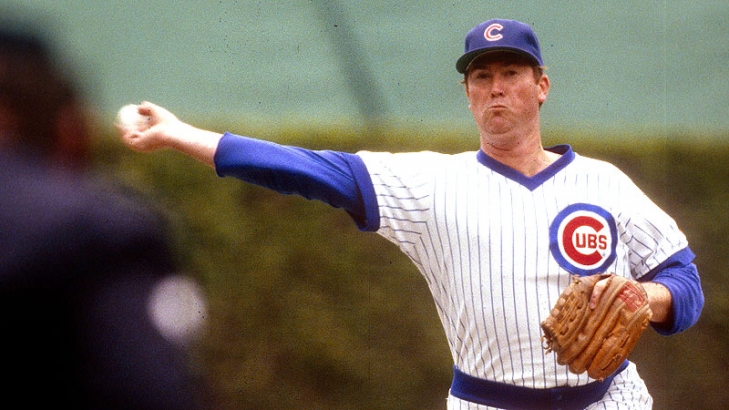
Listed at 6'3" and well over 220 pounds, the man they called "Big Daddy" looked more like a neighborhood plumber than a premier athlete. But that portly physique masked a startlingly athletic pitcher who could move off the mound with a cat’s grace and run the bases well enough to be used as a pinch-runner. He didn't overpower hitters with heat; he dismantled them with a sinking fastball and a relentless refusal to give away free passes.
His run in Chicago was defined by a quiet, high-level competence that was frequently wasted on mediocre teams. While he amassed 135 wins in a Cubs uniform, his value was often obscured by a lack of run support and a shaky defense behind him. The singular, traditional peak of his tenure arrived in 1977, a season where everything finally aligned. Reuschel captured 20 wins, earned his first All-Star nod, and finished third in the Cy Young voting, leading the league in home-runs-per-nine innings. It was the year the old-school stats caught up to his actual talent.
However, the real story of Reuschel’s tenure is found in the numbers that weren't sexy at the time. Modern metrics reveal that he was a sabermetric titan hiding in plain sight. He led the Cubs in bWAR seven times, including a five-year streak from 1976 to 1980. He was a workhorse who specialized in the unseen skills, inducing ground balls, limiting damage, and keeping the ball in the park, that wouldn't be fully appreciated until the 21st century.
After a brief, injury-plagued exit and return in the early 80s, Reuschel eventually found his second act elsewhere, but his identity remained rooted in Chicago. He left the franchise with 49.1 bWAR, a total that places him among the most effective players to ever call Wrigley home. When the Cubs inaugurated their Hall of Fame in 2021, "Big Daddy" was an automatic selection for the first class. He arrived as a deceptive rookie and left as a retroactive superstar, the man who proved that you don't have to look the part to dominate the game.
15. Frank Chance
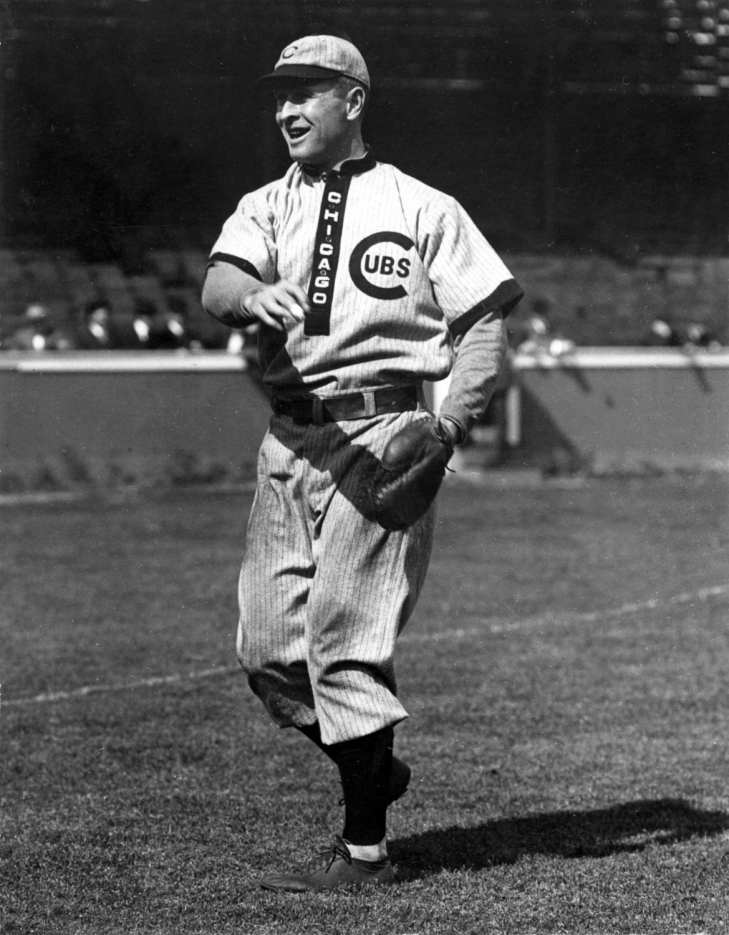
When Frank Chance joined the Chicago roster in 1898, he arrived as a catcher, but his destiny lay at the opposite end of the infield. By the time he transitioned to first base, he had become the heartbeat of a Chicago squad that would soon terrorize the National League. Chance was the rare thinker of the Deadball Era, a man who combined a sophisticated understanding of the game’s nuances with a raw, aggressive playing style. He didn't just inhabit the bag at first; he patrolled it like a commanding officer, serving as the final, reliable destination for the throws coming from Tinker and Evers.
His offensive presence was a nightmare for opposing pitchers who were used to easy outs at the bottom of the order. From 1903 to 1906, Chance put together a run of four consecutive seasons batting over .300, but his true genius lay in his ability to reach base by any means necessary. In 1905, he paced the league with an extraordinary .450 On-Base Percentage, a figure that underscored his elite discipline and refusal to give away an out. Once he was on, he was even more dangerous; a two-time stolen base king, he eventually swiped 402 bags in a Chicago uniform, blending the power of a first baseman with the speed of a pure leadoff threat.
The defining arc of Chance’s tenure was his dual role as player-manager. Under his leadership, the Cubs reached the summit of the baseball world, capturing four pennants and back-to-back World Series titles in 1907 and 1908. He was the "Peerless Leader" because he demanded the same relentless excellence from his teammates that he himself showed on the field, finishing in the top seven in bWAR for five straight years during the team's most fertile era.
By the time his run concluded in 1912, Chance had amassed a .394 OBP and a legacy that was inseparable from the city's first golden age. He arrived as a versatile prospect and left as the architect of a championship culture. The Old Timers Committee rightfully ushered him into Cooperstown in 1946, and when the Cubs finally built their own Hall of Fame in 2021, the man who provided the "Chance" in the game’s most famous trio was one of the first names carved into the stone.