

6. Justin Verlander
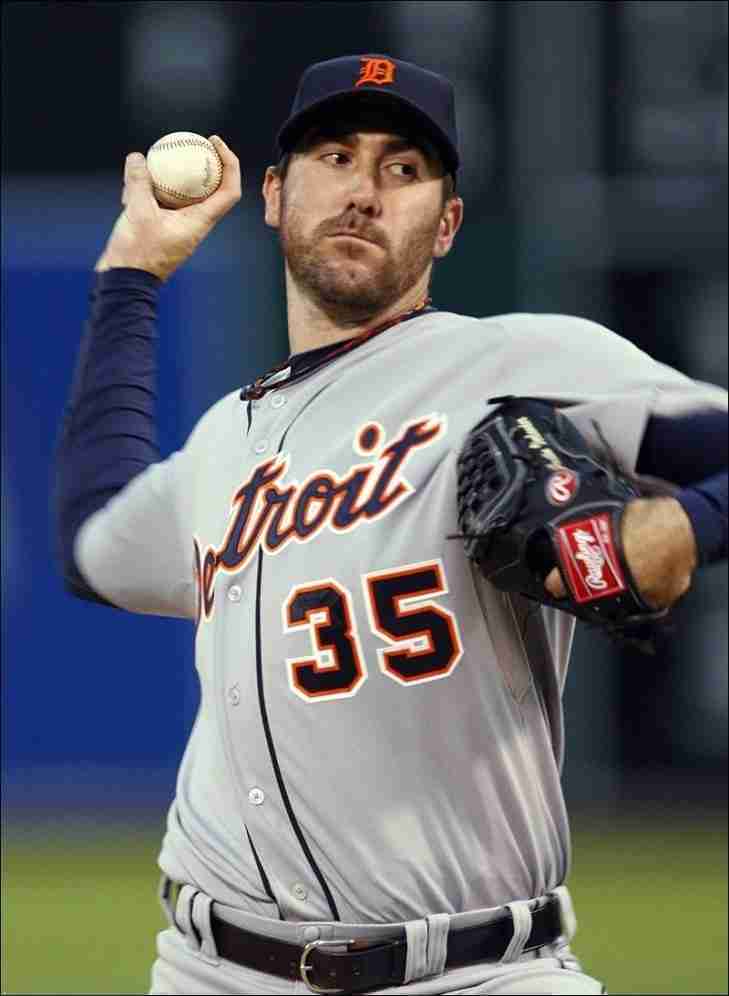
The arrival of Justin Verlander in 2005 was the first tremor of a seismic shift in Detroit baseball. While he debuted as a high-velocity prospect, he quickly matured into the undisputed titan of the American League, a right-hander whose combination of an elite fastball and a relentless competitive fire restored the Tigers to national relevance. Across two distinct eras in the Motor City, Verlander evolved from a fireballing Rookie of the Year into a sophisticated, first-ballot immortal, serving as the high-leverage anchor for a decade of championship aspirations.
Verlander’s rise was instantaneous, capturing the 2006 Rookie of the Year award and immediately leading the club to its first World Series in over twenty years. He established a standard of specialized durability that became his trademark, but the true ascension occurred in 2011. That summer remains a pillar of modern pitching history; he secured the rare Triple Crown—leading the league in wins (24), strikeouts (250), and ERA (2.40)—en route to a historic sweep of both the Cy Young and the American League MVP. He was a model of high-frequency dominance, utilizing a professional resilience to carry the staff through four consecutive postseason runs from 2011 to 2014.
The middle chapters of his Detroit tenure were defined by his tactical mastery of the "big game." Verlander was the primary engine of the 2012 pennant-winning rotation, famously out-dueling the league’s best in October to cement his status as a franchise icon. He possessed a specialized ability to maintain his velocity into the late innings, a craftsmanship that earned him six All-Star nods and two no-hitters in a Tigers uniform. Even as the team’s competitive window began to close in 2017, leading to a blockbuster trade to Houston, where he finally secured a World Series ring, his heartbeat remained tied to the city that raised him.
After a legendary journey through Houston, New York, and San Francisco, the narrative came full circle in February 2026. Following a resilient 2025 campaign with the Giants, where he proved his health by logging 152 innings, Verlander signed a one-year deal to return to Detroit for a final act.
16. Bill Freehan
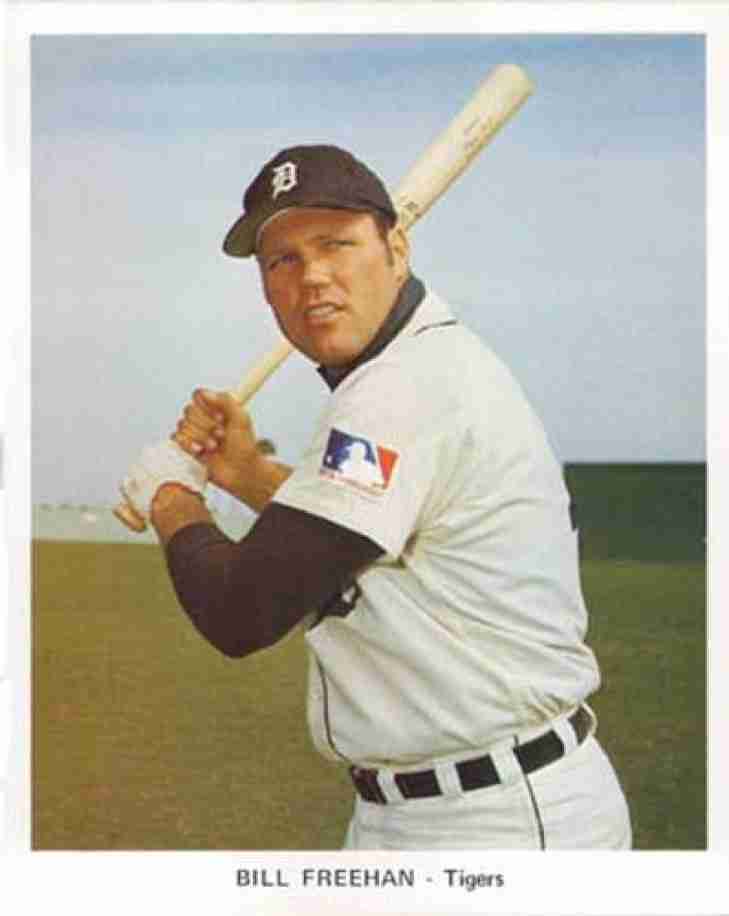
Bill Freehan’s journey in Detroit began as a local standout at the University of Michigan before arriving in the Tigers' clubhouse in the early 1960s. After a brief cup of coffee, he took over the starting catching duties in 1963 and immediately established a reputation for physical resilience. By 1964, he had earned his first All-Star nod—the start of a ten-year streak where he was virtually synonymous with the American League starting lineup. He wasn't a flashy performer; he was a model of specialized durability who played through the bruises and foul tips that defined the era's catching experience.
As the mid-60s progressed, Freehan evolved into one of the league's most feared offensive threats at his position. He reached a professional high point in 1967, hitting .282 with 20 home runs and finishing third in the AL MVP race. He possessed a fearless, focused intensity at the plate, frequently leading the league in hit-by-pitches because he refused to give up the inner half of the zone. This grit provided the middle-order muscle that kept the Tigers in the pennant race, setting the stage for the most iconic summer in the city's history.
Everything culminated in the legendary 1968 "Year of the Pitcher." That season, Freehan had a defensive season for the ages, directing a pitching staff that included 31-game winner Denny McLain and World Series hero Mickey Lolich. While the pitchers grabbed the headlines, Freehan set American League single-season records for putouts and total chances, proving to be the indispensable anchor of the defense. He finished as the runner-up for the MVP Award and capped the year by famously tagging out Lou Brock at the plate in Game 5 of the World Series, a moment that shifted the momentum toward Detroit's eventual championship.
The final chapters of his career saw Freehan maintain a steady state of excellence, earning five consecutive Gold Gloves and adding a final All-Star selection in 1975. He eventually retired in 1976 with 200 home runs and 1,591 hits, having spent all fifteen of his professional seasons in a Tigers uniform. He showed the organization that a catcher could become a franchise pillar by simply being the most reliable man on the field, leaving the diamond as the all-time leader in games caught for the club.
With the Tigers, Freehan compiled 1,591 hits and 200 home runs while earning 11 All-Star selections and five Gold Gloves.
12. Tommy Bridges
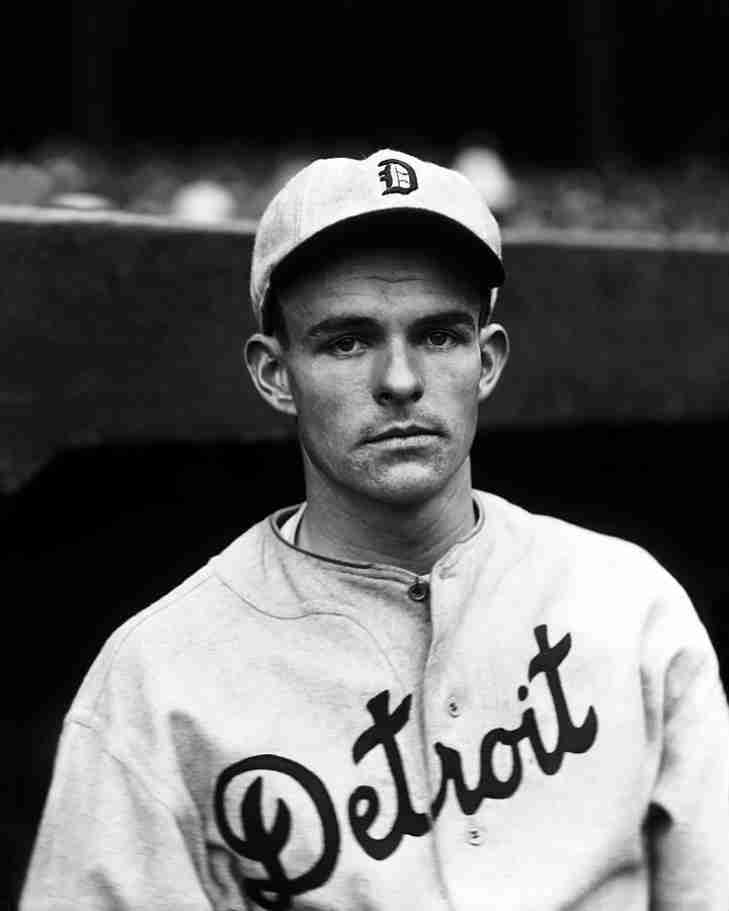
In the history of the Detroit Tigers, few players have personified "pound-for-pound" greatness quite like Tommy Bridges. A diminutive right-hander who stood barely 5'10" and weighed just 150 pounds, Bridges used one of the most devastating curveballs in the history of the sport to anchor the Detroit rotation for sixteen years.
Bridges’ time in Detroit was marked by relentless, high-frequency dominance, during which he became the franchise's primary strikeout threat for over a decade. He reached a peak between 1934 and 1936, a three-year stretch where he rattled off three consecutive 20-win seasons. During this span, he led the American League in strikeouts twice and in wins once (1936), establishing himself as a perennial All-Star and a foundational piece of a roster that featured four future Hall of Famers. His ability to miss bats was legendary; he retired with 1,674 strikeouts, a total that stood as the Tigers' franchise record for a right-hander for fifty years.
The most iconic chapter of his career unfolded during the 1935 World Series. After a gutsy performance in Game 2, Bridges took the mound for Game 6 with the championship on the line. In the ninth inning, with the score tied and a runner on third with nobody out, Bridges displayed what manager Mickey Cochrane famously called "150 pounds of courage." He proceeded to retire three straight Chicago Cubs, including a pair of strikeouts with his signature curveball, to keep the game tied, setting the stage for a walk-off victory in the bottom half. It was the performance that secured Detroit’s first-ever world title and cemented Bridges' reputation as one of the gutsiest performers of his generation.
Like many of his contemporaries, he saw his statistical totals interrupted by a commitment to duty; he missed the 1944 season and nearly all of 1945 due to military service in World War II. He returned just in time to make a relief appearance in the 1945 Fall Classic, earning his second championship ring and joining Hank Greenberg as the only players in franchise history to appear in four different World Series for the club. He retired after the 1946 season.
With the Tigers, Bridges compiled 194 wins and 1,674 strikeouts while winning two World Series titles and leading the AL in strikeouts twice.
13. Norm Cash
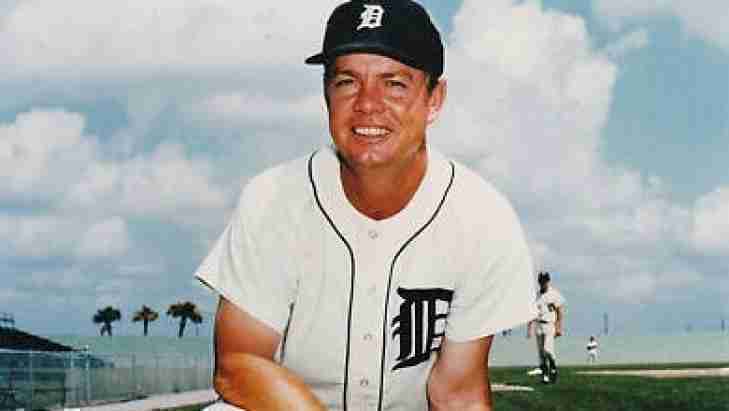
The 1961 baseball season is immortalized by the pinstriped pursuit of Babe Ruth’s ghost, but while the world watched Roger Maris and Mickey Mantle, Norm Cash was quietly putting forth one of the greatest offensive anomalies in the history of the sport.
Arriving in Detroit a year prior in a lopsided trade with Cleveland, "Stormin' Norman" evolved into a left-handed powerhouse whose swing was as distinctive as his colorful personality. Cash spent fifteen seasons as the defensive and emotional heartbeat of the Tigers' infield, blending a Texas-sized sense of humor with a bat that could leave Tiger Stadium in a heartbeat.
Cash’s tenure in the Motor City was highlighted by a 1961 campaign that defies modern logic. That summer, he put together a statistical profile that would look at home in a video game, capturing the American League batting title with a staggering .361 average, a mark that remained the highest by any player in the 1960s. He didn't just hit for contact; he led the league in on-base percentage (.487) and OPS (1.148) while launching 41 home runs and driving in 132. It was a season of such profound efficiency that even a 6.0 bWAR barely does it justice; he simply operated on a different plane than the rest of the league, even if the national spotlight was fixed firmly on the home run chase in New York.
While he never replicated that magical "one-off" peak, Cash remained a model of high-frequency power throughout the next decade. He was the only American League player to belt at least 20 home runs every year from 1961 to 1969, serving as the veteran stabilizer for a Detroit lineup that was consistently among the league's most dangerous. He possessed a specialized athleticism at first base, setting franchise defensive records for putouts and double plays that stood for decades. His professional resilience was never more evident than during the 1968 World Series, where he channeled his 1961 form to hit .385 against the Cardinals. His clutch single in the seventh inning of Game 7 ignited the rally that finally broke a scoreless tie and brought the championship back to Michigan.
His presence in the clubhouse was defined by an infectious energy and a legendary wit that made him a favorite among teammates and fans alike. Whether he was famously trying to use a table leg as a bat against Nolan Ryan or providing the high-leverage hits needed to secure the 1972 division title, he played with a grit that solidified his status as a Detroit institution.
Retiring after the 1974 season, Cash compiled 373 home runs, 1,793 hits, and a World Series ring while winning the 1961 AL Batting Title.
17. Bobby Veach
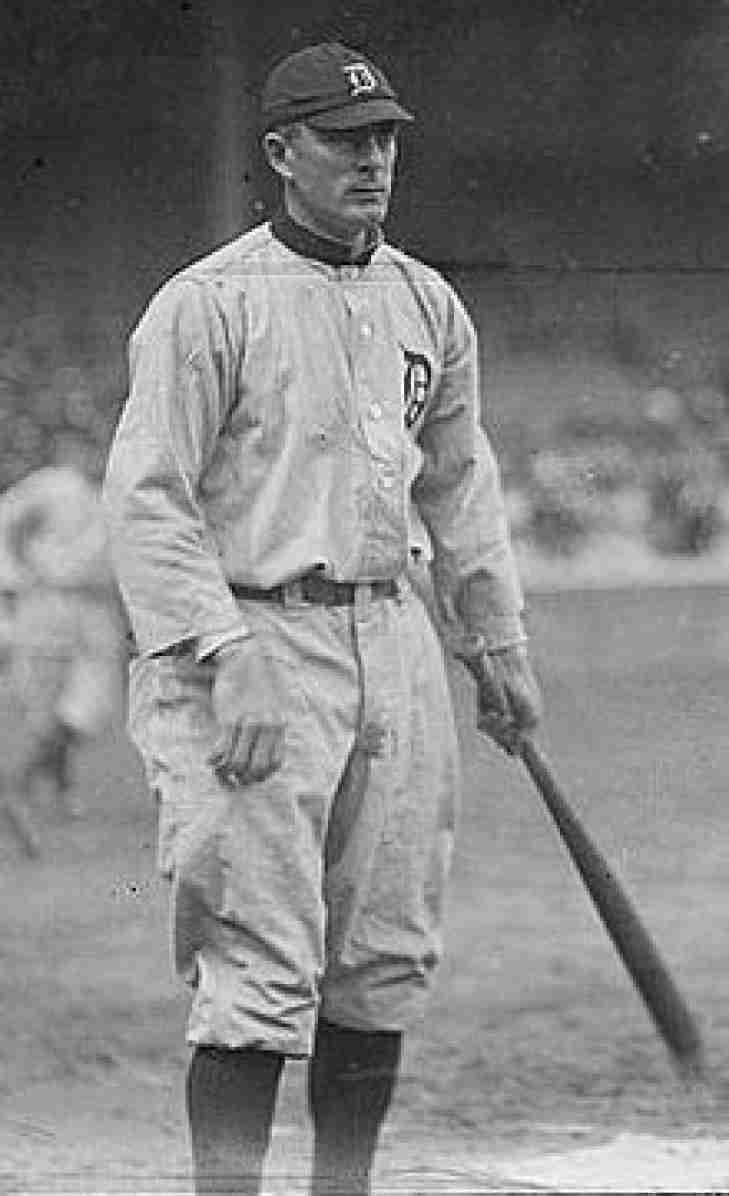
Bobby Veach had the singular misfortune of being an elite ballplayer who spent his entire prime in the physical and historical shadow of three Hall of Fame legends. While he patrolled left field for the Detroit Tigers, the other two spots in the grass were occupied by Ty Cobb and either Sam Crawford or Harry Heilmann. Because he wasn't a "character" like Cobb or a refined technician, Veach was often dismissed as a mere product of his environment, a "cleanup hitter" who just happened to be standing there when Cobb and Crawford crossed the plate. But a look at the linear progression of his career reveals a player who was arguably the most consistent run-producer in the American League for a decade.
Veach’s arrival in Detroit in late 1912 was an immediate spark; he hit .342 in a 23-game audition, convincing the Tigers they had finally found a permanent solution for left field. By 1915, he had reached his first major campaign, leading the American League in both doubles (40) and RBIs (112), tying his teammate Crawford for the latter. It was the birth of what sportswriters called the "$100,000 Outfield." While Cobb and Crawford played "inside baseball”, choking up and bunting, Veach was a specialized power threat who swung from the heels, a style that made him a statistical outlier in the height of the Deadball Era.
The center of his career was a relentless run of high-frequency production. He secured back-to-back RBI titles in 1917 and 1918, proving he was more than just a supporting actor for Cobb. In 1919, he excelled again, leading the league in hits (191), doubles (45), and triples (17) while batting a career-high .355. He was a model of specialized durability, rarely missing a game and providing above-average defense; his range factor and assist totals frequently topped the league's left fielders, showing a defensive craftsmanship that Cobb famously (and perhaps unfairly) criticized as lacking "fire."
The final years of his Detroit residency were marked by a bizarre psychological experiment. In 1921, Cobb, now the player-manager, instructed Harry Heilmann to shout insults at Veach from the dugout to "toughen up" his easygoing nature. The result was another elite plateau: Veach responded with 128 RBIs and 207 hits. However, the tension with Cobb eventually led to his exit; despite hitting .321 in 1923, he was sold to the Boston Red Sox to make room for a younger Heinie Manush. He finished his Tigers tenure with 1,859 hits and a .311 average, leaving as the only player in franchise history to lead the league in hits, doubles, triples, and RBIs who isn't currently in Cooperstown.
With the Tigers, Veach compiled 1,859 hits, 393 doubles, and three RBI titles while maintaining a .311 career average.
8. Hank Greenberg
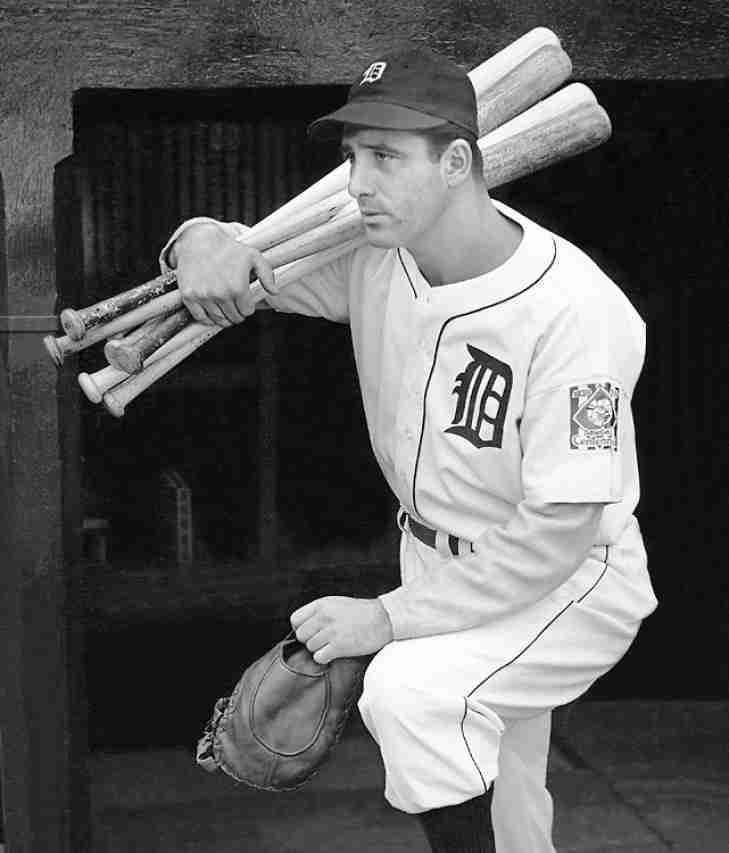
The story of Hank Greenberg is an intriguing "what-if" narrative in the history of the game. For twelve years, he was the heartbeat of the Detroit Tigers, a man whose presence in the lineup guaranteed a level of offensive production that bordered on the surreal. Yet, his legacy is defined as much by his absence as his presence; as the first major star to enlist in the military during World War II, he surrendered 47 months of his absolute athletic prime to the service of his country. Had he not spent those four years in the Army Air Forces, the record books would likely be a much different place today.
Greenberg’s tenure in Detroit was a masterclass in hitting for both power and average. He broke into the everyday lineup in 1933 and immediately set a standard of excellence that never wavered. He reached an early high-water mark in 1935, capturing his first American League MVP after leading the circuit with 36 home runs and a staggering 170 RBIs. His offensive output was a primary driver for the Tigers' first-ever World Series championship that autumn. He was a model of disciplined strength, possessing a unique ability to drive the ball to all fields, culminating in his historic 1938 run, in which he finished with 58 home runs, falling just two shy of Babe Ruth’s then-record.
The middle chapters of his career were defined by a historic transition and a profound commitment to duty. In 1940, at the height of his powers, Greenberg agreed to move from first base to left field to accommodate teammate Rudy York, a selfless adjustment that resulted in his second MVP award. He became the first player in major league history to win the honor at two different positions, hitting .340 and leading the Tigers to another pennant. However, after only 19 games in 1941, he traded his Detroit uniform for a military one. He spent the next four years serving as a captain in the China-Burma-India theater, returning to the club midway through 1945 just in time to hit a pennant-clinching grand slam and lead the Tigers to their second World Series title of his era.
In early 1947, his contract was sold to the Pittsburgh Pirates. With the Tigers, Greenberg compiled 306 home runs and 1,202 RBIs while capturing two MVP awards and two World Series titles.
The organization and the baseball world provided the final punctuation on his legacy when he was inducted into the Baseball Hall of Fame in 1956. In 1983, the Tigers ensured his name would forever be part of the franchise's skyline by retiring his number 5.
9. Alan Trammell
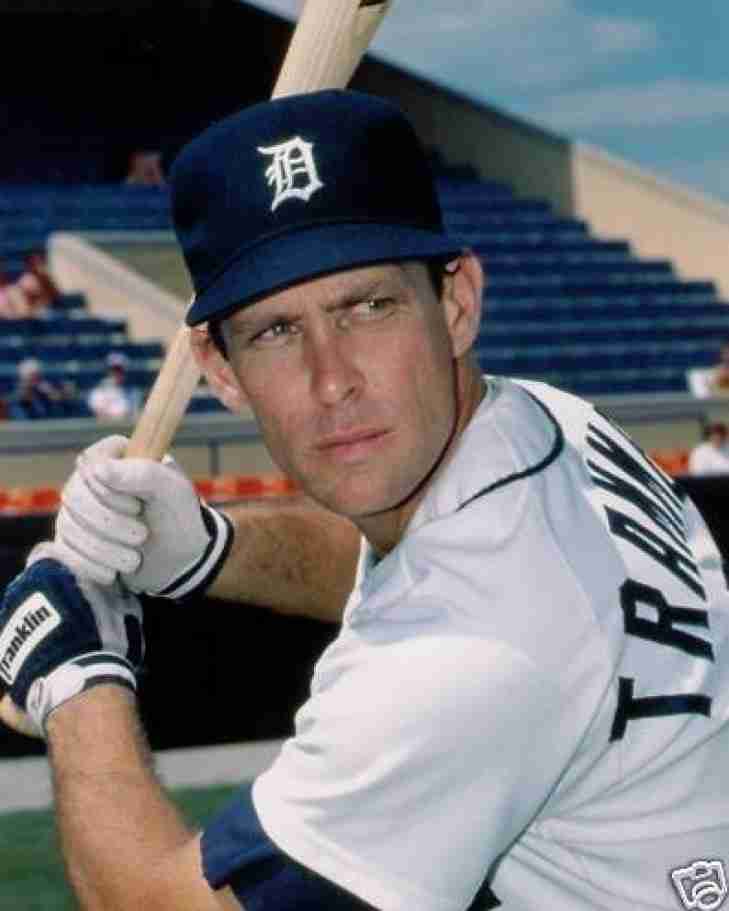
For two decades, Alan Trammell was the steady, brilliant pulse of the Detroit Tigers. Arriving as a teenager in 1977, he didn't just occupy the shortstop position; he revolutionized it alongside his double-play partner, Lou Whitaker. Together, they formed the longest-running middle infield duo in the history of the sport, a partnership that defined the Tigers' identity throughout the 1980s. While he often found himself in the shadow of contemporary giants like Cal Ripken Jr., Trammell’s mix of defensive elegance and offensive punch eventually forced the baseball world to acknowledge him as one of the premier shortstops of any generation.
Trammell’s career in Detroit was a study in all-around excellence. He established himself as a premier run-preventer early on, securing four Gold Gloves between 1980 and 1984. However, it was during the historic 1984 campaign that he cemented his status as a big-game performer. As the Tigers roared to a 35-5 start and an eventual World Series title, Trammell served as the catalyst, hitting .314 in the regular season before exploding in the Fall Classic. He earned World Series MVP honors by batting a staggering .450 against the Padres, including a two-homer performance in Game 4 that accounted for all of Detroit's scoring.
His offensive game reached an even higher level in 1987, a season that saw him nearly carry the Tigers to another championship single-handedly. Moving to the cleanup spot at the request of manager Sparky Anderson, Trammell responded with a .343 average, 28 home runs, and 105 RBIs. He became the first shortstop in major league history to hit at least .340 with 20 homers and 100 RBIs in a single season. Despite these historic numbers and a late-season surge that secured the AL East division title, he narrowly finished as the MVP runner-up, a result that many modern analysts point to as one of the great voting oversights in history.
He was a model of consistency, batting over .300 in seven different seasons and amassing 2,365 hits. Whether he was turning a signature double play or delivering a clutch hit, he played with a quiet, focused intensity that made him the unquestioned leader of the clubhouse.
The story in Detroit reached its long-awaited conclusion in 2018 when the Veterans Committee finally inducted him into the Baseball Hall of Fame. With the Tigers, Trammell compiled 2,365 hits, 185 home runs, and 1,003 RBIs while securing the 1984 World Series MVP.
10. Lou Whitaker
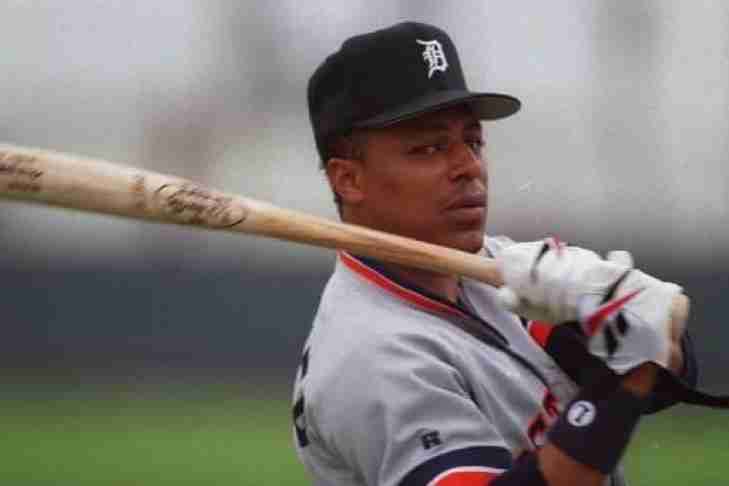
The story of Lou Whitaker is one of the most baffling oversights in the annals of Cooperstown, a narrative where the traditional gatekeepers somehow missed a generational masterpiece hidden in plain sight. For 19 seasons, "Sweet Lou" was the left-handed half of the most enduring double-play tandem in baseball history, patrolling second base for the Detroit Tigers with a grace that made the difficult look routine. While he famously vanished from the Hall of Fame ballot after just one year in 2001, the modern lens of analytics has reaffirmed what Tiger fans knew all along: Whitaker wasn't just a star; he was a revolutionary force at his position.
Whitaker’s arrival in Detroit was punctuated by an immediate and sophisticated impact, as he captured the 1978 American League Rookie of the Year award. He didn't just fill a gap in the lineup; he redefined the expectations for a second baseman, blending elite defensive range with a disciplined, high-velocity offensive approach. He sustained a run of excellence between 1983 and 1987, a five-year stretch during which he was a perennial All-Star and the gold standard at his position. During this run, he collected three Gold Gloves and four Silver Sluggers, proving he was the most efficient two-way threat in the American League.
The hallmark of his tenure was a rare combination of power and patience, decades ahead of its time. Whitaker was a model of specialized discipline, finishing his career with nearly 1,200 walks and a .363 on-base percentage—numbers that made him the ideal table-setter for the powerhouse 1984 World Champions. Yet, he also possessed a surprising punch, belting 244 home runs, a figure that placed him among the elite power-hitting second basemen of the 20th century. He served as the primary engine for the Detroit offense from the leadoff spot, utilizing a veteran-like poise to dismantle opposing pitching staffs through a mix of extra-base hits and high-leverage walks.
His presence in the clubhouse and on the diamond was defined by a quiet, focused intensity that anchored the franchise through two decades of transition. Whether he was famously turning a pivot with Alan Trammell or providing the steady-state production needed to keep the Tigers in the hunt for the 1987 division title, he competed with a professional resilience that never wavered.
He left the game as the only second baseman in history to retire with over 2,000 hits, 200 home runs, and 1,000 walks. In 2021, the Tigers officially retired his number 1, punctuating his status as a Detroit icon.
4. Hal Newhouser
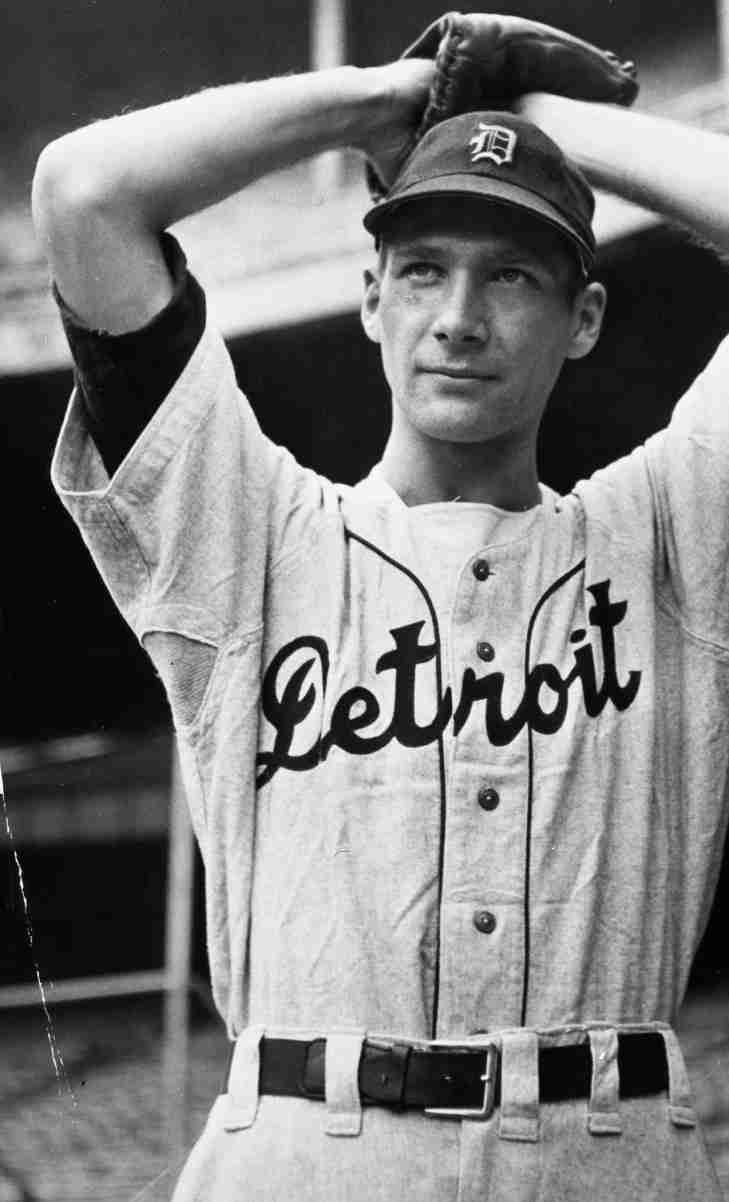
While many pitching legends were carved into the history books during the deadball era, Hal Newhouser’s peak emerged amidst the fires of the 1940s, a period where he stood as the undisputed titan of the mound. Known as "Prince Hal" for his dignified presence—and occasionally "Hurricane Hal" for his fiery competitive streaks—the Detroit native stayed home while others went to war, held back by a heart condition that would paradoxically allow him to lead his hometown team to the absolute summit of the sport. His legacy is etched in a rare back-to-back MVP achievement, a feat that remains the benchmark for pitching dominance in the modern age.
Newhouser’s rise to the rotation was forged as a teenager, but he reached a staggering high-water mark in 1944. That summer, he put together a 29-win campaign that earned him his first American League MVP trophy, a performance he incredibly duplicated in 1945. This second act was the definitive masterpiece of his career; he captured the elusive Pitching Triple Crown by leading the league in wins (25), strikeouts (212), and ERA (1.81). He was a model of specialized endurance, delivering the high-leverage strikes Detroit needed to carry it to a grueling seven-game World Series victory over the Cubs, including a gutsy complete-game win in the finale.
The most profound aspect of his tenure was how he sustained this elite output even as the game’s greatest stars returned from military service. Newhouser was a master of the shifting landscape of the "Live Ball" era, proving that his brilliance was not merely a byproduct of depleted lineups. Between 1946 and 1948, he continued to dominate the Junior Circuit, leading the league in FIP for three consecutive seasons and securing his fourth 20-win season in 1948. He possessed a specialized, high-velocity delivery that made him a high-frequency strikeout artist, concluding the decade with more wins (170) and punchouts (1,579) than any other pitcher in baseball.
With the Tigers, Newhouser compiled 200 wins and 1,770 strikeouts while securing back-to-back MVP awards and the 1945 Triple Crown.
The organization provided the final punctuation on his incredible journey in 1997, five years after his induction into Cooperstown. The Tigers retired his number 16, ensuring that the legacy of the local boy who conquered the 1940s would remain a permanent fixture of Detroit’s baseball soul.
5. Miguel Cabrera
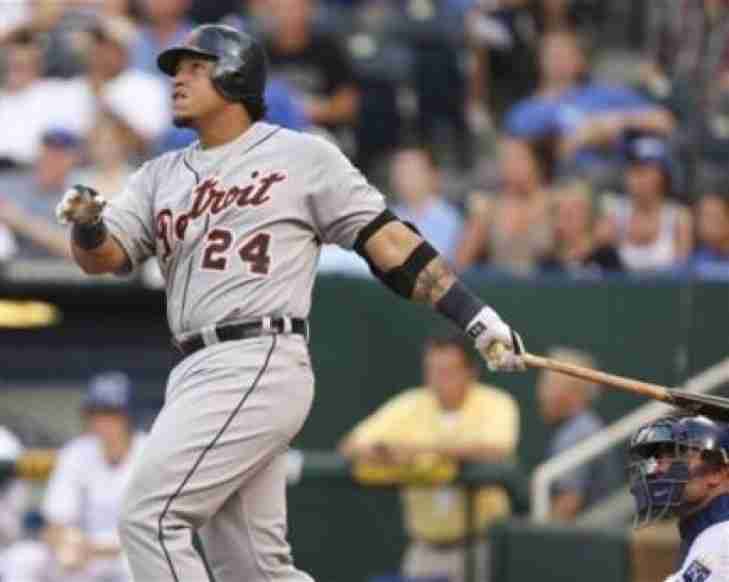
When the Florida Marlins sent Miguel Cabrera to Detroit in late 2007, they didn't just trade a superstar; they gifted the Motor City a generational icon who would go on to rewrite the franchise record books. Already a World Series champion upon arrival, the Venezuelan phenom elevated his game to a level of offensive mastery rarely seen in the modern era.
Cabrera’s transformation into a Detroit immortal began the moment he donned the Old English "D," immediately anchoring a lineup that would become the class of the American League. He established a standard of specialized excellence that few could mirror, collecting MVP votes in each of his first nine years with the club. His production reached a historic zenith in 2012, when he accomplished what many thought was no longer possible: winning the first Triple Crown in forty-five years. By leading the league in batting average, home runs, and RBIs, he secured the first of two consecutive MVP awards and cemented his status as the premier tactical force in baseball.
The sheer breadth of his dominance was staggering, as he collected four batting titles and two slugging crowns during his tenure. Cabrera was a model of high-frequency efficiency, serving as the primary engine for a Tigers squad that captured four straight division titles from 2011 to 2014. Whether he was driving a ball into the opposite-field gap or launching a towering blast to center, his craftsmanship at the plate was a clinic in hitting for both power and average. He wasn't just a volume producer; he was a high-leverage threat who seemed to thrive when the lights were brightest, providing the veteran poise that defined the most successful stretch of Detroit baseball in the 21st century.
His presence in Michigan was defined by a professional resilience that saw him endure through the inevitable physical toll of a long career. Even as his mobility decreased and his power shifted toward a more contact-oriented approach, he continued to chase the sport’s most hallowed benchmarks. The final years of his stay were a celebration of longevity, punctuated by his entry into the 500-home run club in 2021 and the 3,000-hit fraternity in 2022. He competed with a focused intensity that never masked his genuine passion for the dirt and the grass, solidifying a bond with the Detroit faithful that made him a local pillar long before his 2023 farewell tour.
The story in Detroit concluded with 373 home runs and over 1,300 RBIs in a Tigers uniform, leaving behind a legacy that ensures his next stop will be a first-ballot induction in Cooperstown.
3. Charlie Gehringer
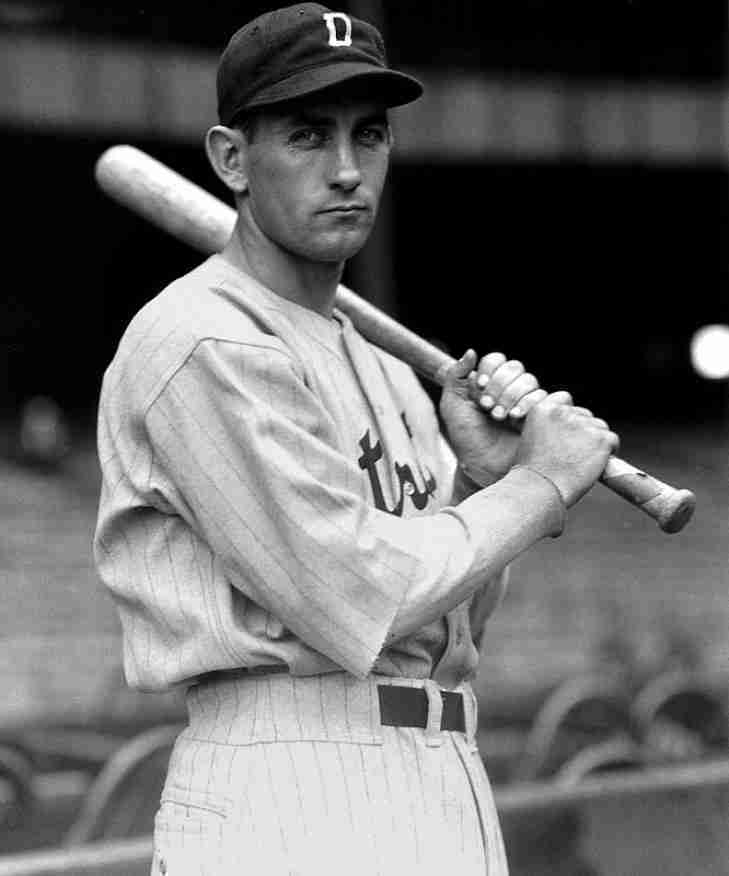
Scouted by Ty Cobb himself, Charlie Gehringer arrived in Detroit in the mid-1920s and matured instantly into the most consistent infielder of his generation. He possessed a specialized, level swing that produced line drives with an almost automated frequency, authoring a career that featured seven seasons with over 200 hits. His craftsmanship was defined by a quiet dominance, leading the Junior Circuit in hits on two occasions and navigating the era’s physical demands with a professional resilience that kept him atop the leaderboards for years.
The true breakthrough for the franchise arrived in 1935, when Gehringer’s steady production served as the tactical heartbeat for the club's inaugural World Series championship. He was a model of specialized offensive value, maintaining a career slash line of .320/.404/.480 that stands as a pillar of modern efficiency. His individual peak came in 1937, a summer when he captured the American League Batting Title with a .371 average and was named the league's Most Valuable Player. This honor was the culmination of a half-decade of elite play, having finished in the top ten of the MVP voting for four consecutive years prior to winning the trophy.
His presence was defined by a technical brilliance on the dirt that mirrored his perfection at the plate. Gehringer was a master of the "uncomplicated" play, a technician who patrolled second base with a specialized grace that made difficult chances look routine. He served as the high-leverage anchor of a legendary infield, proving that his game was built on a rare combination of range and mental composure. Whether he was lacing a double into the gap or turning a critical double play to escape a jam, he competed with a focused intensity that earned him the nickname "The Mechanical Man”, because his peers believed you could simply wind him up on Opening Day and watch him produce for six months.
The chapter on his playing days closed in 1942, leaving behind a statistical legacy that includes 2,839 hits, 142 home runs, and a .320 batting average, as well as a reputation as perhaps the greatest all-around second baseman in the history of the sport. He departed as an undisputed titan of the Detroit organization, having bridged the gap between the era of Cobb and the age of Kaline with a quiet, unbreakable excellence.
The organization provided the final punctuation on his legacy in 1983, decades after his 1949 induction into the National Baseball Hall of Fame. The Tigers retired his number 2, ensuring that the legacy of the soft-spoken superstar would remain a permanent fixture of Detroit lore.
11. Sam Crawford
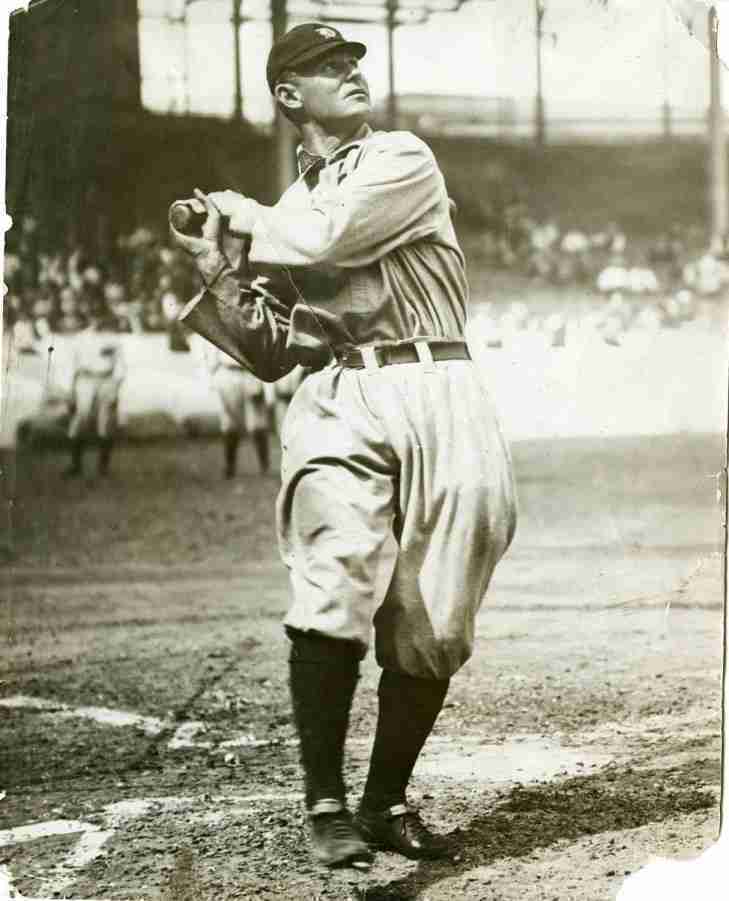
The Deadball Era was a landscape of dust, grit, and massive outfields, and no one navigated that terrain with more explosive speed than "Wahoo" Sam Crawford. While his legendary teammate Ty Cobb utilized a serrated edge of psychological warfare and placement, Crawford relied on a heavy barrel and a sprinter’s kick. He arrived in Detroit in 1903 as an established star and proceeded to turn the triple into an art form.
Crawford led the American League in triples five separate times as a Tiger, utilizing the cavernous gaps of the era to outrun the defense. His style was a unique blend of raw power and elite speed; he remains the only player in history to lead both the National and American Leagues in home runs, yet he is best remembered for his 309 career triples, a statistical mountain that modern players can barely glimpse. He was a model of specialized efficiency, driving in runs at a rate that saw him pace the league in RBIs on three occasions.
The middle era of his career was defined by a complex, high-stakes partnership with Ty Cobb. Together, they formed the most feared offensive engine in baseball, propelling Detroit to three consecutive American League pennants from 1907 to 1909. While the duo famously faltered in the postseason and their personal relationship devolved into a legendary adversarial feud, their on-field chemistry was undeniable. Crawford provided the steady-state muscle that allowed the Detroit offense to dismantle opposing rotations, maintaining a .309 batting average during his fifteen years in the Motor City.
With the Tigers, Crawford compiled 2,466 hits and 1,264 RBIs while setting the all-time record for career triples.
The baseball world provided the final punctuation on his legacy in 1957 with his induction into the Hall of Fame. In 2000, the Tigers ensured his name would never be forgotten by honoring him in right field alongside the greatest legends to ever wear the Old English D.
7. Harry Heilmann
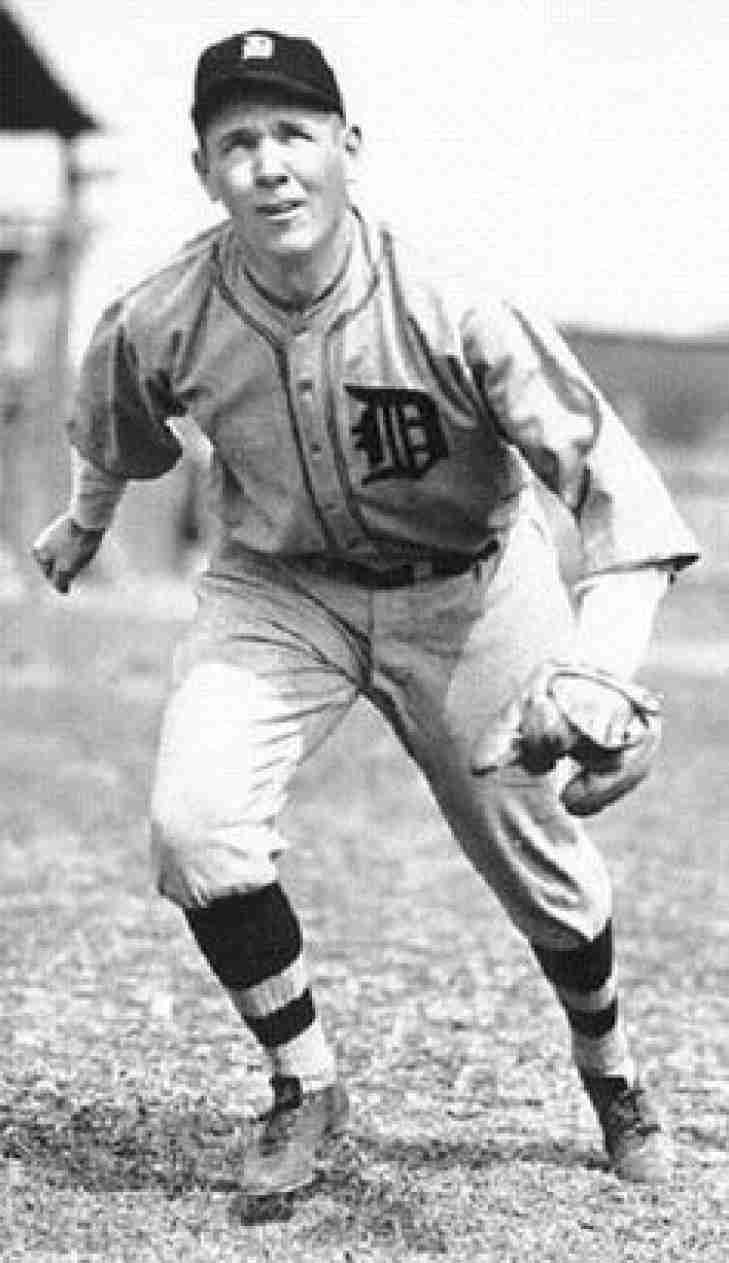
While the shadow of Ty Cobb loomed large over the Detroit outfield for two decades, it was Harry Heilmann who emerged as the most refined right-handed hitter of the 1920s. Often overlooked because he shared the grass with the "Georgia Peach," Heilmann actually served as Cobb’s most successful protégé, crediting the legend’s mentorship for his transformation from a struggling first baseman into a batting champion. With a swing as smooth as it was powerful, "Harry the Horse" became the primary engine of the Tigers' offense during a decade in which he made hitting over .390 look routine.
Heilmann’s tenure in Detroit was a story of offensive efficiency, marked by a peculiar yet spectacular pattern of dominance. He captured four American League batting titles during the 1920s, all in odd-numbered years (1921, 1923, 1925, and 1927)—and remarkably, he surpassed the .390 mark in every single one of those championship seasons. In 1923, he hit a staggering .403, joining an elite fraternity of only six American League players to ever breach the .400 plateau. He was a model of steady-state excellence, never dipping below a .328 average for the entire decade and serving as the tactical anchor for some of the greatest offensive outfields in history.
Though he played in the shadow of the era's massive power boom, Heilmann possessed a specialized strength that allowed him to consistently rank among the league’s most dangerous sluggers. He was a high-frequency producer of extra-base hits, six times finishing in the top five for slugging percentage and five times exceeding a 1.000 OPS. His production was not merely a product of the lively ball; it was the result of focused intensity and professional resilience that saw him drive in over 100 runs across eight seasons for the Tigers.
Heilmann was a fixture in the MVP conversation, finishing in the top ten in voting for five consecutive years. His most significant brush with the award came in 1927, when his league-leading .398 average and 120 RBIs earned him a second-place finish behind Lou Gehrig. Whether he was famously diving into the Detroit River to save a drowning woman in 1916 or providing the veteran poise required to mentor younger teammates, he competed with an energy that solidified his status as a franchise icon.
After the 1929 season, when he was sold to the Cincinnati Reds, his legacy remained firmly rooted in Michigan. After his playing days, he transitioned into a legendary second career as the voice of the Tigers, serving as the team's primary radio broadcaster for 17 years. He departed the organization with a career .342 batting average, the third-highest ever for a right-handed hitter, and a reputation as one of the most beloved figures in the city’s sports history.
Heilmann compiled 2,499 hits and 1,446 RBIs while capturing four batting titles across 15 seasons.
2. Al Kaline
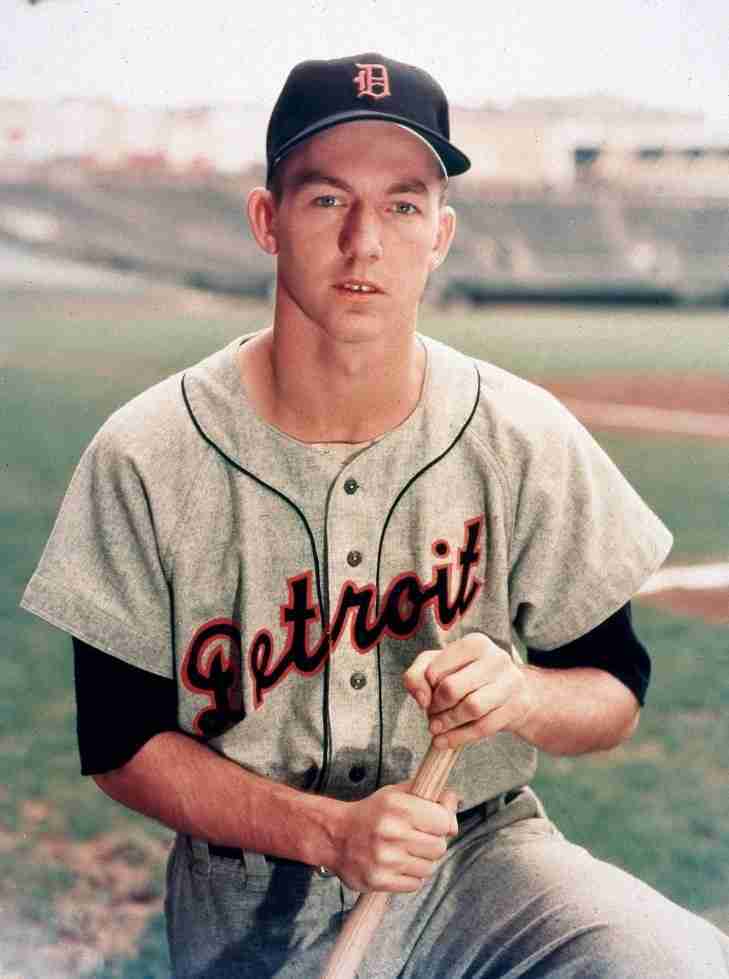
Al Kaline’s path to Detroit was a masterstroke of scouting, signed as a "bonus baby" out of high school in 1953 and maturing instantly into a phenom. He reached a historic threshold in 1955 when, at just 20 years old, he became the youngest player ever to capture a batting title with a .340 average, surpassing the mark previously held by Cobb himself. He was a model of specialized consistency, proving that he could maintain an elite offensive output while navigating the physical demands of the outfield. Throughout his stay, he emerged as a fixture on the leaderboards, finishing in the top three of the MVP race three separate times and serving as the tactical anchor of the Detroit lineup.
The most impressive aspect of his tenure was his defensive brilliance, which made right field at Tiger Stadium his personal domain. Kaline was a master of the "cradle" catch and possessed a specialized, high-velocity arm that froze baserunners for two decades. His craftsmanship was officially recognized with ten Gold Glove Awards, as he patrolled the grass with a sophisticated range that earned him the respect of every hitter in the American League. He wasn't just a defensive specialist, though; he was a high-frequency power threat, concluding his stay with 399 home runs and becoming a cornerstone member of the 3,000-hit club.
His presence was defined by a professional resilience and a high-leverage mental toughness that culminated in the magical 1968 campaign. After years of waiting for a championship opportunity, Kaline provided the veteran poise required to secure a World Series title, batting .379 against the Cardinals in the Fall Classic. Whether he was lacing a clutch double into the gap or serving as the "face of the franchise" in the broadcast booth and front office for decades after his retirement, he competed with a focused intensity that made him a local immortal. He proved that a player could become a franchise pillar by mastering every facet of the game while remaining a "Tiger for Life."
The chapter on his playing days concluded in 1974, leaving behind a statistical legacy that included 18 All-Star selections and a level of popularity that has never been eclipsed in Michigan. He departed as an undisputed titan of the modern era, having established himself as the most respected figure to ever wear the Detroit uniform.
With the Tigers, Kaline compiled 3,007 hits, 399 home runs, and 1,582 RBIs while securing ten Gold Glove Awards.
The organization provided the ultimate punctuation on his legacy in 1980, the same year he became a first-ballot National Baseball Hall of Famer. The Tigers retired his number 6, ensuring that the legacy of "Mr. Tiger" would remain a permanent fixture of the franchise’s history.
1. Ty Cobb
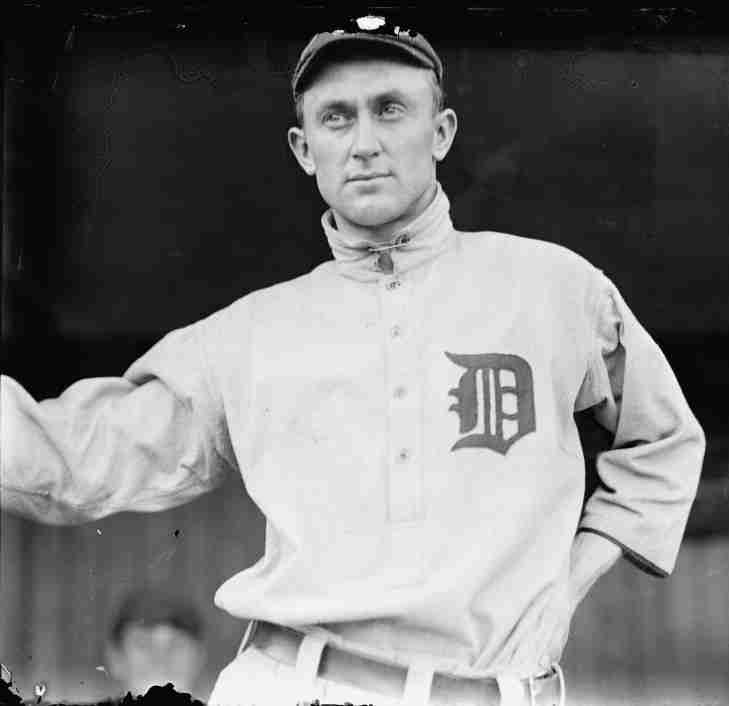
Ty Cobb’s arrival in Detroit in 1905 signaled the birth of a dynasty built on sheer force of will. He surfaced as an eighteen-year-old prodigy and matured instantly into the league’s premier offensive weapon, reaching a level of dominance that essentially turned the American League into his personal playground. He possessed a specialized, split-grip swing that prioritized bat control and field awareness, allowing him to capture a staggering eleven Batting Titles. This craftsmanship was not merely about contact; he was a model of total offensive efficiency, authored by eight slugging titles and ten seasons atop the OPS leaderboards, proving that he could generate power even in an era of mushy balls and expansive outfields.
The most singular aspect of his tenure was the relentless pressure he applied once he reached the basepaths. Cobb was a master of the "inside game," utilizing a fearless, sliding style to capture six Stolen Base crowns and lead the league in runs scored five times. He wasn't just a physical outlier; he was a tactical ghost who studied pitchers’ habits and fielders’ positioning to exploit the smallest margin of error. His name became synonymous with excellence, punctuated by the 1909 Triple Crown and the inaugural AL MVP award in 1911. By the time he left Detroit, he had established an all-time batting average of .366, a benchmark that has stood as an unbreakable record for over a century.
His presence was defined by a polarizing, professional resilience and a physical style of play that earned him both respect and enmity from his peers. Cobb remained the heartbeat of the Tigers for over two decades, navigating the transition from the deadball era to the live-ball age without ever losing his elite edge. Whether he was lacing a line drive over an infielder’s head or stealing home to demoralize an opponent, he competed with a focused brilliance that made him a first-ballot immortal. He proved that a player could reach a historic ceiling through a rare combination of scientific preparation and an uncompromising desire to win every individual battle.
The chapter in Detroit concluded after the 1926 season, leaving behind a statistical legacy that included 3,900 hits, 892 Stolen Bases, and a .367 batting average in a Tigers uniform. He departed as the undisputed king of the hit, having set records for longevity and production that required decades, and thousands more plate appearances, or others to even approach.
25. Bill Freehan
You would not think that an eleven-time All-Star would be forgotten among Hall of Fame consideration, but in the case of career-long Detroit Tiger, Bill Freehan that appears to be the reality.
Bill Freehan gained a lot of respect among Major League players. He may not have been a huge force with his bat (though he did have a few respectable seasons), but he was among the best in handling a pitching staff and the defensive roles of a professional catcher. It was primarily through these attributes that Freehan gained as much MVP support as he did, as he was a serious contender in two seasons. Freehan may not have won the MVP, but he did win the Gold Glove five times and was an All-Star eleven times.
Bill Freehan was never a regular in any top ten offensive categories, but few catchers were when he played. He did more than most at that position, and as such, a great overall ballplayer, it is curious that the respect he got in terms of postseason awards did not translate into a larger Hall of Fame vote.
Should Bill Freehan be in the Hall of Fame?
104. Harvey Kuenn
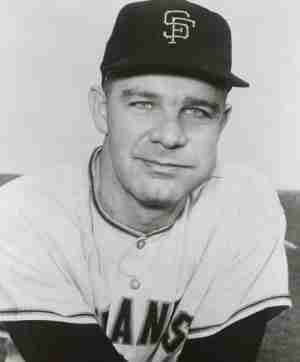
From 1953 to 1960, there were few in the majors who were as good a line drive hitter as Harvey Kuenn. From that time period, he won the American League Rookie of the Year Award and won a Batting Title. Considering that during the 50’s he only batted under .300 once, it was easy to see how, even on average Detroit Tigers teams, he could still make eight All-Star teams.
Kuenn led the league in hits four times, and it seemed like he got those hits in every part of the field possible. In the ’50s, he was the game’s most consistent hitter, with a swing so effortless it looked natural. These skills would serve him well as a hitting coach and manager later in his career.
As good as Kuenn was, he was largely ineffective after 1963, and with his great batting eye failing, he had little else to contribute, as he was not known for his fielding prowess or his power. Still, the numbers he put up for Detroit over an eight-year period were good enough to get him a really solid look from the Hall.
Should Harvey Kuenn be in the Hall of Fame?
73. Darrell Evans
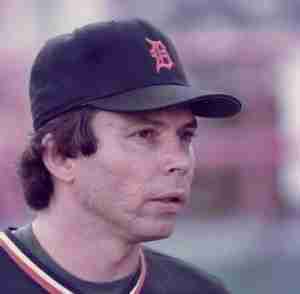
Talk about being forgotten. Darrell Evans is one of the few eligible players to hit more than 400 Home Runs and not get elected to the Hall of Fame. He actually never made it past the first ballot. He only made the All-Star Team twice. He was a great fielder but Mike Schmidt won all the Gold Gloves at third. He won a World Series with Detroit but was overshadowed by Whitaker, Trammell, Morris, and Hernandez. A lot of this may have happened because he had a lifetime Batting Average of .248.
Darrell Evans did get a lot of notoriety for being the oldest player to ever win a Home Run crown when he belted 40 at the age of 38. He was always a consistent power hitter, but received a lot of flak from amateur statisticians for his low Batting Average. Those who saw that forgot to see how often Darrell Evans earned free passes as he walked an awful lot. This was not due to pitchers intentionally walking him, but to a very keen and underappreciated batting eye. Evans is currently twelfth all-time in the Bases on Balls category.
If Darrell Evans had a Batting Average just ten points higher, would it make a huge difference? Probably, as the sub .250 career average really hampers what was a great and consistent career. He has been called one of the most underrated players in baseball history. It is hard to argue that statement.
Should Darrell Evans be in the Hall of Fame?
79. Norm Cash
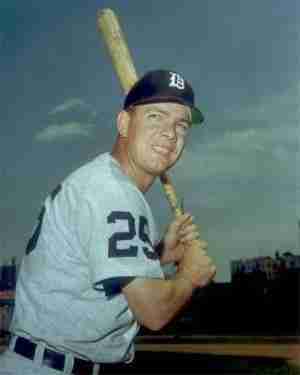
How is it possible to hit .361 and hit 41 home runs without anyone noticing? The answer is to perform that incredible feat the same year that Roger Maris hit 61 Home Runs.
The 1961 season was easily the high-water mark for Norm Cash’s career, and it is sad that it went mostly unnoticed. Cash never had a season like that again, and though he was a very productive power hitter for the rest of his career, he still posted decent on-base percentages. ‘Stormin” Norm Cash was a fan favorite in Detroit for his fun loving antic and genuine love of life. He wasn’t thought of much outside of Detroit as the team was in the national shadow of Kaline, McLain, and Lolich, but this never seemed to be an issue to Cash.
Norm Cash may have been a good power hitter, but without remotely flirting with what he did in 1961, he has been reduced to a fun footnote rather than a legendary part of the game. It is interesting to think about how he would be remembered if he had posted those numbers in 1962 instead.
Should Norm Cash be in the Hall of Fame?
6. Lou Whitaker
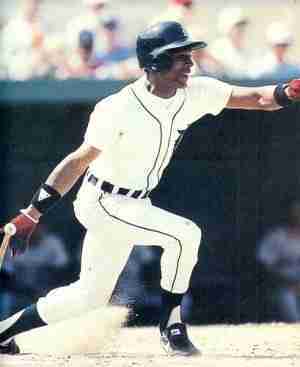
Playing with Alan Trammell for virtually his entire career, Lou Whitaker was one half of the longest-running double play combination in Baseball history. Like Trammell, Whitaker was a great player with both bat and glove and a big part of Detroit’s World Series win in 1984.
Whitaker was one of the top Second Basemen of his era, yet he did not receive the same respect or notoriety as others. He won the American League Rookie of the Year in 1978, and though he did not live up to the lofty expectations placed upon him, records show that he was a very consistent performer. Though he was not among the league leaders in offensive categories, he was a competent producer and easily among the top in his position.
The criticism of Lou Whitaker stems from the fact that it looked so easy for him. Everything he did had such a beautiful flow; he often looked like he wasn’t giving it all on the field. He was also quiet, unlike the boisterous athlete people would expect. As such, he did not draw much attention to himself and preferred it that way. When Whitaker didn't make it past the first year of Hall of Fame voting (which he should have), he didn’t complain. He simply said that if he didn’t make it the first time, don’t bring his name back up”. This type of humility just makes you like “Sweet Lou” even more.
