
20. Stan Brock
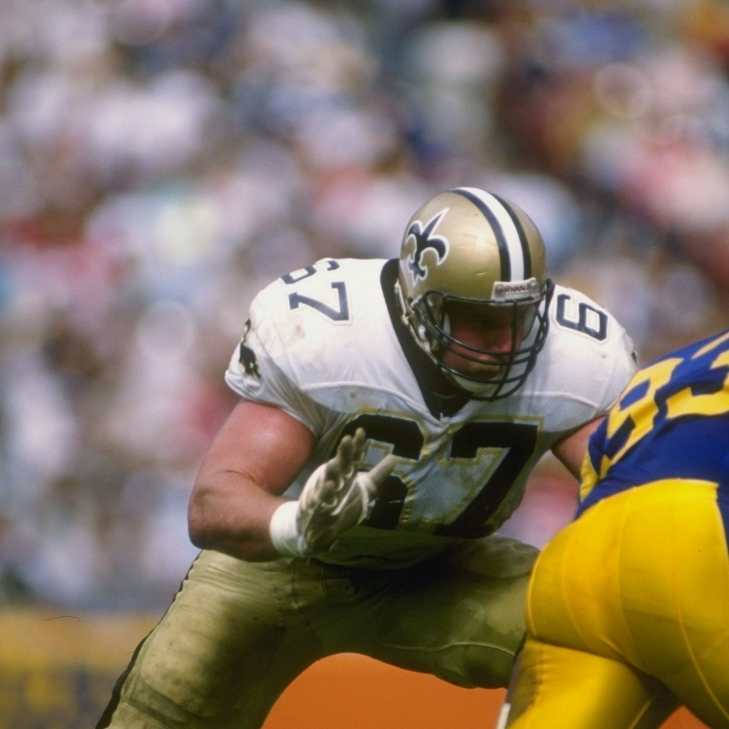
If you are drafted in the First Round, there are high expectations, and Stan Brock fulfilled in the longevity and durability department.
19. Eric Martin
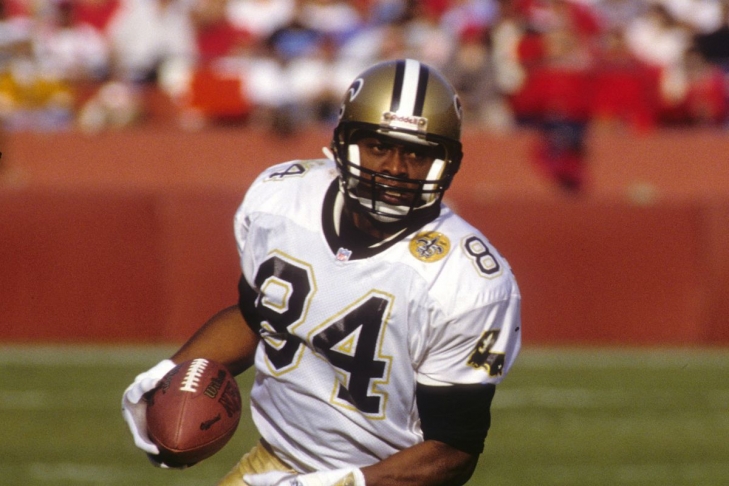
Eric Martin did not have to travel far after he was drafted as the LSU Tiger, only had to venture East on I-10 to New Orleans, who drafted the Wide Receiver in the Seventh Round in 1985.
23. Dave Waymer
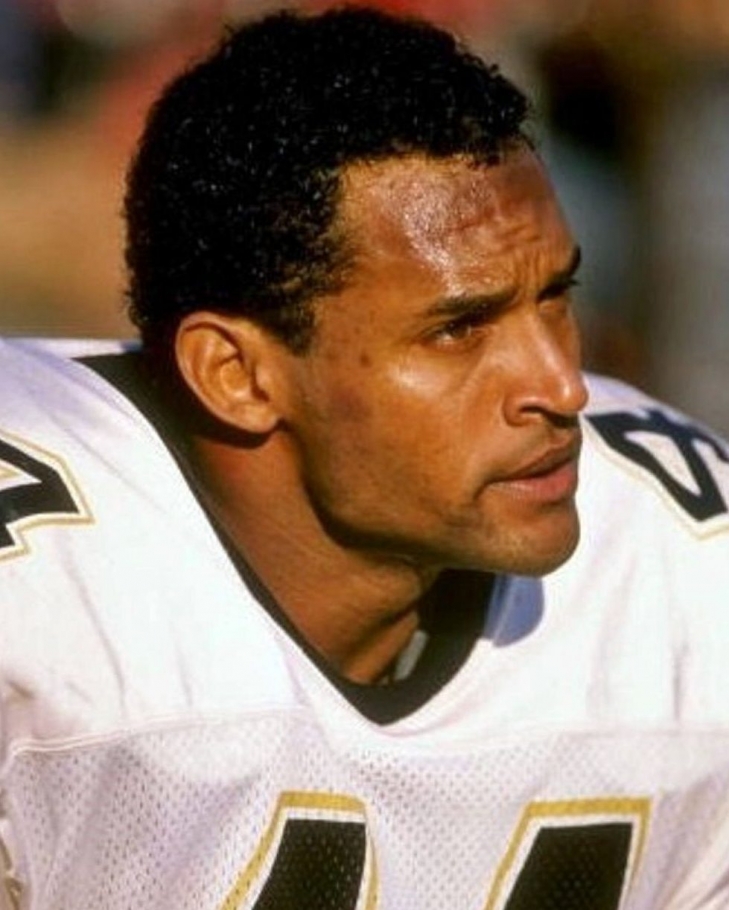
From Notre Dame, Dave Waymer played the entire decade of the 1980s with the New Orleans Saints, who took the Defensive Back with their Second Round Pick.
21. Jim Wilks
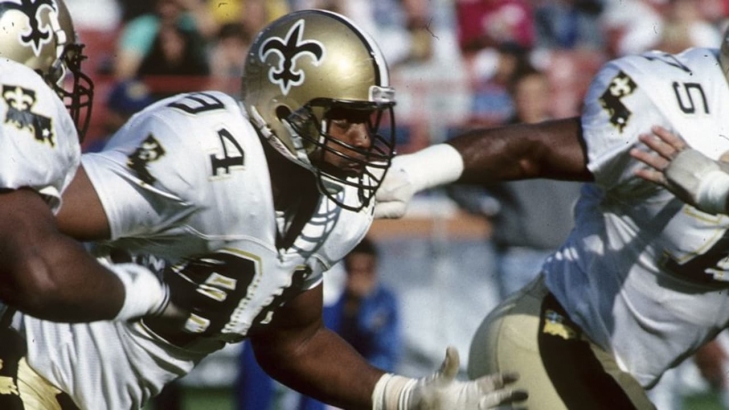
Jim Wilks made the most of his opportunity when the lightly regarded defensive player from San Diego State not only made the New Orleans Saints roster despite being a 12thRound Pick, but he stayed with the team for his entire 13-year career.
37. Joel Hilgenberg
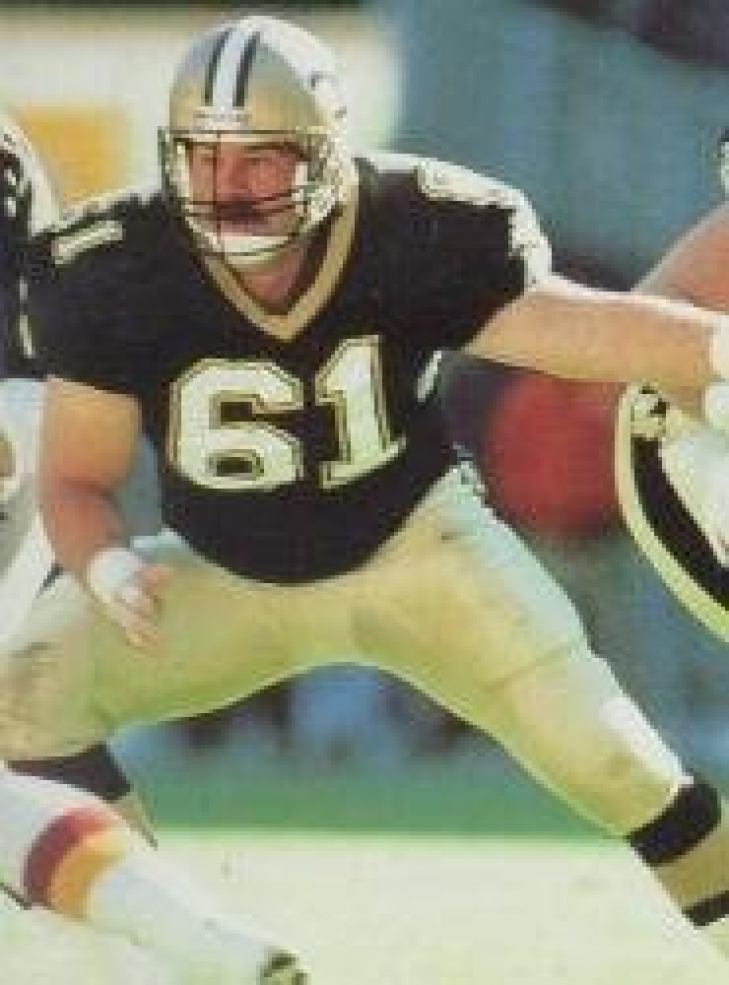
The brother of former Chicago Bear Center, Jay Hilgenberg, Joel Hilgenberg was also an NFL Center, who played his college ball at Iowa.
7. Alvin Kamara
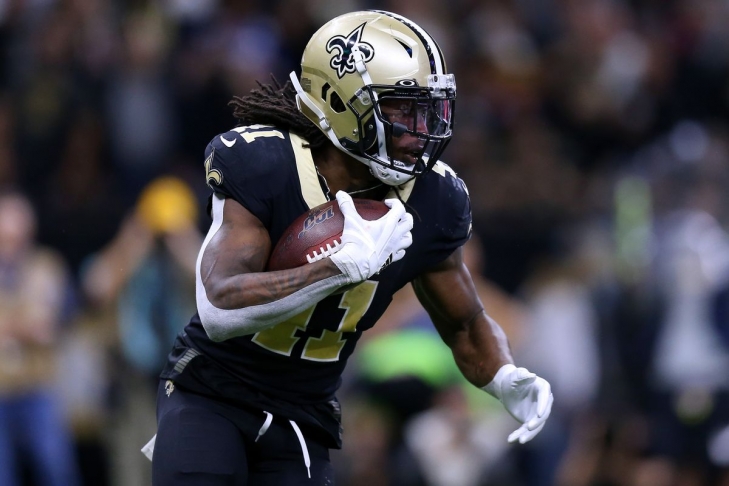
Alvin Kamara arrived in New Orleans as a third-round pick in 2017, and Sean Payton made it clear early that he viewed the Tennessee product as more than a standard running back. Kamara responded immediately. As a rookie, he totaled 1,554 yards from scrimmage and 13 touchdowns, earning second-team All-Pro honors, a Pro Bowl selection, and Offensive Rookie of the Year recognition. The dual-threat ability showed up on every snap, whether he was taking a handoff or catching the ball in space, and defenses quickly learned that leaving him uncovered in the flat or on a wheel route was a risk.
He followed that debut with an even stronger 2018 season, posting 1,592 yards from scrimmage and 18 touchdowns while making the Pro Bowl again. The production continued in 2019 with 1,330 yards from scrimmage and another Pro Bowl nod. In 2020, Kamara reached a peak of 1,688 yards from scrimmage and led the NFL with 21 touchdowns, securing a fourth consecutive Pro Bowl selection. That year included a six-touchdown performance against Minnesota that underscored how quickly he could change a game when the ball found him near the goal line. The 2021 campaign brought a fifth Pro Bowl even as the total yards from scrimmage dipped below 1,400 for the first time. Through those first five seasons, he had established himself as one of the most dynamic offensive weapons in the league and the most versatile skill player the Saints had featured in years.
Kamara’s value went beyond the raw totals. He created after contact on runs between the tackles, forced missed tackles in the open field, and turned short receptions into longer gains with his vision and burst. The Saints used him in the backfield, in the slot, and occasionally split wide, and the multiplicity made it difficult for defenses to account for him on every down. Even in seasons when the rushing average dipped, the receiving production kept the overall impact high and gave the offense a reliable check-down option that could still produce explosive plays.
He remained productive after that initial run. In 2022, he cleared 1,300 yards from scrimmage again despite off-field issues that preceded the season, though he did not return to the Pro Bowl. He continued to contribute at a high level in subsequent years, combining rushing and receiving production that kept defenses from keying on a single phase of the offense. The ability to create after contact, find space in the passing game, and finish in the red zone never fully disappeared, even as the surrounding roster and coaching staff changed. Availability stayed relatively high for a running back of his usage, and the Saints continued to feature him as a central piece of the attack.
He has stayed with the Saints for his entire career and enters the 2026 season still on the roster. Through the end of 2025 Kamara has 12,198 yards from scrimmage and 86 touchdowns with New Orleans. Those totals reflect the sustained dual-threat production that began with the rookie year and carried through multiple 1,300-yard seasons. He remains one of the more accomplished offensive players in franchise history, and the combination of early peaks and long-term availability has made him a central piece of the Saints’ attack for nearly a decade.
22. Mark Ingram
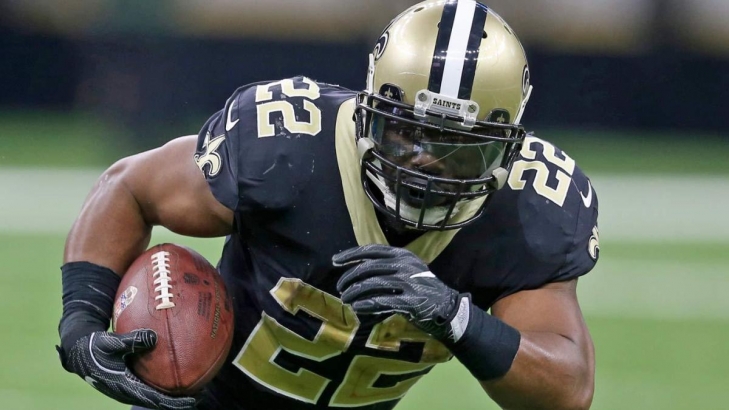
At the University of Alabama, Mark Ingram was a superstar. The Crimson Tide Running Back captured the coveted Heisman Trophy in 2009, and his school won the National Championship. He did this as a sophomore, and while he regressed due to knee issues as a Junior, Ingram was still expected to be a high pick, which he was, when the Saints took him 28thOverall in 2011.
15. Deuce McAllister
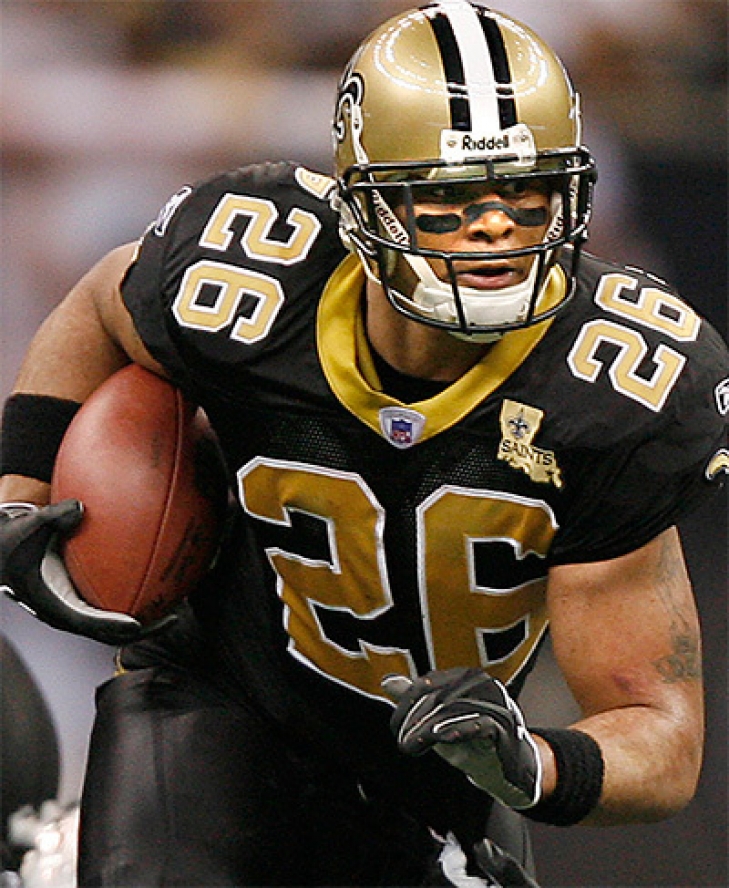
There were a few who shook their heads when the New Orleans Saints chose Deuce McAllister with their First Round pick in 2001, as they already had Ricky Williams in tow. That perception only lasted a year
12. Morten Andersen
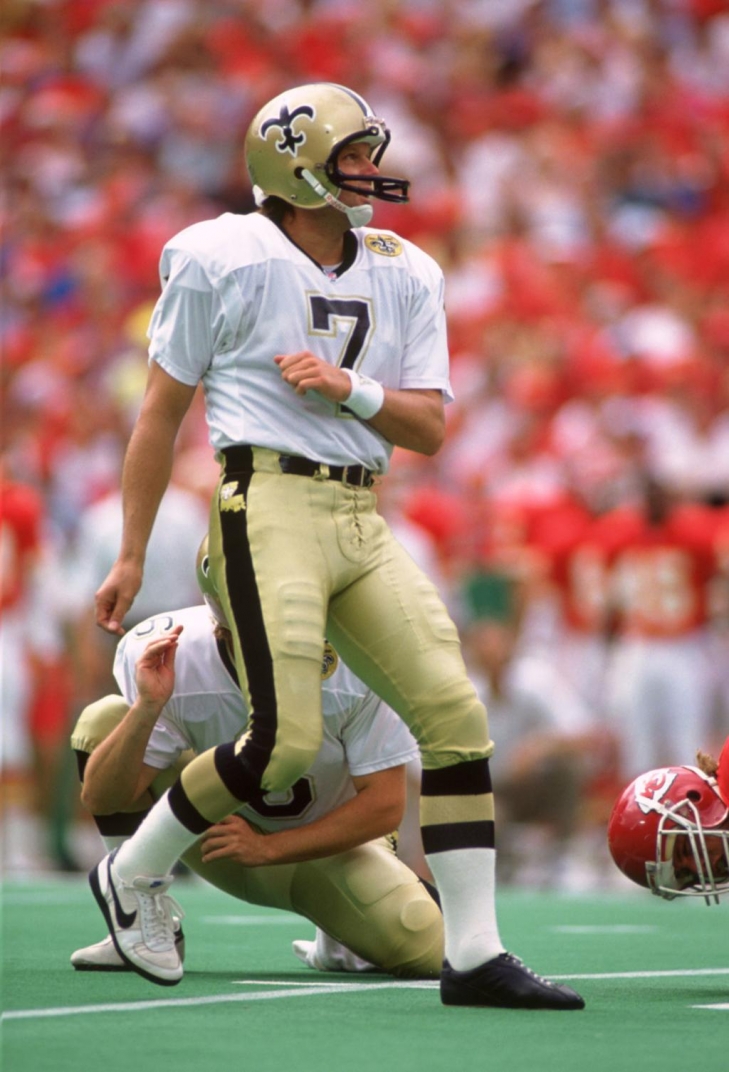
A soccer player as a teen in his native Denmark, Morten Andersen, came to the United States as part of an exchange program. Just for kicks (pardon the pun), he tried kicking a football, and he was excellent at it and would play as a senior in High School. It got him noticed by Michigan State, who gave him a scholarship. That led to him being drafted by the New Orleans Saints in the Fourth Round in 1986.
9. Joe Horn
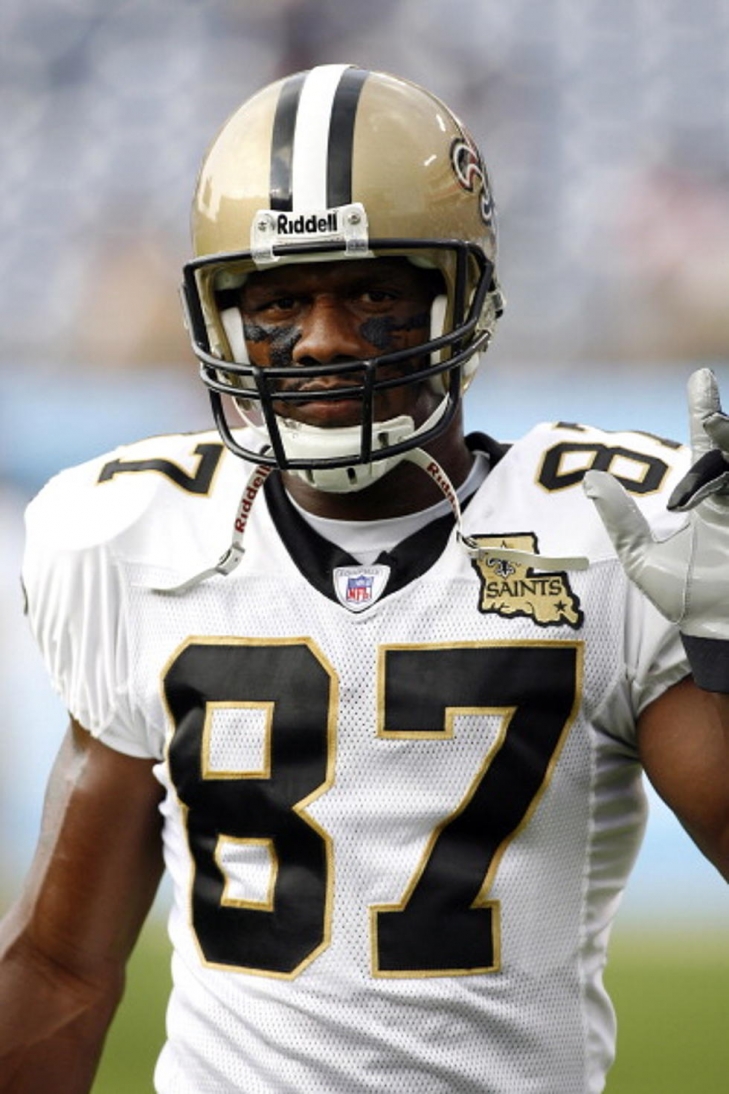
Joe Horn was more than just a flashy way of celebrating a touchdown (remember the phone in the goalpost?).
17. Wayne Martin
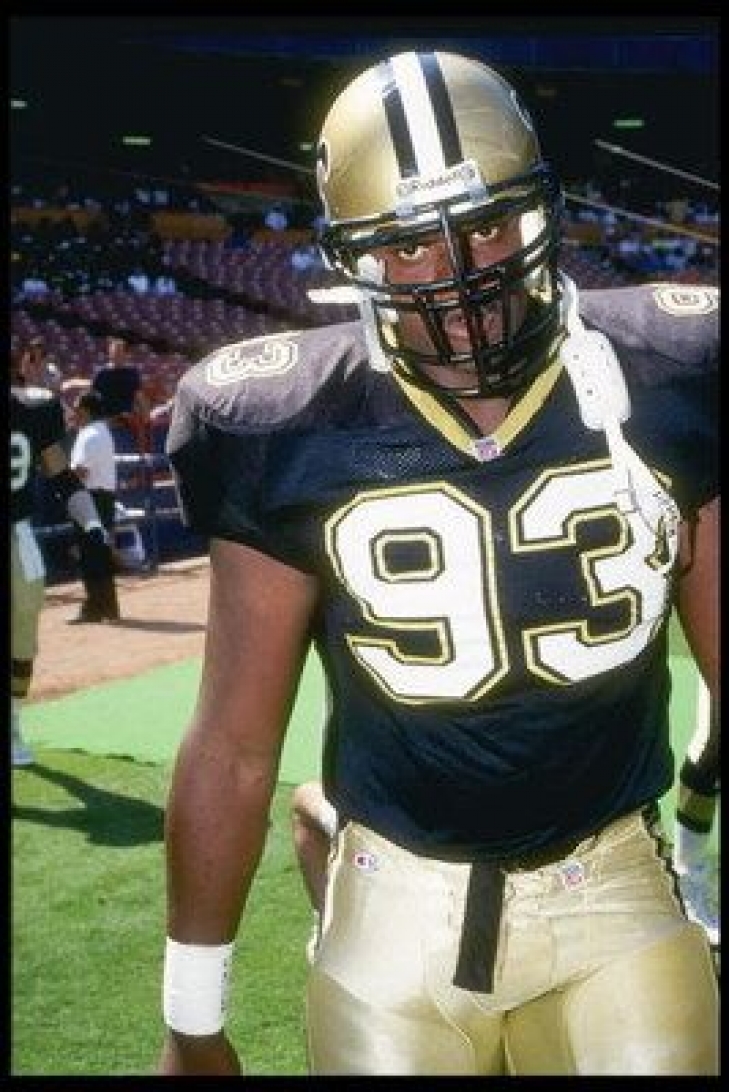
Wayne Martin was from Arkansas, and he played his college ball locally with the Arkansas Razorbacks, where he was one of the best Defensive Ends in the Southwest Conference. The New Orleans Saints agreed, and they used their First Round Pick (19thoverall) to select him.
18. Vaughan Johnson
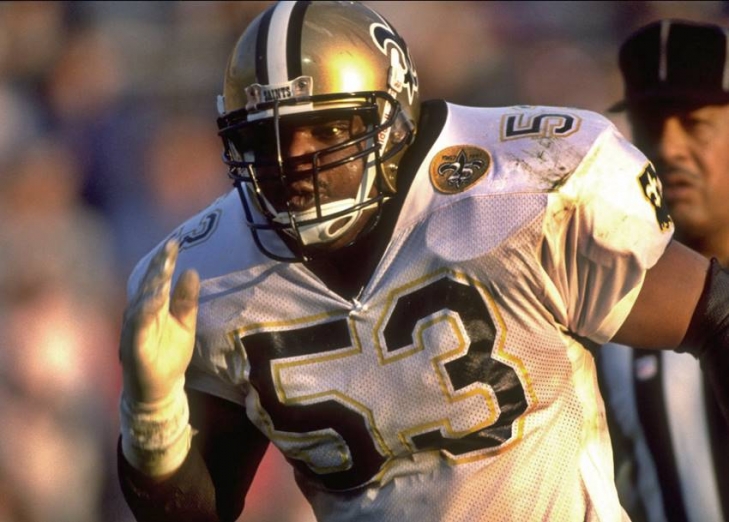
Vaughan Johnson was like Sam Mills; in that, he was in the USFL first before latching on with the New Orleans Saints in 1986.
11. Michael Thomas
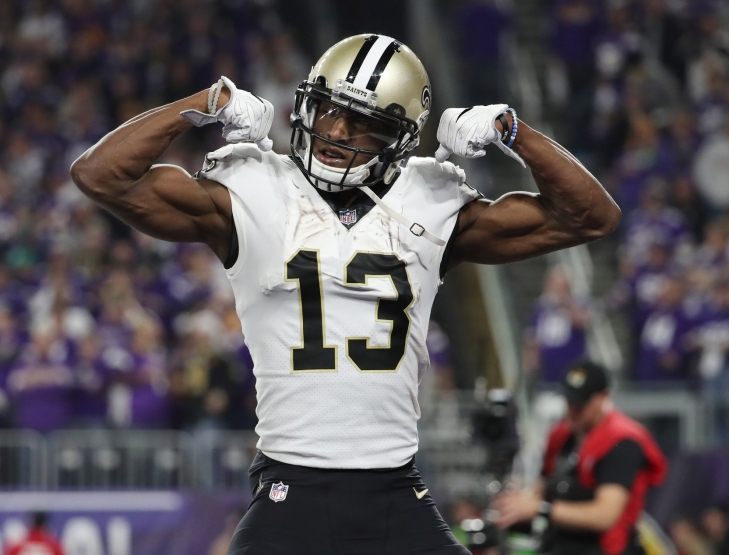
Michael Thomas was a star Wide Receiver at Ohio State, where he helped the Buckeyes win the College Football Playoff in 2015. The following season, he was taken in the Second Round by the New Orleans Saints, where he eventually became the primary weapon of Quarterback, Drew Brees.
16. Jimmy Graham
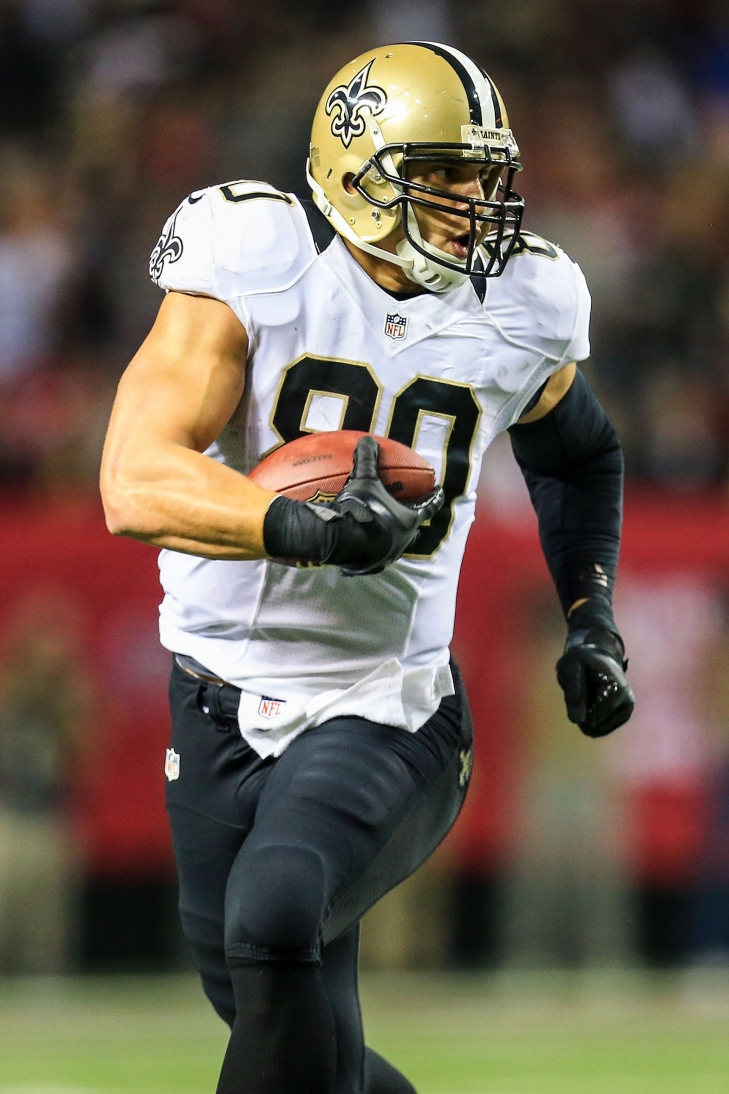
Jimmy Graham began his NFL career backing up Jeremy Shockey, but that would not last long as the former Miami Hurricane was there to become the most prolific Tight End in franchise history.
10. Archie Manning

The father of Peyton, Eli (and Cooper), Archie Manning, was quite a Quarterback in his own right, and he played for the New Orleans Saints for over a decade.
14. Marques Colston
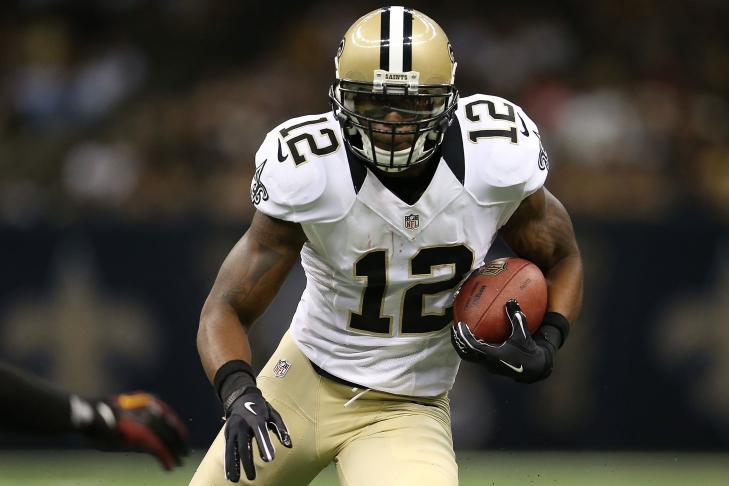
Was Marques Colston a superstar?
8. Sam Mills
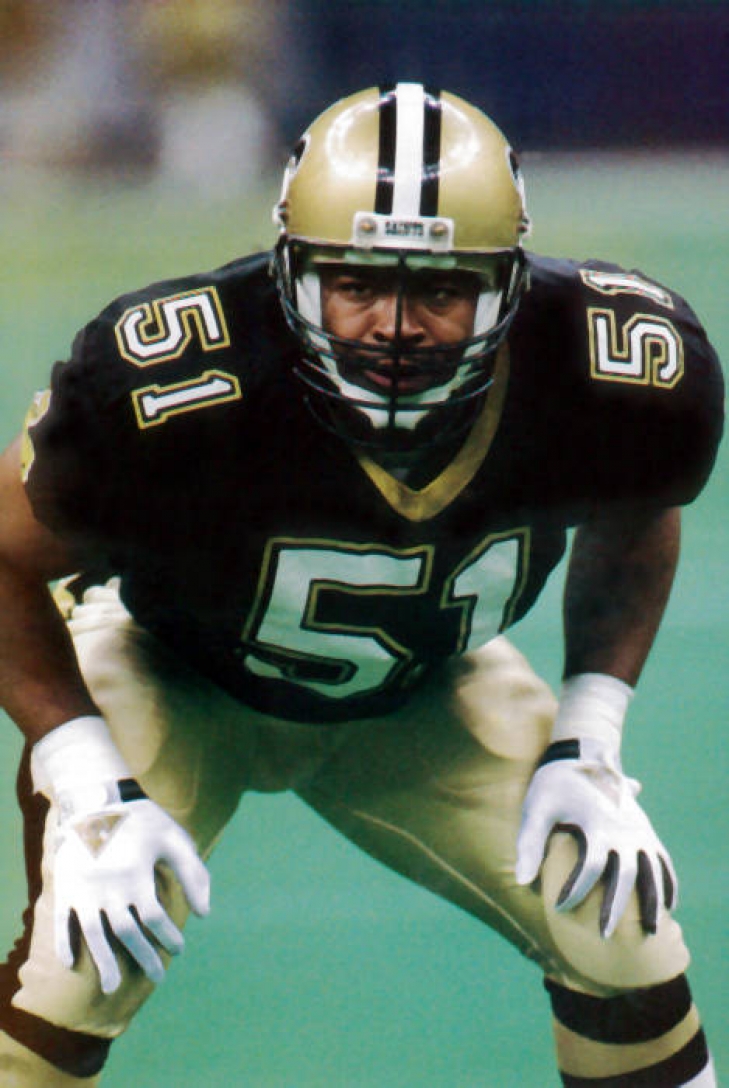
Sam Mills took a long route to the New Orleans Saints. He played college ball at Montclair State, a program that didn’t draw much scouting attention, and went undrafted in 1981. The Cleveland Browns signed him but released him before the season, and a tryout with the Toronto Argonauts also ended without a roster spot. The United States Football League provided the opening he needed. Mills made the Philadelphia Stars, stayed with the franchise through its move to Baltimore, and earned All-USFL honors in each of his three seasons. When the league folded, the Saints signed him, and the linebacker who had bounced between teams finally found a stable home in the NFL.
Mills settled in at left inside linebacker and quickly became one of the team’s more consistent defenders. He earned Pro Bowl selections in 1987 and 1988, establishing himself as a reliable presence in the middle of the defense. Those early nods showed the production was sustainable rather than a brief spike. He diagnosed plays quickly, filled gaps against the run, and rarely gave up big plays in coverage when asked to drop. The Saints began building around the linebacker group that would later gain recognition across the league, and Mills’ steady tackling gave the unit a dependable foundation on every down.
He formed a central part of the Saints’ “Dome Patrol” alongside Pat Swilling. The unit gave New Orleans one of the more respected linebacking corps in the NFL during the late 1980s and early 1990s, and Mills’ ability to diagnose plays and finish tackles helped the group play aggressively. Opposing offenses had to account for the speed of the outside linebackers and the sure tackling in the middle, and the combination created problems few teams solved consistently. He returned to the Pro Bowl in 1991 and 1992, adding two more selections to the earlier pair. In four seasons with the Saints, he exceeded 100 tackles, a mark that reflected both the volume of snaps he played and the consistency he brought week to week. Jim Mora, who coached him for much of that stretch, later called Mills the best player he ever coached, an endorsement that carried weight given the players Mora had worked with over his career.
Mills became a free agent after the 1994 season and signed with the Carolina Panthers, where he continued his career and later became a franchise icon. He left New Orleans after eight seasons with the production that had defined his tenure.
As a Saint, he recorded 934 tackles. Those numbers captured the tackling volume and reliability that made him a cornerstone of the defense throughout his time in black and gold. Mills was inducted into the Pro Football Hall of Fame in 2022. The Saints had already placed him in their Hall of Fame in 1998 and their Ring of Honor in 2021. The undrafted linebacker who had struggled to stick with his first two professional teams had become one of the defining defensive players in franchise history.
6. Pat Swilling

Pat Swilling arrived in New Orleans with a clear specialty. During his 1985 All-American season at Georgia Tech, he set a school record with seven sacks in a single game, and the Saints took him in the third round of the 1986 draft. He did not start as a rookie, but by his second season he had settled in as the starting right outside linebacker and posted 10.5 sacks. That total marked the start of a stretch in which he became one of the league’s more productive edge rushers.
From 1989 through 1992, Swilling reached double-digit sacks every year. He earned Pro Bowl selections across that run, with first-team All-Pro honors in both 1991 and 1992. Alongside Sam Mills, he formed the core of the Saints’ “Dome Patrol,” the linebacking group that gave New Orleans one of the NFL’s more respected defenses during those seasons. Opposing offenses had to account for Swilling’s speed off the edge on every snap, and the pressure he generated helped the rest of the unit play aggressively.
His best season was 1991. Swilling led the NFL with 17.0 sacks and finished with an Approximate Value of 23. He was named the Associated Press Defensive Player of the Year, recognition that confirmed the production was not simply volume but impact. He closed out his time in New Orleans the following season with another double-digit sack total and another first-team All-Pro nod, giving the Saints two consecutive years of elite edge play from their right outside linebacker.
Swilling became a restricted free agent after the 1992 season. The Detroit Lions showed strong interest, and the Saints traded him for a pair of draft picks, one of which they used to select Willie Roaf. He left New Orleans after seven seasons with the production that had defined his tenure.
With the Saints, he recorded 76.5 sacks and 354 tackles. Those numbers reflected the consistent pressure he brought from the outside linebacker spot and the role he played in establishing the Dome Patrol as a unit that commanded respect around the league.
Swilling was inducted into the Saints Hall of Fame in 2000. The third-round pick, who had set a college sack record and then led the NFL in the same category as a pro, gave New Orleans one of its most productive defensive stretches of the era.
5. Willie Roaf
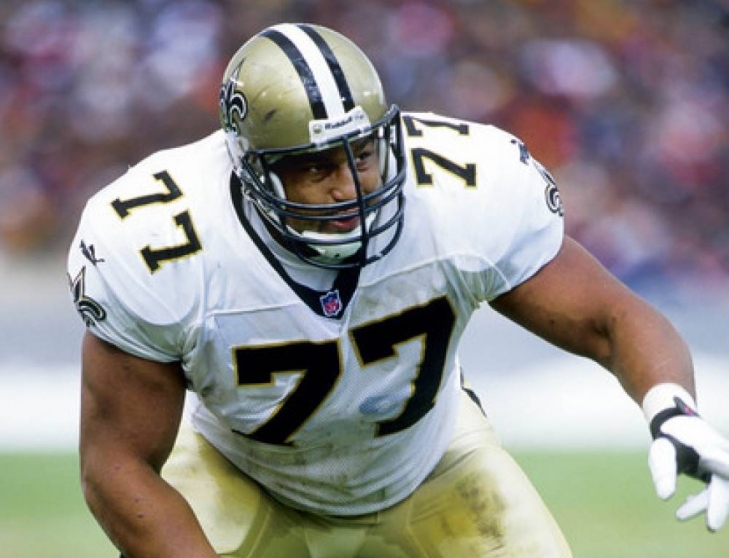
Willie Roaf did not have far to go after Louisiana Tech. The Saints took the 6-foot-5, 300-pound tackle with the eighth overall pick in 1993, and he stepped into the starting lineup at right tackle as a rookie. He earned All-Rookie honors that year, showing the footwork and power that had made him a first-round pick. The following season, the team moved him to left tackle, and the switch locked him into the position that defined the rest of his career.
From 1994 through 2000, Roaf made the Pro Bowl every season. He earned first-team All-Pro recognition in 1995 and 1996 and second-team All-Pro in 1994, 1997, and 2000. Offenses treated the left edge as a problem to be solved rather than a matchup they could exploit. He stayed healthy and available, starting all 131 games he played in a Saints uniform. That consistency gave New Orleans a reliable presence at the most important spot on the offensive line during a stretch when the franchise was still searching for sustained success.
Roaf’s combination of size, athleticism, and technique made him difficult to beat one-on-one. He could stonewall power rushers and recover quickly against speed, and he rarely gave up the kinds of pressures that derail drives. The Saints’ running game and pass protection both benefited from the stability he provided on the blind side. While the team’s overall record fluctuated, Roaf’s level of play did not. He remained one of the league’s better left tackles throughout his time in New Orleans, and the offensive line played with more confidence whenever he was on the field.
The Saints released him after the 2001 season. He finished his career with four more years in Kansas City, where he continued to play at a high level and added more Pro Bowl selections. The production in New Orleans had already established him as the franchise’s most accomplished offensive lineman of the era. Those seven straight Pro Bowl seasons in black and gold had set a standard that few players at the position have matched for the Saints.
In New Orleans, he started every one of the 131 games he played. Those numbers reflect the durability that matched the talent. He left New Orleans as the clear standard at left tackle for the franchise, a player who had given the offense a reliable anchor for nearly a decade. His availability and high-level performance made him one of the most valuable pieces on the roster during his tenure.
Roaf was elected to the Pro Football Hall of Fame in 2012. He was also named to both the 1990s and 2000s All-Decade Teams. The Saints inducted him into their Hall of Fame in 2008 and made him one of the three inaugural members of the Ring of Honor in 2013. The eighth overall pick, who never left the starting lineup, became one of the defining players in franchise history, and his career remains a benchmark for offensive tackles in New Orleans.
4. Cameron Jordan
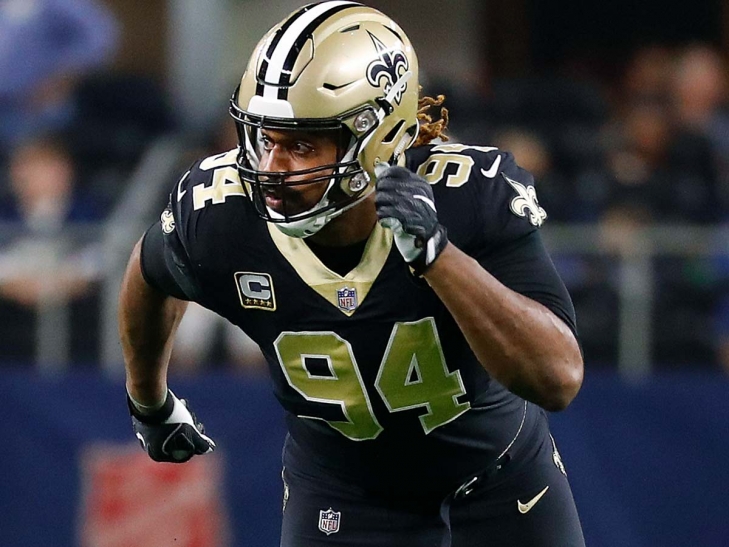
The Saints’ offense drew most of the attention during the Drew Brees years, but the defense still produced standouts who held their own over long stretches. Cameron Jordan has been one of those players since the team drafted him 24th overall out of California in 2011. He stepped into the starting lineup at defensive end as a rookie and stayed there, bringing size, length, and a consistent motor that made him difficult to block one-on-one.
Jordan earned his first Pro Bowl selection in 2013 after recording 12.5 sacks, then added another in 2015 when he reached double digits again with 10.0. Those early peaks showed the production was sustainable rather than a one-year spike. He continued to generate pressure even in seasons when the sack total landed in the mid-to-high single digits, and the Saints’ defensive line stayed competitive in the NFC South in part because of the edge presence he provided.
The clearest individual high point arrived in 2017. Jordan recorded 13.0 sacks and earned first-team All-Pro recognition while the Saints returned to the playoffs. He followed that with 12.0 sacks in 2018 and a career-high 15.5 in 2019, both of which brought second-team All-Pro honors. The combination of power at the point of attack and the ability to finish rushes once he got free made those three seasons among the more productive stretches by a defensive end in the league. Opposing offenses had to account for him on every down, and the attention he drew created opportunities for the rest of the front.
Jordan kept adding Pro Bowl selections through the early 2020s. He earned the nod in 2020, 2021, and 2022, extending a run that reached eight total selections by the end of that stretch. The sack totals stayed productive in those years—12.5 in 2021 and 8.5 in 2022—while the overall disruption remained high. Even as the Saints’ roster turned over and the team’s win totals fluctuated, Jordan remained a constant on the edge. His ability to set the run and rush the passer without taking many snaps off gave the defense a reliable piece year after year.
He has now played 15 seasons with New Orleans, starting the large majority of his games. The durability has matched the production. Through the 2025 season Jordan has 132.0 sacks, 759 tackles, and 175 tackles for loss with the Saints. Those numbers place him among the franchise leaders in sacks and among the more productive edge players of his era. At 36 years old he is still contributing at a level that keeps him on the field, even if the raw totals have moderated from the peak years.
Jordan has remained with the Saints through the entire Brees era and the years that followed, never playing for another team. The first-round pick who started as a rookie and produced eight Pro Bowl seasons has given New Orleans a long stretch of high-level defensive end play. As the 2026 season approaches, he continues to rank as one of the more accomplished and durable defensive players in franchise history.
