
Notinhalloffame List Update: 276-300 on Football Revised
The problem with running a Hall of Fame-related website is that many of the big ones we cover all have announcements within months of each other. The backbone of what we do is list-related, resulting in a long push to revise what we already have, specifically now with our Football and Basketball Lists.
At present, we have a minor update as we have completed the next twenty-five of the 2024 Football List, which you can comment on and vote on:
The new 276 to 300:
276. Keith Millard
277. Derrick Johnson
278. Stanley Morgan
279. Leon Gray
280. David Akers
281. Buster Ramsey
282. Beattie Feathers
283. Russ Francis
284. Carson Palmer
285. Keith Brooking
286. Dennis Smith
287. Frank Cope
288. Charles Mann
289. Ed “Too Tall” Jones
290. Rich Gannon
291. Seth Joyner
292. E.J. Holub
293. Mel Gray
294. Bart Oates
295. Fred Arbanas
296. Michael Vick
297. Bill Stanfill
298. George Svendsen
299. Hanford Dixon
300. Mike Quick
*Denotes First Year of Eligibility.
Rankings are impacted annually based on your comments and votes.
Thank you all for your patience. We will soon unveil more changes to the football and basketball lists.
27. Mel Gray
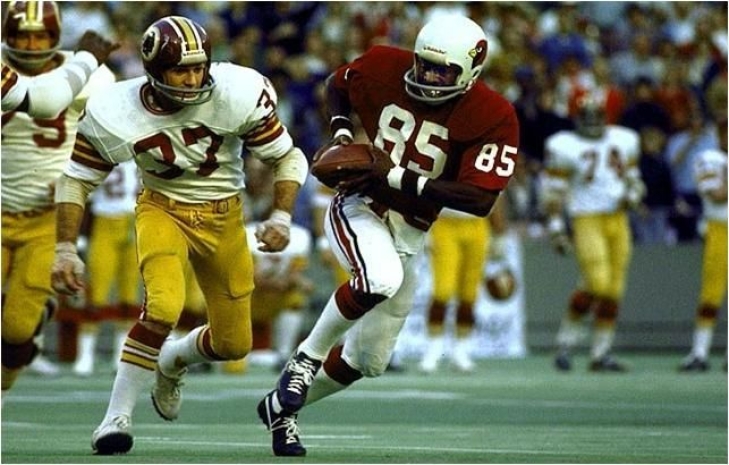
Before modern spread offenses made the deep pass a regular part of the game, only a few receivers could truly stretch the field like the track star who remained in his college hometown. Mel Gray, a world-class sprinter at the University of Missouri who matched national high school and conference records in the 100-yard dash, chose to stay local when the St. Louis Cardinals selected him in the sixth round of the 1971 NFL Draft. The team discovered a top home-run threat of 1970s football, a receiver capable of changing the scoreboard with a single stride.
Gray didn't have the bulky build typical of perimeter targets, but his proven acceleration was unmatched. With a genuine sub-9.5 second speed in the 100-yard dash, he only needed two or three strides to bypass boundary cornerbacks and eliminate safety support deep. In addition to his speed, his remarkable skill in tracking deep passes over his shoulder without losing momentum made him the perfect downfield safety option for quarterback Jim Hart.
Gray's career reached elite status as Don Coryell's high-powered offense gained prominence. Starting in 1974, Gray earned four straight Pro Bowl appearances (1974–1977). Although he rarely achieved high reception totals in an era focused on the run—never exceeding 50 catches or 1,000 yards in a season—his yards per catch were remarkable. He consistently ranked among the NFL's best in yards per reception, averaging an impressive 19.7 yards in 1974 and reaching a peak of 20.6 yards in 1977.
His individual peak arrived during the 1975 season, when he emerged as the undisputed king of big plays. Gray hauled in 48 receptions for 926 yards while tying for the league lead with 11 receiving touchdowns, earning his sole career First-Team All-Pro selection as the Cardinals captured the NFC East crown.
Notably, out of Gray's 46 career total touchdowns, an astonishing 28 of them spanned more than 40 yards, highlighting an explosive downfield capability rarely equaled in NFL history.
Gray remained a trusted focal point in St. Louis through the early 1980s, establishing a franchise-record streak by catching at least one pass in 121 consecutive games. By the time he departed St. Louis following the 1982 season, he had compiled 351 receptions, 6,644 receiving yards, and 45 receiving touchdowns across 145 regular-season contests.
300. Mel Gray
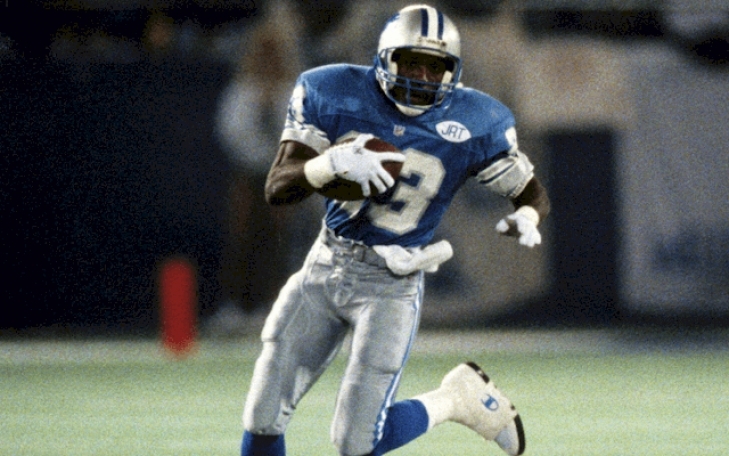
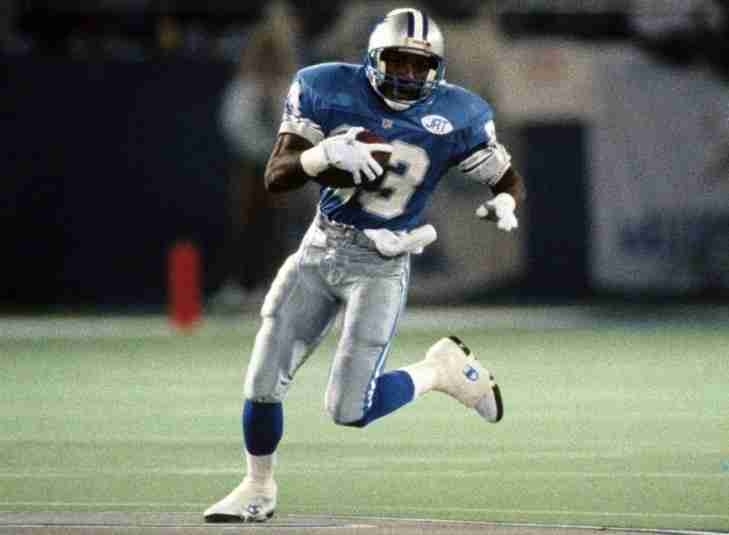
Mel Gray began his career in the USFL for two seasons, and after that league folded, he joined the New Orleans Saints, who had chosen him earlier in a supplemental draft of USFL players. Gray would later join the Detroit Lions, and it was there where he would be named a four-time Pro Bowl Selection and was regarded as one of the best Return Specialists in the NFL. Gray would accumulate 13,003 Return Yards, and was the league leader in that category in the first three seasons of the 1990s. He would also be named a three-time First Team All-Pro.
39. Mel Gray