

45. John David Crow
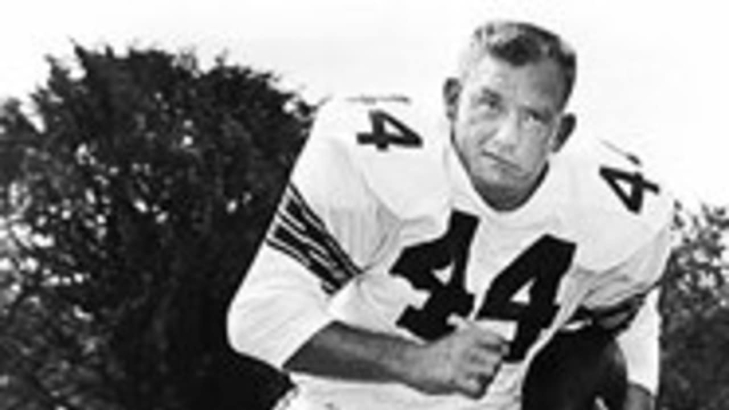
When Bear Bryant famously remarked that if voters didn't award John David Crow the 1957 Heisman Trophy, "they ought to do away with the thing," the college football landscape took notice. The Chicago Cardinals certainly did, selecting the Texas A&M star second overall in the 1958 NFL Draft. After a knee injury limited his rookie campaign to seven games, Crow quickly validated the hype, evolving into one of the most versatile backfield threats of his era.
At 6 feet 2 inches and 220 pounds, Crow possessed rare size and functional power for a 1960s halfback, combining a bruising inside running style with smooth hands out of the backfield and elite blocking ability. Beyond his primary duties, he stood as one of the most lethal halfback-passers in league history, completing 33 career passes for 759 yards and five touchdowns.
His initial breakout arrived in 1959, when he generated 994 scrimmage yards and seven touchdowns to secure his first Pro Bowl selection. However, his game reached legendary status during the franchise's inaugural season in St. Louis in 1960. Crow spearheaded the offense by rushing for a career-high 1,071 yards, averaging an astounding 5.9 yards per carry—while adding 462 receiving yards. His 1,533 yards from scrimmage led the entire NFL, earning him Second-Team All-Pro honors and his second Pro Bowl invitation.
Crow’s physical, violent running style frequently exposed him to severe injuries. He was restricted to eight games in 1961, but responded with a monster rebound in 1962. Pounding the rock in goal-line sets, Crow scored a league-leading 17 total touchdowns (14 rushing, 3 receiving) while racking up nearly 1,000 yards from scrimmage to capture his third Pro Bowl selection in St. Louis.
Crow’s 14 rushing touchdowns in 1962 set a single-season Cardinals record, showcasing the punishing goal-line efficiency that defined his prime years.
Plagued by a knee injury that limited him to three games in 1963 and a quiet 1964 season, Crow departed for San Francisco in 1965. He made one final Pro Bowl as a 49er before retiring in 1968. In seven years wearing the Big Red jersey, Crow compiled 5,450 scrimmage yards and 50 total touchdowns (33 rushing, 17 receiving), earning a spot on the NFL 1960s All-Decade Team.
40. Bill Koman
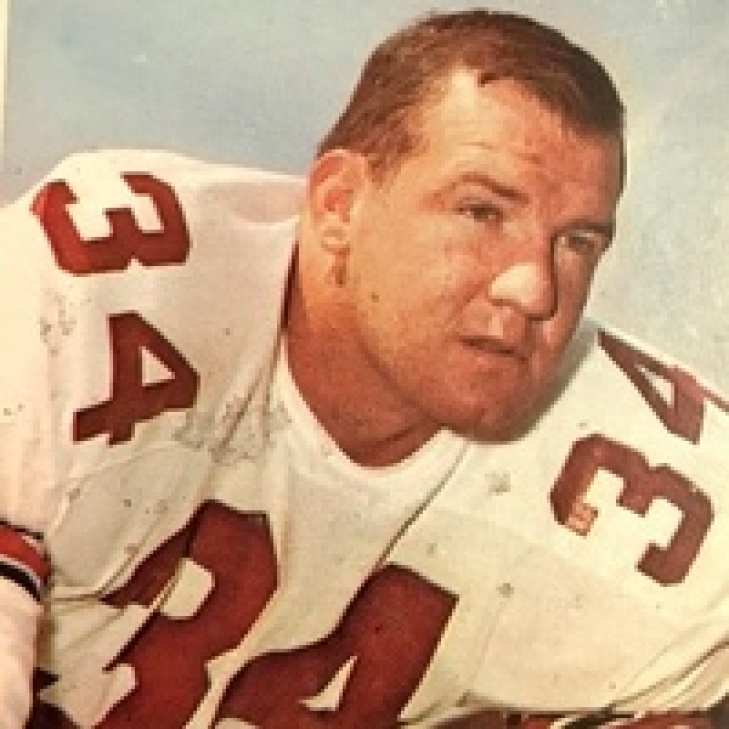
Acquired in a 1959 trade with the Philadelphia Eagles after an earlier stint in Baltimore, Bill Koman entered the Cardinals organization with little fanfare. What the franchise received in return was the physical heartbeat of their defense for nearly a decade. Sliding in at outside linebacker, the University of North Carolina product spent nine seasons with the Big Red (1959–1967), establishing a standard of hitting and durability that set the defensive tone throughout the 1960s.
Koman was an aggressive, downhill defender who relied on raw power, violent shed-and-tackle mechanics, and exceptional durability. Operating through bad knees that required constant wrap and treatment, Koman rarely missed action; he played in 120 consecutive regular-season games for the Cardinals, missing just a single contest over his nine-year tenure with the team.
Following the team’s move from Chicago to St. Louis in 1960, Koman's relentless tackling earned him widespread recognition. He reached his individual peak during the 1962 season, earning his first Pro Bowl invitation after recording 3.5 sacks, two interceptions, and three fumble recoveries.
He repeated that elite standard in 1964, garnering a second Pro Bowl selection as the operational leader of an aggressive front seven. In 1965, he was awarded the Old Pro Award by the St. Louis Quarterback Club, cementing his status as one of the most respected figures in the locker room. Battling through constant knee issues, Koman suited up for 120 consecutive games for the Cardinals, missing only one game across his entire nine-year run with the organization.
Koman retired following the 1967 season. In a Cardinals uniform, he appeared in 121 games, making 121 starts, while accumulating 24.5 unofficial sacks, 6 interceptions, and 16 fumble recoveries.
33. Sonny Randle
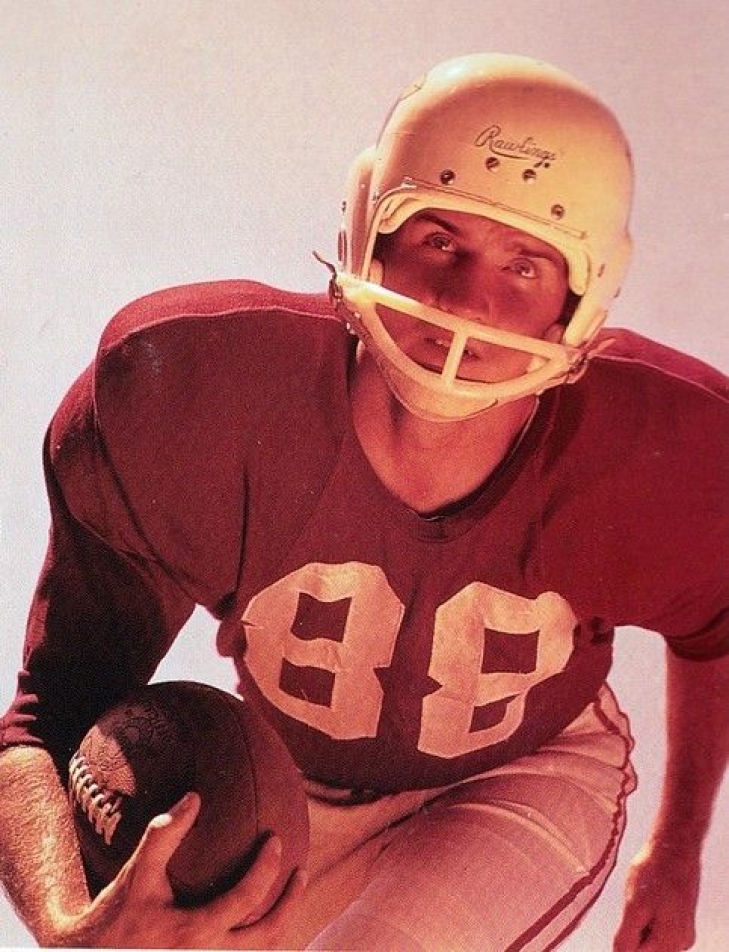
Sonny Randle was selected in the 19th round (218th overall) of the 1958 NFL Draft as a "futures" pick from Virginia. During his final college year, he focused on improving his track speed before joining the Chicago team in 1959. As a rookie, his playing time was limited, but he dedicated the offseason to refining his route running, practicing against teammates Dick "Night Train" Lane and Jimmy Hill. This effort helped convert his raw vertical speed into a highly developed skill. When the franchise relocated to St. Louis in 1960, Randle became a key player, leading the Big Red's passing attack and gaining national recognition.
Randle had explosive long strides that often outpaced coverage. His precise head fakes and quick breaks made him nearly unstoppable on double moves. In the red zone, his tracking ability and body position made him a top goal-line threat of his time.
His breakout season in 1960 showcased exceptional scoring efficiency. Randle led the NFL with 15 receiving touchdowns, setting a franchise record for a single season, and also recorded 62 receptions for 893 yards. His outstanding performance earned him First-Team All-Pro honors and initiated a three-year streak of Pro Bowl appearances from 1960 to 1962.
In the 1962 season, he achieved a career-high in yardage, with 63 receptions for 1,158 yards and 7 touchdowns, earning Second-Team All-Pro honors. The season’s highlight was a remarkable game at Yankee Stadium on November 4, 1962, when Randle set franchise records with 16 catches and 256 receiving yards against the New York Giants, records that remain unbroken.
Randle proved equally lethal in 1963, catching 51 passes for 1,014 yards and 12 touchdowns. After a shoulder injury shortened his 1964 campaign, he returned to peak form in 1965 with 845 receiving yards and 9 touchdowns, earning his fourth career Pro Bowl invitation.
Randle's 15 touchdown catches in 1960 remain the single-season Cardinals benchmark, and his 16 receptions for 256 yards against the Giants in 1962 stand as the team's untouched single-game records. Randle departed for San Francisco in 1967, leaving St. Louis with an extraordinary legacy. Across eight seasons in a Cardinals uniform, he accumulated 328 receptions, 5,438 receiving yards, and 60 touchdown catches.
32. Dale Meinert
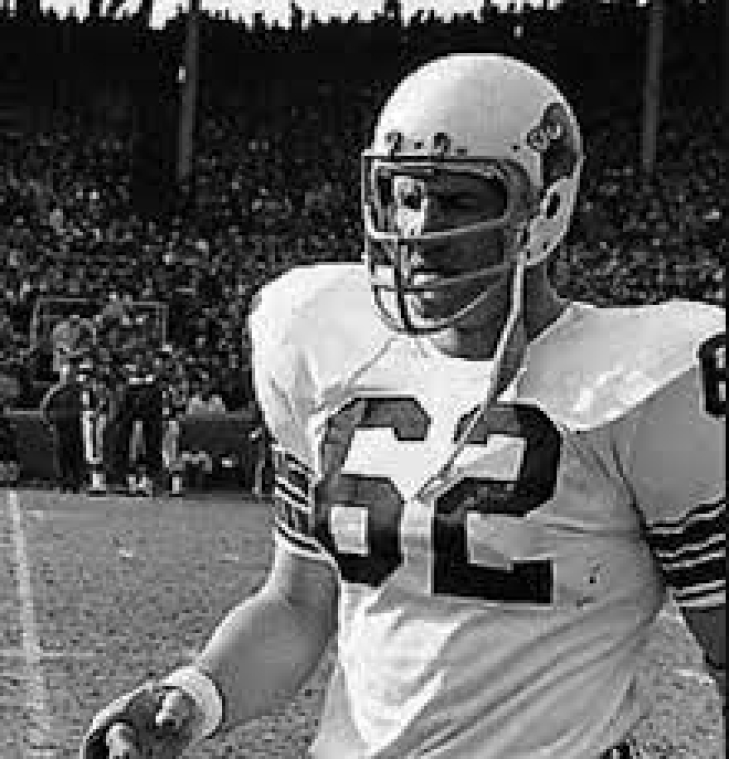
Drafted in the eighth round of the 1955 NFL Draft by the Baltimore Colts from Oklahoma A&M, Dale Meinert originally took a different route to professional football. He moved north to Canada, playing three seasons with the Edmonton Eskimos under coach Pop Ivy and earning two Grey Cups as an offensive lineman. When Ivy became head coach of the Chicago Cardinals in 1958, Meinert followed him to the United States, beginning as a guard for his first two NFL seasons before a positional change significantly altered his career.
Meinert was initially seen as undersized for interior offensive line positions. Switching permanently to middle linebacker in 1960 turned out to be an excellent decision. With sharp instincts, quick lateral pursuit, and a tough, downhill tackling approach, he soon became the strategic leader of the defense. Meinert assumed pre-snap play-calling responsibilities, often using a laid-back Oklahoma voice and sometimes tapping his defensive tackles on the buttocks to shift the defensive front into the correct position.
Following the franchise's move to St. Louis in 1960, Meinert's defensive impact was immediate. He picked off a pass in his very first start at linebacker and earned St. Louis Cardinals Team MVP honors in 1961. Over the next several seasons, he anchored the middle of the field against the run while dropping efficiently into pass coverage, picking up three Pro Bowl selections (1963, 1965, 1967). His pinnacle individual campaign arrived in 1967, when his leadership and field vision earned him Second-Team All-Pro honors alongside his third Pro Bowl invitation. Teammates frequently compared Meinert's impact directly to Hall of Fame contemporaries like Ray Nitschke and Dick Butkus, noting that his play-calling speed and range made him the heartbeat of the Big Red defense.
After capping off his career with that 1967 All-Pro campaign, Meinert decided it was time to step away from the game ahead of the 1968 training camp. It wasn't a spur-of-the-moment choice; after a decade of grinding collisions in the NFL trenches, he felt it was the right time to hang up his cleats and return to his home state of Oklahoma. He transitioned seamlessly into life after football, farming, teaching junior high math, and coaching eight-man high school football at Lone Wolf High School for 15 years.
Over his ten-year NFL career (all as a Cardinal), Meinert recorded 9 interceptions, 13 fumble recoveries, 12 unofficial sacks, and a defensive touchdown in 125 games.
35. Pat Harder
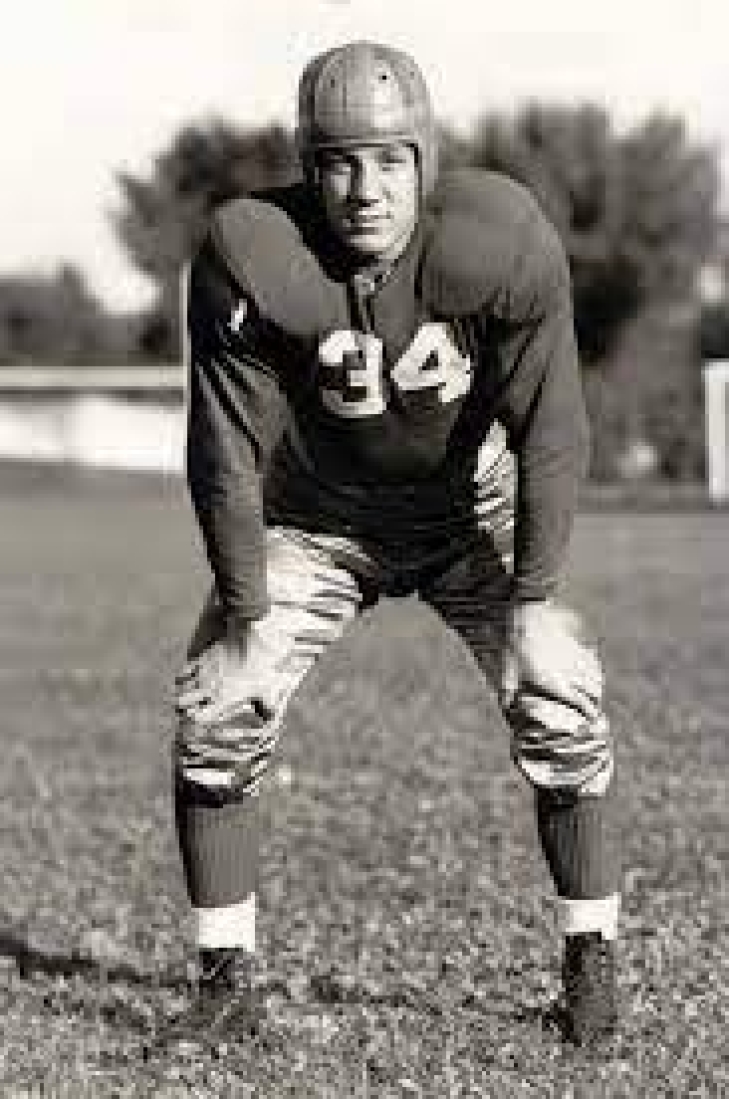
Pat Harder, drafted second overall in the 1944 NFL Draft from Wisconsin, paused his football career to serve in the U.S. Marine Corps during World War II. He debuted with the Chicago Cardinals in 1946, joining a legendary backfield as the power-running fullback in Chicago's renowned "Million Dollar Backfield" with Paul Christman, Charley Trippi, and Marshall Goldberg.
At 5 feet 11 inches and a solid 205 pounds, Harder brought a low-center-of-gravity, downhill rushing style that delivered punishment to opposing linebackers. What made him truly irreplaceable, however, was his dual-phase scoring capability. Beyond his rugged inside running and bone-crushing lead blocking, Harder took over placekicking duties for Chicago and quickly turned himself into the most lethal point-producer in professional football.
Harder's early career in Chicago saw one of the most impressive three-year stretches by any back of that time. In 1947, he topped the league with 102 points and played a key role in Chicago's victory over the Philadelphia Eagles to win the 1947 NFL Championship, which was the franchise's last world title.
He reached the peak of his career in 1948, earning UPI NFL Most Valuable Player honors after leading the league with 110 points, perfect on all 53 extra-point attempts, and rushing for 554 yards. In 1949, he again led the NFL in scoring with 102 points, becoming the first player in NFL history to surpass 100 points in three consecutive seasons. His exceptional performance earned him three consecutive First-Team All-Pro selections (1947–1949) and a place on the NFL 1940s All-Decade Team. Harder scored over 100 points during three straight seasons from 1947 to 1949, leading the league each year and setting a record for individual scoring consistency in the NFL.
After a standout Pro Bowl season in 1950, Harder was traded to the Detroit Lions in 1951. He maintained his winning form in Detroit, playing as fullback and placekicker for consecutive NFL championship teams in 1952 and 1953 until knee injuries led to his retirement. During his five seasons with the Cardinals, Harder racked up 2,371 rushing yards, 510 receiving yards, made 25 field goals, 171 extra points, and scored a total of 412 points across 58 regular-season games.
39. Bobby Joe Conrad
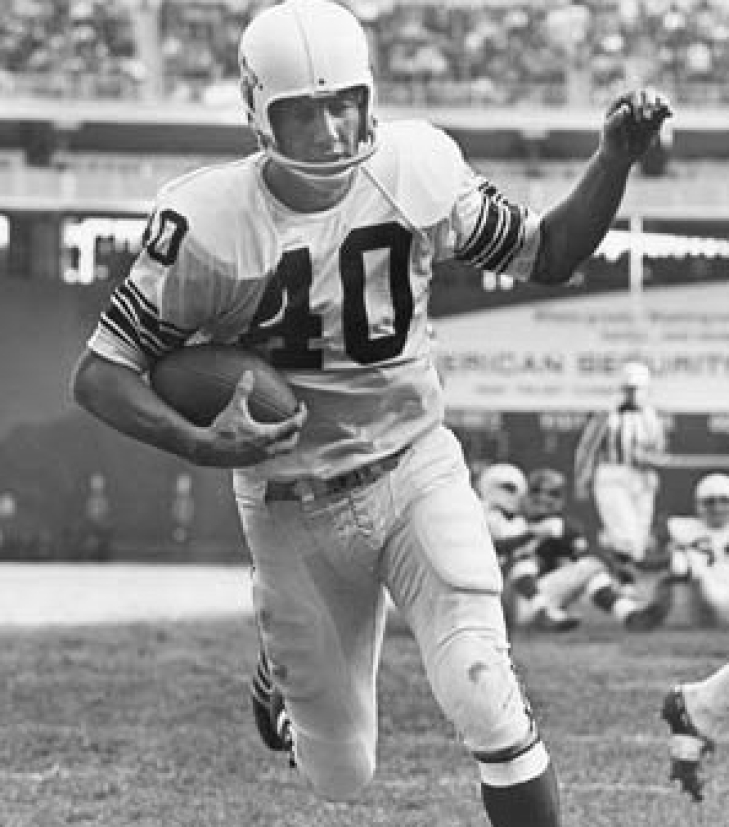
Long before positional versatility became a headlining trend, a fifth-round draft choice out of Texas A&M quietly became the ultimate utility knife for the Cardinals franchise. Drafted by the New York Giants in 1958 and traded to Chicago before ever playing a snap, Bobby Joe Conrad arrived without a set home on the depth chart. What followed was an 11-year run in a Big Red uniform defined by total adaptability, as Conrad transitioned seamlessly from defensive back to halfback, placekicker, and ultimately one of the premier flankers in professional football.
Conrad was not a runaway burner, but he possessed uncanny spatial awareness, soft hands, and crisp route precision. His football IQ allowed him to learn multiple playbooks on the fly: as a rookie in 1958, he picked off 4 passes as a defensive safety, took handoffs as a halfback over the next two seasons, handled placekicking duties, and eventually slid out to flanker in 1962.
Once locked in at receiver, Conrad hit an extraordinary peak alongside quarterback Charley Johnson. His 1963 season stood as a masterclass in possession efficiency: Conrad led the entire NFL with 73 receptions, generating 967 receiving yards and 10 touchdowns to earn First-Team All-Pro honors.
He backed that performance up in 1964 with 61 catches for 780 yards and 6 touchdowns, collecting his first career Pro Bowl invitation. Conrad added another stellar campaign in 1965, leading the team with 909 receiving yards. Across an eight-year span from 1961 to 1968, he established a remarkable franchise record by catching a pass in 101 consecutive games.
When Conrad departed St. Louis following the 1968 season, he left as the Cardinals' all-time leader in receptions with 418 catches, a benchmark that stood for two decades. After a final reserve campaign with the Dallas Cowboys in 1969, Conrad called it a career. In eleven seasons with the Cardinals, he compiled 418 receptions, 5,828 receiving yards, 38 receiving touchdowns, 14 field goals, and 7,633 all-purpose yards.
18. Marshall Goldberg
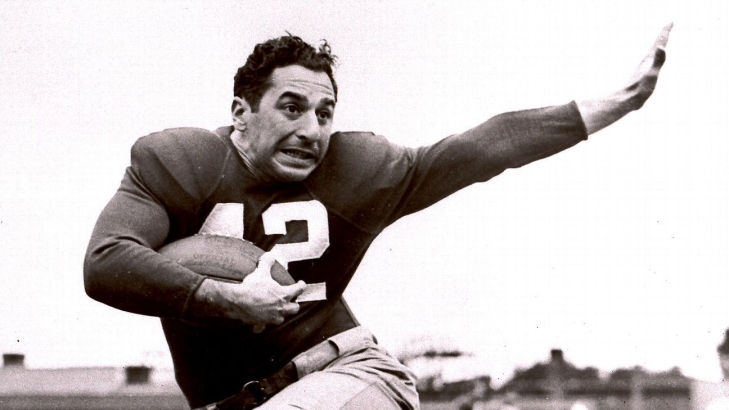
Marshall Goldberg, a two-time consensus All-American and Heisman Trophy finalist under Jock Sutherland at Pitt, became a national star when the Chicago Cardinals picked him in the 1939 NFL Draft's second round. As one of the earliest notable Jewish superstars in pro football, Goldberg's unique blend of backfield strength, return speed, and defensive savvy quickly boosted the team's competitiveness.
Goldberg had a low, powerful running style that made him effective between the tackles, combined with the quick acceleration of a track athlete. His versatility enabled him to play as a fullback, halfback, kick returner, and safety effortlessly. On defense, his quick decision-making and knack for turnovers made him a persistent threat to intercept passes from opponents, while his open-field tackling often stopped large plays in their tracks.
His multi-phase versatility peaked during the 1941 season. Goldberg delivered an impressive single-season performance, rushing for 427 yards, catching passes for 313 yards, and leading the NFL with 290 kickoff return yards. His total of 1,236 all-purpose yards topped the league, earning him a Pro Bowl spot and All-Pro honors. Not satisfied with offensive dominance alone, Goldberg also excelled on defense, tying for the league lead with 7 interceptions. He carried this exceptional energy into 1942, finishing fifth in all-purpose yards and continuing to excel in the secondary.
During his prime, Goldberg paused his football career to serve in the U.S. Navy for two years in the South Pacific during World War II. After returning to Chicago in 1946, he chose to play primarily as a safety to support the Cardinals' renowned "Dream Backfield,” which included Charley Trippi, Paul Christman, Elmer Angsman, and Pat Harder. His unselfish switch to safety became the defensive cornerstone of the memorable 1947 season, ending with a thrilling victory over the Philadelphia Eagles that secured the franchise's only NFL Championship to date.
Goldberg played one more season before calling it a career. He recorded 1,644 rushing yards, 775 receiving yards, 1,083 return yards, and 19 interceptions across 77 regular-season games. The Cardinals enshrined Goldberg into their Ring of Honor in 2006.
16. Duke Slater
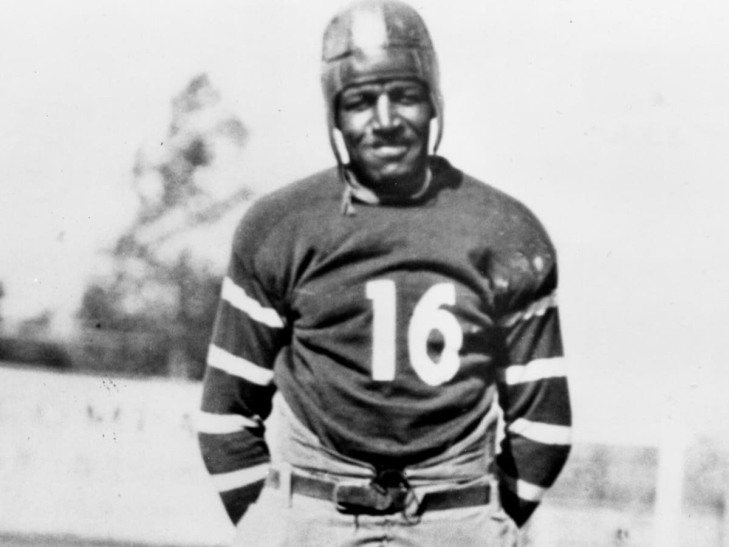
Long before the modern gridiron era of professional football, Duke Slater emerged as a formidable figure who transformed line play. An All-American at the University of Iowa and a leader in guiding the Hawkeyes to a national championship, Slater contributed exceptional strength and leverage to early professional football. He joined the Rock Island Independents, becoming the first African-American lineman in NFL history. Later, with the Chicago Cardinals, he again broke barriers as the first Black player for a franchise that still exists in the NFL today.
Operating in an era of constant 60-minute two-way trench warfare, he played both offense and defense nonstop. His powerful drive-blocks opened large running lanes for stars like Ernie Nevers and Jim Thorpe. On defense, his quick initial punch and ability to shed blocks made it nearly impossible for opponents to run to his side. His dominance led Chicago Bears founder George Halas to famously call him a "one-man line.”
During his time with the Cardinals, Slater was regarded as the top tackle in the league. His most notable performance came on Thanksgiving Day in 1929, when he played the full 60 minutes on the icy field of Comiskey Park. In that game, Slater effectively shut down the edge to support teammate Ernie Nevers' remarkable 40-point game against the Bears, setting an NFL single-game scoring record that remains unbroken.
Over ten years in the professional league, Slater received All-Pro honors for seven straight seasons (1923–1929), establishing himself as an unstoppable force on the line. During many of those years, he was the only Black player in the entire league, persistently breaking barriers through his exceptional skill until an unofficial color barrier temporarily arose after his departure. Slater made history as the first lineman in NFL history to be named All-Pro for seven consecutive seasons, consistently anchoring the offensive or defensive line for a full 60 minutes.
Off the field, Slater combined intelligence and strong work ethic with his athletic achievements. During his NFL seasons, he also attended law school and graduated in 1928. After ending his football career in 1931, he started a legal practice in Chicago, eventually serving as an assistant district attorney. He made history as one of Chicago's earliest Black judges. In 2020, Slater was inducted into the Pro Football Hall of Fame as part of the Centennial Class, posthumously.
15. Ken Gray
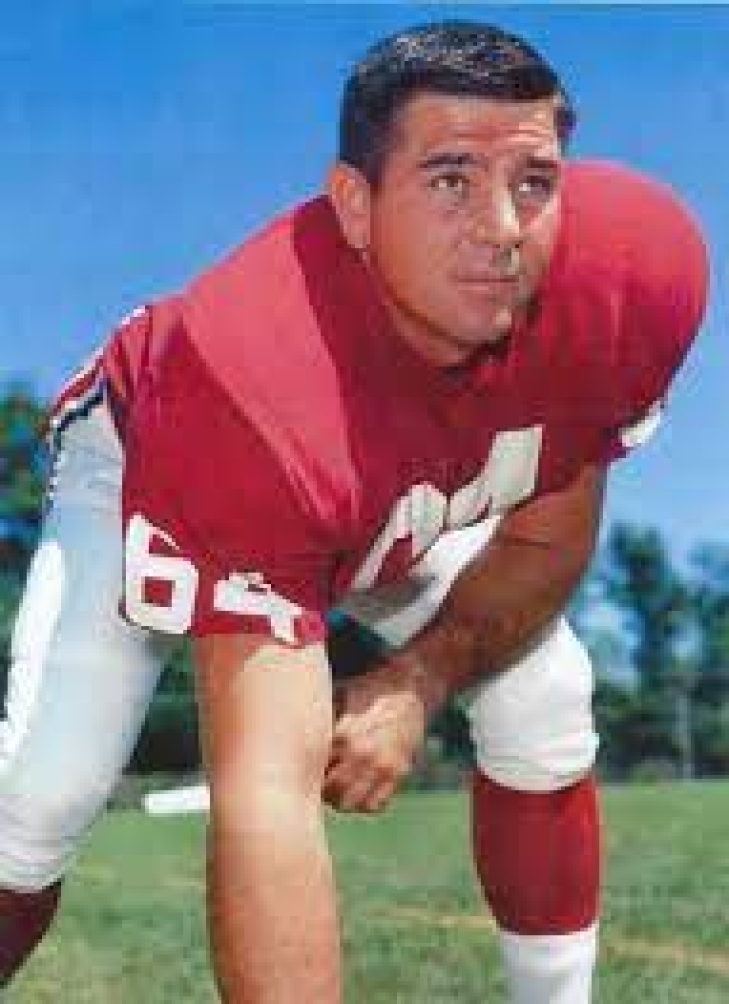
Selected in the sixth round of the 1958 NFL Draft by Green Bay, Ken Gray faced tough competition in a deep roster, playing alongside future Hall of Famers. Unable to secure a permanent spot with the Packers, the Texas native was claimed by the Chicago Cardinals, making his debut as a defensive end in his rookie year. However, this defensive stint was short-lived; before his second season, the coaching staff moved him back to right guard, where he became one of the most formidable interior blockers of his time.
Gray epitomized the classic open-field pulling guard with a perfect blueprint. He had explosive short-area quickness from his stance, enabling him to lead-block on the perimeter with devastating impact. With a fierce, punishing attitude, Gray often dominated defensive ends and linebackers in single coverage, creating large running lanes for stars like John David Crow, Johnny Roland, and Prentice Gautt. His legendary toughness made him a teammate favorite; he was a respected team captain for seven straight seasons and frequently played through serious knee injuries.
While his initial years in Chicago were spent establishing his footing, the franchise's relocation to St. Louis in 1960 coincided with Gray's rise to absolute individual stardom. He secured his first career Pro Bowl invitation in 1961, establishing himself as an elite interior presence. By 1963, Gray had evolved into an untouchable force at right guard, kicking off a seven-year stretch of consensus postseason honors.
His peak performance arrived during the 1964 season, when his dominant drive-blocking and pass protection earned him consensus First-Team All-Pro honors alongside his third Pro Bowl selection. Between 1961 and 1968, Gray was voted to six Pro Bowls (1961, 1963, 1964, 1966, 1967, 1968), serving as the undisputed anchor of the Cardinals' offensive line throughout the entire decade. Gray's relentless individual consistency at right guard earned him All-Pro or All-Conference recognition in seven consecutive seasons from 1963 through 1969.
After twelve seasons and 151 games in a Cardinals uniform, knee injuries finally caught up with the veteran leader, leading to his release prior to the 1970 season. He closed out his career with a single season in Houston before hanging up his cleats.
Gray was named as a First-Team guard on the NFL 1960s All-Decade Team, cementing his status as one of the premier interior linemen of his generation.
11. Dick "Night Train" Lane
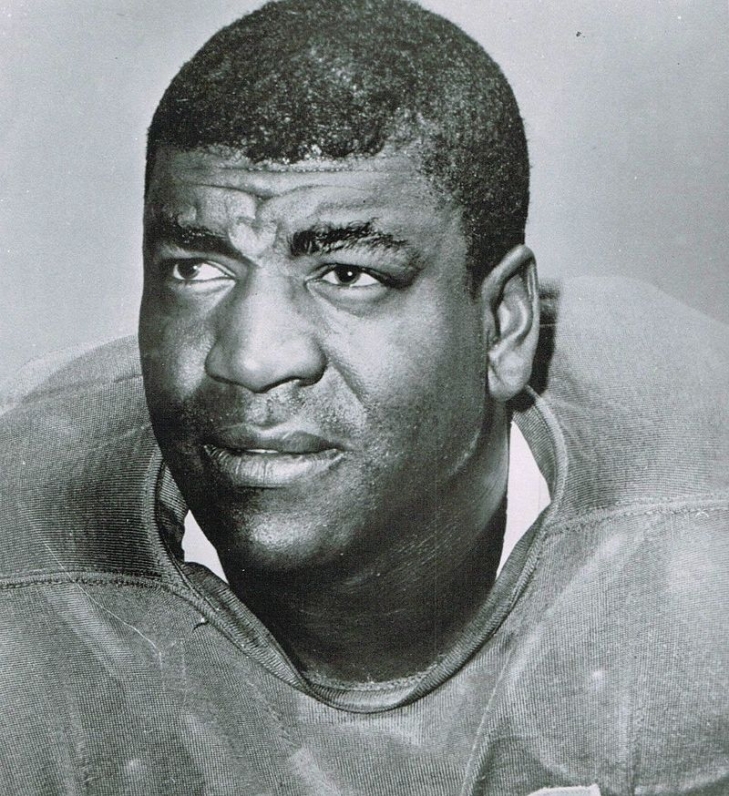
Few nicknames in football history evoke as much fear and respect as "Night Train." Before he played in the NFL, Richard Lane’s unconventional journey to greatness defied typical scouting expectations. After four years in the U.S. Army and working on assembly lines at a Los Angeles aircraft factory, he confidently approached the Los Angeles Rams in 1952 for a tryout. Not only did he earn a spot as an undrafted rookie, but he also set a league record with 14 interceptions in a 12-game season—a record that remains unbroken today. Two years later, the Chicago Cardinals orchestrated a three-team trade to acquire this standout defender, securing him as a key part of their secondary for the next six seasons.
Lane had exceptional vertical leap, smooth hip movement, and a quick closing burst that turned minor quarterback errors into defensive touchdowns. Besides his sharp pass coverage skills, he was arguably the most intimidating, hard-hitting tackler in the league—known for his brutal clothesline tackles called "Night Train Necktie,” which led the NFL to change its rules on neck and facemask contact. His overwhelming athletic ability even led the Cardinals to occasionally use him on offense; notably, in a 1955 game against Pittsburgh, he caught a 98-yard touchdown pass, one of the longest in NFL history at that time.
His first campaign in 1954 while wearing a Chicago uniform immediately highlighted his exceptional ability to intercept the ball. Leading the NFL with 10 interceptions, Lane secured his second career interception title and received his first of four Pro Bowl invites in Chicago. He maintained this high level of performance during his time in the Windy City, leading a tough defense and earning AP First-Team All-Pro recognition in 1956 after making 7 interceptions and returning one for a touchdown.
Between 1954 and 1959, Lane served as the premier perimeter anchor for the Cardinals, collecting four Pro Bowl invitations (1954, 1955, 1956, 1958) while amassing 30 interceptions and 628 return yards in just 68 games. Despite the organization’s overall roster struggles during the decade, Lane was universally recognized as an unassailable star who erased elite split ends across the circuit.
Believing his high-mileage career was nearing its decline, Chicago traded the veteran defensive back to the Detroit Lions prior to the 1960 season. Lane rapidly proved the Cardinals wrong, putting together six more stellar seasons in Detroit—earning three additional First-Team All-Pro nods and bringing his final career tally to 68 interceptions, which ranked second in NFL history at the time of his retirement and still stands fourth all-time.
Lane received the Pro Football Hall of Fame call in 1974 and was named to the NFL 50th, 75th, and 100th Anniversary Teams. In 2006, the Cardinals enshrined Lane in their first Ring of Honor Class.
10. Ernie Nevers
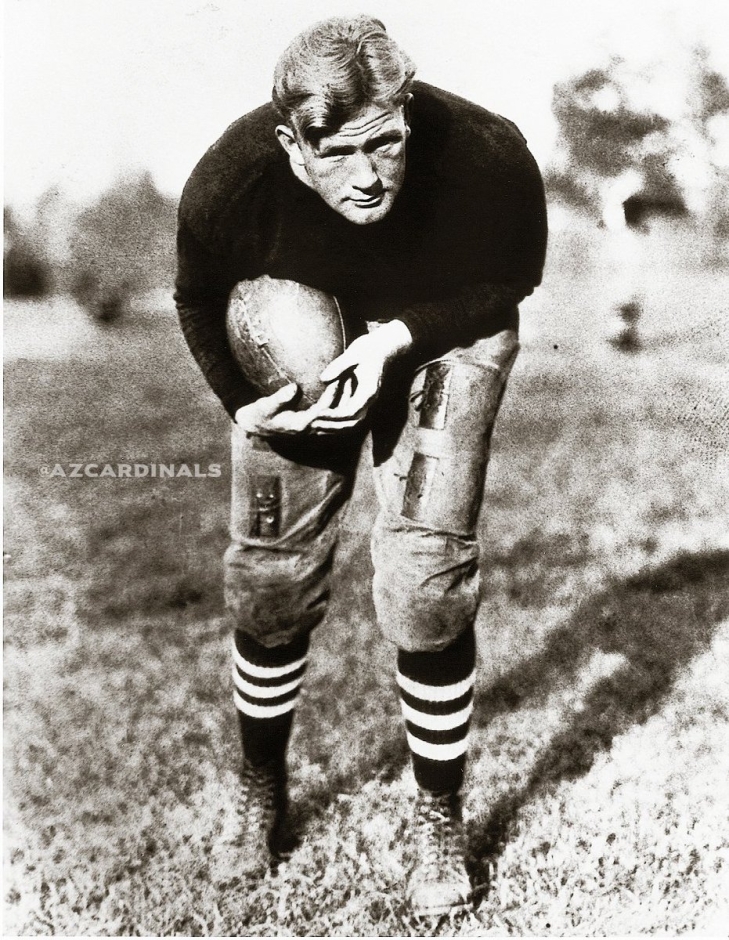
The origins of modern professional football record books can be traced back to the rough sandlots and cold fields of the 1920s. Ernie Nevers, a legendary "triple-threat" back and a consensus All-American under Glenn "Pop" Warner at Stanford, was one of America's most sought-after football stars. After excelling as a tough player-coach for the itinerant Duluth Eskimos in 1926 and 1927, Nevers briefly left playing to become a coach at Stanford. However, the era's competitive spirit was too strong to resist, leading him to return to the field in 1929 with the Chicago Cardinals, where he launched one of the most outstanding individual offensive seasons in football history.
Nevers was a relentless and high-volume power back, known for his bruising, low-center-of-gravity running style. As a versatile "triple-threat" player, he had a strong arm for passing and also excelled as a drop-kicker and placekicker. His aggressive approach required high snap counts; he consistently touched the ball on almost every play and would quickly switch to linebacker to anchor the defense, willingly enduring tough physical hits each series.
Nevers’s 1929 debut in Chicago marked the most legendary individual offensive game in NFL history. During a cold Thanksgiving game at Comiskey Park against George Halas and the Chicago Bears, he delivered an extraordinary performance. As a solo force, he scored six rushing touchdowns and kicked four extra points, totaling all 40 points in a 40–6 victory. His six rushing touchdowns set a league record, still tied but never surpassed, and his 40 points in one game remain the oldest untouched NFL record. Nevers finished his remarkable 1929 season by earning consensus First-Team All-Pro honors.
During his last two active seasons in 1930 and 1931, Nevers took on the additional role of player-head coach for the Cardinals, increasing his workload significantly. Despite intense physical defenses dedicated to stopping him, he maintained his individual dominance on the field. He earned consensus First-Team All-Pro honors in both years, leading the team in rushing, passing, and kicking, all while calling plays from the backfield.
Nevers, the top fullback and a dominant force in the game, finally reached his physical limit after the 1931 season due to relentless pounding. Aware of the intense toll on his body, he retired permanently, leaving a brief but impactful legacy with 5 First-Team All-Pro selections over five NFL seasons—two with Duluth and three with Chicago.
Nevers was selected to the NFL 1920s All-Decade Team, and in 1963, he earned the ultimate honor when he was enshrined as a charter member of the inaugural Pro Football Hall of Fame class. He would later be an inaugural member of the Cardinals Ring of Honor in 2006.
9. Ollie Matson
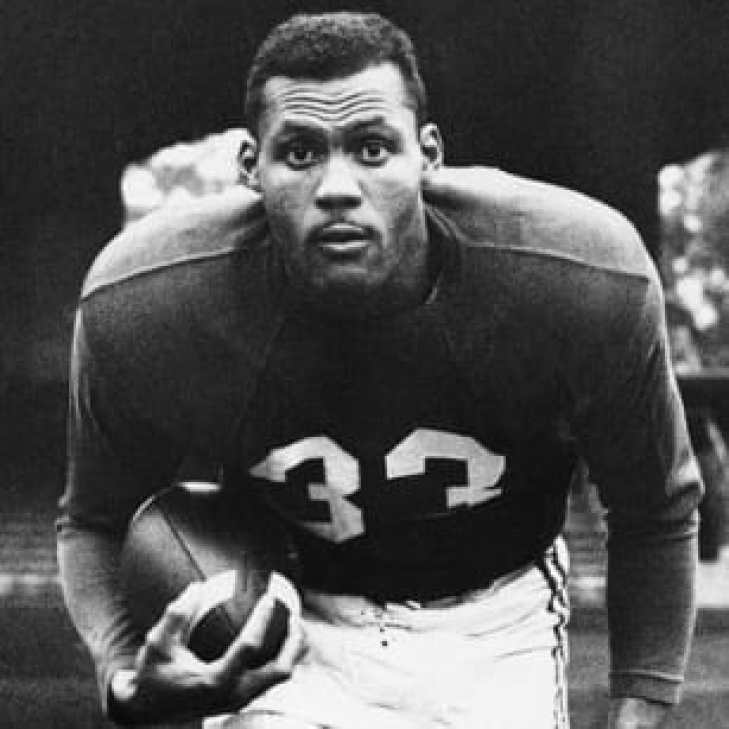
Before recording his first professional football carry, Ollie Matson had already made a significant mark in global athletic history. As a standout consensus All-American running back at the University of San Francisco, his exceptional track speed propelled him to the 1952 Helsinki Olympics, where he earned a silver medal in the 4x100-meter relay and a bronze in the 400-meter dash. Drafted third overall in the first round of the 1952 NFL Draft by the Chicago Cardinals, the versatile athlete quickly proved to be one of the most explosive and game-changing players the league had ever seen.
Matson had an exceptional stride length that enabled him to clear angles easily in open space. Unlike typical sprinters who avoided contact, he ran with aggressive, high-knee motion, powering through arm tackles at the line of scrimmage before accelerating into top speed. His versatility was nearly unrivaled in the 1950s: he served as a main rushing threat from the backfield, an elite receiver downfield, and the most feared kickoff and punt returner in the NFL.
His debut in the NFL in 1952 was an immediate showcase of talent. Matson had a remarkable rookie year, gaining 1,326 all-purpose yards and scoring 9 touchdowns, which earned him a Pro Bowl invitation and a First-Team All-Pro spot. However, just as his career was gaining momentum, it was interrupted when he joined the military, causing him to miss the entire 1953 NFL season while serving in the U.S. Army.
Upon returning in 1954, Matson proved to be an even more formidable player. He dominated defenses across the NFL, accumulating 1,666 all-purpose yards—an average of 5.3 yards per carry—and scoring 9 touchdowns, earning his second First-Team All-Pro honor. Throughout his time in Chicago, he maintained this high level of performance, never falling below 1,200 all-purpose yards in any season with the team. In 1956, he repeated as the NFL’s top all-purpose yardage leader, totaling 1,524 yards and scoring 9 touchdowns—including a 100-yard kickoff return and a 79-yard punt return. Over six seasons with Chicago, Matson averaged more than 1,420 all-purpose yards annually, led the NFL in combined yardage twice, and was the focal point of the Cardinals’ offense.
Despite Matson’s individual brilliance—which generated six consecutive Pro Bowls (1952, 1954–1958) and five First-Team All-Pro selections in Chicago—the Cardinals struggled to build a competitive roster around him. The team managed only one winning season during his tenure. Recognizing his immense market value, Chicago engaged in a historic, blockbuster transaction prior to the 1959 season, trading the superstar to the Los Angeles Rams in exchange for nine players (seven players and two draft picks). While the massive package failed to revitalize Chicago’s fortunes, Matson’s grueling workload in the desert and Midwest meant his elite vertical speed naturally began to taper off in Los Angeles, though he played eight more seasons as a respected veteran across the league.
Matson left behind a towering footprint of 8,544 all-purpose yards and 46 total touchdowns in just 74 games for the Cardinals. At the time of his ultimate retirement in 1966, his combined career running and receiving yards trailed only the legendary Jim Brown on the NFL's all-time list.
Matson, a top halfback on the NFL 1950s All-Decade Team, was inducted into the Pro Football Hall of Fame in 1972 and joined the Cardinals’ Ring of Honor as part of the inaugural group in 2006.
3. Charley Trippi
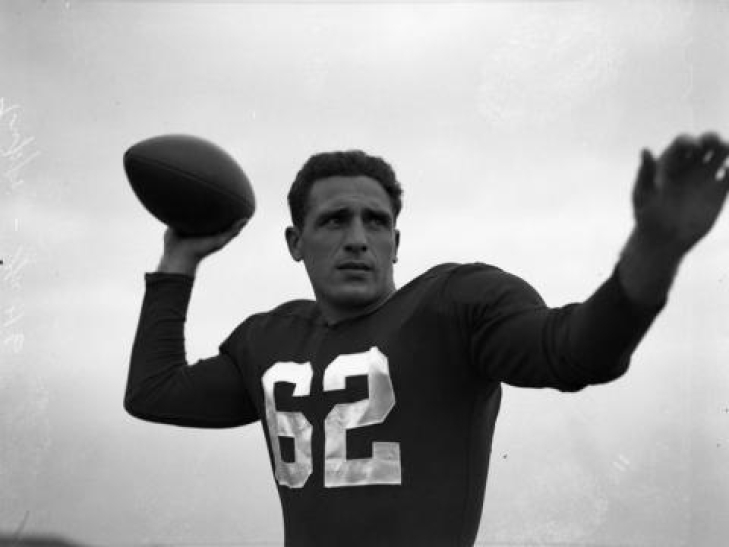
The Cardinals football team's long history can be traced back to a pivotal tug-of-war in winter 1947. Charley Trippi, a prominent college star from the University of Georgia who won the 1946 Maxwell Award and was the Heisman runner-up, became the center of a fierce bidding contest between the NFL and the rising All-America Football Conference. The AAFC’s New York Yankees thought they had secured the superstar, but Chicago Cardinals owner Charles Bidwill shifted the odds with a groundbreaking financial move. He signed the versatile rookie to a historic $100,000 four-year contract, completing a crucial piece of his championship plans.
Standing 6 feet tall and weighing 186 pounds, Trippi was a prototype for the versatile, positionless offensive weapon long before the term existed. As a runner, he had an explosive burst and elite open-field elasticity, slicing through defenses with a 5.1 yards per carry career average. His ability to execute at every skill position made him a tactical nightmare — a lethal passer on halfback options, a skilled route runner with soft hands, and a rugged blocker. When needed, his leg produced a 40.3-yard punting average, and later in his career, he flipped jerseys to become an elite, hard-hitting defensive back.
His arrival in 1947 sparked a legendary chapter in franchise history, as Trippi became the dynamic force behind Chicago’s renowned "Million Dollar Backfield." Playing alongside Paul Christman, Pat Harder, and Elmer Angsman, the rookie halfback immediately led the Cardinals to a remarkable 1947 NFL Championship. Trippi cemented his Chicago legacy with a stellar performance in the icy 1947 Title Game against the Philadelphia Eagles. Wearing basketball shoes to maneuver the icy Comiskey Park turf, he gained 206 all-purpose yards, scoring on a stunning 44-yard touchdown run and a historic 75-yard punt return, contributing to a 28-21 victory. His 206 yards and two long touchdowns in the extreme cold remain among the most clutch individual feats in NFL title game history.
He sustained that dizzying peak into the 1948 campaign, guiding the Cardinals back to the championship game while putting together a masterpiece of individual efficiency. Trippi dominated the league, leading the NFL with 1,485 all-purpose yards and a league-best 5.4 yards per carry, earning consensus first-team All-Pro honors. He replicated that dominance in 1949, again pacing the entire National Football League with 1,552 all-purpose yards while remaining the most feared kick and punt returner in the game.
As the franchise moved into the 1950s, Trippi's exceptional versatility became a crucial support for the coaching staff. During the 1951 and 1952 seasons, he almost entirely played quarterback, leading the offense from under center and earning Pro Bowl honors in 1952 and 1953. Demonstrating total disregard for personal stats or safety, he shifted to the defensive side for his last two seasons in 1954 and 1955, intercepting passes and chasing down opponents with the same fierce determination he showed on offense.
The arduous gridiron marathon culminated in a disappointing end during the 1955 season when a hard pre-season hit resulted in a fractured skull, leading to his retirement after 99 regular-season games. Trippi left Chicago with a legendary stats record, totaling 3,506 rushing yards, 1,321 receiving yards, 2,547 passing yards, and 37 touchdowns, along with 2,321 return yards. At his retirement moment, his remarkable versatility had set the record for the most total offense yards by a single player in NFL history.
Trippi was named to the NFL 1940s All-Decade Team, and his connection to the sport's elite was finalized in 1968 when he was inducted into the Pro Football Hall of Fame. In 2006, he was inducted into the Arizona Cardinals Ring of Honor as a founding member.
328. Gaynell Tinsley
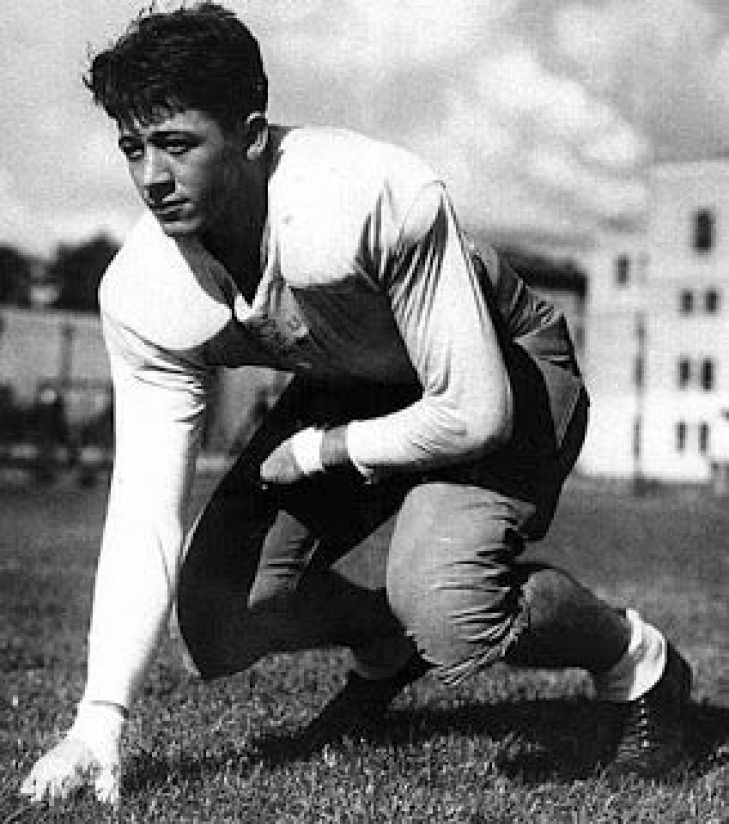
There are only three seasons to draw from in the professional career of Gaynell Tinsley, but it was deemed good enough to get him an All-Decade Selection for the 1930s.
308. Buster Ramsey
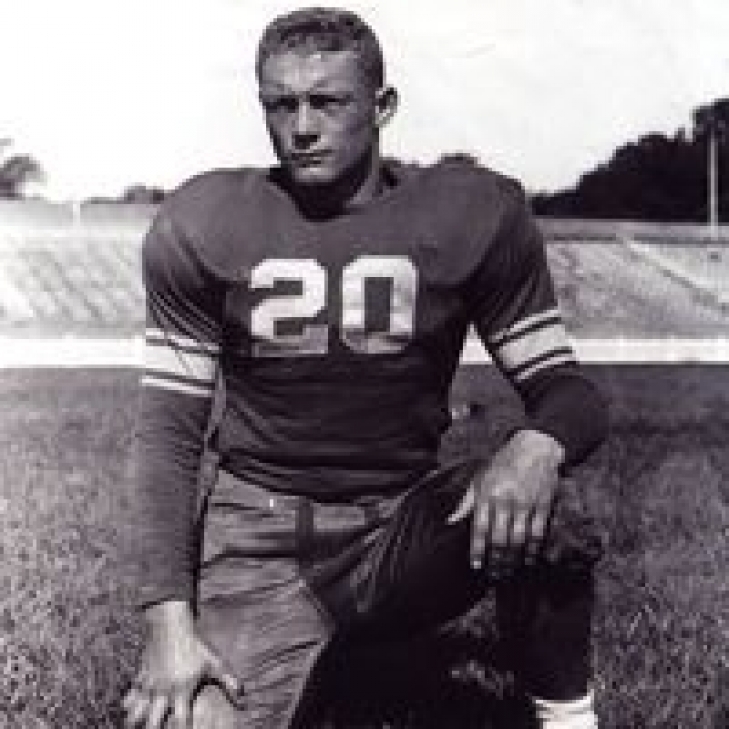
Drafted in 1943 in the 14th Round from William & Mary, Buster Ramsey would not join the NFL until 1946 (due to World War II). He played all six seasons in the league with the Chicago Cardinals (the team that drafted him), and in 1947 he helped them win the NFL Championship. He was named an All-Pro from 1947 to 1950 (two First Teams and two Second Teams), and the two-way Guard was also honored as a 1940's All-Decade Selection.
67. Pat Harder
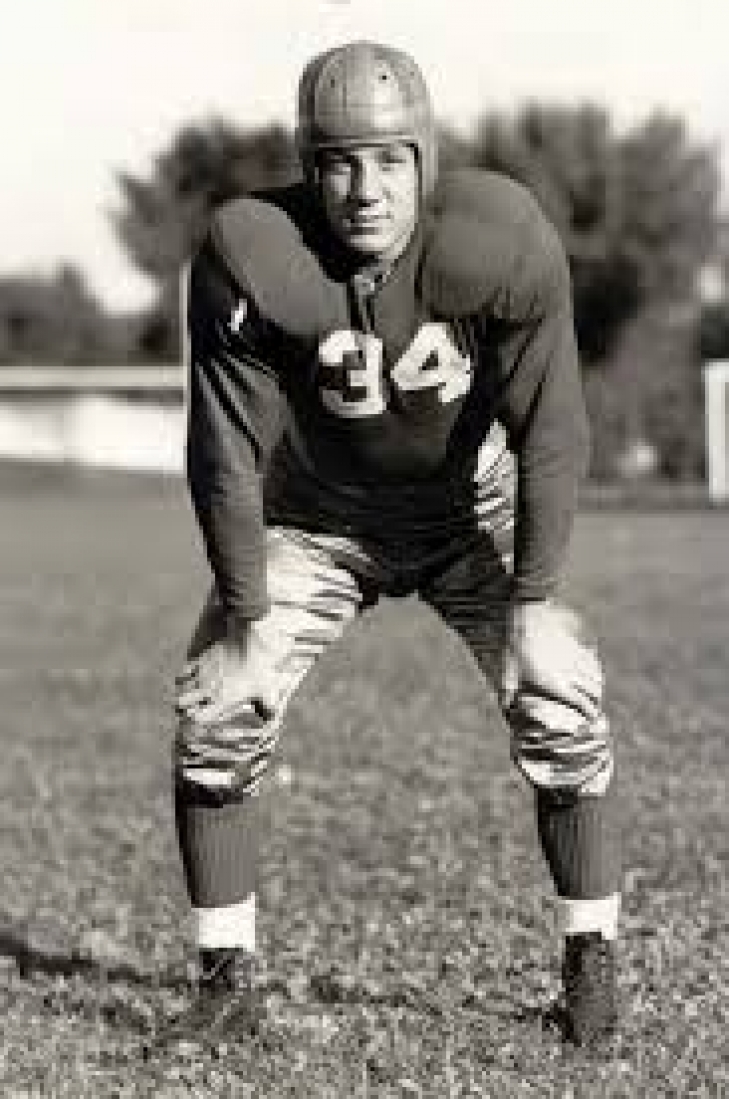
The 1944 2nd Overall Draft Pick from the University of Wisconsin, Pat Harder, lived up to the hype. He helped the Chicago Cardinals win the 1947 NFL Championship and earned First Team All-Pro honors for three consecutive years.
Playing at fullback and also serving as the Cardinals’ placekicker, Harder became the first player in NFL history to exceed 100 points in three straight years (1947-49). Blessed with power and speed, Harder had soft receiving hands and accumulated 3,880 yards from scrimmage over eight seasons, a decent number for his time. UPI named Harder MVP in 1948, and his overall accomplishments earned him a spot on the 1940s All-Decade Team.
Harder's success continued into the 1950s, as he went to the Pro Bowl in 1950. He then joined the Detroit Lions for his final three years, where he helped them win the NFL Championship in both 1952 and 1953 and was a Pro Bowler in the first of those two years.
86. Marshall Goldberg
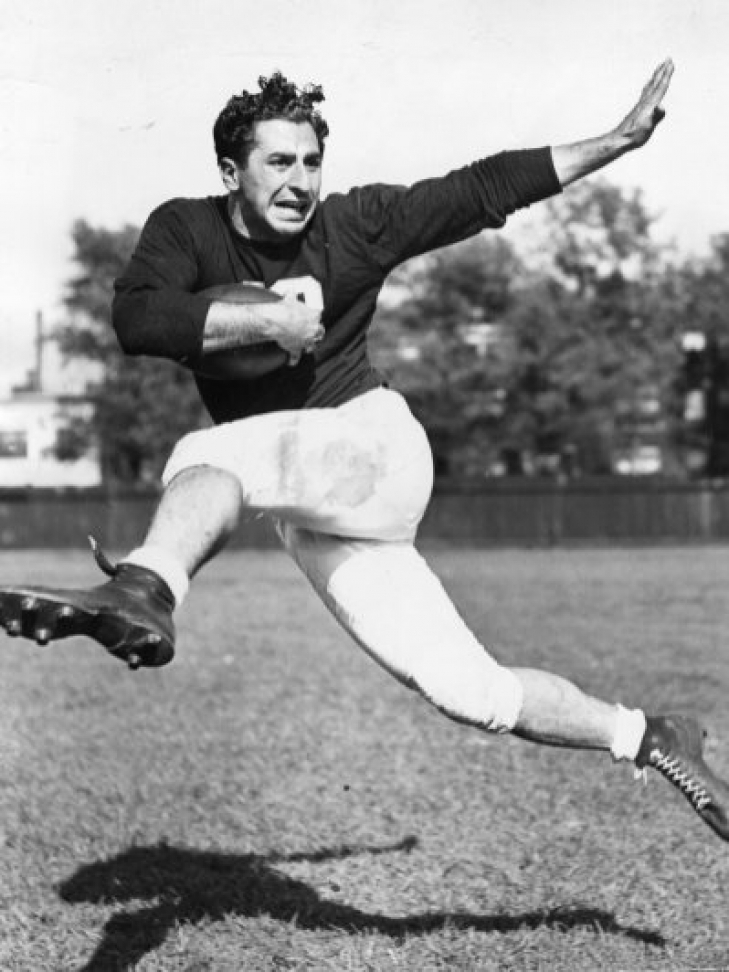
Marshall Goldberg was a major star at the University of Pittsburgh, and he would ply his trade well for the Chicago Cardinals. Goldberg did it all in the early 1940s, especially in the 1941 season, when he rushed for 427 Yards, received passes for 313 yards, and was the top finisher in Kick Return Yards (290), earning him the league lead in All-Purpose Yards (1,236) and a Pro Bowl Selection. He would finish fifth in All-Purpose Yards in 1942.
Like many NFL players, he served his country in World War II, and when he came back, he rejoined Chicago and helped them win the NFL Championship in 1947. Historically speaking, Goldberg was one of the first Jewish stars of the NFL.
