
270. Ed Danowski
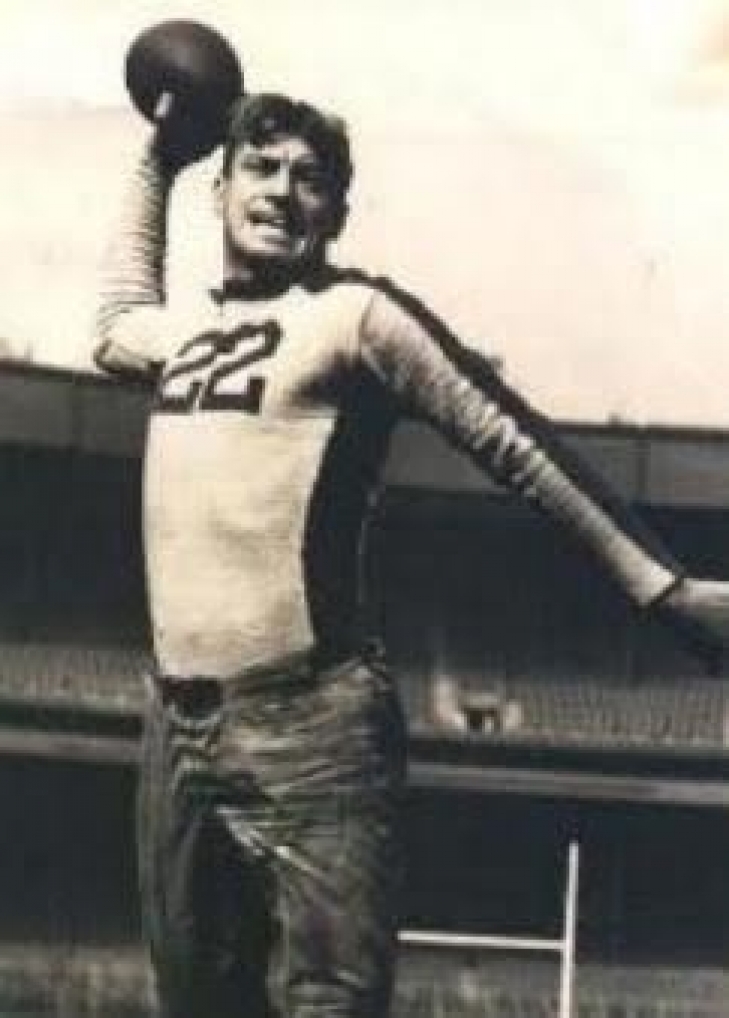
Ed Danowski would join the New York Giants after a successful college career at Fordham, and it was in New York where he would play his entire professional career. Danowski was a top Back in the last half of the 1930s, and he would earn a pair of First Team All-Pro Selections in 1935 and 1938. He was the primary Back for Danowski's NFL Championship wins in 1934 and 1938, and he would twice lead the league in Completion Percentage (1937 & 1938).
285. Ray Wietecha
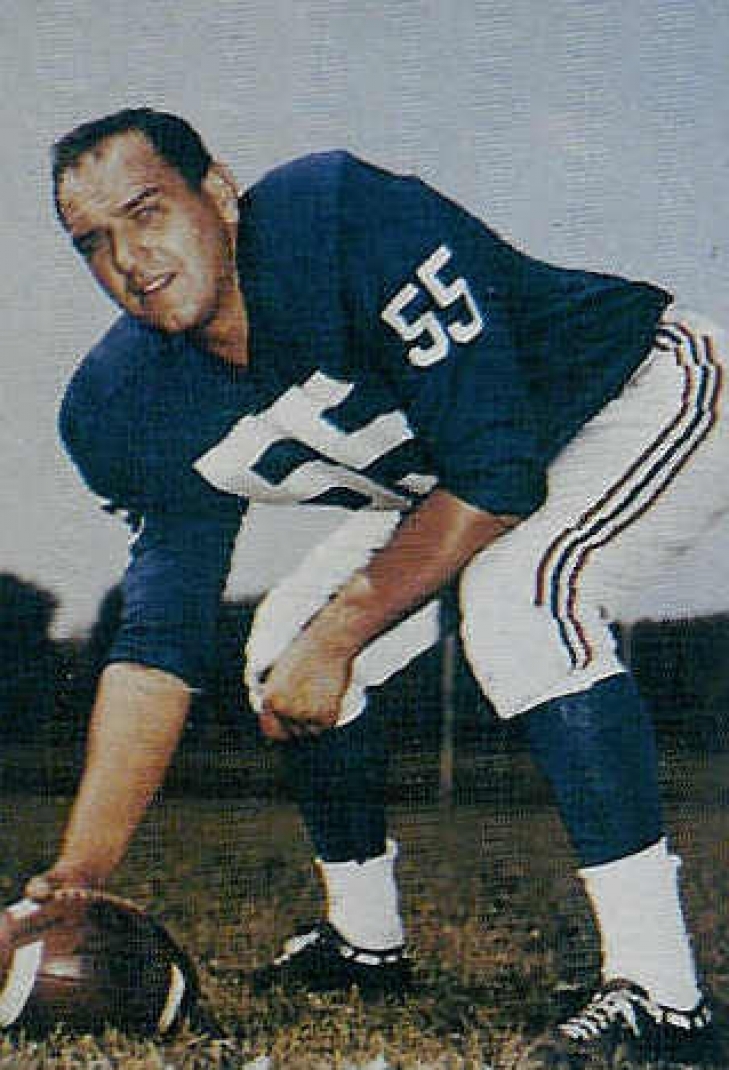
Ray Wietecha played his entire 10-year NFL career with the New York Giants, where he was the literal centerpiece (he played Center) of a robust Offensive Line. Helping the G-Men to an NFL Championship in 1956, Wietecha would have better individual seasons after going to four Pro Bowls and earning a First Team All-Pro nod. In his last season (1962), he was named a Second Team All-Pro and arguably could have continued his playing career, but he elected to become a coach instead.
241. Carl Banks
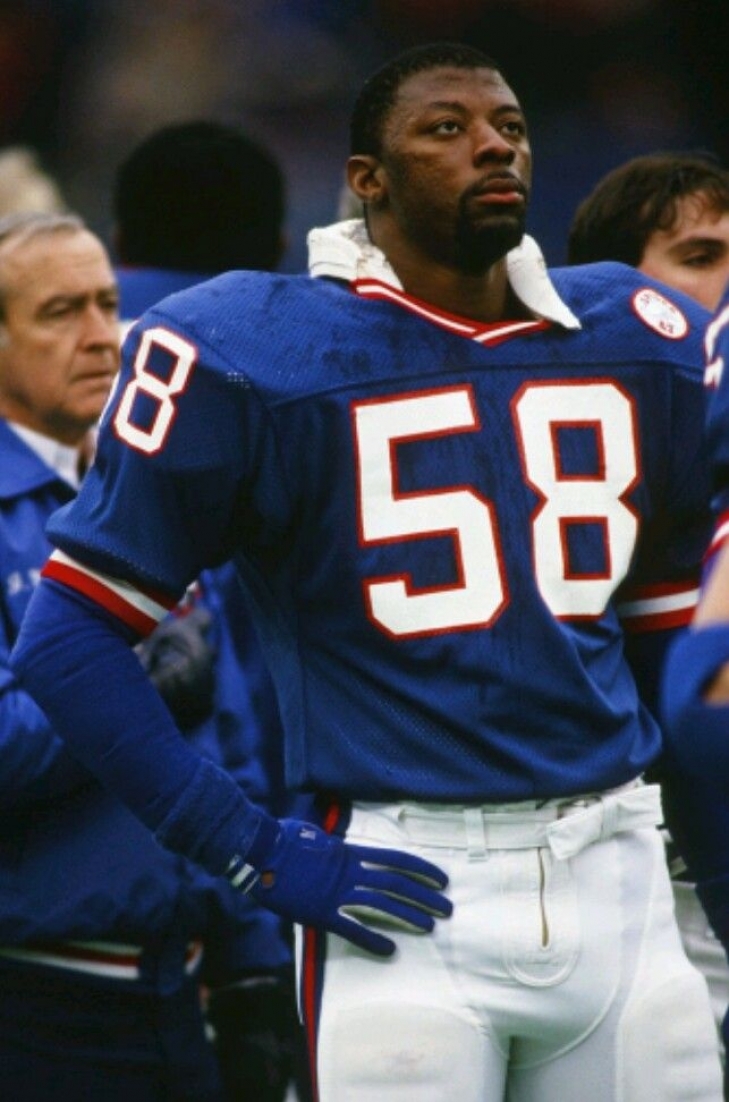
Drafted 3rd Overall in 1984 from Michigan State, the New York Giants would have a longtime fixture in their Linebacking corps in Carl Banks. Banks was an All-Rookie Selection, and he later earned Pro Bowl honors and First Team All-Pro honors in 1987, the year after he played a major role in their Super Bowl XXI win. Banks would again hoist the Lombardi Trophy high four years later in Super Bowl XXV.
Banks may have been only chosen for one Pro Bowl, but he was easily in contention for many others. A master at closing in on Tight Ends and eliminating them from plays, he was named to the 1980s All-Decade Second Team. Banks finished his career with Washington and later the Cleveland Browns.
272. Jessie Armstead

Jessie Armstead played for the University of Miami, where the Linebacker was a key force in the Hurricanes’ NCAA Championships in 1989 and 1991. A torn ACL saw Armstead tumble in the 1993 Draft, but the New York Giants took him in the 8th Round, and a couple of years later, he was a starter for the G-Men.
From 1997 to 2001, Armstead was a Pro Bowl Selection and one of the leaders of the Giants’ defense. He was named a First Team All-Pro in 1997, and in the first year tackles for Loss were recorded (1999), he led the NFL. Armstead played his final two seasons with the Washington Redskins.
215. Sean Landeta
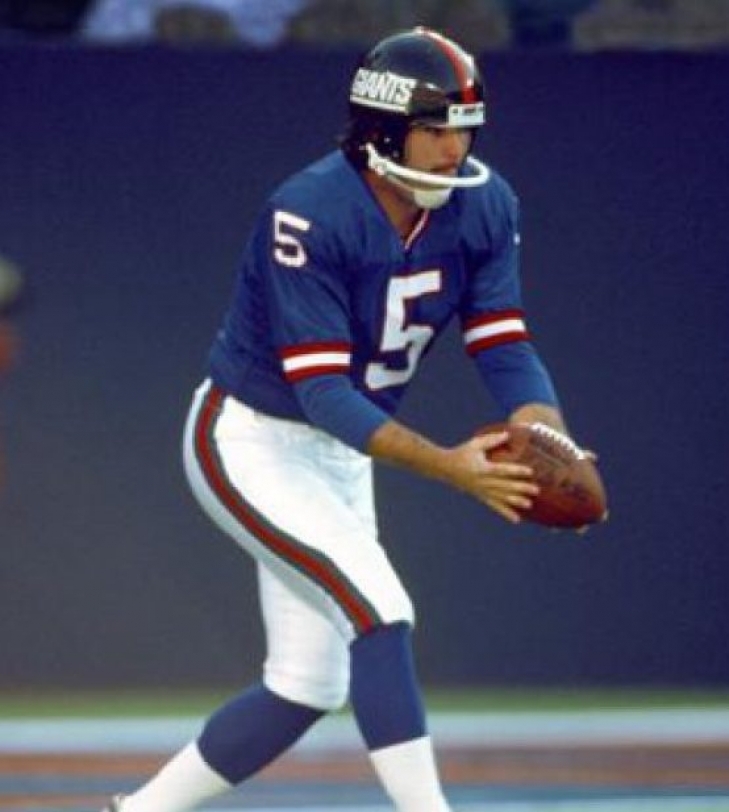
One of the longest-tenured players in NFL history (22 seasons), his NFL career began after going undrafted in 1983 and playing all three seasons of the USFL. Landeta was selected for the All-USFL Team, and he joined the New York Giants in 1985, where he won two Super Bowls and earned two Pro Bowl selections and three First Team All-Pro selections. After the Giants, he played for the Los Angeles Rams, Tampa Bay Buccaneers, Green Bay Packers, and Philadelphia Eagles, and is one of the few players named to two All-Decade Teams (80s & 90s).
262. Len Younce
196. Jim Katcavage
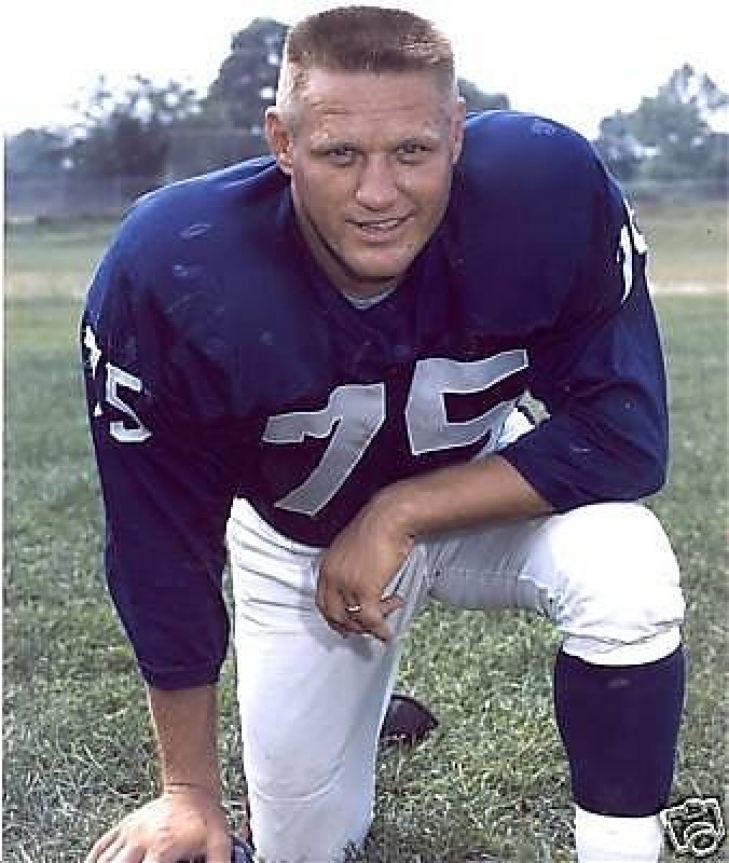
With an (unofficial) total of 96.5 Quarterback Sacks, Jim Katcavage would play his entire pro career with the New York Giants after a nice career at the University of Dayton.
303. Frank Cope
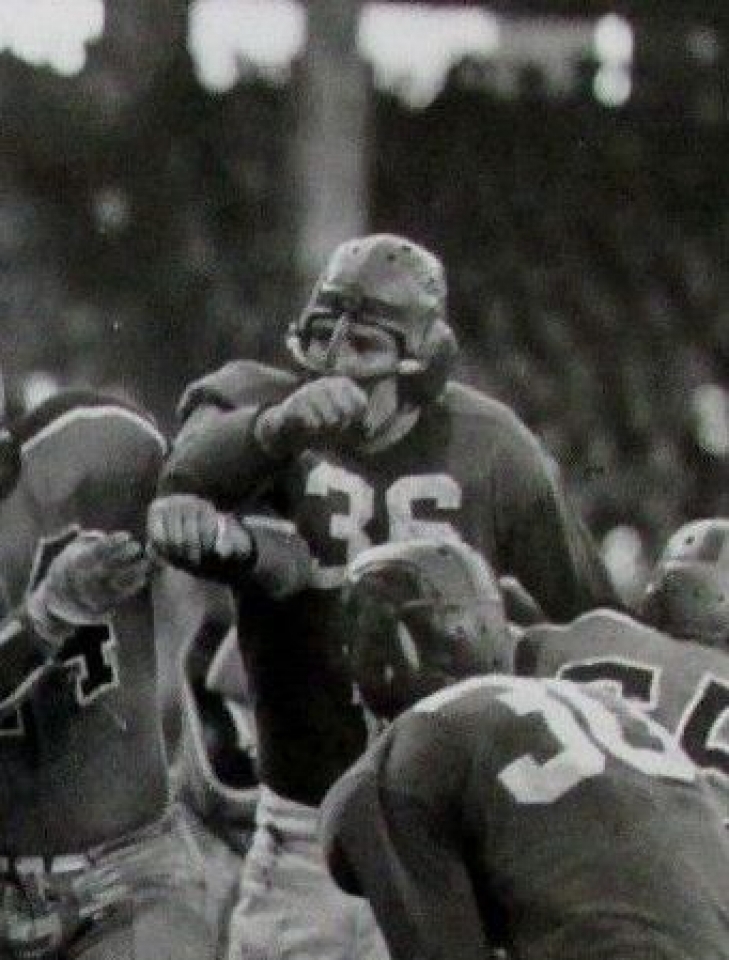
Frank Cope was a member of the 1930's All-Decade Team, although most of his career took place in the 1940s.
266. Kyle Rote
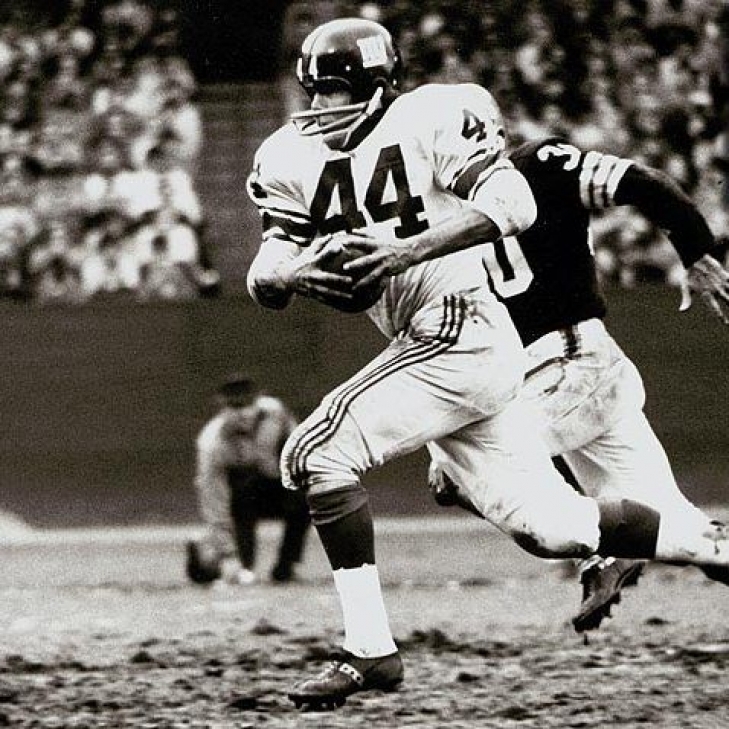
Out of SMU, Kyle Rote was the first overall Draft Pick in 1951, and the New York Giants had high hopes for their new Back. Rote got off to a good start, but knee issues forced him to switch to End, where he became the Giants' top receiver in the 1950s. This is a statement that means a lot, as in the last half of the decade, New York was a perennial contender for the NFL Championship, winning it all in 1956. Rote became a four-time Pro Bowler and would catch 300 passes for 4,797 Yards and 48 Touchdowns and added another 871 Yards on the ground.
114. Erich Barnes
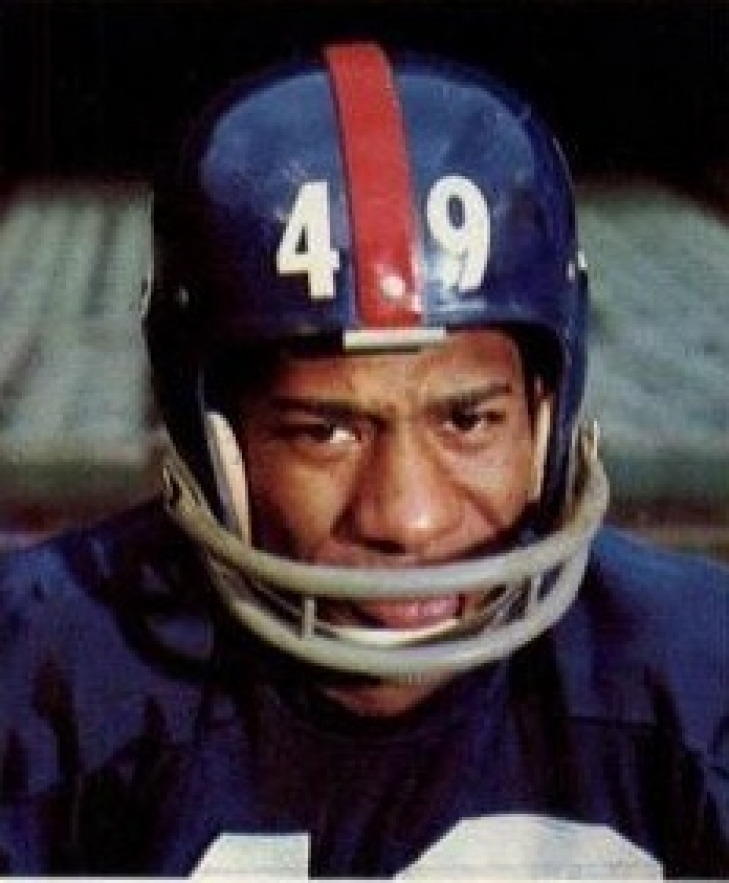
Erich Barnes came out of Purdue when the Chicago Bears drafted him in 1958. The Cornerback played there for three seasons and went to the Pro Bowl in 1959. After that, Barnes had the best run of his career: he played for the New York Giants for four years, earned Pro Bowl selections each year, and made First Team All-Pro in 1961. Barnes would later earn his sixth Pro Bowl with the Cleveland Browns. Barnes was known for his physical style of play and his ability to come back for run defense.
Overall, he would have 45 Interceptions in his career.
77. Rosey Grier
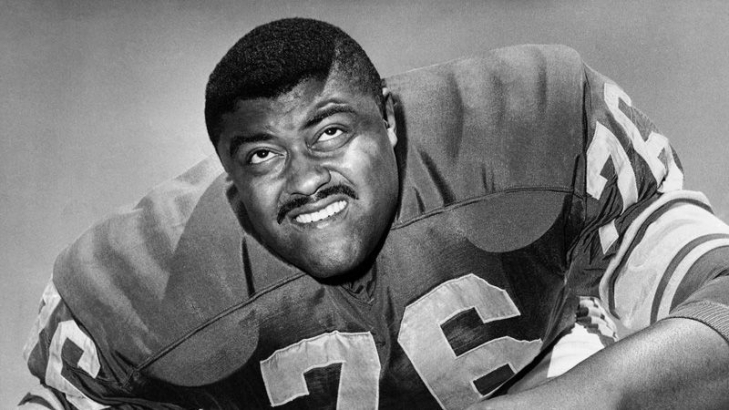
While Rosey Grier was better known for being one of the inaugural members of the Los Angeles Rams' "Fearsome Foursome," the defensive stalwart was a better player in the first two-thirds of his professional career when he was with the New York Giants. Grier helped the New York Giants win the 1956 NFL Championship, and he was named to two Pro Bowls (1956 and 1960) as a Giant. He would also be selected as a First Team All-Pro in 1956 and was a two-time Second Team All-Pro.
Grier started all 141 games he played in the NFL and recorded over 40 (unofficial) Sacks.
Grier would become a more prominent name after his professional career was over as he served as a bodyguard for Robert F. Kennedy and helped to disable his assassin, Sirhan Sirhan. He would also make many television appearances and had his own talk show in Los Angeles. This man was a giant, figuratively and literally, everywhere he went!
12. Del Shofner
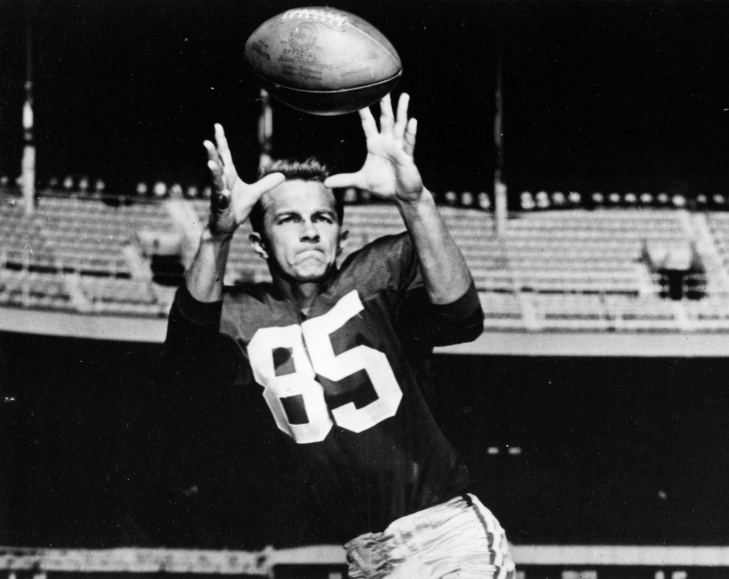
Del Shofner was a remarkable receiver and a member of the 1960s All-Decade Team. He earned this status through outstanding play from 1958 to 1963, during which he was named a First Team All-Pro and Pro Bowl selection in every year except 1960.
During his time with the Los Angeles Rams, Shofner topped the NFL in Receiving Yards in 1958 with 1,097, and finished second in the following year with 936. In 1960, he was relegated more to punting duties, but after joining the New York Giants, he regained his place as an elite receiver. In his first three years with the Giants, Shofner had at least 1,100 Receiving Yards and finished in the top four in that metric. Although he never had a stretch close to that again, his reputation as one of the top offensive skill players and deep ball threats of his era earns him a high spot on this list.
Interview with Jarrod Bunch: Former New York Giant and current actor.
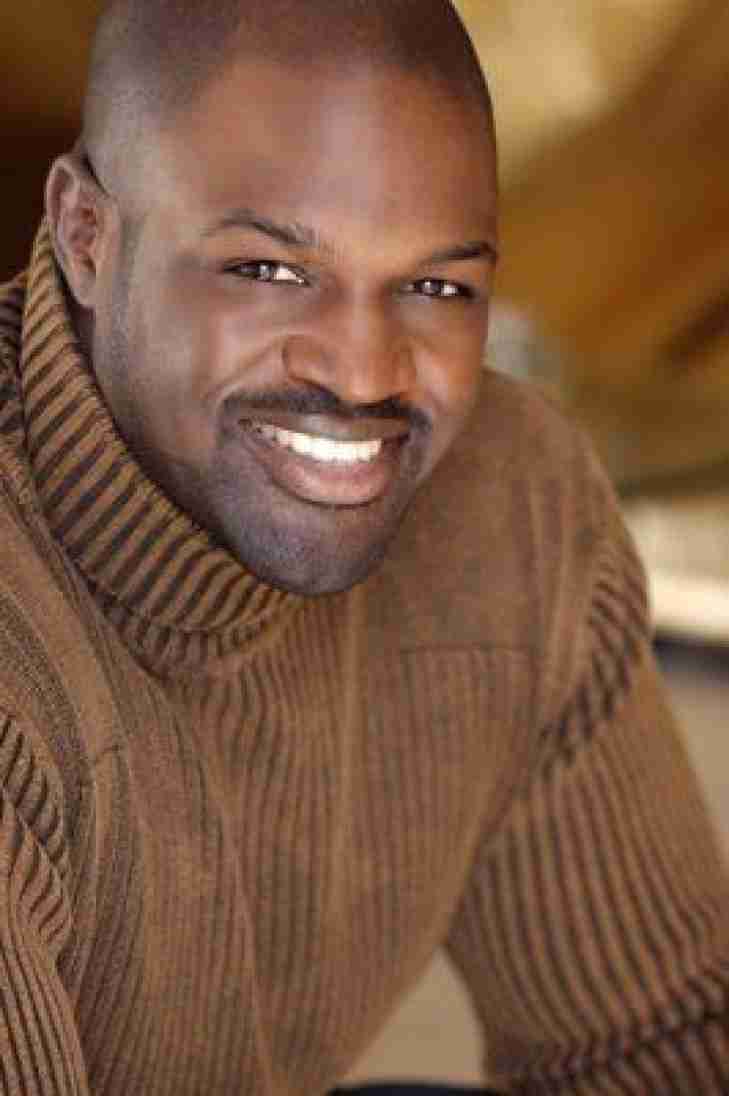
Considering how Jarrod Bunch has been defying stereotypes for decades, I shouldn’t have been surprised.
Jarrod Bunch had a dream to play football for a storied Division One school and make the National Football League, and he did, playing Fullback for the University of Michigan and becoming a first round draft pick of the New York Giants. That in itself is impressive, and makes him the envy of most armchair warriors, but if you have read other interviews that I have conducted there is far more to Bunch than what he accomplished on the gridiron.
Justin Tuck Retires
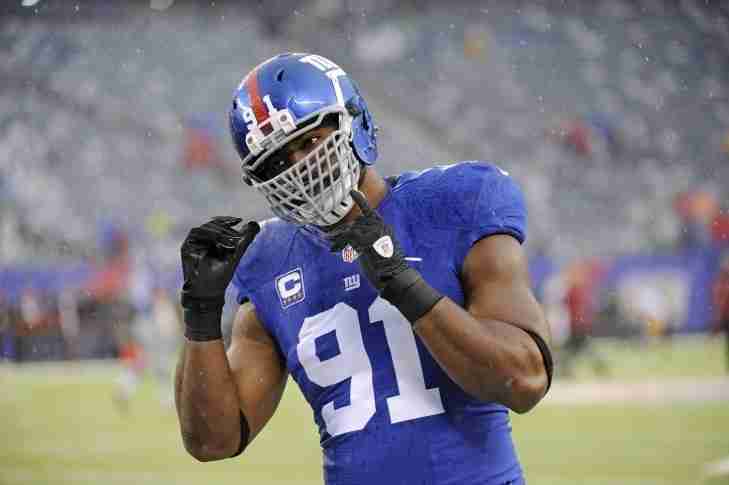
Tuck was drafted in the third round by the New York Giants out of Notre Dame in 2005 and was a large part of the Giants Super Bowl wins in XLII and XLVI. Tuck was a Pro Bowl selection in 2008 and 2010 and holds the distinction of being the only player to record multiple Quarterback Sacks in multiple Super Bowls.
Tuck would sign with the Oakland Raiders in 2014, but would be forced to sit out 2015 due to injury. He retires with 66.5 Quarterback Sacks, 510 Tackles and 22 Forced Fumbles.
While he is not likely to earn a place in Canton, he has solidified a strong place in the history of the New York Giants.
We here at Notinhalloffame.com would like to wish Justin Tuck the best in the next stage of his life and thank him for the memories on the field!
48. Larry Doyle
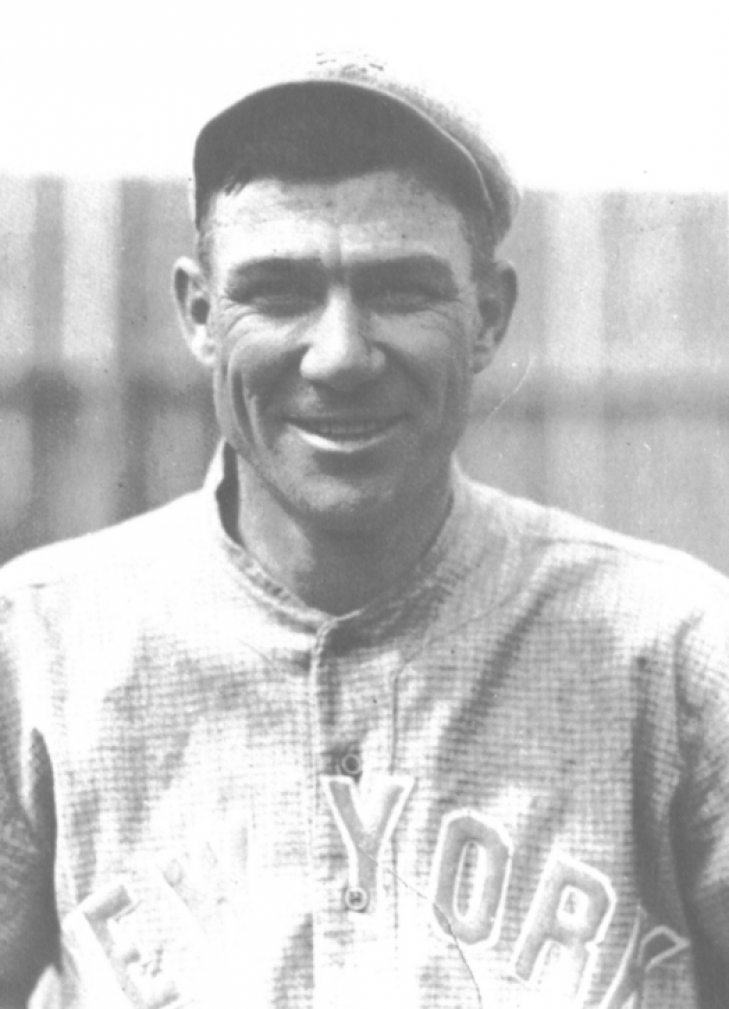
Another forgotten star in the pre-Babe Ruth era was Larry Doyle, who was easily amongst the most likable players of his era. Not only was he a natural favorite, but he was also one of the most consistent players.
Larry Doyle was above average in almost every category and put together a monster 1912 campaign, during which he won the 1911 MVP. Although he had many very good seasons, his three World Series appearances were less than stellar, and he failed to lead his team to any championship. Had he kept to the standards he set from April to September, it could be imagined that Larry Doyle would have been a serious Hall of Fame candidate, as opposed to the remote possibility he is today. He famously quipped that it “was good to be young and a Giant.” It would have been better to be labeled as immortal.
Should Larry Doyle be in the Hall of Fame?
66. George Van Haltren
One of the main staples of this website is to discuss the overlooked. We certainly are not the only ones to do this, as other websites and blogs discuss those they feel are Hall of Fame-worthy, but no matter how you slice it, it is hard to find anyone with more HOF credentials who has been completely abandoned than George Van Haltren.
A star of the last decade of the 1800’s, Van Haltren was a hitting machine who slapped away at singles like they were mosquitoes. He was constantly in the top ten in multiple Batting categories, and he was a huge asset with his glove, as he led the league three times in outfield assists. In addition, he could be called upon to pitch when needed and actually finished his career with a respectable won-loss record of 40- 31. With over 2,500 career hits and 1,600 career runs, how is it possible that he is not even on the radar?
Should George Van Haltren be in the Hall of Fame?
70. Ottis Anderson
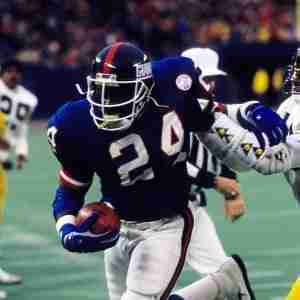
Ottis Anderson had one of the best rookie seasons ever for a Running Back, gaining over 1,600 yards on the ground. Too bad he did it for a bad St. Louis Cardinals team that was barely on the National radar.
Anderson would prove he was not a one-season wonder. Although he never again matched those rookie numbers, he still posted decent numbers and was the highlight of a poor Cardinals team. As it does in football, injuries piled up, and he lost his explosiveness. Anderson was, however, reinvented as a short-yardage specialist by the New York Giants, and he again accumulated impressive tallies. He was a natural leader, and as he rarely fumbled, he was a strong key to the Giants’ ability to control the ball for extended periods of time. As a Giant, Ottis Anderson twice won the Super Bowl, capped with an MVP performance in Super Bowl XXV.
Although Anderson gained major exposure with the Giants, few remember that he retired in the top ten all-time in Rushing Yards. He has since fallen down that list, but he had a long, fruitful career few could match.
Should Ottis Anderson be in the Hall of Fame?
151. Tiki Barber
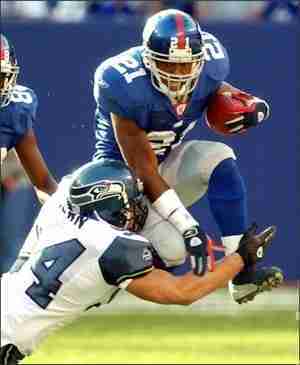
When Tiki Barber retired, many questioned the decision. Many thought he still had a lot to give on the field, despite the golden path he was given in broadcasting. The critics may have been proven right as the New York Giants won the Super Bowl the year after he left, and he was chastised for criticizing his former players. It is too bad that is what he is known for now, because during his prime he was one of the best running backs in the game.
Tiki Barber didn’t start off as a superstar. He was brought into the NFL by the Giants with the hope that he could occasionally befuddle defenses with his unique cutbacks. The man who many thought of only as a third-down back would become the workhorse of the New York Giants’ offense for years and was the only shining light on some dismal campaigns in Gotham.
Tiki was not just a star when his Giants were bad but was equally effective in their good seasons. He shocked the sporting world with his early retirement, and recent news reports suggest he may be ready to shock them again with a potential return. Had he not retired prematurely, many signs point to Tiki Barber racking up the statistics necessary to reach Canton. He may have put himself on the bubble forever because of it.
Should Tiki Barber be in the Hall of Fame?
34. Jimmy Patton
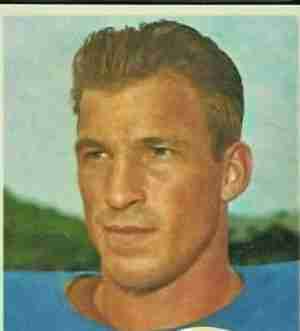
The New York Giants were a dominant force in the NFL during the late 1950s and early 1960s, with a championship win under their belt. However, the incredible contributions of one of their star players, Jimmy Patton, have largely been forgotten.
Patton's skills on the field were undeniable, and he really began to shine during the Giants' 1956 championship win. He continued to improve and impress, leading the league with 11 interceptions in 1958. This marked the first of his five consecutive First Team All-Pro selections and five Pro Bowl appearances, with Patton playing a pivotal role in the Giants' impressive six post-seasons.
Despite his impressive achievements, including a championship title, Jimmy Patton's once-illustrious football career has faded with time. Despite being a standout player with 51 career picks, he has not been inducted into the Hall of Fame, and the odds of that happening seem slim, especially given that he was never even a finalist.
Should Jim Patton be in the Hall of Fame?
101. Herschel Walker
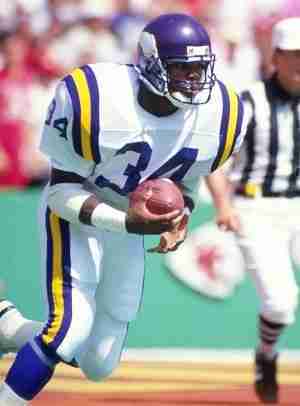
It may be called the Pro Football Hall of Fame, but for all intents and purposes, it only focuses on accomplishments from the NFL and, to a lesser extent, the AFL. This is too bad for Herschel Walker, who chalked up monster totals in his first three years of Pro Football but did so as a member of the New Jersey Generals of the upstart United States Football League.
Walker went to the Dallas Cowboys and tried to live up to the PlayStation-like numbers he put up in College and in the USFL. Walker was still very good and put up good numbers for Dallas in both receiving and running the ball. He was, however, the focal point of one of the more lopsided trades in NFL history, where the Vikings sent five players and a multitude of draft picks (three of which were Emmitt Smith, Alvin Harper, and Darren Woodson). Dallas used this to build a dynasty in the ’90s, and Minnesota coaches took their frustration out on Walker, who wasn’t used to his best ability as a Viking. Herschel was still good, but his stock dropped dramatically.
That lopsided trade hurt his legacy, but Herschel Walker should be remembered as a great Running Back who contributed in pass and kick return situations. If he were a rookie today coming out of Georgia, where there is no USFL, would he have had a shot to shatter NFL rushing records?
Sadly, we will never know.
