

38. Tommy Casanova
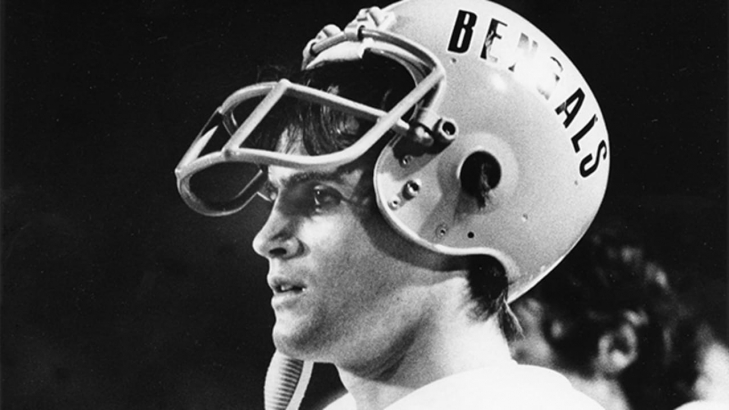
Tommy Casanova was a second-round pick from LSU who had a legendary pedigree as a three-time consensus All-American and future College Football Hall of Famer. A rare multi-dimensional athlete who played both ways in college, Casanova brought fluid range, sharp instincts, and versatility to Paul Brown’s secondary.
Casanova confidently entered the starting lineup as a rookie at free safety, instantly catching attention with five interceptions and two returned for touchdowns. His impressive play earned him his first Pro Bowl honor in 1974, after securing four interceptions and providing vital stability to the Bengals' secondary. When the coaches moved him to strong safety in 1975, his tough physical style in stopping runs flourished, all while maintaining his sharp coverage abilities.
His best individual campaign came in 1976, when he earned a second Pro Bowl selection while serving as the defensive cornerstone of a top-10 Bengals scoring defense. Casanova achieved a third Pro Bowl selection in 1977, thereby solidifying a period of dominance during which he was acknowledged as one of the premier safeties in the AFL/AFC across the middle. In addition to his responsibilities in the secondary, Casanova demonstrated his versatility as a dynamic special teams contributor, returning 90 punts for 784 yards during his tenure with the Cincinnati Bengals.
Casanova made the unexpected decision to retire at the top of his game following the 1977 season at just 27 years old to pursue an ophthalmology degree. Following his medical career, he transitioned into politics, eventually serving as a Republican state senator in the Louisiana State Senate.
During his six seasons with the Bengals (1972–1977), Casanova played 71 regular-season games (62 starts) and two postseason games, recording 17 interceptions, three defensive touchdowns, five fumble recoveries, and 784 punt return yards.
43. Louis Breeden
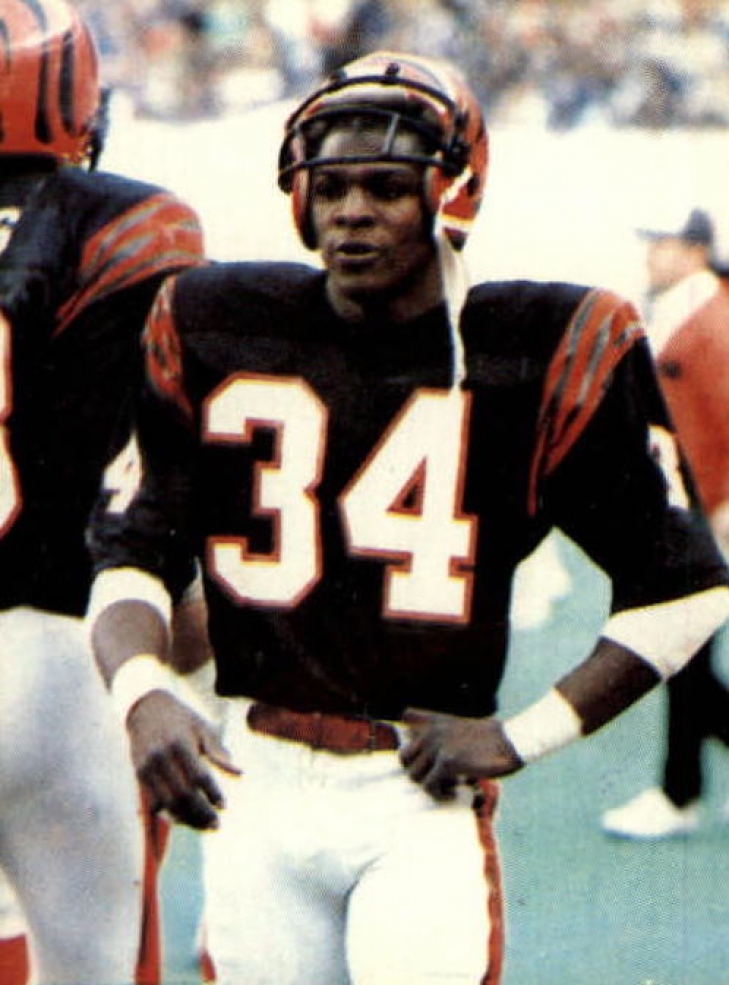
Drafted in the seventh round (187th overall) of the 1977 NFL Draft out of North Carolina Central, Louis Breeden arrived in Cincinnati as an unheralded small-school prospect whose professional journey nearly stalled before it started. After a severe injury forced him to spend his entire rookie season on injured reserve, Breeden returned with a vengeance, evolving into one of the most ball-hawking secondary anchors in franchise history.
Breeden broke through in 1978, securing the starting cornerback job and displaying rare closing speed, fluid hip transitions, and exceptional ball skills. By 1980, he was a true shutdown threat, intercepting seven passes to jumpstart a dominant multi-year run in the Bengals' secondary.
His most iconic moment came during the 1981 AFC Championship campaign: in a Week 10 clash against San Diego, Breeden intercepted a Dan Fouts pass deep in his own end zone and returned it 102 yards for a touchdown—a dramatic play that stood for decades as the longest interception return in team history.
Breeden reached the pinnacle of individual recognition in 1982, earning First-Team All-Pro honors after picking off four passes during the strike-shortened season. He remained a lockdown cornerstone on the outside through the mid-1980s, matching his career-high with another seven-interception campaign in 1986. He retired following the 1987 season, capping a decade of high-level service spent entirely in Cincinnati.
With the Bengals, he generated 33 interceptions, 135 return yards, and two defensive touchdowns, trailing only Ken Riley on the franchise's all-time interception list.
35. Eddie Brown
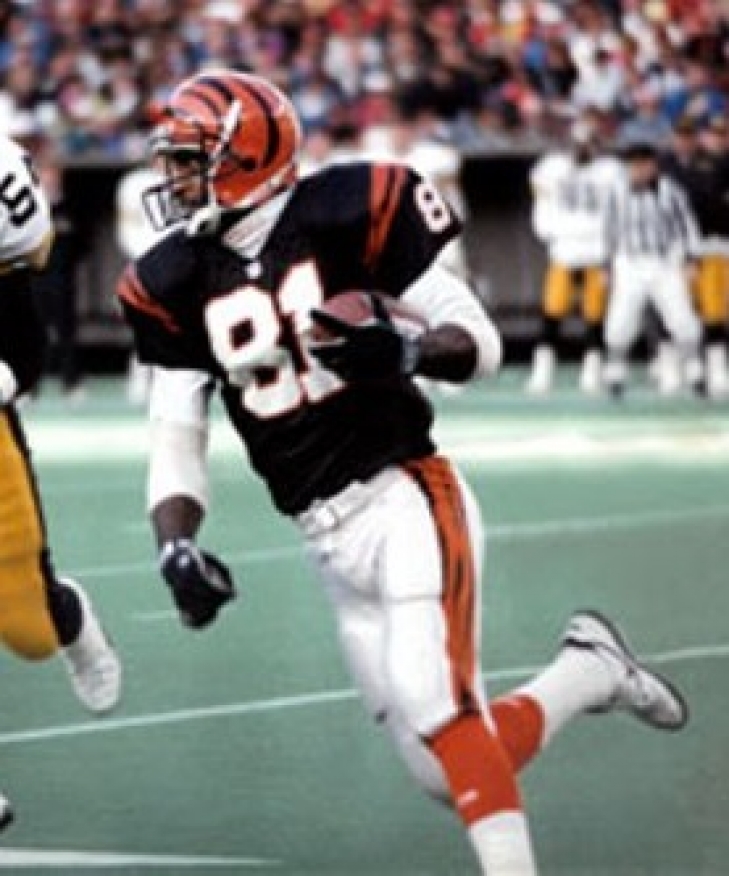
Eddie Brown proved to be worthy of Cincinnati’s 13th Overall Pick. Armed with fluid route-running, explosive top-end speed, and exceptional downfield tracking, Brown stepped in as the immediate vertical focus of the Bengals' aerial attack.
Brown made an impressive start in 1985, achieving a remarkable debut season with 53 receptions for 942 yards and eight touchdowns, earning the AP Offensive Rookie of the Year award. He demonstrated that his early success was not a coincidence as a sophomore in 1986, recording 48 receptions for 964 yards and five touchdowns. After a slight decrease in performance during the strike-shortened 1987 season, Brown delivered a career-best performance in 1988.
During that historic 1988 season, Brown established an exceptional rapport with MVP quarterback Boomer Esiason. He achieved personal bests across various metrics, securing 53 receptions for 1,273 receiving yards and nine touchdowns. His remarkable average of 24.0 yards per reception ranked second in the NFL, providing an explosive, game-changing dimension that propelled Cincinnati's high-powered offense to Super Bowl XXIII. In recognition of his outstanding performance, Brown was named to the Second-Team All-Pro and received his first career selection to the Pro Bowl.
While chronic injuries began to chip away at his longevity over the next three seasons, Brown remained a remarkably steady producer. He reached at least 700 receiving yards in each of his final three campaigns (1989–1991), serving as a reliable starter opposite Tim McGee. Injuries ultimately forced an early end to his career after seven seasons.
Overall, he generated 363 receptions, 6,134 receiving yards, and 41 touchdowns.
41. Rudi Johnson
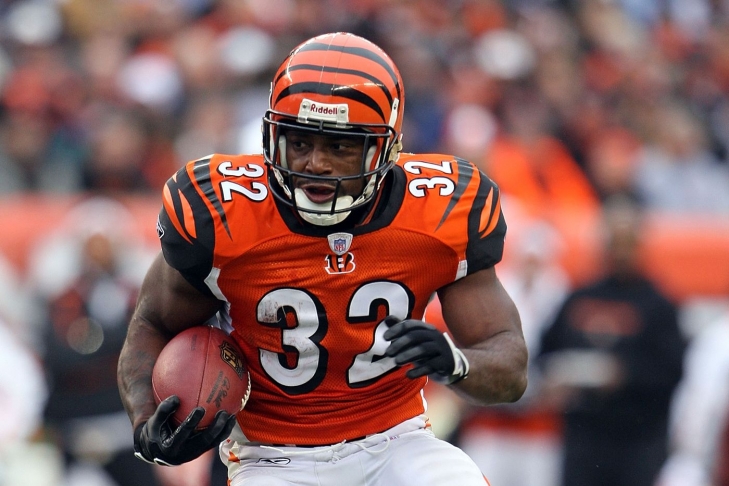
With the fourth-round pick (100th overall), the Bengals selected Rudi Johnson of Auburn. Johnson arrived in Cincinnati as an intense, physical runner. Armed with explosive lower-body power, vision through the tackles, and a punishing finish at the second level, Johnson became the primary backfield anchor during the franchise’s mid-2000s resurgence under Marvin Lewis.
Johnson spent his first two NFL seasons biding his time behind Corey Dillon, contributing primarily as a special teams returner. His opportunity arrived in 2003, when Dillon battled injuries. Johnson stepped into the feature role and seized it, rushing for 957 yards and nine touchdowns in nine starts. When Cincinnati parted ways with Dillon after the season, the backfield belonged to Rudi.
Between 2004 and 2006, Johnson established one of the most prolific multi-year periods in the history of the team by a running back. He received his sole career Pro Bowl selection in 2004, during which he set a then-franchise record with 1,454 rushing yards and 12 touchdowns. In 2005, he accumulated 1,458 rushing yards and an additional 12 touchdowns, significantly contributing to Cincinnati’s first AFC North championship and playoff appearance in fifteen years. In 2006, he achieved his third consecutive season with over 1,300 rushing yards, totaling 1,309 yards, and notably equaled his exact number of 12 rushing touchdowns for the third consecutive season.
Hamstring issues derailed his momentum in 2007, limiting him to 497 yards. Following the emergence of Chris Perry and the arrival of rookie Cedric Benson, the Bengals released Johnson prior to the 2008 season. He spent one final campaign with the Detroit Lions before retiring from the NFL.
With Cincinnati, Johnson compiled 5,742 rushing yards and 48 rushing touchdowns.
27. Domata Peko
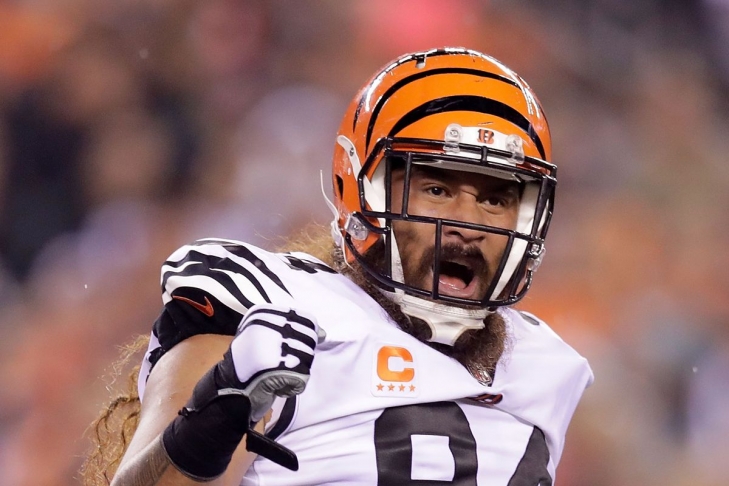
From American Samoa, Domata Peko was selected in the fourth round (123rd overall) of the 2006 NFL Draft out of Michigan State and became a beloved anchor along Cincinnati’s defensive front. Known for his flowing locks, boisterous energy, and immovable presence, Peko evolved from a rotational rookie into the heartbeat of Marvin Lewis’s defense.
After his debut season in 2006, Peko became the full-time nose tackle in 2007. Playing in the interior line, his main tasks were to absorb double-teams, clog A-gaps, and create space for linebackers like Rey Maualuga and Vontaze Burfict to make plays. Besides his primary defensive duties, Peko’s athletic ability made him popular with fans, especially on goal-line plays, where he sometimes lined up as a fullback to block for short-yardage touchdowns.
Over his decade-plus tenure in Queen City, Peko was the picture of durability. From 2007 through 2016, he started 155 of 160 regular-season games, anchoring the defense during five consecutive playoff berths (2011–2015). His finest statistical year arrived in 2015, when he logged a career-high 5.0 sacks to complement his interior run-stuffing.
Following the 2016 season, Peko signed a free-agent deal with the Denver Broncos, ending an 11-year run in Cincinnati. He totaled 517 tackles, 18.5 sacks, 34 tackles for loss, and two forced fumbles in a Cincinnati uniform.
34. Bruce Kozerski
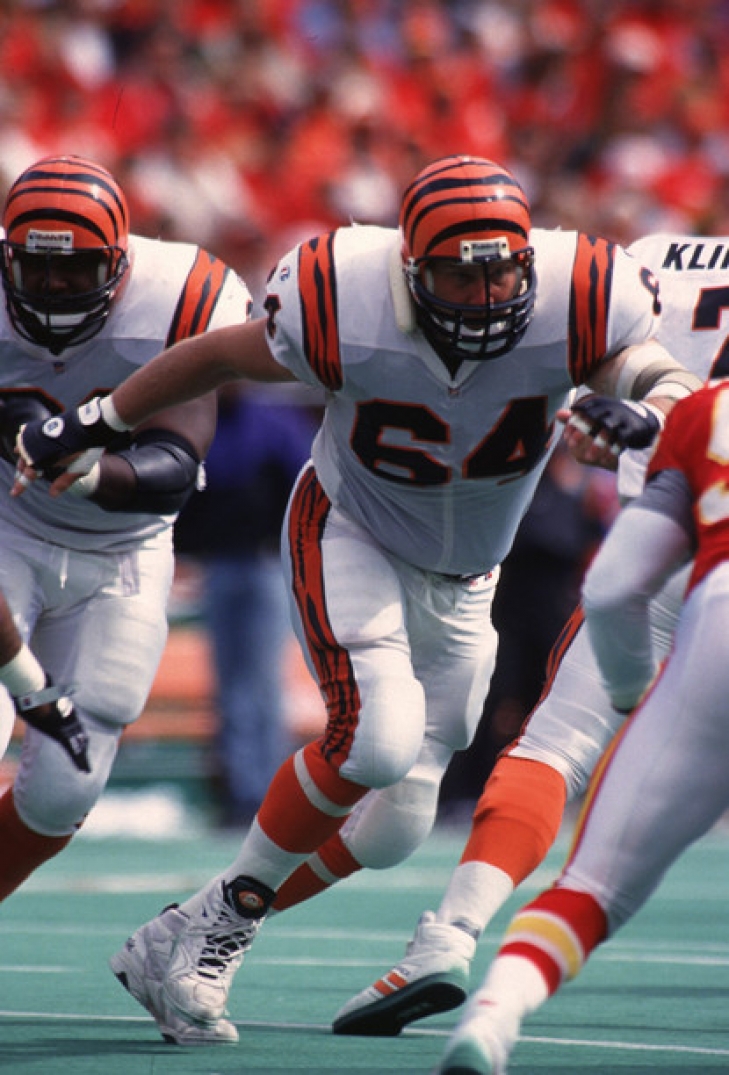
Taken in the ninth round (231st overall) of the 1984 NFL Draft out of Holy Cross, physics major Bruce Kozerski arrived in Cincinnati as a deep-draft longshot. He spent his entire 12-year NFL career with the Bengals (1984–1995), earning the moniker "Mr. Versatile" for his rare ability to start at every position on the offensive line.
Kozerski, standing 6 feet 4 inches and weighing 287 pounds, was known for his exceptional footwork, football IQ, and physical power. Initially serving as a key reserve on the interior line in his first two seasons, he became a full-time starter at guard and center in 1986. His role as a crucial linchpin was marked during Cincinnati's 1988 AFC Championship run, where he started all 16 games at center, snapping to Boomer Esiason and creating openings for Ickey Woods and James Brooks, leading up to Super Bowl XXIII.
Kozerski's legendary status in Queen City stemmed from his exceptional versatility in position flex. Over more than ten years, he regularly stepped into crucial roles at center, left guard, right guard, and right tackle. From 1988 to 1990, he earned Pro Bowl alternate honors three years in a row. Demonstrating his adaptability late in his career, in 1994, he transitioned fully to right tackle, starting all 16 games.
Kozerski remained a steadying veteran presence for the franchise through 1995, finishing his career as one of the longest-tenured interior linemen in franchise history before retiring to enter the teaching and coaching ranks in Greater Cincinnati. Kozerski appeared in 172 regular-season games (137 starts) and five postseason contests.
30. Jim Breech
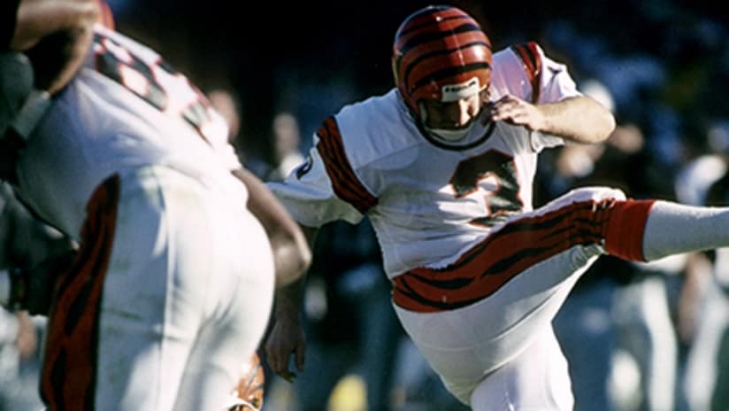
One of the few place kickers drafted (8th round in 1979 from the University of California), Jim Breech had his early NFL journey altered when the Oakland Raiders released him in favor of Chris Bahr. The Cincinnati Bengals seized the opportunity, claiming Breech off waivers in 1980 and securing a steady, clutch-kicking presence who would anchor their special teams unit for the next 13 seasons.
Breech, known for being compact and ice-cold under pressure, proved to be the ultimate cold-weather specialist at Riverfront Stadium. His quick-strike style and talent for performing in high-pressure moments made him a key figure during the franchise’s most successful period. Breech was one of the few players to contribute significantly to both Bengals Super Bowl teams in 1981 and 1988.
His postseason clutch ability is legendary: Breech was perfect with a 9-for-9 record on field goal attempts over nine playoff games, including making all four attempts in Super Bowl XVI and Super Bowl XXIII. Notably, his 40-yard field goal late in Super Bowl XXIII put Cincinnati ahead 16–13 with just over three minutes left. He also set an NFL record by winning nine overtime games with walk-off field goals, never missing in any extra period.
Breech achieved high-volume efficiency during the 1980s, ranking in the top ten for field goal percentage and total points five times. In 1988, he led the NFL with 53 extra points, contributing to the league's highest-scoring offense and reaching the AFC Championship.
He was Cincinnati’s full-time placekicker until 1992, then retired. Breech played 181 regular-season and nine postseason games, making 225 field goals and 349 extra points for 1,151 points, still a franchise record.
29. Eddie Edwards
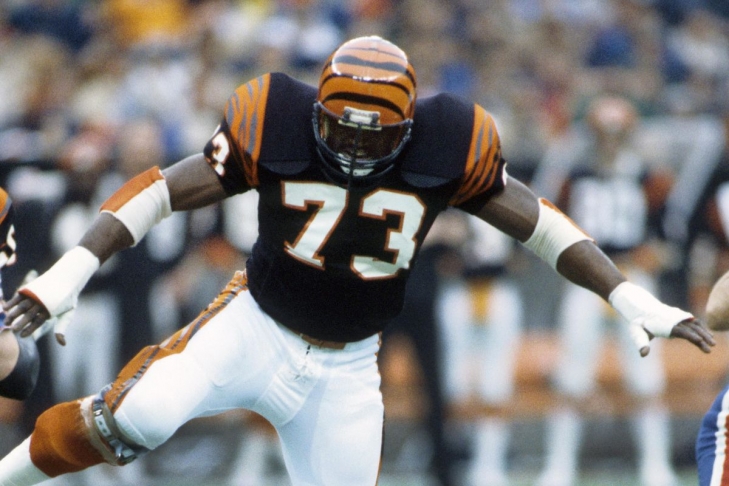
With the third overall pick in 1977, the Bengals selected Eddie Edwards, who arrived in Cincinnati from Miami with a reputation as an unstoppable force along the line of scrimmage. A consensus All-American for the Hurricanes, Edwards gave Forrest Gregg and Bill Walsh an immediate, high-octane anchor to jumpstart the Bengals' defense.
Edwards hit the ground running as an interior force. Lined up at defensive tackle for his first three seasons (1977–1979), his initial burst and heavy hands allowed him to shed guards instantly, earning PFWA All-Rookie honors in 1977.
By 1980, the coaching staff slid him out to defensive end, a move that unlocked his full capability as an edge rusher. Edwards utilized long arms, relentless pursuit, and a sudden change-of-direction stick to terrorize opposing tackles.
His peak arrived in 1983, when he exploded for a career-high 13.0 official sacks. Edwards served as a cornerstone defender during the most iconic era of early Bengals football, starting in Super Bowl XVI in 1981 and anchoring the defensive front through Cincinnati's run to Super Bowl XXIII in 1988.
Because the NFL did not make sacks an official statistic until 1982, his official tally stands at 47.5. However, film study and the work of Pro Football Reference confirm he actually brought down opposing quarterbacks 83.5 times during his tenure, a shadow franchise mark that leads all pass rushers in Cincinnati history.
28. Jim LeClair
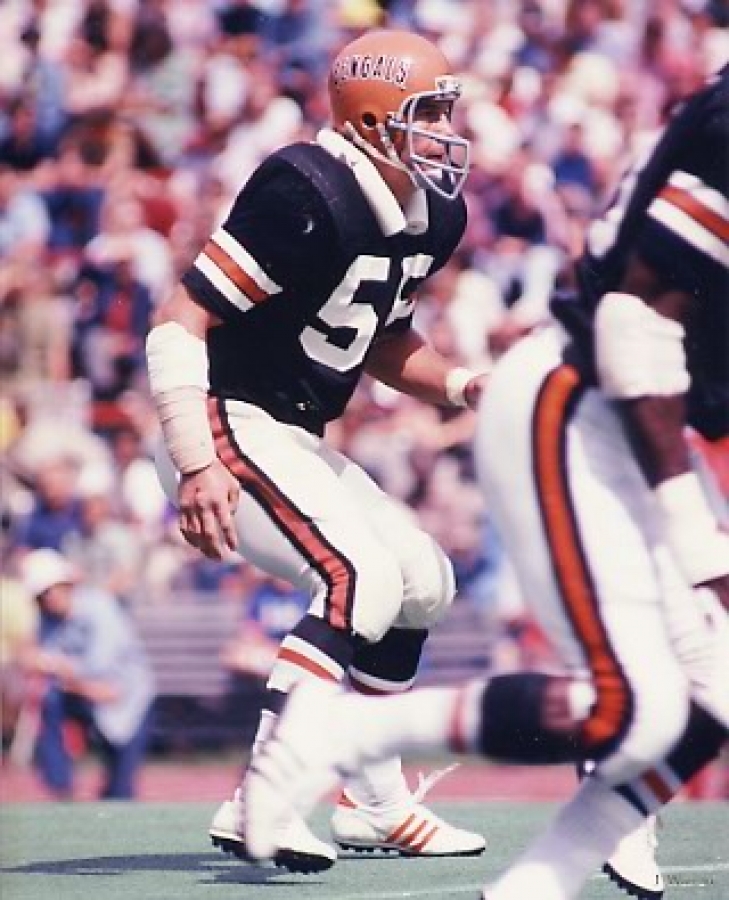
An eventual College Football Hall of Fame inductee from the University of North Dakota, Jim LeClair came to the Bengals in the 1972 Draft (3rd round, 54th overall) and spent 12 seasons with the Bengals (1972–1983). LeClair transformed from a special teams reserve into the hard-nosed, instinctive heart of Cincinnati's linebacker corps.
LeClair possessed ideal size, sideline-to-sideline pursuit range, and elite diagnosing ability. After serving as a backup for his first three seasons, he took over as the starting middle linebacker in 1975, instantly sharpening the interior of Paul Brown’s defense.
LeClair’s finest individual campaign came in 1976, when his tackling prowess and central leadership earned him his first career Pro Bowl selection. As the defense shifted front structures heading into the 1980s, LeClair seamlessly transitioned to left inside linebacker in Forest Gregg’s 3-4 scheme. His consistent play and tackling volume anchored the front seven during Cincinnati’s historic 1981 AFC Championship campaign, culminating in a Super Bowl XVI starting appearance.
LeClair remained a vital starter through the strike-shortened 1982 season and the 1983 campaign. Prior to the 1984 season, he departed Cincinnati to sign with Donald Trump's New Jersey Generals in the USFL, playing two final professional seasons alongside Herschel Walker before retiring.
Over his career in Cincinnati, LeClair generated 10 interceptions, 10 fumble recoveries, and 7.5 official sacks while consistently leading the defense in unofficial tackle totals.
24. Bob Johnson
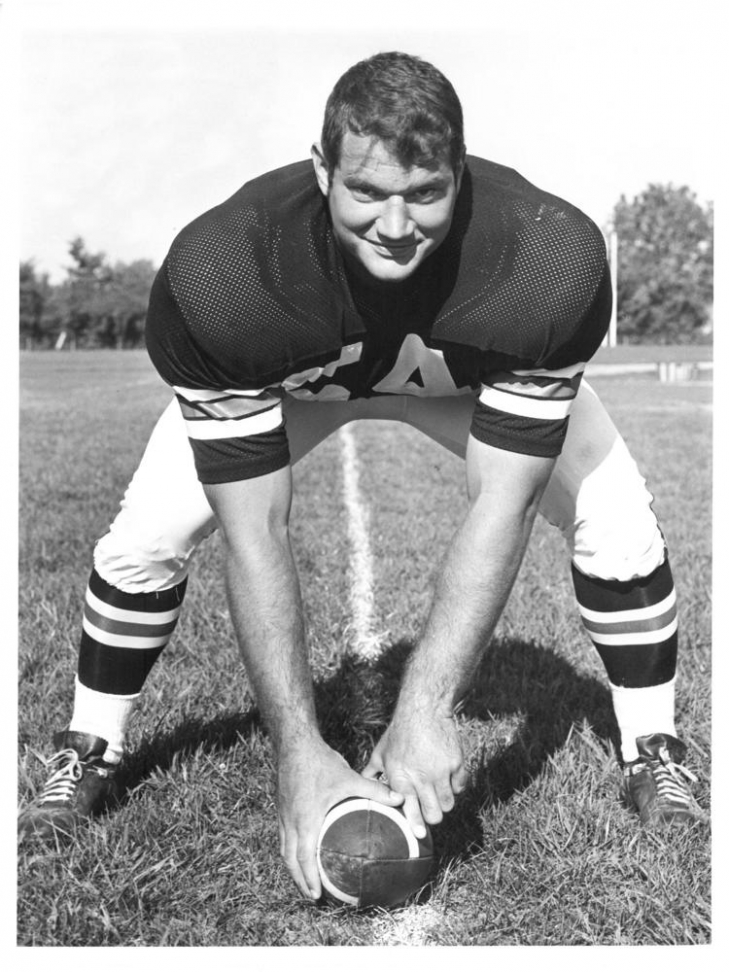
Selected second overall in the 1968 AFL/NFL Draft out of Tennessee, Bob Johnson holds a unique place in Cincinnati Bengals lore as the very first draft pick in franchise history. Head coach Paul Brown coveted a brainy, dependable pivot to set the baseline for his expansion offense, and Johnson answered the call by locking down the starting center job from the team's inaugural drive onward.
Johnson brought exceptional line-calling insight, precise snapping, and relentless technique to the pivot. In an era of heavy interior collisions, he anchored Paul Brown's front five by recognizing blitz patterns and keeping a clean pocket for early Bengals quarterbacks such as Greg Cook and Virgil Carter. Johnson stepped directly into the starting lineup as a rookie in 1968, starting all 14 games and earning an AFL All-Star selection in his debut campaign.
Consistency defined Johnson’s run at center. Across his first ten seasons (1968–1977), he started every single one of the 136 regular-season games he appeared in. He helped lead Cincinnati to its first two division titles in 1970 and 1973, serving as the team's offensive captain and primary interior pass blocker.
As the franchise transitioned into the late 1970s, Johnson stepped into a veteran backup and reserve snapper role for his final two campaigns. He retired following the 1979 season as the last remaining member of the original 1968 inaugural squad.
Johnson played in 154 regular-season games (136 starts) along with three postseason appearances. Shortly after his career ended, the Bengals retired his No. 54 jersey.
26. Carlos Dunlap
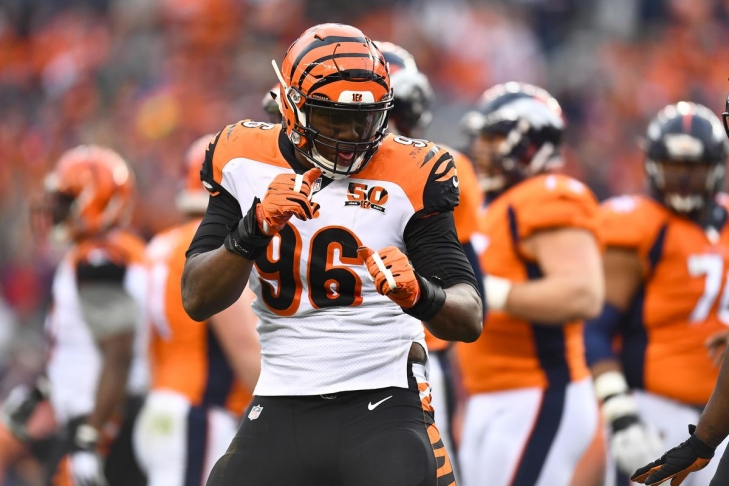
Carlos Dunlap arrived in Cincinnati as a second-round pick fresh off earning Defensive MVP honors in the 2009 BCS National Championship Game. Possessing a massive 6-foot-6 frame, 34-inch arms, and rare length for an edge defender, Dunlap transformed from a pass-rush specialist into one of the most complete and durable defensive ends in franchise history.
During his initial three seasons (2010–2012), defensive coordinator Mike Zimmer predominantly utilized Dunlap in passing situations to optimize his physical attributes. He made an immediate impact as a rookie, establishing a Bengals rookie record with 9.5 sacks in only 12 games. By 2013, Dunlap had secured a permanent starting position on the left side of Cincinnati's defensive line, where his reach enabled him to neutralize edge runs while consistently applying pressure on quarterbacks.
Dunlap reached his peak in the mid-2010s, anchoring the defensive line for a consistent playoff team. In 2015, he achieved a career-high 13.5 sacks, the second-most in team history, along with two forced fumbles and 16 tackles for loss, earning his first Pro Bowl. He was again selected in 2016, with 8.0 sacks and a standout ability to bat down 15 passes at the line, solidifying his status as one of the league's top pass-deflectors.
His more than ten-year tenure with the Bengals abruptly concluded during the 2020 season. Frustrated by a diminished role in Lou Anarumo's system and openly expressing his dissatisfaction, Dunlap asked for a trade. Cincinnati approved his request in the middle of the season, sending him to the Seattle Seahawks in October 2020.
Across 11 seasons with the Bengals (2010–2020), Dunlap played in 155 regular-season games (115 starts) and six postseason contests. He generated 82.5 sacks, 103 tackles for loss, 227 quarterback hits, and 20 forced fumbles.
18. Isaac Curtis
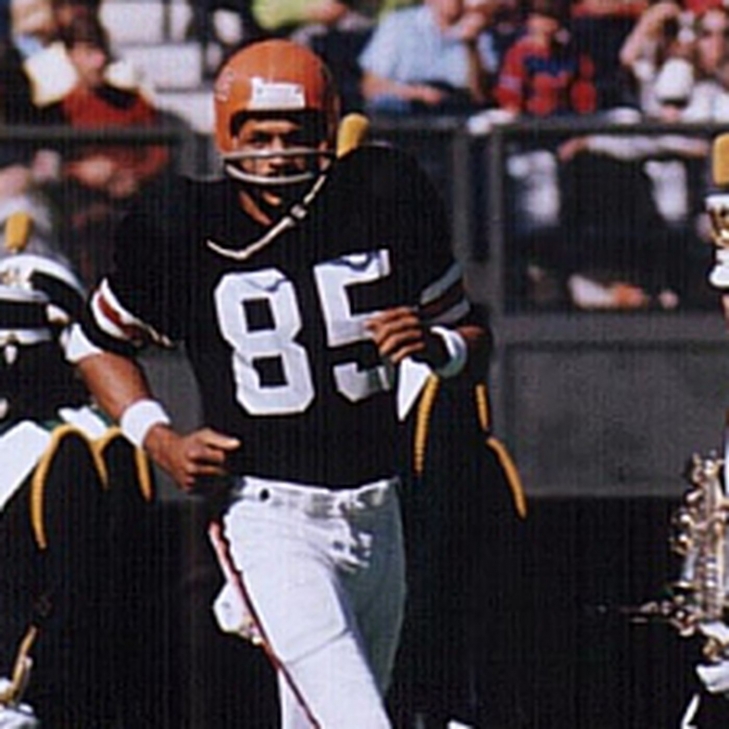
Taken 15th overall in the first round of the 1973 NFL Draft out of San Diego State, Isaac Curtis arrived in Southwest Ohio with Olympic-caliber track speed. Over a 12-season career spent exclusively with the Cincinnati Bengals, Curtis revolutionized deep-threat wide receiver play, forcing NFL defenses to fundamentally change how they covered pass catchers along the boundary.
Curtis had exceptional acceleration, a long stride, and soft hands, making him a formidable downfield threat. As Cincinnati’s main deep target, his speed to outrun physical press coverage was so effective that opponents often grabbed and shoved him, leading to the NFL introducing stricter pass interference rules called the "Isaac Curtis Rule." His ability to track long passes transformed basic post and fly routes into quick scoring opportunities for Ken Anderson.
Curtis entered the professional scene in 1973 with an impressive rookie season, recording 45 receptions for 843 yards and nine touchdowns, which earned him his first Pro Bowl honor. In 1974, he further improved his efficiency, scoring 10 touchdowns from just 30 catches, averaging 21.1 yards per reception, and earning Second-Team All-Pro recognition.
His peak performance continued into 1975, when he led the NFL with an impressive 21.2 yards per catch on 44 receptions for 934 yards and seven touchdowns. In 1976, he earned his fourth straight Pro Bowl selection and third consecutive Second-Team All-Pro honor after accumulating 766 receiving yards and six touchdowns. After knee surgery shortened his 1977 season, Curtis returned in 1978, posting a career-high 47 catches for 737 yards. He stayed a key veteran contributor into the early 1980s, helping Cincinnati reach its first Super Bowl in the 1981 season.
Curtis retired after the 1984 season, ending a 12-year career entirely with Western Ohio. He set franchise records for receptions, yards, and touchdowns. In 2021, the Bengals honored him by inducting him into their first Ring of Honor class. Throughout his career, he achieved 416 receptions, 7,101 yards, 53 touchdowns, and a franchise-best 17.1 yards per catch.
15. Max Montoya
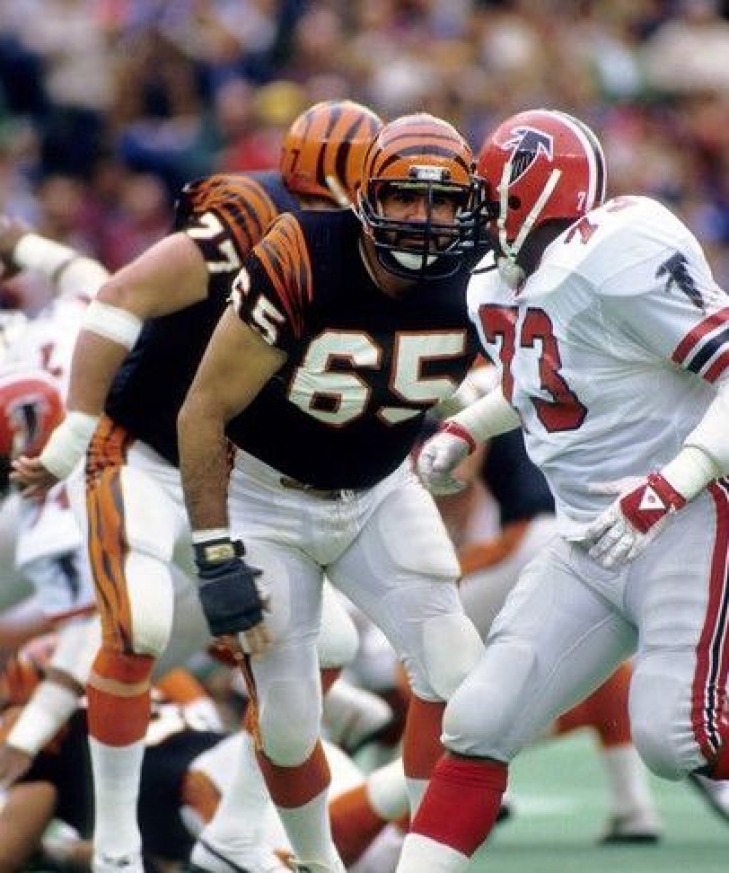
Max Montoya, a seventh-round pick(168th overall in the 1979 NFL Draft from UCLA), became one of the Cincinnati Bengals' greatest late-round steals. During his 11 seasons with the team, he consistently anchored the right guard position with aggressive physicality and reliable technical skill, contributing to one of the top offensive lines of the 1980s alongside Hall of Famer Anthony Muñoz.
Montoya integrated exceptional physical mass with lateral mobility and demonstrated an aggressive finishing ability at the line of scrimmage. Serving as the right guard, he excelled in executing low, powerful drive-blocks that facilitated the creation of significant interior lanes for running backs Pete Johnson and Ickey Woods. In pass protection, his broad frame and substantial hands enabled him to withstand bull-rushes from interior defensive linemen, thereby maintaining a stable pocket for quarterbacks Ken Anderson and Boomer Esiason.
Montoya assumed a position in the starting lineup in 1980 and consistently maintained the right guard position thereafter. He was an integral component of both of Cincinnati's AFC Championship teams during the 1980s. In 1981, he started in every game for an offense that propelled the franchise to Super Bowl XVI. Seven years later, he anchored the line for the league's leading rushing offense in 1988, contributing significantly to Cincinnati's AFC West title and their appearance in Super Bowl XXIII.
His personal accolades exemplify his superior performance on the field. Montoya received three Pro Bowl selections as a Bengal in 1986, 1988, and 1989. In his concluding season with Cincinnati in 1989, he also achieved Second-Team All-Pro recognition and recorded a career-high Approximate Value of 13.
Following the 1989 season, Montoya departed Cincinnati under Plan B free agency to join the Los Angeles Raiders. He spent his final five NFL seasons on the West Coast, starting at right guard for four of those campaigns and earning a fourth career Pro Bowl selection in 1993 at age 37 before retiring after the 1994 season. As a Bengal, Montoya started 144 of his 157 games.
23. Bob Trumpy
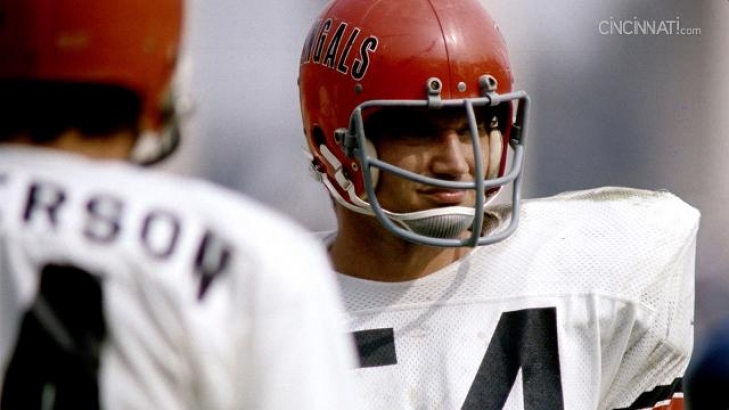
Selected in the twelfth round (301st overall) of the 1968 AFL Draft from Utah, Bob Trumpy established one of the most exceptional return-on-investment careers in the history of professional football. Trumpy dedicated his entire 10-season playing tenure with Cincinnati (1968–1977), evolving from a late-round prospect into a distinguished vertical-passing asset in Coach Paul Brown’s early offensive strategies.
Trumpy broke the traditional mold of the block-first tight end of his era. Boasting wide-receiver speed, fluid route-running, and soft hands, he was routinely deployed in motion or lined up away from the tackle box. His signature trait was his ability to stretch the field vertically, split double-coverage down the seam, and win contested catches in the intermediate and deep zones.
Trumpy made an immediate impact during Cincinnati’s inaugural 1968 season, securing 37 receptions for 639 yards and three touchdowns, which earned him a selection to the AFL All-Star team as a rookie. He elevated his performance to an elite level in his sophomore year in 1969, catching 37 passes for 835 yards and nine touchdowns. His 22.6 yards per reception that season remains one of the highest single-season averages by a tight end in professional football history, which earned him First-Team All-Pro honors as well as a second All-Star appearance.
When the AFL merged with the NFL, Trumpy continued his dominance. He earned a third consecutive Pro Bowl nod in 1970 after posting 37 receptions for 837 yards and three touchdowns, keying Cincinnati's run to its first-ever division title. Trumpy captured his fourth Pro Bowl selection in 1973, leading the Bengals with 609 receiving yards and three scores while helping guide the team back to the postseason.
As injuries began to take a toll and Virgil Carter and Ken Anderson favored a more short-to-intermediate passing game, Trumpy transitioned into a veteran leader and blocking contributor. His receiving volume decreased over his final three campaigns (1975–1977), where he backed up younger tight ends like Bruce Coslet and served as a goal-line target.
Following the 1977 season, after appearing in 12 games and recording seven receptions, Trumpy retired from the NFL at age 32. He seamlessly transitioned into sports broadcasting, becoming one of the most recognizable voices in network football coverage for decades. He finished his playing career with 298 receptions for 4,600 receiving yards and 35 touchdowns.
14. Andy Dalton
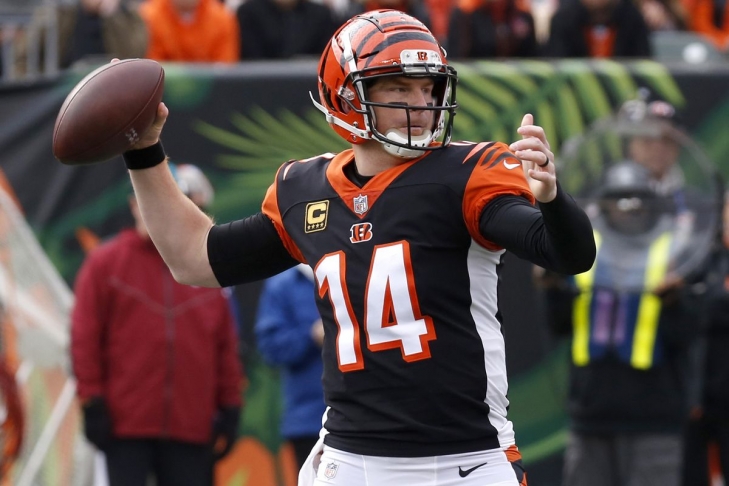
Selected in the second round (35th overall) of the 2011 NFL Draft out of TCU, Andy Dalton stepped straight into the fire in Cincinnati. Winning the starting quarterback job as a rookie, "The Red Rifle" immediately established stability under center and spearheaded one of the most consistent regular-season runs in franchise history.
Dalton depended on rapid decision-making, precise timing, and swift processing capabilities. Excelling in fast-paced, rhythm-oriented passing systems, he demonstrated proficiency in pre-snap diagnostics, efficiently distributing the ball to intermediate targets such as A.J. Green and Tyler Eifert before pass rushers could close in. His mobility within the pocket and acute short-area vision further enabled him to sustain drives through subtle pocket adjustments or opportunistic scrambles into open space.
Dalton made an immediate impact during his 2011 rookie campaign, throwing for 3,398 yards and 20 touchdowns to earn his first Pro Bowl selection while leading Cincinnati to a 9–7 record and a surprise playoff berth. He built on that initial success in 2012 by raising his output to 3,669 yards and 27 passing touchdowns, guiding the Bengals back to the postseason with a 10–6 mark. His finest statistical output came in 2013, when he set Bengals franchise single-season records with 4,293 passing yards and 33 touchdowns, carrying Cincinnati to an 11–5 record and an AFC North division title.
The enduring tradition of success persisted into 2014 as Dalton passed for 3,398 yards and 19 touchdowns, while additionally contributing four rushing scores, thereby earning his second Pro Bowl selection and securing a fourth consecutive playoff appearance. In 2015, he was performing at the peak of his career, achieving a career-best passer rating of 106.2 with 25 touchdowns against only seven interceptions over 13 games, prior to an abrupt interruption of his MVP-caliber season due to a fractured thumb.
Even as the roster around him shifted, Dalton remained productive in 2016, eclipsing the four-thousand-yard mark for the second time with 4,206 passing yards and earning his third career Pro Bowl selection. In 2017, he threw for 3,320 yards and 25 touchdowns, highlighted by a legendary Week 17 touchdown pass to Tyler Boyd that defeated Baltimore and famously snapped the Buffalo Bills' 17-year playoff drought. Injuries limited Dalton to 11 starts in 2018, though he still compiled 2,566 yards and 21 touchdowns before a thumb injury ended his year. He closed out his tenure in Southwest Ohio during a transitional 2019 season under new head coach Zac Taylor, throwing for 3,494 yards and 16 touchdowns in 13 starts.
Following the selection of Joe Burrow as the first overall pick in the 2020 NFL Draft, Cincinnati officially released Andy Dalton in April 2020 after nine seasons of service. He subsequently played for Dallas, Chicago, New Orleans, and Carolina, leaving Cincinnati as the Bengals' all-time franchise leader in completions (2,757), passing yards (31,594), and passing touchdowns (204).
13. James Brooks
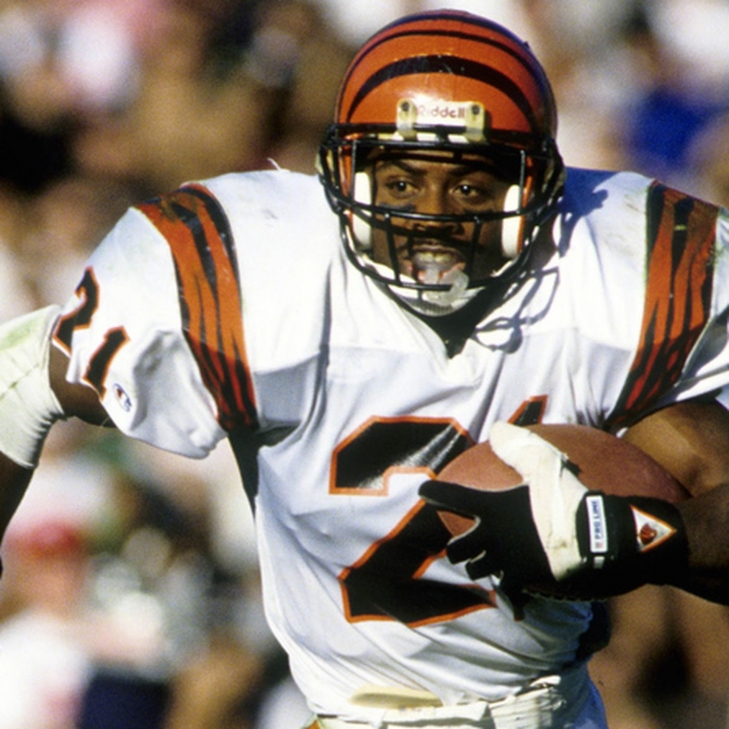
Selected in the first round (24th overall) of the 1981 NFL Draft out of Auburn by the San Diego Chargers, James Brooks joined Cincinnati through a trade in 1984. That transaction proved to be one of the most significant in Bengals history, as the agile running back became the versatile engine of Coach Sam Wyche's innovative "No-Huddle" offense.
Brooks was an exceptionally swift and versatile backfield player who revolutionized the concept of versatility in the late 1980s. Demonstrating remarkable low-center-of-gravity stability, rapid lateral movement, and soft hands when receiving out of the backfield, he was virtually unguardable by linebackers in one-on-one coverage. Serving both as a conventional runner and a flexible receiver, Brooks consistently exploited angles in the secondary to generate substantial, game-changing plays.
Following his initial three seasons in San Diego as a return specialist and rotational running back, Brooks demonstrated significant development upon taking the field at Riverfront Stadium in 1984. His breakthrough year was 1986, during which he delivered an exemplary and versatile performance. Brooks achieved a career-high 1,087 rushing yards and recorded 54 receptions for 658 receiving yards, establishing a franchise record with 1,745 yards from scrimmage. This outstanding performance earned him his first selection to the Pro Bowl.
Following an injury-shortened 1987 campaign, Brooks made a robust return during Cincinnati's remarkable 1988 season. Acting as the pivotal element of the league's most dynamic offense, he accumulated 931 rushing yards and achieved a personal record of 14 total touchdowns (comprising eight rushing and six receiving). These accomplishments garnered him his second selection to the Pro Bowl. He sustained this performance into the postseason, instrumental in advancing Cincinnati through the AFC bracket to reach Super Bowl XXIII.
Brooks executed his most outstanding rushing campaign in 1989, establishing a franchise record at the time with 1,239 rushing yards while maintaining an impressive average of 5.6 yards per carry, thereby earning his third Pro Bowl selection. He concluded his distinguished period in 1990 with 1,004 rushing yards—culminated by a remarkable 201-yard single-game performance against Houston—to attain his fourth Pro Bowl invitation at the age of 32.
Brooks played 118 games (92 starts), becoming the Bengals' all-time leading rusher with 6,447 yards and 37 touchdowns, plus 297 receptions for 3,012 yards and 27 TDs. In 2026, he was inducted into the Bengals Ring of Honor.
22. David Fulcher
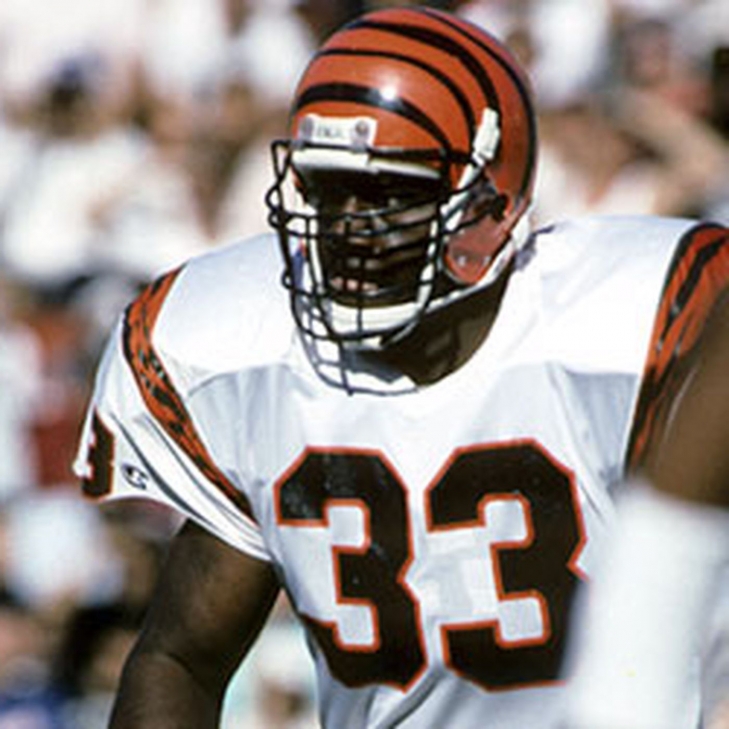
David Fulcher, a rare defensive specimen, arrived in the third round (78th overall) of the 1986 NFL Draft out of Arizona State. Known as "a safety in a linebacker's body," he revolutionized the strong safety position under defensive coordinator Dick LeBeau, using his imposing size and hybrid skill set to anchor the secondary throughout the late 1980s and early 1990s.
Fulcher had the build of a middle linebacker but moved with the fluidity of a defensive back. From his strong safety role, he aggressively supported runs in the alley, using his long reach and ball skills to intercept intermediate passes. LeBeau utilized Fulcher's versatility as a key element in his zone blitz tactics, often shifting him to the line of scrimmage to serve as an additional pass rusher or run-stopper.
Fulcher made a notable impact in his 1986 rookie season by starting all 16 games, recording four interceptions, and earning a spot on the PFWA All-Rookie Team. By 1988, he had established himself as one of the league’s top safeties, with five interceptions and a forced fumble, earning his first Pro Bowl selection and Second-Team All-Pro honors. His aggressive style in the secondary played a key role in Cincinnati's AFC West title and their appearance in Super Bowl XXIII, where he forced a pivotal fumble against San Francisco.
His career truly shined in 1989 when he had an outstanding, career-best season. Fulcher made eight interceptions, achieved a career-high Approximate Value of 16, and received First-Team All-Pro honors along with his second Pro Bowl appearance. He kept up his excellent performance in 1990, with four interceptions and three forced fumbles, earning his third straight Pro Bowl and a Second-Team All-Pro spot. During his last two seasons with Cincinnati (1991–1992), he added seven more interceptions, cementing his reputation as one of the franchise's top ball-hawks.
Fulcher left Cincinnati as a free agent in 1993 to join the Los Angeles Raiders, playing three games before injuries ended his career. In seven seasons there, he had 31 interceptions, 8.5 sacks, and 9 forced fumbles.
12. Reggie Williams
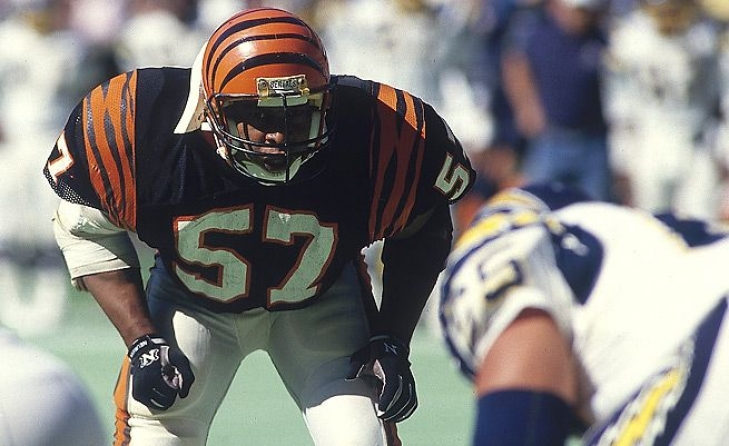
Reggie Williams, a third-round pick (82nd overall) in the 1976 NFL Draft from Dartmouth, arrived in Cincinnati as an extraordinarily intelligent, relentless linebacker. Stepping straight into the lineup, he went on to play his entire 14-year professional career in a Bengals uniform, serving as the dependable anchor on the right side of the defense through two Super Bowl runs.
Williams integrated sharp diagnostic skills with impressive durability and disciplined play at linebacker. As a right-side linebacker in both 4-3 and 3-4 formations, he was adept at anticipating offensive moves before the snap, penetrating blocks to halt the run, and timing blitzes to pressure the quarterback. His intelligent, strategic approach consistently made him a key defensive leader amid scheme and coaching changes.
Williams secured a starting position as a rookie in 1976 and maintained it without pause. Although national award voters often ignored his consistent contributions—resulting in no Pro Bowl selections—his importance to Cincinnati was clear. He was a vital defensive leader for the 1981 AFC Champion Bengals, contributing to the franchise's first Super Bowl XVI appearance. In the strike-shortened 1982 season, Williams topped the NFL with four fumble recoveries and also recorded 2.5 sacks.
As the 1980s progressed, Williams remained a fixture on the field. He compiled 62.5 total career sacks—41.0 of which were officially recorded after the NFL began tracking the stat in 1982—demonstrating a consistent ability to generate edge pressure on third downs. His longevity and leadership capped off another championship run in 1988, when he helped guide the Bengals back to the postseason and to an appearance in Super Bowl XXIII.
In addition to his durability on the field, Williams emerged as a key figure in the Cincinnati community. His wide-ranging philanthropic activities and civic leadership culminated in 1986, when he received the Walter Payton NFL Man of the Year award, originally called the Byron "Whizzer" White Humanitarian Award.
Williams spent 14 seasons with Cincinnati from 1976 to 1989, participating in 206 regular-season games, including 196 starts. He is among a select few in franchise history to surpass 200 games and achieved an Approximate Value (AV) of 92 with the team. During his tenure, Williams recorded 62.5 sacks (41.0 officially credited), recovered 23 fumbles, started in two Super Bowls (XVI and XXIII), and was honored as the 1986 NFL Man of the Year.
20. Tim Krumrie
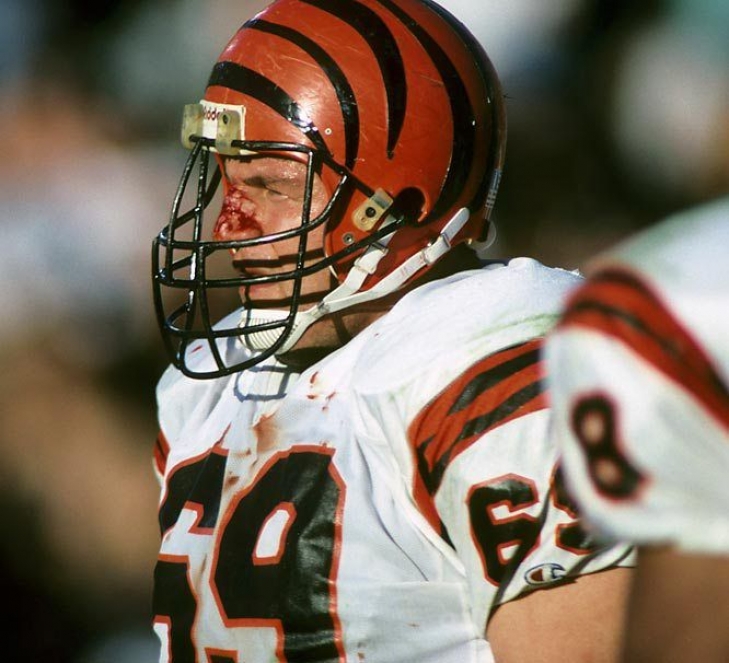
Selected in the tenth round (276th overall) of the 1983 NFL Draft from the University of Wisconsin, Tim Krumrie developed from an overlooked underdog into one of the most productive interior defenders in the history of football. Throughout a 12-year career spent solely with Cincinnati, Krumrie transformed the role of nose tackle, combining exceptional physical resilience with sideline-to-sideline pursuit, thereby establishing himself as a genuine franchise icon.
Krumrie demonstrated intense vigor while operating with a powerful motor, drawing upon his collegiate wrestling background and a keen focus on shedding blocks. Serving as the anchor in Cincinnati's 3-4 defensive scheme, he persistently fought through double-teams to disrupt running plays before their development. His uncommon mobility for an interior lineman allowed him to pursue ball-carriers from behind, converting a position typically dedicated to absorbing blocks into a prolific tackle role.
Krumrie was incorporated into the starting lineup in 1984 and swiftly established himself as a formidable presence, recording 84 tackles and 5.0 sacks. He led the Cincinnati Bengals in tackles for four consecutive seasons from 1985 through 1988, an exceptional achievement for an interior nose tackle. In 1987, he received his initial Pro Bowl selection following the accumulation of 88 tackles and 3.5 sacks over 12 games.
His most distinguished individual campaign occurred in 1988, during which he received First-Team All-Pro honors and was honored with his second Pro Bowl selection. Krumrie accumulated an impressive total of 152 tackles and 3.0 sacks, acting as the defensive pillar for a squad that advanced to the AFC Championship and participated in Super Bowl XXIII. Despite sustaining a severe broken leg early in that Super Bowl, Krumrie undertook a remarkable rehabilitation process, resuming the role of starter in all 16 games of the 1989 season and maintaining an unbroken streak of 96 games following his injury. He continued to be a fundamental figure into the early 1990s, culminating in leading the Bengals in tackles once more at the age of 32 with 97 stops in 1992.
Krumrie retired after the 1994 season, having never missed a non-strike NFL game in 12 years. He then became Cincinnati's defensive line coach for eight seasons. In 2024, he was inducted into the Bengals Ring of Honor as the first defensive lineman to earn this honor. Over his career, Krumrie played 188 games (161 starts), with 1,017 tackles, 34.5 sacks, and 13 fumble recoveries.
10. Andrew Whitworth
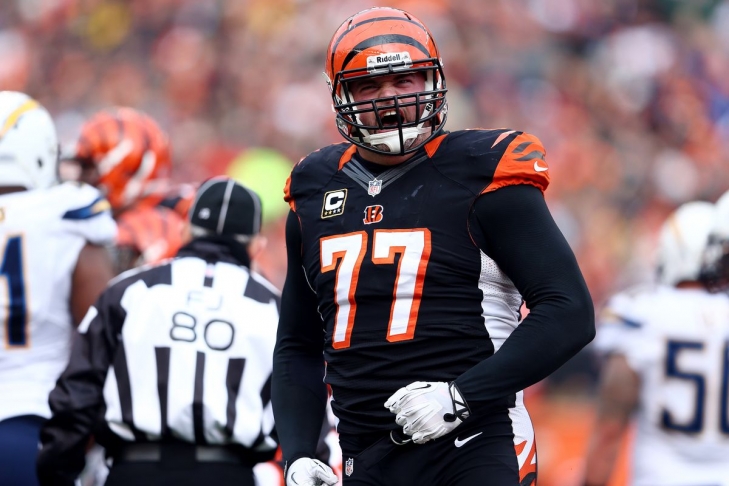
Andrew Whitworth, drafted in the second round (55th overall) of the 2006 NFL Draft from LSU—where he contributed to the 2003 BCS National Championship team—became a key figure on the Ohio River. He quickly secured a starting spot, enabling an 11-year tenure as the Bengals' primary leader and foundation on the offensive line.
Standing at 6 feet 7 inches and weighing 330 pounds, Whitworth was anything but small. He possessed exceptional height combined with quick footwork and a powerful punch. Although some scouts doubted whether his long frame was ideal for interior play, Whitworth proved them wrong when he transitioned to left tackle. He utilized his extensive wingspan and lateral agility to effectively block top-tier edge rushers and shield the blind side of quarterbacks Carson Palmer and Andy Dalton.
Whitworth played 12 games at left tackle as a rookie, but injuries caused Cincinnati to shift their line, moving him to left guard for his second and third seasons. He adapted to the change smoothly, demonstrating his interior strength, before settling back permanently at his natural left tackle position in 2009.
Once established at left tackle, Whitworth began an exceptional second phase of his career, defying usual aging patterns by performing at his peak well into his thirties. In 2012, he gave up only one sack throughout the season and earned his first Pro Bowl invitation.
His career highlight in Cincinnati came in 2015 when he played all 16 games, achieving an Approximate Value (AV) of 19 without allowing any sacks. This performance earned him Consensus First-Team All-Pro honors and his second Pro Bowl selection, helping Cincinnati secure a 12–4 division title. In 2016, he continued his strong play, earning a Second-Team All-Pro recognition and his third Pro Bowl appearance.
In March 2017, the Bengals let the 35-year-old veteran leave in free agency, a decision they soon regretted. Whitworth joined the Los Angeles Rams, where he spent five more outstanding seasons, earning another First-Team All-Pro honor, receiving the Walter Payton NFL Man of the Year Award, and concluding his career with a Super Bowl LVI victory over the Bengals. During his time with the Rams, Whitworth played 168 regular-season games (164 starts), achieved a career AV of 96, and proved to be one of the franchise's best tackle prospects.
