


Committee Chairman
23. Tom Henke
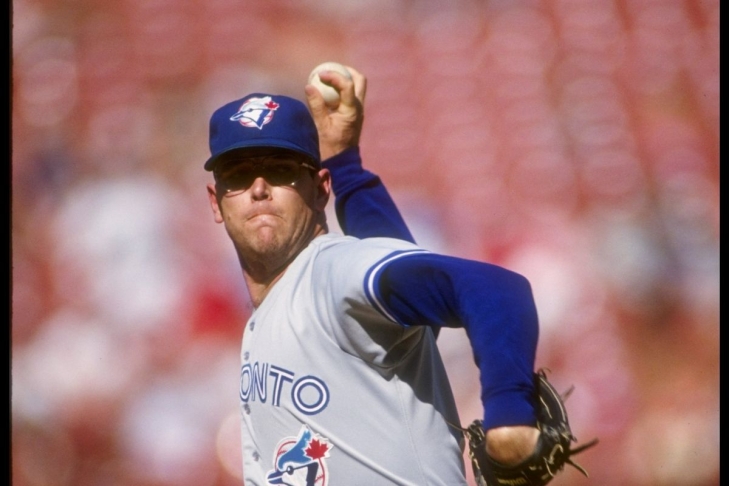
With his large, thick-rimmed wire glasses and gentle demeanor, Tom Henke initially appeared more like a reserved corporate accountant than a formidable major league closer. However, as soon as he took the mound, that misleading impression disappeared. Towering at 6-foot-5, this imposing right-hander utilized a blazing mid-90s fastball and a deadly diving forkball, earning him the nickname "The Terminator”—becoming one of the most formidable and dominant ninth-inning pitchers of his era.
His journey to Toronto truly showcases the cleverness of front-office decision-making. Initially drafted by Texas, Henke had incredible speed but often struggled with control, which led the Rangers to leave him unprotected in the 1985 free-agent compensation draft. The Blue Jays saw great potential in him and quickly took a chance. After Henke made a significant mechanical breakthrough at Triple-A Syracuse and earned the International League MVP award, Toronto called him up to the big leagues in mid-summer. He instantly made a big impact, providing a reliable and intimidating presence in the bullpen during the team's 1985 pennant race—saving 13 games down the stretch and helping secure the franchise's first division title.
By 1986, Henke took on the closer role permanently, recording 27 saves and giving a young team the reliable late-inning presence it had long sought. His performance peaked in 1987 when he was selected as an All-Star for the first time and led the American League with 52 games finished and 34 saves.
As Toronto steadily solidified its status as an elite American League powerhouse into the early 1990s, Henke became an ironclad guarantee in the back of the bullpen, rattling off five consecutive seasons with at least 20 saves. That ninth-innings security guard took on an even more terrifying dimension when the hard-throwing Duane Ward emerged as the team's primary eighth-innings setup man. The lethal Ward-to-Henke combination effectively shrunk games to seven innings, culminating in the historic 1992 championship run, when Henke logged five saves in the postseason to help deliver Canada its first-ever World Series title.
That global triumph doubled as his final act as a Blue Jay. Following the 1992 victory, Henke entered the open market as a free agent and elected to return to his original organization by signing a lucrative contract with the Texas Rangers.
Henke made 446 appearances (all in relief) for Toronto and compiled a stellar 29–29 record with a microscopic 2.48 ERA and an exceptional 1.02 WHIP. He collected a franchise-record 217 saves while logging 563 innings of work and striking out 644 batters. In 2011, he was inducted into the Canadian Baseball Hall of Fame.
24. Fred McGriff
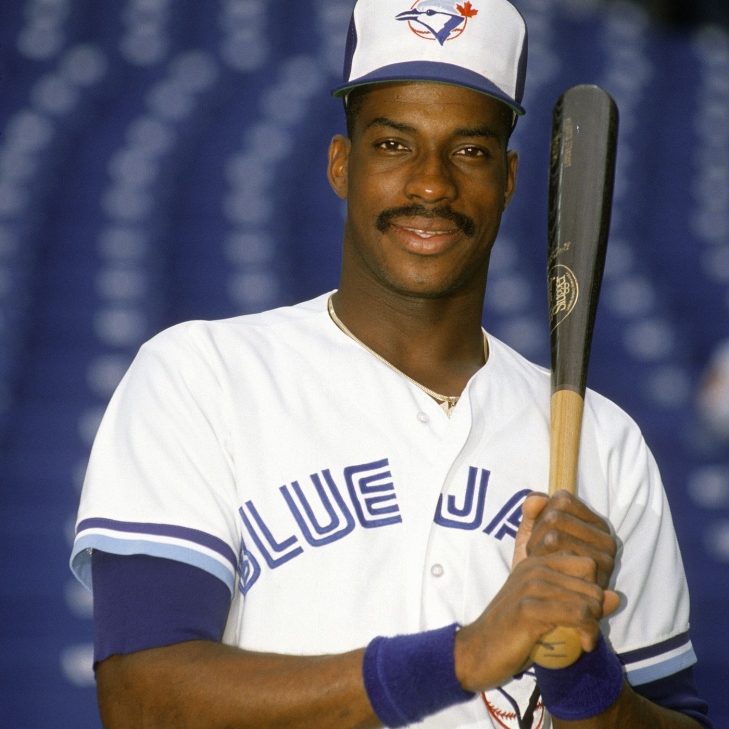
Before he became a well-known figure on the field, whether as a nomadic player in both leagues or as a Hall of Fame immortal, Fred McGriff was actually the rising star among Toronto's young baseball talent. Originally picked up by the New York Yankees, he was later traded to the Blue Jays in a 1982 minor-league deal that turned out to be very favorable for Canada. After steadily beating the best minor league pitchers, this tall, left-handed first baseman made his major league debut in 1986 for a brief stint, but it was the following summer that really put him on the map—hitting 20 home runs in just 107 games and making an unforgettable mark.
Armed with a textbook, high-quality swing that produced effortless opposite-field power, "The Crime Dog" swiftly became one of the most formidable middle-of-the-order hitters in the American League. He made a significant improvement in 1988, taking on most of the first base responsibilities while hitting 34 home runs and driving in 82 runs.
That consistent progression culminated in a remarkable 1989 season. After a summer of dominating junior circuit pitching, McGriff delivered a powerful offensive performance, leading the majors with 36 home runs, a .924 OPS, and a 165 OPS+. His impressive power earned him his first Silver Slugger Award and a sixth-place finish in the AL MVP race, serving as the key statistical factor that helped Toronto win the AL East division. In 1990, he maintained his elite run-producing level, hitting 35 home runs and setting a personal best with 94 walks, maintaining a strong .400 on-base percentage.
His run as a Jay abruptly ended in December 1990. Desiring to improve the clubhouse dynamic and acquire a top-tier defensive second baseman, the front office made a franchise-changing trade, sending McGriff and Tony Fernández to the San Diego Padres for Roberto Alomar and Joe Carter. This move directly contributed to Toronto’s consecutive World Series titles in 1992 and 1993, although McGriff continued his power hitting elsewhere, eventually earning a World Series ring as the cleanup hitter for the 1995 Atlanta Braves.
He accumulated 532 hits, 130 home runs, and 301 RBIs while generating a stellar .278/.389/.530 slash line (153 OPS+) for the squad. McGriff finally got the call from the Baseball Hall of Fame when he was chosen on his first Veterans Committee Ballot.
20. Devon White
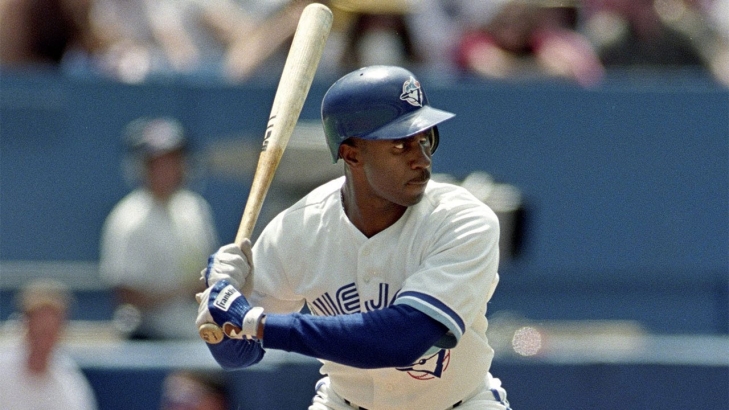
Before he sparked Toronto’s incredible run to back-to-back world championships, Devon White first made a name for himself with the California Angels. He broke into the major leagues in 1985 and earned the everyday center field spot two years later, demonstrating his impressive athleticism and incredible speed right from the start. He earned his first All-Star nod in 1989, but after a dip in his offensive performance in 1990, the Angels became less enthusiastic about his bat. Seeing a great chance, the Blue Jays jumped in with a multi-player trade in December 1990—a deal that fans of Canadian baseball would later call an absolute steal.
"Devo' assumed a pivotal role in the defensive lineup and significantly enhanced the structural defense of the team. His initial three seasons in Toronto exemplified excellence in center-field performance, characterized by smooth, fluid strides that minimized even the deepest gaps of SkyDome. He earned a Gold Glove award in each of his five seasons in Major League Baseball, consistently thwarting opposing hitters by eliminating guaranteed extra-base hits. His defensive prowess reached an exceptional peak during the historic 1992 season, when he led the American League in both Total Zone Runs and defensive Wins Above Replacement (dWAR), notably highlighted by a legendary, wall-crashing catch in Game 3 of the World Series that nearly resulted in an unassisted triple play.
While his glove was considered the gold standard in the junior circuit, White was equally indispensable as the club's high-leverage leadoff man. He set the table with incredible consistency for a powerhouse lineup, rattling off three consecutive summers with at least 155 hits, 15 home runs, and 30 stolen bases. He elevated his game during the 1993 repeat title run, batting .273 with 11 triples and scoring a career-high 116 runs, which secured his second career All-Star selection.
Though his offensive metrics declined slightly in 1994 and 1995 due to the strike, he remained an elite defensive player and a threat in base-stealing. With the core breaking up and the front office shifting priorities, White became a free agent after 1995, signing with the Florida Marlins.
With Toronto, he accumulated 733 hits, 72 home runs, and 126 stolen bases while generating a .270/.323/.419 slash line.
21. Jim Clancy
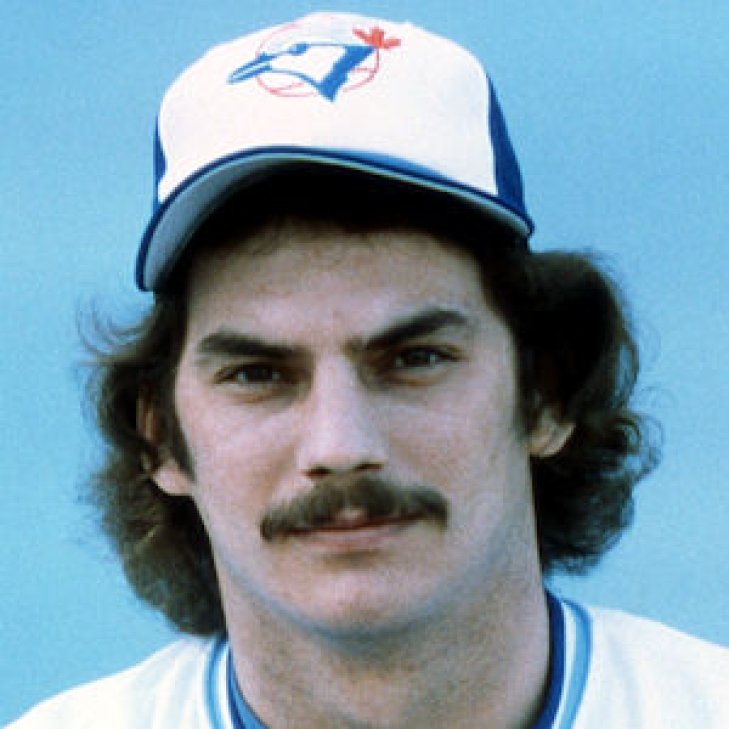
Jim Clancy was picked from the Texas Rangers in the sixth round of the 1976 expansion draft and arrived in Ontario as a young, talented pitcher eager to help build a new team. He made his major league debut during Toronto’s first season in 1977 and quickly became a key part of the starting rotation. Although the Blue Jays faced many challenges in their early years, Clancy quickly proved himself as a dependable and hardworking player, taking the mound every fifth day to provide the stability and effort the team needed to grow and succeed.
Clancy was not a flashy, high-strikeout superstar who dominated league leaderboards; however, his career was characterized by outstanding professional durability. Working with a heavy sinker and a determined, competitive mindset, he established himself as a consistent presence in the Toronto rotation for over a decade. He achieved eight seasons with at least 10 victories, notably marked by an exceptional individual performance in 1982. During that summer, he successfully navigated American League lineups, earning his sole All-Star selection in his career, while accumulating a personal best of 16 wins and pitching a demanding 266.1 innings over 40 starts.
As the organization gradually evolved from a basement-dweller into a bona fide American League powerhouse, Clancy provided the veteran rotation depth needed to push them over the top. He served as a primary engine during the historic 1985 campaign, logging 11 victories and 220.2 innings to help steer the Blue Jays to their first-ever AL East division title and postseason appearance.
His efficiency and velocity began to decline steadily over his final two seasons with the club. Following the conclusion of the 1988 campaign, Clancy ended his long tenure in Canada, signing a free-agent contract with the Houston Astros, where his career tailed off shortly thereafter.
Clancy made 352 appearances (345 starts), compiling a 128–140 record with a 4.10 ERA and a 1.37 WHIP over 2,204.2 innings.
