


Committee Chairman
16. John Lackey
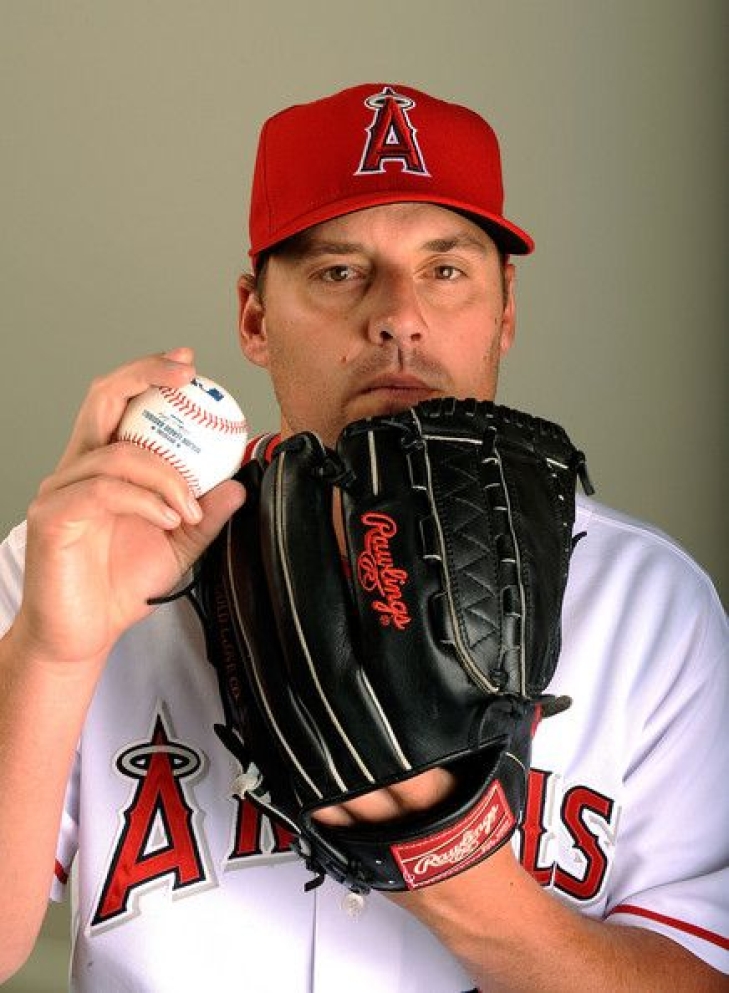
John Lackey joined the Angels organization as a second-round pick in 1999 out of Grayson County College, a big right-hander who would quickly become the backbone of the rotation. He reached the major leagues in 2002 and immediately made history as a rookie, where in a winner-take-all Game 7 against the Giants, he became the first rookie in 93 years to start and win a World Series clincher, tossing five innings of one-run ball.
Between 2003 and 2006, he bridged the gap to his elite 19-win peak by proving he could handle a heavy workload year after year. He recorded at least 14 wins in three of those four seasons and consistently sat near the top of the league leaderboard in starts.
In 2005, he reached the 199-strikeout mark, a career-best at the time, while posting a 3.44 ERA. He followed that with another 190 strikeouts in 2006, providing the steady production required to lead the staff through the transition following the departures of veteran arms like Jarrod Washburn. This stretch of reliable, high-volume pitching served as the essential lead-in to his 2007 ERA title and cemented his status as the unquestioned ace of the staff.
John Lackey’s departure from Anaheim following the 2009 season was primarily a matter of the organization’s hesitation to match the market’s valuation of his longevity. While Lackey had been the anchor of the staff for nearly a decade, the Angels management grew wary of his long-term durability after he missed the first six weeks of both the 2008 and 2009 seasons due to recurring elbow and forearm issues.
The tension began to surface during spring training in 2009 when the club offered Lackey a three-year extension worth approximately $40 million. Lackey, who had previously signed a team-friendly deal to help the club remain competitive, viewed the offer as a sign that the front office did not see him as a top-tier ace. He made it clear that he would not accept another hometown discount and entered free agency seeking a contract that reflected his status as a workhorse.
The Boston Red Sox eventually stepped in with a five-year, $82.5 million contract, an offer that included both more money and more guaranteed years than the Angels were willing to provide. With the Angels, Lackey compiled a 102-71 record, 1,201 strikeouts, and the 2002 World Series Game 7 victory.
14. Mark Langston
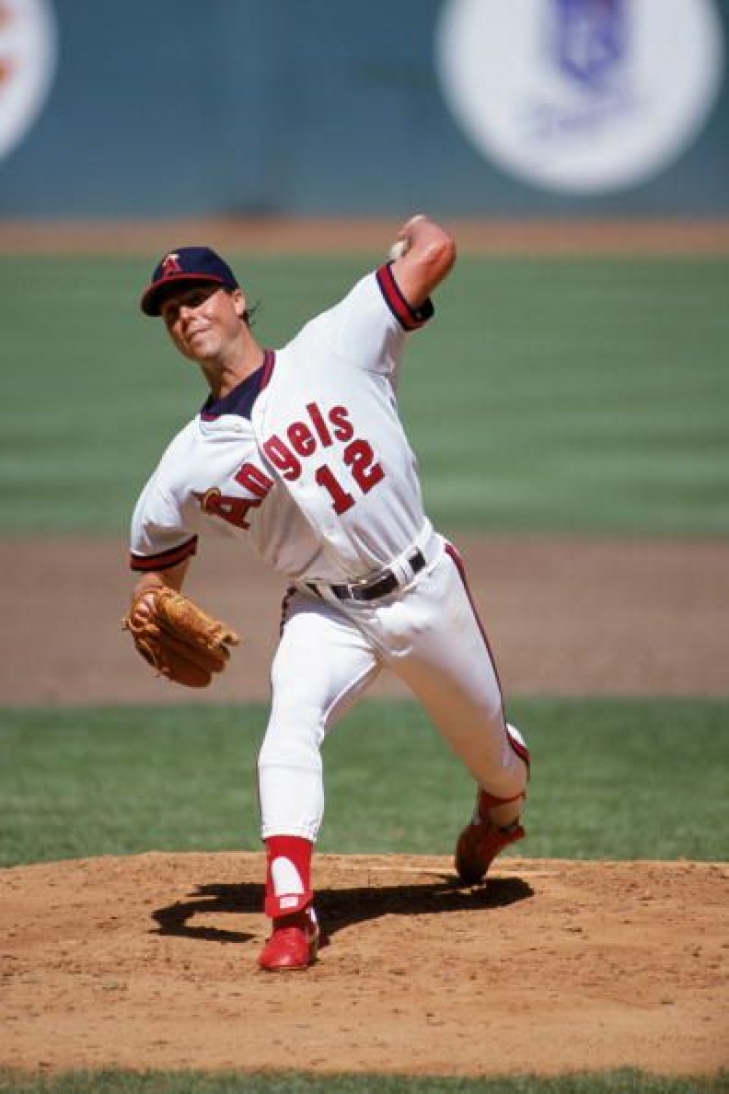
Mark Langston landed in Anaheim as a high-profile free agent in 1990, returning to the West Coast after a whirlwind season that saw him traded from Seattle to Montreal. Known for a blistering heater and a devastating pickoff move, the left-hander arrived with the heavy expectations of a franchise looking for a front-line starter to lead them back to contention. For eight seasons, he anchored the Angels' rotation, evolving from a raw power pitcher into a refined southpaw.
Langston’s tenure in a California uniform took a massive leap forward during the 1991 season. After a rocky debut year in Orange County, he found his groove with a 19-8 record and a 3.00 ERA, earning his first All-Star nod in four years. This resurgence proved he was more than just a high-priced rental; he was a workhorse capable of silencing the best lineups in the American League. His performance that summer garnered a sixth-place finish in the Cy Young race.
Langston was defined by a rare blend of pitching prowess and defensive mastery. Between 1991 and 1995, Langston was a vacuum on the mound, capturing five consecutive Gold Gloves for his ability to shut down the opposition's bunting and running game. He remained a perennial threat in the mid-summer classic, earning All-Star honors in 1992 and 1993 while consistently racking up high inning totals. Even as the league's offensive numbers began to skyrocket, he maintained a sharp edge, eventually fanning 1,112 batters during his stay with the Halos. He provided a veteran presence that gave the club a chance to win every fifth day, regardless of the shifting roster around him.
Following the 1997 season, the veteran hurler moved on to San Diego. He left the organization with 88 wins, 1,112 strikeouts, and five consecutive Gold Glove Awards.
13. Garret Anderson
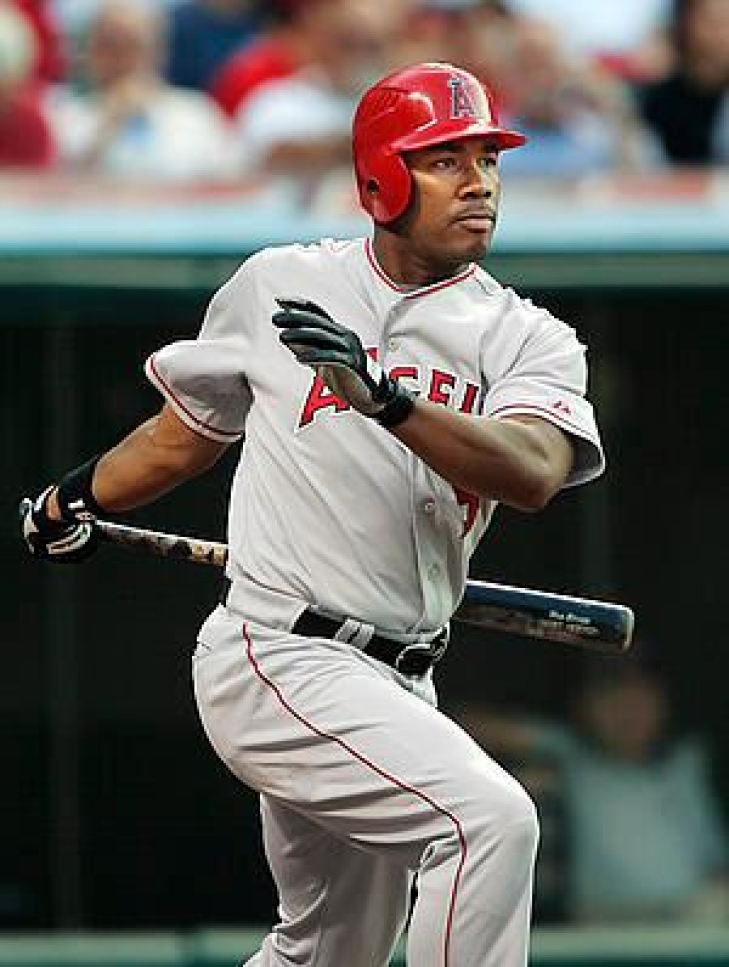
Garret Anderson emerged as the most durable fixture in the history of the Anaheim outfield, a 1990 draft pick who transformed from a quiet prospect into the franchise’s most prolific run-producer. After a brief introduction to the big leagues in 1994, he secured the starting role in left field and immediately proved his worth by finishing as the runner-up for the 1995 American League Rookie of the Year. For fifteen seasons, he anchored the lineup that thrived on his short, effortless left-handed stroke.
Anderson’s journey in a California uniform reached a historic peak during the 2002 and 2003 campaigns. As the club marched toward its first World Series title, he emerged as a premier American League standout, earning his first All-Star selection and a Silver Slugger Award in 2002. That summer, he demonstrated a specialized ability to drive the ball into the gaps, leading the league with 56 doubles while finishing fourth in the MVP voting. He showed the organization that he was a foundational piece of a championship core, providing the high-velocity production of 123 RBIs and 29 home runs in the heart of the "Thundersticks" order.
Between 2000 and 2003, Anderson was a constant presence at the top of the leaderboards, recording four straight seasons with at least 28 home runs and 116 RBIs. He possessed a focused intensity that allowed him to maintain a batting average over .300 for three consecutive years during that span, becoming a perennial fixture at the mid-summer classic. Despite a low-walk approach that impacted his overall efficiency, he remained a model of reliability, eventually setting franchise records for hits, runs, and RBIs.
In 2008, Anderson moved on to Atlanta as a free agent. He left behind a statistical footprint that remains unmatched in the team’s record books: 2,368 hits, 272 home runs, and 1,292 RBIs. In 2016, he was inducted into the Angels Hall of Fame.
10. Brian Downing
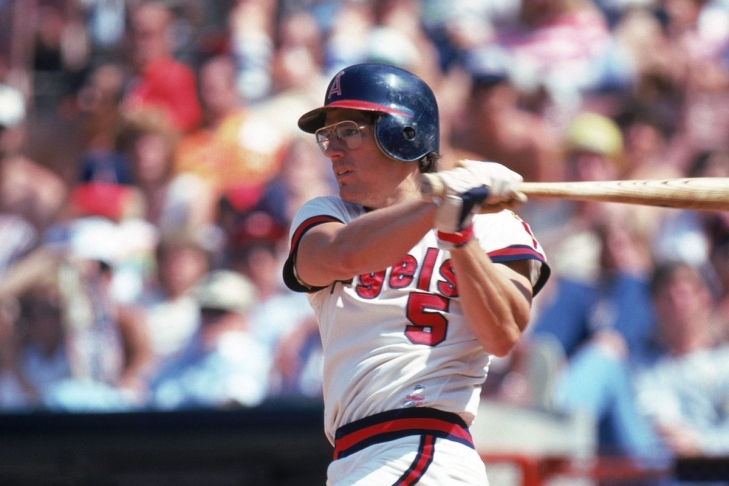
Brian Downing became a central figure in the evolution of the Angels, transforming from a defensive-minded catcher into one of the most feared power-leadoff hitters in the American League. Acquired from the Chicago White Sox in a multi-player trade following the 1977 season, he arrived in Anaheim and immediately reimagined his career through a specialized weight-training regimen and a distinctive open batting stance. An Angel for thirteen seasons, "The Incredible Hulk" helped propel the Angels to their first three playoff appearances.
In his second year with the club, he secured his only All-Star selection by batting a career-high .326 and leading the Angels to their first-ever division title. This initial splash signaled a transition from a marginal regular to a premier league force that specialized in the art of the base hit
Following a serious ankle injury in 1980, Downing moved away from the catcher position, a change that allowed his offensive efficiency to reach a different level. Between 1982 and 1990, he was a statistical force of reliability, launching at least 14 home runs in nine consecutive seasons and twice surpassing 100 runs scored. He reached a career peak for plate discipline during the 1987 season, where he blasted 29 home runs and led the American League with 106 walks. Despite the physical toll of his high-effort style, which famously included a record-setting 105 hit-by-pitches as an Angel, he remained a model of resilience, eventually recording 1,588 hits and 22 homers in a California uniform.
In 1990, Downing signed with the Texas Rangers as a free agent, and in 2009, he was inducted into the Angels Hall of Fame.