

Committee Chairman
15. Francisco Rodriguez
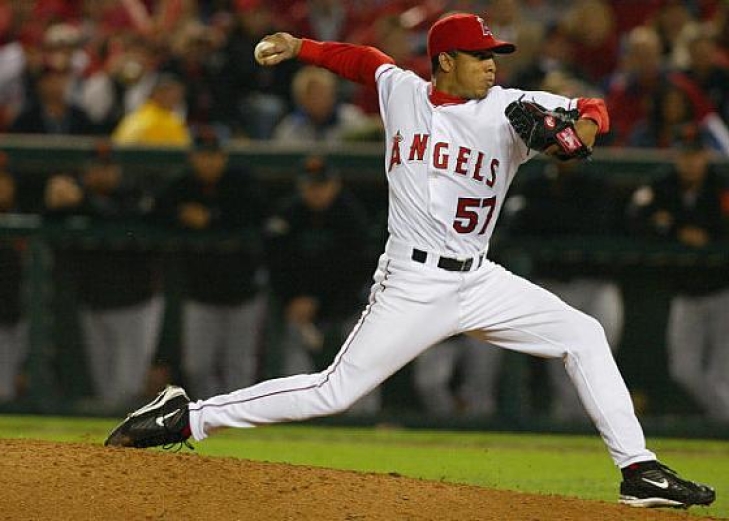
Francisco Rodriguez arrived in the California organization as an amateur free agent in 1998, a right-hander with a high-ceiling delivery that would soon alter the franchise's trajectory.
Debuting in September 2002, Rodriguez immediately established a reputation for elite strikeout capability. Despite having only five regular-season appearances to his name, he evolved into a tactical weapon in October, making 11 relief appearances and securing five wins throughout the playoffs. He showed the organization he was a foundational winner by maintaining a sub-1.000 WHIP across three rounds, providing the bullpen depth needed to secure the franchise's first World Series title. This breakout served as the lead-in to 2004, where he transitioned from a setup role to the full-time closer.
The period between 2005 and 2008 represented the peak of Rodriguez’s efficiency and individual recognition. During this stretch, he led the American League in saves three times and earned three consecutive All-Star selections. In 2008, he recorded a major-league record 62 saves, shattering the previous mark set by Bobby Thigpen. He showed the organization he was a foundational superstar by finishing in the top four of the Cy Young voting three times (2004, 2006, 2008) and winning the Rolaids Reliever of the Year Award twice.
Following the 2008 season, Rodriguez signed with the New York Mets, thus leaving the Halos. With the team, K-Rod recorded 208 saves, 587 strikeouts, and a 2.35 ERA.
18. Howie Kendrick
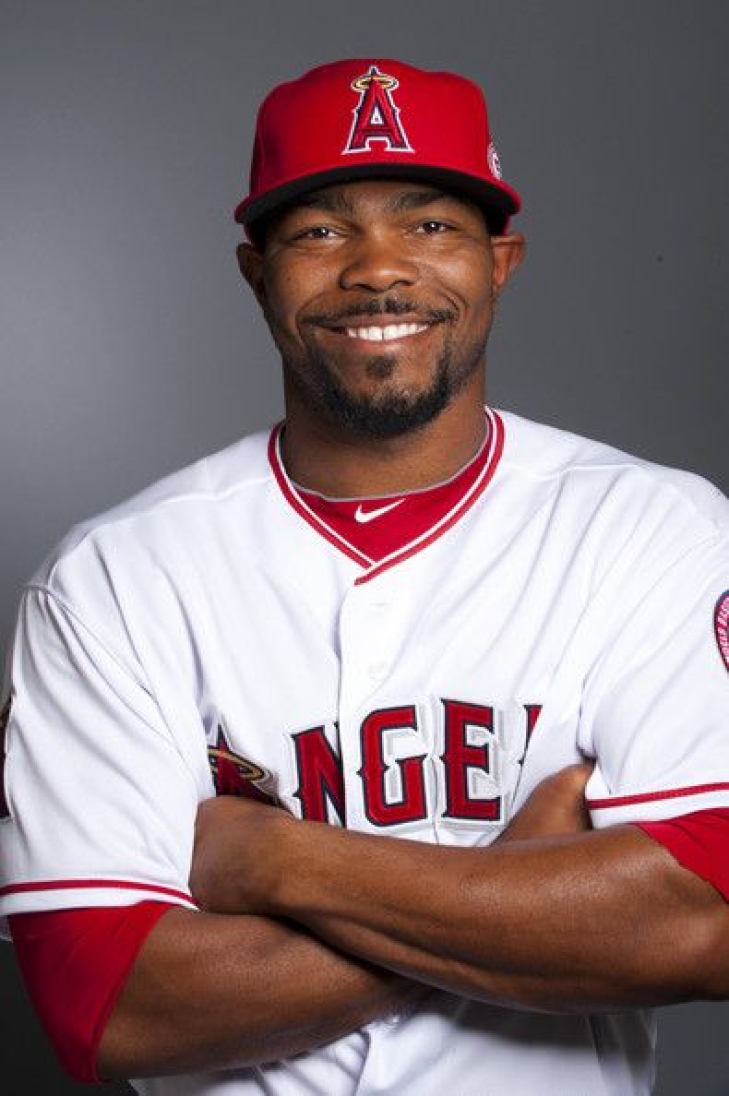
A 10th-round pick in 2002, Howie Kendrick was a contact-first specialist whose minor league averages were so high they bordered on the mythical. After destroying Triple-A pitching, he debuted in 2006 and immediately demonstrated the smooth, line-drive swing that would define his decade-long stay in Anaheim.
During the 2011 campaign, he recorded a career-high 18 home runs and earned his lone All-Star selection while maintaining a .285 batting average. He showed the organization he was a foundational star by providing versatile defense across the diamond, appearing at first base and in the outfield as needed, though he remained the primary fixture at second base.
Between 2012 and 2014, Kendrick demonstrated a specialized ability to drive the ball into the gaps, recording at least 30 doubles in back-to-back seasons. He became a statistical outlier in 2014, recording a career-high 181 hits and batting .293, helping lead the club to a league-best 98 wins. While he never captured a Gold Glove, he provided the tactical flexibility the club required,
In December 2014, a move driven by the Angels' desire to acquire young pitching in Andrew Heaney led to Kendrick being traded to the crosstown Dodgers. Kendrick compiled 1,204 hits and a .292 average with the Halos.
19. Troy Glaus
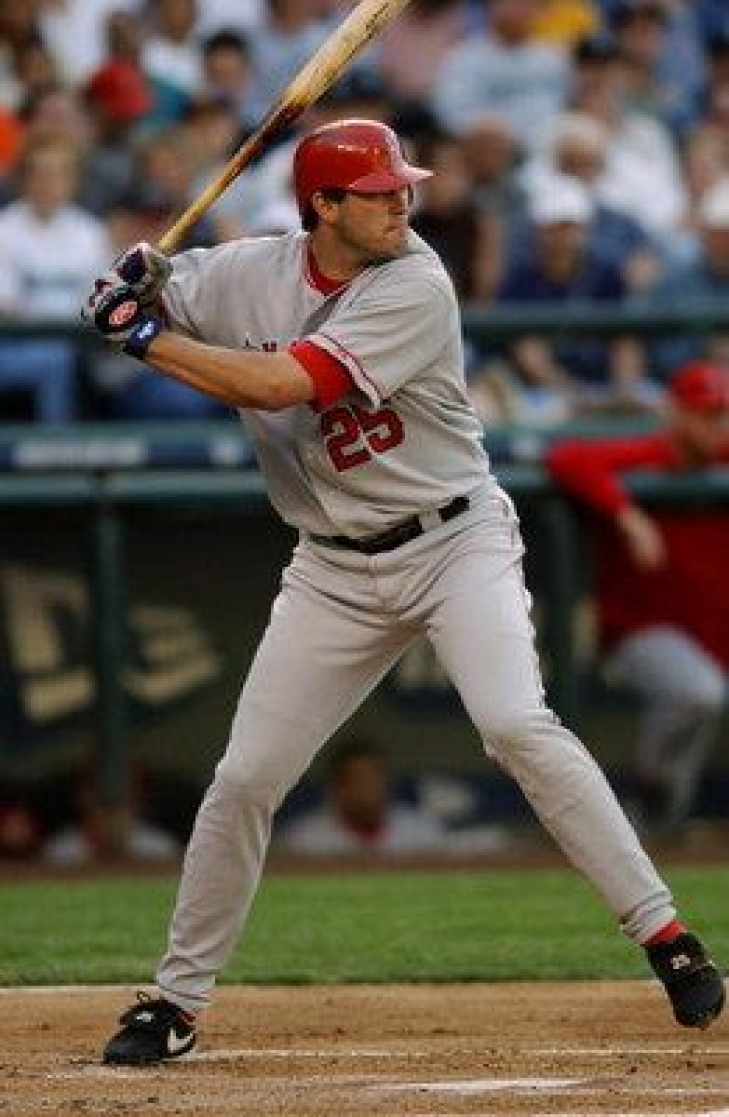
Troy Glaus arrived in the California organization as the third overall selection in the 1998 draft out of UCLA. Known for his immense physical stature and light-tower power, he was installed as the starting third baseman in 1999 and immediately demonstrated that his collegiate success would translate to the professional ranks. For seven seasons in an Angels uniform, Glaus served as the premier power threat in the lineup.
In 2000, he evolved into the most prolific power hitter in the American League, belting a franchise-record 47 home runs and leading the circuit in the category. He showed the organization he was a foundational superstar by pairing that power with a 1.008 OPS and earning the first of back-to-back Silver Slugger Awards. He followed that with 41 home runs in 2001, providing the high-frequency production required to maintain his status as a top-five finisher in the AL MVP voting.
The 2002 campaign saw Glaus transition into a legendary figure during the franchise's first championship run. After recording his third consecutive 30-home run regular season, he demonstrated a focused intensity throughout the postseason, belting seven home runs and batting over .300 in every series. He showed the organization he was a foundational winner by hitting .385 with three home runs in the World Series, earning the World Series MVP and the Babe Ruth Award. His tactical impact was never clearer than in Game 6, when his go-ahead double capped a historic five-run comeback to force a deciding Game 7.
After the 2004 season, Glaus signed a lucrative contract with the Arizona Diamondbacks. While injuries had limited him to just 58 games in his final year with the Angels, he left behind a statistical footprint that reflected his status as the greatest power-hitting third baseman in team history, departing with 182 home runs and 507 RBIs while wearing the Halo.
16. John Lackey
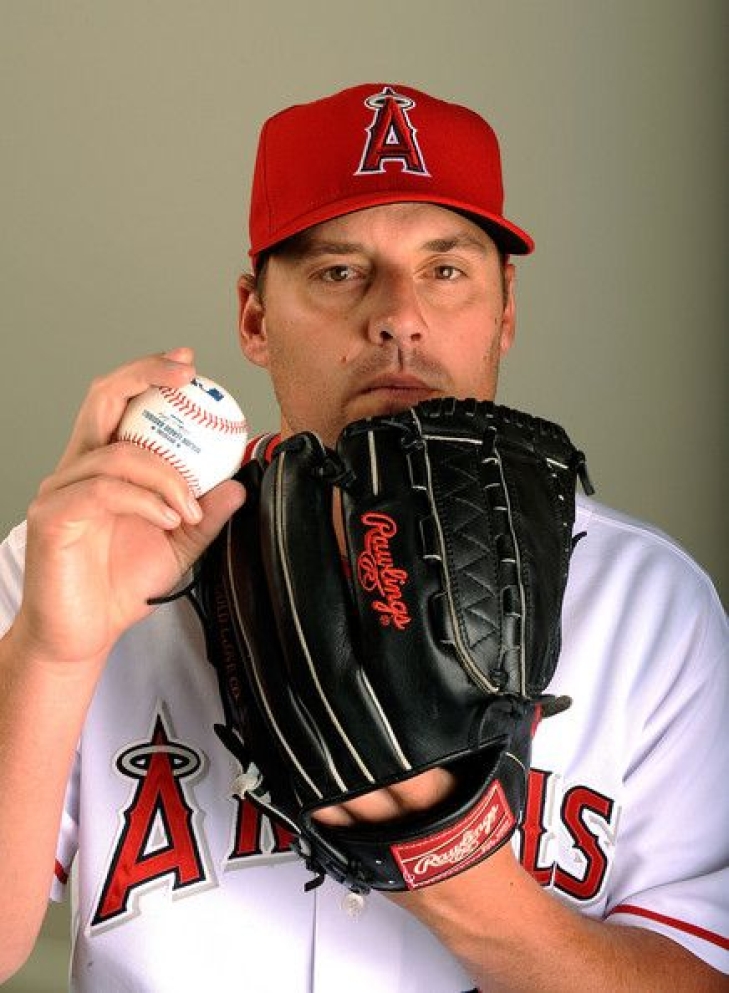
John Lackey joined the Angels organization as a second-round pick in 1999 out of Grayson County College, a big right-hander who would quickly become the backbone of the rotation. He reached the major leagues in 2002 and immediately made history as a rookie, where in a winner-take-all Game 7 against the Giants, he became the first rookie in 93 years to start and win a World Series clincher, tossing five innings of one-run ball.
Between 2003 and 2006, he bridged the gap to his elite 19-win peak by proving he could handle a heavy workload year after year. He recorded at least 14 wins in three of those four seasons and consistently sat near the top of the league leaderboard in starts.
In 2005, he reached the 199-strikeout mark, a career-best at the time, while posting a 3.44 ERA. He followed that with another 190 strikeouts in 2006, providing the steady production required to lead the staff through the transition following the departures of veteran arms like Jarrod Washburn. This stretch of reliable, high-volume pitching served as the essential lead-in to his 2007 ERA title and cemented his status as the unquestioned ace of the staff.
John Lackey’s departure from Anaheim following the 2009 season was primarily a matter of the organization’s hesitation to match the market’s valuation of his longevity. While Lackey had been the anchor of the staff for nearly a decade, the Angels management grew wary of his long-term durability after he missed the first six weeks of both the 2008 and 2009 seasons due to recurring elbow and forearm issues.
The tension began to surface during spring training in 2009 when the club offered Lackey a three-year extension worth approximately $40 million. Lackey, who had previously signed a team-friendly deal to help the club remain competitive, viewed the offer as a sign that the front office did not see him as a top-tier ace. He made it clear that he would not accept another hometown discount and entered free agency seeking a contract that reflected his status as a workhorse.
The Boston Red Sox eventually stepped in with a five-year, $82.5 million contract, an offer that included both more money and more guaranteed years than the Angels were willing to provide. With the Angels, Lackey compiled a 102-71 record, 1,201 strikeouts, and the 2002 World Series Game 7 victory.