

33. Paul Naumoff
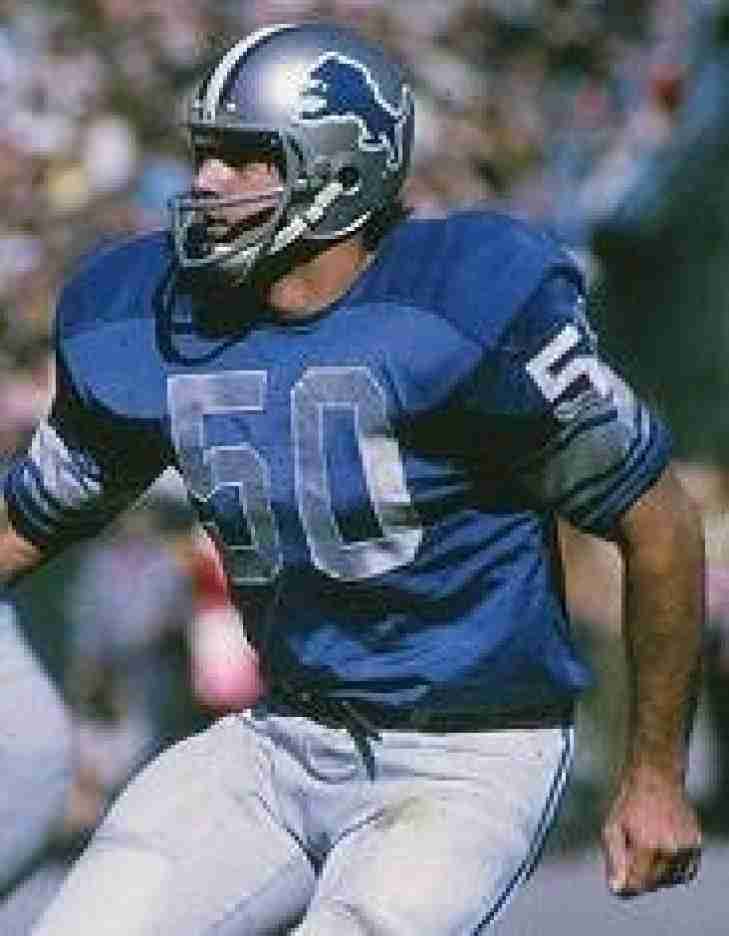
Drafted in the third round out of Tennessee in 1967, consensus All-American Paul Naumoff came to Detroit as a hard-hitting linebacker with an incredible football IQ. After carving out a role on special teams as a rookie, Naumoff quickly took over as the starting left linebacker, anchoring the second level of Detroit's defense for the next decade with remarkable consistency.
Naumoff’s intelligence and range made him a nightmare for opposing quarterbacks trying to diagnose coverage. He hit his peak on the national stage in 1970, helping lead Detroit to a 10-4 record and a playoff berth while earning his first career Pro Bowl selection. Known as the quintessential glue guy in the locker room, coaches and teammates alike revered his steady leadership and instincts. That respect culminated in 1975 when his peers voted him the team’s Most Valuable Player after a stellar season featuring two interceptions.
Durability was the hallmark of Naumoff’s career. He once played in 142 consecutive games for the Lions, missing just two contests across his entire 12-year tenure in Honolulu blue. When he finally hung up his cleats following the 1978 season, only Wayne Walker and Dick LeBeau had appeared in more games in franchise history.
In his career, Naumoff played in 168 regular-season games with 151 starts, plus one postseason contest. He compiled 6.0 interceptions, seven fumble recoveries, and 20.5 sacks.
39. Larry Hand
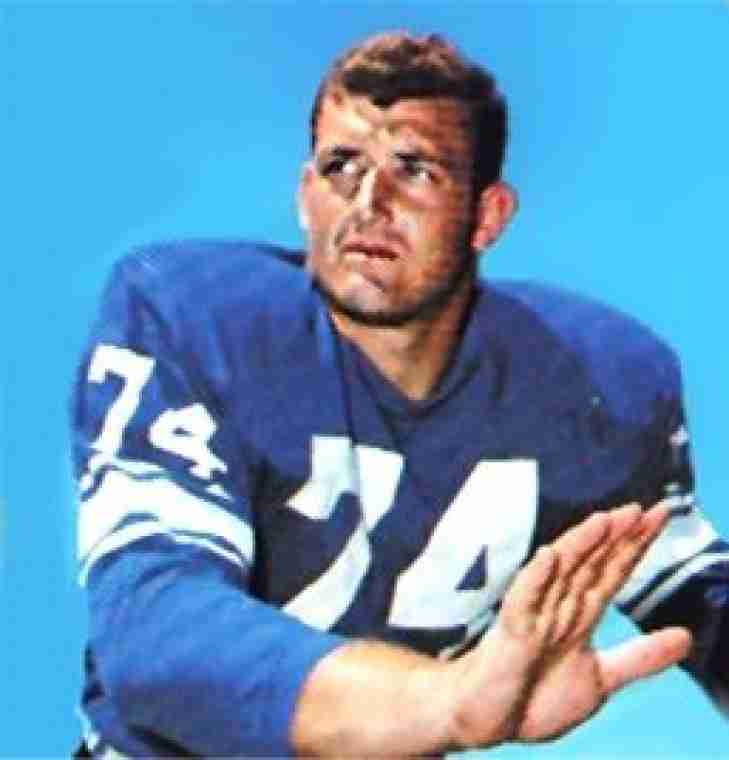
Taken in the 10th round (132nd overall) out of Appalachian State in the 1964 NFL Draft, Larry Hand joined the Lions as a late-round pick who soon became one of the franchise's most notable draft steals. The 6-foot-4, 250-pound defensive lineman secured a roster spot through relentless effort and physical discipline, earning a starting position on Detroit's front four by his second season and maintaining it for more than ten years.
Hand demonstrated exceptional positional flexibility, fluidly moving between defensive end and tackle based on scheme needs. As a formidable run defender and a persistent pressure creator, he was a key component of Detroit's defense alongside Alex Karras and Wayne Walker. Although he never received Pro Bowl honors, his teammates and coaches recognized his value in 1972 by voting him the Detroit Lions’ Most Valuable Player after an outstanding season.
Durability and defensive playmaker instincts defined Hand's 13-year run. In addition to terrorizing backfields for 62.5 retroactively tracked sacks, Hand had an uncanny knack for turning defensive plays into points—housing three of his five career interceptions for touchdowns, including a 62-yard pick-six against Chicago in 1970. When he retired following the 1977 season as a lifelong Lion, he had logged 164 games played, cementing his legacy as one of the most dependable interior anchors in team history.
He compiled 62.5 sacks, five interceptions (110 return yards, three defensive touchdowns), and eight fumble recoveries over his career.
26. Ndamukong Suh
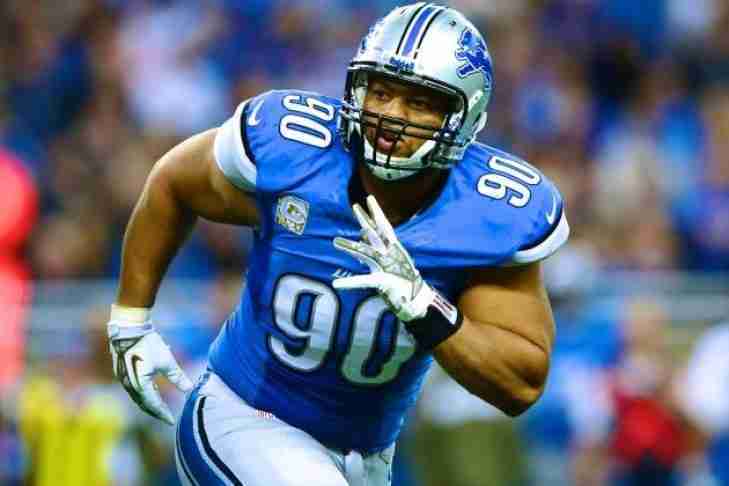
Selected second overall out of Nebraska in 2010 after one of the most terrifying individual college seasons in gridiron history, Ndamukong Suh stepped into the state of Michigan as an instant structural force. Boasting rare raw power, explosion off the snap, and a mean streak that threw opposing offensive lines into complete disarray, Suh immediately redefined what an interior defensive tackle could accomplish.
Suh took the NFL by storm as a rookie, racking up 10.0 sacks, 66 tackles, an interception, and a fumble recovery for a touchdown to capture 2010 AP Defensive Rookie of the Year honors alongside First-Team All-Pro recognition. Alongside Nick Fairley and Cliff Avril, he anchored a vicious front four that helped transform Detroit from a league afterthought into a playoff contender, propelling the Lions to postseason berths in 2011 and 2014.
Suh’s prime years in Detroit were pure interior disruption. Opposing offensive coordinators had to fundamentally alter their game plans, committing two and sometimes three blockers to contain him, yet he still routinely blew up plays in the backfield. His relentless pursuit and upper-body strength made him equally devastating against the run, suffocating interior rushing lanes and allowing linebackers like DeAndre Levy to roam freely. During his final season in Detroit in 2014, Suh led a unit that finished as the NFL’s top-ranked rushing defense, allowing an astonishingly low 69.3 rushing yards per game.
While his relentless physical style frequently crossed the line—earning him an infamous reputation as one of the league's dirtiest players alongside a string of hefty fines and high-profile suspensions—there was no denying his sheer game-disrupting dominance. Teams were forced to commit double-teams on virtually every snap, yet Suh routinely collapsed pockets from the inside and disrupted backfield handoffs before they could even materialize.
He departed following the 2014 season to sign a record-breaking contract with Miami, later winning Super Bowl LV with Tampa Bay and earning a spot on the NFL 2010s All-Decade Team. He compiled 238 tackles, 36.0 sacks, 66 tackles for loss, 98 quarterback hits, and one interception in Detroit.
36. Greg Landry
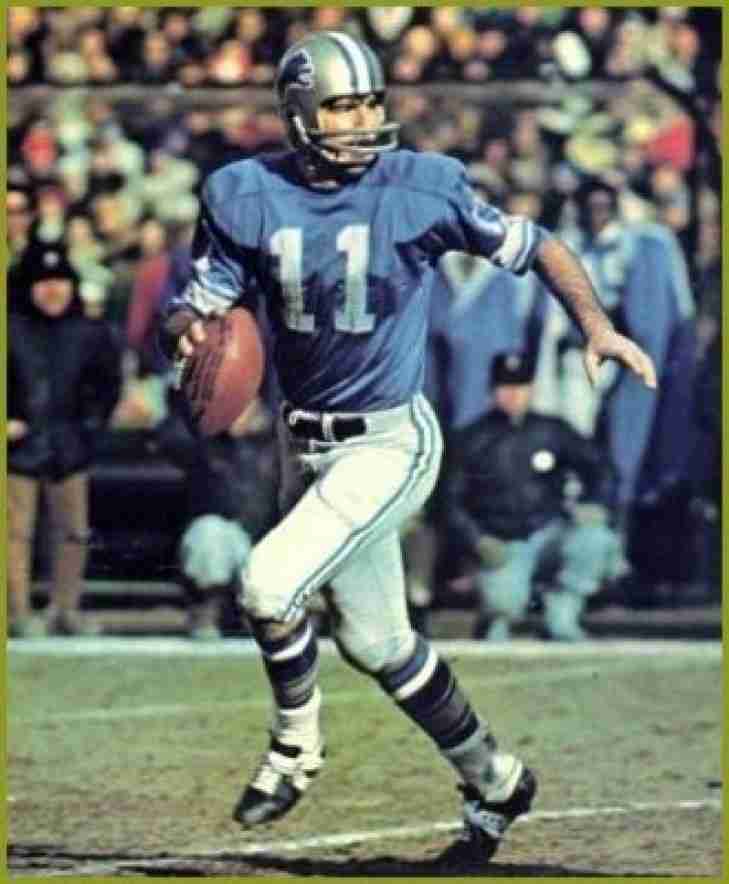
Stepping out of UMass in 1968, Greg Landry provided Motown with a rare structural prototype long before the modern dual-threat quarterback became standard operating procedure. Standing 6-foot-4 and 210 pounds with exceptional open-field athleticism, Landry brought a bruising, power-running dimension to the signal-caller position that fundamentally altered how defenses had to prepare for Detroit.
After earning the starting job full-time in 1971, Landry unleashed a solid season. He threw for 2,237 yards and 16 touchdowns while rushing for 530 yards and three scores, becoming the first quarterback in NFL history to pass for over 2,000 yards and rush for over 500 in the same campaign. His rare athletic skill set earned him a Pro Bowl selection and First-Team AP All-Pro honors as he led Detroit to a 7–6–1 record. He backed it up in 1972 by throwing 18 touchdown passes and rushing for a career-high nine touchdowns on the ground.
Landry's running ability wasn't just a scramble drill when plays broke down; head coach Joe Schmidt routinely called designed option plays and quarterback draws for his imposing field general. Though major knee and shoulder injuries limited his availability in the mid-1970s, Landry staged a triumphant comeback in 1976, passing for 2,191 yards and 17 touchdowns to earn the PFWA Comeback Player of the Year award.
After losing his starting role to Gary Danielson and seeing his playing time dwindle during a frustrating 1978 campaign, Landry's eleven-year tenure in Detroit came to an end in April 1979 when he was traded to the Baltimore Colts in exchange for draft picks. He went on to spend three seasons as a backup and spot starter in Baltimore, brief stints in the USFL, and a final year with Chicago before transitioning into coaching. With Detroit, Landry amassed 12,451 passing yards, 80 passing touchdowns, 81 interceptions, 2,502 rushing yards, and 19 rushing touchdowns.
25. Billy Sims
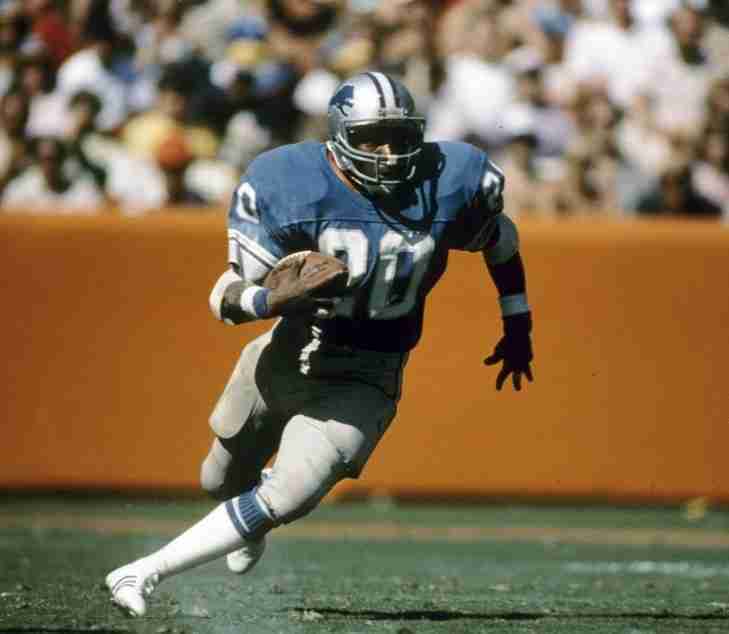
Few tailbacks in NFL history burst onto the professional scene with the raw, jaw-dropping athleticism of Billy Sims. Selected first overall in 1980 after winning the Heisman Trophy at Oklahoma, Sims brought an electric mix of track-star speed, violent high-stepping action, and open-field agility that instantly made him a national sensation and a beloved hero across Motown.
Sims hit the league like a lightning bolt, rushing for 1,303 yards and leading the NFL with 13 rushing touchdowns as a rookie to capture AP Offensive Rookie of the Year honors. He followed that up with a First-Team All-Pro campaign in 1981, racking up 1,437 rushing yards while averaging 4.9 yards per carry. His signature, airborne goal-line dives and karate-style high kicks over prospective tacklers captivated fans, earning him three consecutive Pro Bowl trips from 1980 to 1982 while anchoring Detroit's offense.
His dominance extended far beyond carrying the football. As a dual-threat weapon out of the backfield, Sims regularly tore up defenses on screen passes and swing routes, compiling over 7,000 yards from scrimmage and an astounding 63 Approximate Value across just 60 career games.
Then came the sudden, heart-wrenching halt. On October 21, 1984, during an eight-game stretch in which he averaged 5.3 yards per carry, Sims suffered a catastrophic right knee injury when his cleat caught in the artificial turf at the Hubert H. Humphrey Metrodome against Minnesota. Despite spending nearly two years in grueling rehabilitation, the devastating tear ended his career at just 29 years old.
Across five active seasons spent entirely with the Detroit Lions (1980–1984), Sims played in 60 regular-season games with 58 starts, plus two postseason contests. He compiled 5,106 rushing yards, 42 rushing touchdowns, 186 receptions, 2,072 receiving yards, and 47 total touchdowns over his brief and explosive run.
35. Johnnie Morton
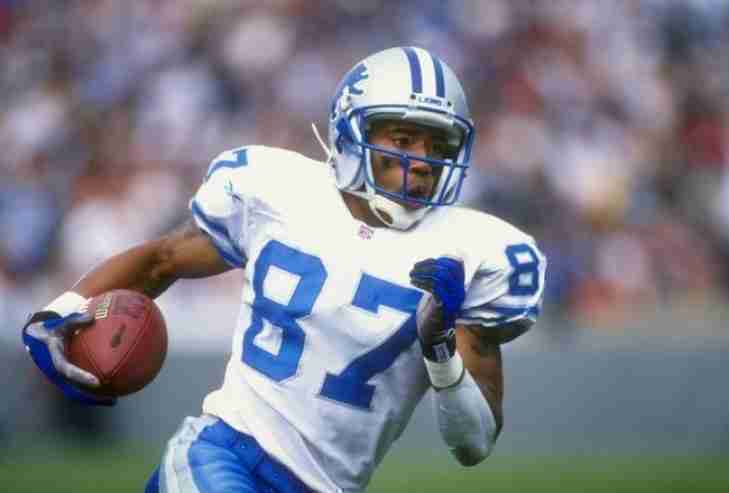
Selected in the first round (21st overall) out of USC in the 1994 NFL Draft, Johnnie Morton arrived in Motown with exceptional route-running ability, smooth open-field acceleration, and reliable hands. While he often played alongside high-profile offensive stars like Herman Moore and Brett Perriman early in his career, Morton quickly carved out a vital role as the ultimate intermediate and deep-threat weapon in Detroit's passing game.
Morton stepped into a full-time starting role in 1996 and broke out the following season with his first 1,000-yard campaign, catching 80 passes for 1,057 yards. He proved to be much more than a secondary option, stringing together three consecutive 1,000-yard receiving seasons from 1997 to 1999. Known for his crisp double-moves and ability to convert critical third downs, Morton became a go-to safety valve for quarterbacks Scott Mitchell and Charlie Batch, consistently punishing secondary coverage that rolled toward Herman Moore.
His best season came in 2001. Operating as the primary target, Morton hauled in 77 receptions for a career-high 1,154 receiving yards while averaging 15.0 yards per catch. His durability was remarkable throughout his eight-year tenure in Detroit, missing only two games while serving as one of the few explosive constants through coaching transitions and roster shifts.
When Morton departed following the 2001 season to finish his career with Kansas City and San Francisco, he left the Lions as one of the most productive pass-catchers in franchise history. He finished his Lions tenure sitting behind only Herman Moore and Calvin Johnson on the organization's receiving leaderboards.
As a Lion, Morton accumulated 469 receptions, 6,499 receiving yards, 35 receiving touchdowns, and 142 rushing yards.
34. Dominic Raiola
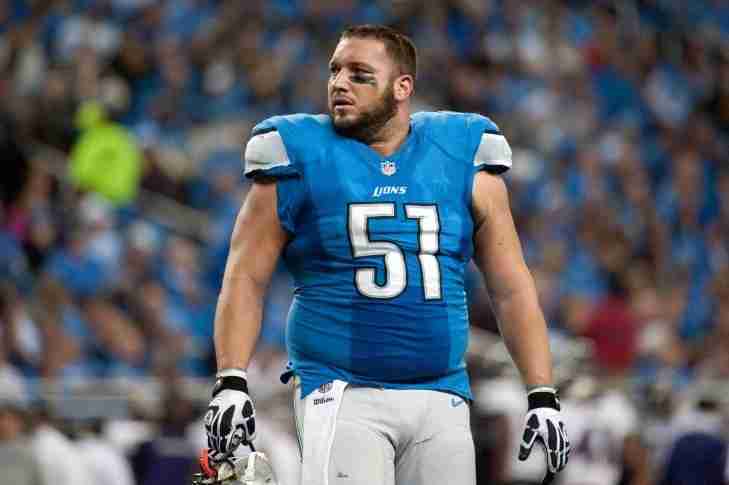
Fresh off winning the inaugural Rimington Trophy as the top center in college football at Nebraska, Dominic Raiola was selected by Detroit in the second round of the 2001 NFL Draft. After spending his rookie year learning the ropes in a backup role, Raiola took over as the starting center in 2002 and held down the pivot point of Motown's offensive line for the next thirteen seasons.
Raiola's time with Honolulu blue was marked by exceptional durability and a tough, fiery attitude. Throughout a career that saw frequent coaching changes, quarterback shifts, and limited supporting talent, he missed only four games in 14 seasons. His sharpness as a line caller and resilience in the trenches made him the key leader for the protection units that achieved franchise records for fewest sacks in 2002 and 2003.
Although postseason awards and Pro Bowl selections often overlooked him, Raiola was highly respected within the organization for his durability and long career. He made history as the first Lion to play 200 games for the franchise, playing a key role in transitioning from the tough, underperforming years of the 2000s to the dynamic playoff teams featuring Matthew Stafford and Calvin Johnson.
By the time he retired following the 2014 season, Raiola had logged 219 games played and 203 starts in a Detroit uniform—placing him behind only Jason Hanson on the franchise's all-time games played list.
32. Al "Bubba" Baker
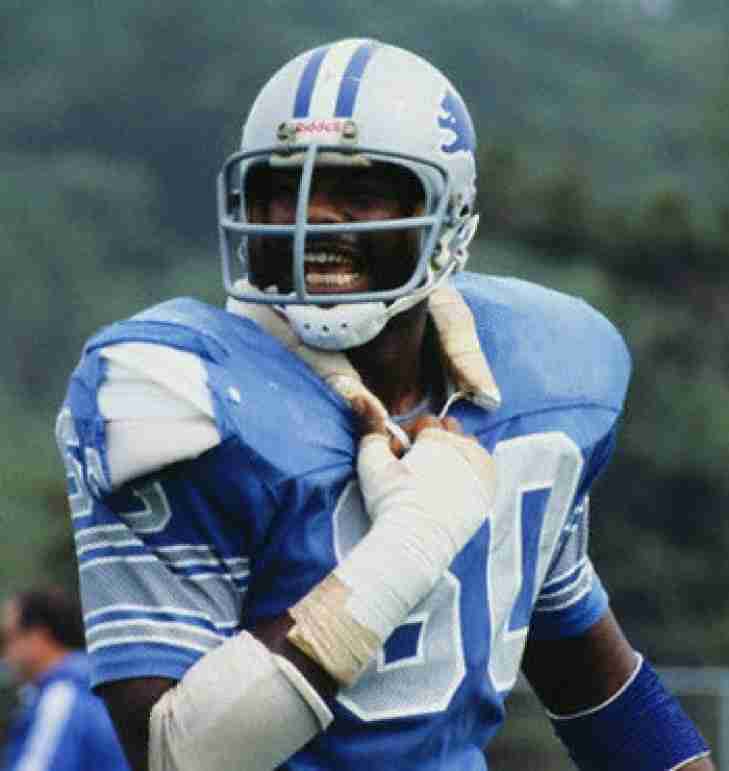
Stepping out of Colorado State as a second-round pick in 1978, Al "Bubba" Baker unleashed one of the most destructive individual seasons the National Football League has ever witnessed. The 6-foot-8 defensive end combined blinding speed with massive power, anchoring Detroit's legendary "Silver Rush" front four and terrorizing opposing quarterbacks from his very first snap.
Baker's rookie campaign was pure bedlam. He compiled an astounding 23.0 sacks in 1978—a jaw-dropping total that stands as the greatest single-season pass-rushing performance in NFL history. He easily captured AP Defensive Rookie of the Year honors and earned a consensus First-Team All-Pro nod. Baker proved it was no fluke by leading the league again two years later with 18.0 sacks in 1980, earning Pro Bowl honors in each of his first three professional seasons.
Opposing offenses had no answer for his edge-bending acceleration, but off-field contract disputes eventually shortened his stay in Motown. After five dominant years anchoring the Lions' line, Baker was traded to St. Louis in 1983, later spending time with Cleveland and Minnesota before retiring. Because sacks did not become an official NFL statistic until 1982, his era-defining numbers sat in historical limbo for decades until retroactively compiled and verified.
As a Lion, Baker compiled 75.5 sacks, four forced fumbles, seven fumble recoveries, and two interceptions in Honolulu blue (131.0 career sacks overall). He was also chosen for both the Lions’ 75th Anniversary and All-Time Teams.
31. Jeff Backus
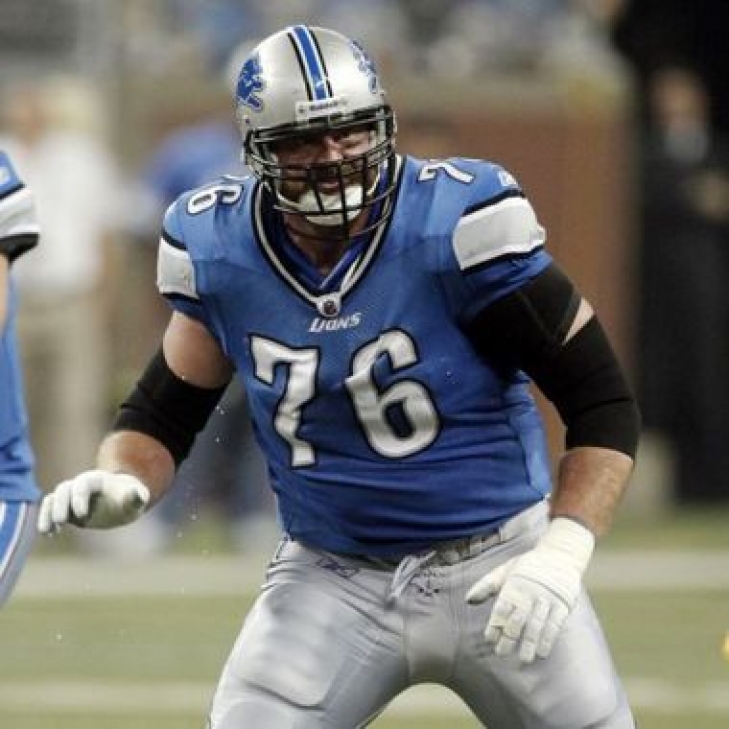
Jeff Backus didn't need time to adjust to the speed of professional football after he was taken 18th overall in 2001 from Michigan. Stepping straight into the starting left tackle spot as a rookie, he immediately locked down the most critical position on Detroit's offensive line and held it without hesitation for twelve consecutive seasons.
Backus defined iron-man durability in an era defined by grueling physicality. From his first career game in 2001 through November 2012, he started 186 consecutive games at left tackle for the Lions—the longest starting streak by an offensive lineman in franchise history. Through multiple coaching regimes, offensive schemes, and quarterback rotations, he served as the blindside protector. His mechanical consistency and toughness made him a respected locker-room leader and an offensive cornerstone.
Although postseason honors and Pro Bowl selections often eluded him, Backus gained national recognition early in his career by making the 2001 PFWA All-Rookie Team. His dependability proved valuable in 2011 when he helped solidify the line that protected Matthew Stafford during his record 5,000-yard passing season, leading Detroit to its first playoff appearance in more than ten years.
When a hamstring injury finally snapped his historic starting streak late in the 2012 season, Backus retired shortly thereafter as a lifelong Lion. His 191 career starts rank among the highest totals in franchise history, standing as a testament to one of the most dependable first-round investments the franchise ever made.
28. Robert Porcher
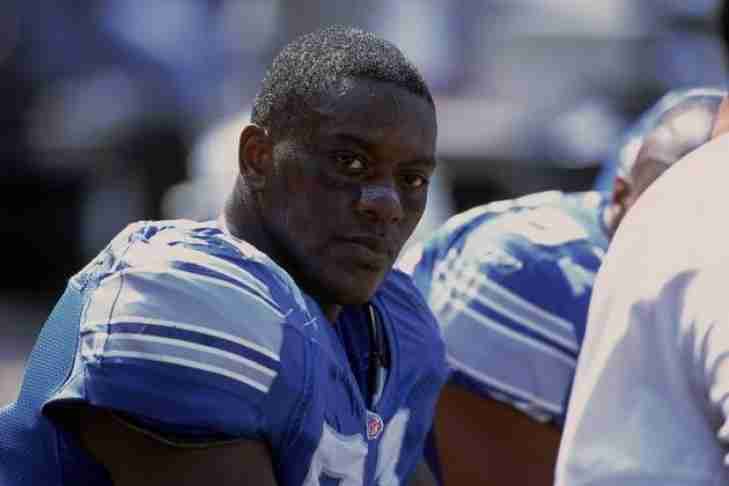
Arriving in Motown as a 26th overall pick out of South Carolina State in 1992, Robert Porcher possessed raw athleticism and length that needed only time and technique to turn into pure backfield destruction. He quickly became the undisputed anchor of Detroit's defensive line, spending twelve seasons torturing opposing quarterbacks.
Porcher hit his stride in 1996 with an 8.5-sack campaign, launching a dominant six-year run as one of the NFC's premier edge threats. He recorded double-digit sacks in five seasons, highlighted by a career-best 15.0 sacks in 1999. Combining exceptional closing speed with powerful hand use, Porcher earned three Pro Bowl selections (1997, 1999, 2001) and three AP Second-Team All-Pro honors, regularly collapsing the pocket and anchoring front-seven defenses that reached the postseason five times during his tenure.
Although opposing quarterbacks dreaded facing him on Sundays, the Detroit community highly valued his contributions beyond football. He is a key philanthropist in the region, having established the Robert Porcher Man of Rush Foundation, which has raised hundreds of thousands of dollars for cancer research and youth initiatives. His relentless civic efforts have led to multiple nominations for the team's Walter Payton Man of the Year award.
When Porcher retired following the 2003 season, he hung up his cleats as a lifelong Lion, having accumulated 95.5 official career sacks—falling just 4.5 sacks shy of the century mark while establishing a franchise record that still stands today. In September 2025, his towering legacy was immortalized at Ford Field when the organization officially inducted him into the Pride of the Lions ring of honor. He also had 602 tackles and 25 forced fumbles for the team.
22. Chris Spielman
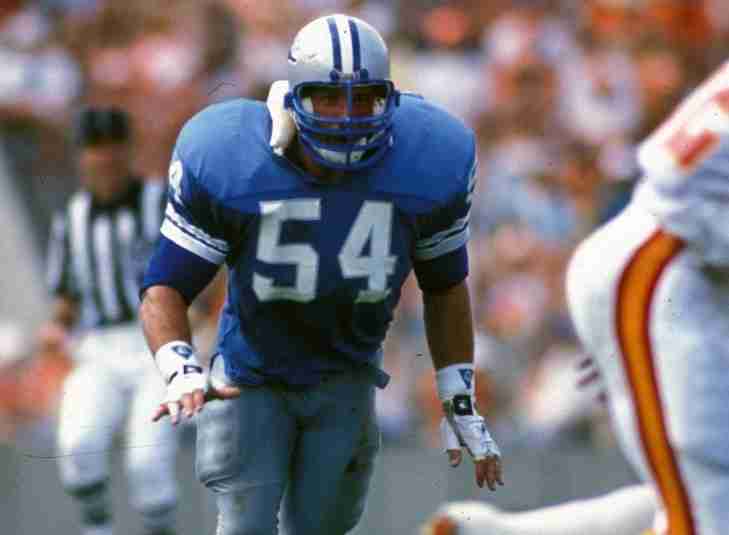
A Linebacker born in Canton, Ohio. How perfect!
Drafted in the second round out of Ohio State in 1988, the consensus All-American linebacker landed in Detroit and immediately became the ferocious, heartbeat captain of Wayne Fontes' defense.
Spielman's relentless preparation and energetic sideline-to-sideline effort quickly made him a key figure in Detroit's defense. He led the team in tackles in seven of his eight seasons in Motown, setting a franchise record with 195 tackles in 1994. As the vocal leader and main anchor, Spielman drove Detroit's rise to a competitive team, guiding them to four postseason appearances, two NFC Central titles, and a trip to the 1991 NFC Championship Game.
His individual accolades matched his impact. Spielman represented Detroit in four Pro Bowls (1989, 1990, 1991, 1994) and earned First-Team AP All-Pro honors in 1991, alongside two Second-Team All-Pro selections (1992, 1994).
After leaving the Lions following the 1995 campaign, Spielman played two seasons with the Buffalo Bills—setting a franchise record with 206 tackles in 1996—before retiring. He later returned to the Lions front office as a key executive, cementing his lifelong bond with the organization before being formally enshrined in the Pride of the Lions in 2021.
Spielman amassed 1,138 tackles, 10.5 sacks, four interceptions, 14 forced fumbles, and 17 fumble recoveries for the organization.
23. Alex Wojciechowicz
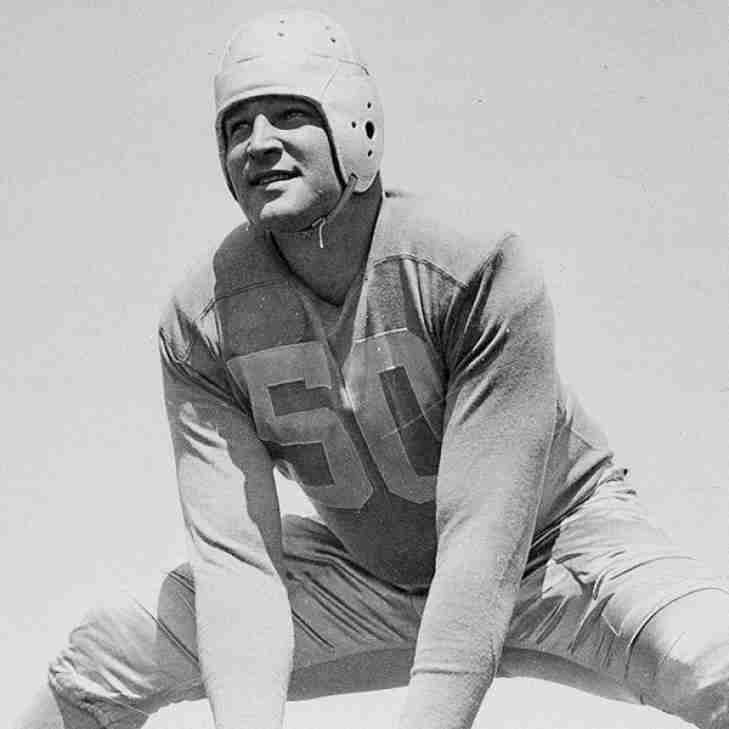
Famous as a member of Fordham's legendary "Seven Blocks of Granite" offensive line, Alex Wojciechowicz—known throughout gridiron history simply as "Wojie"—arrived in Motown as the sixth overall pick in the 1938 draft. He immediately became an indispensable fixture for the Lions, operating as a relentless two-way iron man who rarely left the field.
Wojciechowicz, who snapped the ball at center on offense and played as a tough linebacker on defense, embodied the physical toughness of early football. He received First-Team All-Pro honors in 1939 and stayed a key interior player through World War II. In addition to his fierce tackling, his pass coverage skills were exceptional for his time; in 1944, he intercepted seven passes, setting a franchise record for most in a season that lasted for many years.
After nearly nine seasons with Detroit, Wojciechowicz was traded to the Philadelphia Eagles halfway through the 1946 season. He shifted to a strictly defensive role, bringing championship experience to Greasy Neale's team and aiding their back-to-back NFL Championship wins in 1948 and 1949.
Recognized as a premier interior force of his generation, Wojciechowicz was selected to the NFL 1940s All-Decade Team. Enshrined into the Pro Football Hall of Fame in 1968, his legacy in Motown was immortalized when the Lions inducted him as part of the inaugural class of the Pride of the Lions in 2009. As a Lion, he compiled 14 interceptions, 127 interception return yards, and one defensive touchdown, while also playing on the offensive line.
19. Jim David
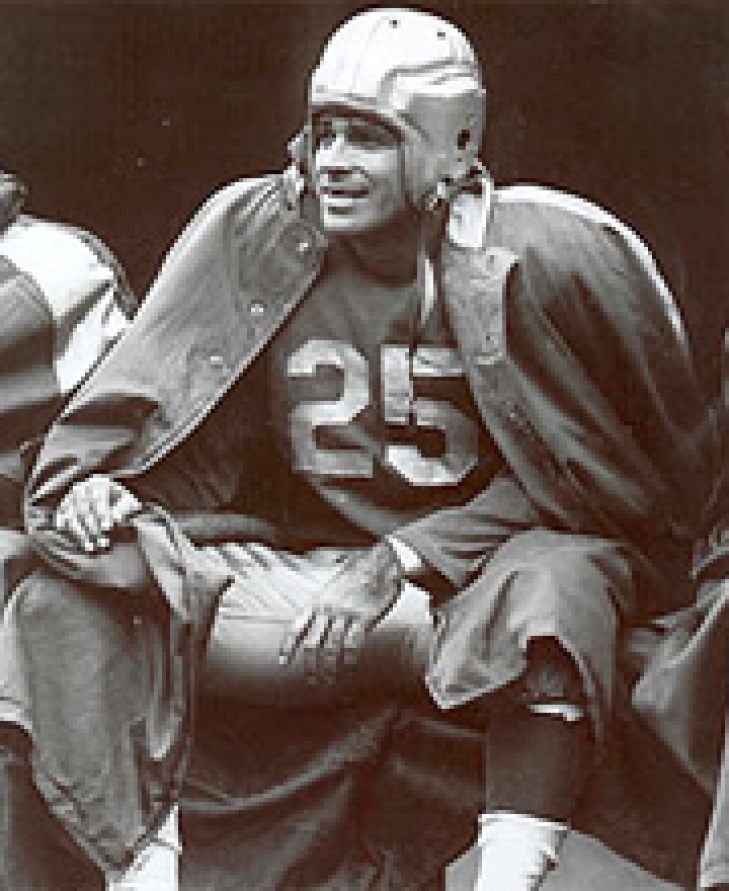
Standing just 5-foot-11 and barely tipping the scales at 175 pounds, Jim David entered the league as a 22nd-round longshot out of Colorado A&M in 1952. What he lacked in bulk, he made up for with pure, unadulterated hostility on the field. Opponents quickly dubbed him "The Hatchet"—a moniker earned after his relentless, bone-crushing tackles knocked Hall of Fame talents like Y.A. Tittle and Tom Fears out of back-to-back games in 1953.
Operating at right defensive halfback, David served as the physical Enforcer of "Chris' Crew," Detroit's legendary secondary alongside Hall of Famers Jack Christiansen and Yale Lary. While his reckless tackling set a terrifying defensive tone for Buddy Parker's squad, his ball-hawking range was equally lethal. David hauled in seven interceptions as a rookie in 1952, going on to match that seven-pick mark in both 1954 and 1956.
His true claim to Motor City immortality came on the postseason stage. David was a vital catalyst for Detroit's three NFL Championship teams (1952, 1953, and 1957), remarkably picking off a pass in all three title game victories. From 1954 through 1959, he was selected to six consecutive Pro Bowls, establishing himself as one of the era’s premier defensive backs.
After retiring in 1959, David remained a fixture in the organization, eventually serving as Detroit's defensive coordinator from 1967 to 1972 under former teammate Joe Schmidt. He was inducted into the Michigan Sports Hall of Fame in 1997.
David compiled 36 interceptions, 259 interception return yards, and five fumble recoveries in Detroit (adding three postseason picks).
27. Doug English
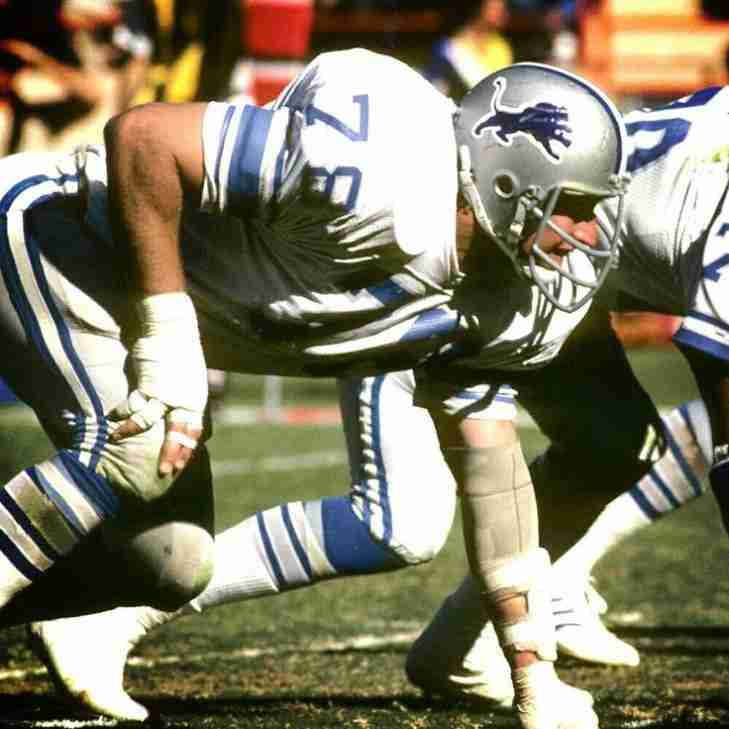
Selected in the second round out of Texas in 1975, College Football Hall of Famer Doug English didn't take long to transform Detroit's front four into an absolute nightmare for opposing offenses. Sliding into the interior at defensive tackle, he emerged as the undisputed centerpiece of Motown's fearsome "Silver Rush" defensive line alongside pass-rushing terrors Al Baker, Bubba Baker, and Dave Pureifory.
English possessed a rare combination of raw power and quickness off the snap, allowing him to collapse pockets from the inside just as easily as he stuffed the run. After earning his first career Pro Bowl selection in 1978, he briefly stepped away in 1980 to recharge, but returned in 1981 without missing a beat. His finest campaign arrived in 1983, when he recorded a career-high 13.0 official sacks to lead Detroit to an NFC Central title while earning consensus First-Team AP All-Pro honors and his third Pro Bowl nod.
In addition to his pass-rushing prowess, English proved to be uniquely opportunistic when trapped near the opponent's goal line. He shares the NFL record for most career safeties with four, including a rare two-safety performance during his explosive 1983 season. While the NFL did not track sacks as an official statistic until 1982—leaving his official total at 25.0—unofficial tracking credits him with 59.0 total sacks across his decade in Detroit, a mark that firmly ranks among the top six in franchise history.
English remained a dominant interior disruptor until a severe neck injury cut his career short in 1985, ending a solid run spent entirely with the Lions.
24. Kevin Glover
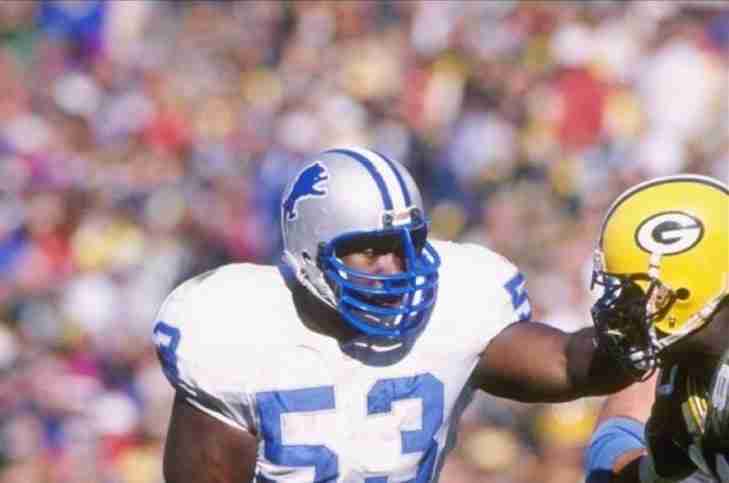
Selected in the second round out of Maryland in 1985, Kevin Glover worked his way into the lineup before taking full control of the center spot. Once entrenched, he provided the intelligent, athletic pivot that Detroit's front line needed during one of the most explosive offensive eras in franchise history.
Glover's tenure peaked alongside Hall of Fame running back Barry Sanders. Operating at center, Glover possessed the rare mobility needed to reach the second level, pull on perimeter sweeps, and make split-second adjustments against blitzing fronts. His chemistry with left tackle Lomas Brown formed the core of a front five that helped Sanders rack up historical rushing totals and powered Detroit to four playoff appearances, including a trip to the 1991 NFC Championship Game.
His national recognition came later in his career, but it reflected years of dominant technique. Glover earned three consecutive Pro Bowl selections from 1995 through 1997 and captured a Second-Team AP All-Pro nod in 1995. Known for his exceptional durability and leadership, he rarely missed a snap, serving as an offensive captain and one of the most respected locker-room voices in Motown.
After 13 seasons in Detroit, Glover finished his career with two years in Seattle before hanging up his cleats. His contributions were later recognized with selections to both the Detroit Lions 75th Anniversary Team and All-Time Team.
17. Roger Brown
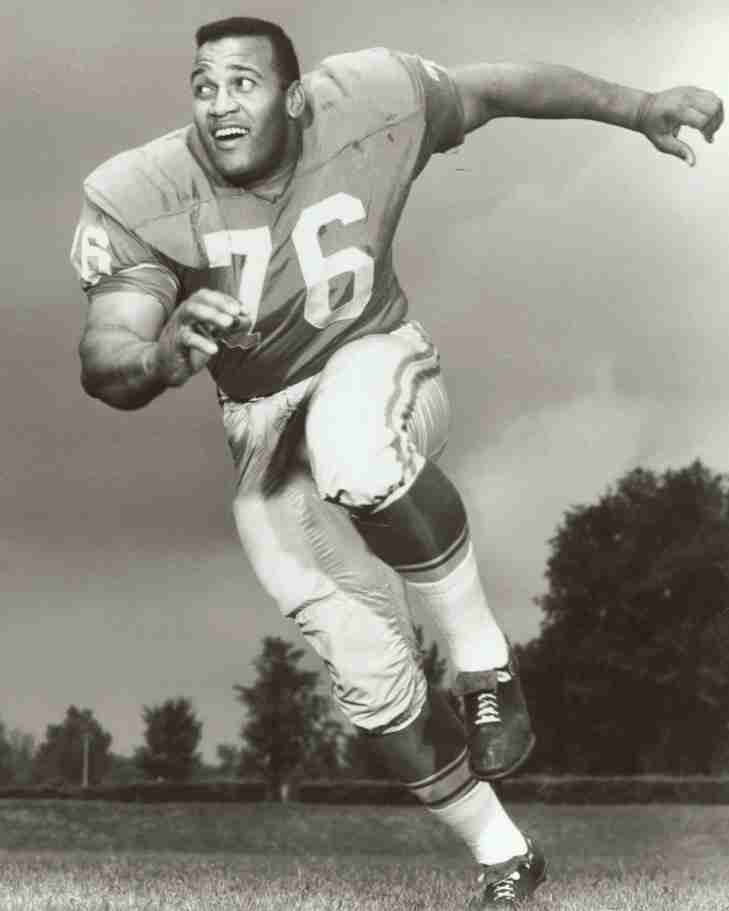
Taking the field at 6-foot-5 and over 300 pounds—reportedly making him the NFL’s first 300-pound player—Roger Brown possessed an uncanny blend of brute force and sideline-to-sideline quickness that defied his size. Landing in Motown as a fourth-round pick out of Maryland Eastern Shore in 1960, Brown joined Alex Karras to form arguably the most destructive interior defensive tackle duo in pro football history.
Brown made his presence felt immediately, earning a starting role as a rookie before bursting into national superstardom during his sophomore season. His defining masterpiece unfolded during the famous 1962 "Thanksgiving Day Massacre" against the undefeated Green Bay Packers. Brown systematically dismantled Vince Lombardi’s offensive line, racking up six individual sacks—including a game-altering safety of Bart Starr—and forcing a fumble as the Lions handed the eventual champion Packers their sole defeat of the year.
That historic afternoon served as the catalyst for a dominant run in which Brown earned five consecutive Pro Bowl selections (1962–1966) and First-Team All-Pro honors in back-to-back seasons (1962 and 1963). While unofficial film tracking credits him with roughly 63.5 sacks in Honolulu Blue, his ability to blow up double teams allowed Detroit’s linebackers to flow freely to the ball, keeping the Lions' defense among the elite throughout the decade.
He was eventually traded to Los Angeles in 1967 to replace Rosie Grier in the famed "Fearsome Foursome," but Brown's prime belonged strictly to Detroit.
Brown played in 98 regular-season games with 96 starts for Detroit. He compiled an unofficial 63.5 sacks, 11 fumble recoveries, and three safeties. Brown was inducted into the Pride of the Lions in 2018.
21. Jason Hanson
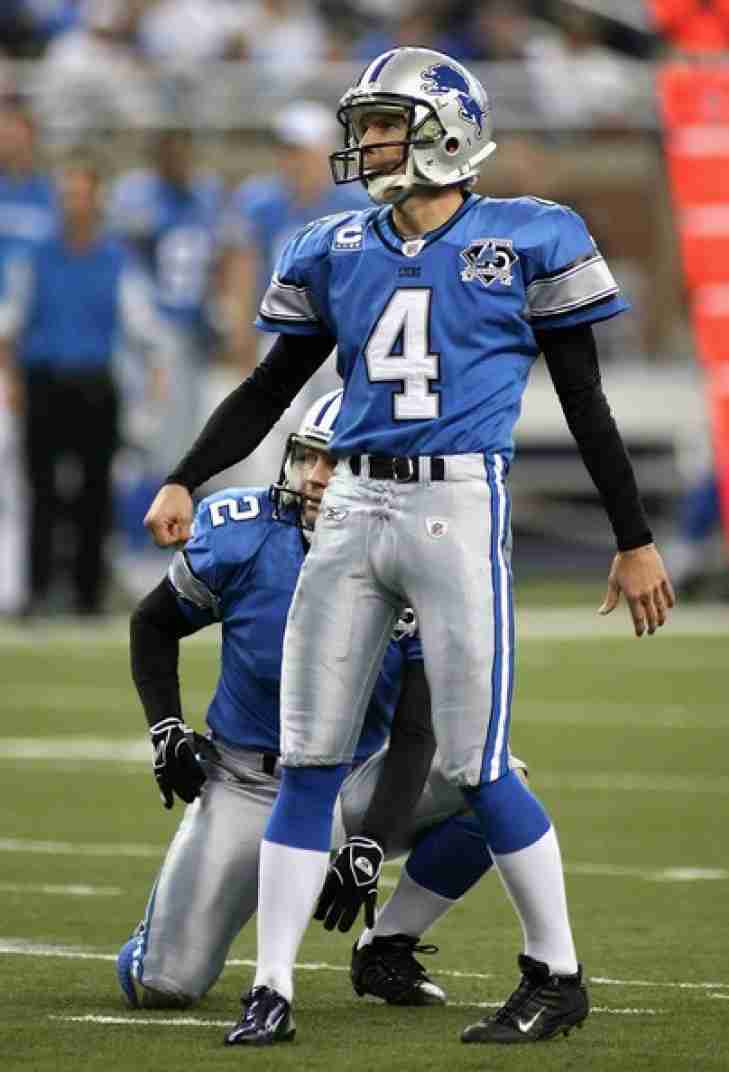
Drafted in the second round out of Washington State in 1992, Jason Hanson stepped into the Lions’ roster and delivered unprecedented longevity at the placekicker position. Over the next two decades, Hanson remained the lone constant through changing coaching staffs, evolving front offices, and roster overhauls, anchoring Detroit's special teams unit for an extraordinary 21 consecutive seasons.
Hanson's leg was a weapon from long distance, particularly inside the climate-controlled domes of the Pontiac Silverdome and Ford Field. He made his first Pro Bowl in 1997, earned a second selection in 1999, and set an NFL record for the most 50-plus yard field goals in a career (52). He stands as the first player in NFL history to play 300 games for a single franchise, ultimately appearing in 327 games for the Lions without ever donning another uniform—the all-time league record for seasons and games played with one team.
His accuracy under pressure yielded 17 game-winning field goals, cementing his reputation as one of the most reliable pressure kickers of his generation. When he retired after the 2012 campaign, he ranked among the top scorers in NFL history, having accumulated a staggering 2,150 career points.
That massive scoring tally firmly entrenched him as Detroit's all-time leading scorer, a record that will likely stand for generations. Recognizing his two decades of dedication and clutch kicking, the Lions inducted Hanson into the Pride of the Lions Ring of Honor in 2013 during his first year of eligibility.
14. Charlie Sanders
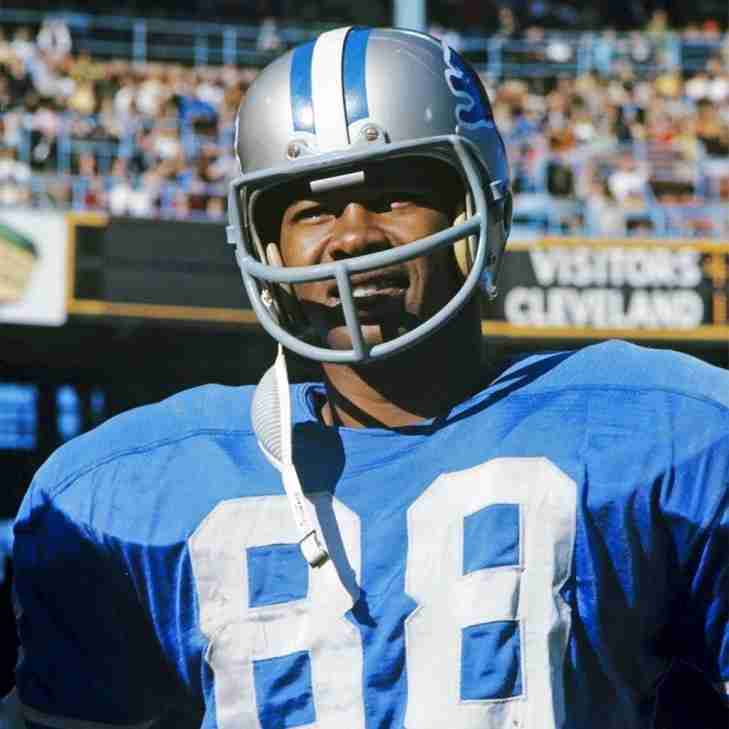
Chosen in the third round of the 1968 NFL Draft out of Minnesota, Charlie Sanders arrived in Detroit and promptly redefined what it meant to play tight end. At 6-foot-4 and 230 pounds, Sanders possessed a rare mix of size, soft hands, and open-field speed that made him a mismatch nightmare. At a time when tight ends were primarily used as glorified extra tackles, Sanders helped pave the way for the modern pass-catching weapon without sacrificing an ounce of inline blocking toughness.
Sanders made a significant impact as a rookie in 1968, catching 40 passes for 533 yards and earning his first of seven Pro Bowl selections. He quickly became quarterback Greg Landry’s most reliable target, especially over the middle. Over the next few years, Sanders dominated opposing secondaries, earning three straight First-Team All-Pro honors from 1969 to 1971. In 1969, he led the Lions with 42 receptions for 699 yards, averaging an impressive 16.6 yards per catch—an outstanding feat for a tight end across any era.
What truly defined Sanders was his fierce execution in the run game. He enjoyed sealing the edge for running backs such as Altie Taylor and Steve Owens, leveraging his broad build and persistent effort to open lanes. This dual-threat ability earned him seven Pro Bowl selections over ten seasons in Motown, ranking him as one of the most celebrated tight ends of the 1970s.
Sanders’ ongoing knee injury led him to retire before the 1978 season, yet his influence on the franchise endured. He stayed a cherished figure in Detroit for many years, working as a color commentator, assistant coach, and scout.
In Detroit, Sanders had 336 receptions, 4,817 yards, and 30 touchdowns. A seven-time Pro Bowler, three-time First-Team All-Pro, and member of the NFL’s 1970s All-Decade Team, Sanders was enshrined in the Pro Football Hall of Fame in 2007 before becoming a charter member of the Pride of the Lions in 2009.
15. Wayne Walker
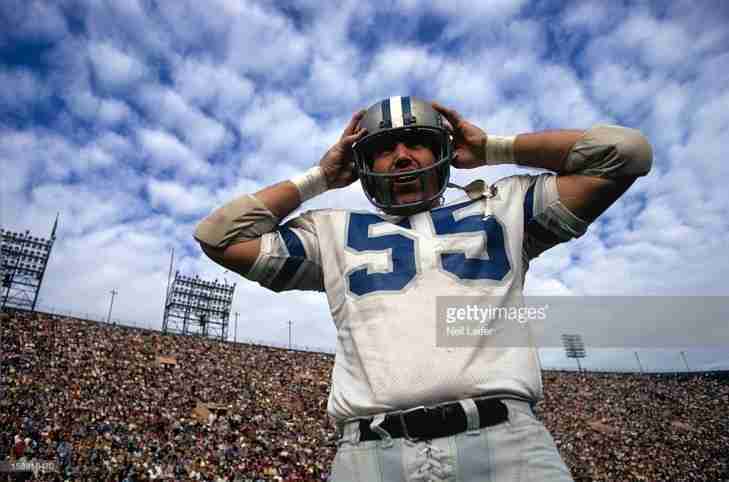
Chosen in the fourth round of the 1958 NFL Draft out of Idaho, Wayne Walker stepped into the Motor City and quietly built one of the most durable, versatile careers in franchise history. Holding down the outside linebacker spot while simultaneously pulling duty as the team's primary placekicker, Walker gave Detroit a two-way producer who rarely left the field for fifteen consecutive seasons.
As a core member of the formidable 1960s defense, Walker relied on textbook tackling and exceptional instincts against both the run and the pass. He earned three Pro Bowl nods (1963, 1964, 1965) and a First-Team All-Pro selection in 1965, constantly disrupting opposing offenses alongside Hall of Fame middle linebacker Joe Schmidt. In 1968, his leadership and playmaking earned him team Defensive MVP honors. Meanwhile, his right leg proved equally valuable; he led the Lions in scoring five times and booted 121 career field goals.
Walker's ironman longevity became the stuff of Lions legend. Between 1958 and 1972, he set a franchise record by playing in 200 regular-season games, a mark that stood for nearly four decades before kicker Jason Hanson surpassed it.
In his 15 seasons, Walker played in 200 regular-season games. He compiled 14 interceptions, 13 fumble recoveries, 121 field goals, 333 extra points, and 696 total points. Walker was elected into the Pride of the Lions in 2013.
18. Lomas Brown
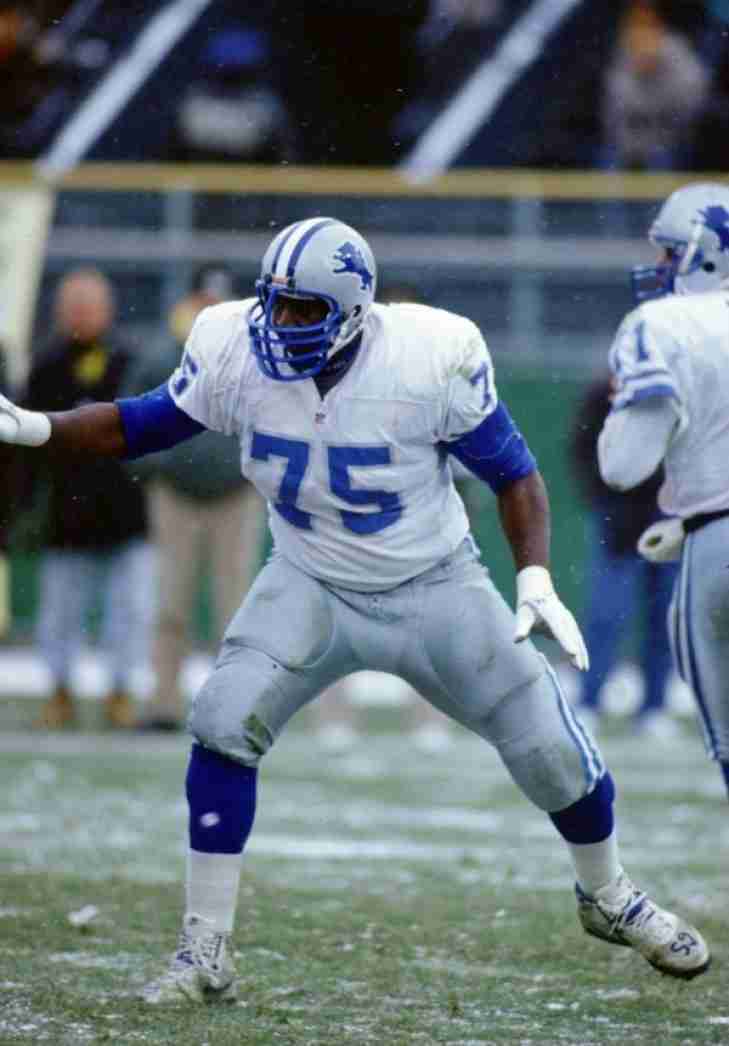
Drafted sixth overall out of Florida in 1985, Lomas Brown stepped into the Motor City as a plug-and-play left tackle and immediately took command of the blind side. A smooth athlete with long arms and ideal footwork, Brown earned a spot on the PFWA All-Rookie Team and established himself as the anchor of Detroit's offensive line for the next decade.
Brown's tenure attained legendary prominence upon the arrival of Barry Sanders in 1989. Over a span of seven seasons, Brown and center Kevin Glover functioned as the primary facilitators both internally and on the perimeter for Sanders' remarkable rushing performances, creating openings for back-side runs and securing edge defenders. Throughout their collaborative efforts, Sanders amassed over 10,000 rushing yards, while Brown secured six consecutive Pro Bowl selections as a Lion (1990–1995) and was honored with a First-Team All-Pro selection in 1995.
Beyond his spatial dominance in Wayne Fontes' run and pass schemes, Brown was an absolute iron man. He started 163 of the 164 regular-season games he played in Detroit, anchoring lines that propelled the Lions to four playoff appearances and the 1991 NFC Championship Game.
After leaving Detroit following the 1995 season, Brown logged stops with Arizona, Cleveland, and New York before capping his 18-year NFL career by capturing an elusive ring with the Tampa Bay Buccaneers in Super Bowl XXXVII. He returned to the franchise post-retirement as its radio color analyst and earned induction into the "Pride of the Lions" ring of honor in 2023. Brown played in 164 regular-season games with 163 starts for the franchise.
