


Site Admin
The Buck Stops Here -- Hall of Fame News -- Season 1 Episode 10
5. Billy Williams
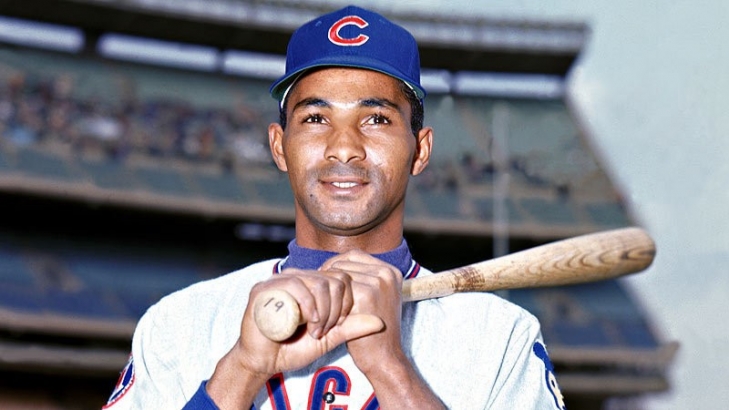
When Billy Williams arrived at Wrigley Field, he brought with him a left-handed stroke so smooth and effortless that it earned him a nickname for the ages: "Sweet-Swinging Billy." But behind that picturesque mechanics was a player carved out of granite. Williams didn't just play for the Cubs; he was their heartbeat, a fixture in the lineup so dependable that manager Leo Durocher famously said he didn't pencil Billy’s name in—he wrote it in ink.
His journey began with a bang in 1961, when he captured the National League Rookie of the Year Award with a 25-homer campaign. It was the start of a historic run of consistency that saw him blast at least 20 home runs for 13 consecutive seasons. The pinnacle arrived in 1970, an "Iron Man" year where he led the NL in hits (205) and runs (137) while launching a career-high 42 home runs. He finished as the MVP runner-up that year, a feat he would repeat in 1972 when he claimed the National League Batting Title with a .333 average and led the circuit in slugging. In any other era, Williams would have walked away with a shelf full of trophies; instead, he frequently found himself as the "best in the world,” standing just a half-step behind Johnny Bench.
Perhaps most remarkably, Williams set a National League record by playing in 1,117 consecutive games between 1963 and 1970. He didn't just show up; he produced at an elite level while refusing to take a day off, a streak that showcased mental toughness often overlooked because of his soft-spoken nature. He was the quiet engine of a legendary core that included Banks, Santo, and Jenkins, a team that flirted with greatness but never quite reached the October summit.
In late 1974, with the Cubs looking to rebuild, Williams was traded to the Oakland Athletics in a deal that finally gave the veteran a taste of the postseason. He left Chicago with 392 home runs and 2,510 hits, a statistical titan who never lost his humble edge. The franchise rightfully hoisted his number 26 to the foul pole in 1987, the same year he took his place in Cooperstown. He arrived as a rookie sensation and left as "Mr. Consistency," the man who proved that being "sweet-swinging" didn't mean you weren't as tough as they come.
4. Ron Santo
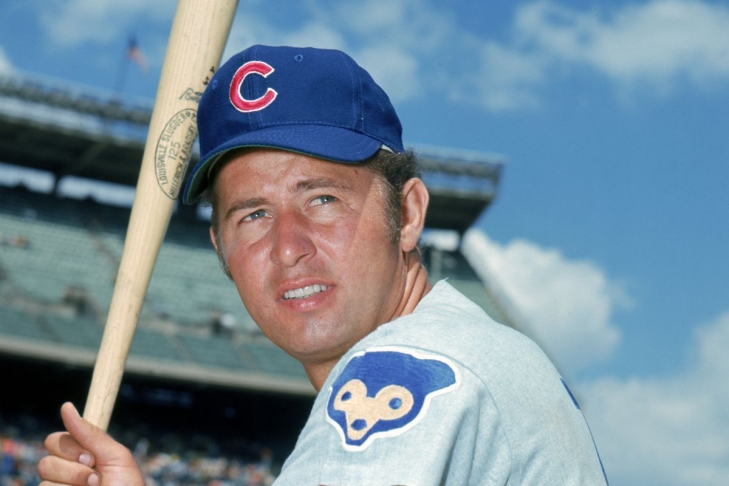
Ron Santo didn’t just play third base for the Chicago Cubs; he anchored it with a grit that defined an entire generation of North Side baseball.
Arriving as a rookie in 1960, he quickly evolved into the gold standard for the "hot corner." For over a decade, Santo was the rare triple-threat: a defensive vacuum, a disciplined on-base machine, and a middle-of-the-order slugger. What the fans didn't know at the time was that Santo was achieving all of this while privately managing Type 1 diabetes, a battle that makes his durability and production seem less like sports and more like a miracle.
His peak was a masterclass in professional hitting. Santo wasn't just a "swing for the fences" type; he was a scientist at the plate, leading the National League in walks four times and twice topping the league in On-Base Percentage. But when the situation called for thunder, he delivered, launching 337 home runs in a Cubs uniform and driving in over 100 runs in four different seasons. Defensively, he was virtually untouchable, sweeping five consecutive Gold Gloves and leading the league in Total Zone Runs for four straight years. He was the complete package, the kind of player who could win a game with a diving stop in the ninth just as easily as a three-run blast in the first.
The final chapter of his playing days provided a legendary moment of franchise loyalty. In 1973, Santo became the first player to ever exercise his "10-and-5" rights, famously vetoing a trade to California because he simply couldn't imagine himself anywhere else. While he eventually accepted a move across town to the White Sox for a final season, his heart never left Wrigley. He spent the rest of his life as the team’s most boisterous ambassador and broadcaster, the self-proclaimed "biggest Cubs fan ever."
The ending of the Santo story is tinged with bittersweetness. While the Cubs rightfully retired his number 10 in 2003, the Hall of Fame in Cooperstown infamously waited until 2012, two years after his passing, to finally induct him. It remains a sore spot for the Chicago faithful, a "travesty" that took far too long to correct. But when the Cubs Hall of Fame opened its doors in 2021, Santo was an automatic first-ballot choice. He arrived as a young man with a secret struggle and left as a permanent monument to what it means to love a team with everything you've got.
3. Ryne Sandberg
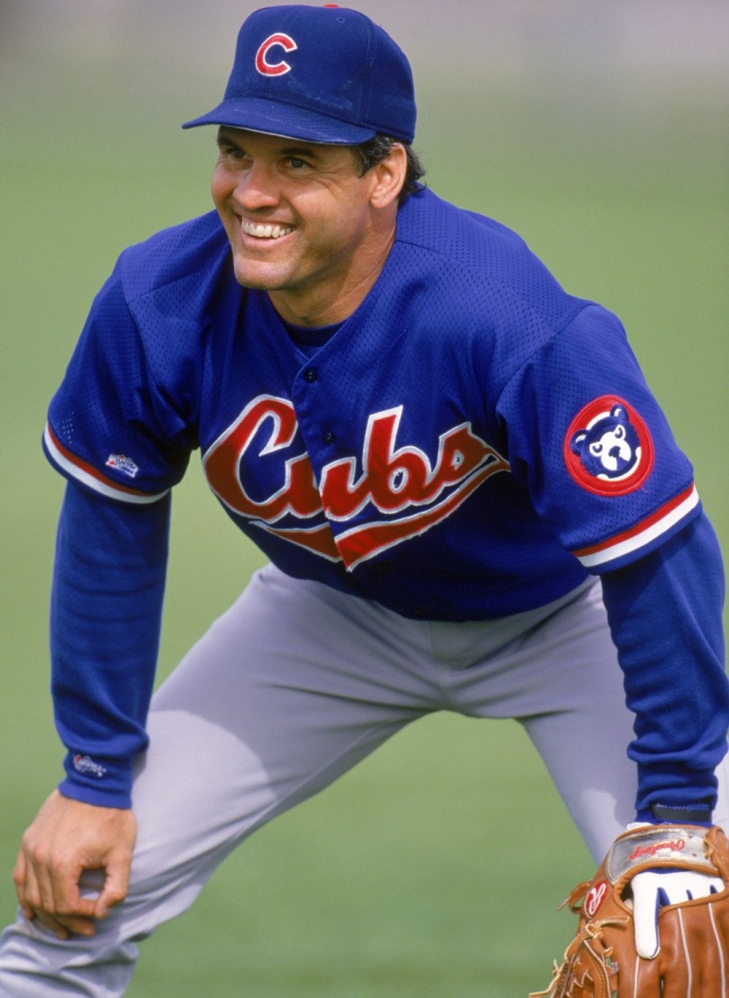
Ryne Sandberg’s journey to Wrigley Field began as a footnote in what would become one of the most lopsided trades in baseball history. When the Cubs sent Ivan DeJesus to Philadelphia in 1982, they weren't just looking for veteran shortstop Larry Bowa; they were secretly eyeing the young, versatile outfielder the Phillies were willing to throw in. That "extra" player, Ryne Sandberg, arrived in Chicago as a man without a fixed position, bouncing from the outfield to third base before finally finding his permanent home at second. It was a move that didn't just solidify the Cubs' infield; it altered the trajectory of the franchise.
The transformation was immediate. By 1983, Sandberg had secured the first of nine consecutive Gold Gloves, proving that his defensive range was as elite as his instincts. But the true arrival, the moment "Ryno" became a household name, was the legendary "Sandberg Game" in June 1984. On a national stage, he launched two game-tying home runs off Hall of Fame closer Bruce Sutter, a performance that served as the engine for his National League MVP campaign. He finished that year leading the league in triples and runs scored, beginning a streak of ten consecutive All-Star appearances and proving that the "lovable losers" era was officially over.
Sandberg was the heartbeat of the North Side for over a decade. While his early years were defined by speed and defensive brilliance, he evolved into a premier power threat at the turn of the decade, launching 40 home runs in 1990 to lead the National League. He was the rare second baseman who could beat a team with a glove, a stolen base, or a walk-off blast.
Then came the unexpected detour. Feeling he could no longer meet his own high standards, Sandberg abruptly retired in 1994. But the pull of Wrigley was too strong; he returned for a final two-season encore in 1996, proving he could still compete at the highest level before retiring for good in 1997. He left the game with 282 home runs, at the time, a record for his position, and 2,385 hits. His number 23 was hoisted onto the foul pole in 2005, the same year he entered Cooperstown, and in 2024, the team unveiled a statue of the man who started as a "throw-in" and ended as an immortal. He arrived as a question mark from Philadelphia and left as a cornerstone of Chicago history.