


Site Admin
35. Ellis Kinder
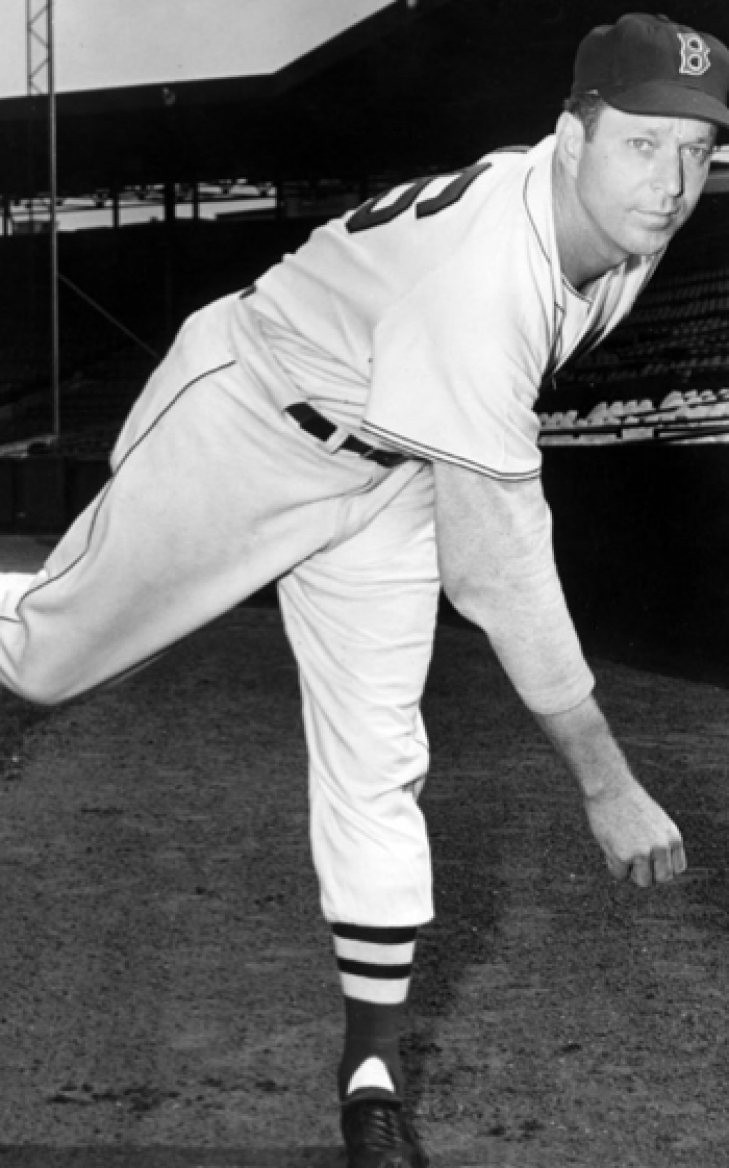
Ellis Kinder’s path to Boston was anything but conventional. Debuting as a 31-year-old rookie for the St. Louis Browns, "Old Folks" arrived at Fenway in 1948 with little fanfare. However, he quickly shattered every expectation (which wasn’t much). In 1949, Kinder led the American League with 23 Wins and a league-best 6 Shutouts. He was the league's most effective workhorse, finishing fifth in the MVP voting and earning the prestigious Sporting News Pitcher of the Year award, a hardware proxy that effectively serves as a pre-Cy Young era 10.0.
In 1951, as injuries began to mount, the Red Sox moved the 36-year-old to the bullpen. Rather than fade away, Kinder reinvented the role of the modern reliever. He led the AL in Saves (16) and Games Finished (41) that season, and he would repeat in 1953 with a staggering 27 Saves and 51 Games Finished. His 1953 campaign was a statistical takeover: he posted a 1.85 ERA over 69 appearances, proving to be the most dominant high-leverage arm in the game.
Kinder’s legacy is defined by his rugged durability and high-leverage heroics. On July 12, 1951, he provided one of the greatest relief performances in baseball history, entering in the 8th inning and throwing 10 consecutive scoreless innings of relief to secure a 17-inning win. This remains a legendary moment in franchise history, personifying the "rubber arm" that allowed him to win or save over 200 games for the Red Sox despite starting his career in his thirties.
Though he was eventually waived in 1955, Kinder left Boston with an 86–51 record, 93 saves, and a reputation as the finest hybrid pitcher of his generation. He is one of the few players in history to lead the league in Wins as a starter and saves as a reliever for the same franchise. Inducted into the Red Sox Hall of Fame in 2006.
30. Reggie Smith
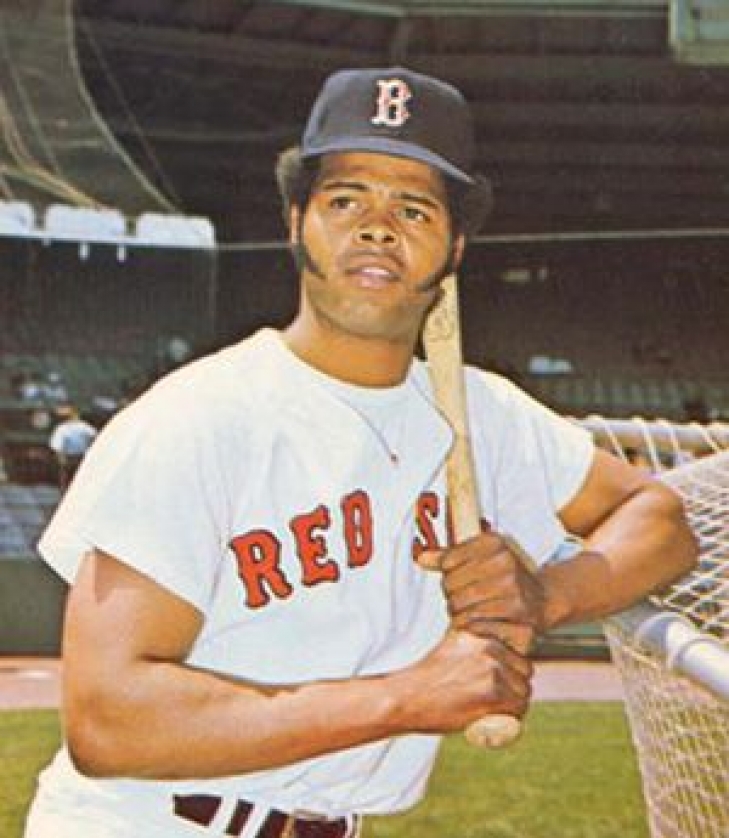
Reggie Smith was acquired by the Red Sox in what remains one of the shrewdest moves in franchise history. Originally signed by Minnesota, Smith debuted in Boston in 1966 and quickly became a cornerstone of the youth movement. By 1967, he was the everyday center fielder and the runner-up for the AL Rookie of the Year, serving as a vital spark for the pennant-winning squad. His ability to impact the game from both sides of the plate and all three outfield positions made him a tactical nightmare for opposing managers.
Smith’s run in Boston is noted for his five-year peak from 1969 to 1973. During this stretch, he launched at least 20 home runs every season, showcasing a rare blend of power and contact that saw him hit over .300 twice. He was a doubles machine, leading the American League in two-baggers twice (1968 and 1971). His 1971 campaign was his statistical masterpiece: he blasted 30 home runs, drove in 96, and led the league with 302 Total Bases, finishing with a career-high .841 OPS.
Defensively, Smith possessed one of the most legendary throwing arms in baseball history. This was on full display in 1968 when he earned a Gold Glove and recorded 15 outfield assists, a "rifle" that discouraged runners from even attempting to advance. He was a seven-time All-Star who brought a scientific, analytical approach to his craft, often outthinking pitchers long before "Launch Angle" was a part of the lexicon. In the 1967 World Series, he proved his high-leverage worth by slugging two home runs against the Cardinals, including a go-ahead shot in Game 6.
Though he was traded to St. Louis after the 1973 season, a move that eventually brought back key pieces like Rick Wise and Bernie Carbo, Smith left an indelible mark on Boston. He finished his Red Sox tenure with 149 home runs, 1,064 hits, and a stellar .281 average. Recognizing his status as one of the most complete players to ever wear the uniform, the Red Sox inducted him into the Red Sox Hall of Fame in 2000.
23. Harry Hooper
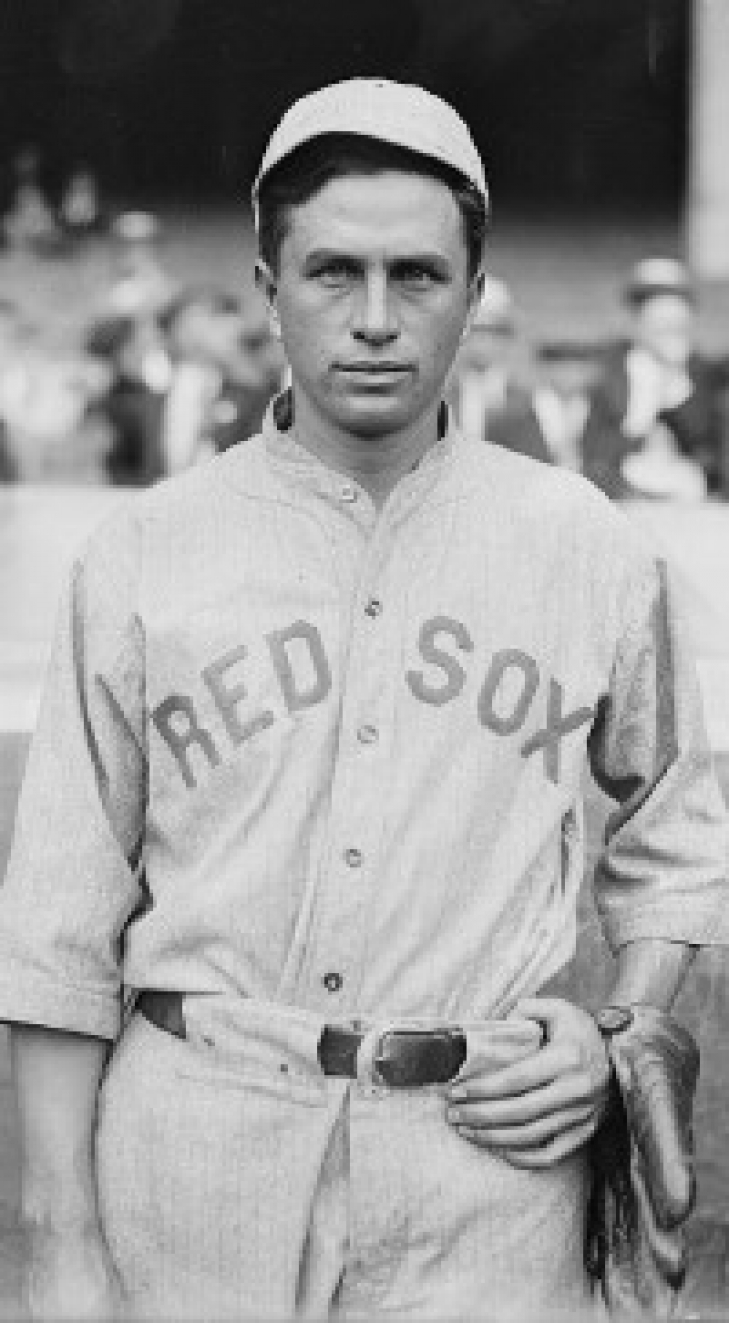
Harry Hooper debuted for the Red Sox in 1909 and quickly became the defensive heartbeat of the most legendary outfield in baseball history. Alongside Tris Speaker and Duffy Lewis, Hooper formed the "Million-Dollar Outfield," a trio whose collective range and intelligence redefined how the game was played in the early 20th century. While he was a model of consistency at the plate, it was his legendary glove and his revolutionary "rump-slide" catch that made him a centerpiece of the Red Sox dynasty.
Hooper’s value to the Red Sox was rooted in his dominance as a leadoff man and defensive specialist. Over his 12 seasons in Boston, he amassed 1,707 hits and set franchise records that still stand today, including 130 triples and 300 stolen bases. On May 30, 1913, he achieved a feat that wouldn't be matched for 80 years: hitting a leadoff home run in both games of a doubleheader. This ability to ignite the offense from the first pitch made him the ideal table-setter for the Deadball Era.
Nowhere was Hooper’s impact more apparent than in the World Series. He was a four-time World Champion with the Red Sox, consistently raising his game when the stakes were highest. In the 1915 World Series against the Phillies, Hooper became the first player in history to hit two home runs in a single World Series game (the decisive Game 5), including the game-winner that clinched the title. His .293 average over 24 World Series games proves he was a high-leverage outlier during the team’s most successful decade in its long history.
Though he was eventually traded to the Chicago White Sox in 1921, Hooper’s legacy remained firmly planted in Boston. He was the first Red Sox player to ever take an at-bat at the opening of Fenway Park in 1912, and he remains the franchise leader in many of the game's "hustle" categories. Recognizing his defensive mastery—including a major-league record for double plays and assists by a right fielder—the Veterans Committee inducted him into the Baseball Hall of Fame in 1971.
29. Tex Hughson
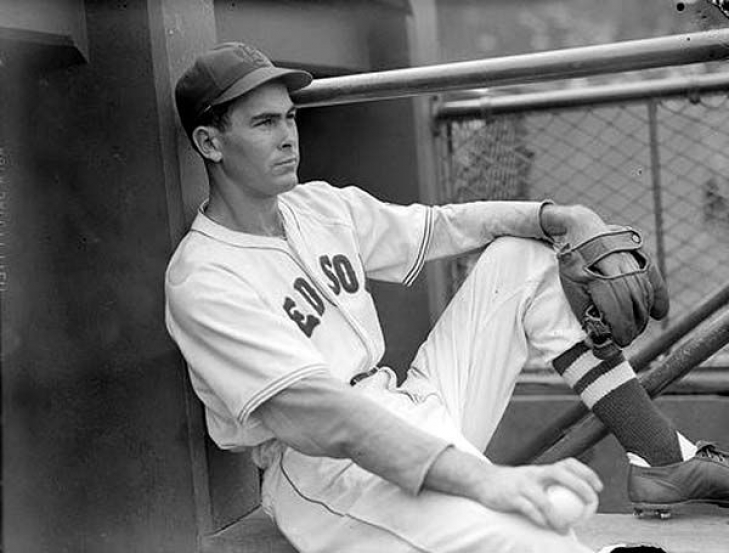
Cecil "Tex" Hughson arrived in Boston in 1941 and quickly established himself as the workhorse of the Red Sox rotation. By 1942, he authored a strong finish via traditional means, leading the American League in Wins (22), Complete Games (22), Innings Pitched (281), and Strikeouts (113). This rare "quadruple crown" of volume and performance earned him an All-Star nod and a sixth-place finish in the MVP voting, which confirmed his status as an elite arm.
While 1942 was his most famous year, his 1944 campaign was statistically his most efficient. Hughson posted a career-low 2.26 ERA and led the league in FIP (2.33), WHIP (1.048), and SO/BB (2.73). He was a surgical technician on the mound, utilizing a heavy sinker and impeccable control to stifle hitters. Like many of his peers, he sacrificed a year of his prime to military service in 1945, but he returned in 1946 to win 20 games and lead the Red Sox to their first pennant in nearly thirty years.
Hughson’s impact was vital to the Red Sox's post-war resurgence. He was the staff ace for the 1946 squad, pitching 14 high-leverage innings in the World Series against the Cardinals. However, the heavy workload of the early 40s—including those 22 complete games in a single season—eventually took its toll. Arm and shoulder trouble hampered his effectiveness in the late 1940s, forcing an early retirement after only eight seasons, all spent in a Boston uniform.
Hughson retired with a stellar 96–54 record and a reputation as one of the finest "Lifer" pitchers in franchise history. Despite a career shortened by injury, his peak dominance was so concentrated that the Red Sox inducted him into the Red Sox Hall of Fame in 2002.