


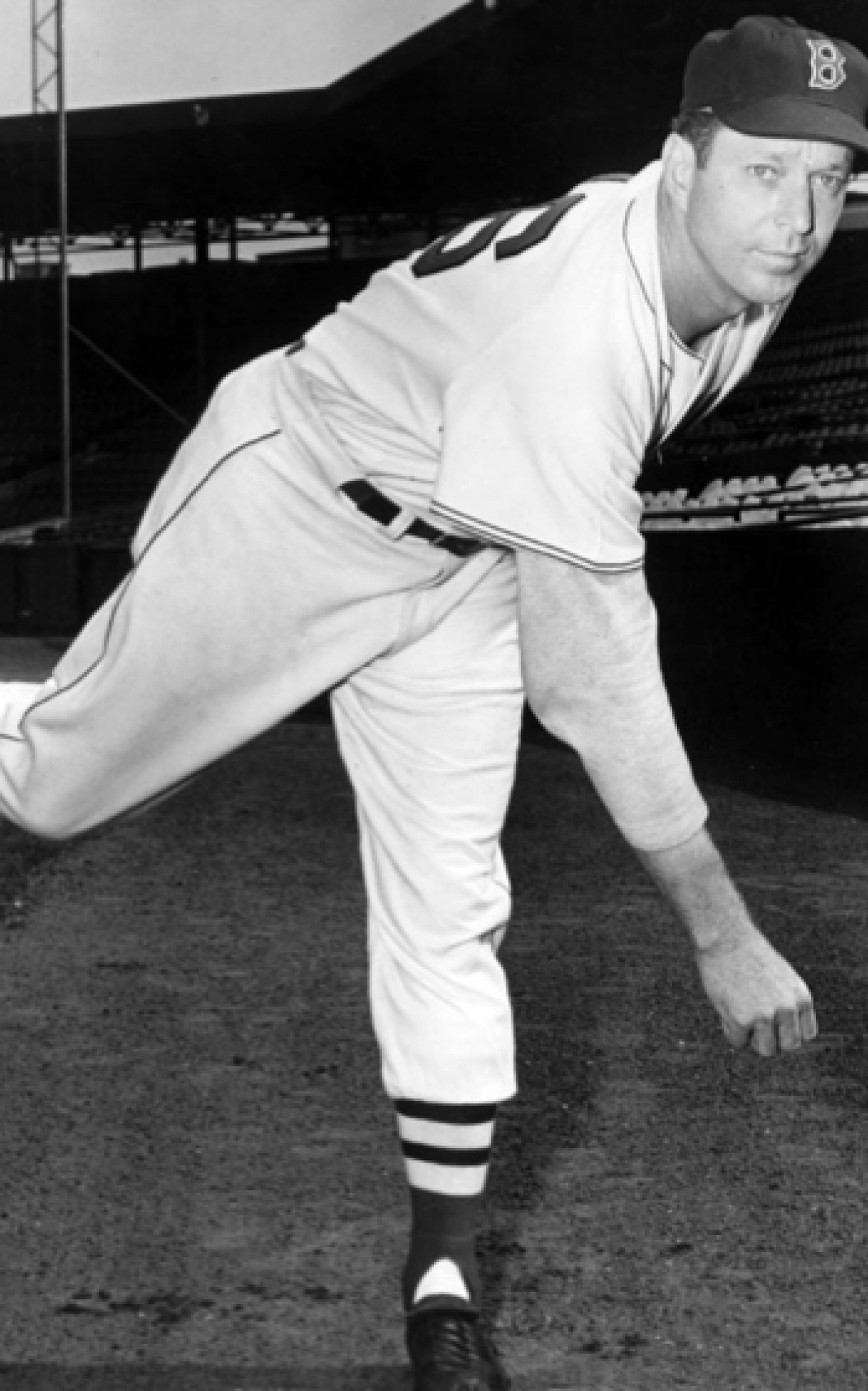



Ellis Kinder’s path to Boston was anything but conventional. Debuting as a 31-year-old rookie for the St. Louis Browns, "Old Folks" arrived at Fenway in 1948 with little fanfare. However, he quickly shattered every expectation (which wasn’t much). In 1949, Kinder led the American League with 23 Wins and a league-best 6 Shutouts. He was the league's most effective workhorse, finishing fifth in the MVP voting and earning the prestigious Sporting News Pitcher of the Year award, a hardware proxy that effectively serves as a pre-Cy Young era 10.0.
In 1951, as injuries began to mount, the Red Sox moved the 36-year-old to the bullpen. Rather than fade away, Kinder reinvented the role of the modern reliever. He led the AL in Saves (16) and Games Finished (41) that season, and he would repeat in 1953 with a staggering 27 Saves and 51 Games Finished. His 1953 campaign was a statistical takeover: he posted a 1.85 ERA over 69 appearances, proving to be the most dominant high-leverage arm in the game.
Kinder’s legacy is defined by his rugged durability and high-leverage heroics. On July 12, 1951, he provided one of the greatest relief performances in baseball history, entering in the 8th inning and throwing 10 consecutive scoreless innings of relief to secure a 17-inning win. This remains a legendary moment in franchise history, personifying the "rubber arm" that allowed him to win or save over 200 games for the Red Sox despite starting his career in his thirties.
Though he was eventually waived in 1955, Kinder left Boston with an 86–51 record, 93 saves, and a reputation as the finest hybrid pitcher of his generation. He is one of the few players in history to lead the league in Wins as a starter and saves as a reliever for the same franchise. Inducted into the Red Sox Hall of Fame in 2006.

Comments powered by CComment