


Site Admin
13. Charlie Root
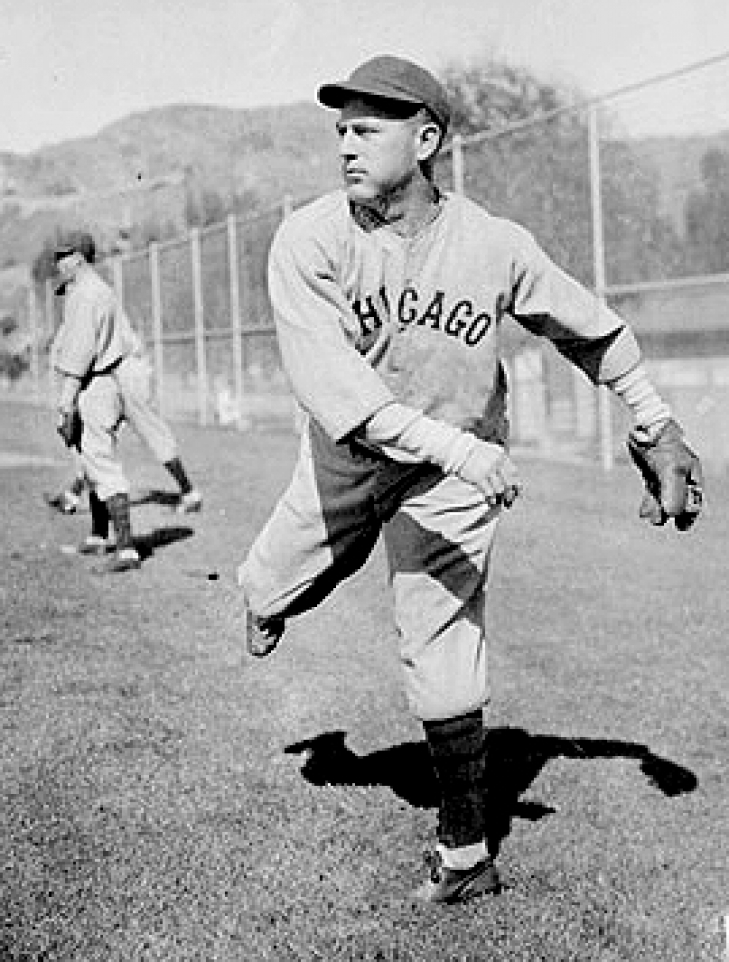
In the long, star-studded history of Chicago Cubs pitching, there are bigger names and flashier legends, but there is only one man at the top of the mountain when it comes to the "W." Charlie Root arrived in Chicago in 1926 as a castoff from the St. Louis Browns, and he spent the next 16 seasons proving that the Browns had made a historic mistake. His story is one of pure, unadulterated durability, who in every sense of the word took the ball more often, threw more innings, and walked off the mound a winner more times than any other pitcher to ever wear the blue pinstripes.
His arrival was a baptism by fire. In his first full season in 1926, Root led the league in losses, but he also showed flashes of the brilliance to come with 18 wins. The true breakout, the moment he became the undisputed ace of the staff, arrived in 1927. In a performance that earned him a fourth-place finish in the MVP voting, Root led the National League with 26 wins, serving as the high-velocity engine for a Cubs team that was suddenly a perennial contender. For the next six years, Root was the model of metronomic consistency, never dipping below 14 wins and serving as the foundational piece of the rotation.
As the 1930s progressed, Root’s play evolved. He transitioned from the young firebrand at the top of the rotation to the veteran stabilizer in the bullpen, proving that his value to the franchise was immune to the passing of time. By the time he threw his final pitch in 1941, he had amassed a franchise-record 201 wins and tossed an incredible 3,137 innings. He left the game as the Cubs' all-time leader in games pitched and Win Probability Added, a statistical titan whose legacy was built on showing up, every single day, for nearly two decades.
The story reached its permanent acknowledgment in 2021. When the Cubs finally opened the doors to their own Hall of Fame, Charlie Root was an automatic selection for the inaugural class. He arrived as a young pitcher with a point to prove and left as the winningest hurler in the franchise's history, the man who defined what it meant to be a Chicago Cub on the mound.
11. Grover Cleveland Alexander
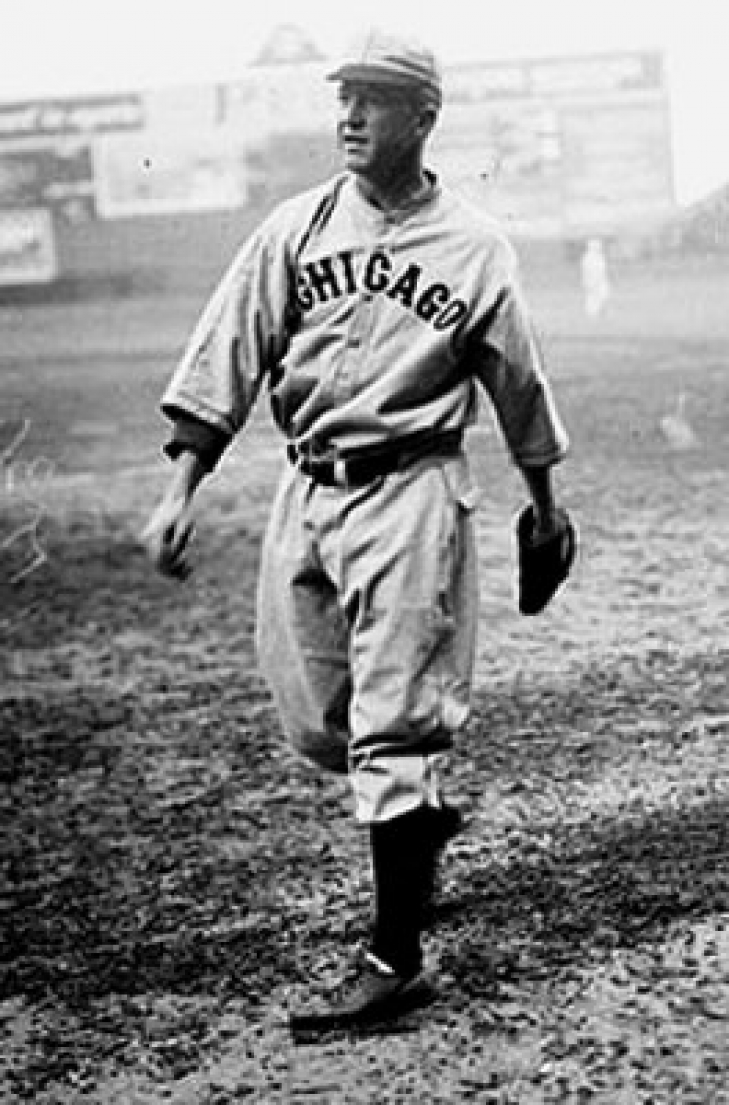
When Grover Cleveland Alexander arrived in Chicago in 1918, he didn't come by choice, and he didn't come whole. The Philadelphia Phillies, desperate for cash, had sold the greatest pitcher of the era to the Cubs just as the shadow of World War I loomed over the sport. Before he could throw a meaningful pitch for Chicago, Alexander was shipped to the front lines of France. He returned a year later, physically alive but mentally scarred—suffering from shell shock, partial deafness from the artillery fire, and a growing dependency on alcohol to quiet the ringing in his ears. It was a tragic transformation for a man who had already won two Triple Crowns.
But even a broken "Old Pete" was a marvel of the mound. His run with the Cubs from 1919 to 1920 remains one of the most improbable displays of pure, localized dominance in the history of the game. Despite the trauma and the seizures that began to plague him, he captured back-to-back ERA titles in his first two full seasons at Wrigley. In 1920, he authored a masterpiece: a 27-win season with a 1.91 ERA that secured his third career Triple Crown. It was a defiant statement from a veteran who was supposed to be washed up, a performance that proved his control and pinpoint accuracy were immune to the ghosts of the war.
The middle chapters of his Chicago story were defined by a steady, professional decline. While he never again touched the heights of 1920, he remained a formidable force for the next five years, anchoring a Cubs rotation that relied on his veteran savvy. However, his off-field struggles eventually wore thin with the front office. Midway through the 1926 season, he was unceremoniously waived and claimed by the St. Louis Cardinals, where, in a bit of poetic justice, he would go on to win the World Series that very autumn.
Alexander left Chicago with a sterling 128-83 record and a 2.84 ERA, marks that would be career-defining for any other pitcher but were merely a second act for him. His legacy was officially set in stone when he entered Cooperstown in 1938 as part of the Hall's third-ever class. Decades later, when the Cubs finally inaugurated their own Hall of Fame in 2021, "Old Pete" was an automatic selection for the first class. He arrived as a broken soldier and left as a testament to the enduring power of a master at work.
12. Hippo Vaughn
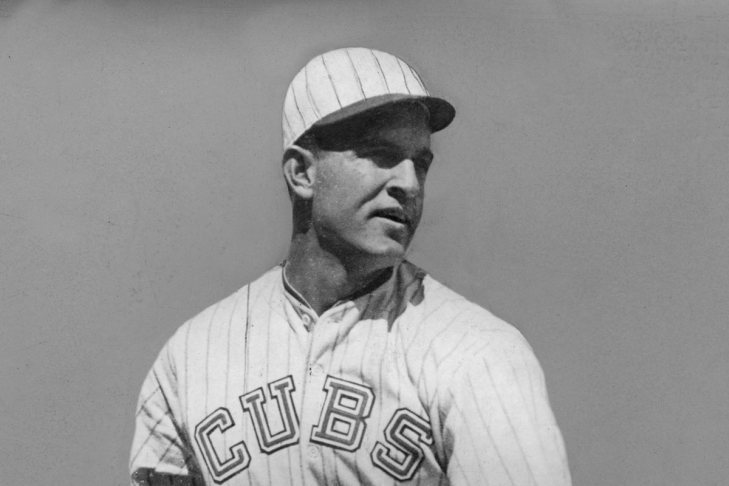
Before he arrived in Chicago in 1913, James “Hippo” Vaughn was the definition of a baseball nomad. He had bounced through the minors and struggled to stick with the Yankees or Senators, looking like a massive talent that simply couldn't find its rhythm. But when he stepped onto the mound at West Side Park, something clicked. The journeyman vanished, and in his place stood the most formidable left-hander in the senior circuit. By 1914, he was a 21-win powerhouse, beginning a run where his sheer bulk and deceptive speed became the nightmare of every hitter from New York to St. Louis.
The climax of Hippo’s Chicago story arrived in 1918, a season where he didn't just lead the league, he suffocated it. In a display of mound mastery that remains a benchmark for Cubs hurlers, Vaughn captured the Triple Crown of pitching, leading the National League in Wins (18), ERA (1.74), and Strikeouts (148). He was the undisputed engine of a Cubs team that marched to the pennant, and while the World Series against Boston ended in heartbreak, Vaughn was blameless. He turned in a heroic 1.00 ERA over three starts in that Fall Classic, proving that when the stakes were highest, the big man was immovable.
However, the run with the team ended abruptly. After two more seasons of elite production in 1919 and 1920, the wheels came off in 1921. Following a string of poor performances and a reported clash with management, Vaughn was unceremoniously released. But his story didn't end with a quiet retirement; driven by a pure, unyielding love for the game, he spent the next 15 years pitching in the minor leagues, a legendary figure of the bushes who simply refused to put the ball down.
Vaughn left Chicago with a legacy built on five 20-win seasons and a 1918 campaign that stands as one of the greatest single-season pitching performances in franchise history. When the Cubs finally looked back at their roots to inaugurate their Hall of Fame in 2021, the big left-hander was an automatic choice for the first class. He arrived as a wandering journeyman and left as a Triple Crown immortal, the man who carried a dynasty on his broad shoulders.
9. Stan Hack
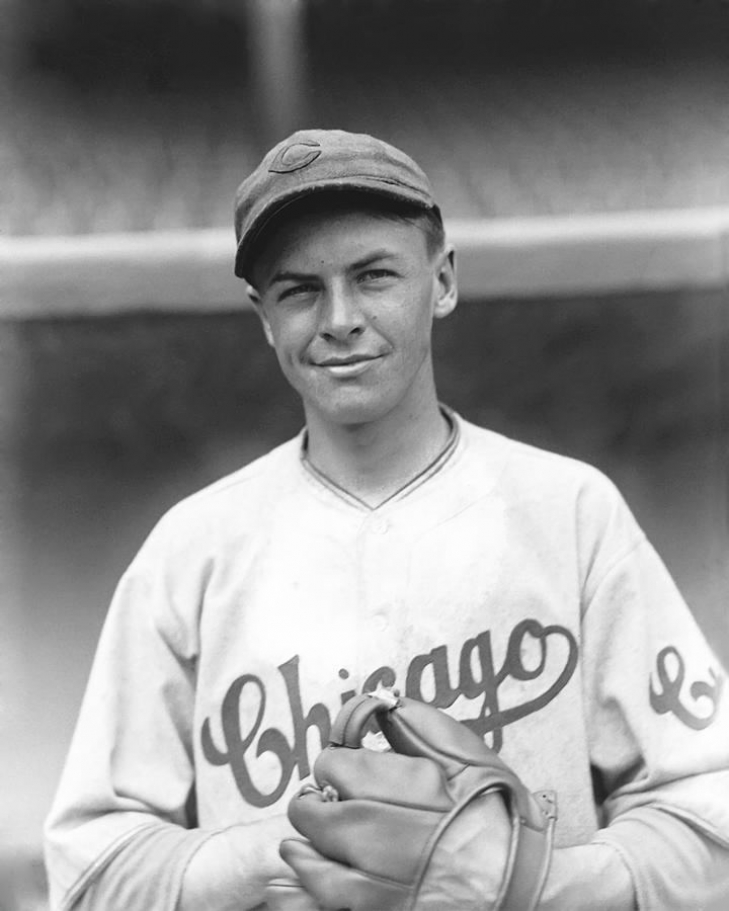
In an era of baseball defined by rugged toughness and loud personalities, Stan Hack was a different kind of weapon. He arrived in Chicago in 1932 and quickly made the "hot corner" his permanent residence, but it wasn't just his glove that made him indispensable. As the Cubs' permanent leadoff man, Hack brought a scientific approach to the top of the order. While others were swinging for the fences, Hack was busy mastering the art of the professional plate appearance. He didn't just hit his way on base; he haunted pitchers by working the count, finishing his career with a .394 On-Base Percentage, a number that would make a modern sabermetrician weep with joy.
His run with the team was defined by a metronomic, "smiling" consistency. From 1934 until his final game in 1947, Hack was the engine that powered the Chicago offense. He was a two-time hits leader and a perennial .300 hitter, but his true value emerged when the lights were brightest. Hack helped lead the Cubs to four National League pennants, and while the franchise famously fell short in those World Series appearances, it was never for a lack of effort from their third baseman. Hack was a postseason revelation, batting a scorching .348 in October and proving that his patient approach was immune to the pressure of the Fall Classic.
Hack was the rare superstar who never felt the need to raise his voice or change his uniform. He played all 1,938 of his Major League games in a Cubs jersey, amassing 2,193 hits and serving as the bridge between the glory days of the late 20s and the post-war era. He was the "Lifer" before the term was even popularized, a man whose loyalty to the North Side was as unwavering as his batting eye.
The story reached its formal acknowledgement in 2021 when the Cubs inaugurated their own Hall of Fame. Hack was an easy, unanimous choice for the first class, a permanent tribute to the man who proved that you could dominate a game with a smile and a walk as easily as a home run. He arrived as a young prospect and left as a franchise institution, the gold standard for what a leadoff man should be.