

33. Tomas Kaberle
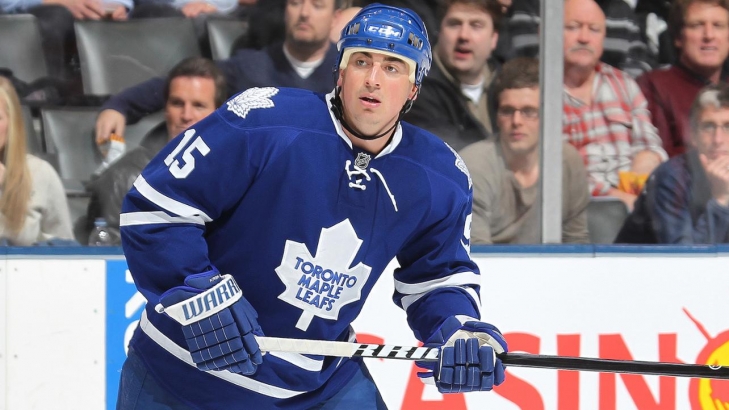
The Toronto Maple Leafs chose Czech Defenseman Tomas Kaberle in the Eighth Round of the 1996 NHL Draft, and it turned out to be a steal.
Kaberle first played for the Maple Leafs in the 1998-99 season, and before long, he was the team's top blueliner. Kaberle scored at least 40 Points seven times for Toronto, peaking at 67 in 2005-06. A four-time All-Star, Kaberle was excellent on the power play and had 520 Points over his tenure with the Maple Leafs.
Kaberle was traded to Boston during the 2010/11 Season and would win a Stanley Cup that year with the Bruins. As a Leaf, Kaberle scored 520 Points.
32. Sid Smith
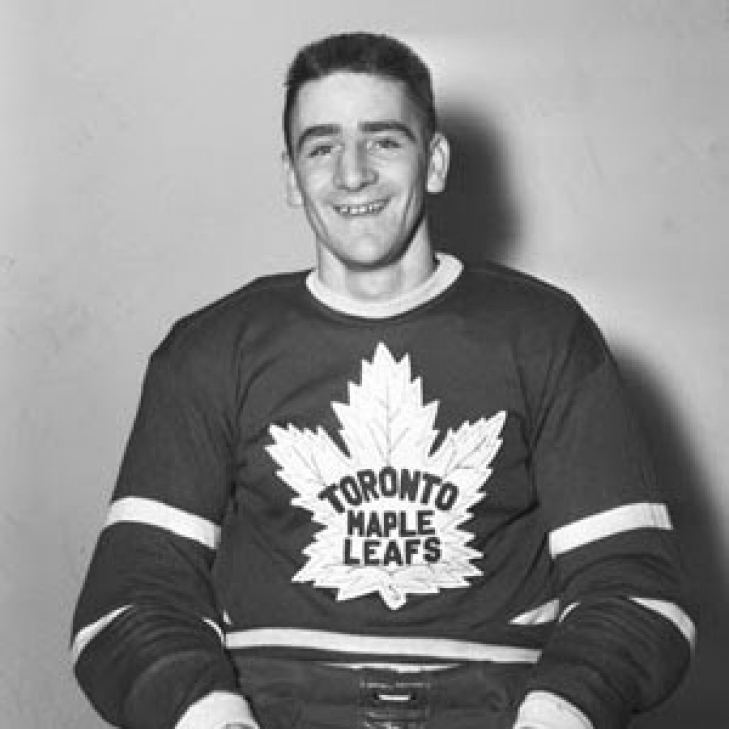
Sid Smith spent all 12 of his NHL campaigns with the Toronto Maple Leafs, and it can be argued that his contributions have not received their proper due in Hogtown.
Smith was signed in December of 1946, but played sparingly and was not on the roster when Toronto won the Cup that year. He was a minor help in their 1948 Cup, but the Left Wing was a big part of the 1949 Stanley Cup, Toronto's third in a row.
Smith continued to improve, winning another Stanley Cup in 1951 but earning Second Team All-Star honors that year and finishing atop the leaderboard in Power Play Goals (12). The Left Wing did not win another Cup, but his individual honors continued, with two Lady Byngs (1952 & 1955), another Second Team All-Star (1952), and a First Team Selection in 1955.
Injuries piled up, and Smith retired after the 1957-58 season with 369 Points and only 90 Penalty Minutes.
31. Bob Pulford
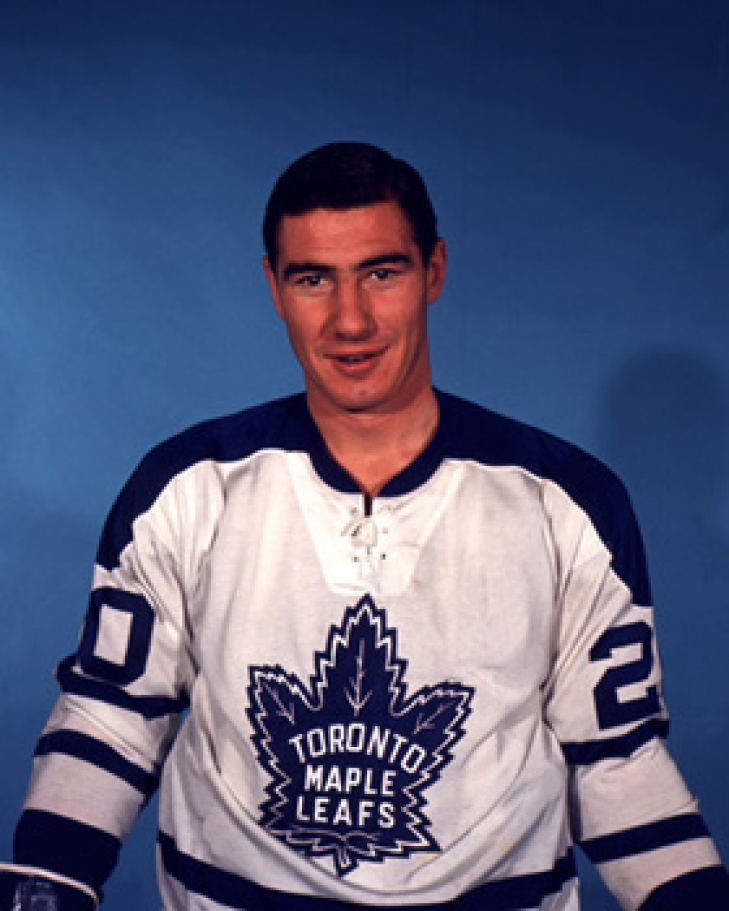
Bob Pulford played his junior hockey for the Toronto Marlboros, where he helped them win two Memorial Cups. The winning ways would continue in the same city when he signed with the Toronto Maple Leafs, the team he played the first 14 of his 16 NHL seasons.
Pulford played at Left Wing, where he proved to be a consistent presence on the lower lines. Pulford had four 20-Goal seasons, three of which saw him exceed 50 Points. His greatest asset to the Leafs was his penalty killing, as few in the 1960s were better at playing hockey a man down than Pulford. Leading the NHL in Short-Handed Goals three times, Pulford had 28 of his 251 Goals with the Buds, with his team at a disadvantage. His efforts helped Toronto win four Stanley Cups in the 1960s, and he led all skaters in Assists (10) in the 1967 Playoffs.
After he stopped playing, he would become a successful coach and executive for the Chicago Blackhawks, winning the Jack Adams Award as the Coach of the Year in 1975.
Pulford was chosen for the Hockey Hall of Fame in 1991.
43. Bob Baun
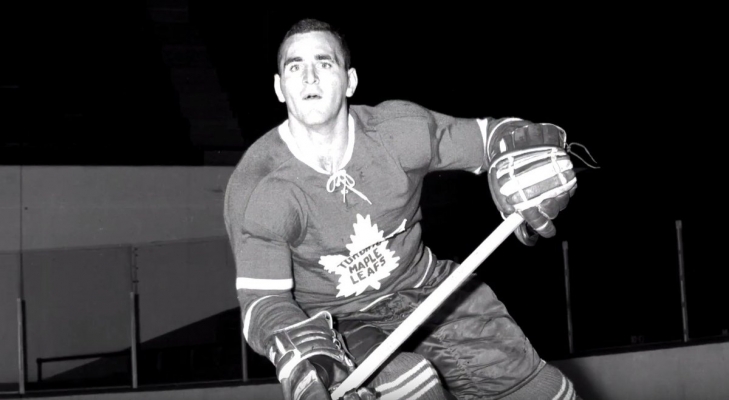
Bobby Baun reminds us a lot of Paul Henderson in that he is best known for one game. Baun fractured his ankle early in Game 3 of the 1964 Stanley Cup Championship but returned to the ice to score the game-winning goal against the Detroit Red Wings and would help Toronto win the Cup that year.
Overall, Bob Baun had an excellent stay-at-home blueline career in the National Hockey League, where he was a five-time All-Star, four-time Stanley Cup winner, and was the NHL leader in Defensive Point Shares (1960-61). He is also a five-time All-Star.
6. Auston Matthews
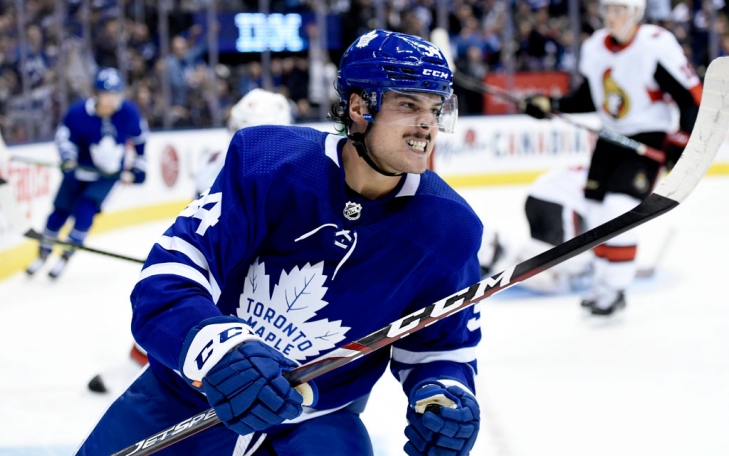
In 2016, the Toronto Maple Leafs chose Auston Matthews with the number one pick, and the Californian-born hockey player became an instant ice-sport superstar. He was hyped to be great, and the Maple Leafs fans loved him immediately.
In the Center's first game, he scored four Goals, an unprecedented debut in the NHL. Matthews won the Calder that year on a 40-Goal year, and he was first in Even Strength Goals (32). To date, he has been a three-time All-Star and has never had a year in which he lit the lamp fewer than 33 times. Matthews had 47 Goals in 2019-20 and 41 in the abbreviated 2020-21 campaign, which won him the Rocket Richard Trophy. That was good but the American had another trick up his sleeve.
From the outset of the 2021-22 campaign, Matthews was lighting the lamp often, and he broke Toronto's single-season record for Goals, netting 61 (with 106 Points in total), which also led the NHL. Matthews was awarded the Hart Trophy for his work, a second Rocket Richard, and his peers voted him the MVP with the Lester B. Pearson Award. Matthews was not as good in 2022-23 but was still at a superstar level with 85 Points. Last season, Matthews won his third Rocket Richard Award with 69 Goals (his best to date), and was also the league-leader in Even Strength Goals with 51. He was also fourth in Hart voting, and for the first time in his career was third in Selke voting.
As of this writing, Matthews is entering his eleventh season and has been their star since his debut. Stanley Cups will be the only way to enter the stratosphere of this list, but we aren't counting him out of reaching the top without one.
35. Harry Cameron

Playing for Toronto in three different stints dating all the way back to when the team was called the Arenas, Harry Cameron was an early prototype of the rushing Defenseman who could play make without sacrificing his end of the ice.
Cameron led the NHL in Assists twice and was a capable goal scorer who was also one of the first players who could curve his shot. A Stanley Cup Champion twice with Toronto, Cameron averaged over a Point per Game with Toronto (1.11), a rare accomplishment for any blueliner.
Cameron entered the Hockey Hall of Fame in 1962.
42. Dick Duff
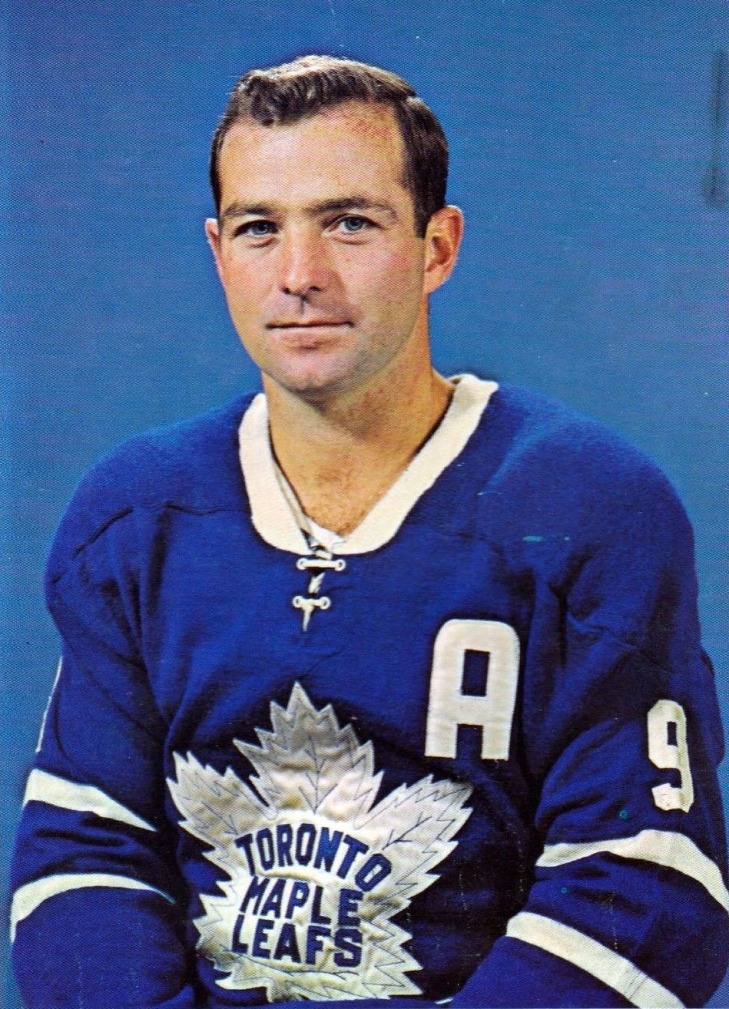
Dick Duff began his career with the Maple Leafs in 1954, where he showed his gritty two-way play quickly as an asset.
Duff would be one of the players around whom Toronto was rebuilt. While he was not a scoring machine, he was a glue guy who was capable of digging his skates in where necessary and doing the grinding necessary to win games. The Left Wing had three straight seasons (1956-57 to 1958-59) where he had at least 26 Goals, and he would play a large part in Toronto’s 1962 and 1963 Stanley Cup wins.
Duff was traded late in the 1963-64 Season to New York in a deal that sent over Andy Bathgate. Duff missed out on the Maple Leafs’ Stanley Cup that year, but he won four more with Montreal. As a Leaf, Duff scored 342 Points.
Duff entered the Hockey Hall of Fame in 2006.
41. Ken Randall

Ken Randall was an original member of the Toronto Arenas when the National Hockey League formed, and we will make the case that he was one of the most underrated players of the era.
Randall played mostly on the blueline but would occasionally play at Right Wing when needed. A Stanley Cup champion immediately when the Arenas won it all, he was also a champion in 1922, when the then-named St. Pats won it again. Except for his first year, Randall was in the top ten in Defensive Point Shares each season he was in Toronto, which ended when he was traded to Hamilton.
With Toronto, Randall had a good run with 86 Points in 128 Games.
38. Max Bentley
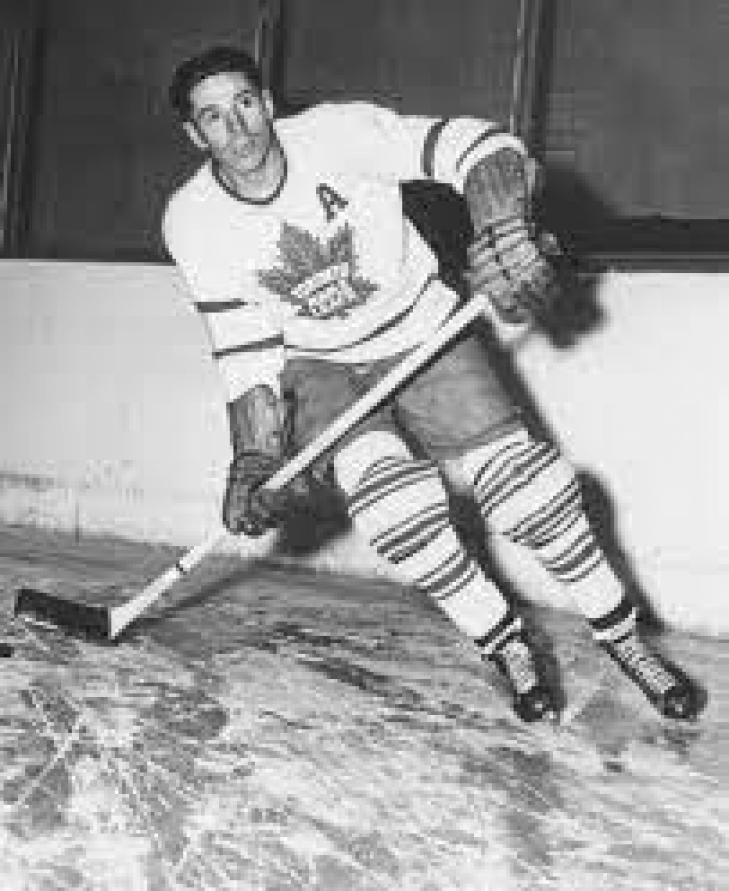
Max Bentley’s best years might have been with Chicago, where he won the Hart Trophy in 1946, but at age 27, he was traded to Toronto, where the two-time scoring champion had a lot left to offer.
The Maple Leafs had a lot more talent than Chicago, but Bentley was still a good scorer, posting five consecutive 40-point years with the Buds. Bentley helped Toronto win three Stanley Cups (1948, 1949 & 1951) and was the leading playoff scorer in 1951.
Bentley was traded to the Rangers before the 1953-54 Season, where he was reunited with his brother Doug, but he only played in half the season and refused to report to New York the following year. His rights were given back to Toronto, but they never agreed on terms, and Bentley never played in the NHL again. As a Maple Leaf, Bentley scored 256 Points, the same amount he did in Chicago.
Bentley was chosen for the Hockey Hall of Fame in 1966.
18. Doug Gilmour
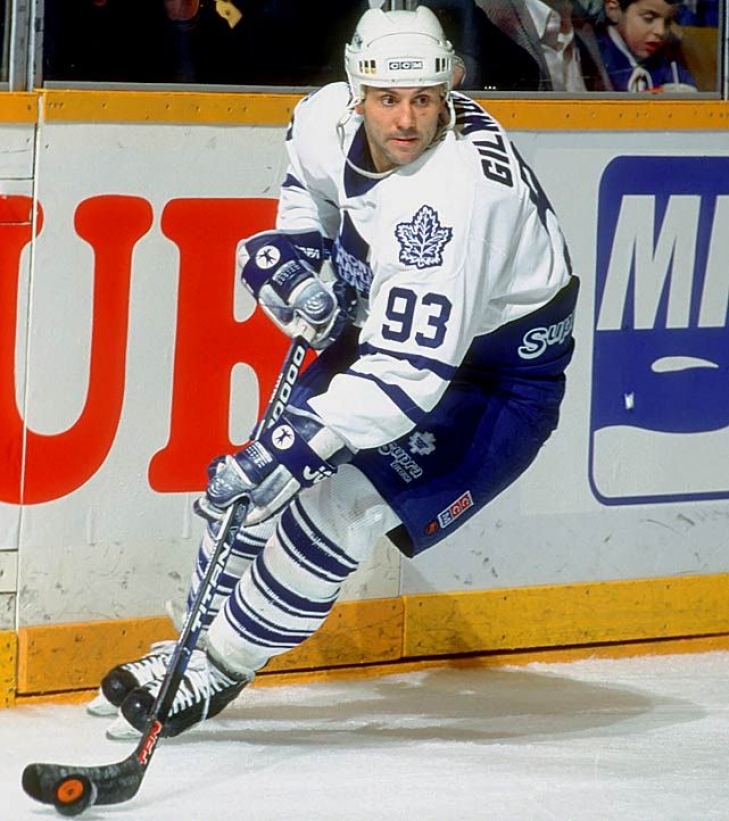
Doug Gilmour was already an established star in hockey before he arrived in Toronto, as he had a 105-Point season with St. Louis, and he later helped the Calgary Flames win the 1989 Stanley Cup. While Gilmour did not win a Cup as a Maple Leaf, he became their leader and led them to their best success in years.
Gilmour was the best player in the ten-player trade he was involved in during the 1991-92 Season, and he brought a culture that immediately turned the team around. The following year, Gilmour had his best year in hockey, scoring a career-high 127 Points. Despite being an offensive dynamo, he was equally gifted on the defensive side, as he won the Frank J. Selke Trophy as the NHL's top defensive forward. Gilmour, who was second for the Hart, led the Leafs to the Western Conference Final, where they came close to upending Wayne Gretzky and the Los Angeles Kings. Toronto may not have made the Finals, but “Dougie” was installed as an iconic figure in the city.
Gilmour followed that with his second consecutive 100-Point year (111) and was fourth in Hart voting. This ended Gilmour's apex, but he was still a Point-per-game player, and the two-time All-Star averaged 1.15 Points per Game during his time in Toronto. That period ended when he was dealt to New Jersey in 1997, but he played one final game in Toronto in 2003, when he was reacquired at the trade deadline. His return to the Leafs was brief, as a collision tore his ACL, and he never played professional hockey again.
The Hockey Hall of Fame inducted Gilmour in 2011, two years after the Leafs elevated a banner in his honor. His number 93 was retired in the mass group in 2016.
17. Allan Stanley
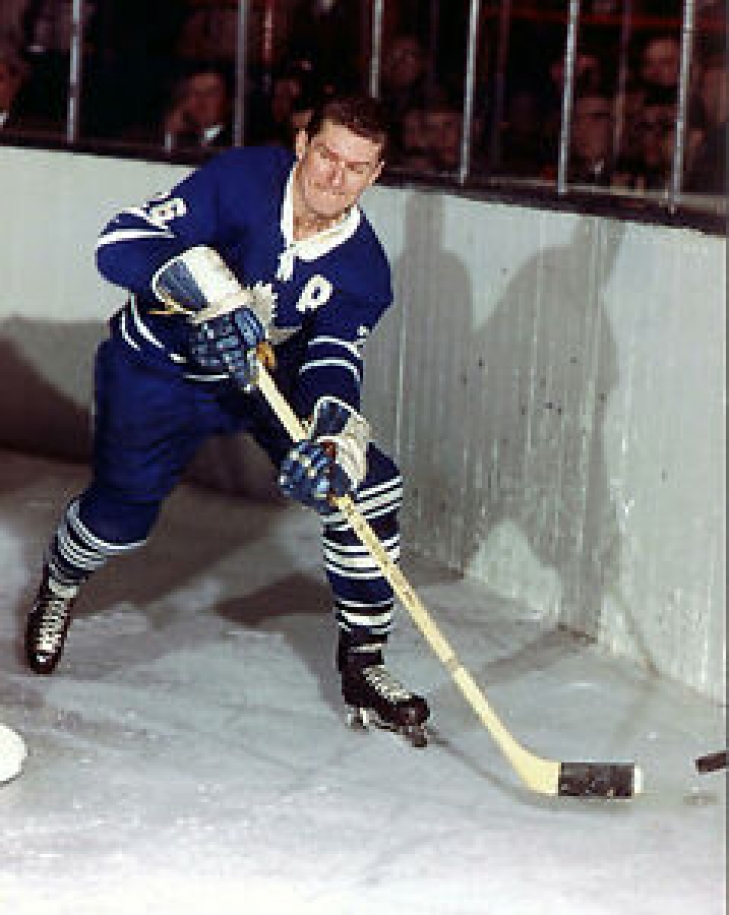
The first half of Allan Stanley's career was decent, but it wasn't spectacular. The Defenseman played for New York (1948-54), Chicago (1954-56), and Boston (1946-58), and while he was good, he was approaching 30, and hockey pundits thought they knew what Stanley was, but a trade to the Toronto Maple Leafs placed him in the best light possible.
Stanley was a slow and plodding skater (so much so that he was called "snowshoes"), but he was a master of positioning and an expert passer, which made him an asset on the power play. Stanley's true strength was as a lockdown defender, and he played a massive role in the Maple Leafs’ success in the 1960s, winning four Stanley Cups. Individually, Stanley was a three-time Second Team All-Star and was the runner-up for the Norris Trophy in 1959-60.
In 1968, Stanley was claimed by the Philadelphia Flyers, where he played one year before retiring.
Stanley was inducted into the Hockey Hall of Fame in 1981.
16. Babe Dye
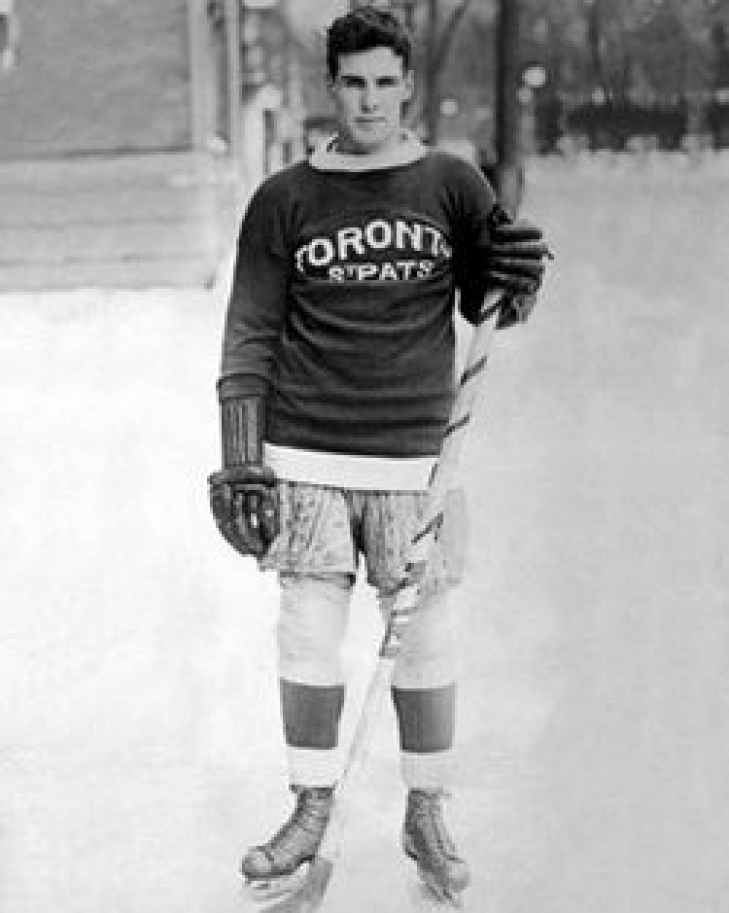
One of the most prolific Canadian athletes of the 1920s was Cecil "Babe" Dye, who played hockey, was a football player for the Toronto Argonauts, and was an outstanding minor league baseball player. Dye was at his best in hockey, of which the then-named Toronto St. Patricks was the beneficiary of.
Dye signed with Toronto in 1919, and in his second season, he led the NHL in Goals. Two seasons later, Dye led the St. Patricks to a Stanley Cup while again leading the NHL in Goals (31), while doing so again the following season (27). Dye became the first player to lead the NHL in Goals four times, achieving his career-high 38 to lead the league in 1924-25.
As athletic as the forward was, Dye was not a great skater and relied on an incredible shot and unequaled stickhandling. There were few players in his era or any other era who could score but couldn't playmake, but goals are the arbiter of wins.
Dye’s play plummeted after that season, and he was traded a year later. He returned to play six final games in the NHL for Toronto in 1930-31. With the Maple Leafs, Dye had a phenomenal 1.24 Points per Game Average and put the puck in the net 175 times in 177 Games.
Dye entered the Hockey Hall of Fame in 1970.
40. Rick Vaive
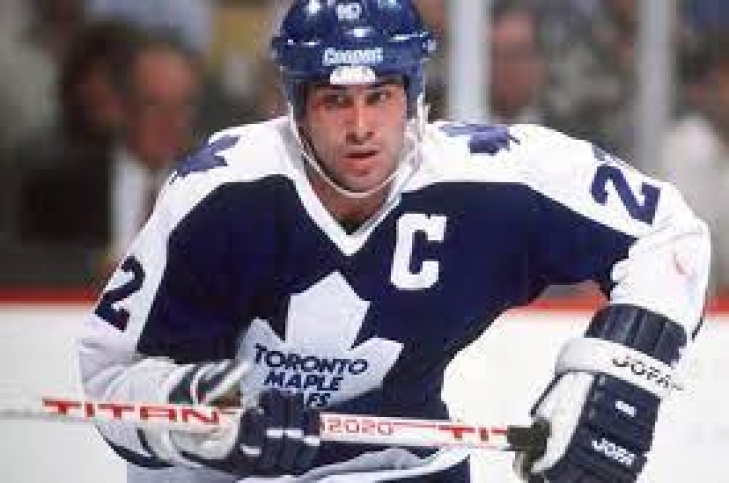
The Toronto Maple Leafs have had their share of titles and snipers, but it is a surprise to some to learn that Rick Vaive was the first player in franchise history to score 50 Goals in a season.
Arriving from Vancouver in early 1980, Vaive blossomed into one of Toronto’s top goal scorers of the 1980s, who not only had that aforementioned 50-Goal year (1981-82) with 54, but he also eclipsed the 50-Goal mark the next two seasons. The Right Wing was also an All-Star in all of those seasons. Vaive’s lamp-lighting production dipped after that, but in those three years, 30-Goal outputs were perfectly respectable.
Vaive was traded to Chicago right before the 1987-88 season began, and as a Maple Leaf, he had 299 Goals, and was a point-per-game player.
30. Ron Ellis
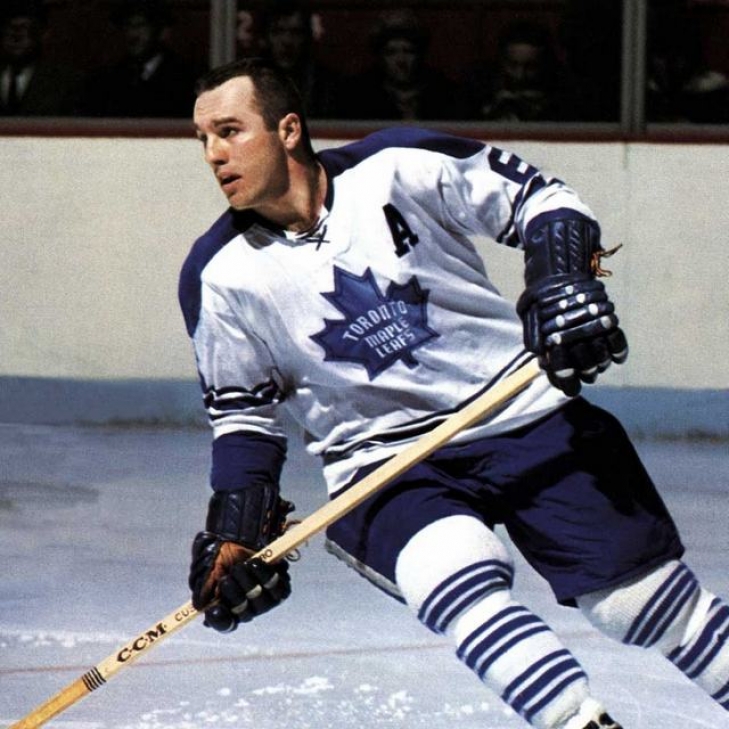
Ron Ellis played 1,034 Games in the National Hockey League, all of which were in the blue and white of the Toronto Maple Leafs.
Ellis played in one game in the 1963-64 Season and was then a fixture at Right Wing for years to come. Aiding the Maple Leafs in securing the 1967 Stanley Cup, Ellis had at least 42 Points each year from 1965-66 to 1974-75, with the last year seeing Ellis score a career-high 61 Points. Ellis abruptly retired after that year, allegedly upset that he was passed over for the captaincy in favor of Darryl Sittler. That lasted two seasons before he returned for three more years, retiring after the 1980-81 Season with 640 career Points.
29. Jimmy Thomson
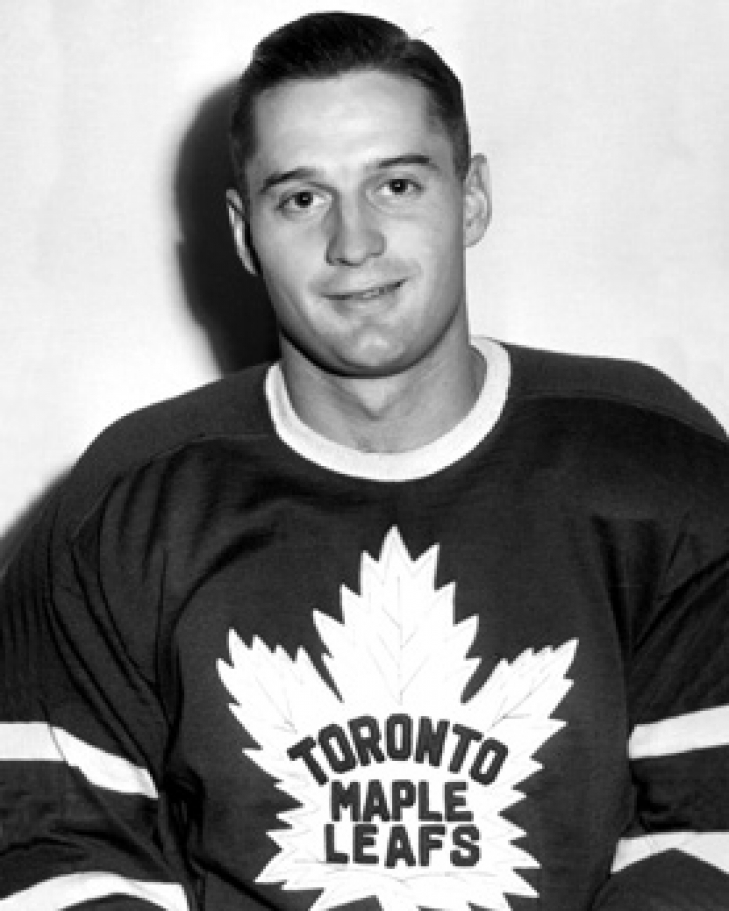
Jimmy Thomson was an underappreciated cog in the machine that won four Stanley Cups in five seasons (1947-51), a period that coincidentally is not as respected as their four titles in the 1960s.
Playing at Defense, Thomson was twice a Second Team All-Star and led the NHL in Defensive Point Shares three times. Thomson was not a scorer but was an expert passer who managed to land in the top ten in Assists twice. Thomson played twelve years with the Leafs, with a final one in Chicago.
As a Maple Leaf, Thomson had 233 Points and ensured a lot more did not happen on his end of the ice.
28. Wendel Clark
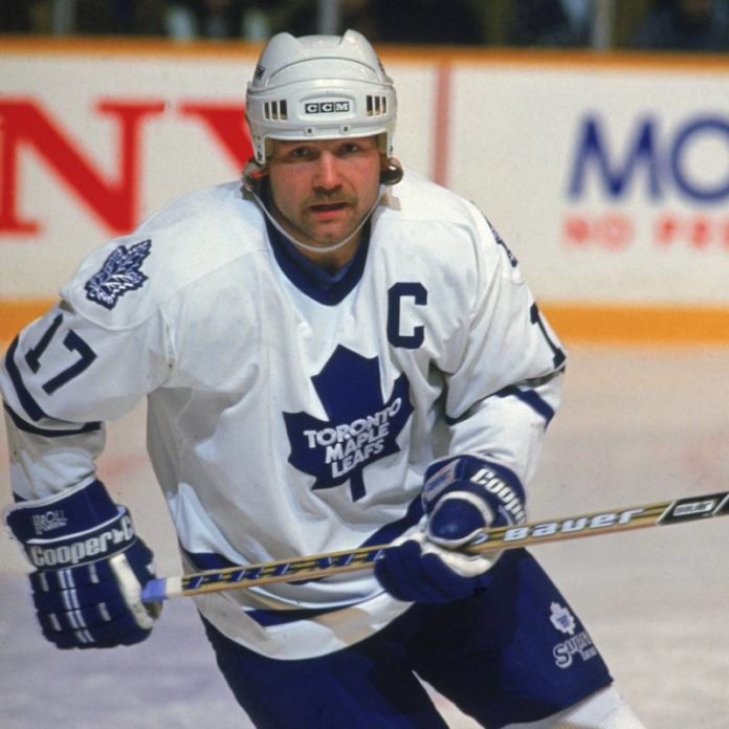
If this list were based purely on popularity, Wendel Clark would be near the top.
Clark was taken number one in the 1985 Draft, and he joined a struggling Maple Leafs team that lacked an identity. The Left Wing immediately became a fan favorite for his no-nonsense play, willingness to fight, and ability to score. As a rookie, Clark scored 45 Points and finished second in Calder voting to Gary Suter. The Left Wing had 60 Points as a sophomore, but in his third year, he began to be plagued with back problems that affected him for the rest of his career and resulted in many games lost.
Despite his medical setbacks, Clark remained the heart of the team and became the team captain. A trade from Calgary brought Doug Gilmour to the Leafs and with other pieces in tow, the Maple Leafs made a deep run in the 1993 Playoffs. Clark had his best year the season after, with a career-high 76 Points, but the Leafs dealt Clark to Quebec for Mats Sundin, and the Leaf Nation wept for days.
Clark returned two years later, where he was again often-injured but always popular and pugilistic. He signed with the Tampa Bay Lightning in 1998 but made one more stop in Toronto to finish his career.
Of the 564 career Points Clark scored, 441 came in a Maple Leafs uniform. Toronto would hang his banner in 2008, with his number 17 retired in 2016.
8. King Clancy
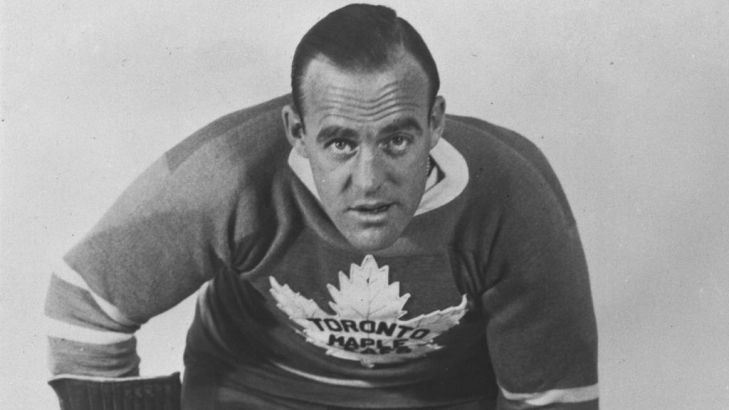
In the 1920s, while he was playing for the Ottawa Senators, Francis Michael "King" Clancy was one of the top Defenseman in professional hockey. While he likely lost most of the fights he was in, the 150-pounder was afraid of nobody. Clancy led the Sens to two Stanley Cups, but Ottawa made a colossal error, as they traded him to the Toronto Maple Leafs before the 1930/31 Season.
The transaction became known in circles as the "best deal in hockey," and Clancy’s already stellar game had a bigger platform. Clancy led Toronto to a Stanley Cup win in 1932, and he would be named a post-season All-Star four times as a Maple Leaf. Clancy brought leadership and identity to Toronto and was also known for his charitable work off the ice.
Clancy retired in 1936, and he would forever be associated with Toronto, later serving as their Coach, then General Manager, and multiple capacities in between. The NHL would later name an annual award given to the NHL player who demonstrates leadership qualities on and off the ice and who has made exceptional humanitarian contributions in the community.
Clancy was chosen for the Hockey Hall of Fame in 1958. In 1995, his name was part of the group that had their name honored at the Air Canada Center, and in 2016, his number 7 (also with Tim Horton) was retired by the team.
27. Hap Day
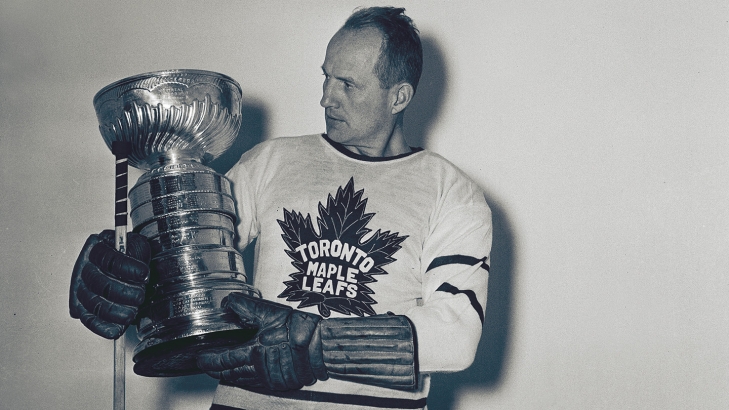
Hap Day entered the NHL with Toronto as a rookie in 1924, where he played at Left Wing, leading the NHL in Assists (17). He would move to Defense afterward, playing competent two-way hockey before becoming a pure lockdown Defenseman in his fourth NHL season.
Day was very good in this role, and he became a team leader, earning the captaincy in 1926. He would later be paired with the legendary King Clancy, and the two would anchor the Maple Leafs to a Stanley Cup win in 1932. He played for Toronto until his contract was sold to the New York Americans in 1937.
Day returned to Toronto as a Coach, winning five Stanley Cups, and went on to capture one more as an Assistant General Manager.
The Hockey Hall of Fame inducted Day in 1961, and in 2006, his name was added to the honored greats at Air Canada Center. His number 4 (along with Red Kelly) was retired in 2016.
25. Carl Brewer

When it comes to hockey players who stood firm on their principles, Carl Brewer might have stood the tallest.
Brewer debuted in 1958 and was second in Calder Trophy voting for the 1958/59 Season. Showing grit on the defensive end and strong passing on the rush, Brewer quickly moved up to the upper-tier of blueliners in the NHL, earning three post-season All-Star Selections and anchoring them to three consecutive Stanley Cups (1962-64). Like so many Maple Leafs, Brewer began to have issues with management, namely Head Coach Punch Imlach.
Brewer abruptly retired and regained his amateur status, playing for Team Canada in the 1967 World Championship. He would also play and coach in Finland, and Brewer is credited with elevating their program. He did come back to the NHL, playing for Detroit, St. Louis, and Toronto of the WHA before retiring again in 1974.
He would make a comeback for the Maple Leafs in January of 1980 for 20 Games after not playing for over six years and retired for good at season's end.
After his playing career ended, Brewer suspected that a substantial portion of the NHL's pension funds had been siphoned away to league owners. He was right, and $40 million was reimbursed, and Alan Eagleson, the Players' Association Executive Director, was charged with fraud and jailed.
The work that Brewer did behind the scenes in hockey should never be forgotten.
24. Joe Primeau
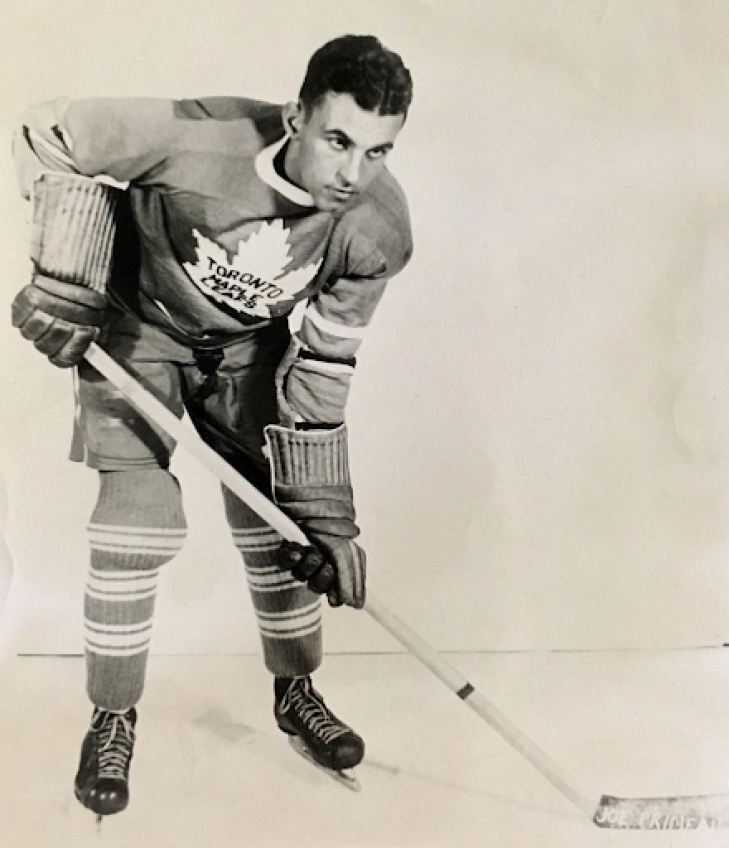
Joe Primeau played all of his ten seasons (1927-36) in the National Hockey League with the Toronto Maple Leafs, where he famously centered the “Kid Line” with Charlie Conacher and Busher Jackson as his wings.
A clean player who won the Lady Byng in 1932, Primeau took the Buds to the Stanley Cup that year, and his playmaking skills were on full display with his three Assists Titles. Primeau was also a Second Team All-Star in 1933-34, which was the last of three years he led the NHL in Assists.
Primeau was elected to the Hockey Hall of Fame in 1963.
