

Our All-Time Top 50 Washington Nationals have been revised to reflect the 2023 Season
Yes, we know that this is taking a while!
As many of you know, we at Notinhalloffame.com are slowly generating the top 50 of each major North American sports team. That being said, we have existing Top 50 lists, and we always consistently look to update them when we can and based on necessity. As such, we are very happy to present our post-2023 revision of our top 50 Washington Nationals.
As for all of our top 50 players in baseball, we look at the following:
1. Advanced Statistics.
2. Traditional statistics and how they finished in Major League Baseball.
3. Playoff accomplishments.
4. Their overall impact on the team and other intangibles that are not reflected in a stat sheet.
Last year, the Nationals had another awful season and were not close to the playoffs. The poor year did not generate any changes in the Top 50, but as always, we acknowledge that we considered the 2023 Season.
As always, we present our top five, which (obviously) saw no changes:
1. Gary Carter
2. Tim Raines
3. Max Scherzer
4. Andre Dawson
5. Steve Rogers
You can find the entire list here.
We thank you for your continued support of our lists on Notinhalloffame.com.
219. Steve Rogers
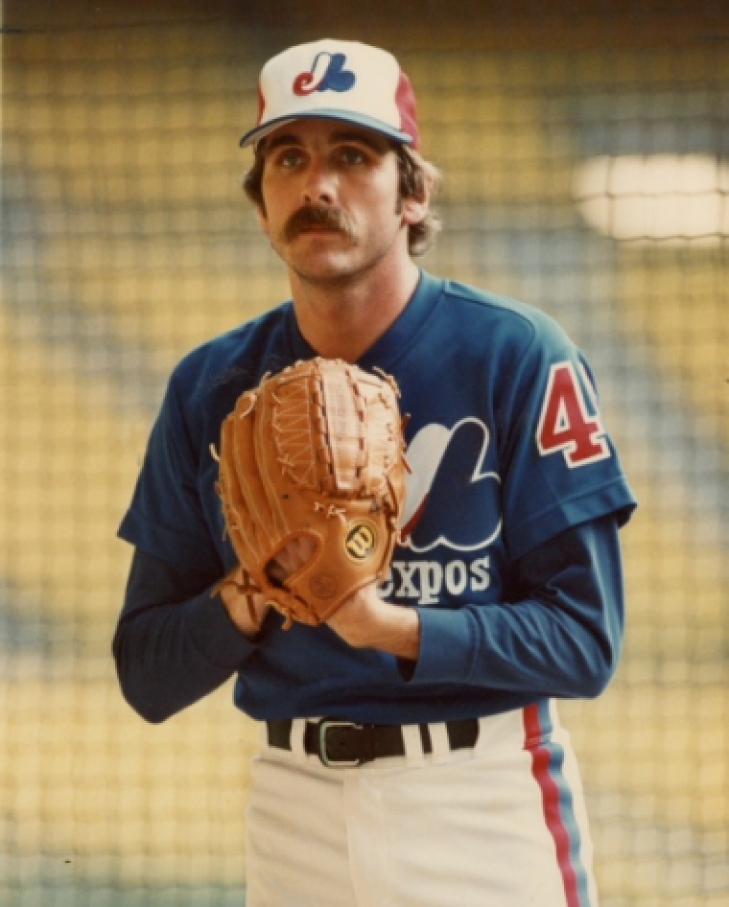
The claim can be made (and we will be among those who make it) that Steve Rogers was the greatest Pitcher in franchise history when the Washington Nationals were in Montreal as the Expos.
Rogers played his entire career with the Expos (1973-85), and he got off to a great start as the runner-up for the Rookie of the Year. The Expos were not a good team in the 70s, and he twice led the National League in Losses, but most of that could not be put on his shoulders. Rogers, who was an All-Star in 1974, was again one in 1978 and 1979, and as Montreal improved, the baseball world took notice of their ace.
In 1982, Rogers was an All-Star again, winning the ERA Title (2.40) and finishing second in Cy Young voting. Rogers was third for the Cy Young the year after, and he was an All-Star for the fifth and final time. Injuries and arm fatigue caught up with him, and he retired in 1985.
Notably, Rogers was also a respectable hitter, who might have had a low Batting Average (.138), could bunt people over, and he actually led the NL in Sacrifice Hits in 1983.
Rogers retired with a 158-152 record with 1,621 Strikeouts.
Our Top 50 All-Time Washington Nationals have been updated
As always, we here at Notinhalloffame.com continue to update our existing lists.
As we slowly put together our Top 50 all-time players for every major team we constantly continue to update our existing ones. For the second time, we are updating the first franchise 50 we ever posted, the Washington Nationals.
Since the last time we revised our Washington Nationals two things have changed.
The first is that since our last revision in two and a half years ago, we have relaxed the dependence on advanced statistic and put a higher reward on individual seasons. We think this allows for a more equitable balance on traditional and advanced metrics.
The second and of course obvious change is that two full seasons have passed. This list is now up until the end of the 2017 Season.
The entire list can be found here and we certainly encourage you to take a look at it and let us know your thoughts and opinions.
Prior to that we wanted to make you aware of a few major changes on the list since the last revision.
Max Scherzer debuts at #9. While his tenure with Washington has certainly been brief, three All Stars and two Cy Youngs already make him one of the most successful hurlers in Nationals history.
2014 Silver Slugger Anthony Rendon makes his first appearance at #22.
Other debuts on current Nationals are Daniel Murphy (#31) and Tanner Roarke (#35).
Other jumps in active Washington Nationals include Bryce Harper from #9 to #8, Steven Strasburg goes from #29 to #11 and Gio Gonzalez moves from #28 to #16.
Other debuts based on our revisions are Moises Alou (#38), Dan Schatzeder (#45) and Wilson Ramos (#47).
As you may have deduced, the entire list has been shuffled.
We will be unveiling the Top 50 All-Time Dallas Stars next.
5. Steve Rogers
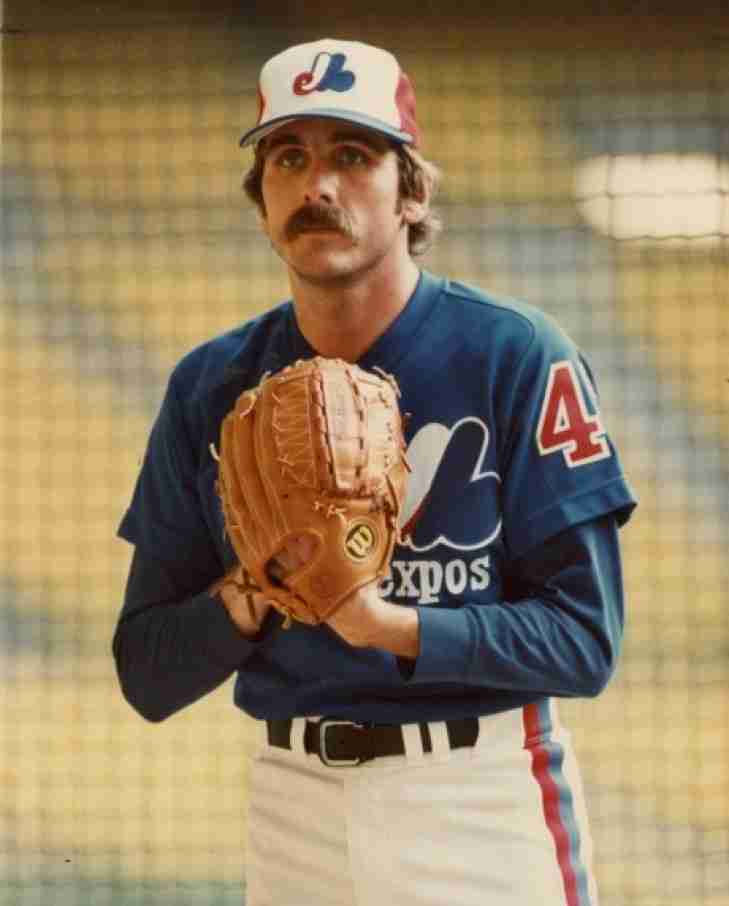
When Steve Rogers debuted in the major leagues in July 1973, he quickly provided the young Montreal Expos with something they had lacked since the team started: a true, homegrown ace. Coming from the University of Tulsa, this right-handed pitcher had an outstanding rookie season, going 10–5 with a mere 1.54 ERA in 17 starts. His immediate dominance over big-league batters pushed the Expos into an exciting late-season pennant race and earned him second place for the National League Rookie of the Year Award, marking the emergence of a remarkable talent.
After his initial surge, Rogers became the Nationals’ most dependable pitcher, renowned for his durability and precise control. Each season, he willingly took the mound, stabilizing a fluctuating Montreal rotation and often surpassing 200 innings. His peak physical endurance came in 1977, when he set franchise records by starting 40 games and pitching 301.1 innings. Rogers excelled at inducing ground balls, reducing setbacks, and consistently resisting opposing hitters.
The late 1970s and early 1980s represented his peak years, during which he consistently earned national recognition as a five-time National League All-Star. Rogers secured top-five finishes in Cy Young Award voting three times, utilizing a refined mix of heavy sinkers and consistent mechanics. In 1980, he led the league with 14 complete games and achieved two shutouts, with five in both 1979 and 1983, cementing his reputation as a pitcher who finishes what he starts.
Nothing captured the emotional peaks and valleys of his Montreal stay quite like the shortened 1981 postseason. Rogers was outstanding in the National League Division Series, posting a 2–0 record with an impressive 0.51 ERA, highlighted by a six-hit shutout against Steve Carlton and the defending World Series champions, the Philadelphia Phillies, in the decisive Game 5. Yet, just days later in the NLCS versus the Los Angeles Dodgers, he was brought in from the bullpen in the ninth inning of a tied Game 5, yielding a heartbreaking, pennant-winning home run to Rick Monday—an moment that tragically overshadowed his otherwise stellar October.
Undeterred by his October heartbreak, Rogers rebounded strongly in the 1982 season with his best campaign. Playing with a fierce determination, he finished with a 19–8 record, set a personal best with a 44.7 bWAR, and won the National League ERA title with a stellar 2.40. That summer, he highlighted his season by starting the 1982 All-Star Game in front of his enthusiastic home crowd at Olympic Stadium, finished second in the Cy Young voting, and became an enduring legend in Canadian baseball history.
Rogers retired in May 1985 due to shoulder injuries, ending his 13-year MLB career entirely with the Montreal Expos. He was the franchise’s career leader in wins (158), starts (393), innings pitched (2,837.2), complete games (129), and shutouts (37)—records still standing today. In the history of the franchise, Rogers symbolizes peak positional longevity and era efficiency, a fact confirmed by his induction into the Canadian Baseball Hall of Fame in 2005.
