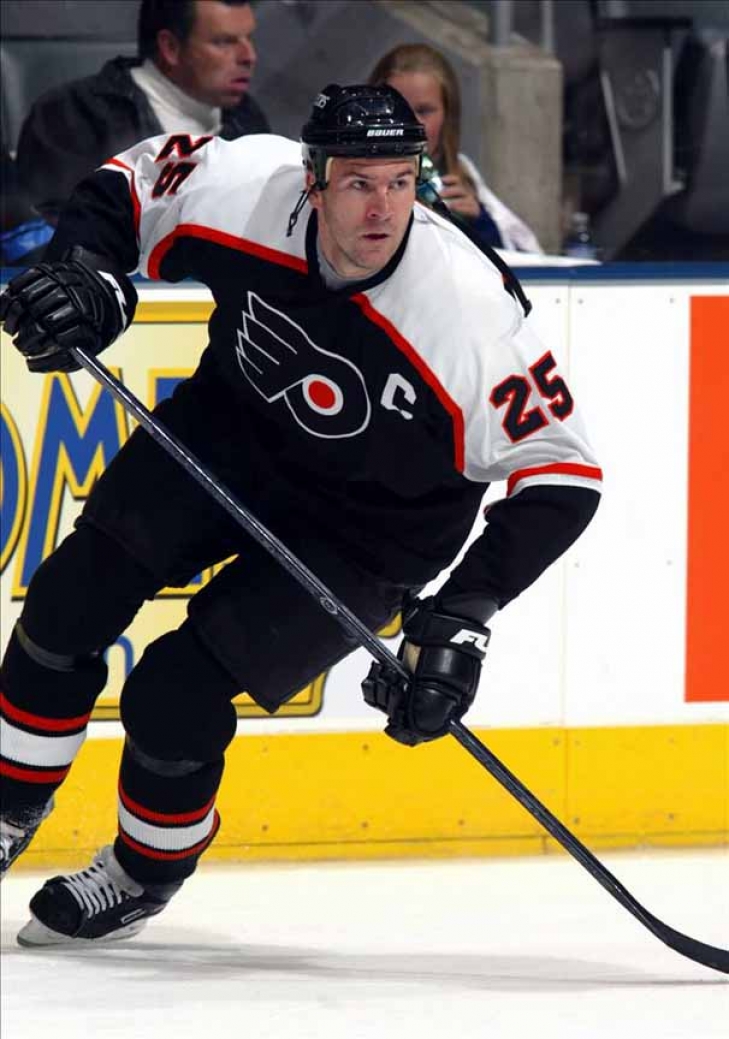
1. Bobby Clarke
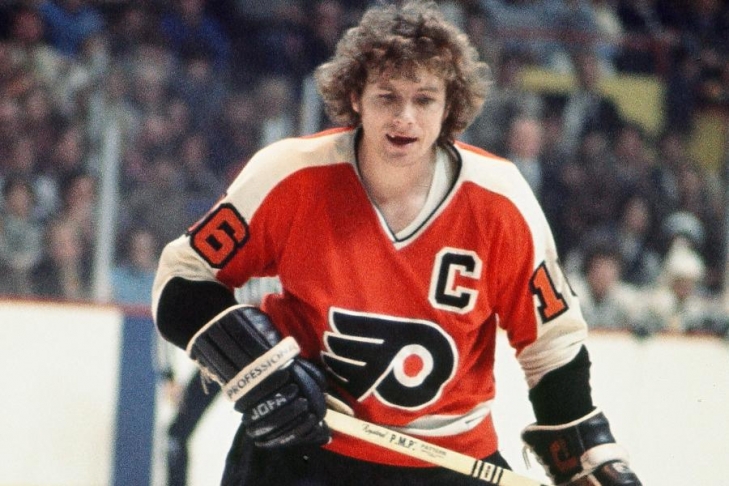
In terms of overall statistics, Bobby Clarke belongs at the top, but it is not exactly a landslide. However, in terms of what embodies the Philadelphia Flyers, this wasn’t even close.
The Philadelphia Flyers retire the #88 of Eric Lindros
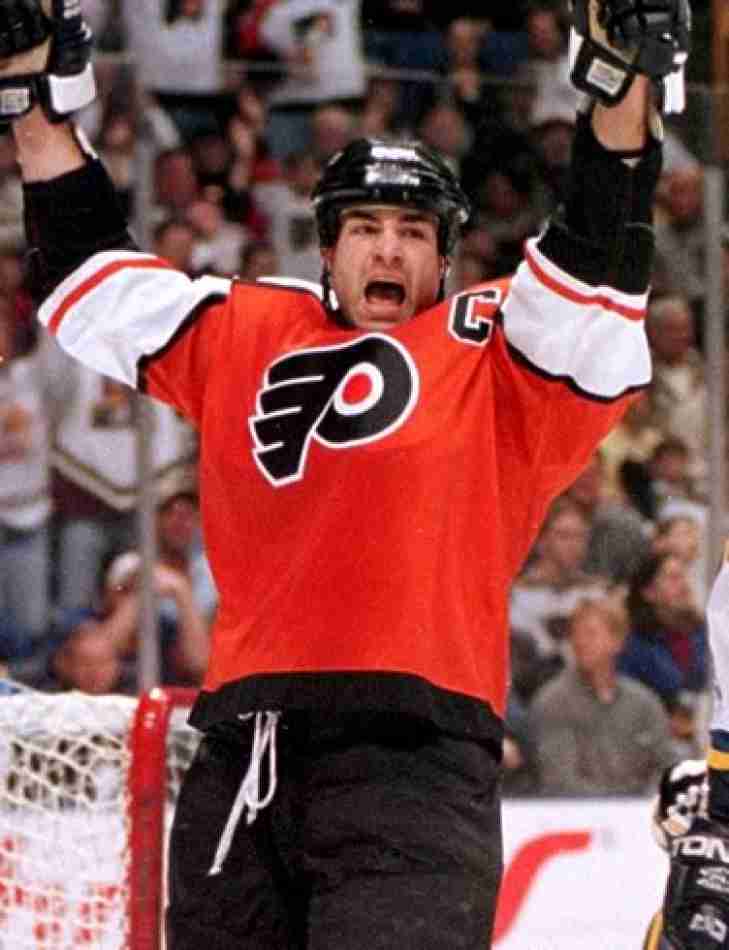
Lindros was drafted first overall by the Quebec Nordiques in 1991 and famously refused to report to the team. He sat out a year and was traded to the Flyers in a megadeal and he would immediately become the face of the franchise. A power forward in every sense of the word, Lindros’ imposing size was complimented with finesse skills. In the 1994-95 strike shortened season, Lindros was named the Hart Trophy winner while also earning First Team All Star Honors. The following season Lindros had a career high 115 Points and was named a Second Team All Star. In 1997, he led the Flyers to a Stanley Cup Final and was the playoffs leading scorer, though the team went down to defeat to the Detroit Red Wings.
As big and as powerful as Lindros was, his style of play made him injury prone and more specifically he began to get concussed often. He also suffered a collapsed lung, which was followed by a team edict for him to fly back to Philadelphia (this occurred in Nashville). He didn’t, and had he done so he would have likely died in the plane.
The injuries led to a public battle between Lindros and Flyers management, namely GM Bobby Clarke who questioned his star’s toughness. During the 2000-01 season, Lindros was cleared to return but refused to report and would sit out the remainder of the season. He would later be dealt to the New York Rangers but to say that the parting between the Flyers and Lindros was smooth would be an inaccurate one. Number 88 would play five more years in the NHL with New York, Toronto and the Dallas Stars before retiring.
Bridges were seemingly burned but Lindros would play in the Alumni Game at the 2012 Winter Classic at the request of GM, Paul Holmgren. Lindros would later be inducted into the Hockey Hall of Fame in 2016 and this was mostly due to his work as a Philadelphia Flyer.
As a Flyer, Lindros was a six time All Star and he scored 659 Points over 486 Games, an incredible 1.36 Points per Game Average.
Lindros becomes the sixth player to have his number retired by the Flyers. He joins Bernie Parent (1), Mark Howe (2), Barry Ashbee (4), Bobby Clarke (7) and Bill Barber (16).
We here at Notinhalloffame.com would like to congratulate Eric Lindros for achieving this latest honor.
Simon Gagne Retires
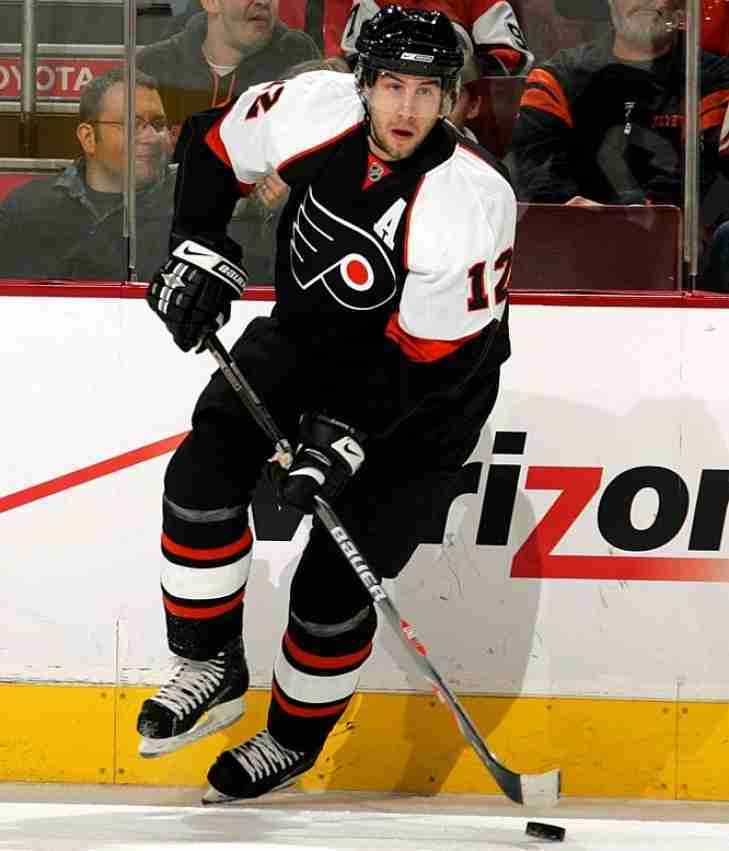
In a press release, the now former Boston Bruin Left Winger had this to say:
"Today, I want to thank my trainers and teammates. You inspired me to surpass myself. You made me understand that you need more than talent; it takes sacrifice and discipline and you need to work harder than your rivals. I also wish to thank my fans. Every evening, you energized me and inspired me to perform."
Over his fourteen year career, Gagne was a two time All Star and spend the bulk and best of his career with the Philadelphia Flyers. Gagne, a well respected all around player would score 601 Points over his career and would lead the NHL in Even Strength Goals in the 2005-06 season and later on would win a Stanley Cup as the member of the Los Angeles Kings in 2012.
Gagne would also win accolades Internationally as a member of Team Canada and would win a Gold Medal for his country in the 2002 Olympics and the 2004 World Cup.
Gagne will now be moved from the Notinhalloffame Hockey TBD Futures Section to the 2018 Futures Section.
We here at Notinhalloffame.com wish the best for Simon Gagne and his post-NHL career.
Daniel Briere Retires
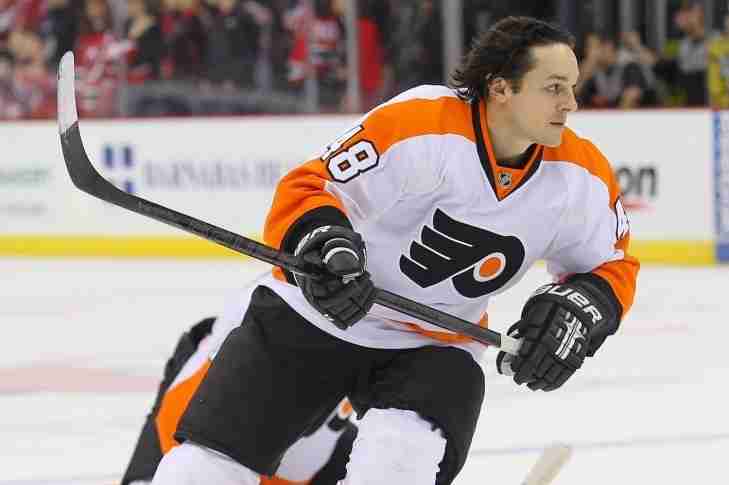
An undersized Centre, Briere would break in to league with the Phoenix Coyotes, but it was his season with the Buffalo Sabres in the 2006-07 season where he really turned heads, finishing with 95 Points and securing his first All Star Game appearance. Statistically, that would be his best season, but it would be with his next team, the Philadelphia Flyers, that he would have greater success.
Briere would lead everyone in scoring in the 2010 Playoffs in Philadelphia’s failed Stanley Cup run and two years later would lead the league in Playoff Goals. His overall playoff production saw him net 116 Points in 124 Games.
Daniel Briere retires with 696 Points and two All Star Game appearances. This is not likely to be a good enough career for the Hockey Hall of Fame, but probably for the back end of our list once eligible.
We have moved Briere to the 2018 Hockey Futures accordingly.
187. Simon Gagne

60. Eric Desjardins
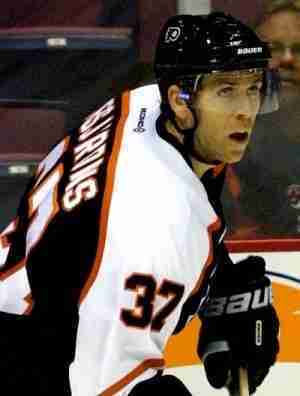
A solid two-way defenseman, Eric Desjardins was one of the better players behind the blue line during the 1990s. Desjardins could help stop the puck as well as help put it in the net. He won a Stanley Cup with the Habs in 1993, and upon being traded to Philadelphia, he was even more productive. He was easily their best defenseman and was good enough to represent Canada on three World Class National teams. Desjardins was a star, and with 575 career points, he could receive a look, but chances are that will be all he will receive.
47. Rick Tocchet
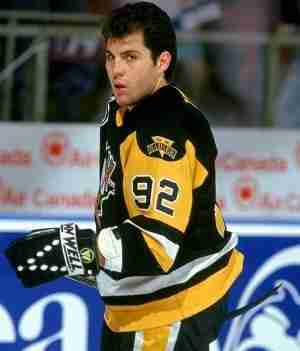
When Rick Tocchet entered the National Hockey League, he seemed to do so with the strength of his fighting skills. Tocchet still fought, but by his fourth season, he emerged as an effective scorer as well. Tocchet was as hard-nosed as they came and was the quintessential power forward of the game. The popular winger won a Stanley Cup with Pittsburgh, and though he played for six different teams throughout his career, he was always among the more popular. Tocchet did score a lot of points, but it may not have been enough to gain entry. Let’s hope that Rick Tocchet isn’t betting on his chances.
62. Ron Hextall
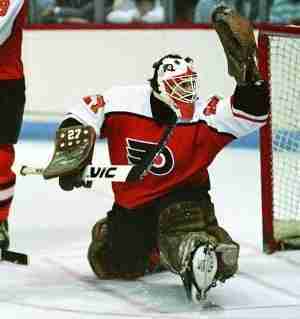
It is funny how Ron Hextall may be known more for the one goal (though he did do it again in a playoff game), he scored as opposed to the many he prevented. Hextall was a fearless player who had no qualms leaving the net, showcasing his skating acumen. In addition to being one of the game’s most mobile netminders, he was also among the most aggressive. Opposing players were wary of Hextall’s stick as he was known to slash at anyone who dared cross his path.
4. John LeClair
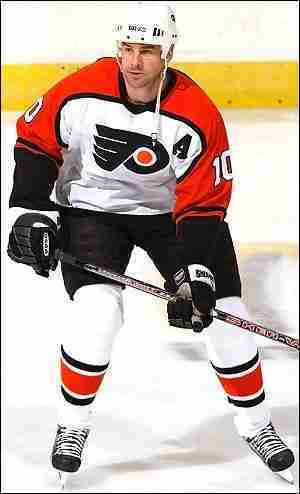
Some have said that John LeClair got off to a slow start in the NHL. There is certainly a level of truth to that, as his stint with the Habs showed his defensive skill, but not any fundamental offensive proficiency. Upon becoming a Philadelphia Flyer, LeClair began to utilize his size and mobility effectively. He was placed on a line with Eric Lindros and Michael Renberg, and the line dubbed the “Legion of Doom” became a highlight reel staple with their goals and bruising nature. LeClair became the first American to net 50 goals three seasons in a row. The question for the Hall is whether John LeClair’s tenure on Broad Street was enough to secure a spot.
40. Brian Propp
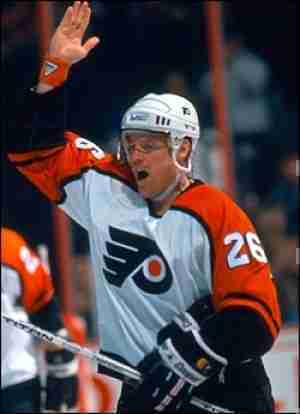
In 1999, Master Card named the entire Canadian Junior Hockey Team. This team featured current Hall of Famers Wayne Gretzky, Mario Lemieux, Guy Lafleur, Denis Potvin, Bobby Orr, and Bernie Parent. It also featured Saskatchewan native Brian Propp, who lit up the lights for the Brandon Wheat Kings. Propp’s first NHL season saw him on a line with Bobby Clarke and Reggie Leach. He held his own, and for the next ten years, he was a consistent offensive threat on Broad Street.
65. Tim Kerr
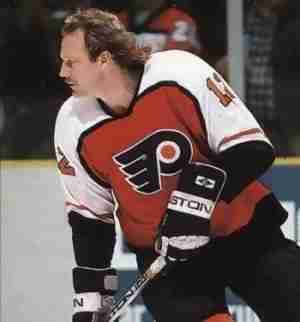
Although it can be argued that almost all hockey players take a pounding from the game, few may have put themselves in harm's way more than Tim Kerr. Dubbed “the Sultan of Slot”, Kerr would park himself in front of the net and do whatever it took to get the puck in the net. Some criticized him for scoring what was considered a high amount of “garbage” goals, but the fact is that Kerr netted 50-plus goals four seasons in a row. Anyone who can do that is undoubtedly a valuable commodity regardless of the era. Kerr still holds the NHL record for 34 Power Play goals in one season. His style of play finally caught up with him, and he was only able to play 655 games (which on this list, is relatively low), but did score 370 goals. Although his stats were solid, some pundits may look down on how he achieved them, which could be enough to prevent Tim Kerr from gaining induction.
36. Reggie Leach
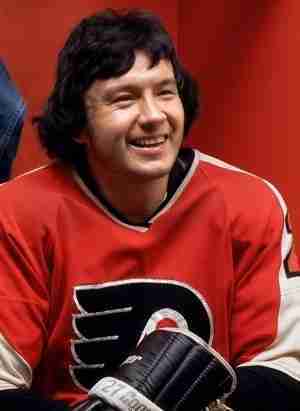
Reggie Leach was one of the more prolific scorers in the Western Junior Hockey League. He was able to perform similar feats in the NHL, primarily when he arrived to the Philadelphia Flyers and joined the Broad Street Bullies. Interestingly, Leach’s best season may have been his most frustrating. Leach scored the most goals in the 1975-76 season (61) and led his team to a Stanley Cup appearance. Despite scoring 16 goals in the playoffs and winning the Conn Smythe Trophy, his Flyers failed to win the Cup that year. Leach would go on to gain 666 points in the NHL and had he been a better playmaker he would have a points total that may have garnered a look from the Hall.
24. Rod Brind'Amour

262. Keith Primeau