

8. Nellie Fox
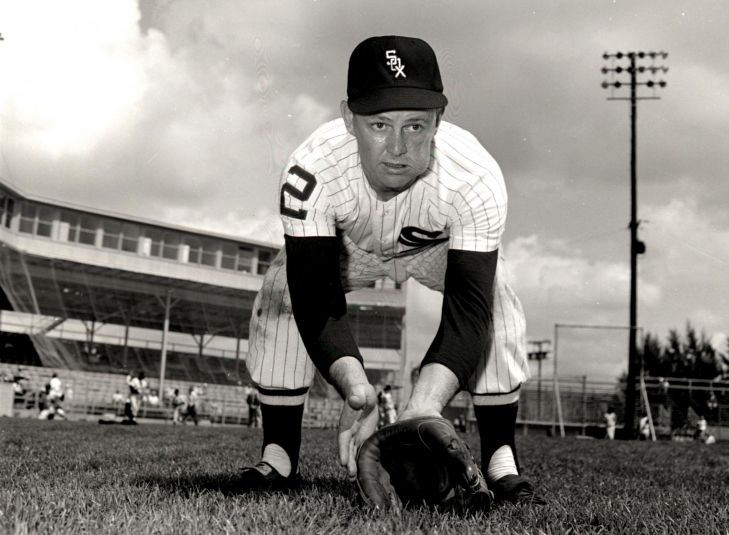
When the White Sox sent Joe Tipton to the Philadelphia Athletics in exchange for Nellie Fox following the 1949 season, they weren't just making a trade; they were altering the course of their franchise history. While Tipton faded into obscurity, Fox arrived on the South Side and immediately set up a permanent residence at second base. He was a small man with a giant wad of tobacco in his cheek and a bottle-shaped bat that he used to torment American League pitchers for the next fourteen years. He didn't just play for the Sox; he personified the scrappy, high-octane brand of baseball that became the team's trademark.
The middle chapter of Fox’s career saw him evolve into a certifiable hitting machine. From 1951 to 1961, he was an annual fixture at the All-Star Game, a high-contact specialist who led the league in hits four separate times. He was the most difficult man in the sport to strike out, a bat-control wizard who once went nearly 100 consecutive games without fanning. The pinnacle of his tenure arrived in 1959, a magical season where Fox captured the American League MVP award and willed the White Sox to their first pennant in forty years. Though the team fell short in the World Series, Fox remained untouchable on the big stage, batting a blistering .375 in the Fall Classic.
Defensively, Fox was the gold standard of his era. While the Gold Glove award didn't exist for the first half of his career, he dominated every defensive metric available, eventually claiming three of the trophies once they were established in 1957. He led the league in fielding percentage six times and was the master of the double play, serving as the defensive anchor for a pitching staff that relied on his vacuum-like range. He played with a durable, blue-collar intensity that made him the most beloved figure on the South Side, missing only a handful of games over a twelve-year span.
The final walk toward the exit came in 1963, when his legendary residency in Chicago finally concluded. Seeking a fresh start in the National League, Fox headed south to join the Houston Colt .45s, where he would provide veteran leadership for the young expansion club in his final two seasons. He left the White Sox with 2,470 hits in a Sox uniform and a reputation as the ultimate competitor. His journey to Cooperstown was a long one, finally culminating in a posthumous induction in 1997, nineteen years after the team hoisted his number 2 to the rafters. He arrived as an unheralded trade piece and left as the permanent face of South Side grit.
Awards = HOF? Part Twenty-Five: Gold Glove Second Base

Needless to say, different awards in different sports yield hall of fame potential. In basketball, the team sport with the least amount of players on a roster, the dividend for greatness much higher. In baseball, it is not as much as a great individual season does not have the same impact.
We are now taking a look at the Gold Glove Award, given annually to the best defensive player in MLB in each respective position.
