

43. Steve Cishek
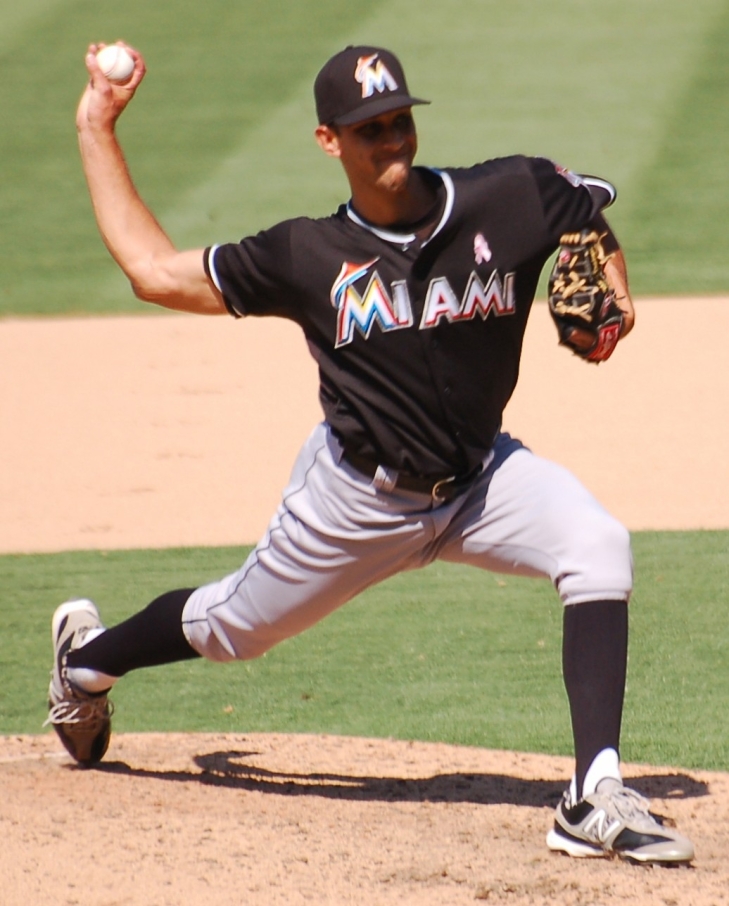
Steve Cishek arrived in Miami as a fifth-round pick in 2007, a gangly right-hander whose sidearm delivery and sinking velocity made him an immediate intrigue for the organization's bullpen. After a brief run in 2010, in which he threw over four scoreless innings, he returned in 2011 to become a permanent fixture in the late innings.
While he showcased an ability to induce ground balls and missing bats, his 2012 transition to closer sealed his status as a top late-inning reliever. Taking over for struggling Heath Bell, Cishek led the National League with 62 games finished, recording 15 saves. His funky delivery proved a reliable asset against top hitters in high-pressure situations.
During 2013-2014, he showed consistency, converting 34 of 36 saves in '13 with a 2.33 ERA, and set an MLB record for saves on a team losing 100 games. In 2014, he hit a career-high 39 saves and achieved 33 consecutive saves, marking historic milestones.
After a tough start that lowered his efficiency, the organization traded him mid-season to the St. Louis Cardinals for prospect Kyle Barraclough. Cishek finished 191 Games for the Marlins with 94 Saves.
28. Brian Anderson
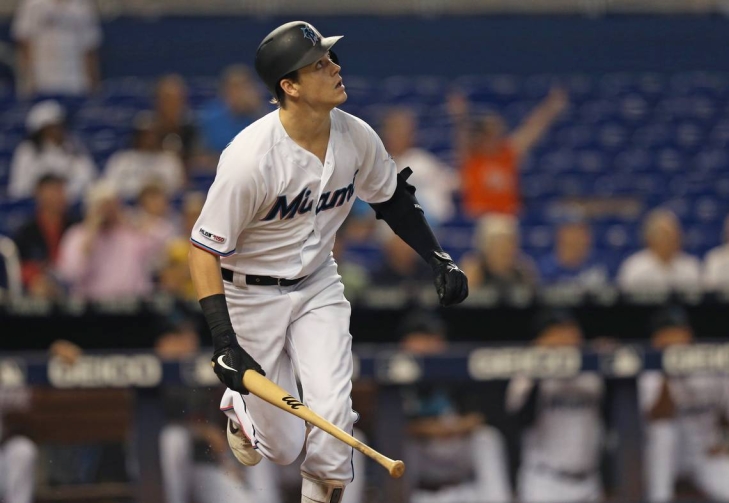
A former Arizona Razorback, Brian Anderson has spent the first six years of his career with the Miami Marlins, debuting in 2017 with 25 Games, keeping his rookie eligibility intact for the following year.
In 2018, Anderson demonstrated his value by appearing in 156 games, leading all Marlins players in plate appearances and runs scored. His 161 hits and .273 average earned him a fourth-place finish in the National League Rookie of the Year voting, establishing him as a foundational piece of the franchise's future. He paired that offensive efficiency with a strong arm, often sliding into right field to accommodate team needs while maintaining a high level of performance at third base.
During the 2019 season, authoring a campaign that saw him set career highs in multiple power categories. He blasted 20 home runs and drove in 66 runs while posting a solid .811 OPS before a fractured hand in August cut his year short. Despite the injury, he remained a central figure in the clubhouse, eventually becoming the first player in the history of the Marlins' home park to record a three-homer game in 2020.
Between 2021 and 2022, he was restricted to fewer than 100 games each season, which hampered his ability to regain the power stroke he showed earlier in his run. He eventually departed in November 2022 after being non-tendered, signing as a free agent with the Milwaukee Brewers.
Anderson compiled 487 hits, 57 home runs, and a .257 batting average as a Marlin.
39. Kevin Millar
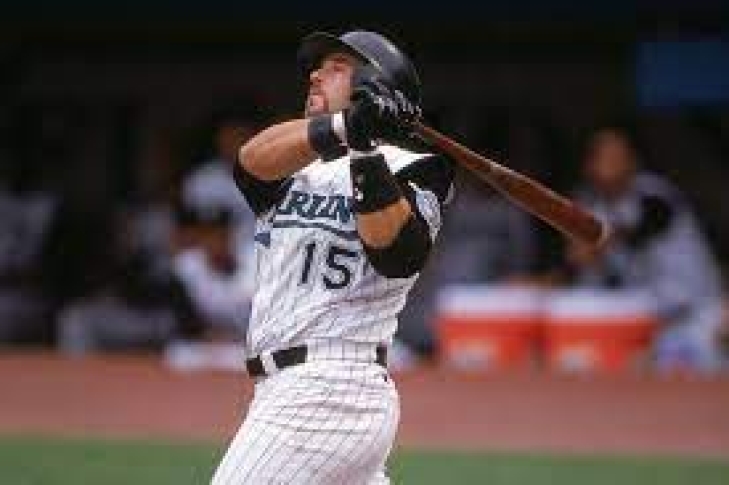
Kevin Millar arrived in Miami in 1998 as the ultimate baseball outcast. Undrafted and forced to start his professional journey in the independent leagues, he famously served as a replacement player during the 1995 spring training, a decision that permanently barred him from the Major League Baseball Players Association. Despite this "union-less" status, he operated with a specialized, blue-collar intensity that transformed him from a $5,000 minor-league purchase into one of the most reliable bats in South Florida.
After a brief stint in the Majors in 1998, Millar reached a plateau of efficiency as a part-time player, eventually forcing his way in the daily lineup by 1999. He demonstrated excellent control of the strike zone, hitting .285 during his first full season and improving to .300 in 2000. He wasn't only a morale booster in the clubhouse; he was a significant presence in the batting order, with 14 home runs in limited opportunities, confirming that his rise from the St. Paul Saints to the major leagues was truly earned.
During the 2001 and 2002 seasons, he posted consistent batting averages of .314 and .306, slugging over .500 both years. In 2001, he hit 20 home runs and received the "Charlie Hough Good Guy Award" for his professionalism. That year, he had a career-high 25-game hitting streak, becoming a key player for a Marlins team building towards its next championship.
In 2002, South Florida's journey hit a strange crossroads. The team planned to sell his contract to Japan's Chunichi Dragons, but after the Red Sox claimed him on waivers, breaking an unspoken rule, a complex deal ensued. Millar returned to Miami, then was traded to Boston for cash. He became a global star as the "idiot" who helped break the Curse of the Bambino.
Millar compiled 443 hits, 59 home runs, and a .296 batting average as a Marlin.
36. Alex Fernandez
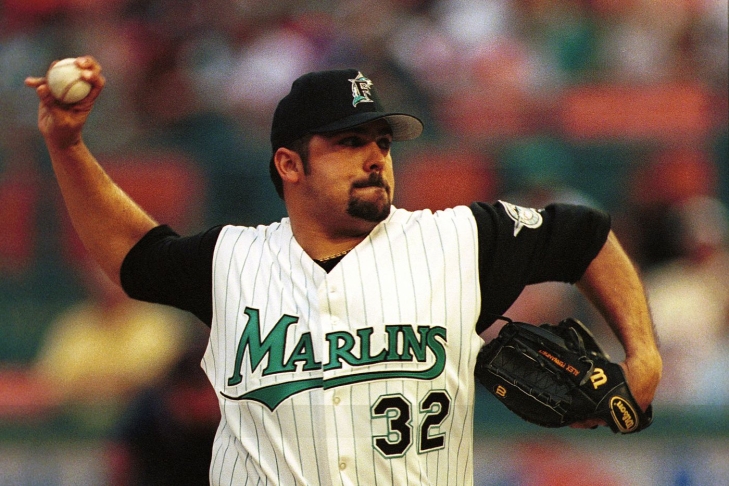
In 1997, Alex Fernandez went back to his hometown of Miami Beach, becoming the last key player in South Florida’s first championship team. Following seven successful seasons in Chicago, the right-hander added veteran composure and a powerful fastball to a Marlins rotation that quickly gained national attention.
In 1997, Fernandez led the rotation with Kevin Brown and Al Leiter. He posted a 17-12 record, a 3.59 ERA, and 183 strikeouts, establishing himself as the high-leverage pitcher the organization expected when they signed him to a then-record deal. His season was marked by a remarkable performance at Wrigley Field in April, where he was just two outs shy of a no-hitter before settling for a dominant one-hit shutout. He was the key driver for a team that advanced to the postseason, winning the NLDS and helping the franchise reach its first National League Championship Series.
After being chased early in an NLCS start against the Braves, Fernandez was found to have been pitching with a torn rotator cuff. While his teammates famously won the 1997 World Series, Fernandez was more of a spectator in the dugout, observing from the sidelines as he prepared for a difficult surgery. His career was completely halted during the 1998 season, making him one of the few veterans to survive the notorious "fire sale" that broke up the championship team.
Fernandez returned to the mound in 1999, authoring a deceptively strong 3.38 ERA over 24 starts and proving there was still life in his arm. Yet the physical toll of his 1997 workload proved too great; after eight starts in 2000, the shoulder issues sealed his decision to step away from the game.
44. Mike Redmond
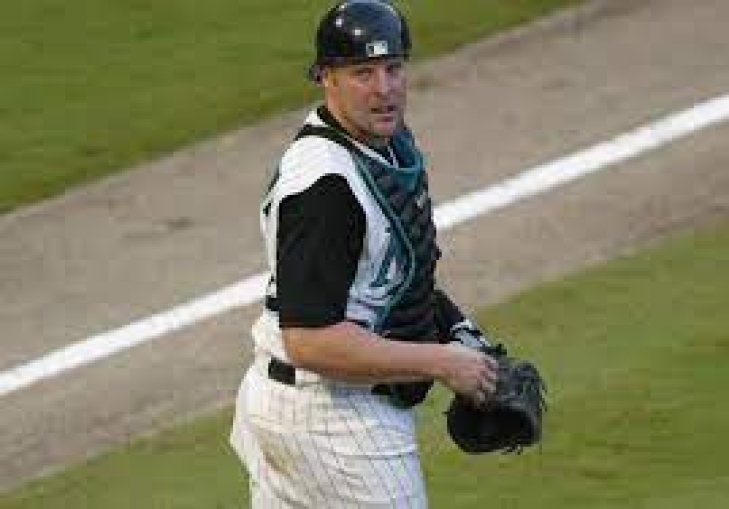
Mike Redmond arrived in South Florida in 1992 as one of the first building blocks of the expansion Marlins, signing as an undrafted free agent out of Gonzaga. While he didn't carry the "first-round" pedigree of his teammates, he operated with a gritty, professional durability that kept him in the organization for over a decade.
After six years of grinding in the system, Redmond hit an immediate impact peak in May 1998, going 3-for-3 with a home run in his first major league game. He demonstrated complete strike zone control during his rookie year, batting.331 and showing his bat was a key asset even in part-time play. Quickly earning a reputation as a reliable mainstay who could stay "locked in" despite limited playing time, he won the Charlie Hough "Good Guy" Award in 1999 for his conduct on and off the field.
In '02, he set a career high with 89 games and a.305 batting average, serving as a specialized foil to starters. His Marlins legacy was cemented in 2003 when he backed up Iván Rodríguez on the way to the World Series. Though his hits mostly were singles, 380 in total, his skill in managing pitchers and delivering clutch hits made him a clubhouse giant.
Redmond signed with Minnesota after the 2004 season.
30. A.J. Ramos
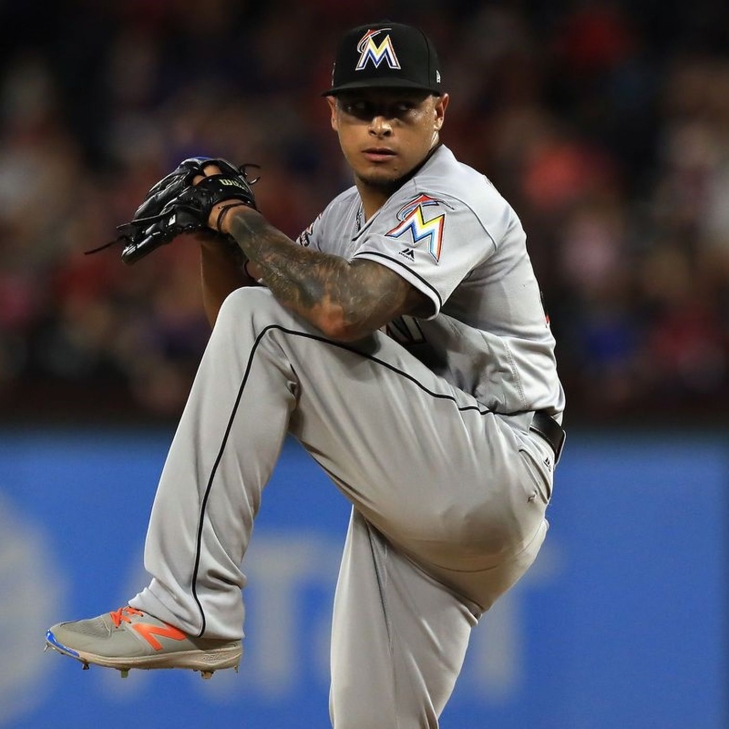
A.J. Ramos came to Miami as a 21st-round pick, initially overlooked as a late-round choice from Texas Tech. Despite the odds, he became one of the most dependable pitchers in Marlins’ bullpen history. Known for his strikeout ability and deceptive delivery, he served as a flexible reliever bridging the middle innings and the ninth, eventually assuming the full-time closer role.
Ramos made his debut for the Marlins in 2012, finishing with an impressive 7-0 record and a 2.11 ERA across 68 games. By 2015, after filling in for the ninth inning, he was promoted to closer, achieving 32 saves and demonstrating that his high-strikeout ability was a key strength for the end of the bullpen.
In 2016, he successfully converted his first 24 save opportunities, a franchise record, and earned his first All-Star selection. He finished the campaign with a career-high 40 saves, posting a 1.67 home ERA and establishing himself as one of the premier late-inning threats in the National League.
Following the franchise’s familiar pattern of retooling before a contract reached its peak value, the organization traded him to the New York Mets in exchange for Merandy Gonzalez and Ricardo Cespedes. Ramos would finish 175 Games for Miami with 92 Saves.
34. Robb Nen
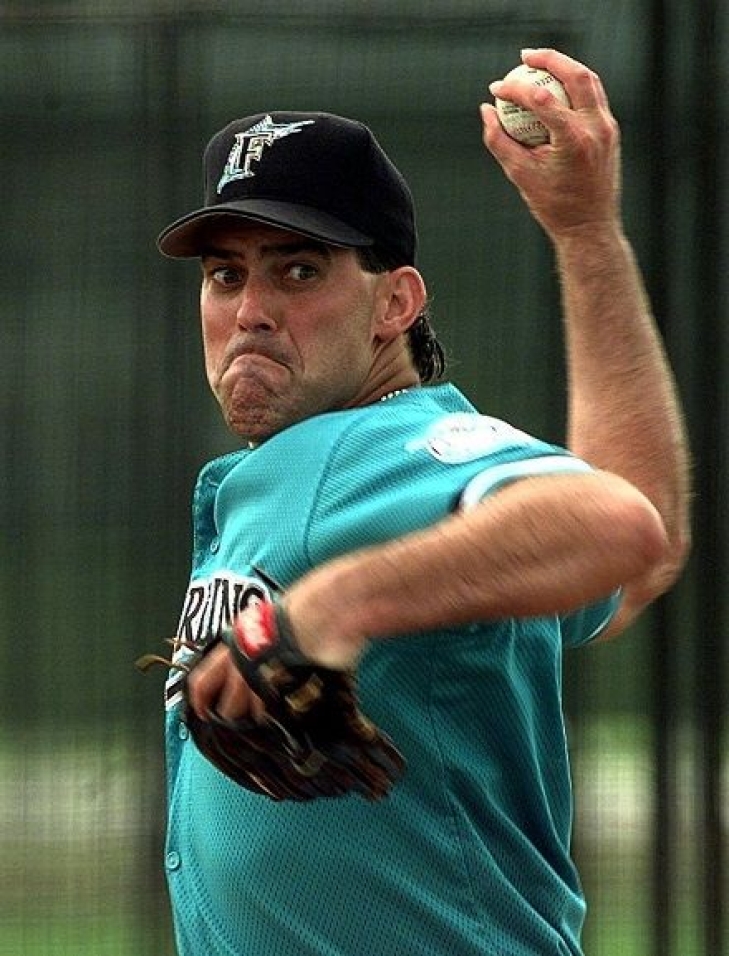
Robb Nen came to Florida in 1993 as an unrefined power pitcher from the Texas Rangers, acquired during the Marlins' first season for Cris Carpenter. With a toe-tap delivery and a high-speed fastball, he shifted from a struggling starter to the franchise’s most dominant early closer.
Following a challenging debut in 1993, the organization repositioned Nen to the bullpen to maximize his electric arm and mitigate the risk of injury. He reached a new level of efficiency in 1994, recording 15 saves during the strike-shortened season, and subsequently experienced a breakout campaign in 1996. During that season, he delivered an exemplary performance in relief, posting a 1.95 ERA and securing 35 saves while striking out 92 batters in just 74 innings. He swiftly established himself as a key figure in late-inning relief, demonstrating that his "Terminator" slider was an indispensable asset for a rising contender.
Nen will be most remembered by Marlins fans for their historic 1997 season. Despite his regular-season ERA exceeding three, he matched his career high in saves with 35. He was instrumental in providing the crucial bridge to victory during the postseason, recording four saves throughout the playoffs. His journey in Florida culminated in a legendary moment in Game 7 of the 1997 World Series, where he pitched 1.2 innings of scoreless relief across the 9th and 10th innings, reaching 102 mph on the radar gun—to preserve the Marlins’ hope for their eventual walk-off victory in the 11th.
Following the World Series win, Nen was one of the many players traded, with San Francisco being his destination. He departed as the franchise’s all-time leader in appearances and remains the all-time saves leader with 108.
18. J.T. Realmuto
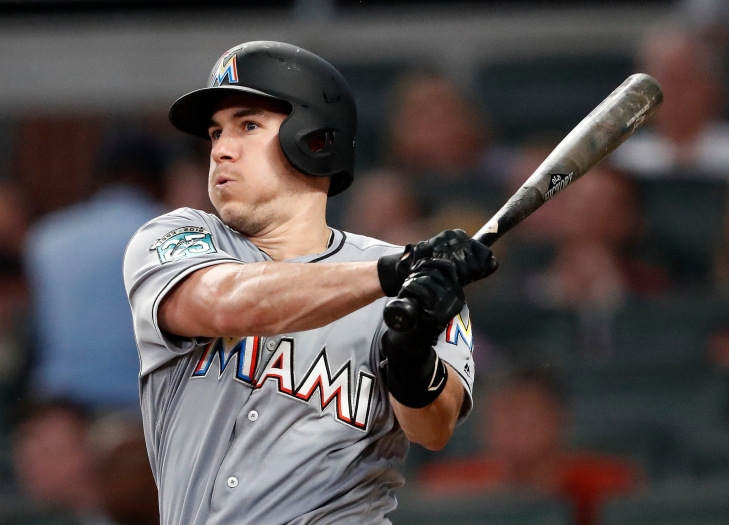
J.T. Realmuto was a third-round selection by the Marlins in 2010, an athletic former quarterback who transitioned from shortstop to catcher with surprising speed. After a brief 11-game look in 2014, he seized the starting job behind the plate in 2015.
The early days of his run were marked by a steep learning curve and a fierce commitment to defense. While his rookie season saw an on-base percentage stay under .300, Realmuto immediately turned heads with his pop time and mobility. He found his rhythm in 2016, posting a .303 average and proving that his athleticism was a massive asset on both sides of the ball.
Realmuto reached a career peak in Miami during 2018, a year in which he secured all major positional awards. He hit 21 home runs, was selected for his first All-Star game, and received a Silver Slugger. By that time, he had built a reputation as a versatile player who could hit for average, hit for power, and suppress the opposing team's running game. His 2018 season remains one of the best seasons ever by a catcher in team history, confirming the scouts’ belief that he was a future superstar during his minor league days.
The exit from Miami arrived in February 2019, as the Marlins moved their biggest remaining star to the Philadelphia Phillies in exchange for a package that included Sixto Sanchez and Jorge Alfaro. With the Marlins, Realmuto had 555 hits, 59 home runs, and a .279 batting average.
29. Cody Ross
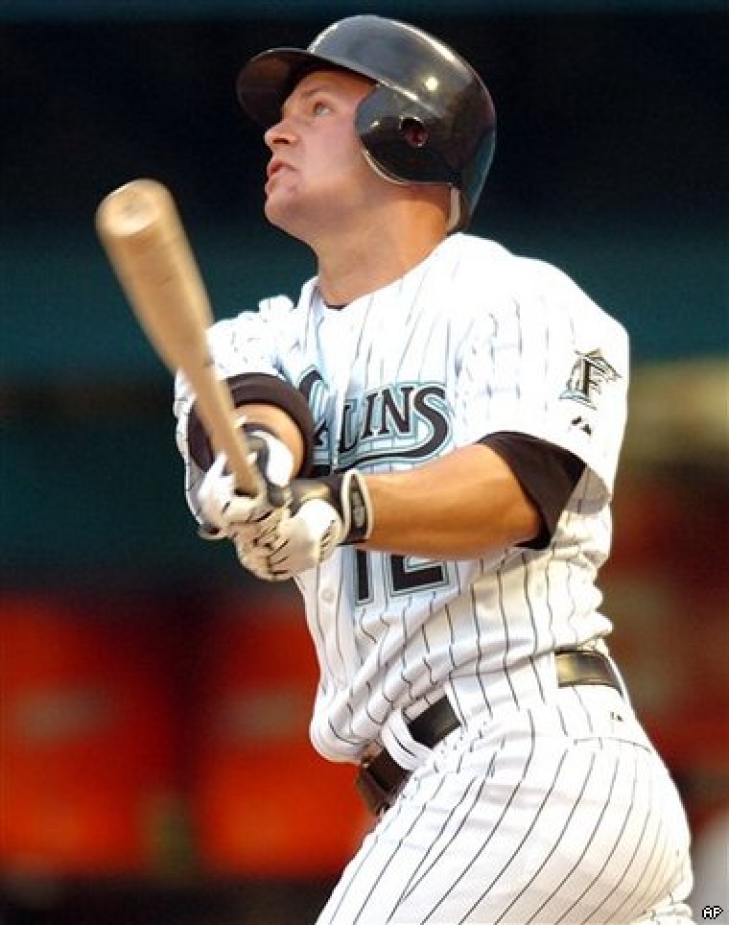
Cody Ross arrived in Florida in early 2006 as a nomadic outfielder searching for a permanent home after brief stops in Detroit, Los Angeles, and Cincinnati. The Marlins purchased his contract in May of that year, and he quickly proved he belonged in the big leagues.
After appearing in 157 games across 2006 and 2007, Ross demonstrated a knack for finding the gaps and clearing the fences. He became a fixture in the lineup in 2008, belting 22 home runs with a .260 average. He followed that with an even more productive 2009, recording a career-high 24 home runs and 90 RBIs while batting .270.
During the Marlins' cost-cutting, he was placed on waivers and was claimed by the San Francisco Giants. While the Marlins moved on from his salary, Ross went on to become a national hero in the Bay Area, earning NLCS MVP honors and a World Series ring.
As a Marlin, Ross had 80 Home Runs with 503 Hits.
27. Carl Pavano
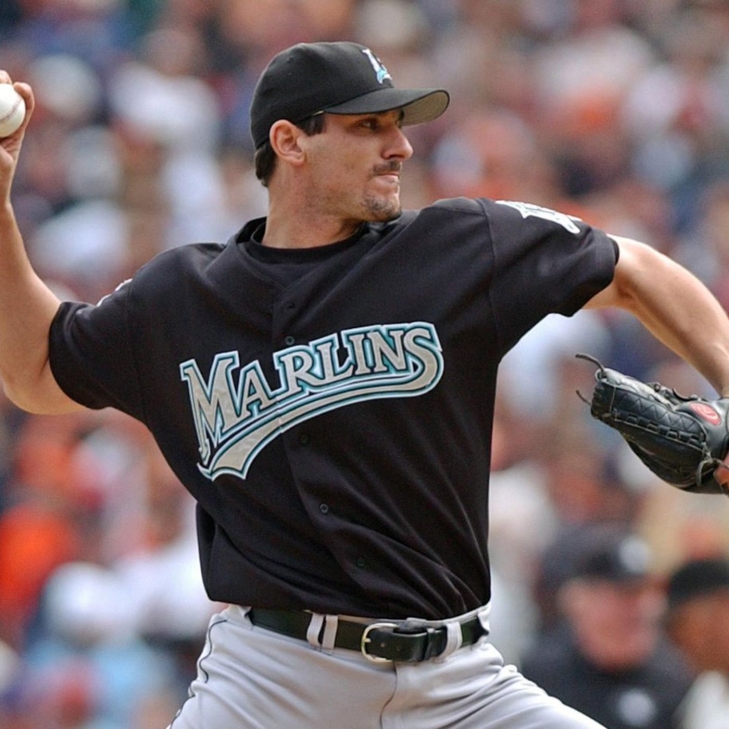
Carl Pavano arrived in Florida during the 2002 season after a trade with the Expos, a pitcher whose career was later defined by health struggles in New York but reached its peak in the sun of Miami. While he began his tenure as a versatile arm moving between the rotation and the bullpen, he quickly emerged as a reliable workhorse.
After a solid introduction in late 2002, Pavano spent 2003 proving his durability by logging over 200 innings for the first time. While his regular season record of 12-13 was modest, he saved his best work for the postseason. He operated as a versatile weapon for manager Jack McKeon, appearing in eight games and posting a stellar 1.40 ERA over 19.1 innings. His brilliance in the World Series against the Yankees, where he allowed only one run over eight innings in Game 4, was vital in securing the franchise’s second World Series championship.
Pavano followed that with his best season, going to his only All-Star Game and posting career-highs in Wins (18), ERA (3.00), Innings (222.1), and WHIP (1.174). With a sixth-place Cy Young finish, his stock had never been higher, and you know what that means. Pavano got paid big time: by the New York Yankees.
With the Marlins, Pavano had a record of 33-23 with 313 Strikeouts.
26. Miguel Rojas
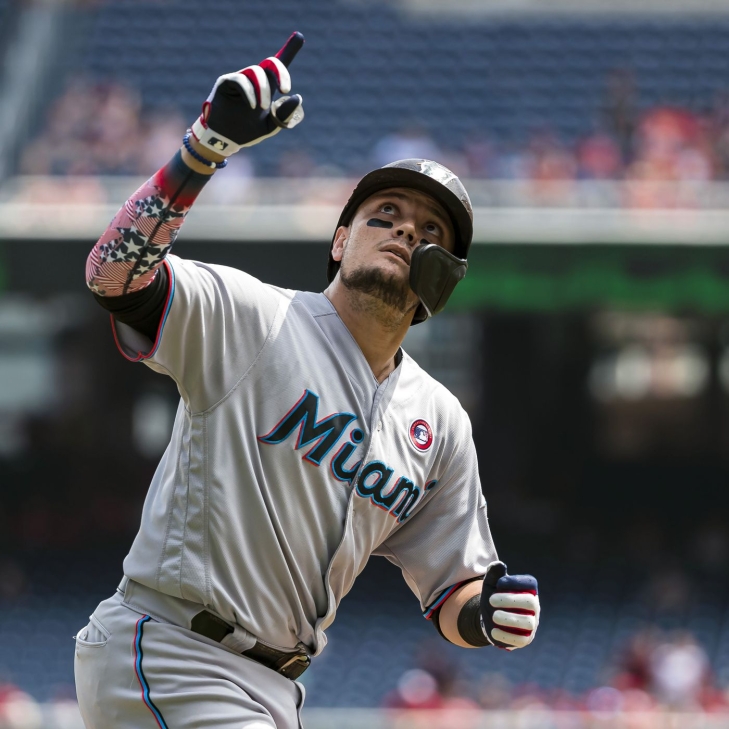
Miguel Rojas joined the Marlins in late 2014 through the same seven-player blockbuster that brought Dee Strange-Gordon to Miami. Initially viewed as a defensive specialist from the Dodgers' system, he arrived in Florida with a reputation for elite glovework and a modest bat.
Between 2015 and 2017, Rojas served as a versatile insurance policy, playing various infield positions and mainly functioning as a defensive substitute at shortstop. His value was evident in 2017 when he hit .290 despite dealing with a thumb injury, demonstrating his capacity for a larger offensive role. In 2018, he became the regular shortstop, playing a career-high 153 games and setting personal records for hits and home runs. During the shortened 2020 season, he achieved a career-best .304 batting average and helped lead the young Marlins team to an unexpected postseason appearance. Known as the team's unofficial “Captain," he brought stability to the organization and eventually secured a multi-year extension, reaffirming his position as the franchise's rebuilding face.
In January 2023, he was traded back to his original club, the Los Angeles Dodgers, in exchange for Jacob Amaya. As a Marlin, Rojas compiled 707 hits, a .268 batting average, and 269 RBIs.
25. Derrek Lee
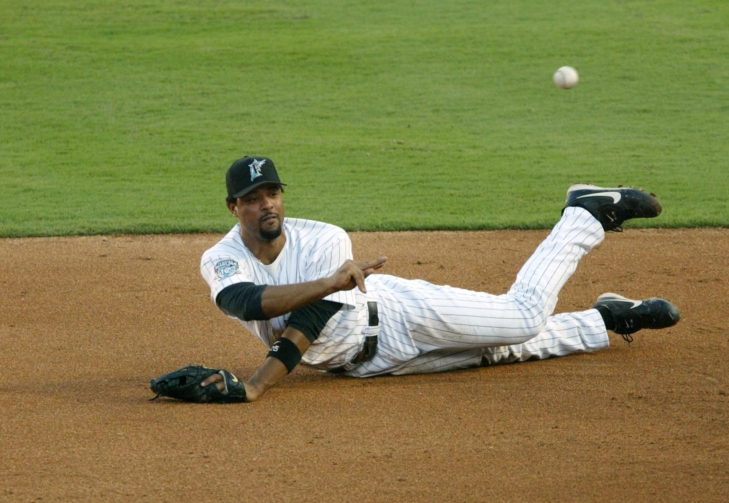
When the Marlins did their first fire sale, Derrek Lee was one of the prizes in return, coming over from the Padres as the centerpiece of the return for ace Kevin Brown. Standing 6-foot-5, he was a physically imposing first baseman who initially struggled to find his rhythm in the big leagues.
The first two seasons in the Marlins organization were a struggle, but by 2000, he had a breakout in 2000, belting 28 home runs and batting .281. Between 2001 and 2002, he continued to produce at a steady rate, averaging over 20 homers a year while showcasing an athletic range at first base that was rare for his size, but it was in 2003 that Lee had his best season in a Marlins uniform.
In that season, he hit 31 home runs and drove in 92 runs, while his glove work earned him his first Gold Glove Award. He was a force during the postseason, notably making a spectacular grab in Game 5 of the World Series to help preserve a crucial win. During this stretch, he was a tactical giant who provided the defense and power necessary to stun the Yankees and secure the title.
The end of his run as a Marlin was easy to predict. Much as he arrived in “Fire Sale 1.0”, he departed in “Fire Sale 2.0”. Lee was traded to the Chicago Cubs, where he had his best run in baseball. With the Marlins, he had 734 hits, 129 home runs, and a .264 batting average.
20. Dee Strange-Gordon
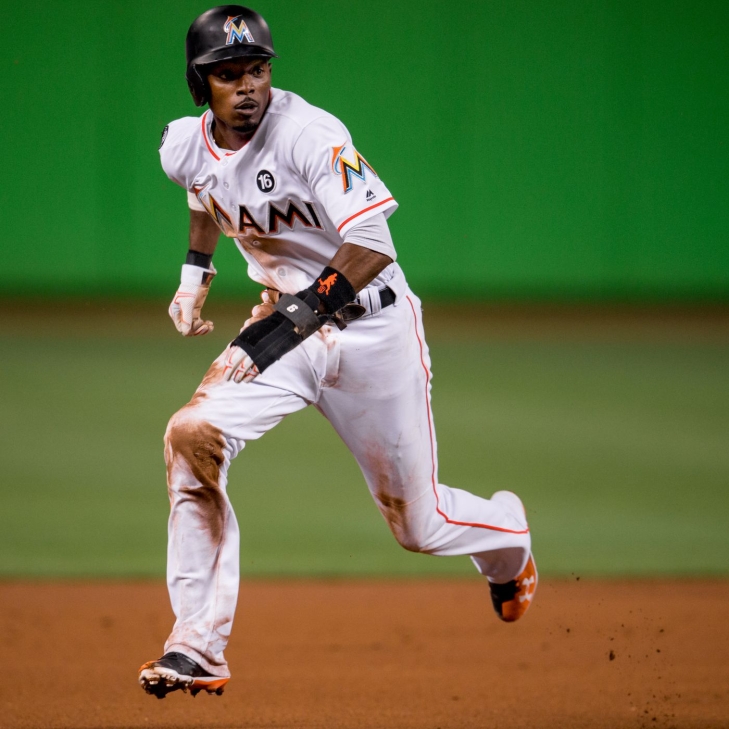
Dee Strange-Gordon joined South Beach following a major seven-player trade with the Dodgers in late 2014, arriving as an All-Star known for game-changing speed. Although the Marlins seldom acquire big-name stars, they signed a top leadoff hitter who instantly upgraded their top order. Over three seasons with Miami, he was a frequent base stealer and a defensive star, recording one of the franchise’s most outstanding individual seasons before his departure, which was somewhat complicated.
In 2015, Strange-Gordon had the season of his life, becoming the first player since Jackie Robinson in 1949 to win a National League Batting Title (.333) and lead the league in stolen bases (58) in the same year. He also topped the majors with 205 hits, earning his second All-Star nod alongside both a Gold Glove and a Silver Slugger.
His Florida residency took a dark turn in 2016 when he received an 80-game suspension for testing positive for performance-enhancing drugs. This coincided with a major contract extension, casting a shadow over his achievements and causing him to miss nearly half the season. Despite this, he demonstrated resilience upon returning, playing 79 games and stealing 30 bases. Though the suspension affected the team's momentum, he remained a clubhouse mainstay, working to regain trust.
Strange-Gordon wrapped up his Miami tenure with an impressive redemption season in 2017. He appeared in 158 games, once again driving the lineup with energy, amassing 201 hits, and leading the league with 60 stolen bases. He hit .308, scored 114 runs, and often acted as the catalyst for Giancarlo Stanton’s notable MVP campaign. Although he achieved personal success, the Marlins began rebuilding under new ownership and traded him to the Seattle Mariners in December 2017.
As a Marlin, Strange-Gordon had a .309 batting average, 148 stolen bases, and 493 hits.
23. A.J. Burnett
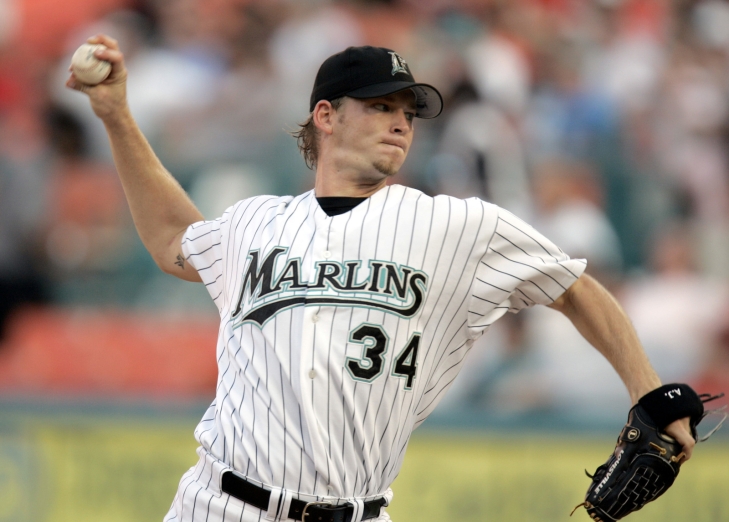
A.J. Burnett arrived in Florida as a central piece of the 1998 trade that sent Al Leiter to the Mets, bringing a high-octane fastball and a curveball that became a nightmare for hitters. During his seven-season run with the club, he emerged as a powerful yet erratic force in the rotation, often balancing flashes of absolute brilliance with a struggle for command.
After bouncing between the minors and the big leagues during his first two seasons, Burnett demonstrated his ceiling on May 12, 2001, by tossing a no-hitter against the San Diego Padres. It remains one of the strangest performances in baseball history, as he secured the feat despite issuing nine walks.
During the 2002 season, he authored a campaign that led the major leagues with five shutouts. He demonstrated complete mastery of the strike zone at times, earning 12 wins and 203 strikeouts while allowing only 6.7 hits per nine innings. Although the Marlins won the World Series in 2003, Burnett faced a major setback that October; he was sidelined for the entire season after Tommy John surgery, watching the championship from the dugout as he focused on a prolonged recovery.
In 2005, he enjoyed a durable farewell campaign, logging 209 innings and striking out 198 batters with a 3.44 ERA. He proved he was fully recovered from surgery, though his tenure ended with a tactical exit as he signed with the Toronto Blue Jays as a free agent following the season. He posted a 49-50 record with 753 Strikeouts and a 3.73 ERA with Florida.
19. Josh Beckett
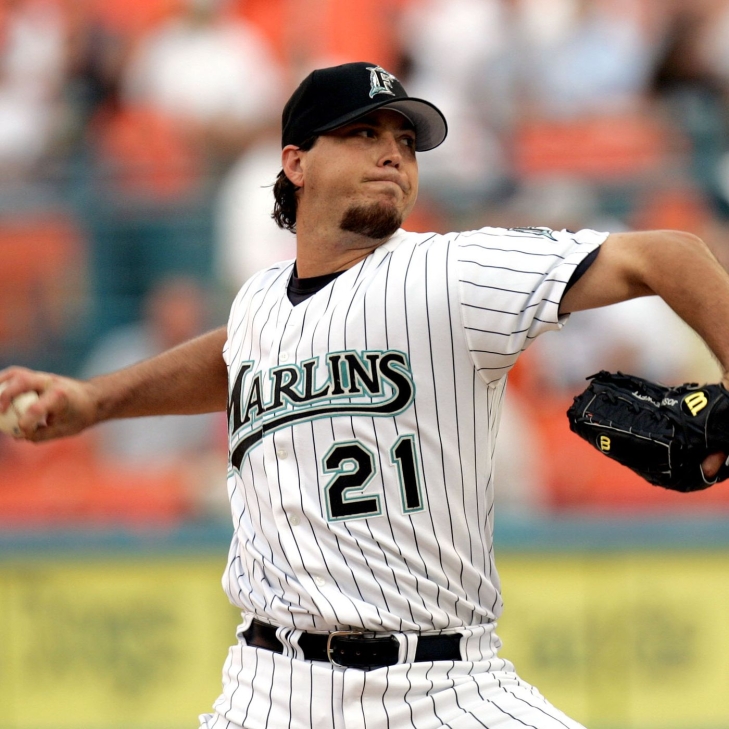
Josh Beckett joined the Marlins organization as the second overall pick in 1999, carrying high expectations as a Texas fireballer often compared to legendary players from his home state. Though he initially faced minor injuries and took time to adjust to the speed of the major leagues, he ultimately became the key player in a postseason run that changed the franchise's course.
After a brief debut in 2001 where he posted a 1.50 ERA in four starts, Beckett spent 2002 adjusting to the demands of a full major league season, finishing with a 6-7 record. By the next spring, he showed tactical growth, becoming the youngest Opening Day starter in the team's history. His 2003 regular season, with a 3.04 ERA and 152 strikeouts, was respectable, but it was October that elevated him to national prominence.
In the playoffs, Beckett delivered performances that verge on legendary. He demonstrated resilience in the NLCS against Chicago by throwing a complete-game shutout in Game 5 and coming back on two days' rest to pitch four scoreless innings in Game 7. His defining moment, however, was in the Fall Classic against the Yankees. On short rest in Game 6 at Yankee Stadium, he pitched a five-hit shutout to secure the victory, earning World Series MVP honors and securing his legacy in the organization.
The final seasons in Miami saw a shift to a high-volume workload, although he often experienced localized setbacks that restricted his total appearances. In 2005, he achieved his most productive regular season for the Fish, with 15 wins and 161 strikeouts over nearly 180 innings. He demonstrated complete mastery of his high-velocity fastball and sharp curve, delivering a top-tier arm to the organization during a transitional period.
In November 2005, Beckett was traded to the Red Sox with Mike Lowell in a blockbuster deal that sent Hanley Ramirez and Anibal Sanchez to the Marlins. He earned multiple All-Stars and another ring in Boston, but his Miami days are remembered for raw power and October heroics that marked the franchise's second golden season.
With the Marlins, Beckett accumulated a 41-34 record, a 3.46 ERA, and 607 strikeouts.
22. Anibal Sanchez
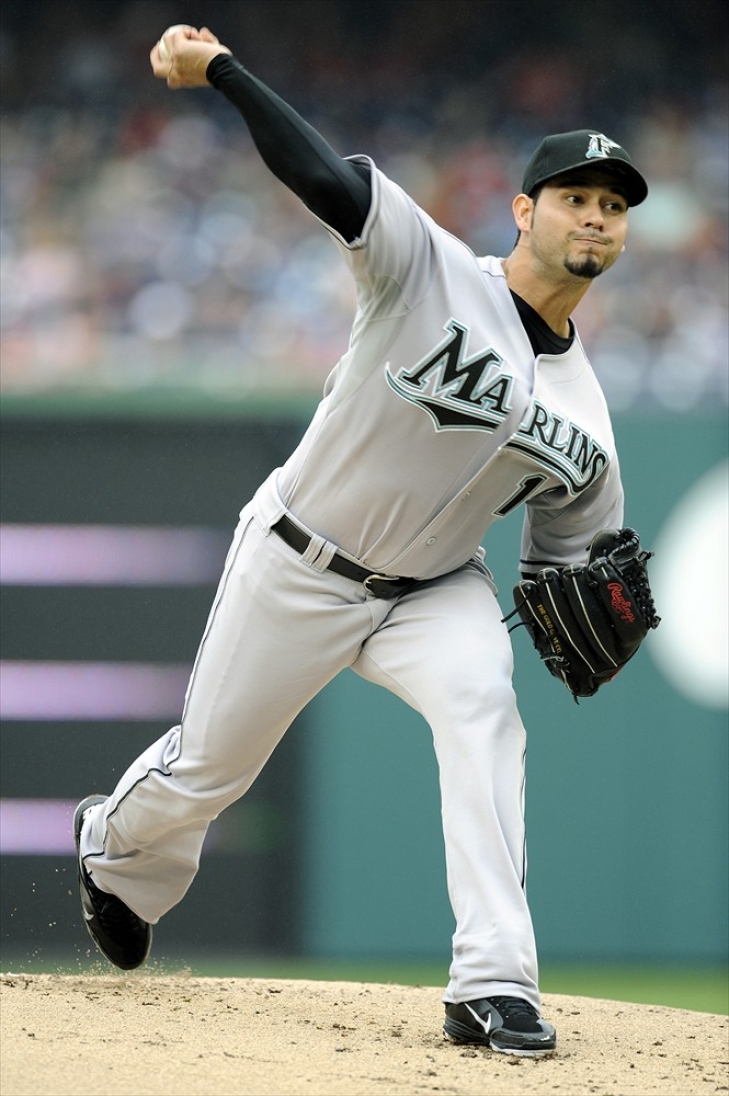
Aníbal Sánchez arrived in Florida as a central piece of the franchise-altering trade that sent Josh Beckett and Mike Lowell to Boston. A highly regarded arm from Venezuela, he was expected to join a new wave of young talent that could stabilize the rotation for the next generation.
In 2006, Sánchez demonstrated his raw ability by going 10-3 with a 2.83 ERA, but his crowning achievement came on September 6 against the Arizona Diamondbacks. He authored the first major league no-hitter in over two years, a specialized performance that snapped the longest drought in the sport's history at the time. This breakout season earned him a top-ten finish in the Rookie of the Year voting.
Between 2010 and 2011, Sánchez made a comeback after years of localized shoulder struggles. In 2010, he demonstrated full mastery of his repertoire, recording 13 wins and 157 strikeouts while pitching nearly 200 innings for the first time. In 2011, he continued his strong performance, finishing sixth in the league with 202 strikeouts and third in strikeouts per nine innings.
Sanchez was traded to Detroit during the 2012 season, and later in his career, he would win a World Series with Washington in 2019. With the Marlins, he had a 44-45 record, a 3.75 ERA, and 676 strikeouts.
21. Ricky Nolasco
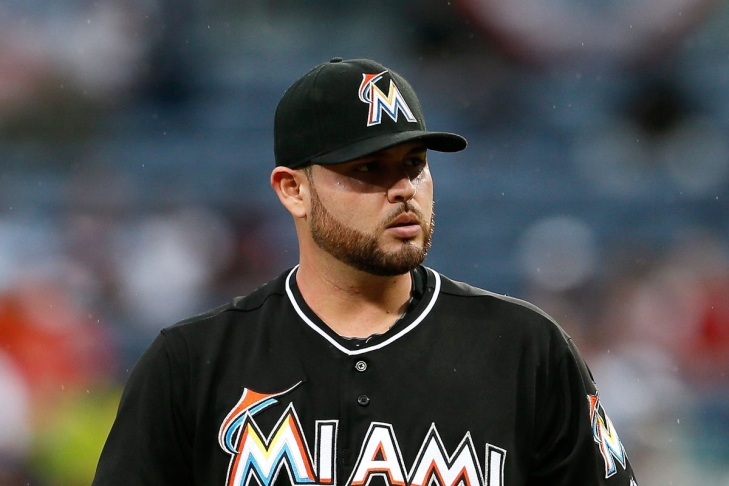
While still in the Minors, Ricky Nolasco arrived in Florida after a 2005 trade with the Cubs. A right-hander whose value lay in a tireless arm rather than flashy, top-of-the-rotation results, he rarely operated as a definitive ace but became a symbol of durability for a franchise often defined by rapid turnover.
In 2006, Nolasco demonstrated his readiness by winning 11 games, anchoring a young staff that famously featured four rookie starters with double-digit wins. After an injury-shortened 2007, he returned to the mound in 2008 with his most dominant statistical campaign, racking up 15 wins and a then-franchise record 186 strikeouts.
Between 2008 and 2012, he consistently won at least 10 games in five seasons. Despite giving up many hits and a high ERA, he was efficient by avoiding walks, ending with a 3.51 strikeout-to-walk ratio, one of the highest in franchise history. During the 2013 season, he was traded to the Los Angeles Dodgers and departed as the franchise’s absolute leader in nearly every major longevity category, a legacy of service that eclipsed the records of more famous names like Dontrelle Willis.
Nolasco compiled an 81-72 record, a 4.44 ERA, and 1,001 strikeouts.
24. Juan Pierre
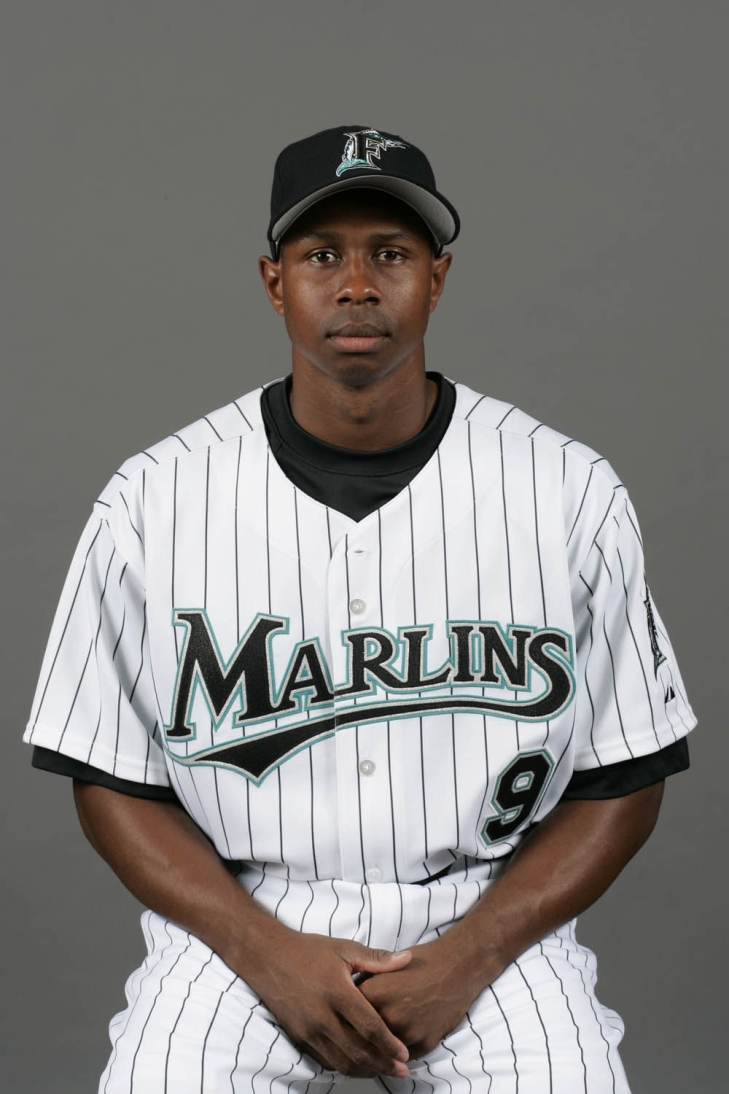
Juan Pierre joined South Florida via a major trade with the Rockies in late 2002, bringing a relentless speed the franchise hadn't experienced since Luis Castillo. As a left-handed center fielder who often roamed the basepaths, he swiftly became the team's offensive catalyst.
In 2003, Pierre fully excelled as the leadoff hitter, playing in all 162 games and leading the National League with 65 stolen bases. His offensive contributions included 204 hits and a .305 batting average. However, his biggest impact was in the postseason, where he played a crucial role in securing the World Series title. He posted a .333 batting average against the Yankees and was a constant challenge for opposing catchers during the championship series.
In 2004, he led the majors with 221 hits. He demonstrated a remarkable level of durability, becoming the only league player to play every inning of every game that year, a rare accomplishment. He posted a .326 batting average, along with 12 triples and 45 stolen bases, earning MVP votes and cementing his status as a dependable professional with seemingly endless stamina. During this peak, he was an impressive technical hitter, famously going weeks without striking out.
After a productive 2005 campaign where he swiped 57 bases, the organization moved him to the Cubs in a cost-cutting trade. He returned for a final swan song in 2013, providing a veteran presence and adding to his career totals before retiring at the end of the year. Overall, Pierre compiled 682 hits, 190 stolen bases, and a .295 batting average.
7. Sandy Alcantara
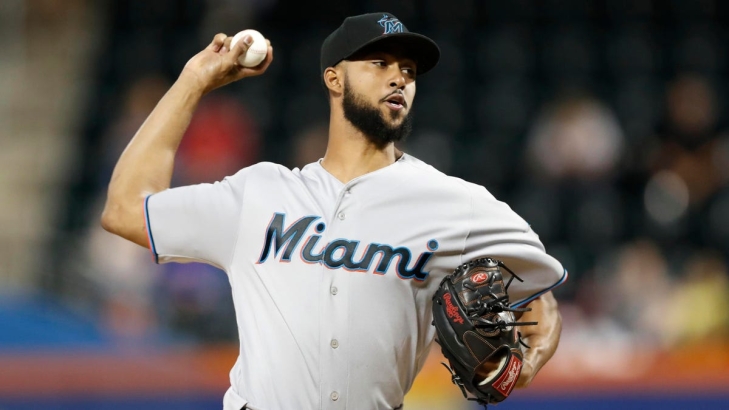
Sandy Alcantara arrived in Miami following a 2017 trade with the Cardinals, a high-upside right-hander who had only eight major league games to his name. While he spent much of his early career proving that a pitcher’s win-loss record is an unreliable narrator, he eventually established himself as the most durable and dominant force in the National League, at least for one season anyway.
After becoming a permanent starter in 2019, he demonstrated a high-frequency ability to pitch deep into games, yet famously led the National League with 14 losses despite showing the organization he was their best arm. He remained a professional mainstay through the shortened 2020 campaign and the 2021 season, in which his 3.19 ERA was again undermined by a poor record. This, however, was about to change.
In 2022, the Dominican hurler mastered the strike zone to become the first Marlin to win the National League Cy Young Award. He led the majors in innings pitched (228.2) and complete games (6), recording a stellar 2.28 ERA and a sub-1.00 WHIP. It looked to be only up from there, but a traumatic injury threatened to derail his prime. After a 2023 season where he struggled with localized command issues and ultimately underwent Tommy John surgery, he missed the entirety of the 2024 campaign. However, he showed the organization his grit by returning for the 2025 season and immediately reassuming his role as a professional mainstay. While his first year back from surgery featured the expected up-and-down results as he regained his feel, he still logged over 170 innings and recorded 11 wins, proving that his durable frame could still handle a significant workload.
Entering 2026, Alcantara is healthy and is arguably at a crossroads in his career.
17. Marcell Ozuna
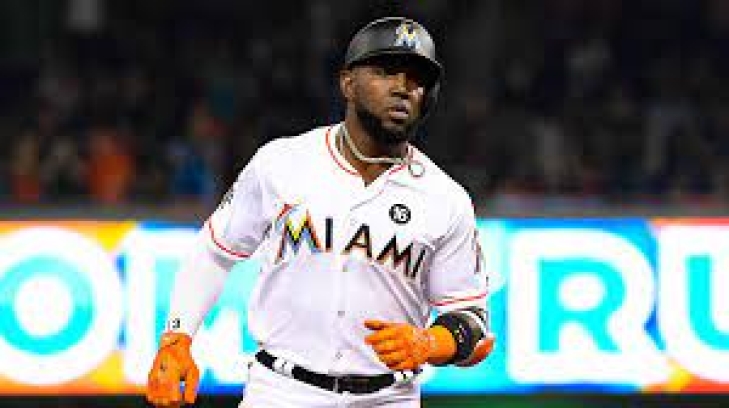
Marcell Ozuna came to the Marlins in 2013 as a high-voltage talent from the Dominican Republic, a player whose raw power and "cannon" for an arm made him an immediate tactical asset. After signing as an international free agent in 2008, he steadily climbed the ranks to become the high-caliber center fielder the organization had been searching for.
After debuting promisingly in 2013, Ozuna showed strong batting in 2014, hitting 23 home runs with 85 RBIs. Following a slump, including a 1-for-36 stretch, the Marlins demoted him to Triple-A New Orleans in July. His agent, Scott Boras, accused the team of delaying his service time to manipulate arbitration eligibility. Ozuna called the 33-day demotion a "jail sentence," and although he returned in August, his relationship with the front office remained tense.
Despite last year's challenges, Ozuna demonstrated remarkable resilience in 2016. He rejoined the lineup as a key player and delivered an impressive first half, hitting .307 with 17 home runs before the All-Star break. This performance earned him his first All-Star nod, where he was chosen as the starting center fielder for the National League. Although his effectiveness waned somewhat in the second half, he concluded the season with 23 home runs and 76 RBIs.
Ozuna then had his best season (2017), finishing the year with a .312 average, 37 home runs, and 124 RBIs. This high-stakes production earned him his second consecutive All-Star nod, along with his first Silver Slugger. As par for the course, Ozuna was traded for four players (one of whom was Sandy Alcantara) to St. Louis. With Miami, Ozuna had 683 hits, 96 home runs, 376 RBIs, and a .277 batting average.
