

Our All-Time Top 50 Los Angeles Dodgers have been revised to reflect the 2023 Season
Yes, we know that this is taking a while!
As many of you know, we here at Notinhalloffame.com are slowly generating the 50 of each major North American sports team. That being said, we have existing Top 50 lists out and we always consistently look to update them when we can and based on necessity. As such, we are very happy to present our post 2022/23 revision of our top 50 Los Angeles Dodgers.
As for all of our top 50 players in baseball we look at the following:
1. Advanced Statistics.
2. Traditional statistics and how they finished in Major League Baseball.
3. Playoff accomplishments.
4. Their overall impact on the team and other intangibles not reflected in a stat sheet.
Last year, the Dodgers had another great year, with a playoff run, but in their current state, anything other than a World Series Championship is a failure. The 2023 season gave us one new entry.
As always, we present our top five, which saw no changes.
2. Sandy Koufax
3. Duke Snider
4. Don Drysdale
5. Dazzy Vance
You can find the entire list here.
This is one of the hardest lists to do, and we know positioning Kershaw at the top is controversial considering the legends that he beat out. Statistically, we can defend it, but in terms of overall legacy, it would be different.
The lone new entrant was last year’s National League runner-up, Mookie Betts, who debuts at #44.
As always, we thank you for your support, and look for more revisions in the future.
Our All-Time Top 50 Los Angeles Dodgers are now up!

Yes, we know that this is taking a while!
As many of you know, we here at Notinhalloffame.com are slowly generating the 50 of each major North American sports team. We have a new one to unveil today, that of the Los Angeles Dodgers.
One of the most celebrated franchises in all sports, the Los Angeles Dodgers were initially the Brooklyn Grays in 1883, but it was a long time before they found an identity.
The organization changed its name multiple times since its origin, the Atlantics (1884), back to the Grays (1885-87), then the Bridegrooms (1888-90), the Grooms (1991-95), the Bridegrooms again (1895-98, the Superbas (1899-1910), the Trolley Dodgers (1911-12), then the Dodgers (1913), the Robins (1914-1931), before settling on the Dodgers again in 1932.
The Brooklyn Dodgers would sign Jackie Robinson to integrate baseball, and in 1955, on their eighth attempt, they finally won their first World Series.
The fans of Brooklyn were not rewarded for their loyalty and patience, and like the crosstown New York Giants, westward the Dodgers went in 1957, where they remain to this day.
In Los Angeles, the Dodgers won three World Series Titles in their first ten years in the new environment, capturing it all in 1959, 1963, and 1965. The 1970s saw them competitive at the decade's end, and they won two more Championships in the 1980s (1981 and 1988).
In recent years, the Dodgers have been a top team, with their last World Series win coming in 2020, giving them seven in total.
Our Top 50 lists in Baseball look at the following:
1. Advanced Statistics.
2. Traditional statistics and how they finished in the National League.
3. Playoff accomplishments.
4. Their overall impact on the team and other intangibles not reflected in a stat sheet.
Remember, this is ONLY based on what a player does on that particular team and not what he accomplished elsewhere and also note that we have placed an increased importance on the first two categories.
This list is updated up until the end of the 2022 Season.
The complete list can be found here, but as always, we announce our top five in this article. They are:
1. Clayton Kershaw
2. Sandy Koufax
4. Duke Snider
5. Dazzy Vance
We will continue our adjustments on our existing lists and will continue developing our new lists.
Look for our more material coming soon!
As always, we thank you for your support.
6. Dazzy Vance
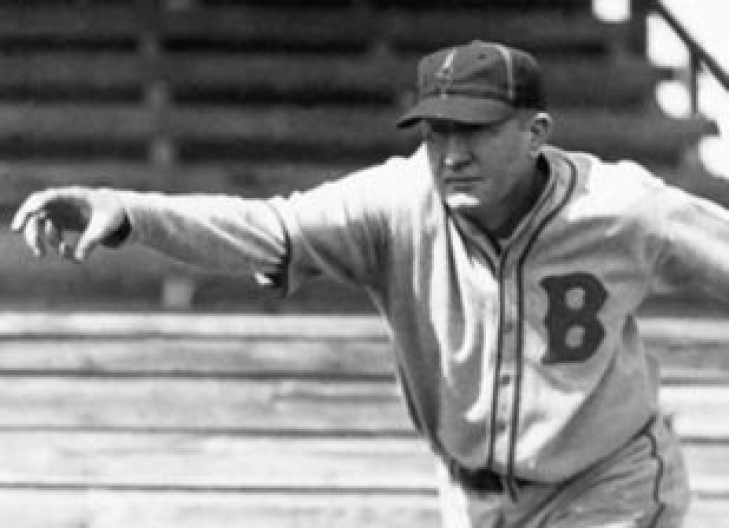
The incredible MLB career of Dazzy Vance began in Brooklyn in 1922 as a 31-year-old rookie, a veteran of the minor league grind who finally found his footing at an age when most of his contemporaries were considering retirement. Despite his late start, he immediately established himself as the premier flamethrower of his era, possessing a high-velocity fastball that looked entirely alien to hitters in the early live-ball years.
After bouncing around for nearly a decade, Vance showed the organization he was a professional mainstay by leading the National League in strikeouts during his first full season in 1922. This breakout marked the formal introduction of a period of dominance that saw him lead the league in strikeouts for seven consecutive years. His ability to blow the ball past hitters during a decade defined by high batting averages made him a unique outlier, providing a high-quality floor for a Brooklyn team that frequently struggled to stay in the pennant race.
Vance reached a remarkable ceiling of individual production during the 1924 campaign, a season that remains one of the greatest in the history of the position. That summer, he led the National League in wins (28), ERA (2.16), and strikeouts (262), capturing the elusive Pitching Triple Crown. He earned the 1924 National League MVP for his efforts, becoming the first player in franchise history to win the award. His value was further highlighted by his technical control; despite his reputation as a power pitcher, he consistently led the league in strikeout-to-walk ratio, proving he was much more than just a wild thrower.
He followed his MVP season with another league-leading 22 wins in 1925. Between 1922 and 1930, he won three ERA titles and remained the standard-bearer for strikeouts in the National League. While the Brooklyn teams of this era were often inconsistent, Vance was a steady workhorse who routinely eclipsed 250 innings pitched, using a specialized, high-leg kick and a tattered long-sleeve undershirt to further distract hitters. He remained a premier arm deep into his thirties, a feat of durability that allowed him to amass a staggering 190 wins for the organization.
In a final Brooklyn act, he led the league in ERA one last time in 1930, at the age of 39. Even as his velocity began to naturally wane, his mastery of the strike zone and veteran savvy kept him among the league's elite. Vance was traded to the St. Louis Cardinals in 1933, and he left behind 1,918 strikeouts in Brooklyn.
He was inducted into the Baseball Hall of Fame in 1955, the same year the "Boys of Summer" finally brought a title to Brooklyn.
