

Notinhalloffame List Update: 276-300 on Football Revised
The problem with running a Hall of Fame-related website is that many of the big ones we cover all have announcements within months of each other. The backbone of what we do is list-related, resulting in a long push to revise what we already have, specifically now with our Football and Basketball Lists.
At present, we have a minor update as we have completed the next twenty-five of the 2024 Football List, which you can comment on and vote on:
The new 276 to 300:
276. Keith Millard
277. Derrick Johnson
278. Stanley Morgan
279. Leon Gray
280. David Akers
281. Buster Ramsey
282. Beattie Feathers
283. Russ Francis
284. Carson Palmer
285. Keith Brooking
286. Dennis Smith
287. Frank Cope
288. Charles Mann
289. Ed “Too Tall” Jones
290. Rich Gannon
291. Seth Joyner
292. E.J. Holub
293. Mel Gray
294. Bart Oates
295. Fred Arbanas
296. Michael Vick
297. Bill Stanfill
298. George Svendsen
299. Hanford Dixon
300. Mike Quick
*Denotes First Year of Eligibility.
Rankings are impacted annually based on your comments and votes.
Thank you all for your patience. We will soon unveil more changes to the football and basketball lists.
42. Carson Palmer
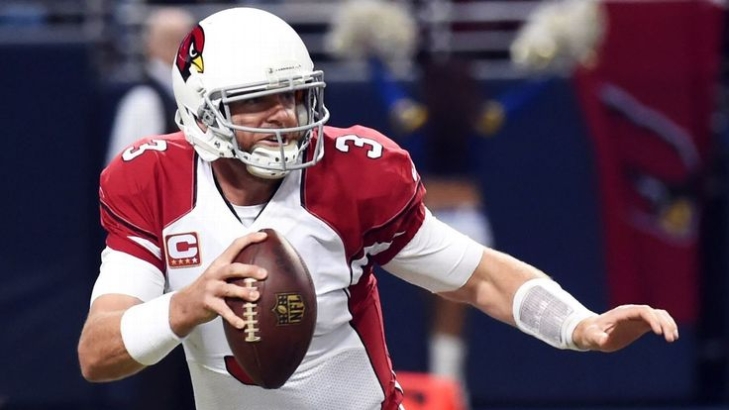
When Carson Palmer arrived in Arizona via a trade with Oakland in 2013, the Heisman Trophy winner and former No. 1 overall pick was widely regarded as a player in the twilight of his career. Yet, under the tutelage of head coach Bruce Arians, Palmer orchestrated one of the most remarkable late-career revivals in modern NFL history, elevating the Cardinals offense into a downfield powerhouse.
Palmer was the archetypal pocket passer, possessing rare arm strength, field vision, and the willingness to take hits while standing tall in the pocket. In Arians’ "no risk, no biscuit" system, Palmer excelled at pushing the football into high-degree-of-difficulty windows, driving outer-third boundary routes and vertical seams with exceptional velocity and touch.
His debut season in 2013 saw him pass for 4,274 yards and 24 touchdowns, making him the first quarterback in NFL history to post a 4,000-yard passing season for three different franchises. Though a torn ACL cut short a promising 6-0 start in 2014, Palmer returned in 2015 to put together a single-season masterpiece.
At 36 years old, Palmer set single-season franchise records with 4,671 passing yards and 35 touchdown passes. He led the entire NFL in total QBR (76.4), yards per attempt (8.7), and yards per completion (13.7) while guiding Arizona to a 13–3 record and an NFC Championship Game appearance. That performance earned him a Pro Bowl selection, Second-Team All-Pro honors, and a top finish in AP NFL MVP voting behind winner Cam Newton. Palmer's 2015 campaign remains the golden standard for Cardinals quarterbacks, setting untouched franchise records with 4,671 passing yards, 35 touchdowns, and a 104.6 passer rating.
Palmer backed up his MVP candidate campaign with another heavy-volume year in 2016, throwing for 4,233 yards and 26 touchdowns. After a broken arm prematurely ended his 2017 season in Week 7, he officially announced his retirement in early 2018. Across 60 games in an Arizona uniform, Palmer posted a 38-21-1 record—the highest winning percentage by any starting quarterback in franchise history.
He finished his desert tenure with 16,782 passing yards and 105 touchdown passes, earning induction into the Arizona Cardinals Ring of Honor in September 2019.
17. Carson Palmer
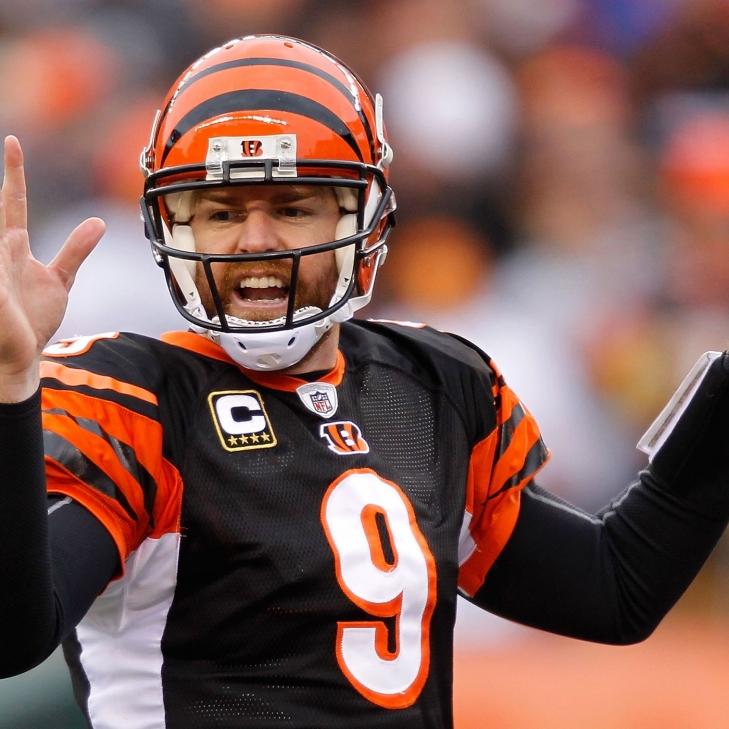
Selected first overall in the 2003 NFL Draft from the University of Southern California—where he secured the 2002 Heisman Trophy—Carson Palmer arrived in Cincinnati as a prospect capable of redefining the franchise. After remaining on the bench throughout his entire rookie season behind Jon Kitna, Palmer assumed the starting role in 2004 and promptly revolutionized the Bengals into one of the most prolific passing offenses in the National Football League.
Standing at 6 feet 5 inches and weighing 235 pounds, Palmer exhibited a quintessential NFL quarterback physique, characterized by a fluid over-the-top release and exceptional arm strength. Primarily operating from conventional dropback passing formations, he demonstrated proficiency in delivering high-velocity throws into narrow intermediate windows and connecting with Chad Johnson and T.J. Houshmandzadeh on deep vertical routes along the boundary. His arm talent enabled Cincinnati to target all three levels of the field; however, his inclination to remain within the pocket rendered him susceptible to significant interior pressure.
Palmer made his long-awaited debut in 2004, starting 13 games and throwing for 2,897 yards and 18 touchdowns while showcasing the raw arm talent that justified his top pick. His true national breakout came in 2005, when he delivered one of the franchise’s greatest individual passing seasons. Palmer led the NFL with a 67.8% completion rate and set a franchise record with 32 touchdown passes, accumulating 3,836 yards and earning his first Pro Bowl selection. He helped Cincinnati achieve an 11–5 record, its first division title, and a playoff spot in 15 years.
Tragedy struck on his first pass attempt in the 2005 AFC Wild Card Game against Pittsburgh, when a low hit caused a severe knee injury that tore both his ACL and MCL. Palmer made a remarkable recovery and returned for the 2006 season, starting all 16 games and earning his second Pro Bowl selection after throwing for 4,035 yards and 28 touchdowns. He maintained that high volume in 2007, setting a career mark with 4,131 passing yards and 26 touchdowns.
The latter part of Palmer's tenure in Cincinnati was hindered by team-wide roster declines and injuries. An elbow injury restricted him to merely four starts in 2008. He returned in 2009 to lead Cincinnati to a 10–6 record and another AFC North division title, passing for 3,094 yards and 21 touchdowns. Following a disappointing 4–12 season in 2010, during which he threw for 3,970 yards and 26 touchdowns, Palmer became profoundly frustrated with the organization's direction and requested a trade. When management initially declined, Palmer threatened retirement and abstained from the start of the 2011 season before being traded to the Oakland Raiders in October 2011.
With the Bengals (2003–2010), Palmer started 97 regular-season games, throwing for 22,694 passing yards, 154 touchdowns, and 100 interceptions,
304. Carson Palmer
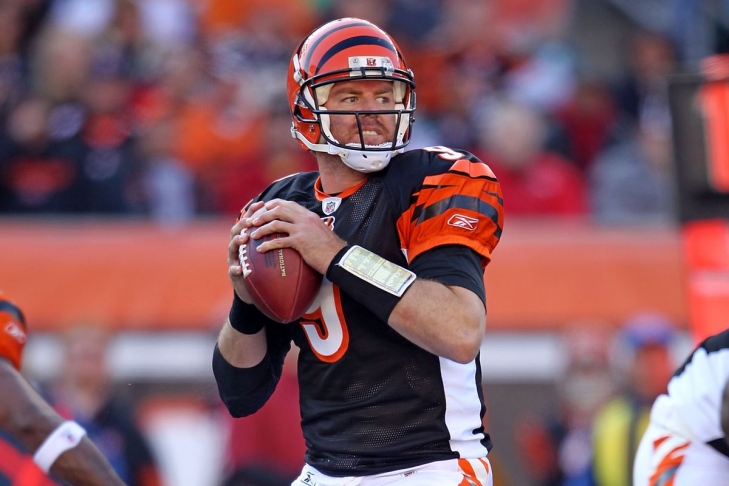
Carson Palmer was the 2002 Heisman Trophy winner and the USC Quarterback was considered a can’t miss prospect in the NFL. Palmer would be drafted first overall by the Cincinnati Bengals and the organization would take their time with the pivot as they did not play him in his rookie season choosing to start him in 2004 and in 2005 he was a Pro Bowl Selection who was second in the NFL in Completions, fourth in Passing Yards and he led all Quarterbacks in Touchdown Passes while taking the Bengals to the playoffs, though he would suffer a severe injury in the playoffs.
Carson Palmer Retires
Carson Palmer, Quarterback of the Arizona Cardinals announced in an open letter that ‘it’s time” and he retired from the league.
Palmer was a stud QB at USC where he won the Heisman Trophy and was the number one Draft Pick of 2003 by the Cincinnati Bengals. Palmer did not play a snap that year as he was groomed to slowly to takeover in 2004 and in 2005 he arguably had his best season in the National Football League where he made his first Pro Bowl and led the league in Touchdown Passes and Completion Percentage. Palmer would again be named a Pro Bowl Selection in 2006. The former Trojan’s stats would regress a bit and by 2010 out of frustration he retired rather than continue with Cincinnati. He would come out of retirement following a trade to the Oakland Raiders.
Palmer was with Oakland for two seasons but a trade to the Arizona Cardinals brought a renaissance of sorts for the Quarterback. In 2015, he would make his third Pro Bowl while leading the NFL in Yards/Attempt, Yards/Completion and QBR.
Carson Palmer retires with 3,961 Completions with 46,247 Passing Yards; numbers that are good enough for 11th and 12th all-time. He is also 12th all-time in Touchdown Passes with 294.
These are good numbers but with the high numbers that Quarterbacks are able to accrue these days, his rankings will plummet quickly. Realistically, he was considered an elite QB for maybe two seasons (three perhaps) and above average for most of his career. This is not likely to put Palmer in Canton but this was a good career that will likely put him on our Notinhalloffame.com Football list when he is eligible in 2023.
We here at Notinhalloffame.com would like to thank Carson Palmer for his gridiron memories and we wish him the best in his post-playing career.
