

36. Alex Fernandez
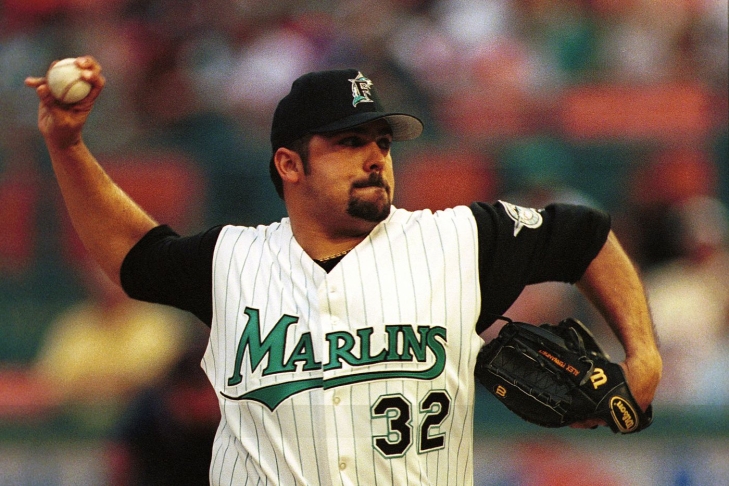
In 1997, Alex Fernandez went back to his hometown of Miami Beach, becoming the last key player in South Florida’s first championship team. Following seven successful seasons in Chicago, the right-hander added veteran composure and a powerful fastball to a Marlins rotation that quickly gained national attention.
In 1997, Fernandez led the rotation with Kevin Brown and Al Leiter. He posted a 17-12 record, a 3.59 ERA, and 183 strikeouts, establishing himself as the high-leverage pitcher the organization expected when they signed him to a then-record deal. His season was marked by a remarkable performance at Wrigley Field in April, where he was just two outs shy of a no-hitter before settling for a dominant one-hit shutout. He was the key driver for a team that advanced to the postseason, winning the NLDS and helping the franchise reach its first National League Championship Series.
After being chased early in an NLCS start against the Braves, Fernandez was found to have been pitching with a torn rotator cuff. While his teammates famously won the 1997 World Series, Fernandez was more of a spectator in the dugout, observing from the sidelines as he prepared for a difficult surgery. His career was completely halted during the 1998 season, making him one of the few veterans to survive the notorious "fire sale" that broke up the championship team.
Fernandez returned to the mound in 1999, authoring a deceptively strong 3.38 ERA over 24 starts and proving there was still life in his arm. Yet the physical toll of his 1997 workload proved too great; after eight starts in 2000, the shoulder issues sealed his decision to step away from the game.
46. Alex Fernandez
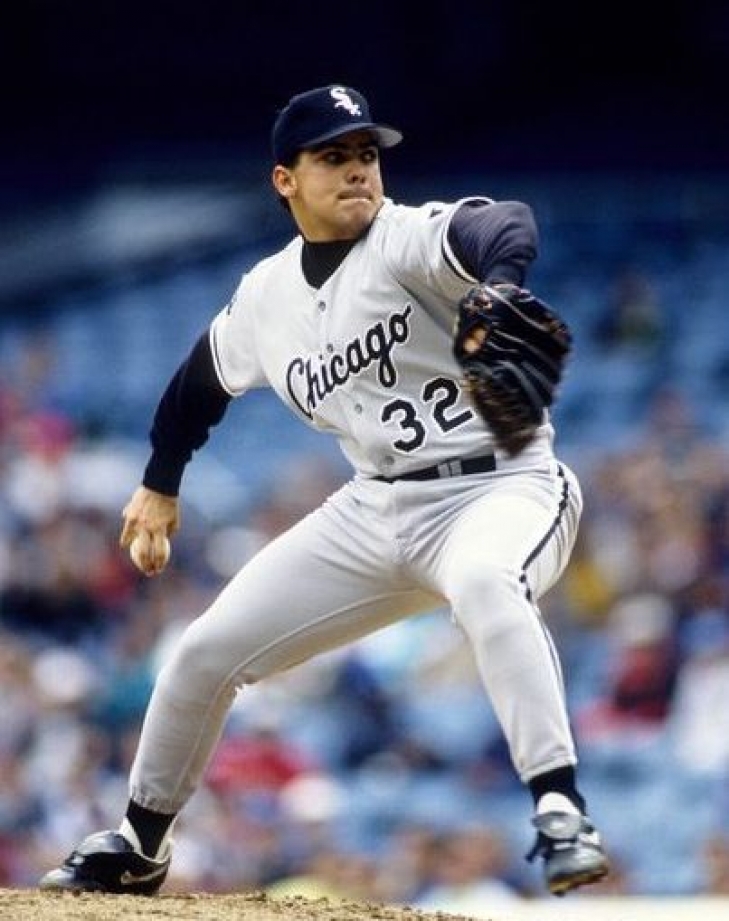
Alex Fernandez surfaced in Chicago during a whirlwind 1990 campaign, making his Major League debut just months after being selected fourth overall and sweeping the Golden Spikes and Dick Howser awards at the University of Miami. While his initial transition to the professional ranks required a brief period of adjustment, he matured into a cornerstone of the staff by 1993. That summer, he emerged as a premier force in the Junior Circuit, authored by an 18–9 record and a .313 ERA. He was a model of specialized control from the start, proving that his game was built on a sophisticated ability to outthink and out-execute the best hitters in the game.
The most impressive aspect of his tenure was the sustained excellence he maintained at the front of the Chicago rotation. Between 1993 and 1996, Fernandez established himself in the elite tier of American League hurlers, consistently finishing in the top ten in both WHIP and strikeout-to-walk ratio. He was a master of efficiency, possessing a workhorse mentality that allowed him to navigate the high-stakes environment of the mid-90s with professional poise. He reached a new ceiling in 1996, his final season with the club, when he eclipsed the 200-strikeout plateau for the first time and finished sixth in the Cy Young voting, showcasing a rare balance of power and precision.
His presence was defined by a quiet, steely resolve and a tactical brilliance that stabilized the Chicago staff during the 1993 division title run. Fernandez was a fixture of the South Side rotation for seven seasons, using a specialized repertoire to remain a high-leverage producer through some of the most offense-heavy years in the sport's history.
After the 1996 season, Fernandez returned to his home state to sign with the Florida Marlins, where he would eventually capture a World Series ring. With the White Sox, Fernandez compiled a 79-63 record with 951 strikeouts and a 3.70 ERA across 1,281.1 innings.
