

12. Wesley Walls
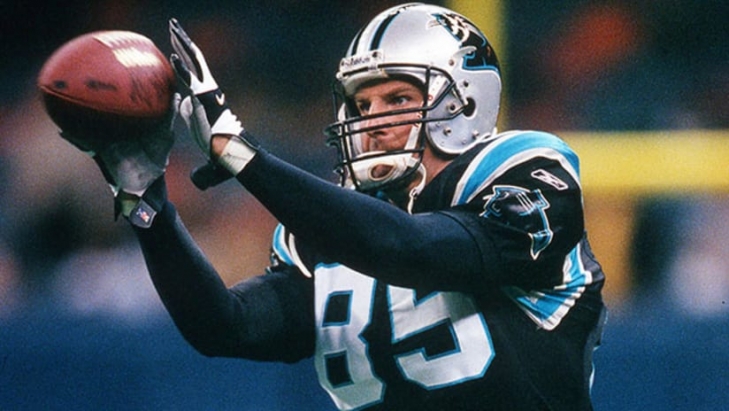
Wesley Walls, after earning a Super Bowl ring as a reserve with the 49ers and spending two solid seasons in New Orleans, joined Charlotte in 1996 as a high-profile free agent. This move drastically changed his career path—and the Panthers' offense—immediately, establishing him as one of the top tight ends of the late 1990s and early 2000s.
Walls blended traditional inline strength with the smooth route-running of a large wide receiver. Serving as Kerry Collins and Steve Beuerlein's reliable safety net and main target in red-zone situations, he excelled at running intermediate seam routes, finding openings in zone coverage, and using his ability to high-point the ball to out-jump linebackers and safeties in confined areas.
In 1996, during Carolina's second year, Walls made a notable impact. He caught 61 passes for 713 yards and scored 10 touchdowns, earning his first Pro Bowl selection and Second-Team All-Pro honors. His performance helped the expansion team win the NFC West division and reach the NFC Championship Game.
In 1997, he repeated that elite performance, recording 58 catches for 746 yards and six touchdowns, earning a second consecutive Pro Bowl selection and a Second-Team All-Pro honor.
His stellar statistical campaign came in 1999. Walls delivered an outstanding season, catching 63 passes for 822 yards and 12 touchdowns—tying the NFL single-season record for touchdown catches by a tight end at that time. That impressive performance earned him a third Second-Team All-Pro honor and his fourth straight Pro Bowl invitation. Walls celebrated his fifth and final Pro Bowl selection in 2001 after making 43 catches and scoring five touchdowns.
Following seven seasons as a fixture in Charlotte, the organization shifted toward a youth movement in 2003, leading to Walls' release. He spent his final NFL season with the Green Bay Packers in 2003 before hanging up his cleats.
Walls played seven seasons with the Panthers (1996–2002), appearing in 98 games (95 starts), with 324 receptions, 3,902 yards, and 44 touchdowns—the franchise record for tight ends. In 2019, he was inducted into the Panthers Hall of Honor alongside Jake Delhomme, Jordan Gross, and Steve Smith Sr.
5. Ryan Kalil
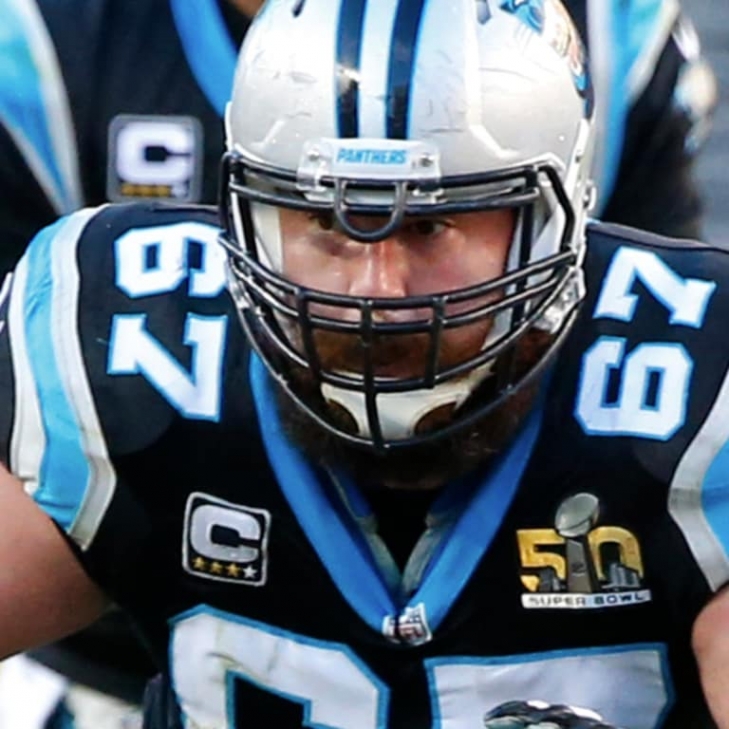
Chosen in the second round (59th overall) of the 2007 NFL Draft from USC, Ryan Kalil came to Charlotte as a highly regarded college center. Over 12 seasons, he became the key figure on Carolina's offensive line, blending exceptional athleticism with sharp pre-snap awareness to lead the franchise through its most successful period.
Kalil transformed interior offensive line play in Carolina. With exceptional quickness for a center, he excelled at pulling blocks in power-running schemes, easily reaching the second level to block linebackers. More than his physical skills, Kalil served as the brain of the offensive front, analyzing defensive fronts, communicating blitz calls, and delivering swift, accurate snaps in Cam Newton's zone-read and power-option schemes.
After serving a rotational role as a rookie in 2007, Kalil became the full-time starting center in 2008, quickly improving the team's performance. By 2009, he was selected for his first Pro Bowl, beginning a period during which he was regarded as one of the top centers in the league.
Kalil kept his high level of performance around the decade's start, earning back-to-back Pro Bowl selections in 2010 and 2011, as well as a Second-Team All-Pro accolade in 2011. That achievement led to a significant contract extension in August 2011, making him briefly the highest-paid center in NFL history.
His career peak came during Carolina's strong performances in the mid-2010s. Kalil earned First-Team All-Pro and a Pro Bowl spot in 2013 when Carolina won the NFC South. He maintained that high level during the remarkable 2015 season, earning his second First-Team All-Pro honor and fifth Pro Bowl. As a team captain, he led the offensive line that helped Carolina reach a 15–1 record, win the NFC Championship, and make it to Super Bowl 50.
Navigating injuries late in his career, Kalil provided steady veteran leadership through his final year in Charlotte in 2018, before spending a brief 2019 farewell season with the New York Jets.
A six-time team captain, Kalil started 145 of his 148 regular-season games in a Panthers uniform, establishing himself as one of the most durable and decorated offensive linemen in team history.
50. Geoff Hangartner
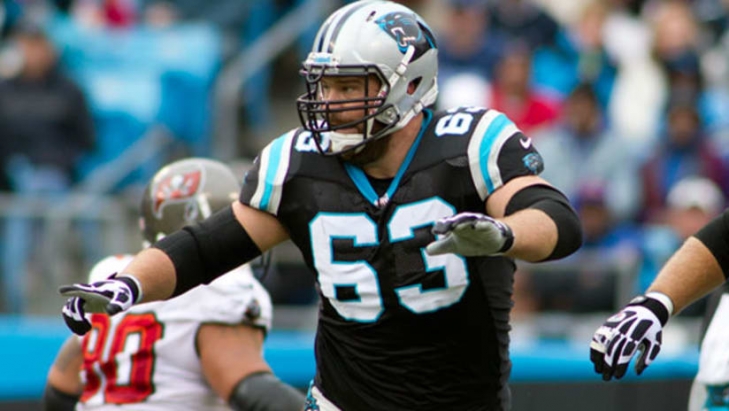
Drafted in the fifth round (148th overall) of the 2005 NFL Draft from Texas A&M, Mr. Geoff Hangartner demonstrated essential versatility and interior stability through two separate tenures with the Carolina Panthers. Capable of playing as a center, guard, and tackle, Mr. Hangartner established himself as a dependable utility lineman during the mid-2000s and early 2010s in Charlotte.
Hangartner’s initial four NFL seasons (2005–2008) were spent with the Carolina Panthers, where he served as a versatile backup, filling various roles across the interior line whenever injuries occurred. In 2008, he assumed the position of full-time starting center. In 2008, he signed with the Buffalo Bills as a free agent and commenced two complete seasons as a starter. Subsequently, in 2011, he returned to Western North Carolina to assume the role of right guard, holding this position for two years alongside tackle Jordan Gross and center Ryan Kalil. His final year in Charlotte was hindered by injuries, resulting in his release prior to the 2013 season.
Across his seven seasons with the Panthers, Hangartner played in 90 games with 62 starts and three postseason appearances. Fans remember him for his versatility, veteran line-calling, and dependable play on multiple offensive line positions.
41. Jeff Mitchell
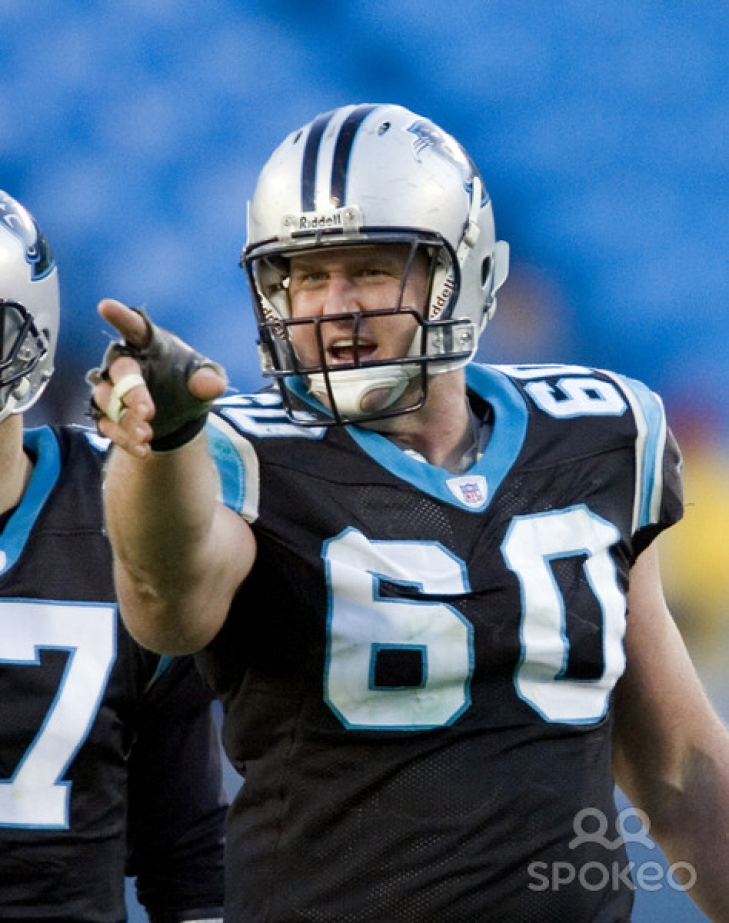
Arriving in Charlotte in 2001 after starting at center for Baltimore's 2000 Super Bowl championship squad, Jeff Mitchell provided immediate championship pedigree and line-calling authority to John Fox's offense. Operating as the heart of Carolina's offensive line for five seasons, Mitchell anchored the pivot and elevated the physical identity of the front five.
Mitchell combined low-pad leverage, heavy hands, and quick pre-snap mental processing. Operating at center, his primary role was reading defensive fronts, setting protection slide calls at the line of scrimmage, and driving nose tackles off the ball on downhill power runs.
Mitchell's defining stretch in Western North Carolina arrived during the 2003 season. Playing alongside tackles Jordan Gross and Todd Steussie, Mitchell anchored an offensive front that powered the Panthers to an NFC Championship and an appearance in Super Bowl XXXVIII.
With Mitchell organizing protections at the line, Carolina's offense pounded the ground for 2,091 rushing yards while surrendering just 23 sacks all regular season. His pre-snap calls gave quarterback Jake Delhomme a stable pocket and opened interior lanes for Stephen Davis and DeShaun Foster during Carolina's historic playoff run.
He retired after the 2005 season, starting 78 of his 79 games in Carolina.
39. Star Lotulelei
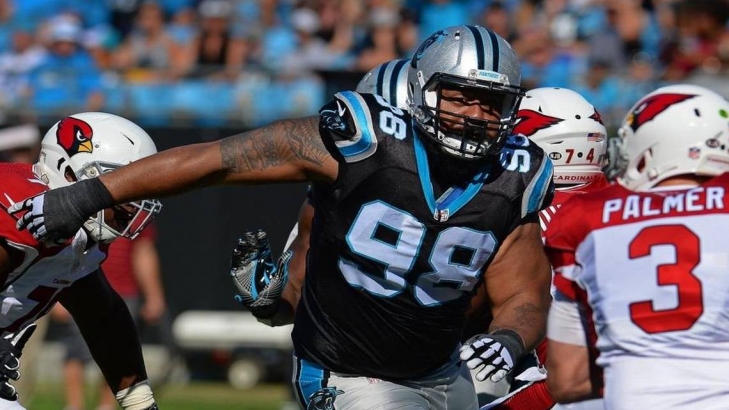
Selected 14th overall in the first round of the 2013 NFL Draft out of Utah, Star Lotulelei arrived in Charlotte as an immediate interior anchor. Born in Tonga before growing up in Utah, Lotulelei stepped straight into general manager Dave Gettleman’s defensive overhaul as the primary run-plugging nose tackle for Ron Rivera’s front four.
Lotulelei relied on broad-framed strength, low leverage, and heavy hands. Operating at right defensive tackle before shifting to left defensive tackle, his primary role was absorbing double-teams at the line of scrimmage, holding ground in B-gaps, and freeing up linebackers Luke Kuechly and Thomas Davis to scrape downhill clean.
Lotulelei enjoyed an immediate impact as a rookie in 2013, starting all 16 regular-season games. He recorded 42 tackles, 3.0 sacks, and nine tackles for loss, finishing fourth in AP Defensive Rookie of the Year voting and earning PFWA All-Rookie Team honors. His interior anchor transformed Carolina’s run defense, propelling the unit from 14th to 2nd in the league.
Paired alongside fellow 2013 draft pick Kawann Short, Lotulelei served as the dirty-work half of Carolina’s interior duo. During the 2015 season, he started 14 games for a unit that went 15–1 and advanced to Super Bowl 50, anchoring a defense that consistently dominated opposing ground attacks.
Lotulelei played out his five-year rookie contract in Charlotte after the team exercised his fifth-year option for the 2017 season. With Carolina heavily invested in Short's contract extension and having drafted Vernon Butler in the first round, the Panthers allowed Lotulelei to hit the open market in March 2018, and he signed with Buffalo.
With the Panthers, Lotulelei recorded 141 tackles, 11.5 sacks, 28 tackles for loss, 24 QB hits, two forced fumbles, and two fumble recoveries.
36. Dan Morgan
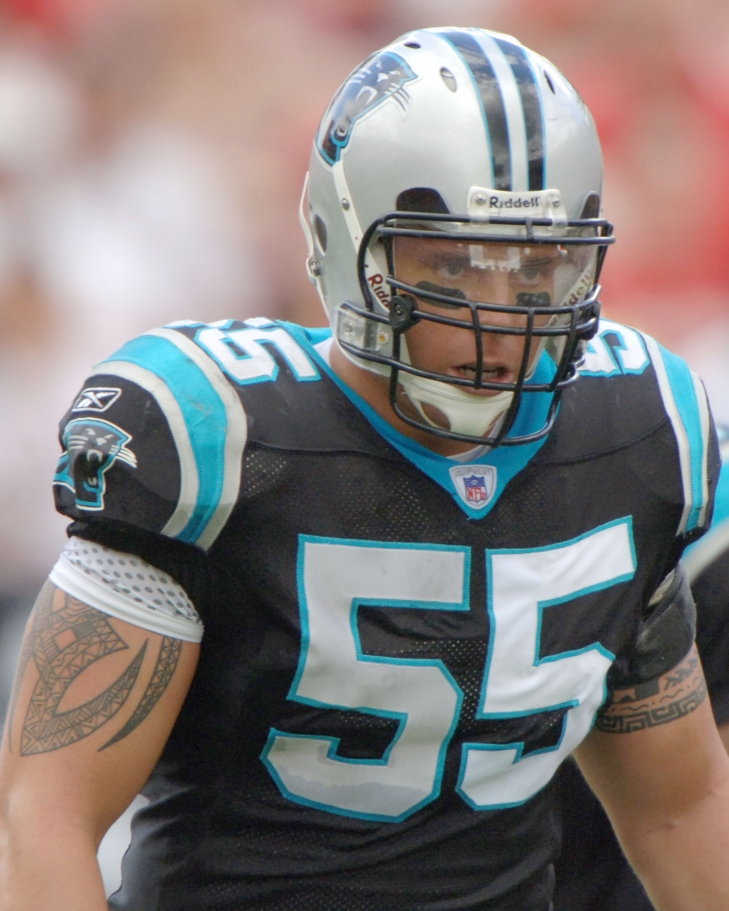
Dan Morgan was chosen 11th overall in 2001 out of Miami following a legendary collegiate career where he swept the Butkus, Bednarik, and Nagurski awards. Installed immediately as the brain center of Carolina's defense, Morgan showcased sideline-to-sideline range and instincts when healthy.
Morgan played with ferocious intensity, elite processing speed, and explosive closing acceleration. Operating as the middle linebacker in John Fox's defense, his strength was diagnosing plays at the snap, scraping through interior trash to deliver bone-jarring tackles in the run game, or dropping into the middle third to break up passes.
When on the field, Morgan was a dynamic disrupter. During Carolina's 2003 run to Super Bowl XXXVIII, he delivered one of the greatest individual defensive performances in championship history, setting an all-time Super Bowl record with 18 total tackles (11 solo) against the New England Patriots.
He followed that postseason brilliance with his finest regular season in 2004. Despite missing four games, Morgan recorded a career-high 102 total tackles, 2.0 sacks, two interceptions, and two fumble recoveries across 12 starts. His dominant middle-of-the-field play earned him his first career Pro Bowl selection.
Concussions and shoulder injuries ultimately altered Morgan's trajectory. He never played more than 13 games in a single season, and over his final two years in Charlotte (2006–2007), he was limited to just four total appearances. Morgan started all 59 regular-season games he appeared in, compiling 390 total tackles (284 solo), 7.0 sacks, five interceptions, 17 passes defensed, six fumble recoveries, and three forced fumbles.
6. Thomas Davis
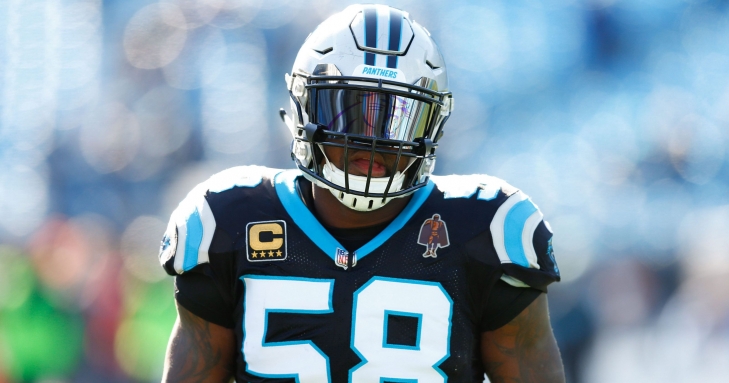
Thomas Davis was selected 14th overall in the first round of the 2005 NFL Draft and entered the league as a hybrid safety/linebacker. While he began his career in the secondary, the Panthers quickly shifted him to weakside linebacker full-time, unlocking one of the most remarkable stories of resilience and longevity in modern NFL history.
Davis maintained his safety speed while building the lower-body strength needed to play in the front seven. A sideline-to-sideline tackler, he had fluid hips in zone coverage, making him an ideal weakside linebacker capable of carrying tight ends up the seam or firing through gap blitzes. Above all, what defined Davis was his relentless motor and physical toughness, paired with a rare ability to overcome severe knee injuries.
Davis swiftly transitioned to linebacker, starting 14 games in 2006 and then achieving consecutive 100-tackle seasons in 2008 (114 tackles) and 2009. Unfortunately, he tore his right ACL late in 2009, and over the following two years, he experienced two more ACL tears on the same knee—one in June 2010 and another in September 2011—losing nearly two entire seasons.
While most careers would have ended after three ACL reconstructions, the Panthers supported Davis, who then delivered an extraordinary second chapter. In 2012, he came back full-time and achieved 105 tackles, making NFL history as the first to return and perform at an elite level after three ACL surgeries on the same knee.
Paired with middle linebacker Luke Kuechly, Davis formed one of the era's premier linebacker duos. In 2013, he recorded 123 tackles and 4.0 sacks. Off the field, his extraordinary charitable work earned him the prestigious 2014 Walter Payton NFL Man of the Year award.
In his 30s, Davis reached a top-tier individual peak. In 2015, he led Carolina's defense, which went 15–1, with 105 tackles, 5.5 sacks, and four interceptions, earning First-Team All-Pro and his first Pro Bowl. Notably, he broke his arm in the NFC Championship Game, had 12 screws and a plate inserted, and still played through the pain two weeks later in Super Bowl 50.
Davis picked up two additional Pro Bowl nods in 2016 and 2017, anchoring Carolina's defense through 2018 before playing his final seasons with the Chargers and Washington. Davis played 176 regular-season games (158 starts), racking up 1,098 tackles, 28.0 sacks, 13 interceptions, and 18 forced fumbles in a Panthers uniform. The organization inducted Davis into the Carolina Panthers Hall of Honor in 2023 alongside his long-time linebacking partner Luke Kuechly.
35. Frank Garcia
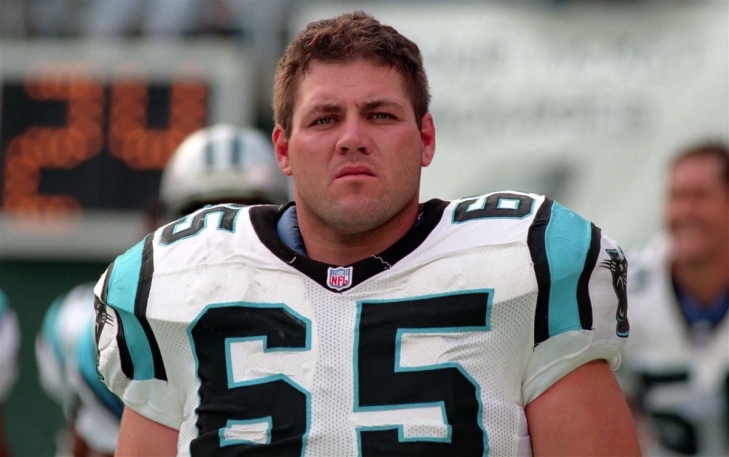
Frank Garcia was an original Carolina Panther, taken in the 4th round (132nd overall) from Washington, and it proved to be a solid acquisition to the expansion club.
Garcia relied on leverage, lower-body power, and pre-snap mental processing to control the interior pocket. Capable of sliding seamlessly across all three interior line spots, his main strength was his positional flexibility—transitioning smoothly from starting left guard as a rookie to becoming the team's full-time starting center.
Garcia joined the starting lineup right away as a rookie in 1995, starting 14 games at left guard for Carolina's 7–9 debut season. In the exciting 1996 season, he alternated between guard and center, recording eight regular-season starts and starting in both playoff games. His interior blocking was instrumental in supporting Dom Capers' offense as Carolina finished with a 12–4 regular-season record and reached the NFC Championship Game in only their second year.
By 1997, Garcia became Carolina's full-time starting center, starting all 16 regular-season games. He maintained remarkable consistency at the pivot point over his final four seasons in Charlotte, starting all 16 games at center in both 1997 and 1999, and making 14 starts in 1998.
Following the 2000 season, Garcia spent time with the St. Louis Rams (2001–2002) and Arizona Cardinals (2003) before concluding his nine-year NFL career. With Carolina, Garcia started 84 games.
30. Lamar Lathon
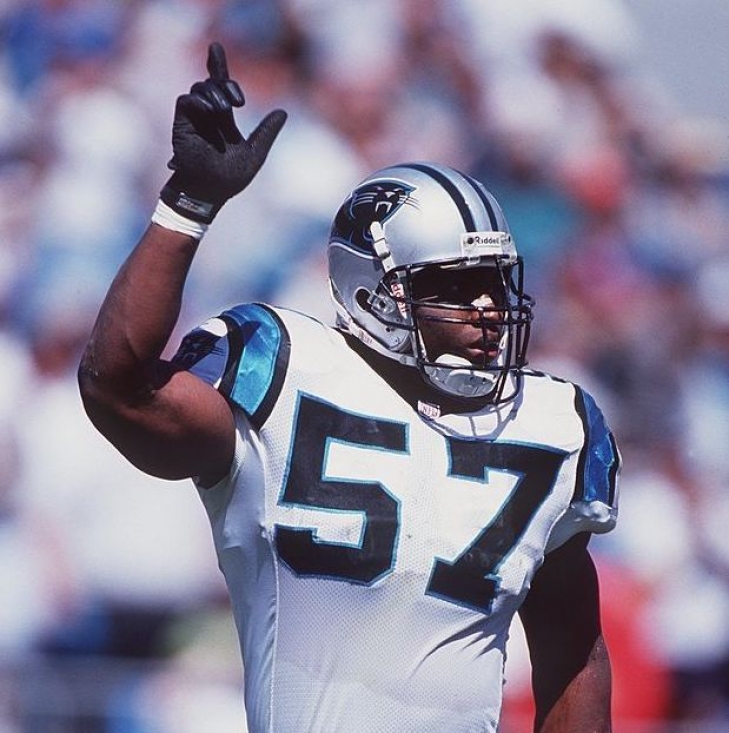
1. Luke Kuechly
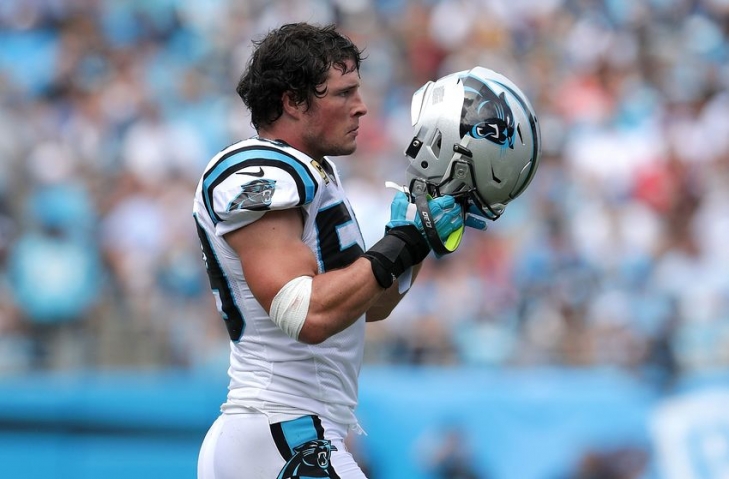
Out of Boston College, Luke Kuechly arrived in Charlotte as the ninth overall pick in the 2012 draft and immediately took over the middle of the field. Operating as the heartbeat and defensive play-caller of the franchise, Kuechly processed pre-snap alignments with the precision of an offensive coordinator, elevating linebacker play to a masterclass level over his eight dominant seasons.
Kuechly combined exceptional sideline-to-sideline pursuit speed, smooth coverage movement, and sharp diagnostic skills. His defining trait was his relentless preparation—he would analyze opposing formations and receiver splits before the snap, alerting teammates to play concepts and adjusting the defensive line for optimal gap fits. In pass defense, Kuechly had the hips and range to drop into Tampa 2 zones or cover tight ends up the seam, playing with the instincts of a free safety. When defending the run, he used quick lateral footwork to avoid offensive linemen, then charged downhill to fill interior gaps and tackled ball-carriers with solid form.
Kuechly's rookie year in 2012 started as an outside linebacker, but a midseason move to the middle linebacker position unlocked his full potential. He ended his first season as the NFL's leading tackler with 205 total tackles, along with two interceptions and a sack, earning the AP NFL Defensive Rookie of the Year award.
He supported his reputation with an iconic 2013 season. Leading a defense that was second overall and helping Carolina reach a 12–4 record, Kuechly recorded 156 tackles, four interceptions, and two sacks. His standout achievement was a tied-NFL-record 24-tackle game against the Saints in Week 16. At only 22, he received the AP NFL Defensive Player of the Year award, his first First-Team All-Pro selection, and his first Pro Bowl appearance. In 2014, Kuechly secured his second league tackle title with 153 tackles, guiding Carolina to a division championship and a playoff win over Arizona.
In Carolina's historic 15–1 season in 2015, Kuechly was the anchor of the NFC championship defense. Although he missed three games due to a concussion, he finished the regular season with 118 tackles and four interceptions. During the playoffs, he made a significant impact by returning interceptions for touchdowns in consecutive victories against Seattle and Arizona, leading Carolina to Super Bowl 50.
From 2016 to 2018, Kuechly consistently upheld an elite level despite dealing with injuries. He achieved First-Team All-Pro recognition in 2017 and 2018, recording 125 tackles and three interceptions in 2017, then surpassing that with 130 tackles, two interceptions, and 20 tackles for loss in 2018.
In 2019, his last season, Kuechly played all 16 games, made 144 tackles, and received his seventh straight Pro Bowl honor. He surprised the football community by retiring in January 2020 at age 28, deciding to step away at his prime to safeguard his long-term health.
Kuechly played 118 regular-season games, recording 1,092 tackles, 18 interceptions, 12.5 sacks, 66 pass deflections, 7 forced fumbles, and 75 tackles for loss. He averaged 136.5 tackles annually and never had fewer than 100 in a season. He was named to the NFL 2010s All-Decade Team and was inducted into the Carolina Panthers Hall of Honor in 2023. His career was ultimately capped when he was elected to the Pro Football Hall of Fame as part of the Class of 2026.
3. Cam Newton
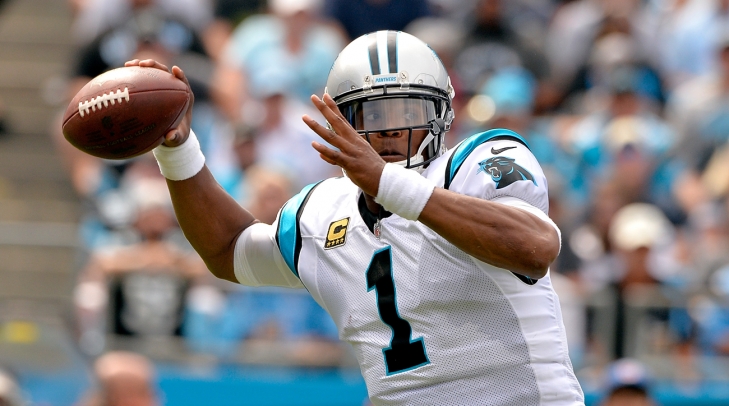
Cam Newton, the top pick in the 2011 NFL Draft after winning the Heisman Trophy at Auburn, debuted in the league as a rare physical talent. Standing 6 feet 5 inches and weighing 245 pounds, he combined the size of a linebacker, a strong arm like a pocket passer, and the agility of a running back, immediately transforming Carolina's offense.
Newton transformed how defenses considered the quarterback in the run game. Designed to withstand direct hits at the goal line, he displayed remarkable strength on QB sweeps, draws, and power-read options, reliably converting short-yardage plays that typical passers wouldn't attempt. As a passer, Newton leveraged his exceptional arm strength to throw into tight boundary windows, combining his rushing ability with a confident deep-ball approach.
Newton created instant history in his 2011 rookie season. He made a remarkable debut with 422 passing yards and ended the year with 4,051 yards passing, 21 passing TDs, plus 706 rushing yards and 14 rushing TDs—setting an NFL record for a quarterback in a single season. His outstanding debut earned him AP NFL Offensive Rookie of the Year and his first Pro Bowl selection.
Over the following three seasons, Newton consistently demonstrated durability and dual-threat effectiveness. In 2012, he passed for 3,869 yards and rushed for 741 yards. In 2013, he guided Carolina to a 12–4 record, secured a division title, and earned his second Pro Bowl selection. The franchise's postseason return in 2014 was also part of his accomplishments.
His career peaked during his legendary 2015 MVP season. He led Carolina to a franchise-record 15–1 regular season, tallying 45 total touchdowns—3,837 passing yards with 35 passing scores, plus 636 rushing yards and 10 rushing touchdowns. He earned multiple awards, including AP NFL MVP, AP Offensive Player of the Year, and Bert Bell Award, along with First-Team All-Pro and Pro Bowl selections.
Newton led Carolina through decisive postseason wins over Seattle and Arizona to reach Super Bowl 50. However, facing the Denver Broncos in the Championship, he faced obstacles. Denver's fierce pass rush limited him, resulting in 265 passing yards and six sacks. The crucial point was late in the fourth quarter when, trailing 16–10, Newton was strip-sacked by Von Miller. As the ball scattered on the field, Newton hesitated and chose not to dive for it, a move that drew much public criticism as Denver recovered and secured the victory.
Despite the disappointing end to the Super Bowl, Newton continued to be the team's driving force, passing for more than 3,100 yards in each complete season from 2011 to 2018. During this period, he established himself as the most productive goal-line quarterback in NFL history, surpassing Steve Young's record for the most career rushing scores by a quarterback.
A foot injury limited Newton to just two games in 2019, leading to his release in early 2020. After spending the 2020 season with the New England Patriots, he returned to Charlotte midway through 2021 for a brief second stint, providing memorable touchdown moments for the home crowd despite operating in a reduced role.
Newton started 133 regular-season games, holding franchise records with 29,725 passing yards, 186 passing touchdowns, 5,036 rushing yards, and 63 rushing touchdowns. He stands as one of only two quarterbacks in NFL history to rush for over 5,000 yards with a single franchise.
2. Steve Smith
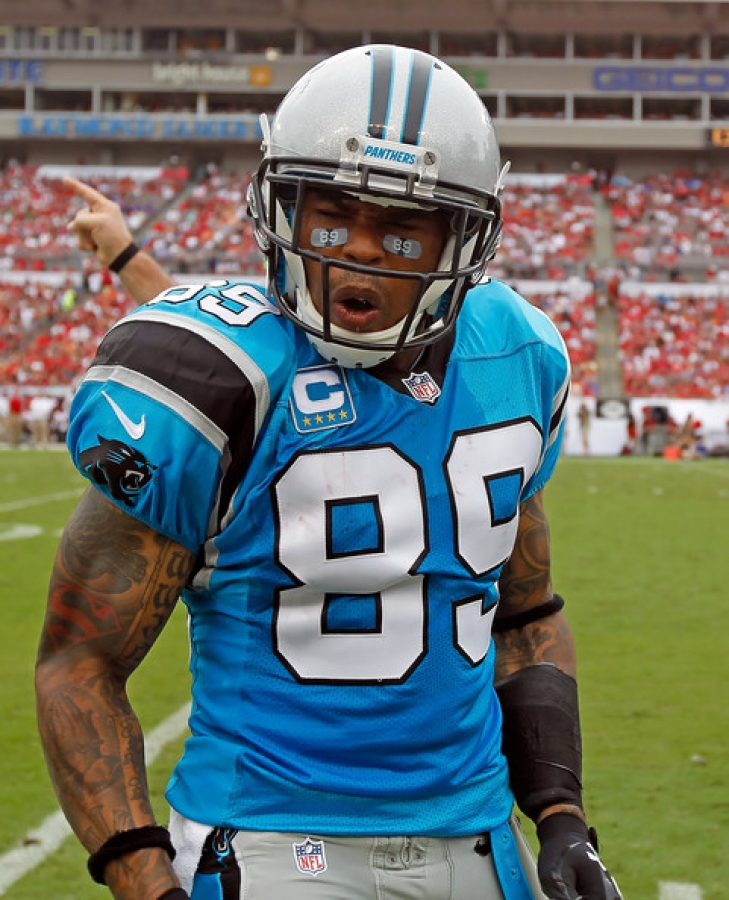
Drafted as the 74th overall pick in the third round of the 2001 NFL Draft from Utah, Steve Smith Sr. came to Charlotte marked by a strong motivation. Standing 5 feet 9 inches, he frequently encountered skepticism about his stature, which he turned into a fierce, competitive game approach. Throughout 13 seasons with the Panthers, Smith evolved from a remarkable special teams contributor to the franchise's all-time leading offensive star.
Smith displayed a rare level of intensity for a receiver. He used his quickness off the line to beat press coverage and relied on his frame to shield larger defenders. In the air, he had exceptional timing and consistently caught contested passes over taller opponents. After catching the ball, he ran with the agility of a running back, breaking tackles and resisting tackles from defenders in open space.
Smith demonstrated his exceptional talent right from his rookie year in 2001, earning First-Team All-Pro honors as a return specialist. He made history as the first NFL player to score a touchdown on both a kickoff and a punt in his debut month. After shifting to a full-time receiver role, he achieved his first 1,000-yard season in 2003 with 88 catches for 1,110 yards and seven touchdowns. His performance was crucial in Carolina's journey to Super Bowl XXXVIII, especially with his memorable 69-yard walk-off touchdown in double overtime against the St. Louis Rams during the Divisional Round.
In 2004, adversity hit when a broken leg in Week 1 sidelined him for the rest of the season. His 2005 response stands out as one of the greatest wide receiver seasons in modern football. He achieved the NFL's wide receiver Triple Crown, leading the league in receptions (103), receiving yards (1,563), and touchdowns (12). That year, he received AP Comeback Player of the Year, was named a First-Team All-Pro, and made the Pro Bowl, and was most memorable for finishing with a legendary 218-yard, two-touchdown game against Chicago in the postseason.
Smith remained a top-tier pass-catcher for the rest of his tenure in Charlotte, earning three additional Pro Bowl invitations in 2006, 2008, and 2011. During his 2011 campaign, he teamed with rookie quarterback Cam Newton to record 1,394 receiving yards on 79 catches.
Before spending his final three NFL seasons in Baltimore, Smith completed a 13-year run in Carolina, where he was the team's undisputed all-time leader in receptions (836), receiving yards (12,197), receiving touchdowns (67), and all-purpose yards (16,614). The organization enshrined him in the Carolina Panthers Hall of Honor in 2019.
31. Eric Davis
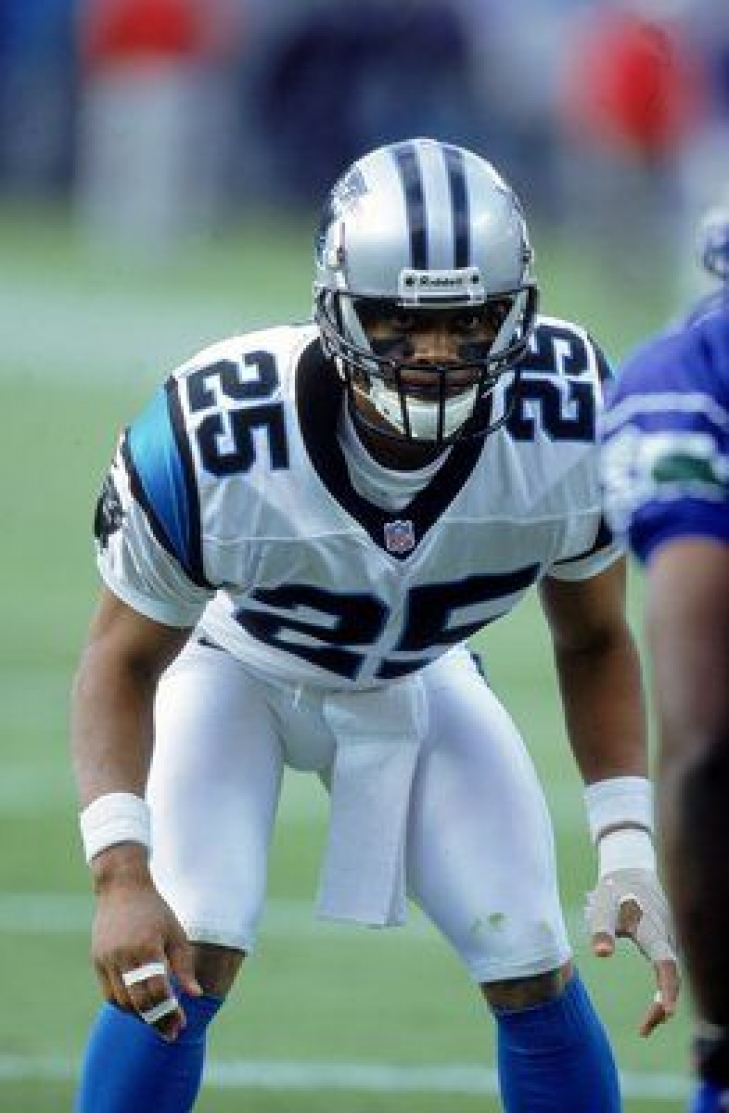
One of the best early signings in franchise history was Eric Davis, who was fresh off a Super Bowl championship and First-Team All-Pro season in San Francisco. He became one of the immediate defensive leaders for the second-year expansion franchise. Anchoring the secondary, Davis provided the perimeter lockdown ability that fueled Carolina's historic run to the NFC Championship Game in just their second year of existence.
Davis relied on elite route recognition, loose hip mechanics, and dynamic ball skills. Operating primarily as a boundary press and off-man cornerback, his primary strength on film was anticipating breaks; he routinely jumped intermediate routes and used smooth transition speed to close on the football, turning defensive stops into game-changing turnovers.
Davis made a remarkable impact in his first season in 1996, earning his second Pro Bowl nod after leading the defense with five interceptions and 13 pass defenses. His boundary play contributed to Dom Capers' defense finishing as the NFL's second-best in scoring, helping Carolina achieve a 12–4 record, secure the NFC West title, and reach the NFC Championship Game within just their second season.
Remarkably, Davis displayed clockwork consistency over his five-year run in Charlotte (1996–2000), recording exactly five interceptions in every single season as a Panther.
After the 2000 season, Davis played for Denver, Detroit, then ended his career. With the Panthers, he started 78 of 79 regular games and both playoffs, with 25 interceptions, 226 tackles, seven forced fumbles, four recoveries, and two defensive TDs.
32. Travelle Wharton
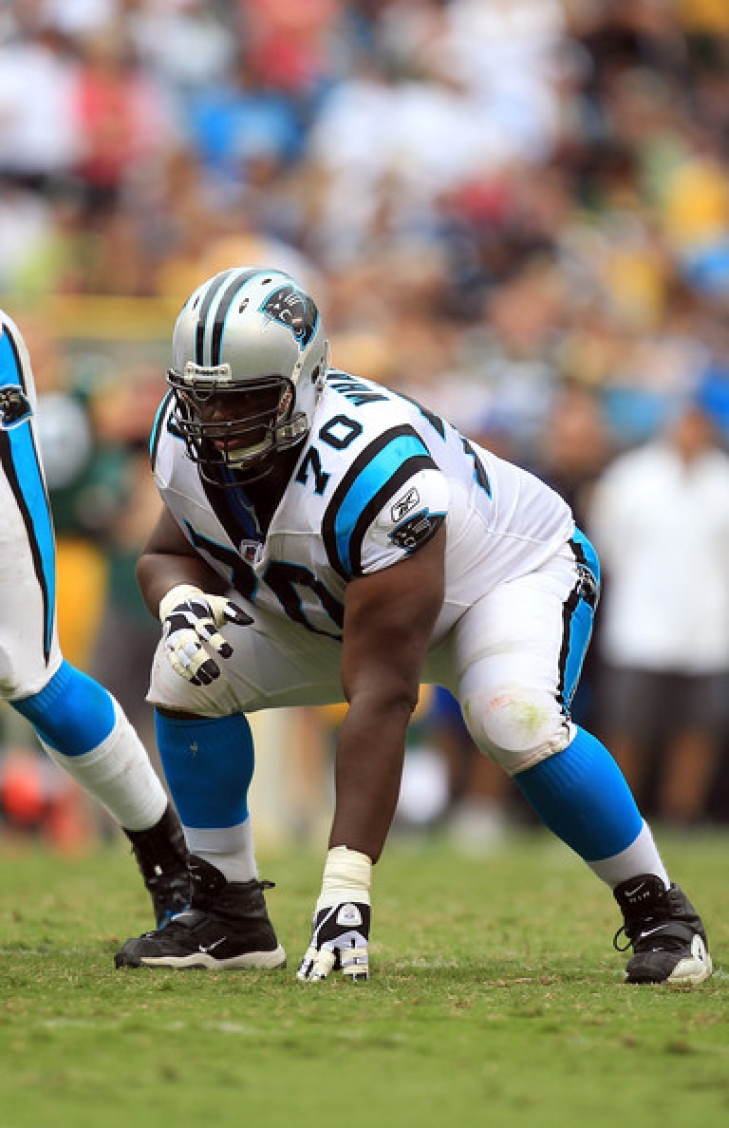
Taken in the third round (94th overall) of the 2004 NFL Draft out of South Carolina, Travelle Wharton stepped onto the field for the Panthers as an immediate interior presence. A versatile lineman who played both left guard and left tackle, Wharton served as a quiet, physical pillar along Carolina's offensive line across nine seasons in Charlotte.
The 312-pound Wharton relied on broad-framed strength, hand placement, and quick lateral footwork to sustain blocks. Capable of sliding out to left tackle when needed, his primary home was at left guard, where he excels in setting a firm anchor against interior power rushers and creating rushing lanes on downhill counter and power runs.
Wharton commenced his professional career as a rookie in 2004 by participating in the lineup, beginning the final 11 games at left guard. In 2005, he was in the starting lineup for all 16 games as the Carolina team advanced to the NFC Championship Game, thereby establishing himself as an underappreciated star within the interior offensive line. Following a recovery from a knee injury in 2006, Wharton transitioned to the role of left tackle in 2007, starting all 16 games at the blindside before subsequently shifting back to an interior position.
His most notable campaign was in 2008, when he led a formidable ground attack alongside DeAngelo Williams and Jonathan Stewart. In 2011, Wharton had another excellent season, starting all 16 games and paving the way for rookie Cam Newton, the precursor to Lamar Jackson, during his record-breaking debut.
Wharton signed with the Cincinnati Bengals in 2012, but a preseason knee injury sidelined him for the entire year, preventing him from appearing in a regular-season game for Cincinnati. He returned to Charlotte in 2013 for a final stint, starting all 16 games at left guard and helping propel Carolina to a 12–4 record and an NFC South title. Wharton started 111 of his 115 games over his career.
4. Julius Peppers
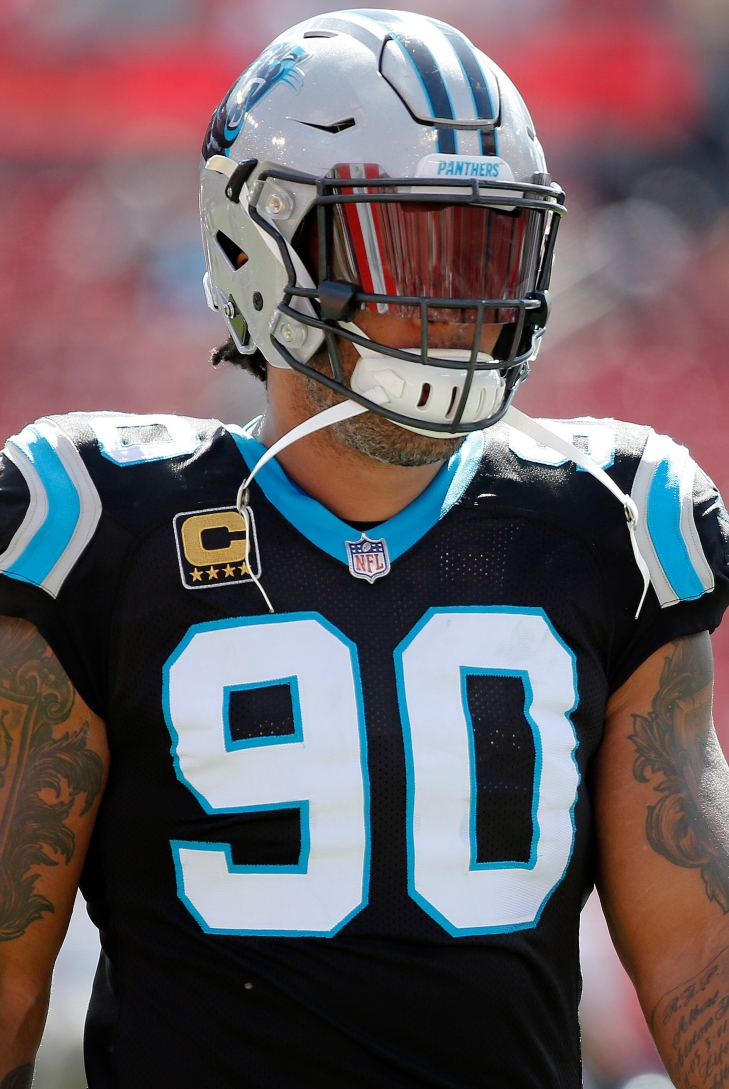
Julius Peppers, chosen second overall in the 2002 NFL Draft from North Carolina—after earning both the Lombardi and Chuck Bednarik Awards during his college career—was the quintessential local star. Retaining this multi-talented athlete in his home state turned out to be a brilliant move, as Peppers developed into an extraordinarily athletic pass rusher who set the standard for defense in Carolina during two separate periods.
Standing 6 feet 7 inches tall and weighing 283 pounds, Peppers redefined the physical profile that offensive coordinators fear on the edge. With a 4.7-second 40-yard dash and basketball-learned vertical leap, he easily countered edge angles through his long stride. He used a long-arm extension to keep offensive tackles at bay, combining it with a swift speed-to-power rush that often collapsed the pocket. His great length also enabled him to swat passes at the line of scrimmage, defend boundary sweeps, and drop into passing lanes to make surprising interceptions for a defensive lineman.
Peppers made a strong start with a breakout 2002 rookie season, achieving 12.0 sacks and five forced fumbles in only 12 games, earning the AP NFL Defensive Rookie of the Year award. In 2003, he was a key pass-rusher, contributing significantly to Carolina's first division title in seven years and their run to Super Bowl XXXVIII.
His first First-Team All-Pro and Pro Bowl honors came in 2004, a standout year in which he recorded 11.0 sacks, led the NFL with 18 tackles for loss, and returned an interception 97 yards for a touchdown against Denver. Peppers remained nearly unblockable during the following two seasons, earning Pro Bowl selections in 2005 and 2006, with the 2006 season earning him First-Team All-Pro recognition after posting 13.0 sacks and two forced fumbles.
Named defensive captain in 2007, Peppers reached his career peak in 2008, disrupting opponents’ backfields with 14.5 sacks, 17 tackles for loss, and five forced fumbles, earning Second-Team All-Pro honors. He made his fifth Pro Bowl in 2009 in Carolina after recording 10.5 sacks.
After seven productive seasons away—four with the Chicago Bears and three with the Green Bay Packers—Peppers returned to Charlotte in 2017. At 37, he delivered an impressive 11.0-sack season, contributing to the Panthers making the postseason again, before finishing his career with one last year in 2018.
Peppers appeared in 140 regular-season games, setting franchise records with 97.0 sacks, 34 forced fumbles, and eight blocked field goals. His total of 159.5 career sacks ranks fourth in NFL history. Recognized on both the NFL 2000s All-Decade Team and NFL 2010s All-Decade Team, Peppers was inducted into the Carolina Panthers Hall of Honor in 2019. His legendary career was finally confirmed when he was elected to the Pro Football Hall of Fame in 2024 on his first ballot, making him the first franchise-drafted player to be enshrined in Canton.
42. DeShaun Foster
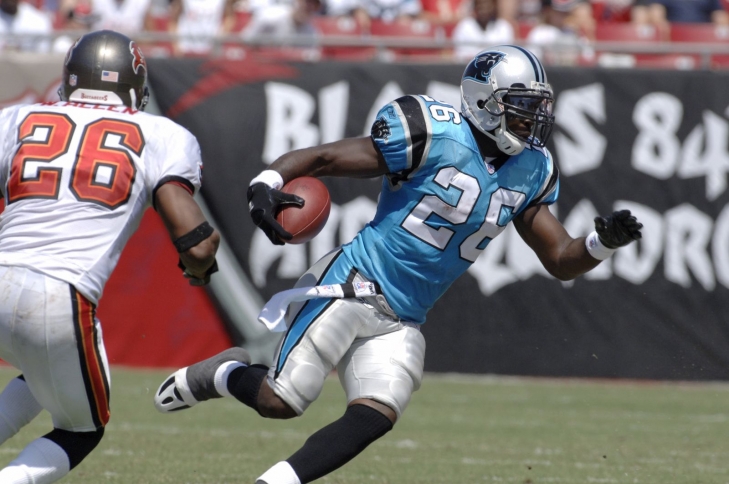
Selected 34th overall in the second round of the 2002 NFL Draft out of UCLA, DeShaun Foster arrived in Charlotte as an athletic running back with dynamic open-field acceleration and sharp cutback vision. Though a microfracture knee injury cost him his entire rookie season, Foster made a resounding statement during Carolina's 2003 postseason run. He powered through five tackle attempts for an iconic 1-yard touchdown in the NFC Championship Game against Philadelphia, then broke free for an explosive 33-yard touchdown burst in Super Bowl XXXVIII against New England.
As his role expanded, Foster developed into the steady, high-volume engine of John Fox’s ground attack. From 2005 through 2007, he put together three consecutive campaigns of at least 850 rushing yards, topping 1,000 yards from scrimmage in each of those seasons. His versatility as both a between-the-tackles runner and a reliable target out of the backfield made him an invaluable asset for Carolina's ball-control offenses.
Over five active seasons on the field with the Panthers (2003–2007), Foster appeared in 63 regular-season games with 40 starts. He accumulated 3,336 rushing yards and 996 receiving yards for 4,332 total yards from scrimmage and 14 touchdowns in Charlotte, while adding another 401 rushing yards across six playoff appearances. Panthers fans remember Foster for his electric open-field bursts, his clutch Super Bowl XXXVIII touchdown, and his steady tenure as the primary focal point of Carolina’s backfield.
327. Wesley Walls
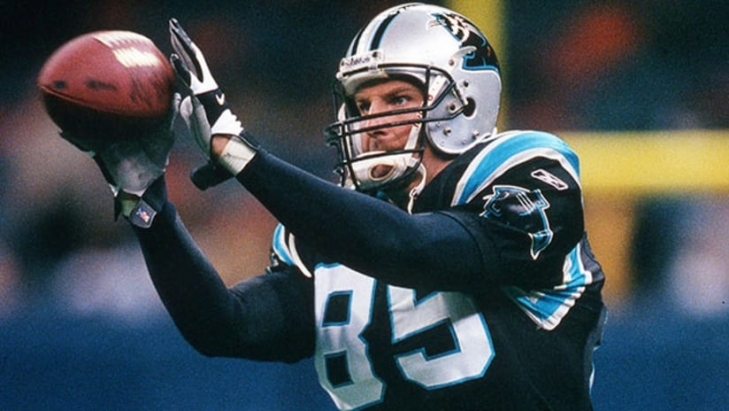
Behind the depth chart to Brent Jones, Wesley Walls did not see a lot of action with the San Francisco 49ers, although he did win a Super Bowl with them (XXIV) and caught a pass in the big game. Walls was injured through 1992 and 1993, and he would sign with the New Orleans Saints as a Free Agent, where he played well for two seasons, but it was with their division rival, the Carolina Panthers, where he would see his greatest success.
310. Ryan Kalil
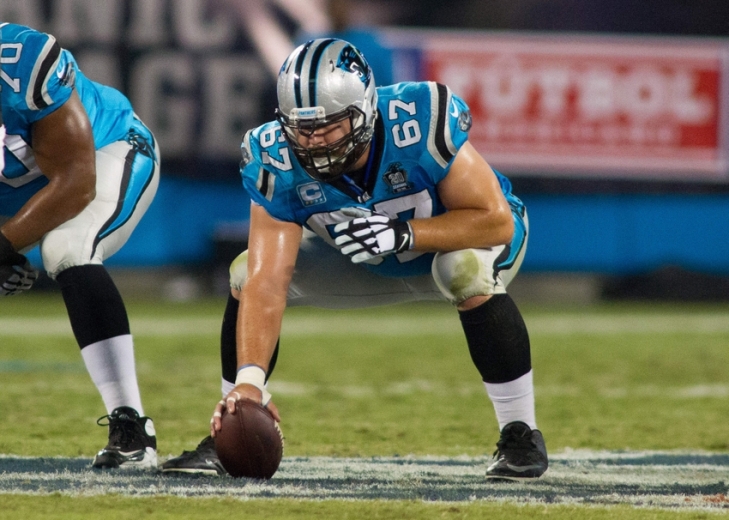
The Carolina Panthers announced four new names for their Hall of Honor
Regular visitors of Notinhalloffame.com know that we are slowly working on the top 50 of every major team in the NHL, NBA, NFL and MLB. Once that is done, we intend to look at how each team honor their past players and executive. As such it is news to us that the Carolina Panthers have announced that four new members will be added to their Hall of Honor for 2019.
Before we look at those new members, let’s take a look at the Hall of Honor itself, which is still in a state of development. Prior to this announcement, only two people were honored, that of former player Sam Mills and former executive Mike McCormack who were inducted way back in 1998. There had been no discernable talk after about new members would enter the Hall of Honor but this changed when the new owner David Tepper bought the team.
The Class of 2019 are:
Jake Delhomme: Quarterback 2003-09. Delhomme arrived in 2003 as a free agent and took over as the team’s starter quickly coming in during the first game of the season in relief of Rodney Peete. This began a Cinderella season where he took the Panthers all the way to an unexpected Super Bowl XXXVIII appearance where they lost in the last play of the game to the New England Patriots. Delhomme would remain the team’s QB through to 2009 and the 2005 Pro Bowl Selection would throw for 19,258 Yards and 120 Touchdowns as a Panther.
Jordan Gross: Offensive Tackle 2003-13. Gross would play 167 Games in the NFL all with Carolina and he started them all. Gross was a three-time Pro Bowl Selection who was also chosen in 2018 as a First Team All-Pro.
Steve Smith: Wide Receiver 2000-13. Smith was drafted in the 3rdRound in 2001 out of Utah and he would become the greatest offensive threat in Panthers history. He was a Pro Bowl Selection four times and a First Team All-Pro twice and in 2005 he would lead the NFL in Receptions (103), Receiving Yards (1,563) and Receiving Touchdowns (12). Before he signed with the Baltimore Ravens in 2014, Smith would accrue 836 Receptions, 12,197 Yards and 67 Touchdowns as a Panther. Smith is considered to be a solid threat to enter the Pro Football Hall of Fame once eligible.
Wesley Walls: Tight End 1996-02. Walls played six years in the NFL before joining Carolina in 1996 and it was there where he had his best years. Walls played in Carolina for seven years and was a Pro Bowler in five of them. With the Panthers he would accumulate 324 Receptions, 3,902 Yards with 44 TDs.
Going forward, what we know is that the other considered nominees for the Class of 2019 was not revealed and that there is no guarantee that there will be an inductee every year. While it has not been finalized, the belief is that a player must have played for the organization for a minimum of three years and be retired for at least two. Both Mills and McCormack have statues, but it will be commemorative busts for the new inductees. Their names will be added to the upper bowl inside the stadium.
We here at Notinhalloffame.com would like to congratulate and Jake Delhomme, Jordan Gross, Steve Smith and Wesley Walls for earning this honor.
Jonathan Stewart Retires
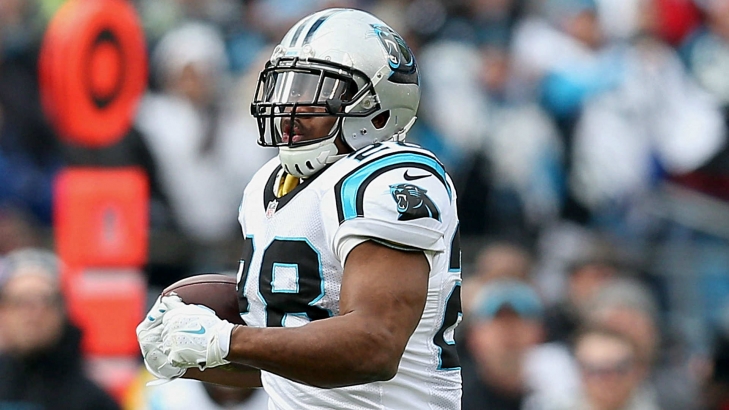
We have another retirement to look at as Jonathan Stewart has just announced his departure from playing professional football. He signed a one-day contract with the Carolina Panthers allowing him to sign with the team that drafted him.
Stewart was drafted by Carolina 13thoverall in 2008 out of Oregon and he had a good rookie season with 836 Yards with 10 Touchdowns. He matched his TD total in 2009 and would have a career high 1,113 Yards in 2010. While Stewart was often sharing the load, he was consistent for the Panthers and over his ten seasons there he would accumulate 7,318 Rushing Yards with another 1,295 Yards coming by way of the air. Stewart was named to the Pro Bowl in 2015. He finished his career playing for the New York Giants last season.
We here at Notinhalloffame.com would like to wish Jonathan Stewart the best in post-playing career.
