

20. Kevin Greene
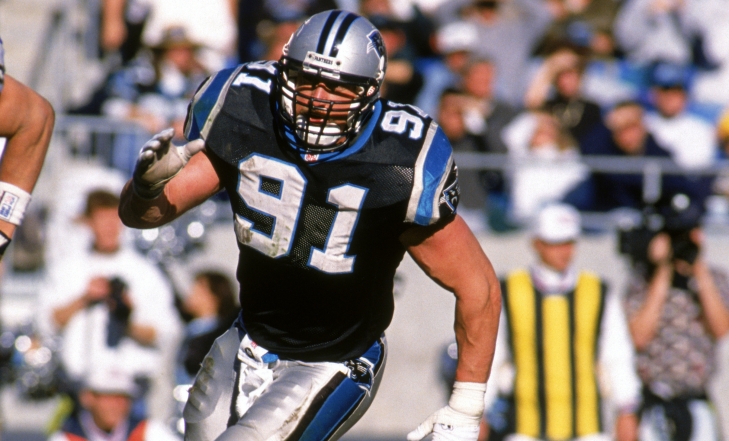
Before arriving in Charlotte for the first time in 1996, Kevin Greene had already carved out an outstanding 11-year NFL career between the Los Angeles Rams and Pittsburgh Steelers. With three Pro Bowls, two First-Team All-Pro nods, and a reputation as a relentless pass-rusher, he brought elite edge heat and championship swagger to a second-year expansion franchise.
Greene combined volcanic intensity with a high-octane motor and signature long blond hair flowing out of his helmet. Operating as an outside linebacker in Dom Capers’ 3-4 scheme, Greene excelled at converting speed to power, using violent hand-swipes and a relentless motor to collapse the pocket and destroy pass plays from the blind side.
Greene joined Carolina as a free agent in 1996 and led one of the most impressive individual defensive performances in NFL history. Partnering with outside linebacker Lamar Lathon to create the "Salt and Pepper" pass-rushing duo, Greene's relentless energy helped elevate the young franchise into a league contender.
In the remarkable 1996 season, Greene led the NFL with 14.5 sacks, added 51 tackles, forced two fumbles, recovered three, and recorded a safety. He set an NFL record with five consecutive multi-sack games during the final part of the season. His pass-rushing prowess helped Carolina win seven straight games to finish the regular season, securing the NFC West title with a 12–4 record. In the playoffs, Greene achieved three more sacks in two games, notably delivering a strong performance in a 26–17 Divisional Round win over the defending champions, the Dallas Cowboys. His outstanding play earned him the UPI NFC Defensive Player of the Year award, a fourth Pro Bowl selection, and Consensus First-Team All-Pro honors.
Following the 1996 run, a contract dispute led to Greene's release in August 1997. He spent one year with the San Francisco 49ers—where he posted 10.5 sacks—before returning to Carolina for his final two seasons in professional football.
Greene picked up right where he left off during his 1998 return campaign. At 36, he broke his own franchise single-season record with 15.0 sacks (tied for the team record today), forced four fumbles, and earned his fifth and final Pro Bowl selection. He returned for one last ride in 1999, starting all 16 games and sacking opposing quarterbacks 12.0 times while recovering three fumbles. In doing so, he recorded his tenth career double-digit sack season before hanging up his cleats for good.
Greene appeared in 47 regular-season games with the Panthers, achieving an impressive 41.5 sacks, six fumble recoveries, and six forced fumbles. He is the only player in franchise history to record double-digit sacks in three different seasons. This late-career surge brought his total to 160.0 sacks, ranking third in NFL history upon his retirement. In 2016, Greene was inducted into the Pro Football Hall of Fame, earning his well-deserved spot in Canton.
9. Jake Delhomme
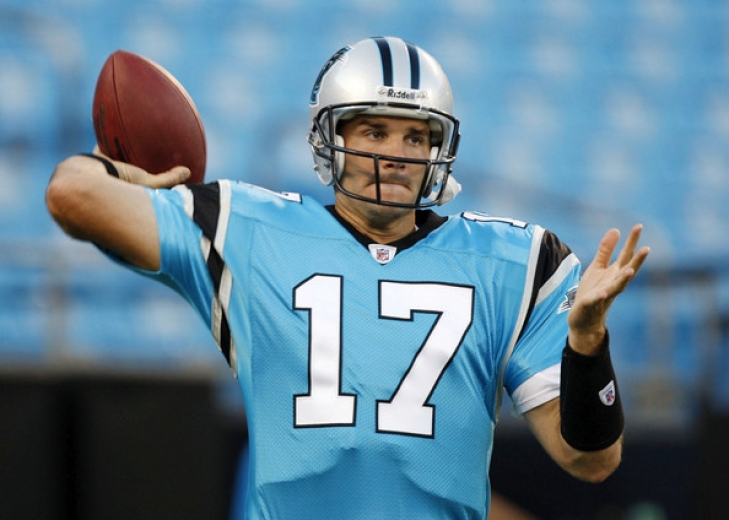
Unrated and overlooked as an undrafted free agent out of Southwestern Louisiana in 1997, Jake Delhomme spent six years grinding on practice squads, in NFL Europe, and backing up Aaron Brooks in New Orleans. Signing with Carolina in 2003, he stepped off the bench in Week 1 to ignite a second-half comeback victory—and immediately captured the heart of the franchise.
Delhomme brought intense fire, rapid decision-making, and an unshakeable late-game clutch factor to Foxboro-style cardiac games. Operating John Fox’s run-heavy, play-action offense, he possessed the rare courage to stand in against interior pressure and launch vertical boundary strikes to receivers like Steve Smith Sr. and Muhsin Muhammad. His hallmark was his Fourth-Quarter magic—Delhomme earned the nickname "Ragin' Cajun" for his ability to lead dramatic, game-winning drives when everything was on the line.
Delhomme’s first season in 2003 was like a Hollywood story. He set an NFL record with seven game-winning drives during the regular season, leading the "Cardiac Cats" to the playoffs. In four playoff games, he threw for 987 yards, including an exciting double-overtime win in St. Louis. He also set an NFL postseason record with an 85-yard touchdown pass to Muhsin Muhammad in Super Bowl XXXVIII.
He built on his impressive streak over the following two years. In 2004, even though he lost key offensive players to injury, Delhomme achieved a career-high 3,886 passing yards and 29 touchdowns. His peak came in 2005 when he threw for 3,421 yards and 24 touchdowns, earning his first Pro Bowl selection. Delhomme then guided Carolina to away playoff wins against the Giants and Bears, advancing to the NFC Championship Game.
After missing three games due to a thumb injury in 2006, adversity struck again in 2007 when Delhomme suffered a season-ending Tommy John elbow injury just three games into the year. He made a triumphant return in 2008, throwing for 3,288 yards and leading Carolina to a 12–4 record and an NFC South title. However, the season ended on a crushing note when he threw five interceptions in a playoff loss to Arizona on his birthday.
Believing in his leadership, the organization signed Delhomme to a lucrative five-year contract extension in the spring of 2009. But the magic faded in 2009. Plagued by turnovers and a nagging finger injury that landed him on injured reserve, Delhomme struggled through 11 starts. In March 2010, the Panthers made the difficult business decision to release the veteran quarterback. He closed out his career with brief stops in Cleveland (2010) and Houston (2011).
In his seven seasons in Charlotte (2003–2009), Delhomme started 90 regular-season games, accumulating 19,258 passing yards, 120 touchdowns, and a franchise-record 21 game-winning drives. He also won five postseason games as a starter.
7. Muhsin Muhammad
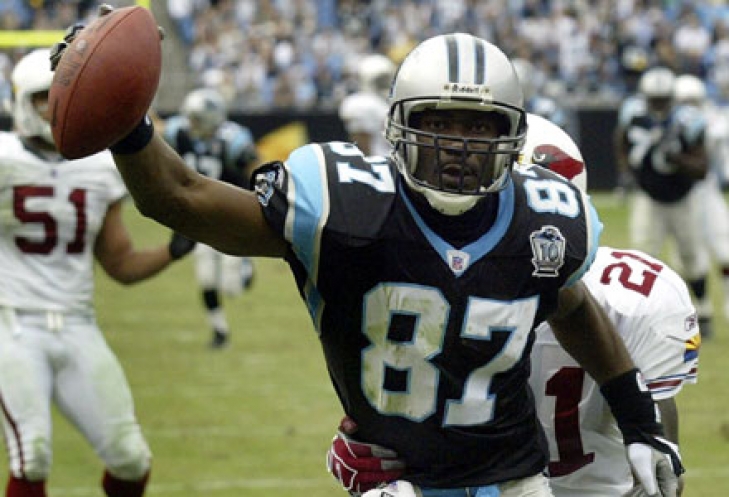
Drafted 43rd overall in the second round of the 1996 NFL Draft from Michigan State, Muhsin Muhammad joined Charlotte during the team's second year. Known as "Moose" for his formidable size and aggressive playing style, he developed into a top possession receiver and a highly regarded blocking wideout in modern NFL history.
Muhammad brought a running back's physical mindset to the wide receiver position. Operating on the outside, he was renowned for his elite contested-catch radius, using heavy hands and strong body positioning to shield off cornerbacks on intermediate slants and dig routes. Equally vital was his commitment to the dirty work of the offense: Muhammad was widely regarded as one of the league's top run-blocking receivers, regularly cracking down on linebackers and sealing the boundary edges to spring tailbacks like Stephen Davis and DeShaun Foster for massive gains.
After a quiet start to his career, Muhammad exploded in 1999, catching 96 passes for 1,253 yards and eight touchdowns, earning his first Pro Bowl selection. He followed that in 2000 by co-leading the NFL with 102 receptions for 1,183 yards, cementing his status as a premier volume receiver.
Muhammad was crucial in Carolina's journey to Super Bowl XXXVIII in 2003. During the title game against New England, he made a memorable 85-yard touchdown catch from Jake Delhomme, marking the longest touchdown reception in Super Bowl history.
His best season came in 2004. With injuries across the offense, Muhammad carried Carolina's passing attack and led the NFL in receiving yards (1,405) and receiving touchdowns (16), catching 93 passes. That transcendent performance earned him First-Team All-Pro honors and his second Pro Bowl invitation.
A contract dispute following his career year led to a three-season stint with the Chicago Bears (2005–2007), during which he helped guide the Bears to an appearance in Super Bowl XLI.
Muhammad returned to Charlotte in 2008, offering veteran leadership with Steve Smith Sr. During that season, he caught 65 passes for 923 yards, contributing to Carolina's 12–4 record. In Week 2, he became the 29th NFL player to exceed 10,000 career receiving yards.
After his final season in 2009, Muhammad retired with 11,438 career receiving yards and 62 touchdowns. Over his 11 seasons with Carolina, he caught 696 passes for 9,255 receiving yards and 50 touchdowns in 155 regular-season games. The franchise inducted Muhammad into the Carolina Panthers Hall of Honor in 2023, alongside Julius Peppers.
8. Jordan Gross
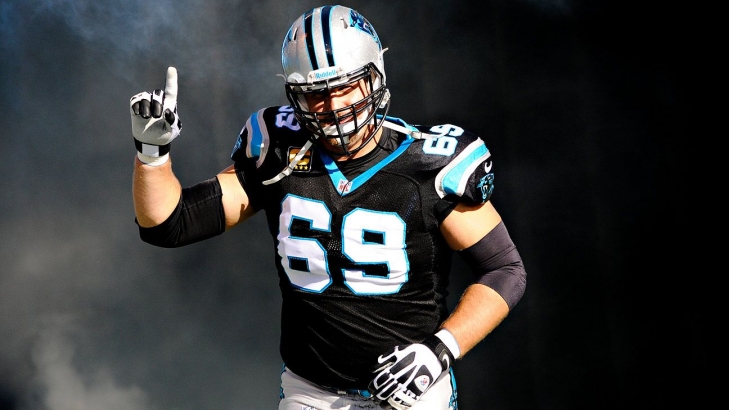
Jordan Gross was selected eighth overall in the first round of the 2003 NFL Draft from Utah. He joined the Charlotte team as an immediate solution for the offensive line. Throughout 11 seasons, Gross proved to be the epitome of durability at tackle, maintaining consistent performance and establishing the franchise's standard for resilience.
Gross combined excellent footwork with strong technical skills. While his core strength was ideal for driving defenders in the running game, his real expertise was in pass protection. Using balanced movements and patient hand placement, he effectively neutralized pass rushers without losing deep pocket leverage, executing textbook sets that enabled quarterbacks like Jake Delhomme and Cam Newton to operate smoothly.
Gross made a strong start as a rookie in 2003, taking his place as the starting right tackle from day one. He played every offensive snap during the season, permitting only three sacks and leading a line that propelled Carolina to Super Bowl XXXVIII.
After a standout rookie year, Gross transitioned to left tackle, securing the quarterback's blind side for the rest of his career. His best season was in 2008, when he played exceptionally well, allowing minimal pressure and creating running lanes for DeAngelo Williams and Jonathan Stewart. That year, he was chosen for his first Pro Bowl and received First-Team All-Pro honors, helping Carolina achieve a 12–4 record and win the NFC South division.
Gross earned two more Pro Bowl selections in 2010 and 2013. In his last season in 2013, he was the team captain for an NFC South-winning team, leading a front five that protected Cam Newton and contributed to a 12–4 record.
After the 2013 season, Gross retired, having spent all 11 of his professional seasons with Carolina. His durability sets a team benchmark: he played and started in all 167 games of his career, marking the franchise record for the most career starts by any player. The organization honored his contributions by inducting Gross into the Carolina Panthers Hall of Honor in 2019, alongside longtime teammates Steve Smith Sr. and Jake Delhomme.
24. Kawann Short
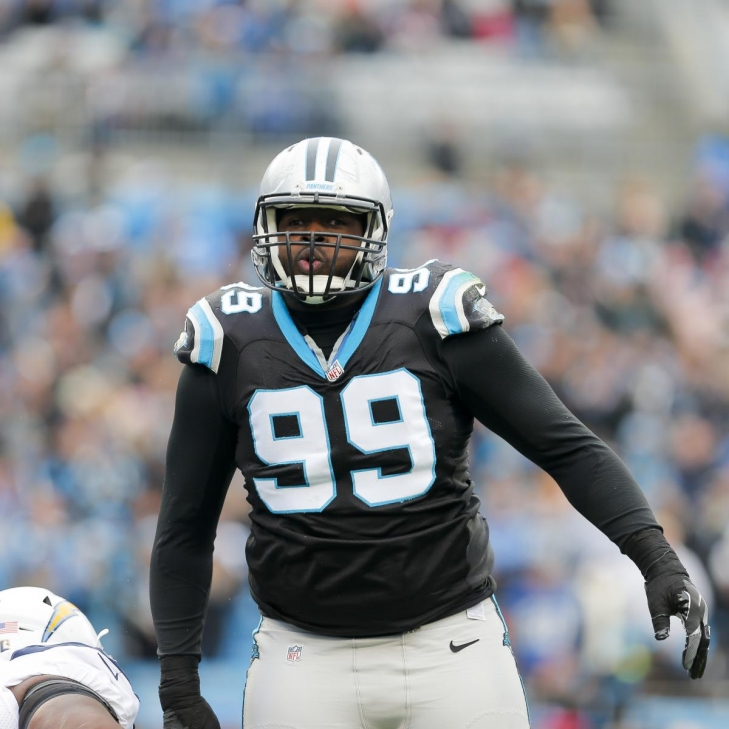
Taken in the second round (44th overall) of the 2013 NFL Draft out of Purdue, Kawann Short arrived in Charlotte as an interior disruptor with rare quickness. Operating at defensive tackle, Short developed into one of the premier interior pass rushers in franchise history, combining explosive initial penetration with exceptional run-stopping leverage to collapse pockets from the inside out.
Weighing 315 pounds, Short had a quick first step right after the snap, enabling him to penetrate A-gaps before interior linemen could set. His core strength helped him withstand double teams on run plays, and his swim move combined with aggressive hand techniques made him a difficult matchup for guards on third downs. By collapsing the pocket from inside, Short often forced quarterbacks to scramble wide, into the reach of Carolina's edge rushers.
Following his impactful rotational role in his initial two seasons, Short became a starter in 2015 and had a standout season for an interior lineman in Panthers history. He achieved a career-best 11.0 sacks, 16 tackles for loss, and three forced fumbles, earning his first Pro Bowl and Second-Team All-Pro honors. He was key to the defense during Carolina's impressive 15–1 regular season and their journey to Super Bowl 50.
Short demonstrated that his breakout campaign was no coincidence, maintaining dominance on the interior line over the next three seasons. Following a significant long-term extension in 2017, he had another exceptional year in 2018, recording 3.0 sacks, 12 tackles for loss, and securing his second Pro Bowl selection.
Rotator cuff injuries significantly affected Short's late years in Charlotte, restricting him to only five games in 2019 and 2020. In February 2021, after eight seasons, the Panthers released the veteran tackle during a roster overhaul. Short then retired, leaving a legacy as one of the most formidable interior players in team history.
Over his career, Short played in 99 regular-season games (76 starts), recording 280 combined tackles, 32.5 sacks, 59 tackles for loss, and 9 forced fumbles.
16. Trai Turner
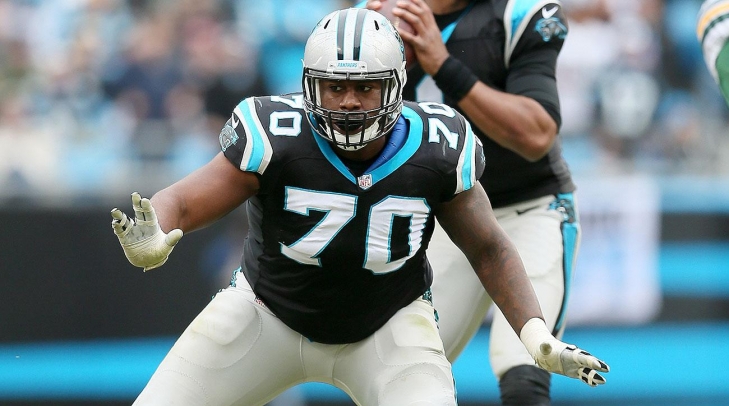
Chosen by the Panthers in the third round (92nd overall) of the 2014 NFL Draft out of LSU, Trai Turner stepped in as a 21-year-old power blocker with exceptional phone-booth strength. He seized the starting right guard job midway through his rookie season and quickly established himself as the anchor of Carolina's interior line.
At 6 feet 3 inches and 320 pounds, Turner paired sheer interior mass with explosive leg drive from his stance. Operating at right guard in Carolina's power-gap running scheme, he excelled at driving nose tackles off the ball, clearing running lanes for Cam Newton, Jonathan Stewart, and Christian McCaffrey. In pass protection, Turner used a heavy anchor and wide frame to stonewall interior blitzes and keep the pocket firm for Newton's deep drops.
After making nine starts as a rookie in 2014, Turner’s career took off during Carolina's historic 2015 campaign. Playing 98 percent of offensive snaps, he started all 16 games for an offense that led the NFL with 500 points. Turner earned his first Pro Bowl selection as the Panthers rolled to a 15–1 record, an NFC Championship, and an appearance in Super Bowl 50.
That breakout performance launched an unprecedented run of consistency. Turner earned five consecutive Pro Bowl selections (2015, 2016, 2017, 2018, and 2019), becoming one of only a handful of offensive linemen in franchise history to sustain that level of peer recognition. He signed a four-year contract extension in 2017, cementing his status as the team's most dependable interior lineman through multiple offensive coordinator changes and coaching transitions.
In March 2020, as the Panthers began a major roster rebuild under a new coaching staff, the organization traded Turner to the Los Angeles Chargers for veteran offensive tackle Russell Okung. He later played for Pittsburgh and Washington before retiring.
In his six productive years with the Panthers, Turner started 80 out of 84 games played.
25. Mike Minter
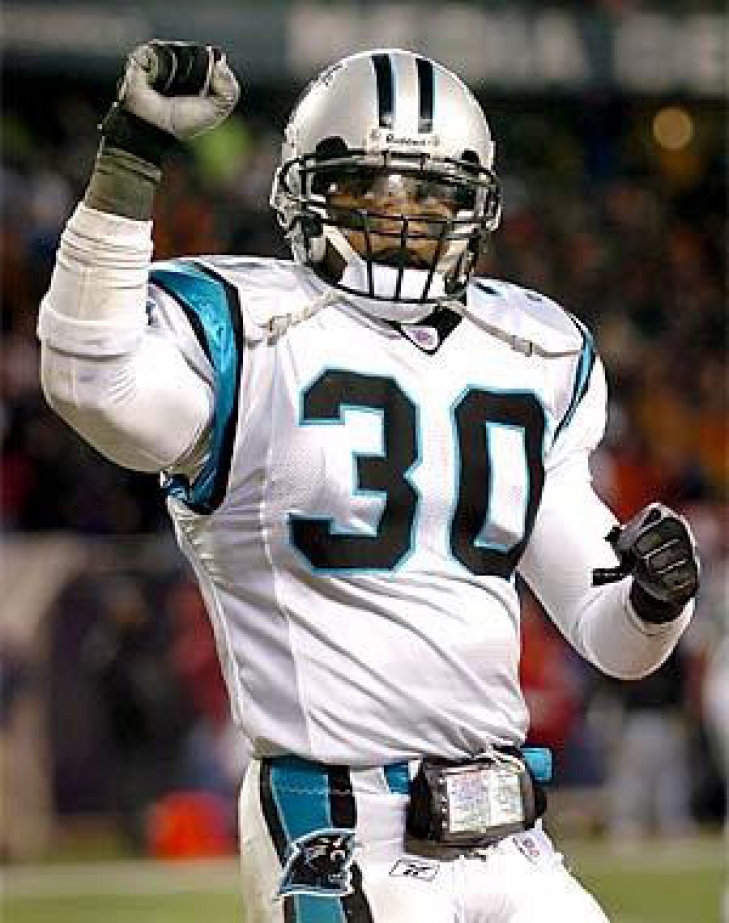
Mike Minter, a two-time National Champion at Nebraska, was selected in the second round (56th overall) of the 1997 NFL Draft. He quickly became a defensive leader in Charlotte, playing all 10 NFL seasons with the Panthers. Throughout the late 1990s and 2000s, Minter was the emotional driving force and a physical enforcer of Carolina's secondary.
Minter played with a fierce, downhill style that set the tone for Carolina's defense. After starting his career at free safety before transitioning seamlessly to strong safety, he possessed the versatility to drop deep into coverage, read quarterback eyes, and unleash bone-crushing hits over the middle. Minter was essentially an extra linebacker in the run game, routinely blowing up perimeter blocks and filling gaps at the line of scrimmage.
Minter became a full-time starter in his 1998 sophomore season and stayed a key presence in the secondary for almost ten years. Celebrated for his game-changing playmaking, he intercepted 17 passes throughout his career, returning four for touchdowns. His 421 yards in interception returns established a Panthers franchise record that lasted for years, highlighting his skill in converting turnovers into immediate scoring opportunities.
His legendary toughness was never more evident than during Carolina's historic 2003 Super Bowl run. Playing with a broken left foot, Minter delivered a heroic performance in Super Bowl XXXVIII against the New England Patriots, recording a game-high 18 combined tackles (14 solo) while battling through the injury on football's biggest stage.
Minter was a reliable anchor in 2006, starting all 16 games with two interceptions and forced fumbles. In August 2007, knee pain led to his retirement before his 11th season. Over his career, he played 148 games (141 starts), with 805 tackles, 11.0 sacks, 17 interceptions, 4 defensive touchdowns, and 15 forced fumbles.
21. Steve Beuerlein
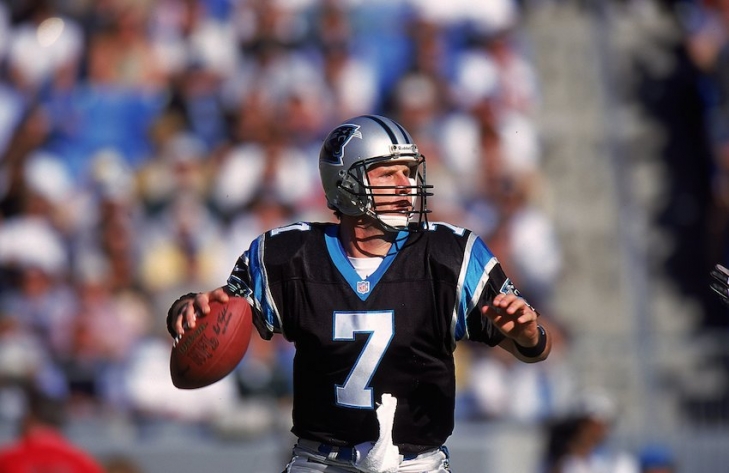
After playing with the Raiders, Cowboys, Cardinals, and Jaguars early in his career, Steve Beuerlein joined Carolina as a free agent in 1996. He was initially brought in to add veteran depth, but he quickly made the most of his chances in Charlotte. Beuerlein eventually took over as the full-time starting quarterback and enjoyed the most successful period of his impressive 17-year NFL career.
Beuerlein used sharp field vision, exact touch on intermediate passes, and remained calm under pressure. Instead of scrambling, he held his ground against strong pass rushes, reliably throwing high-arcing passes to receivers like Muhsin Muhammad and Wesley Walls. His skill in reading defenses before the snap enabled him to analyze zone coverages and effectively counter blitz schemes with quick throws.
After backing up Kerry Collins for two seasons, Beuerlein assumed the full-time starting role in 1998 as Collins dealt with off-field issues. Beuerlein quickly made an impact by leading the NFL with a 63.0% completion rate.
That performance set the stage for his defining 1999 season. Beuerlein launched a powerful offensive run, leading the NFL in both completions (343) and passing yards (4,436), along with a career-best 36 touchdowns. This remarkable year earned him his first Pro Bowl selection. In 2000, he maintained his high-volume passing, with 3,730 yards and 19 touchdowns.
In April 2001, following a 7–9 season in 2000, new head coach George Seifert chose to embrace a youth movement at the position, releasing the 36-year-old veteran quarterback. Beuerlein subsequently signed with the Denver Broncos, where he served as a backup for two seasons before retiring in 2004. Upon announcing his retirement, he signed a symbolic one-day ceremonial contract with Carolina to officially retire as a Panther.
Beuerlein played 59 games (51 starts) with the Panthers (1996–2000), throwing for 12,690 yards and 86 touchdowns.
17. Jonathan Stewart
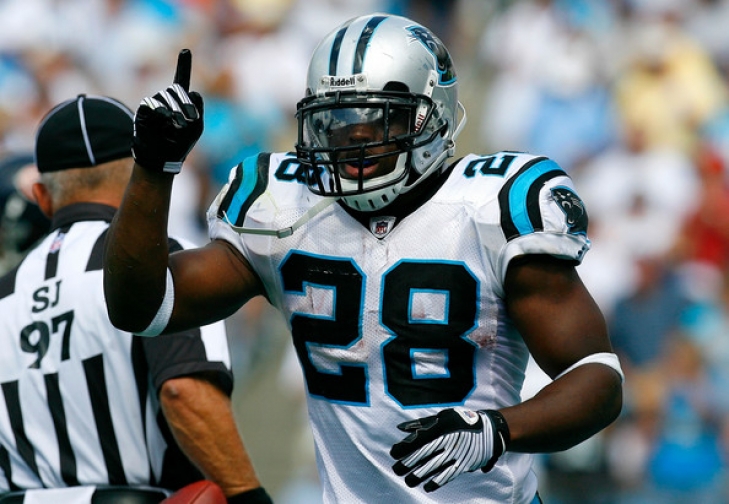
Selected 13th overall in the first round of the 2008 NFL Draft out of Oregon, Jonathan Stewart entered Charlotte as a bone-crushing, physical runner. Teaming up with DeAngelo Williams, "J-Stew" formed the smash-mouth half of Carolina's legendary "Double Trouble" backfield, giving the franchise a relentless ground attack that punished defenses for a decade.
Stewart was built like an iron bowling ball. Possessing a rare combination of lower-body power and nimble footwork, he specialized in running through arm tackles, bouncing off linebackers at the line of scrimmage, and wearing down opposing front sevens in the fourth quarter. Stewart was a master of contact balance, routinely turning potential losses into hard-fought four-yard gains and punishing defensive backs who tried to tackle him in the open field.
Stewart made an immediate impact during his rookie season in 2008, setting a franchise record for rookies with 10 rushing touchdowns and accumulating 836 rushing yards. His most outstanding individual statistical season occurred in 2009. Collaborating with Williams, Stewart achieved 1,133 rushing yards at an average of 5.1 yards per carry and scored 10 touchdowns. On December 27, 2009, in a game against the New York Giants, he delivered one of the most commanding rushing performances in the history of the franchise, rushing for 206 yards. During that season, Stewart and Williams became the first pair of teammates in NFL history to each rush for over 1,100 yards in the same year.
Whether functioning as part of a tandem or assuming the role of the primary bell-cow back during Cam Newton’s MVP period, Stewart’s rugged running style constituted the cornerstone of Carolina's offensive strategy. His contributions reached a pinnacle in 2015, when he accumulated 989 rushing yards and six touchdowns over 13 games, securing his inaugural Pro Bowl selection. He concluded that remarkable year by scoring two touchdowns in the postseason, including the opening touchdown in Super Bowl 50.
After ten bruising seasons as the heart of Carolina’s rushing attack, Stewart spent his final NFL season with the New York Giants in 2018, appearing in three games before retiring. In April 2019, he signed a one-day contract with Carolina to officially retire as a Panther.
Stewart appeared in 131 regular-season games (62 starts) with the Panthers. He departed as the franchise’s all-time leading rusher with 7,318 rushing yards and 51 rushing touchdowns, while adding 162 receptions for 1,295 receiving yards and seven touchdown catches.
14. John Kasay
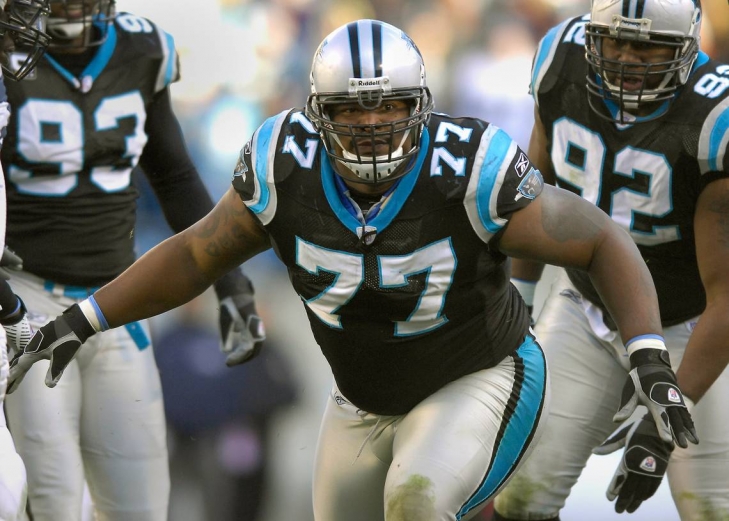
Drafted by the Seattle Seahawks in the fourth round of the 1991 NFL Draft out of Georgia, John Kasay spent four solid years in the Pacific Northwest before taking a leap in 1995. Signing as an unrestricted free agent with the expansion Carolina Panthers, the left-footed placekicker became the very first star player signed in franchise history and served as the scoring backbone of the organization for 16 seasons.
Kasay developed a lengthy career based on smooth mechanics, icy composure under pressure, and exceptional leg strength from long range. Throughout two decades of football in the Carolinas, he excelled in high-pressure situations, delivering low, powerful kickoffs and precise, rhythmic kicks on critical fourth-quarter drives. This made him one of the most dependable long-range kickers of his era.
Kasay made a remarkable impact during Carolina's 1995 expansion, scoring 26 field goals and establishing the franchise. His most outstanding individual achievement came in 1996 (not 2006), during a historic season that propelled the second-year Panthers to the NFC Championship. Kasay set an NFL single-season record at that time with 37 field goals and scored a league-high 145 points. His exceptional performance earned him his first Pro Bowl selection and Second-Team All-Pro honors.
Despite roster changes and championship campaigns, Kasay was the team's steady heartbeat. He made crucial postseason kicks in Carolina's journey to Super Bowl XXXVIII in 2003, successfully converting 9 out of 10 playoff field goals that month.
Even in his late thirties, his leg remained strong; Kasay, in 2006, made over 88% of his kicks and scored 28 field goals in 2008, contributing to Carolina's return to the playoffs.
After serving as the team's leading scorer for 16 years, Carolina released the veteran in August 2011 to make space for younger players. Kasay quickly signed with the NFC South rival New Orleans Saints for the 2011 season, where he made 28 field goals at age 42 before retiring. During his time with the Panthers, he made 351 field goals and scored a total of 1,482 points, a franchise record that remains unmatched. In 2019, he was inducted into the Panthers Hall of Honor.
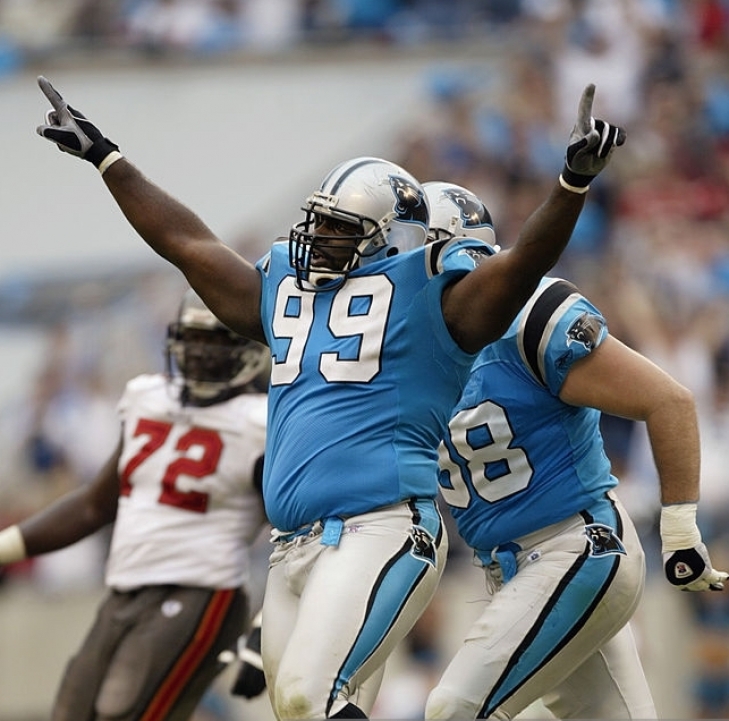
38. Brentson Buckner
27. Charles Johnson
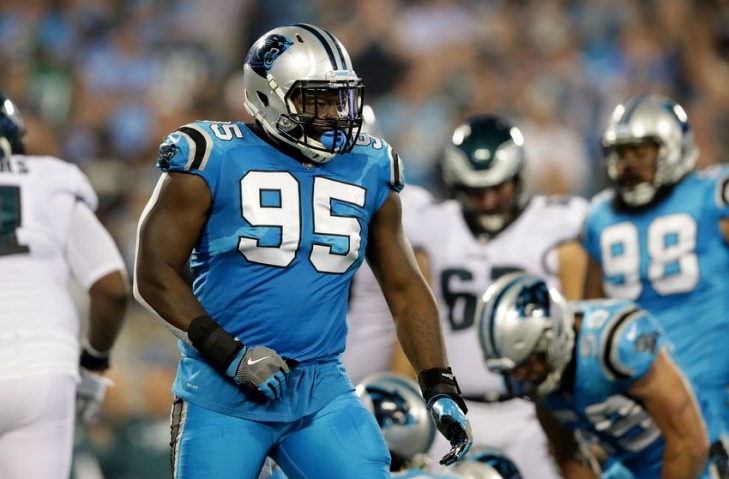
Chosen in the third round (83rd overall) of the 2007 NFL Draft out of Georgia, Charles Johnson joined the Carolina Panthers as a physical, heavy-handed defensive end. Over an 11-year career spent entirely in Charlotte, Johnson earned the nickname "Big Money" for his clutch playmaking and durable presence, becoming the cornerstone of Carolina's defensive front throughout the 2010s.
Johnson integrated formidable strength, minimal leverage, and polished hand techniques on the left flank of the defense. Instead of depending exclusively on speed, he subdued offensive tackles with a bull-rush that fragmented the pocket into the quarterback's vicinity. Equally proficient in defending the run, Johnson established a solid perimeter boundary, consistently stacking and shedding tight ends and tackles to halt ball-carriers at the line of scrimmage.
Following his tenure as a backup during his initial three seasons, Johnson emerged as a full-time starter in 2010, accumulating 11.5 sacks. This achievement secured him a significant contract extension, which he demonstrated was well justified by producing back-to-back seasons with double-digit sacks: 9.0 sacks in 2011, a career-high 12.5 sacks in 2012, and 11.0 sacks in 2013.
During Carolina's historic 15–1 season in 2015, Johnson was a key leader on the defensive unit. Although a hamstring injury restricted his participation during the regular season, he demonstrated resilience during the playoffs by successfully stripping Carson Palmer in the NFC Championship Game and delivering an outstanding performance in Super Bowl 50, where he achieved five tackles and secured a sack against the Denver Broncos.
Johnson remained a key starter and mentor through the 2017 season, passing along his veteran knowledge to younger pass rushers. Carolina released him in February 2018 and honored his long service. Johnson officially hung up his cleats as a "Lifer" who spent all 11 of his professional seasons in Western North Carolina. At the time of his retirement, his 67.5 sacks trailed only Julius Peppers in Panthers history. With the team, Johnson played in 143 regular-season games (114 starts), recording 305 tackles, 67.5 sacks, and 19 forced fumbles.
23. Mike Rucker
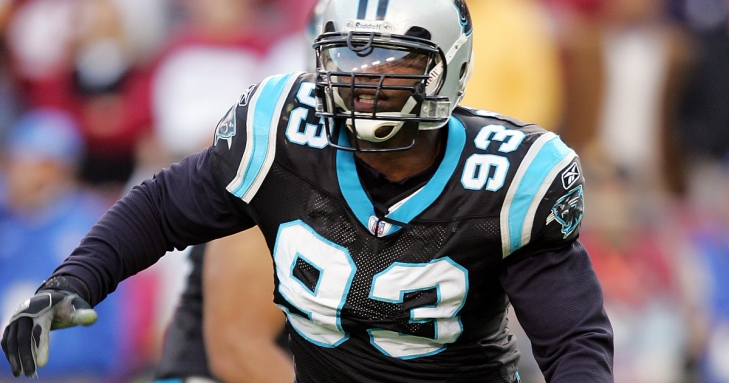
A second-round (38th overall) pick in the 1999 NFL Draft out of Nebraska—where he won two national championships—Mike Rucker joined the Carolina Panthers as a dynamic, physical edge prospect. Spending all nine of his NFL seasons in Charlotte, Rucker evolved into a fundamental anchor along Carolina's defensive front, forging a reputation as one of the most productive pass rushers in franchise history.
Rucker paired a typical size with powerful hands and relentless motor on the right side of the line. Known for his skill in collapsing the pocket during passing plays, he combined a fierce bull-rush with precise hand techniques to shed blocks swiftly. Rucker was also tough against the run, establishing a solid edge that let linebackers pursue the ball-carrier without obstacle.
After serving as a rotational contributor in his initial two seasons, Rucker became a starter in 2001 and quickly led Carolina with 9.0 sacks. This marked the beginning of a dominant period alongside fellow defensive end Julius Peppers. In 2002, Rucker achieved 10.0 sacks and four forced fumbles, establishing himself as a crucial force on the defensive line.
In 2003, Rucker achieved the peak of his career with a standout season that earned him a Pro Bowl invite and the NFL Alumni Defensive Lineman of the Year award. He recorded a personal best of 12.0 sacks and was named NFL Defensive Player of the Month in September, playing a key role in a formidable Panthers defense that advanced to Super Bowl XXXVIII. Over the following four years, he remained a key starter, adding another 7.5 sacks in 2005 as Carolina reached the NFC Championship Game.
Following the 2007 season, Rucker announced his retirement from professional football in April 2008. He played in 139 regular-season games (106 starts), compiling 422 combined tackles, 55.5 sacks, and 15 forced fumbles.
18. Jon Beason
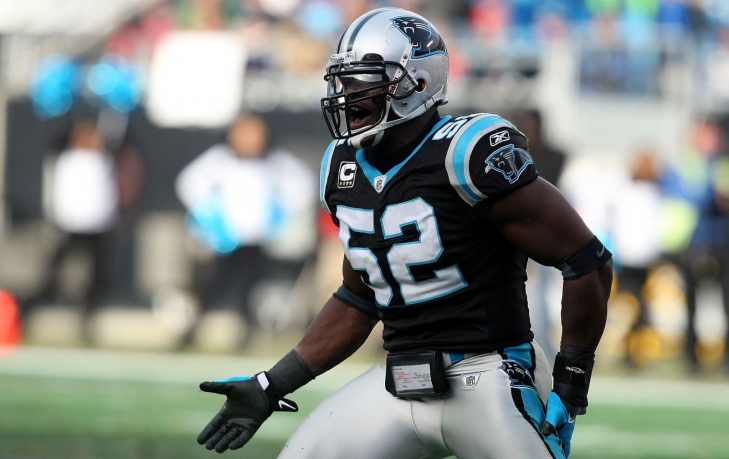
Taken 25th overall in the first round of the 2007 NFL Draft out of Miami, Jon Beason made his presence felt immediately with the Panthers. Stepping straight into the middle linebacker role as a rookie, Beason established himself as an elite, sideline-to-sideline tackling machine and the heart of Carolina’s defense.
Beason possessed baseline speed, diagnostic instincts, and explosive closing power. Operating as the primary defensive play-caller in the heart of the front seven, he excelled at sifting through trash at the line of scrimmage, reading running back keys instantly, and dropping seamlessly into intermediate coverage to challenge passing lanes.
Beason hit the ground running in 2007, recording 140 total tackles and finishing as the runner-up for NFL Defensive Rookie of the Year. His sophomore campaign in 2008 was nothing short of brilliant. Leading the entire NFL with 110 solo tackles (138 combined), Beason earned his first Pro Bowl selection and was named a First-Team All-Pro.
That standout performance launched a three-year streak of excellence at middle linebacker. Beason made his second Pro Bowl and earned Second-Team All-Pro recognition in 2009, highlighting a season with 141 tackles and 3.0 sacks. In 2010, he secured his third straight Pro Bowl, recording 121 tackles and adapting to different positions effortlessly. During his first four NFL seasons, Beason started all 64 games and averaged more than 134 tackles annually.
Severe injuries significantly changed his career path just as he reached his peak. In Week 1 of the 2011 season, Beason tore his Achilles tendon, which allowed him to play only one game. Additionally, knee and shoulder injuries cut short his 2012 season after only four games, during which rookie Luke Kuechly assumed the role of middle linebacker.
With Kuechly entrenching himself at the position, Carolina traded Beason to the New York Giants midway through the 2013 season. He revitalized New York’s defense upon arrival, recording 93 tackles in 12 games for the Giants that year before injuries eventually forced his retirement after 2015. In Carolina, Beason played in 72 regular-season games (71 starts), amassing 583 total tackles (444 solo), 4.0 sacks, 32 tackles for loss, and nine interceptions.
15. DeAngelo Williams
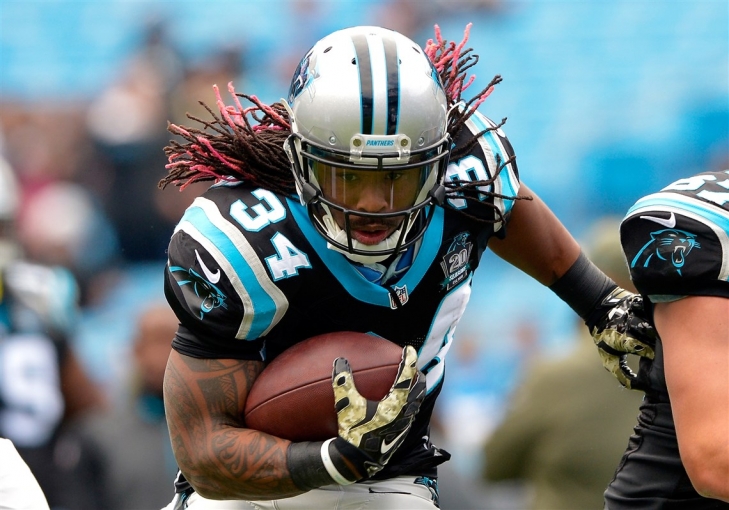
With the 27th overall pick in the first round of the 2006 NFL Draft, DeAngelo Williams arrived in Charlotte as an explosive, home-run-hitting playmaker. Pairing with heavy-hitting rookie Jonathan Stewart in 2008, Williams anchored the backfield half of Carolina's famous "Double Trouble" duo—one of the most lethal two-headed backfield tandems in modern pro football history.
Williams had exceptional acceleration, a low center of gravity for contact balance, and a powerful second gear on the open field. Playing in John Fox's run-focused system, he excelled at setting up blocks on zone stretches before swiftly cutting back into the secondary. Once past the initial tackles, Williams seldom got caught from behind, often turning what looked like simple gap plays into long touchdown runs.
Williams continued his initial two-year development, but his performance truly skyrocketed in 2008, establishing himself as a superstar. With exceptional efficiency, he totaled a franchise-high 1,515 rushing yards, averaged 5.5 yards per carry, and led the NFL with 18 rushing touchdowns. Despite having one of the best seasons ever by a running back that year, he was surprisingly omitted from the Pro Bowl but was later recognized as a Second-Team All-Pro to correct the mistake.
He demonstrated that his breakout season in 2009 was no coincidence. Sharing duties with Stewart in a historic backfield—the first in NFL history to have two 1,100-yard rushers in a single season—Williams accumulated 1,117 yards and scored seven touchdowns over 13 games. This achievement earned him his first Pro Bowl selection, a well-deserved recognition.
Although injuries and shared backfield duties prevented him from reaching 1,000 yards again in Charlotte, Williams stayed a consistent part of the Panthers' offense through 2014. He was a reliable veteran presence, frequently making significant plays during crucial moments, especially after Cam Newton's arrival.
Following nine seasons with the Carolina Panthers, the veteran running back was released in March 2015. Williams subsequently signed with the Pittsburgh Steelers, where he experienced a resurgence in his career by stepping in during Le'Veon Bell's absences—culminating in tying the NFL lead with 11 rushing touchdowns in 2015—before retiring after the 2016 season. During his tenure with the Panthers, Williams participated in 117 regular-season games (starting 62), amassing 6,846 rushing yards and 46 rushing touchdowns. Additionally, he recorded 1,621 receiving yards and seven receiving touchdowns. His total of 8,467 yards from scrimmage and 53 touchdowns ranks among the highest in franchise history at the time of his departure.
44. Graham Gano
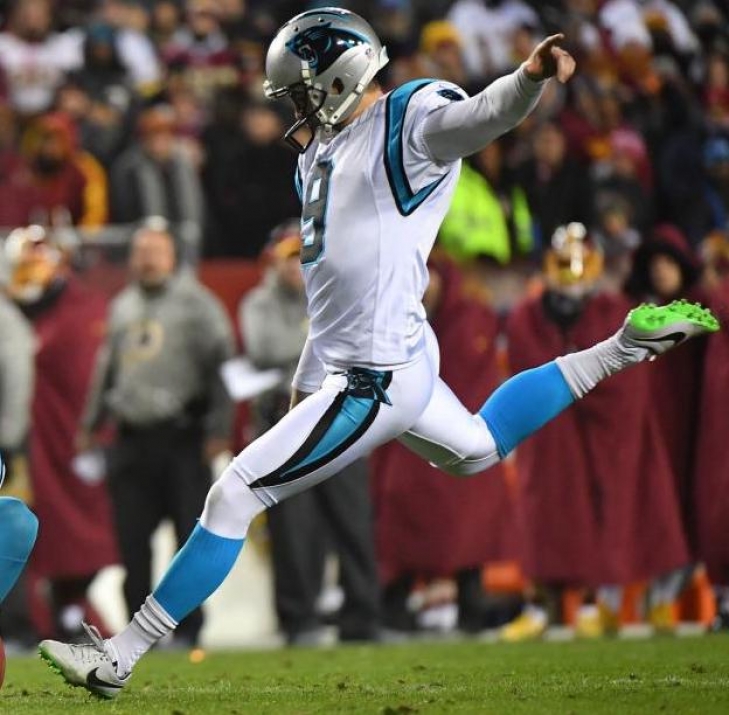
Signed midway through the 2012 season after being released by Washington in favor of Billy Cundiff, Graham Gano quickly turned a midseason tryout into an eight-year run as one of the most reliable and powerful placekickers in Carolina Panthers history.
Gano took over the kicking duties in Charlotte in Week 10 of 2012 and immediately gave the Panthers a weapon with elite leg strength. Beyond his high touchback percentage on kickoffs, he routinely delivered in high-pressure situations. In 2015, Gano set a Panthers single-season franchise record with 146 total points scored, helping power Carolina to a 15–1 record and an NFC Championship.
His best year came in 2017, when he earned his first career Pro Bowl selection after connecting on 29 of 30 field goals. His 96.7% field goal percentage led the entire NFL, setting a single-season franchise record for accuracy. The following year in 2018, Gano etched his name into team lore by drilling a game-winning 63-yard field goal as time expired against the New York Giants, tying the second-longest field goal in NFL history at the time.
A fractured leg ended his 2018 campaign early, and after spending the entire 2019 season on injured reserve, Gano was released in March 2020 before signing with the Giants.
With the Panthers, Gano converted 165 field goals and 247 extra points. He remains second all-time in Panthers franchise history in points scored with 742, trailing only John Kasay.
47. Charles Godfrey
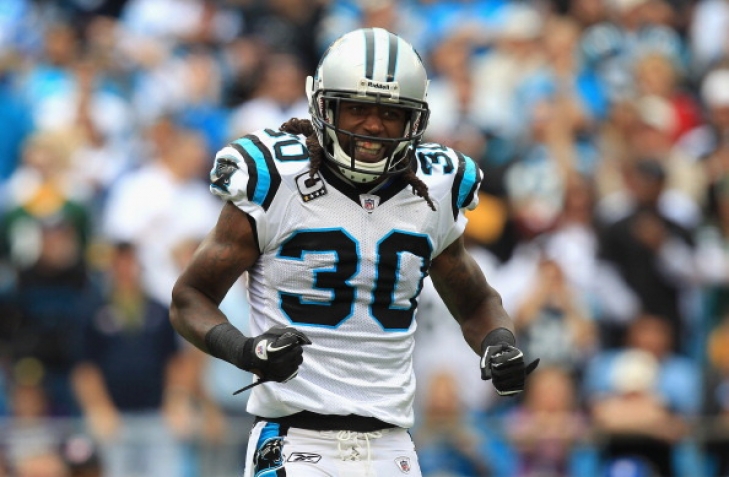
Drafted in the third round (67th overall) of the 2008 NFL Draft out of Iowa, Charles Godfrey made an immediate jump into Carolina’s secondary. A converted college cornerback with striking closing speed and tackling power, Godfrey stepped straight into the starting lineup as a rookie and anchored the back end of the defense across seven seasons in Charlotte.
Godfrey spent his first two years at free safety before shifting to strong safety in 2010. That position switch unlocked the best football of his career. Reading quarterbacks efficiently and playing downhill, Godfrey produced a breakout 2010 campaign, intercepting five passes, forcing two fumbles, and racking up 84 tackles. Over the next two seasons, his range over the top and willingness to support against the run made him a steady fixture in defensive coordinator Sean McDermott's secondary.
Injury adversity struck in 2013 when Godfrey suffered an Achilles tear in Week 2, prematurely ending his season. Upon returning in 2014, the Panthers transitioned him to nickel cornerback, but he was ultimately released midseason in October 2014. He subsequently finished his career with the Atlanta Falcons (2014–2015).
Over his seven years in Carolina, Godfrey accumulated 384 total tackles (302 solo), 11 interceptions, 30 passes defensed, six forced fumbles, and 3.0 sacks.
40. Will Witherspoon
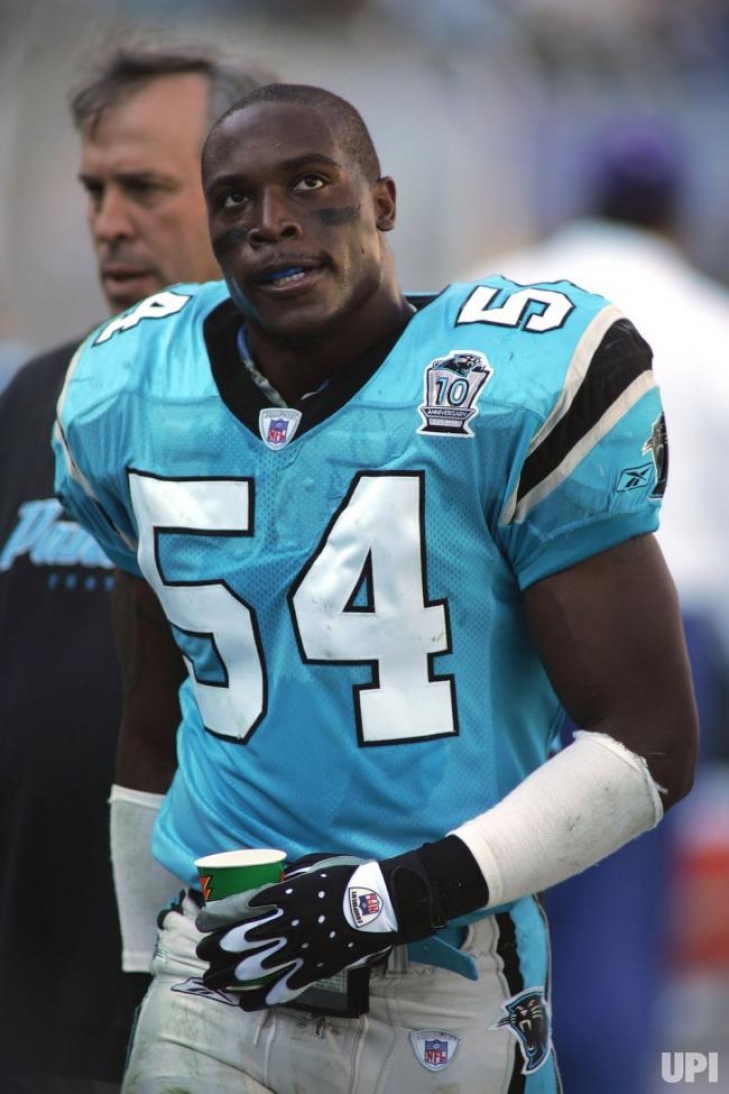
After he was chosen in the third round (73rd overall) of the 2002 NFL Draft out of Georgia, Will Witherspoon stepped straight into the middle of Carolina's defense during John Fox’s first season as head coach. Taking over the starting middle linebacker role as a rookie, Witherspoon provided an athletic, high-IQ presence that transformed Carolina's linebacking corps.
Witherspoon brought secondary-like lateral agility and explosive closing speed to the second level. Operating as the middle linebacker before shifting to weakside linebacker, his defining strength was his range—sliding through traffic to blow up perimeter runs and dropping into intermediate passing lanes to swallow up tight ends and running backs in coverage.
Witherspoon blossomed in his second season (2003), serving as a cornerstone of a Carolina defense that ranked second overall in the NFL. Starting all 16 games, he racked up 100 total tackles (73 solo), 1.5 sacks, and two interceptions. His dynamic play alongside Dan Morgan and Mark Fields helped power the Panthers through the playoffs, culminating in the franchise's first Super Bowl appearance, Super Bowl XXXVIII.
Witherspoon elevated his production even higher over his next two seasons in Charlotte. In 2004, he led the team with a career-high 104 total tackles while adding 3.0 sacks, four forced fumbles, and two interceptions. He backed that up in 2005 with 81 tackles, 2.5 sacks, and two interceptions across 15 starts, helping guide Carolina back to the NFC Championship Game.
After the 2005 postseason, Witherspoon became a free agent and signed a multi-year deal with the Rams, later playing for the Eagles and Titans before ending his 12-year NFL career. In four seasons with the Panthers (2002–2005), he played in 60 regular-season games (55 starts) and seven playoff games, recording 354 tackles (259 solo), 8.0 sacks, six interceptions, 28 passes defensed, six forced fumbles, and three recoveries.
37. Andrew Norwell
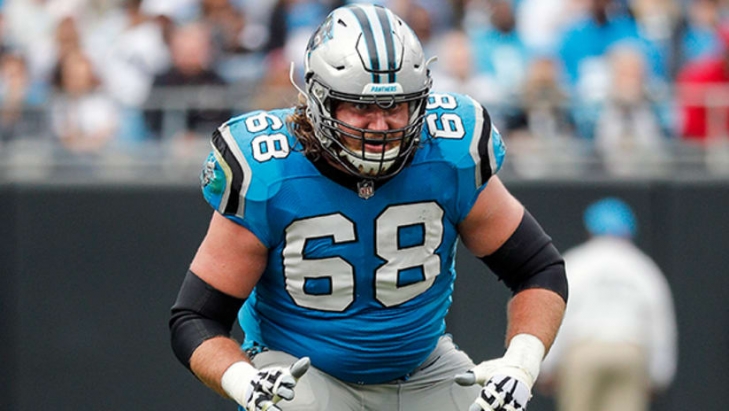
Undrafted in the 2014 NFL Draft out of Ohio State, Andrew Norwell signed with the Carolina Panthers as a long-shot prospect and transformed himself into one of the premier interior offensive linemen in the league. Stepping into the lineup midway through his rookie year, Norwell locked down the starting left guard position and provided physical, clean protection for Cam Newton across four seasons in Charlotte.
Norwell used his elite core strength, wide leverage, and excellent hand technique. Playing mainly at left guard, his standout trait on tape was his pass-blocking balance—he seldom let interior pressure reach the quarterback, consistently holding his blocks against strong nose tackles and adding a fierce edge to Carolina’s downhill run game.
After claiming the starting spot in Week 7 of his 2014 rookie campaign (nine starts), Norwell solidified his presence in 2015. Starting 13 regular-season games and all three playoff contests, he anchored the interior for an offense that scored a franchise-record and NFL-leading 500 points, helping propel Carolina to a 15–1 record and an appearance in Super Bowl 50.
Norwell reached his absolute peak in 2017. Playing every single offensive snap over 16 games, he did not allow a single sack or quarterback hit all season long. Despite surprisingly missing out on Pro Bowl selection, his utter dominance on the interior was recognized on the highest level as he earned First-Team All-Pro honors.
Following his 2017 All-Pro campaign, Norwell parlayed his elite play into a massive free-agent contract with the Jacksonville Jaguars. He later spent time with the Washington Commanders before wrapping up his nine-year NFL career. Norwell started 54 of his 55 games as a Panther.
28. Chris Gamble
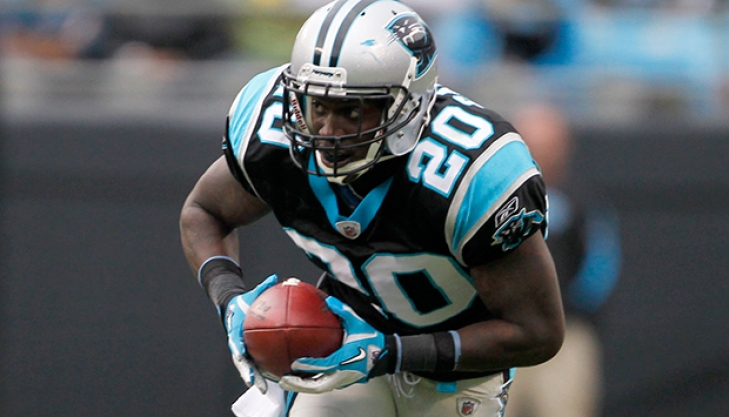
Selected 28th overall in the first round of the 2004 NFL Draft from Ohio State, Chris Gamble joined the Carolina Panthers as an athletic and versatile defensive back. Throughout his nine-season career in the NFL, Gamble remained with the Panthers, positioning himself as the steadfast cornerstone of the secondary and developing into the franchise’s most prolific performer in terms of takeaways.
Gamble exhibited elongated arms, expressive hips, and hands reminiscent of a receiver, developed throughout his dual-role collegiate career as a Buckeye. Serving as Carolina’s principal perimeter cornerback, he concentrated on press-man and tight zone coverage, employing meticulous footwork to shadow speed receivers along the boundary. His gentle hands and innate instincts enabled him to deceive opposing quarterbacks, converting narrow passing opportunities into immediate turnovers.
Gamble made an immediate impact during his rookie season in 2004, starting all 16 games and intercepting 6 passes—achievements that earned him PFWA All-Rookie Team recognition and ranked him among the league leaders in interceptions. He elevated his performance further in 2005, recording a career-high 7 interceptions and returning one for 61 yards for a touchdown, thereby contributing significantly to the Panthers' advancement to the NFC Championship Game.
Throughout the subsequent seven seasons, Gamble maintained his position as the quintessential reliable presence on the periphery. He achieved multiple-interception campaigns in six distinct seasons and consistently ranked among the leading defensive backs in passes defended, regularly neutralizing the opponent's primary target. His accumulation of 27 career interceptions surpassed that of Eric Davis, thereby establishing the Carolina Panthers' all-time franchise record.
After four games in 2012, a shoulder injury ended Gamble's season and placed him on injured reserve. The Panthers released him in March 2013, and he chose to retire instead of joining another team. Over his career, Gamble recorded 508 tackles, 96 pass deflections, 27 interceptions, and 2 defensive touchdowns.
