


Committee Chairman
35. Dave Dravecky
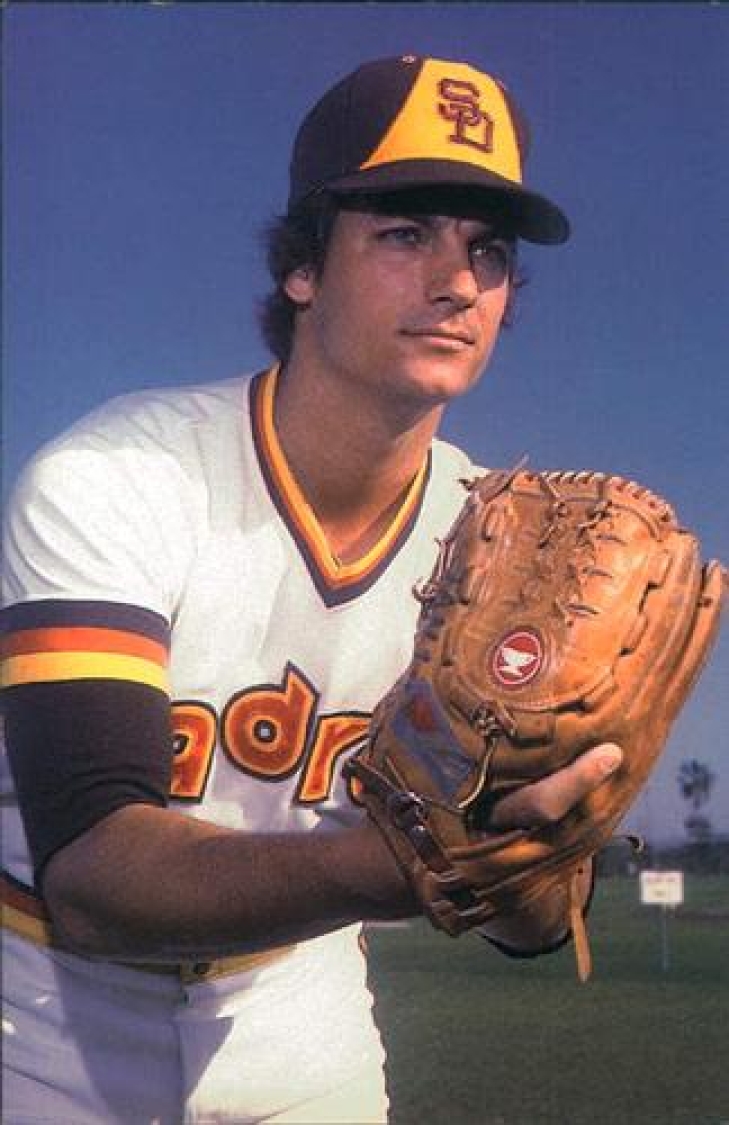
Dave Dravecky began his baseball career with San Diego in 1982, making the starting rotation during his rookie year. The southpaw was an All-Star as a sophomore, with a 14-10 year, and he followed that with back-to-back 2.93 ERA years and helped the Padres win the 1984 Pennant.
Dravecky continued to do well, but the struggling Padres traded him to the Giants. Dravecky contracted cancer in his pitching arm, eventually resulting in its amputation. Dravecky had a 53-50 Record with a 3.12 ERA with 456 Strikeouts with the Padres.
29. Fred McGriff
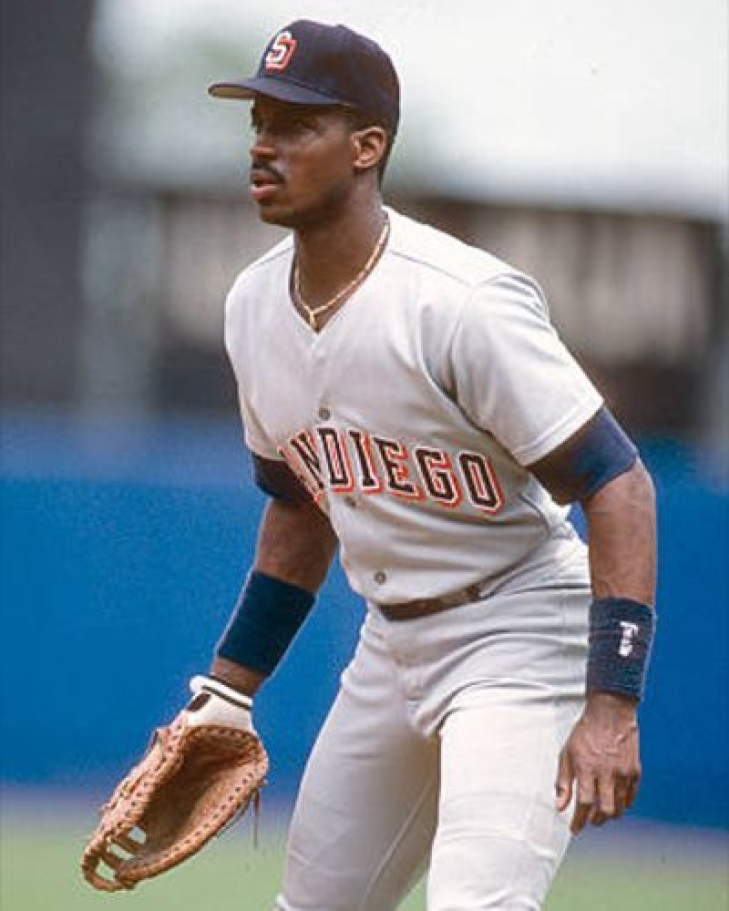
When an ambitious front office decides to shake up the competitive balance of the entire sport, they pull off a winter blockbuster that leaves fans across the country in absolute shock. The San Diego Padres executed precisely that type of franchise-altering maneuver in December 1990, trading homegrown stars Roberto Alomar and Joe Carter to Toronto to land shortstop Tony Fernández and a towering, left-handed premier slugger named Fred McGriff. Universally known as the "Crime Dog"—a classic moniker bestowed upon him by broadcaster Chris Berman—McGriff seamlessly integrated his thunderous, helicopter-follow-through stroke into the heart of the San Diego lineup, treating National League pitching to a masterclass in high-leverage destruction.
His 1991 debut season with the Padres showcased exceptional middle-of-the-order discipline and power. McGriff made run production a daily priority, finishing with 31 home runs and 106 RBIs. His remarkable efficiency was evident; he drew 105 walks, his career high, contributing to a .396 on-base percentage. He consistently controlled deep counts to tire out opposing pitchers, helping the team secure third place in the division and a tenth-place finish in the NL MVP voting.
In 1992, he delivered an outstanding performance, with 152 hits, including 30 doubles and 35 home runs, and 104 RBIs over 152 games. His impressive slash line of .286/.394/.556 resulted in a remarkable .950 OPS, setting a personal best for the veteran first baseman. This achievement earned him his first National League All-Star selection, a Silver Slugger Award, and a sixth-place finish in MVP voting. Most historically significant, his 35 home runs in 1992 earned him the National League home run crown. Because he had previously led the American League with 36 homers for Toronto back in 1989, McGriff carved out a permanent, immortal spot in the baseball history books.
Broader economic conditions prompted a sudden and bittersweet exit. By mid-1993, despite McGriff hitting 18 home runs and driving in 46 runs in 83 games, the front office was instructed to undertake a major payroll cut. The veteran star was the main focus of the notorious San Diego "fire sale," and was traded to the Atlanta Braves in July 1993 for three minor league prospects, none of whom proved successful.
As a Padre, McGriff had 382 hits, 60 doubles, and 254 runs batted in, alongside exactly 84 home runs and a powerful .519 slugging percentage in 388 games. While his stay in San Diego was brief, it helped him earn induction into the Baseball Hall of Fame in 2023.
38. Rollie Fingers
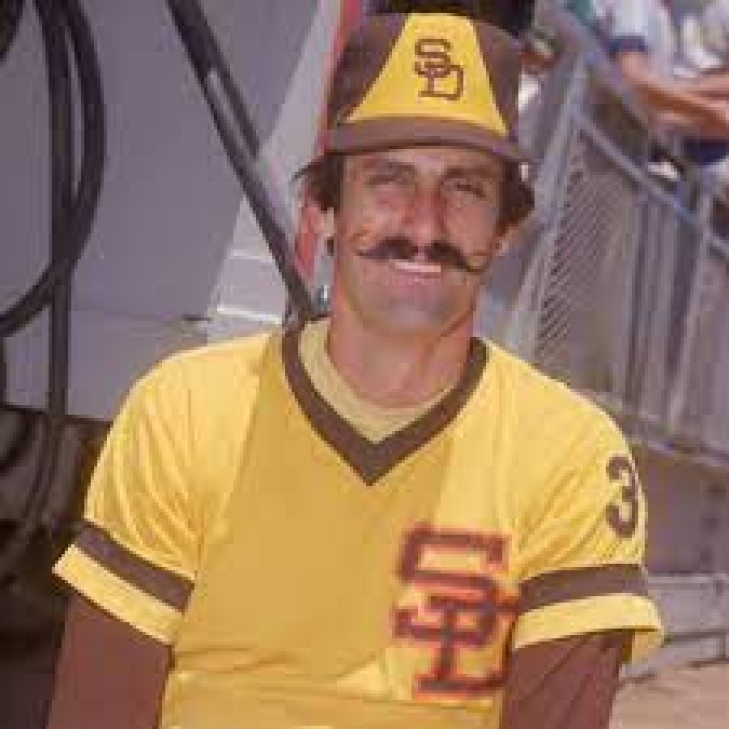
While the legendary, handlebar-mustachioed right-hander is rightfully immortalized for anchoring a historic dynasty in Northern California, many casual fans overlook the fact that he packed up his elite tools to spend four dominant summers stabilizing the early San Diego relief corps. Signed as a high-profile free agent ahead of the 1977 calendar during owner Ray Kroc’s initial wave of financial spending, Rollie Fingers did not merely fulfill his closing duties under the sun; he completely redefined the workload expectations of a senior circuit bullpen anchor.
His debut campaign as a Padre in 1977 quickly set a strong foundation of dependable performance. Fingers made tossing multiple high-pressure innings a regular part of his daily routine, breaking through the franchise's previous relief limits. He consistently shut down National League hitters across an incredible 78 appearances—entirely in relief—covering 132.1 innings to earn an impressive 35 saves, and an 8.1 overall pitching bWAR, helping him earn his first National League Rolaids Reliever of the Year Award.
He impressively followed that with an even more remarkable 1978 season. During that summer, Fingers was like an artist, delivering perfect closing performances by setting a single-season National League record with 37 saves. He also maintained a tiny 2.52 ERA over 107.1 innings, contributing greatly to teammate Gaylord Perry's incredible Cy Young achievement. More than just his save numbers, it was his impressive endurance and relentless effort that made his profile stand out in a detailed analysis. Unlike today's typical three-out specialists, he excelled in tough, multi-inning relief roles.
In addition to his typical save numbers, his substantial physical presence cemented his distinctive analytical profile during a comprehensive algorithmic assessment. Unlike a modern three-out specialist, he excelled in demanding, multi-inning relief roles. In 1980, he appeared in 66 games, earned 23 saves, and led the senior circuit in games finished for the second time while playing for San Diego. He also secured his third National League Rolaids Reliever of the Year award within four years.
Fingers was traded to St. Louis after the 1980 Season and four days later to Milwaukee, where he won the Cy Young and closed out his career. Over his 265 games strictly representing the Padres, he compiled a 28–44 record alongside 108 saves, with a 3.12 ERA and 319 strikeouts over 430.0 innings.
The Baseball Hall of Fame called his name in 1992.
34. Ozzie Smith
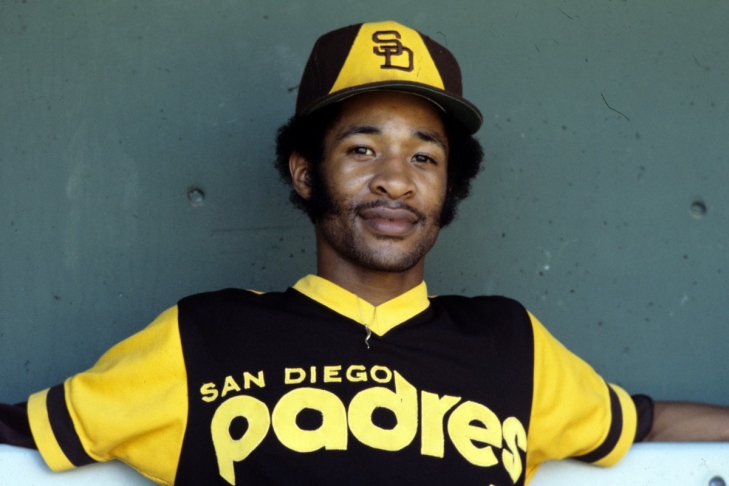
When we look at baseball history over the long haul, it’s easy to fall into the trap of hindsight bias, viewing a legend's career only through the lens of their ultimate success. Many fans forget that Osborne Earl Smith originally flourished on the lush fields of Southern California. Drafted by the San Diego Padres in 1977, this exceptionally agile shortstop didn’t need years in the minors; he jumped straight onto the major league stage, showcasing a uniquely daring and acrobatic style of infield defense. However, reflecting on his career honestly means acknowledging both sides—during his impactful but brief four-year stint in San Diego, he was a figure of both admiration and debate. While his incredible display of athleticism delighted local fans, his inconsistent and low-efficiency batting caused significant concern within the front office, ultimately leading to a historic trade that the organization would regret for many years.
His impressive debut in 1978 truly stands out as a remarkable highlight in his local history. Smith transformed aggressive contact and base running into powerful tools, hitting an admirable .258, stealing 40 bases, and even executing his signature pre-game backflip to finish as the near runner-up for the National League Rookie of the Year award. He consistently dominated opposing running attempts, leading all National League shortstops with a record-breaking 621 assists in 1980, and earning back-to-back Gold Glove Awards in 1980 and 1981. Modern analytics strongly support his outstanding defensive skills during this peak period; he led the entire league with a fantastic 3.8 defensive bWAR in 1980, proving he was an elite defender even before turning twenty-six.
To be fair, when considering his place on the franchise leaderboard, we need to acknowledge the significant offensive leaks that greatly impact his local ranking. After his rookie season, his hitting performance sharply declined, becoming a real challenge. Smith's batting average fell to a disappointing .211 in 1979—famously beginning the summer with an tough 0-for-32 streak—before posting fairly unimpressive numbers of .230 in 1980 and .222 in 1981. Over his 583 games for San Diego, he maintained a challenging .231 batting average, along with a low on-base percentage (.295) and a relatively insignificant .278 slugging percentage.
Management was deeply concerned about the idea that the light-hitting shortstop might never be able to handle the rigors of major-league pitching over time. This worry grew more intense, leading to a sense of desperation for a better player. Things reached a boiling point during a very heated and public contract dispute after the 1981 season. During this tense period, his agent famously placed a newspaper ad, seeking other opportunities for his client. With their relationship completely broken, the team decided to part ways in December 1981. They made a bold move by trading the young shortstop to the St. Louis Cardinals in exchange for Garry Templeton, marking a significant change for both teams.
The Padres thought they were selling high on a one-dimensional hitter; however, Cardinals manager Whitey Herzog unlocked Smith's offensive potential, helping him adjust his swing. Smith amassed over 2,400 career hits, becoming a top leadoff hitter and winning a 1982 world title. He left the Padres with 516 hits, 64 doubles, and 147 stolen bases, primarily known for his early defensive prowess.
While his eventual walk toward the Cooperstown rafters in 2002 features a St. Louis cap on his plaque, the foundational brilliance of "The Wizard" was undeniably forged right on the San Diego infield.
