Site Admin
8. Ian Kinsler
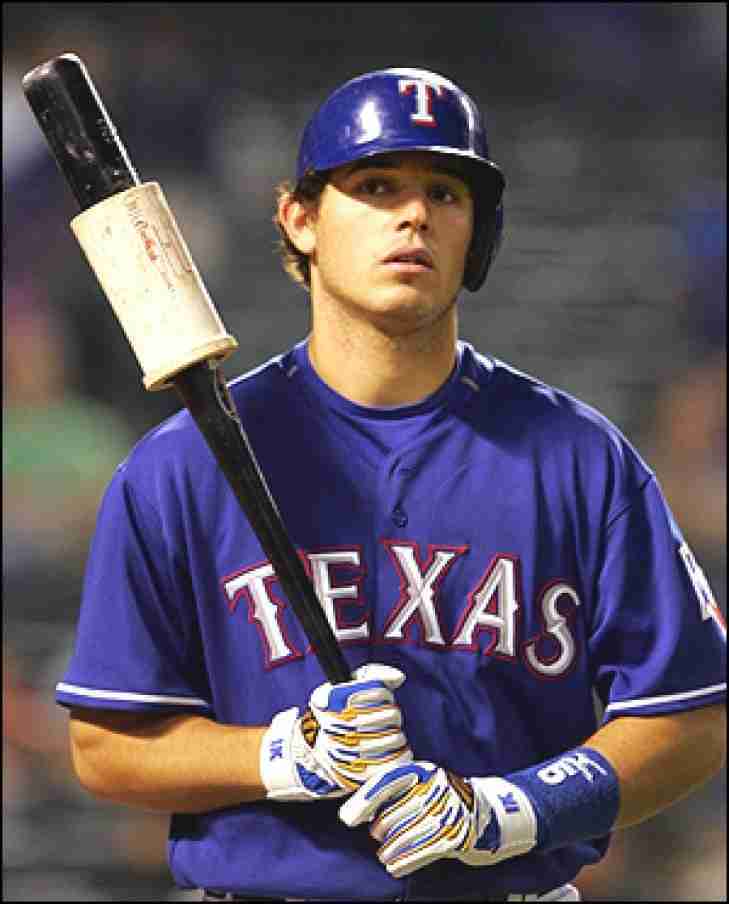
The ascent of Ian Kinsler from a 17th-round draft pick in 2003 to the influential catalyst of the most illustrious period in Texas Rangers history exemplifies his unwavering competitive drive. Upon debuting in Major League Baseball in 2006, Kinsler promptly secured the starting second baseman position, succeeding Alfonso Soriano and infusing a vigorous, high-energy presence into the Arlington infield. He swiftly demonstrated his impact, establishing himself as a foundational member of a young, rising core aimed at significantly transforming the franchise’s competitive stature.
Kinsler’s defining characteristic was his ability to excel at everything, avoiding the pitfalls of a one-dimensional profile. He paired a fundamentally sound, high-coverage glove at second base with rare, explosive pop for a middle infielder. Standing wide open at the plate and aggressively looking to launch, he became the most prolific leadoff threat in club history, setting franchise records for games started and home runs from the number one slot—including a staggering 29 leadoff longballs that instantly put opposing pitchers on their heels.
That unique power-speed combination culminated in historic statistical peaks during the 2009 and 2011 campaigns. Kinsler joined the ultra-exclusive 30-30 club in both seasons, demonstrating an exceptionally advanced understanding of base-stealing efficiency alongside his 30-home run performance. His 2009 season also featured a legendary single-day masterclass on Jackie Robinson Day, when he went a perfect 6-for-6 at the plate and hit for the cycle, thereby establishing his reputation as a player capable of dominating a baseball game.
While his high-intent swing left him prone to stretches of elevated strikeouts, his overall value remained remarkably stable throughout his seven-year run in Arlington. From 2006 through 2012, Kinsler collected 1,145 hits, 156 home runs, and a sharp .273 batting average. He wasn't just a regular-season compiler; he was the emotional sparkplug for the back-to-back American League pennant-winning squads of 2010 and 2011, bringing a fierce, borderline-arrogant confidence that defined those historic World Series teams.
Defensively, Kinsler provided a remarkably steady hand, routinely placing near the top of the league in range factor and total putouts. He worked seamlessly alongside shortstop Elvis Andrus to lock down the middle of the diamond, ensuring that a sophisticated Rangers pitching staff had a premium safety net behind them. Though he would later move on to Detroit and eventually capture an elusive World Series championship ring with the Boston Red Sox in 2018, his absolute physical prime and baseline identity were forged in the Texas heat.
In 2022, Kinsler received the ultimate franchise honor when he was inducted into the franchise Hall of Fame.
9. Alex Rodriguez
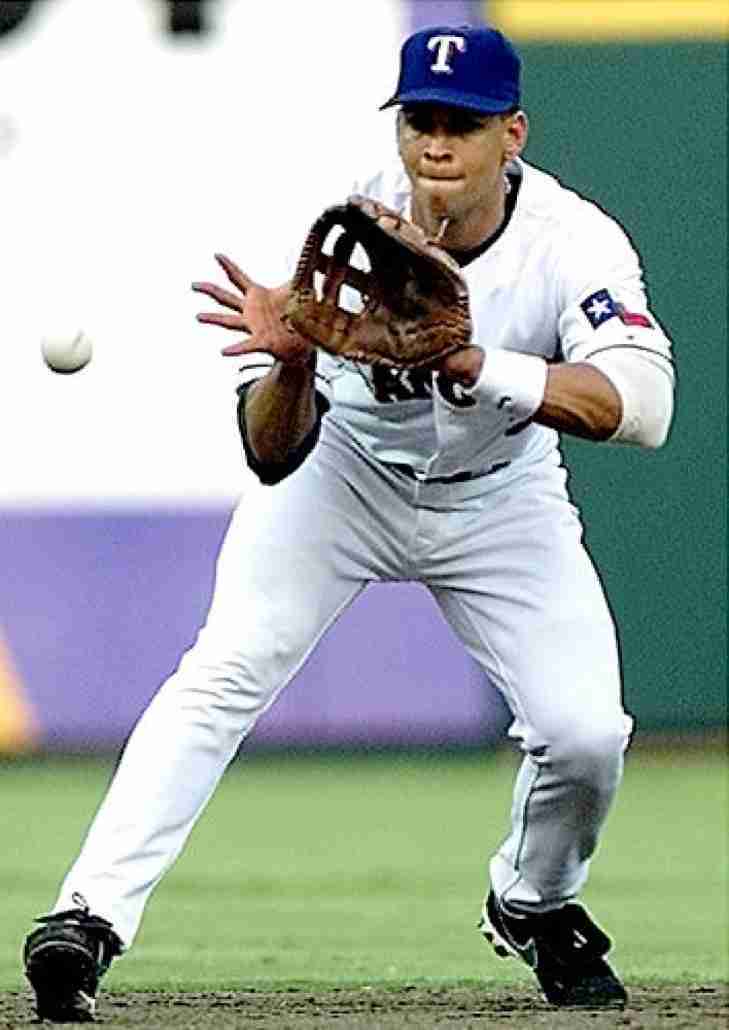
The decade-long, $250 million contract that brought Alex Rodriguez to Arlington before the 2001 season remains one of the most controversial moments in sports. It significantly limited the Texas Rangers' financial freedom. Although the front office failed to create a winning team around him, Rodriguez's three-year period of individual excellence ranks among the best in baseball history. From the moment he took the field as Texas's shortstop, he played at a level far above his peers, turning the Ballpark in Arlington into his own personal launching pad.
Rodriguez was a statistical powerhouse, excelling with elite shortstop defense and extraordinary power. During his three seasons, he led the American League in home runs, hitting 52 in 2001, an impressive 57 in 2002, and 47 in 2003. He also earned three consecutive Silver Slugger Awards, two Gold Gloves, and secured the AL home run and RBI titles, making his spot in the lineup a daunting challenge for opposing pitchers.
The extent of his offensive impact was emphasized by his remarkable consistency in producing extra-base hits. Ironically, the 2003 season—the year he officially received his inaugural American League Most Valuable Player Award—recorded his lowest slugging percentage as a Ranger at an exceptionally high .600. His capacity to sustain this level of offensive production while occupying the most challenging position on the infield set a precedent for the value of positional scarcity, fundamentally challenging contemporary sabermetric projection models.
The relationship reached an unavoidable breaking point following his 2003 Most Valuable Player (MVP) campaign, as the front office publicly acknowledged their inability to continue subsidizing his contractual obligations while maintaining a competitive roster. Subsequently, a highly publicized and dramatic winter saga unfolded; an initial blockbuster trade to the Boston Red Sox spectacularly collapsed when the players' union declined to permit Rodriguez to accept a voluntary salary reduction to facilitate the transfer. Motivated by an off-season injury sustained by Aaron Boone, the rival New York Yankees swiftly capitalized on the opportunity, finalizing a historic transaction in February 2004 that sent second baseman Alfonso Soriano and prospect Joaquín Arias to Texas, with the Rangers compelled to absorb a substantial $67 million of the remaining salary to secure financial relief.
Across his 485 games in Texas, Rodriguez accumulated a staggering 25.5 bWAR, meaning he essentially operated at an average of an 8.5-win player per season. He departed Texas with 569 hits, 156 home runs, and a blistering .305 batting average.
300. Lena Petermann
299. Thaisa Menesez