


Committee Chairman
Our All Time Top Cincinnati Bengals have been revised to reflect the 2025 season
Yes, we know that this is taking a while!
As many of you know, we at Notinhalloffame.com are slowly generating the top 50 of each major North American sports team. That being said, we maintain and update our existing Top 50 lists annually. We are pleased to present our pre-2026 revision of our top 50 Cincinnati Bengals.
As for all of our top 50 players in football, we look at the following:
1. Duration and Impact.
2. Traditional statistics and how they finished in the National Football League.
3. Advanced Statistics.
4. Playoff performance.
5. Their respective legacy on the team.
6. How successful the team was when he was there.
7. Respecting the era in which they played.
Criteria 1-4 will make up the lion’s share of the algorithm. Please note that we have implemented this for the first time. This has changed the rankings all throughout the board.
Last year, the Bengals had a rough year, dealing with copious injuries and limped their way to a 6-11 record. Two significant elevations and no new entries appeared on the list.
As always, we present our top five, which saw no changes.
1. Anthony Munoz
2. Ken Anderson
3. Geno Atkins
4. Ken Riley
5. Boomer Esiason
You can find the complete list here:
Wide Receiver Ja’Marr Chase, who is coming off his second straight First Team All-Pro, rocketed from #25 to #11.
Notably, Quarterback Joe Burrow, who was injured for much of the season, held at #19.
Defensive End Trey Hendrickson, who is now with the Baltimore Ravens, has moved up one spot to #25.
Wide Receiver Tee Higgins, who went to his first Pro Bowl last year, vaulted to #36 from #45.
We thank you for your continued support of our lists on Notinhalloffame.com.
Our All Time Top 50 Carolina Panthers have been revised to reflect the 2026 Season
Yes, we know that this is taking a while!
As many of you know, we at Notinhalloffame.com are slowly generating the top 50 of each major North American sports team. That being said, we maintain and update our existing Top 50 lists annually. We are pleased to present our pre-2026 revision of our top 50 Carolina Panthers.
As for all of our top 50 players in football, we look at the following:
1. Duration and Impact.
2. Traditional statistics and how they finished in the National Football League.
3. Advanced Statistics.
4. Playoff performance.
5. Their respective legacy on the team.
6. How successful the team was when he was there.
7. Respecting the era in which they played.
Criteria 1-4 will make up the lion’s share of the algorithm. Please note that we have implemented this for the first time. This has changed the rankings all throughout the board.
Last year, the Panthers had a losing record (8-9), but still won the NFC South, thus making the playoffs. There was one new entrant and two elevations based on last season.
As always, we present our top five, which saw no changes.
1. Luke Kuechly
2. Steve Smith
3. Cam Newton
4. Julius Peppers
5. Ryan Kalil
You can find the complete list here:
Offensive Tackle Taylor Moton moved from #26 to #22.
Defensive Lineman Derrick Brown climbed to #34 from #43.
Wide Receiver Jaycee Horn makes his debut at #48.
We thank you for your continued support of our lists on Notinhalloffame.com.
Our All Time Top 50 Buffalo Bills have been revised to reflect the 2025 Season
Yes, we know that this is taking a while!
As many of you know, we at Notinhalloffame.com are slowly generating the top 50 of each major North American sports team. That being said, we maintain and update our existing Top 50 lists annually. We are pleased to present our pre-2026 revision of our top 50 Buffalo Bills.
As for all of our top 50 players in football, we look at the following:
1. Duration and Impact.
2. Traditional statistics and how they finished in the National Football League.
3. Advanced Statistics.
4. Playoff performance.
5. Their respective legacy on the team.
6. How successful the team was when he was there.
7. Respecting the era in which they played.
Criteria 1-4 will make up the lion’s share of the algorithm. Please note that we have implemented this for the first time. This has changed the rankings all throughout the board.
Last year, the Bills won 12 games and made the playoffs before falling to the Denver Broncos in the divisional round. There was one new entrant and two elevations based on last season.
As always, we present our top five, which saw a change at the top tier of the list.
1. Bruce Smith
2. Thurman Thomas
3. O.J. Simpson
4. Jim Kelly
5. Josh Allen
You can find the complete list here:
After another incredible season, in which he earned his fourth Pro Bowl and finished third in MVP voting, Allen jumped up from #10 to #5.
Left Tackle Dion Dawkins went from #28 to #18.
The lone new entrant was Linebacker Matt Milano, who debuted at #45.
Cornerback Tre’Davious White, who made a one-year return, did enough to move up from #48 to #46.
We thank you for your continued support of our lists on Notinhalloffame.com.
The Pro Football Hall of Fame Revisited Project: 1999 Final VOTE
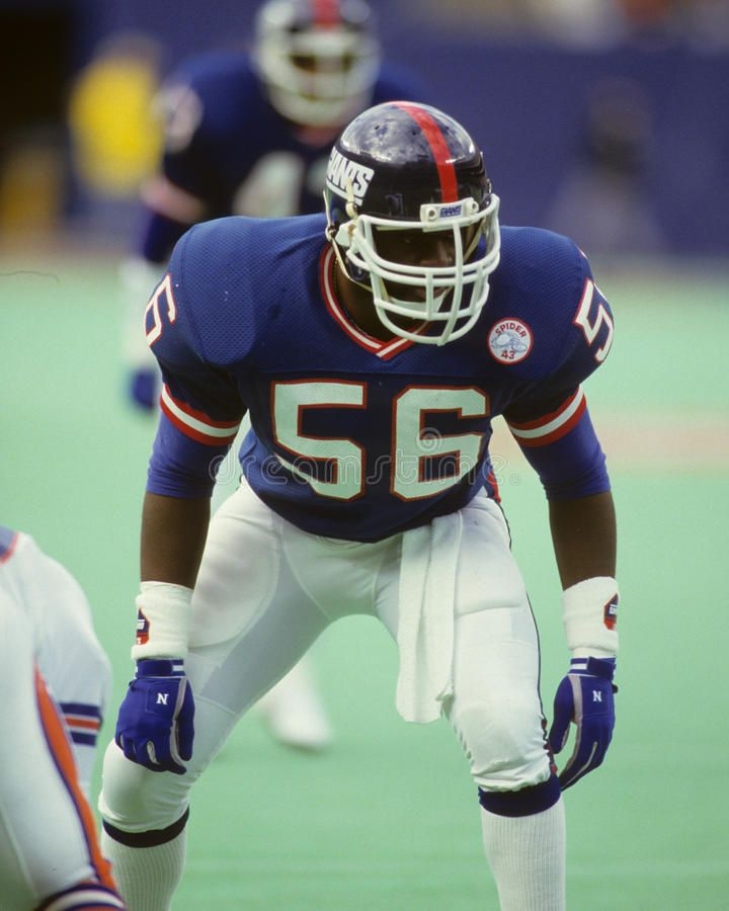
1999 Pro Football Hall of Fame Revisited Project Class.
Here we are! Again!!
If you have been following our Pro Football Hall of Fame Revisited Project, you know we have asked the question: What if the PFHOF had begun in January 1946?
After soliciting and obtaining a passionate group of football fans and historians, we sent out a ballot for a Preliminary Vote, in which each voter selected 25 names as their semi-finalists and five names for the Senior Pool.
We then asked the group to vote for their 15 Finalists in the Modern Era and 3 in the Senior Category. The final stage was to vote for their five Modern Era inductee and one Senior inductee.
This is the result of the 54th official class.
Below are the final results of this project based on 30 votes.
Remember that we have reverted back to the top five candidates entering the Hall in the Modern Era
This is for the “Modern Era”
*Bold indicates they have been elected to the Pro Football Hall of Fame Revisited Class of 1999:
|
Player |
Year of Eligibility |
Vote Total |
|
Lawrence Taylor LB |
1 |
29 |
|
Eric Dickerson RB |
1 |
21 |
|
Howie Long DE-NT |
1 |
17 |
|
Mike Munchak T |
1 |
15 |
|
Louis Wright DB |
8 |
12 |
|
L.C. Greenwood DE |
13 |
8 |
|
Ken Anderson QB |
8 |
6 |
|
Lester Hayes DB |
8 |
6 |
|
Billy “White Shoes” Johnson |
6 |
6 |
|
James Lofton WR |
1 |
6 |
|
Andre Tippett LB |
1 |
6 |
|
Cliff Harris DB |
15 |
5 |
|
Bob Griese QB |
14 |
4 |
|
Ken Stabler QB |
10 |
3 |
|
Drew Pearson WR |
11 |
2 |
|
Joe Klecko DE-NT |
6 |
2 |
This is for the “Senior Era”,
*Bold indicates they have been elected to the Pro Football Hall of Fame Revisited Class of 1999.
|
Dick Schafrath T-F-DE |
3 |
15 |
|
Alan Ameche FB |
14 |
5 |
|
Arch Ward CONTRIBUTOR |
10 |
5 |
|
Charlie Conerly QB |
13 |
2 |
|
None of the Above |
N/A |
3 |
This is for the “Coaches/Contributors”,
*Bold indicates they have been elected to the Pro Football Hall of Fame Revisited Class of 1999.
|
Bill Nunn (Scout) |
6 |
15 |
|
Ron Wolf: (Exec) |
1 |
5 |
|
Eddie Kotal (Scout) |
4 |
4 |
|
None of the Above |
N/A |
6 |
About the 1999 Inductees:
Lawrence Taylor, LB, NYG 1981-93: Inducted in the Pro Football Hall of Fame Revisited Project in 1999 on his 1st Ballot. Inducted into the actual Pro Football Hall of Fame in 1999.
There are a lot of great players who competed in the National Football League, though only a select few can be called legends. Only a few of those legends can be called game-changers. Let's meet Lawrence Taylor, one of the few who fits this description
Taylor played his entire career with the New York Giants, and his pass-rushing from the outside changed how defenses were built and how offenses had to react. He was a pioneer in chopping the ball from opponents' hands, and he became not just the face of the Giants, but defensive football. That is an icon!
L.T. was the second overall pick in 1981, and as a rookie, he won not only Defensive Rookie of the Year but also Defensive Player of the Year. This season began what was the most dominant six-year run by any Linebacker. From 1981 to 1986, Taylor was a perennial First Team All-Pro, a Pro Bowler, and never had an Approximate Value below 16. That last fact was especially incredible, considering he played only nine games in 1982, the year he won his second DPOY.
The climax of his career was 1986, when he led the NFL in Sacks with 20.5, won his third DPOY, and was also named the AP MVP, the PFWA MVP, and the Bert Bell Award. Taylor took his team to the Super Bowl, defeating the Denver Broncos. This sounds like a pretty good season, doesn’t it?
Taylor had two more First Team All-Pros after that and a second Super Bowl. Age and mileage caught up with him, and his last Pro Bowl came in 1990, but he played three more seasons, retiring in 1993. Taylor recorded 141 Sacks (132.5 official, since 1981 it wasn’t a stat yet) over his career, including a seven-year streak of double-digit numbers from 1984 to 1990.
As phenomenal as Taylor was a player, it can be argued that his drug use during his playing days hampered him from being even better. Can you imagine Taylor being even more dominant?
Eric Dickerson, RB, RAM 1983-87, IND 1987-91, RAI 1992 & ATL 1993: Inducted in the Pro Football Hall of Fame Revisited Project in 1999 on his 1st Ballot. Inducted into the actual Pro Football Hall of Fame in 1999.
Eric Dickerson made a spectacular debut in the NFL in 1983 with the Los Angeles Rams, quickly becoming one of the most formidable running backs in football history. As a rookie from SMU, his upright running style, distinctive goggles, and remarkable blend of size and speed captivated the league. He rushed for an incredible 1,808 yards and scored 18 touchdowns in his first season, earning the NFL Rookie of the Year award effortlessly. His immediate influence turned the Rams into playoff contenders instantly and set new standards for what a modern feature back could achieve.
The peak of Dickerson’s legendary career arrived just one year later, during a historic 1984 campaign that etched his name permanently into the NFL record books. Exhibiting a rare blend of fluid stride and explosive power, he terrorized opposing defenses for 16 consecutive weeks. On December 9, 1984, against the Houston Oilers, he broke O.J. Simpson's single-season rushing record. Dickerson finished the season with 2,105 rushing yards, a monumental milestone that has withstood decades of challengers and remains the gold standard for single-season rushing performances.
After a contract dispute, Dickerson was traded to the Indianapolis Colts in 1987 as part of a major three-team deal. The move initially didn't affect his performance, as he quickly energized the Colts and led them to their first playoff appearance since relocating to Indianapolis. In 1988, he became the first Colt since 1978 to win the NFL rushing title, with 1,659 yards. During his time with the Colts, he also became the fastest player in NFL history to reach 10,000 career rushing yards, accomplishing the milestone in just 91 games.
As injuries and heavy workloads took their toll, Dickerson spent his final two professional seasons with the Los Angeles Raiders and the Atlanta Falcons before retiring in 1993. Over his eleven-year career, he amassed 13,259 rushing yards, six Pro Bowl selections, and five First-Team All-Pro honors.
Howie Long, DE-NT, RAI 1981-93. Inducted in the Pro Football Hall of Fame Revisited Project in 1999 on his 1st Ballot. Inducted into the actual Pro Football Hall of Fame in 2000.
Howie Long anchored the Los Angeles Raiders' defensive line for 13 spectacular seasons, becoming one of the most feared and technically proficient defensive linemen of his era. Drafted in the second round of the 1981 NFL Draft out of Villanova, Long possessed a rare combination of explosive strength, relentless motor, and prototypical size. His versatility allowed him to dominate whether lining up as a defensive end in a 3-4 scheme or kicking inside to tackle on passing downs. His signature "rip" move and violent hands quickly made him the focal point of a ferocious Raiders defense that embodied the franchise's tough, renegade identity.
The apex of Long’s team success came in 1983, culminating in a dominant performance in Super Bowl XVIII. Throughout that championship campaign, Long was an unstoppable force, registering a career-high 13.0 sacks and earning the first of his eight Pro Bowl selections. In the Super Bowl against the heavily favored Washington Redskins, Long and the Raiders' defensive front relentlessly harassed quarterback Joe Theismann, holding Washington's high-powered offense to just 9 points in a 38-9 blowout. This definitive victory solidified Long's status as a premier superstar on football's grandest stage.
As the 1980s progressed, Long transitioned from a rising star into the veteran heartbeat of the Raiders organization. His individual brilliance earned consistent recognition from peers and talent evaluators, earning him First-Team All-Pro honors in three consecutive seasons from 1983 to 1985. He was also named the NFL Alumni Defensive Lineman of the Year twice. Long's ability to destroy opposing run games while maintaining a constant rush on the quarterback helped keep the Raiders in the postseason, bridging the gap through the franchise's transition into the early 1990s.
Injuries eventually began to slow his ironman pace, leading Long to retire after the 1993 season with 84.0 career sacks and a spot on the NFL 1980s All-Decade Team.
Mike Munchak, G, HOU, 1982-93. Inducted in the Pro Football Hall of Fame Revisited Project in 1999 on his 1st Ballot. Inducted into the actual Pro Football Hall of Fame in 2001.
Mike Munchak spent 12 seasons establishing himself as one of the most technically excellent and durable guards in NFL history. Drafted eighth overall in 1981 from Penn State, he combined exceptional lower-body strength, quick footwork, and relentless competitiveness. As a rookie, he quickly secured a starting role, providing stability and top-tier pass protection for an evolving Houston offense. His presence transformed the left side of the Oilers' line into an unbreakable barrier, raising the standard for interior blockers across the league.
In the late 1980s and early 1990s, Munchak established himself as the top offensive guard of his era, serving as a key player in Houston's renowned "Run and Shoot" offense. His exceptional agility enabled him to pull on sweep plays and make effective downfield blocks, contributing to quarterback Warren Moon's record-breaking passing game. His excellence was acknowledged through nine Pro Bowl selections and four First-Team All-Pro titles. Together with teammate Bruce Matthews, they formed perhaps the most formidable offensive guard-tackle partnership in history, guiding the Oilers to seven straight playoff berths.
Munchak’s remarkable consistency was characterized by his exceptional durability, overcoming chronic knee issues to participate in 159 regular-season games and start 156 of them. He was a master tactician who infrequently committed penalties or allowed sacks, employing leverage and precise hand placement to neutralize the league's most formidable interior pass rushers. His vigorous leadership and understated professionalism rendered him the unequivocal captain and the vital force of the locker room. Even as injuries increased towards the conclusion of his career, his distinguished performance remained unwavering, enabling him to retire at the zenith of his abilities following the 1993 season.
Louis Wright, CB, DEN 1975-86. Inducted in the Pro Football Hall of Fame Revisited Project in 1999 on his 8th Ballot. Was never inducted into the actual Pro Football Hall of Fame.
Wright anchored Denver’s defensive backfield for 12 years, establishing himself as one of the NFL's pioneering and most formidable "shutdown cornerbacks.’ Drafted 17th overall in the first round of the 1975 NFL Draft from San Jose State, he brought rare size, elite track-star speed, and exceptional toughness against the run. He quickly made a significant impact, earning All-Rookie honors, and rapidly stabilized the secondary to become the cornerstone of Denver’s renowned Orange Crush defense.
His national breakthrough came in 1977, when Wright contributed significantly to the Denver Broncos' 12–2 record and their first Super Bowl XII appearance. Throughout the late 1970s, he became a distinguished defensive player, earning three consecutive Pro Bowl selections from 1977 to 1979 and back-to-back First-Team All-Pro honors. Defensive coordinators from opposing teams routinely devised entire game strategies to circumvent passing to his side of the field, illustrating the formidable coverage capabilities that secured him a place on the NFL’s 1970s All-Decade Team.
Throughout the 1980s, Wright consistently stood out as a top playmaker and turned defensive stops into quick momentum swings. In 1983, he posted a personal best with six interceptions, and in 1984, he allowed just one touchdown pass all season. Besides his coverage skills, Wright made significant contributions on special teams and was a formidable threat when creating turnovers. His career highlights include a notable 27-yard fumble return for a touchdown during a snowstorm against Green Bay in 1984, as well as an exciting 60-yard return of a blocked field goal in overtime against San Diego in 1985.
Wright retired after the 1986 season, having guided the Broncos back to the big stage in Super Bowl XXI. Over his 12-year ironman career in Denver, he started 163 of 166 games, amassing 26 career interceptions and 11 fumble recoveries.
Dick Schafrath, T-DE, CLE 1959-71. Inducted in the Pro Football Hall of Fame Revisited Project in 1999 on his 1st Senior Ballot. Was never inducted into the actual Pro Football Hall of Fame.
Drafted in the second round (23rd overall) of the 1959 NFL Draft from Ohio State—where he served as captain of a national championship team—Dick Schafrath entered the professional arena in Cleveland as a formidable force. Throughout a 13-year career exclusively with the Browns, "The Mule" anchored left tackle with exceptional leverage and mobility, helping fuel one of football's most dominant rushing eras.
After transitioning to left tackle from defensive end in his second season, he quickly became the primary starter in 1960 and established himself as one of the league's premier offensive linemen. Throughout the 1960s, he earned four First-Team All-Pro honors (1963–1965, 1969) and was selected for seven Pro Bowls. In 1963, he was honored by his teammates with the title of Cleveland Browns' Most Valuable Player—a distinguished accolade rarely awarded to an offensive lineman.
His presence on the left side was crucial to Cleveland's historic rushing game; during his tenure, Browns running backs won eight NFL rushing titles, and Schafrath protected three future Hall of Famers: Jim Brown, Bobby Mitchell, and Leroy Kelly. His career peaked in 1964, when he anchored the offensive line in Cleveland's 27–0 victory over the Baltimore Colts to claim the 1964 NFL Championship.
Schafrath remained a dependable starter throughout the 1971 season, retiring with the team that drafted him after playing in 176 regular-season games for Cleveland.
Bill Nunn, Scout, PIT 1970-2014. Inducted in the Pro Football Hall of Fame Revisited Project in 1999 on his 6th Coach/Contributor Ballot. Inducted into the actual Pro Football Hall of Fame in 2021.
Bill Nunn revolutionized NFL personnel evaluation by opening a vital pipeline to Historically Black Colleges and Universities (HBCUs), transforming the Pittsburgh Steelers into a powerhouse. Initially a sports writer and managing editor for The Pittsburgh Courier, he developed deep relationships across southern Black colleges while compiling his annual Black College All-America team starting in 1950. Recognizing his unmatched knowledge of overlooked talent, Steelers owner Dan Rooney hired Nunn in 1968, a move that permanently reshaped professional football scouting.
His uncanny eye for talent became the driving force behind the Steelers' 1970s dynasty, which captured four Super Bowl titles in a six-year span. Nunn discovered legendary franchise cornerstones from HBCUs that other teams largely ignored, including future Hall of Fame defensive back Mel Blount and gems like safety Donnie Shell and defensive lineman L.C. Greenwood, establishing a championship core built on players other teams missed.
Nunn remained a fixture in the Steelers' front office for nearly five decades, serving as a trusted scout, advisor, and mentor until his passing in 2014. His meticulous evaluation methods became a blueprint for modern NFL personnel departments and helped bridge a significant racial gap in sports talent acquisition.
