


Committee Chairman
What are the Most Popular Sports in the United States?
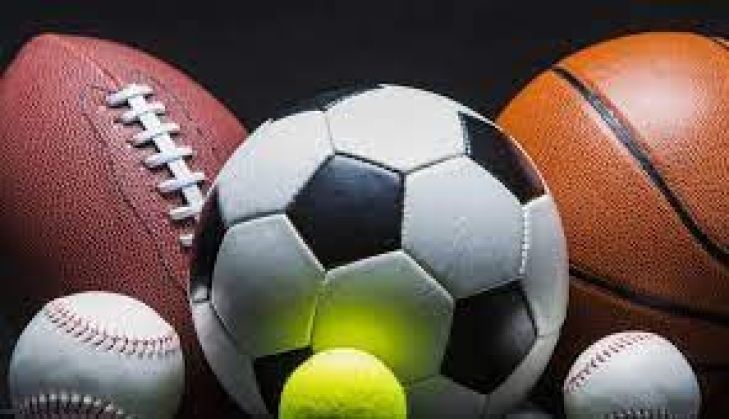
The United States is a country that houses some of the biggest sports fan bases in the entire world. Americans are huge fans of sports, with over half of all Americans proclaiming to be passionate supporters of at least one sports team. The United States, in the over 200 years of its existence, has produced some of the most popular sports in the world, but what are the most popular sports in the country?
American football
American football is one of the biggest sports in the country, and the National Football League is, by far, the biggest sports organization, being worth over 15 billion U.S. dollars. While Association football dominates the world of sports globally, in the United States, the undisputed king is American football. The sport is followed by over 40% of Americans, and college football is the most popular college sport, even exceeding the popularity of certain professional sports in the country.
American football is also the biggest betting sport in the United States, with betting shops and online betting sites reporting that their American user base is far more active during football season than any other sport’s season. If you are interested, have a look at the best sportsbooks, before you start out gambling.
Baseball
Often referred to as “America’s favorite pastime”, baseball is recognized as an American tradition, and one of the first sports created in the United States. It is not nearly as popular as American football and basketball, however, it is still one of the most popular American sports, and the MLB is the second most valuable sports organization in the United States, with an estimated worth of over ten billion dollars. The popularity of baseball, as well as the fact that it is the first sport created in the United States, has earned it the moniker “Godfather of American Sports”.
Basketball
Behind American football, Basketball is the most popular sport in the United States, and the National Basketball Association (NBA) is the world’s biggest professional basketball league. The NBA is also the third biggest sports organization in the United States, with a value exceeding eight billion dollars.
The sport is played on the professional and college level all around the country, and is becoming more and more popular with every year. Some of the biggest NBA teams in the States include the Chicago Bulls, the Los Angeles Lakers, etc.
Hockey
While not nearly as popular as it is among their northern neighbors, hockey (ice hockey specifically) is still massively popular in the United States, with the National Hockey League being the fourth biggest sports organization in the United States of America. The NHL is comprised of 32 teams, twenty-five of which are American and the remaining seven Canadian.
The United States is one of the “big six” on the international hockey stage, among Canada, Finland, Russia, the Czech Republic, and Sweden. These so-called “Big Six” are the six countries that dominate the international hockey scene.
7. Zac Gallen
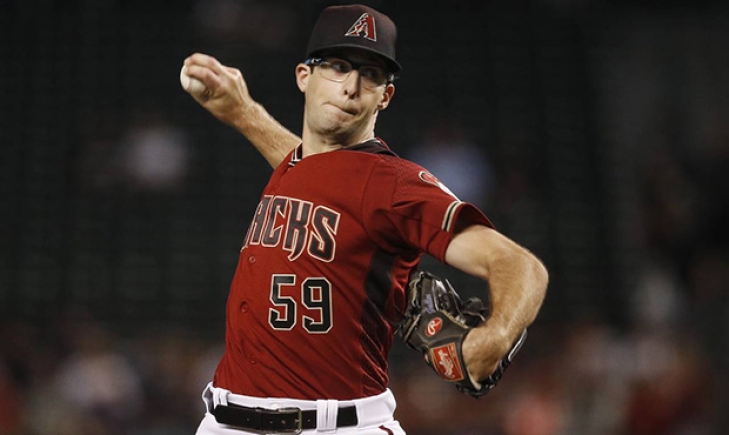
Zac Gallen came up through the St. Louis Cardinals system, but was traded to the Miami Marlins while he was still in the Minors. He would debut for Miami in June of 2019, but he was only a Marlin for seven Games before he was traded to the Diamondbacks at the Trading Deadline. Gallen finished the year 2-3 with a .289 ERA, and was cemented in the rotation going forward.
In the COVID-19-shortened 2020, Gallen was one of the top hurlers in the NL, going 3-2 with a 2.75 ERA and 1.111 WHIP. He was ninth in Cy Young voting and a bright spot for a struggling Diamondbacks team. Gallen struggled last year (4-10, 4.30 ERA), but had the skills to bounce back, and boy, did he!
Arizona was not very good in 2022, but Gallen was phenemonal, finishing fifth in Cy Young Voting, while leading the NL in WHIP (0.913) and H/9 (5.9) with 192 Strikeouts and a 12-9 record. Earning the nickname of the “Milkman” for always delivering, Gallen led the D-Backs to a shock National League Pennant win in 2023, where he went 17-9 with 220 batters going down on strikes. An All-Star, a third-place Cy Young spot, and a First Team All-MLB selection also punctuated the season.
Gallen has not reached that level since, but over the last four seasons, he has posted at least 12 Wins and 155 Strikeouts, and now has 1,060 Ks for the Diamondbacks.
With the relative brevity of the existence of the organization, a player with three top-ten Cy Young finishes earns a spot this high on a list like this.
The Pro Football Hall of Fame announces the Class of 2022
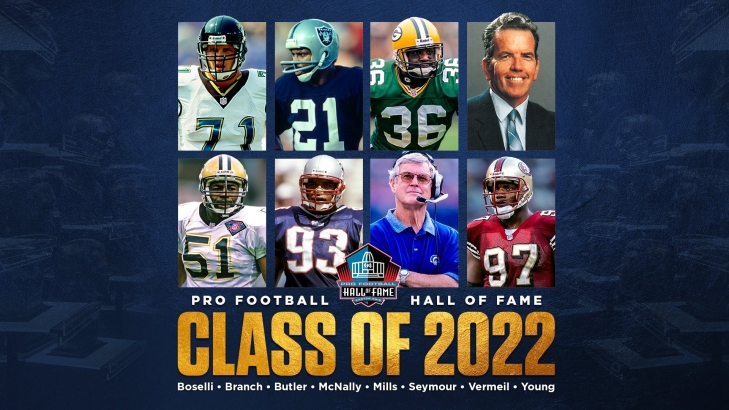
Last week, we here at Notinhalloffame.com had our mock Pro Football Hall of Fame Committee, where we debated came up with our Class of 2022, which consisted of Richard Seymour, Tony Boselli, LeRoy Butler, Devin Hester and Patrick Willis.
It was a transparent process, which you can see here, and like the actual Hall, we too, had previous shows where we debated who should reach the Semi-Finalists and Finalists.
Tonight, the Pro Football Hall of Fame came up with a different five than we did, and they announced that during the NFL Honors.
Let’s get right into who they chose:
Tony Boselli: Tackle: 1995-01 Jacksonville Jaguars & 2002 Houston Texans. The career of Boselli was short but impactful, but he is believed to be the greatest Jaguar of all-time. The Lineman was a Finalist for six years in a row, and it was widely speculated that he would be the next Offensive Lineman to get in, which has now come to fruition. Jacksonville now has Canton representation. Ranked #36 on Notinhalloffame.com.
LeRoy Butler: Safety: 1990-01 Green Bay Packers. Butler had 38 career Interceptions, won a Super Bowl and went to four Pro Bowls over his career. Entering on his third straight year as a Finalist, Butler’s HOF momentum has been the most gradual of any other former player who made it to the Finals. Ranked #69 on Notinhalloffame.com.
Sam Mills: Linebacker: 1986-94 New Orleans Saints & 1995-97 Carolina Panthers. A five-time Pro Bowler, Mills began his pro career in the USFL, it was a now or never situation for Mills who was in his last year of eligibility. It turned out to be “now”, and Mills will not have to enter the bloated senior pool. Ranked #40 on Notinhalloffame.com.
Richard Seymour: Defensive End/Defensive Tackle: 2001-08 New England Patriots & 2009-12 Oakland Raiders. Seymour won three Super Bowls with the Patriots, went to seven Pro Bowls and was a three-time First Team All-Pro. This was his fourth consecutive year as a Finalist. Ranked #35 on Notinhalloffame.com.
Bryant Young: Defensive Tackle: 1994-07 San Francisco 49ers. Young played his entire career with San Francisco where he won a Super Bowl as a rookie. He went to four Pro Bowls, was a one-time First Team All-Pro and had 89.5 career Sacks. This was arguably the biggest surprise, as his resume is not as strong as fellow Niner Finalist, Patrick Willis, but he is a worthy inductee. Ranked #159 on Notinhalloffame.com.
The ten who did not make it:
Jared Allen: Defensive End: 2004-07 Kansas City Chiefs, 2008-13 Minnesota Vikings, 2014-15 Chicago Bears & 2016 Carolina Panthers. This was Allen’s second year of eligibility, and was a Finalist last year, and anyone who makes it as a Finalist in his first year of eligibility will make it to Canton eventually. Allen led the NFL in Sacks twice (2007 & 2011) and had 136.0 in total. He was also a five-time First Team All-Pro. His bust is impending. Ranked #24 on Notinhalloffame.com.
Willie Anderson: Right Tackle: 1996-07 Cincinnati Bengals & 2008 Baltimore Ravens: Anderson is a three-time First Team All-Pro, four-time Pro Bowler, and was a Finalist for the first time after being eligible since 2014. The Bengals success this year may not have translated into a Hall of Fame for Anderson, but he is on people’s radar exponentially more than it was two years ago. That being said, Joe Thomas is eligible next year, and takes over as the biggest name Offensive Lineman on the ballot. Ranked #268 on Notinhalloffame.com.
Ronde Barber: Cornerback/Safety: 1997-12 Tampa Bay Buccaneers. Barber is a former Super Bowl Champion and was the 2001 leader in Interceptions. He has over 1,000 Solo Tackles with 47 career Interceptions. Barber was a Finalist for the second time, and was in his sixth year of eligibility. He will eventually join his teammates, John Lynch and Warren Sapp in Canton, but the arrival of Darrelle Revis on next year’s ballot will likely impact next year’s candidacy. Ranked #10 on Notinhalloffame.com.
Devin Hester: Wide Receiver/Returner: 2006-16 Chicago Bears. 2014-15 Atlanta Falcons, 2016 Baltimore Ravens & 2016 Seattle Seahawks. Hester becomes a Finalist on his first year on the ballot, and he was the most feared returner of his day. A three-time First Team All-Pro, Hester had 14,455 Return Yards and an all-time record 19 Return Touchdowns. While he did not enter Canton this year, he will be the next Special Teams player to enter the Hall. Ranked #103 on Notinhalloffame.com.
Andre Johnson: Wide Receiver: 2003-16 Houston Texans, 2015 Indianapolis Colts 2016 Tennessee Titans. Easily the best offensive player in Texans history, Johnson was a two-time leader in Receptions and Receiving Yards, and would amass 14,185 total Receiving Yards and 64 Touchdowns. Johnson is a two-time First Team All-Pro and seven-time Pro Bowl Selection and was a Finalist in his first year of eligibility. As we stated before, nobody who achieved that failed to make Canton, so his time is coming, though he is one of many top flight Wide Receivers who are eligible. Ranked #30 on Notinhalloffame.com.
Torry Holt: Wide Receiver: 1998-08 St. Louis Rams & 2009 Jacksonville Jaguars. Holt won a Super Bowl with the Rams, and he went to seven Pro Bowls with 12,832 career Receiving Yards. Holt is now a four-time Finalist, but the Wide Receiver position is loaded with worthy candidates, and with no Wide Receivers getting inducted this year, he faces the exact same scenario as next year. Ranked #6 on Notinhalloffame.com.
Zach Thomas: Linebacker: 1996-07 Miami Dolphins & 2008 Dallas Cowboys: Thomas led the NFL in Combined Tackles twice (2002 & 2006) and he is five-time First Team All-Pro. He also has 1,727 career Combined Tackles. Thomas is now a three-time Finalist, and many expected that this would be his year. Ranked #21 on Notinhalloffame.com
DeMarcus Ware: Linebacker: 2005-13 Dallas Cowboys & 2014-16 Denver Broncos: Ware is a four-time First Team All-Pro and two-time Sack leader who had 138.5 Sacks overall. Also, a nine-time Pro Bowl Selection, Ware helped Denver win Super Bowl 50. He was a Finalist on his first year of eligibility, and of all the first time Finalists, we thought Ware would have the best shot, but he will have to wait. Ranked #1 on Notinhalloffame.com.
Reggie Wayne: Wide Receiver: 2001-14 Indianapolis Colts. A six-time Pro Bowl and one-time Super Bowl Champion, Wayne has 14,345 Receiving Yards with 82 Touchdowns. Wayne is now a Finalist in his first three years on the ballot, so he is likely to get in. The question is just whether he gets in before, or in the same group as Holt and Johnson. Ranked #9 on Notinhalloffame.com.
Patrick Willis: Linebacker: 2007-14 San Francisco 49ers. Willis played his entire career with San Francisco, and was a five-time First Team All-Pro Selection, went to seven Pro Bowls, and twice led the NFL in Tackles. He was in his third year of eligibility and was a Finalist for the first time, but the induction of Young should help him. Ranked #15 on Notinhalloffame.com.
The five chosen will join:
Cliff Branch: Wide Receiver: 1972-85 Oakland/Los Angeles Raiders. Branch was this year’s Senior Candidate and finally enters after first being eligible in 1991. A game-breaker for the Raiders, Branch led the NFL in Receiving Yards in 1974, and helped take his team to three Super Bowl wins. Ranked #11 on Noinhalloffame.com.
Dick Vermiel: Head Coach: Vermiel had a career record of 120-109, and was known for turning horrific teams into championship contenders. He won Super Bowl XXXIV, leading the Rams to their first Super Bowl win.
Art McNally: Referee: Finally, a referee enters the Pro Football Hall of Fame, with McNally earning his spot as this year’s Contributors Nominee. He was the Director of Officiating from 1968 to 1991, with the game becoming more complex and the need for competent officials skyrocketing.
We will now begin our revision of our Notinhalloffame.com Football List, which will involve the following:
Removing the six former players who were chosen.
Add those who are eligible in 2023.
Adjust ranking based on your votes and comments.
As always, we thank you for your support!
Tuukka Rask retires
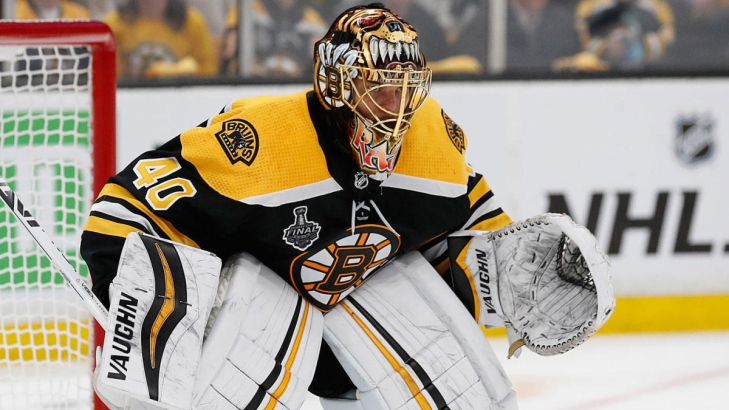
A very significant retirement has taken place in sports, as Boston Bruins Goalie, Tuuka Rask, announced today that he was retiring from the NHL.
From Savonlinna, Finland, Rask was drafted in the First Round (21st Overall) by the Toronto Maple Leafs, but he never played there as he was traded to Boston for fellow Goalie, Andrew Raycroft. It was a deal that historically would favor the Bruins, the team in which Rask played his entire career.
Rask was first called up in 2007, but was not the regular back-up until the 2009-10 Season, a year in which he led the NHL in Save Percentage and Goals Against Average. Rask would finally take over from Tim Thomas as the Bruins lead Goalie, bringing the Bruins back to the Stanley Cup Finals in 2013. They lost to Chicago, but Task established himself as one of the best in the game. The season after, he won the coveted Vezina Trophy as the NHL’s top Goalie.
Rask had his ups and down afterward, dealing with injuries, but again led the Bruins to another Cup Final in 2019, the same season he was named a Second Team All-Star. Boston again lost, this time to St. Louis, who captured their first Title.
Rask had an upper-body injury that kept him on the sideline going into this season, but he came back to rejoin the Boston, appearing in four games as Linus Ullmark’s backup, but he cited that he physically was not at the level he needed to be.
Internationally, Rask represented Finland multiple times, with his greatest success coming in the 2014 Olympics, where he backstopped his nation to a Bronze Medal.
Rask leaves the games with a record of 306-163-66 with a 2.28 GAA.
Should Rask’s retirement hold up, and he does not play in Europe, he will be Hall of Fame eligible in 2026.
We here at Notinhalloffame.com would like to wish Tuukka Rask the best in his post-playing career.
