


Committee Chairman
The New York Yankees will retire Paul O'Neill's number this year
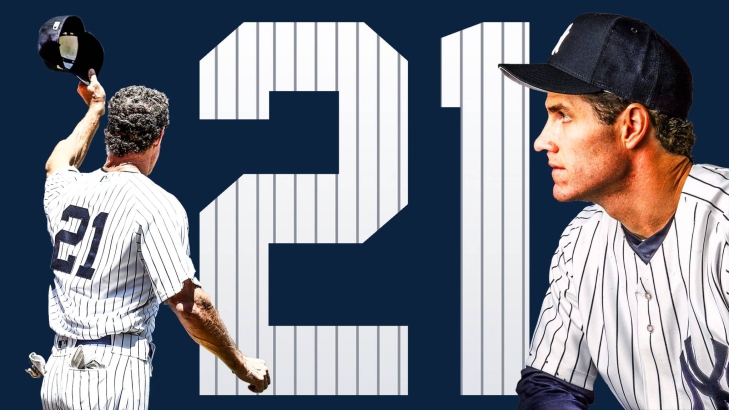
Regular visitors of Notinhalloffame.com know that we are slowly working on the top 50 of every major team in the NHL, NBA, NFL and MLB. Once that is done, we intend to look at how each team honor their past players, coaches and executives. As such, it is news to us that the New York Yankees will be retiring his number 21 this upcoming season.
The event will take place on August 21, during New York’s home game against Toronto.
After playing his first eight seasons with the Cincinnati Reds, O’Neill helped New York win four World Series Titles (1996, 1998, 1999 & 2000) where the Rightfielder smacked 185 Home Runs, 858 RBI, with an OPS of .869. In 1994, O’Neill won the American League Batting Title with a .359 average and he also represented the Yankees in four All-Star Games.
O’Neill becomes the 23rd Yankee to have his numbers retired, joining Billy Martin (#1), Derek Jeter (#2), Babe Ruth (#3), Lou Gehrig (#4), Joe DiMaggio (#5), Mickey Mantle (#7), Yogi Berra (#8), Bill Dickey (#8), Roger Maris (#9), Phil Rizzuto (#10), Thurman Munson (#15), Whitey Ford (#16), Jorge Posada (#20), Don Mattingly (#23), Elston Howard (#32), Casey Stengel (#37), Mariano Rivera (#42), Reggie Jackson (#44), Andy Pettitte (#46), Ron Guidry (#49) and Bernie Williams (#51).
O’Neill had been previously honored by the Yankees with a plaque in Monument Park in 2014.
We here at Notinhalloffame.com would like to congratulate Paul O’Neill for his impending honor.
CM Punk named to the ROH Hall of Fame

Ring of Honor announced that former Champion, CM Punk will join The Briscoe Brothers, Bryan Danielson and Samoa Joe as part of the first Hall of Fame Class.
Making his ROH debut in 2002 won the ROH Tag Team Titles twice with Colt Cabana, and the ROH World Title in 2005 when he defeated Austin Aries. His most famous run was the “Summer of Punk” when he had signed with the WWE, but was still the ROH Champion. He finally lost the title to James Gibson in a four-way match.
We here at Notinhalloffame.com would like to congratulate CM Punk for this impending honor.
Why Online Casino Betting Sites Are Awesome

Introduction
Betting can help you get a lot of money in some instances, but it is not easy; one can lose all their money through online casino betting, but if they use the techniques required, one can have a better chance of winning. So for you to maximize your cash, you need to follow the right tactics for this to avoid losing everything. An essential thing for individuals to note is that many betting sites are available, and knowing how to select a good one should be a top priority. Below are some of the benefits of online casino betting sites.
- Entertainment
Online casino betting has become popular over the years because it brings interest and entertainment to people. Most rich business people use online casino betting to unwind and refresh themselves. It is suitable for everyone to be extra cautious when choosing an online casino betting site since it involves money and sometimes a lot of it, some of which are not genuine. If you want to have maximum enjoyment while playing, choose legit links, like the fun88 link, which will help you know what you're looking for in an online casino.
- Winning cash
Conducting research or getting recommendations on a genuine online casino is a good step; this is great because you'll be sure to get your money every time you win a game. There are also many review sites for casinos on the internet, and one can look for famous ones and ones with the best reviews that are good for your needs. There is nothing better than having fun while playing and getting some good money while at it.
People should avoid betting with a lot of money in online casinos, especially a beginner. Starting low will help you understand the best strategies to use and have more chances of betting and even better chances of winning. It is recommended that one put a fixed budget for online casino betting to avoid going over budget. Proper planning is a necessary tool in online casino betting since it will help you stay more disciplined. It is also good to have a limit and know when the best time to stop is; one can keep going and going and lose even what they had won. In online casino betting, there are always good days and not-so-good days, and one should utilize the good days, but when they get to days when they lose a lot, they should take a break and stop till the next day.
Conclusion
People who love online casino betting should always take it as a way to refresh and unwind after long days of working hard. When you stop taking the game too seriously and play happily, you will get more wins; people should also remember that practice improves your skills significantly. Being ready to learn and try new methods will help you get to the top. It would be good to go through the various online links, such as the fun88 link, for better deals while playing. You will never go wrong with an online casino as long as you follow the rules of the game.
Manu Ginobili headlines the 2022 Basketball HOF Finalists
It is NBA All-Star Game weekend, and those who are into Halls of Fame know exactly what that means!
The Naismith Basketball Hall of Fame announced today the Finalists for the Class of 2022.
The Finalists are:
Leta Andrews: Andrews is one of the most successful basketball high school coaches of all-time, coaching from 1962 to 2014 with a lifetime record of 1,416-355. She is already a member of the Women’s Basketball Hall of Fame, and has been a Finalist three times before.
Swin Cash: Cash was a two-time NCAA Champion at Connecticut and a three-time WNBA Champion, two with Detroit and one with Seattle. Cash was also a four-time All-Star. WNBA 20th and 25th Anniversary Team Selection, and is also a two-time Olympic Gold Medalist with America. Cash is a member of the Women’s Basketball Hall of Fame.
Michael Cooper: Playing all of his 13 seasons with the Los Angeles Lakers, Cooper helped L.A. win five NBA Titles, while earning five NBA All-Defensive Selections and the 1987 Defensive Player of the Year.
Hugh Evans: Evans was an NBA referee from 1972 to 2001 and he officiated in 35 NBA Finals Games.
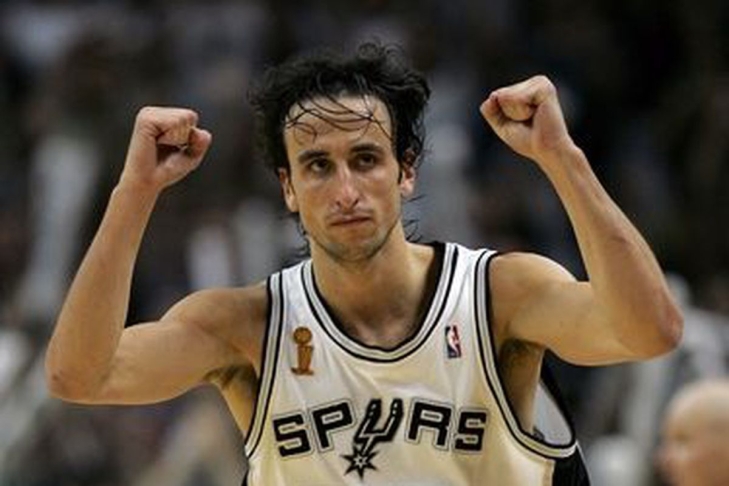
Manu Ginobili: Playing his entire pro career with the San Antonio Spurs, Ginobili helped take the team to four NBA Championships, while individually going to two All-Star Games. Internationally, Ginobili led Argentina to Olympic Gold in 2004, Olympic Bronze in 2008, and he also took his country to Silver at the 2002 FIBA World Cup. He has an excellent shot of entering as a first ballot inductee.
Tim Hardaway: Hardaway was a former WAC Player of the Year at UTEP, and professionally was a five-time All-Star known for his time in Golden State and Miami. A five-time All-NBA player, Hardaway also won Gold for the United States at the 2000 Olympics.
Bob Huggins: Huggins took Cincinnati to the Final Four in 1992, and West Virginia in 2010. Still coaching the Mountaineers today, Huggins presently has a career record of 913-393.
Marques Johnson: Johnson won the NCAA Title at UCLA in 1975 and was named the National College Player of the Year in 1977. Professionally, he had his best seasons with Milwaukee, where he went to four All-Star Games, and was twice a Second Team All-NBA player. Johnson also played for the Clippers, where he went to his fifth All-Star Game.
George Karl: Karl is one of nine NBA Coaches wo have won 1,000 Games with a Coach of the Year Award (2013 with Denver). He also was the Head Coach for Seattle, Milwaukee and Sacramento with a lifetime record of 1,175-824.
Marianne Stanley: Stanley coached Old Dominion to a National Championship in 1985, and she also coached Penn, USC, Stanford and California. In the WNBA, she was named the WNBA Coach of the Year in 2002 with Washington, and she is currently the Head Coach of the Indiana Fever. Stanley is a member of the Women’s Basketball Hall of Fame.
Lindsay Whalen: Whalen was one of the best women’s player in Golden Gopher history, and she went on to have a stellar WNBA career, winning four titles with the Minnesota Lynx, earning three First Team All-Star selections and five trips to the WNBA All-Star Games. She was also named to the WNBA 20th and 25th Anniversary Team and internationally she won two Olympic Gold Medals with the United States (2012 & 2016).
Also announced was the following:
Reggie Minton won the John Bunn Lifetime Achievement Award.
Dick Ebersol won he Curt Gowdy Transformative Media Award
Mechelle Voepel won the Curt Gowdy Media Award.
Walt Frazier won the Curt Gowdy Electronic Media Award.
We here at Notinhalloffame.com would like to congratulate the four new Award winners and this year’s Finalists.
